
REVIEW · KILIMANJARO LEMOSHO ROUTE
Lemosho Route 7 Days Trekking at Mount Kilimanjaro
Kilimanjaro demands smart planning. The Lemosho Route gives you a longer runway for altitude, plus a quieter feel than the main tracks, and Suricata Safaris runs it with tight group size (up to 8 travelers) and certified guidance that keeps you moving with purpose. Two things I especially like: the day-by-day acclimatization structure, and the way the team setup is built around safety and steady pacing rather than rushing.
The main consideration is simple: even on a well-run 7-day plan, summit day is still a hard climb at extreme altitude. And if weather turns wet, you will feel it on the trail, so pack for cold rain and expect some slow moments.
In This Review
- Key things to know before you go
- Why the Lemosho Route fits a real 7-day Kilimanjaro goal
- Arusha logistics, 4×4 travel, and the Londorossi Gate permit day
- Day-by-day acclimatization: from Mti Mkubwa to Shira One
- Lava Tower at 4600m, then Barranco at 3940m: the route’s big emotional test
- The Barranco Wall to Karanga, then Barafu: when your body learns the new altitude
- Summit night to Uhuru Peak, then descent to Mweka: the part you remember forever
- Mweka Gate, certificate, and the ride back to Arusha
- Price and value at $2,800 per person: what you’re paying for
- The guide team style you should expect (and how to work with it)
- Who this trek suits, and who should rethink it
- Practical tips for packing and pacing on this Lemosho week
- Should you book Suricata Safaris for Lemosho 7 days?
- FAQ
- How long is the Lemosho Route trek with Suricata Safaris?
- What is the maximum group size?
- Does the tour include pickup from Arusha?
- Are meals included during the trek?
- When do you start the summit attempt for Uhuru Peak?
- What is not included in the price?
- What is the cancellation window for a full refund?
Key things to know before you go
- Small group size (up to 8 travelers) means you get more personal attention on pacing and check-ins.
- 4×4 transfer to the Londorossi Gate (2250m) helps you start the trek efficiently after permit registration.
- Acclimatization built into the route: Shira (3500m), Lava Tower (4600m), then Barranco (3940m) before pushing higher.
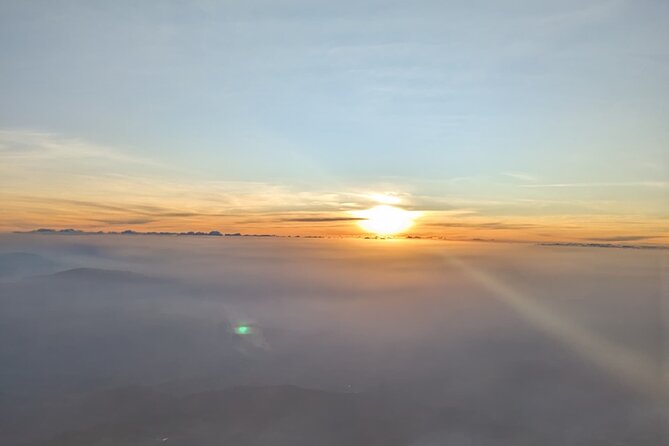
- A properly timed summit push: wake around midnight for Uhuru Peak (5895m), then descend back to camp and continue down.
- Support that often includes a cook and multiple porters, which makes it easier to focus on breathing, steps, and hydration.
- Admission ticket coverage is included, so you’re not scrambling with park fees during the climb.
Other ways up Kilimanjaro we reviewed
- 8-Day Small-group Lemosho Kilimanjaro Summit Trekking★ 5.0 · 186 reviews
- 7-Day Machame Kilimanjaro Summit Tour from Arusha★ 5.0 · 125 reviews
- Mountain Kilimanjaro Day Hike★ 5.0 · 102 reviews
- 4 days Best experience Kilimanjaro Hike, Serengeti &Ngorongoro★ 5.0 · 54 reviews
Why the Lemosho Route fits a real 7-day Kilimanjaro goal
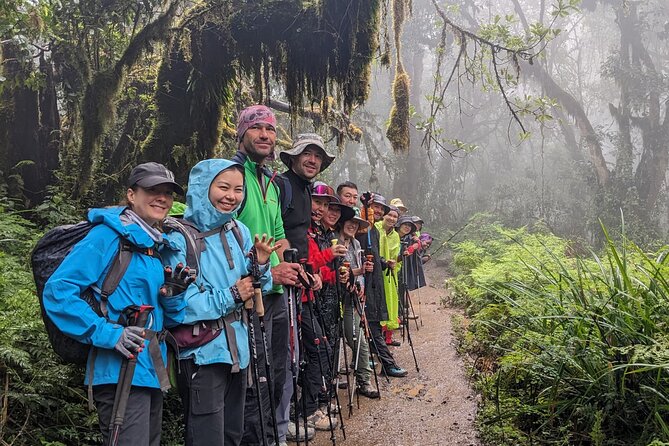
If you want Kilimanjaro without the constant crush, the Lemosho approach is often the route you pick. Here, the big advantage is time. A 7-day plan needs to manage altitude carefully, and the Lemosho itinerary does that with a gradual climb, then repeated “go up, then come down” days that help your body adjust.
You’ll notice the rhythm right away. Day 1 climbs from the rainforest zone up to Mti Mkubwa Camp around 2750m. Day 2 pushes higher to Shira One Camp at 3500m, and the day 3 plan takes you up to Lava Tower at about 4600m before moving to Barranco at 3940m. That pattern matters because altitude isn’t just about the highest number you see. It’s about what your body experiences across multiple elevations.
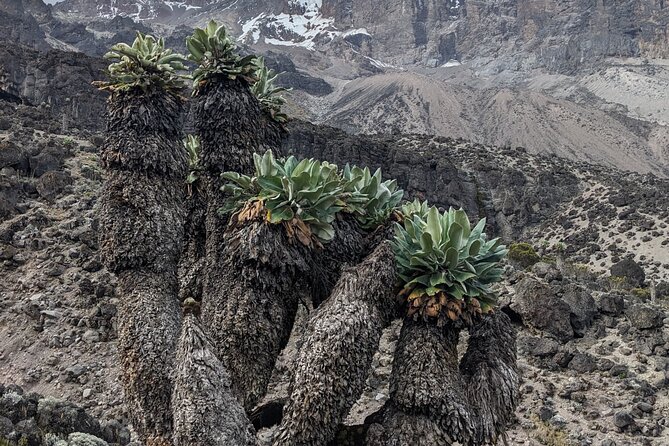
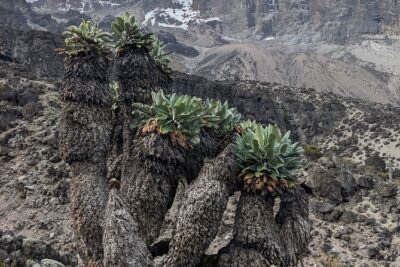
Also, this route tends to feel more “in the mountains” because you spend more time moving through different ecological zones. You’ll go from rainforest to heath and moorland, then up into alpine desert before the final rainforest descent. That matters for your enjoyment because you’re not hiking the same scenery for a full week.
Arusha logistics, 4×4 travel, and the Londorossi Gate permit day
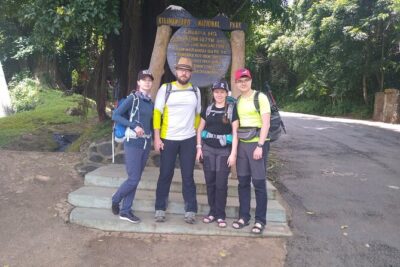
Your trip is based in Arusha, and that is useful because it’s the practical hub for Kilimanjaro treks. Suricata Safaris includes pickup, and you’ll travel by 4×4 Land Cruiser or Land Rover to the Londorossi Gate at 2250m.
Day 1 is more than just a trail start. You register and pay for the permit at the gate, and that takes about an hour. After that, you drive to the Lemosho starting point around 2100m. Then the actual hike begins with a 6 km climb through rainforest to Mti Mkubwa Camp at about 2750m.
Why I think this first day is a good setup for you: it gives you a “getting your feet under you” transition. You’re not thrown into high altitude immediately after an airport landing or a long drive. You still work, but the plan is paced.
What you might want to plan mentally: this is a gate-day. You should expect a schedule that mixes paperwork, vehicle time, and a first hike, so bring a flexible mindset and set your “start time anxiety” aside.
Day-by-day acclimatization: from Mti Mkubwa to Shira One
Day 1 ends at Mti Mkubwa Camp (Big Tree Camp) around 2750m. It’s a rainforest start, and the hike is about 6 km taking around 3 hours, with roughly 650m of altitude gain. That is a solid warm-up. You’ll feel the climb, but it’s not the brutal part.
Day 2 then heads to Shira One Camp at 3500m. The walk is around 13 km and takes about 6 hours, with an ascent of about 1100m. This is where I’d tell you to go into “slow and steady” mode. The higher you go, the more your breathing will dictate pace. The itinerary even hints at steepness, so you should treat this as a day to master comfort, not speed.
If you’re trying to maximize summit odds, you’ll benefit from how the plan approaches this. You hike, reach camp, eat, and recover. You do not spend the whole day racing forward. Meals are included here, which is practical because you don’t want to spend your limited energy hunting for food.
A helpful mindset: think of each camp as part of the acclimatization, not just an overnight stop. The higher you climb, the more important it is to sleep and hydrate well, even when you’re tired.
Lemosho itineraries worth reading next
Lava Tower at 4600m, then Barranco at 3940m: the route’s big emotional test
Day 3 is where the trek starts to feel clearly like Kilimanjaro. You leave Barranco Camp goalward early, but you first pass through Lava Tower around 4600m. The plan is about 6 to 7 hours total, with a picnic lunch.
After that high point for acclimatization, you drop to Barranco Camp at about 3940m. The numbers tell the story: around 750m up to Lava Tower, then about 660m more in the overall climb math listed before reaching Barranco.
This is also one of the most psychologically important days. You spend time higher than Barranco, then you end at a lower altitude camp. That can help you feel like the route is working, because it is building your tolerance while still letting you recover.
You’ll hike 10.75 km, which is not extreme, but the altitude can make every kilometer feel longer. I’d suggest you watch your effort level closely. If you feel yourself “breathing for oxygen,” slow down. Your body doesn’t reward bravado on this mountain.
And if you run into bad weather, this is the kind of day where wet footing can sap confidence. That is where a professional guide team makes the difference between pushing forward and moving smartly.
The Barranco Wall to Karanga, then Barafu: when your body learns the new altitude
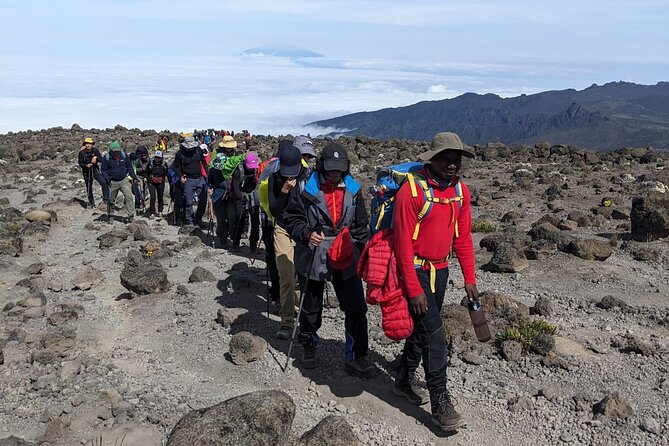
Day 4 starts with the Barranco Wall, going up to about 4250m, then continues to Karanga Camp around 4000m. Expect about 3 to 4 hours total, with a hot lunch when you arrive. After lunch, you get rest and an acclimatization walk.
The trek distance is short, about 4.25 km, with about 250m gain listed. On paper it looks manageable. On the mountain, it’s more about effort management. A short day at altitude can still exhaust you because your body is already operating at a lower oxygen level.
This is one of the reasons I like this route for you: it gives you a smaller “push day” after the higher day on Day 3. It helps your body absorb what it already climbed, and it gives your legs a chance to recover before the summit attempt.
Day 5 then climbs to Barafu Camp at about 4600m. You’ll walk through heath and moorland for about 3 to 4 hours, covering roughly 4.25 km, and ascending about 600m. You get a hot lunch, then rest. There’s also an early dinner before sleeping for a few hours.
This is a key transition day. You’re moving toward the summit strategy, but you’re still building energy and protecting sleep. If you’re the type who wants to stay busy, this day will teach you to slow down instead. Your best “summit training” on Kilimanjaro is usually good recovery.
Summit night to Uhuru Peak, then descent to Mweka: the part you remember forever
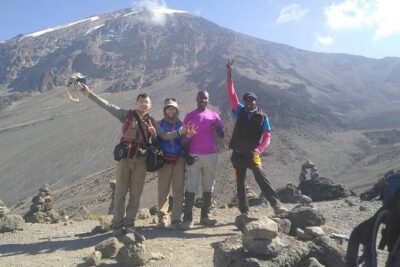
Day 6 is the summit push, and it starts around midnight. You wake up to pack essentials, then you have hot drinks and snacks before the climb. The ascent to Uhuru Peak (5895m) takes about 6 to 7 hours and covers around 4.86 km, with an elevation gain listed at about 1295m.
This is the real test. Even if you are in great shape, altitude can still make progress feel stubborn. The good news is that this trek’s structure supports the attempt with earlier acclimatization. The route is designed so you are not just jumping to the summit from a low camp.
After reaching the peak, you descend back to Barafu Camp for breakfast, about 3 hours. Then you rest and have a hot lunch before continuing down into the alpine desert, heath, and moorland to Mweka Camp at around 3100m.
The itinerary lists the combined distance for the descent segment at about 11.5 km and a huge altitude decrease total of about 2795m. That kind of drop can feel intense on your knees and ankles, even though it’s physically “easier” than climbing. So you’ll want to take the descents as seriously as the ascent. Smooth steps, good trekking pole use if you have them, and consistent hydration matter here.
Mweka Gate, certificate, and the ride back to Arusha
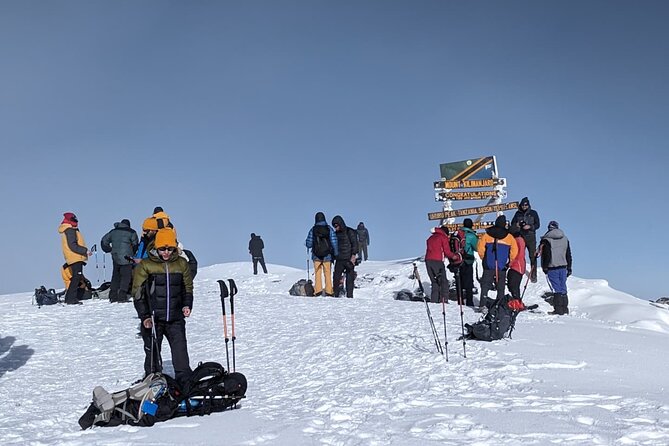
Day 7 brings you down to Mweka Gate at about 1800m. You’ll trek through rainforest for about 3 to 4 hours. The distance is listed around 9.1 km, with a descent of about 1400m.
When you reach the gate, if you summited successfully, you’ll receive a certificate. After that, the plan includes meeting the vehicle and transferring you to Jevas Hotel in Arusha for drop-off.
This final day is about closure. You’re tired, your body will still be adjusting after summit altitude, and yet you’re moving into lower elevation again. It’s a good time to focus on steady pacing rather than trying to “finish fast.” Your reward is getting back to Arusha with the emotional weight of what you accomplished.
Price and value at $2,800 per person: what you’re paying for
The price is listed at $2,800 per person for the 7-day trek. In this category, you’re not just paying for “time on a mountain.” You’re paying for a whole system: a certified guide, meals across the days, admission tickets included, plus the 4×4 transport from Arusha to the trailhead area and back.
Here’s what’s included:
- Certified guide
- Breakfast (6), lunch (7), dinner (6)
- Admission ticket included (as shown for the trekking days)
- Pickup offered
- Mobile ticket
It’s not included:
- International flights and departure taxes
- Medical, travel, and luggage insurance
So is $2,800 “worth it”? For me, the strongest value markers are the meal coverage (which reduces planning stress), the admission ticket coverage (less admin during a demanding trip), and the guide quality plus small group size. With Kilimanjaro, the difference between a good operator and a great one often shows up in small things: pacing decisions, how they handle altitude discomfort, and how calm the team stays if weather shifts.
Also, Suricata Safaris caps the group at maximum 8 travelers. That’s a practical value point. In a smaller group, your guide can check in more effectively, and you spend less time waiting.
The guide team style you should expect (and how to work with it)
From the names shared in recent experiences, you could be guided by people like Mike and Freddie. Other guide names that appear include Freddy, Modest, and a teacher mentioned in connection with the guiding team. The important part is the pattern: experienced mountain guides who know how to manage summit pacing and safety decisions.
What that means for you day-to-day:
- You’ll get help maintaining an appropriate pace on steep, higher altitude sections.
- You can ask questions about how you feel and where you are in the plan.
- If rain shows up, a skilled guide can help you keep traction and avoid overexertion.
One more practical note from the team setup you may experience: groups often include a cook and porters. That kind of support tends to translate into easier camp logistics and more consistent meals, so you can focus on walking and rest.
Who this trek suits, and who should rethink it
The tour notes a moderate physical fitness level as appropriate for participants. That doesn’t mean it’s easy. It means the route is designed so people with reasonable fitness can handle the hiking length, provided they respect pace and altitude.
This is a strong fit if you:
- Want a route with a better acclimatization shape for a 7-day schedule
- Prefer a smaller group size (maximum 8)
- Like the idea of rainforest, heath and moorland, and alpine zones in one week
- Want a guide team that focuses on professionalism and care
It may not be the best fit if you:
- Know you struggle with cold nights and steep climbs, especially around midnight summit day
- Are not comfortable with the possibility of rain and wet trails, which at least one group experienced as repeated wet conditions
- Are looking for a “light hike.” Kilimanjaro is never light.
Practical tips for packing and pacing on this Lemosho week
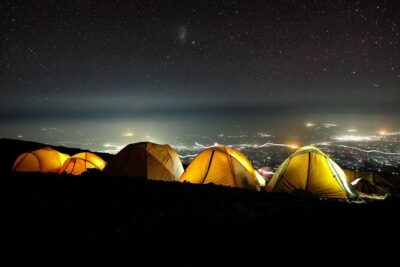
I’ll keep this strictly tied to what the plan implies. Since summit night starts around midnight on Day 6, you should assume you will be moving in low light and cold conditions. Bring the right night gear so you can see safely and keep warm.
Because the itinerary moves through multiple zones, you’ll want layers, not one heavy item. Rain is a real possibility. One recent group reported almost 6 days of continuous rain, so plan for wet weather and the kind of slow going it creates.
On the pacing side, the route gives you both “longer days” and “shorter, steep days.” For example:
- Day 2 is longer (about 13 km, 6 hours).
- Day 4 is shorter but includes the Barranco Wall and an acclimatization walk after arrival.
- Day 6 is short on distance but huge on elevation gain and mental pressure.
Your job is to keep effort consistent. If you feel behind, slow down early. It’s much harder to recover from overspending your energy at high altitude.
Finally, treat the camp days as part of the trek. Sleep, hydrate, and eat what you’re served. With breakfast, lunch, and dinner included, you’re set up to follow that rhythm.
Should you book Suricata Safaris for Lemosho 7 days?
I’d book this trek if you want a well-structured 7-day Lemosho Kilimanjaro attempt with certified guidance and a small group cap. The route choice makes sense for altitude management, the meal and ticket inclusions reduce everyday stress, and the guide team is repeatedly described as professional and caring.
I would pause if your priority is comfort over challenge. Summit day to Uhuru Peak is still demanding, and wet weather can make the week more tiring than it looks on a schedule. If that sounds like a deal breaker, you might want a different plan length or a different route with more cushion.
If you do book, go in with a simple goal: walk patiently, listen to your guide, and treat every camp day like part of the summit attempt, not downtime.
FAQ
How long is the Lemosho Route trek with Suricata Safaris?
It’s listed as 7 days approximately.
What is the maximum group size?
The maximum is 8 travelers.
Does the tour include pickup from Arusha?
Yes, pickup is offered, and the trek starts and ends in Arusha.
Are meals included during the trek?
Yes. The tour includes breakfast (6), lunch (7), and dinner (6).
When do you start the summit attempt for Uhuru Peak?
You wake up around 12:00 am on Day 6, then start the ascent to Uhuru Peak (5895m).
What is not included in the price?
International flights and departure taxes are not included, and medical, travel, and luggage insurance are also not included.
What is the cancellation window for a full refund?
You can cancel up to 24 hours in advance for a full refund. If you cancel less than 24 hours before the start time, the amount paid is not refunded.
Lemosho, Compared
- 8-Day Small-group Lemosho Kilimanjaro Summit Trekking
★ 5.0 · 186 reviews - 8 Days Mountain Kilimanjaro Lemosho Route
★ 5.0 · 22 reviews - 7 Day Kilimanjaro Climb Lemosho Route & 2 Day Safari
★ 5.0 · 16 reviews - Kilimanjaro Climb- Lemosho Route
★ 5.0 · 9 reviews - Kilimanjaro-lemosho Route 8 Days Itinerary
★ 5.0 · 6 reviews
Kilimanjaro, Route by Route
- 8-Day Small-group Lemosho Kilimanjaro Summit Trekking
★ 5.0 · 186 reviews - 7-Day Machame Kilimanjaro Summit Tour from Arusha
★ 5.0 · 125 reviews - Mountain Kilimanjaro Day Hike
★ 5.0 · 102 reviews - 4 days Best experience Kilimanjaro Hike, Serengeti &Ngorongoro
★ 5.0 · 54 reviews - From Arusha/Moshi: Kilimanjaro Hike Marangu Route Day Trip
★ 4.5 · 54 reviews
Just added from around Arusha
Kilimanjaro Lemosho Route, compared.
 ★ 5.0Kilimanjaro climb by Lemosho Route (7-day)From $3,476651 reviews
 ★ 5.08-Day Small-group Lemosho Kilimanjaro Summit TrekkingFrom $2,895186 reviews
 ★ 5.0Kilimanjaro Climbing Lemosho Route 8 Days.From $2,300186 reviews
 ★ 5.0Kilimanjaro climb, Lemosho Route (8-day)From $3,975148 reviews
 ★ 5.0Kilimanjaro climb, Lemosho Route (6-day)From $3,034129 reviews
 ★ 5.0Kilimanjaro Lemosho RouteFrom $2,89071 reviews
 ★ 5.0Private Kilimanjaro Hike 7 Day Lemosho RouteFrom $2,45060 reviews
 ★ 5.0Climbing Kilimanjaro through 8 days Lemosho RouteFrom $2,76052 reviews
Browse the lists this tour appears in