
REVIEW · KILIMANJARO LEMOSHO ROUTE
8 Days Mountain Kilimanjaro Lemosho Route
Kilimanjaro never works on autopilot. This 8-day Lemosho route strings together rainforest, Shira high country, volcanic rock, and a classic summit bid, with time built in so you do not rush the altitude.
I love two things right away. First, the trek includes clean water and all meals, plus camping gear and a sleeping bag, so you can focus on the mountain instead of logistics. Second, there is a stated ethical commitment through paid membership with KPAP, the Kili Porter Assistance Program, which is a big deal on Kilimanjaro.
The main drawback is also the highlight: you will start the summit push at around midnight, and wind and cold at that elevation can be intense. If you hate cold, darkness, and long days, this is not a gentle stroll.
In This Review
- Quick hits before you commit
- Why Lemosho makes sense for an 8-day Kilimanjaro plan
- Day 1 to Day 3: rainforest start, Shira Ridge, and the high plateau feel
- Day 4 to Day 5: Lava Tower, Senecio Forest, and the Barranco Wall challenge
- Day 6: Barafu Camp, summit views, and your “save your energy” day
- Day 7: midnight summit push to Uhuru Peak, then down to Mweka
- Day 8: the descent to Mweka Gate, certificates, and the ride back to Moshi
- Guides, crew, and the KPAP porter ethics that matter in real life
- Price and value: what $2,840 covers, and what you still need to plan
- How to prep so the summit day does not wreck you
- Who this Lemosho route suits best
- FAQ
- Where does the trek start and where does it end?
- What time does the experience start?
- How long is the Kilimanjaro trek?
- What meals and gear are included?
- Are park fees and admission tickets included?
- What is not included in the price?
- What fitness level do I need?
- Is this tour private?
- What is the refund window for cancellation?
- Should you book this 8-day Lemosho Kilimanjaro trek?
Quick hits before you commit
- A route designed for acclimatization, with higher points followed by smart drops, like Lava Tower leading into Barranco
- Shira Plateau day with moorland meadows and early views of Kibo across the plateau
- Iconic Kilimanjaro scenery, including Lava Tower (about 300 ft tall) and the steep Great Barranco Wall
- A real summit rhythm, midnight start, then sunrise near Stella Point as you work your way to Uhuru Peak
- Included support basics, from park fees and taxes to camping setup, meals, and clean water
- Private departure, so you hike with only your group
Other ways up Kilimanjaro we reviewed
- 8-Day Small-group Lemosho Kilimanjaro Summit Trekking★ 5.0 · 186 reviews
- 7-Day Machame Kilimanjaro Summit Tour from Arusha★ 5.0 · 125 reviews
- Mountain Kilimanjaro Day Hike★ 5.0 · 102 reviews
- 4 days Best experience Kilimanjaro Hike, Serengeti &Ngorongoro★ 5.0 · 54 reviews
Why Lemosho makes sense for an 8-day Kilimanjaro plan
The Lemosho route is a favorite because it gives you variety without feeling like a theme park. One day you are moving under forest shade, the next you are walking across open high-country grass and rock, with the air gradually thinning. That matters because Kilimanjaro is as much about pacing as it is about grit.
This trek also builds in flexibility. From camp, you can do flexible day walks, and the guides can support a 7- or 8-day journey depending on what fits you best. In practice, that means the itinerary is structured, but you are not locked into one speed for every person.
If you like having a plan, but you also want room to breathe, this route style fits. It is not just climbing for climbing’s sake. You are moving through distinct ecological zones, and the day-by-day altitude choices are meant to help you adjust.
Day 1 to Day 3: rainforest start, Shira Ridge, and the high plateau feel
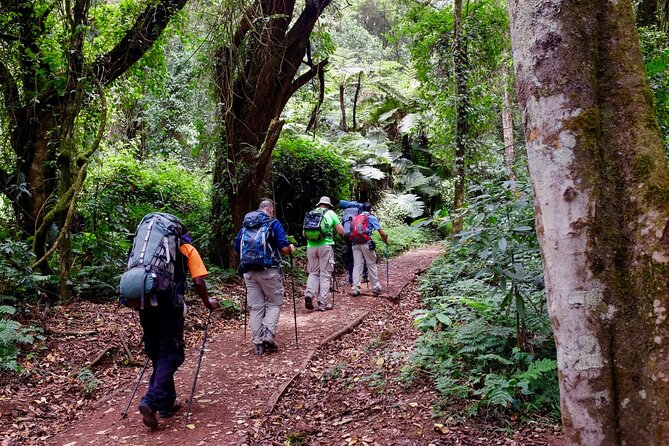
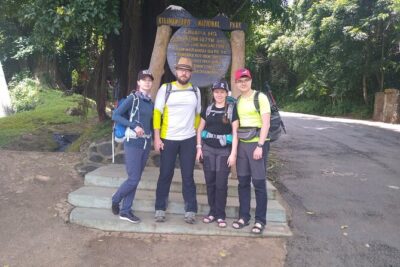
Day 1 begins right after breakfast, with a drive toward the Lemosho Gate area. Along the way, you can stop for lunch in a local village and pick up any last-minute supplies, then link up with your trekking crew. You start hiking through thick rainforest toward Mti Mkubwa Camp, a 3 to 4 hour trek where wildlife can show up, including Colobus Monkey.
Day 1 is not about speed. It is about easing into the rhythm. Forest hiking lets you get comfortable with carrying your day pack while your legs warm up, and it is a nice mental shift before the higher, emptier terrain.
Day 2 pushes you out of rainforest and into a savannah of tall grasses, heather, and volcanic rock covered with lichen. You go from about 9,498 ft to 11,500 ft, hiking around 5 to 6 hours (about 8 km, 5 miles). You cross streams and climb toward Shira Ridge before descending to Shira 1 Camp, where you get one of those morale boosts: Kibo appears across the plateau.
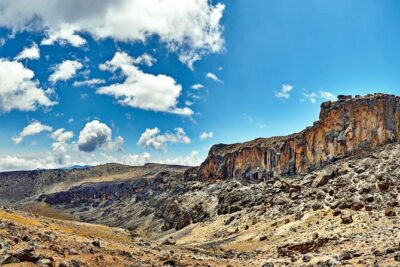
Day 3 is your “big high country” day. You explore the Shira Plateau with a full day walk, moving from roughly 11,500 ft to 13,800 ft over about 5 to 7 hours (around 11 km, 7 miles). The walking here is gentle compared to what comes later, with moorland meadows and a route east toward Shira 2 Camp. You can also divert to Moir Hut, a less-used spot near the Lent Hills, where there are multiple acclimatization walk options.
Two practical takeaways:
1) This is a long day for your body to process altitude.
2) You are also building confidence, because the terrain is not technical. Your work is steady breathing and careful effort.
Day 4 to Day 5: Lava Tower, Senecio Forest, and the Barranco Wall challenge
Day 4 is where the scenery starts to look extra volcanic, in a good way. You hike from Moir Hut to Lava Tower, climbing from around 13,800 ft to about 15,190 ft (about 7 km, 4 miles) for roughly 3 to 4 hours. Lava Tower is a tall volcanic rock formation, about 300 ft, and it is the kind of landmark you remember long after you are back down.
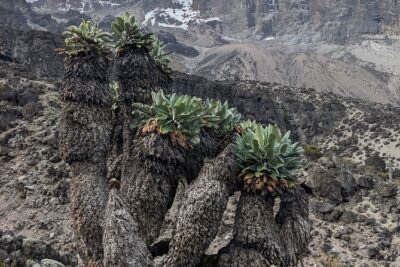
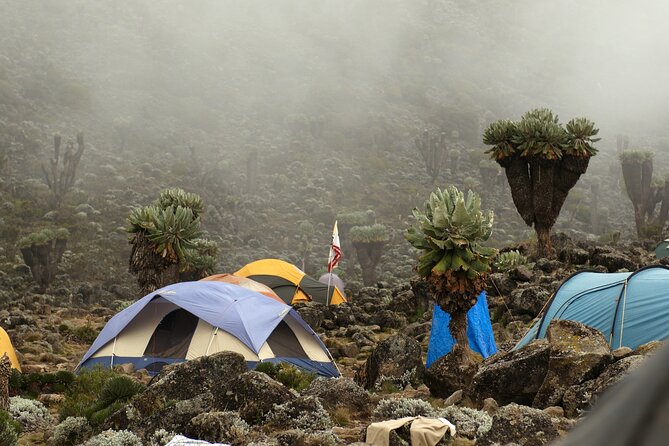
After that, you descend to Barranco Camp, ending the day around 13,044 ft. The route drops through the Senecio Forest, and even though you end at a similar elevation, you have spent time higher up. That is the point. Your body gets stimulus from the altitude without forcing you to “live” up there all day.
Day 5 is shorter, but it comes with a psychological wall, the Great Barranco Wall. You start Barranco Camp and hike toward Karanga Camp, staying near 13,044 ft to 13,106 ft (about 5 km, 3 miles) with around 2 to 3 hours of walking. The day begins by descending into a ravine, then climbing a steep but non-technical section. The wall is described as nearly 900 ft steep climb, which is why you should take it slow and controlled.
From the top, you cross hills and valleys, then descend sharply into Karanga Valley and make one more steep climb to Karanga Camp. This is an excellent acclimatization day because you are not spending hours pounding higher and higher. You are learning how to handle steep effort while staying within a tighter altitude band.
Lemosho itineraries worth reading next
Day 6: Barafu Camp, summit views, and your “save your energy” day
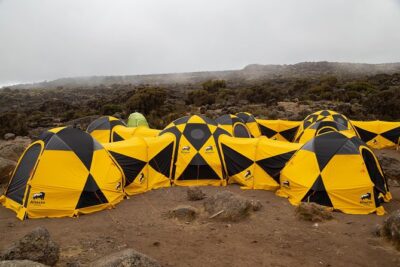
Day 6 takes you from Karanga Camp to Barafu Camp, climbing from about 13,106 ft to 15,331 ft (roughly 4 km, 2 miles) in 1 to 2 hours. The trail connects with the Mweka Trail junction, and you continue up a rocky section to Barafu Hut.
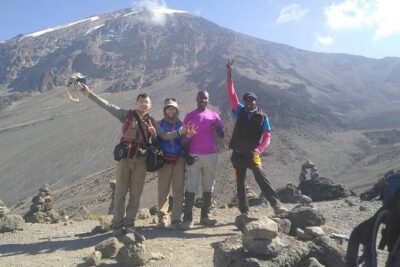
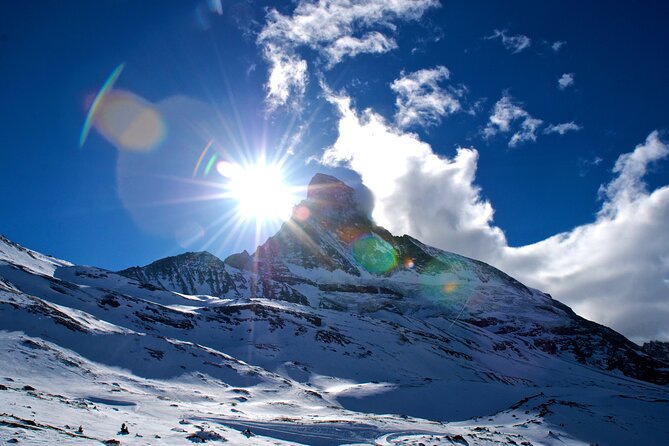
You have essentially completed the southern circuit by this stage. The payoff is that you are camped where the summit angles start to show from multiple angles. Mawenzi and Kibo are viewable from Barafu, and seeing the mountain at this point helps the summit day feel real, not theoretical.
This is also your prep day. You rest and get an early dinner to prepare for the summit push. If you ever wonder why guides emphasize sleep before midnight, it is because the summit night is mentally demanding, not just physically tough.
Day 7: midnight summit push to Uhuru Peak, then down to Mweka
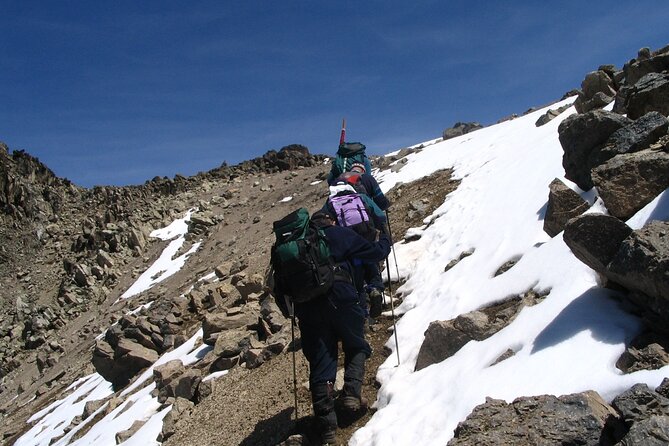
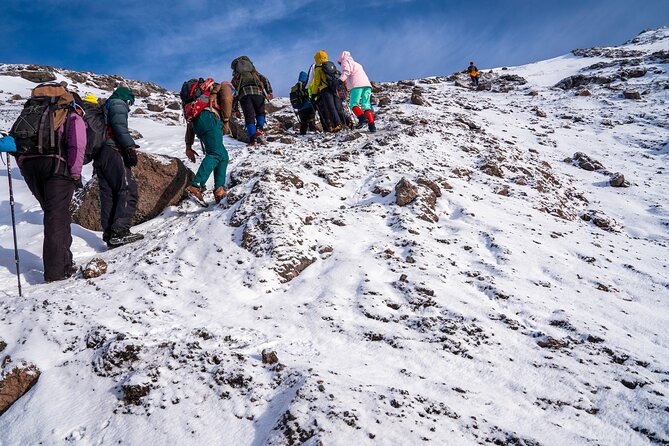
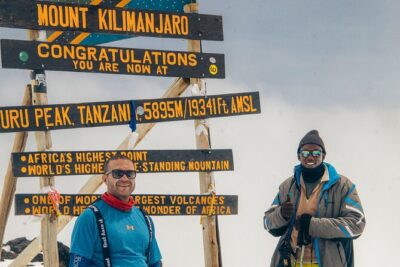
Day 7 is the big one. You start from Barafu Camp at around midnight and hike toward Uhuru Peak, going from about 15,331 ft up to 19,341 ft. Expect around 6 to 8 hours for the ascent segment (about 6 km, 4 miles).
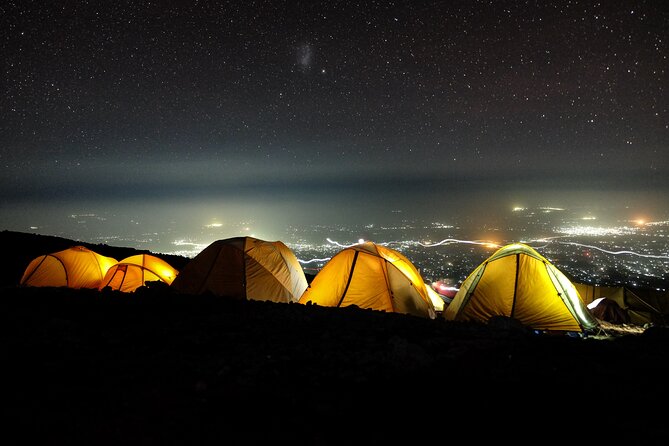
This part is described as the most mentally and physically challenging portion. Wind and cold at that elevation and time can be extreme, and you are moving in darkness for several hours. You will take frequent but short breaks. That break rhythm is a huge part of why summit days feel survivable. You are not “resting,” you are buying time for your breathing.
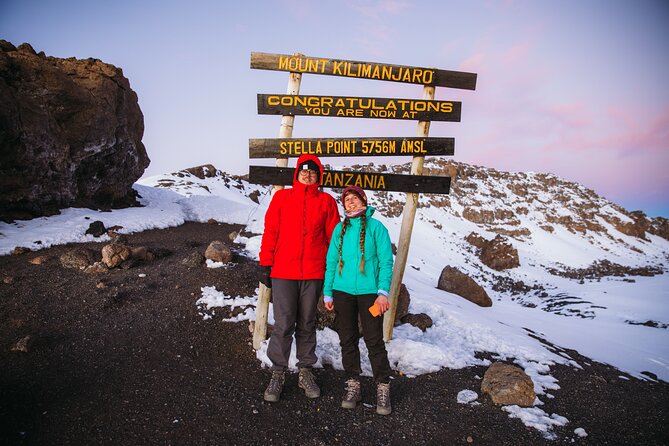
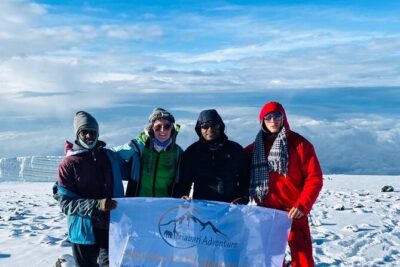
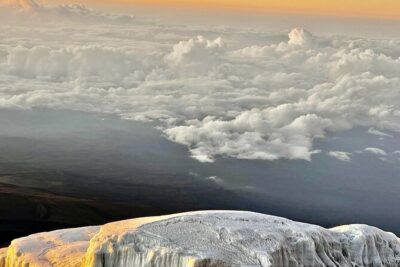
Near Stella Point, at around 18,900 ft, you get a sunrise reward. The description points to the sunrise coming over Mawenzi, which is a classic Kilimanjaro memory for many people. After the peak portion, you descend from Uhuru Peak to Mweka Camp, dropping to about 10,065 ft over roughly 4 to 6 hours (about 12 km, 7 miles) through rain forest.
Two notes so you plan your headspace:
- Summit day is both an ascent and a long descent day. Your legs may feel okay at the top, then suddenly not later.
- Darkness changes how effort feels. It is harder to gauge time, so trust the plan and your guide’s pacing.
Day 8: the descent to Mweka Gate, certificates, and the ride back to Moshi
Day 8 is mostly recovery, but you still walk. You hike from Mweka Camp down to Mweka Gate, going from about 10,065 ft to 5,380 ft over around 2 to 3 hours (about 10 km, 6 miles). The environment can be wet and muddy at lower elevations, since you are back in rain forest.
At Mweka Gate, you collect summit certificates. Then you continue for about another hour to Mweka Village, where a vehicle meets you to drive you back to your hotel in Moshi.
There is something satisfying about the final day. You are not chasing altitude anymore. You are walking with purpose, getting that last stretch behind you, and then sliding back into normal life.
Guides, crew, and the KPAP porter ethics that matter in real life
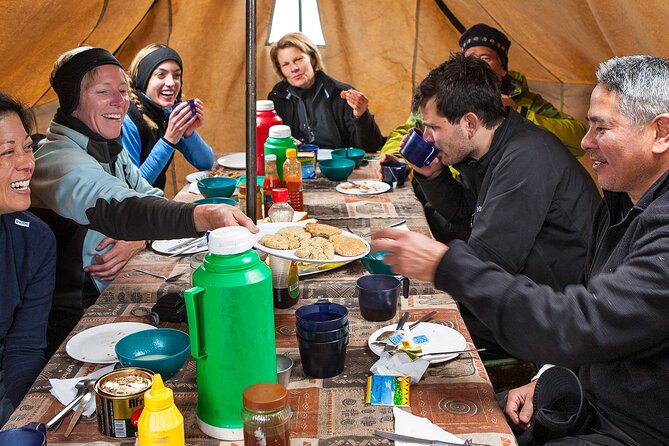
Kilimanjaro is a team sport. You see it in the way camps run, meals get handled, and the trail stays organized even when the mountain is harsh.
This trek has a stated ethical framework through membership with KPAP (Kili Porter Assistance Program), which is tied to the idea that porters are treated fairly and paid fairly. That is not a feel-good add-on. On Kilimanjaro, it can be the difference between tourism that costs people their bodies and tourism that protects the people who carry the heavy work.
From past feedback connected to African Polecat Safaris, certain names appear repeatedly in the guide role. John Danford is mentioned as a chief head guide, and other names like James (point of contact and operator support) and Chris show up as well. I cannot promise who you will get, but it is a good sign when consistent leadership names show up in people’s memories.
Bottom line: you are paying for more than a view. You are paying for the system that keeps you moving safely and fed, with the behind-the-scenes labor handled responsibly.
Price and value: what $2,840 covers, and what you still need to plan
At $2,840 per person for an 8-day Lemosho trek, the big value question is what you are buying besides the route itself.
Here is what is explicitly included:
- All fees and taxes
- Clean water
- Camping gear
- Sleeping bag
- Meals: 7 breakfasts, 7 lunches, and 7 dinners
- Admission tickets included as part of the trek pricing
What is not included:
- Tips
- Travel insurance
- Visas
- Flights
So the value is in the “loaded” nature of the price. Many cheaper-feeling options try to separate permits, meals, and gear, then surprise you later with add-ons. With this package, your budget is clearer. The tradeoff is that you still need to cover tips, and you should not show up without travel insurance and the right visa.
Also, this is described as a private tour/activity, meaning only your group participates. That kind of privacy often costs more, but it can be worth it if you want a calmer pace, better group coordination, and fewer logistical wrinkles.
How to prep so the summit day does not wreck you
This trek says you should have moderate physical fitness. That is fair, but it is also worth translating into reality.
Moderate fitness means you can do steady hiking for hours. It does not mean the summit day is easy. Day 7 includes an ascent starting around midnight, in cold and wind, with long hours in thin air.
To prep smart:
- Train for steep effort and long time on your feet. The climb is not technical, but it is relentless.
- Plan for cold layers and wind protection. The trek calls out extreme cold and wind at summit elevation.
- Expect darkness on summit night. You will be ascending for hours, so have proper headlight lighting and keep batteries protected from the cold.
- Keep your expectations realistic about pace. The itinerary includes acclimatization choices like higher time followed by drops, shorter recovery days, and an early dinner before midnight.
If you are the type of person who hates slow progress, you might struggle mentally. If you can stick to steady steps and short rests, you will be happier.
Who this Lemosho route suits best
This 8-day Lemosho trek fits best if you:
- Want a route with multiple ecological zones, not just one repetitive hike
- Appreciate acclimatization built into the schedule
- Prefer a private group experience
- Care about how porters are treated, and value ethical support through KPAP
It may not fit if you:
- Strongly dislike cold and darkness, since summit night is around midnight
- Want a guaranteed easy trek. Kilimanjaro includes a “work it” day on the calendar
- Are trying to keep costs ultra-low, because tips and travel basics like insurance and visas are not included
FAQ
Where does the trek start and where does it end?
You are picked up at your accommodation after breakfast and driven toward the Lemosho Gate area. The trek ends back at the meeting point, with a vehicle meeting you at Mweka Village to drive you back to your hotel in Moshi.
What time does the experience start?
The start time is listed as 8:00 am.
How long is the Kilimanjaro trek?
The duration is listed as 8 days, approximately.
What meals and gear are included?
The trek includes all meals for 7 days: 7 breakfasts, 7 lunches, and 7 dinners. It also includes clean water, camping gear, and a sleeping bag.
Are park fees and admission tickets included?
Yes. All fees and taxes are included, and admission tickets are listed as included as part of the trek.
What is not included in the price?
Tips, travel insurance, visas, and flights are not included.
What fitness level do I need?
The guidance is moderate physical fitness.
Is this tour private?
Yes, it is listed as private. Only your group will participate.
What is the refund window for cancellation?
You can cancel up to 24 hours in advance for a full refund. If you cancel less than 24 hours before the experience’s start time, the amount paid will not be refunded.
Should you book this 8-day Lemosho Kilimanjaro trek?
If you want a classic Kilimanjaro route that makes sense for acclimatization, this one is easy to recommend. The included package covers the heavy basics, from food and clean water to camping setup, which lowers your stress. Add in the stated KPAP porter ethics and the route’s mix of rainforest, Shira high country, Lava Tower, and Barranco Wall, and you get a trek that feels both scenic and well run.
Book it if you are ready for the summit night reality, and you can commit to pacing, cold-weather layers, and steady effort. If that sounds like your kind of challenge, the Lemosho route is a smart way to chase Uhuru Peak.
Lemosho, Compared
- 8-Day Small-group Lemosho Kilimanjaro Summit Trekking
★ 5.0 · 186 reviews - 7 Day Kilimanjaro Climb Lemosho Route & 2 Day Safari
★ 5.0 · 16 reviews - Kilimanjaro Climb- Lemosho Route
★ 5.0 · 9 reviews - Lemosho Route 7 Days Trekking at Mount Kilimanjaro
★ 5.0 · 7 reviews - Kilimanjaro-lemosho Route 8 Days Itinerary
★ 5.0 · 6 reviews
Kilimanjaro, Route by Route
- 8-Day Small-group Lemosho Kilimanjaro Summit Trekking
★ 5.0 · 186 reviews - 7-Day Machame Kilimanjaro Summit Tour from Arusha
★ 5.0 · 125 reviews - Mountain Kilimanjaro Day Hike
★ 5.0 · 102 reviews - 4 days Best experience Kilimanjaro Hike, Serengeti &Ngorongoro
★ 5.0 · 54 reviews - From Arusha/Moshi: Kilimanjaro Hike Marangu Route Day Trip
★ 4.5 · 54 reviews
Just added from around Arusha
Kilimanjaro Lemosho Route, compared.
 ★ 5.0Kilimanjaro climb by Lemosho Route (7-day)From $3,476651 reviews
 ★ 5.08-Day Small-group Lemosho Kilimanjaro Summit TrekkingFrom $2,895186 reviews
 ★ 5.0Kilimanjaro Climbing Lemosho Route 8 Days.From $2,300186 reviews
 ★ 5.0Kilimanjaro climb, Lemosho Route (8-day)From $3,975148 reviews
 ★ 5.0Kilimanjaro climb, Lemosho Route (6-day)From $3,034129 reviews
 ★ 5.0Kilimanjaro Lemosho RouteFrom $2,89071 reviews
 ★ 5.0Private Kilimanjaro Hike 7 Day Lemosho RouteFrom $2,45060 reviews
 ★ 5.0Climbing Kilimanjaro through 8 days Lemosho RouteFrom $2,76052 reviews
Browse the lists this tour appears in