
REVIEW · KILIMANJARO LEMOSHO ROUTE
8 Days Kilimanjaro Hike via Lemosho Route
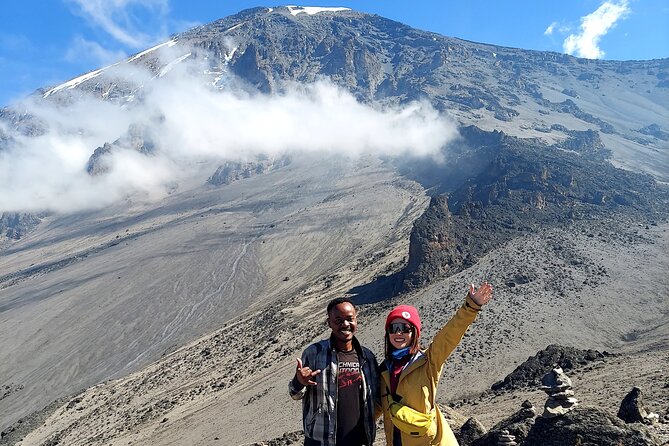
Eight days later, Kilimanjaro still feels huge. This 8-day Lemosho route starts on the west side and walks you through changing ecosystems, from rainforest tones to high, cold alpine zones, with big-window views the whole way.
I especially like the built-in approach to safety: guides perform regular health checks and are ready to detect and treat altitude sickness, with emergency oxygen on hand. I also love the practical support you get for camping and comfort, including Mountain Hardware tents plus treated water throughout the trek, so you can focus on hiking instead of logistics.
The one real consideration is the summit push. You’ll be up around midnight for a long, cold climb, aiming for Stella Point at sunrise and then Uhuru Peak soon after, so you need steady stamina and a calm pace.
In This Review
- Key things to know before you go
- Lemosho Route: the west-side start that changes the whole climb
- Safety and altitude support that feels more than paperwork
- Getting to the trail with pickup and Moshi lodging already handled
- Day 1 to Day 3: rainforest start, Shira Plateau views, and acclimatization that actually happens
- Day 1: Lemosho glades to Big Tree Camp
- Day 2: Shira 1 Camp and Kibo appearing in the clouds
- Day 3: Shira Plateau, ice fields views, and a short walk for better adaptation
- Day 4 to Day 5: Lava Tower lunch, Great Barranco Wall, and moving through glaciers
- Day 4: Upland desert and the lava ridge climb to Lava Tower
- Day 5: Great Barranco Wall, Heim and Kersten glaciers, then a critical rest window
- Day 6 to Day 7: Barafu to midnight summit, Stella Point sunrise, and Uhuru Peak
- Day 6: Barafu Camp and the “short day, big purpose” effect
- Day 7: Midnight start, Stella Point at sunrise, Uhuru Peak, then descent
- Day 8: the descent to Mweka Gate, certificates, and the feeling of air again
- Price and value: what $2,350 buys you here
- The vibe on the mountain: small groups, strong crew care, and real daily attention
- Who should book this 8-day Lemosho climb, and who should rethink it
- Should you book this one?
- FAQ
- How long is the Kilimanjaro hike on the Lemosho route?
- Where do you start and where do you finish?
- What camping gear is included?
- Is emergency oxygen included?
- How many meals are included and is water provided?
- What is summit day like in terms of timing?
- Do I need a visa for Tanzania, and is it included?
- What is the group size limit?
Key things to know before you go
- West-side Lemosho scenery with panoramic views and a quieter feel than some popular approaches
- Safety systems built for altitude, including regular health checks and emergency oxygen
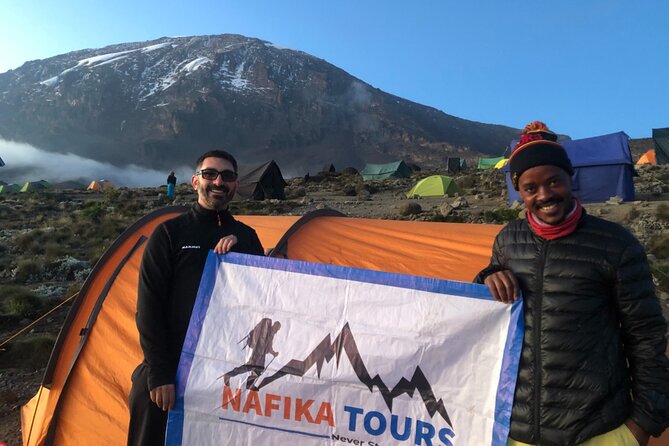
- Comfort support on the ground, with Mountain Hardware sleeping gear and treated water
- Smart acclimatization structure, including a short mid-day climb before the final summit phase
- Peak-day timing for sunrise, with Stella Point followed by Uhuru Peak and then a same-day descent
- A small group cap of 20, which helps the trek feel more manageable
Other ways up Kilimanjaro we reviewed
- Kilimanjaro Airport taxi to/from Moshi town/Arusha town★ 5.0 · 60 reviews
- 6 Days Climbing Mount Kilimanjaro Machame Route★ 5.0 · 40 reviews
- 8 Days Kilimanjaro Hike via Lemosho Route★ 5.0 · 39 reviews
- 7-Day Machame Route Kilimajaro★ 5.0 · 28 reviews
Lemosho Route: the west-side start that changes the whole climb
The Lemosho route is loved for one simple reason: it gives you dramatic views from multiple angles, not just at the end. Starting on the western side, you begin in lower, greener country and gradually work your way upward. That pace helps your body adapt while your eyes keep getting rewarded.
Another nice part is how the route tends to feel quieter. This isn’t a promise that you will have the mountain to yourself, but the overall goal of Lemosho is low crowding combined with strong summit odds. You also get a lot of variety in what you walk through, which keeps the days from feeling repetitive.
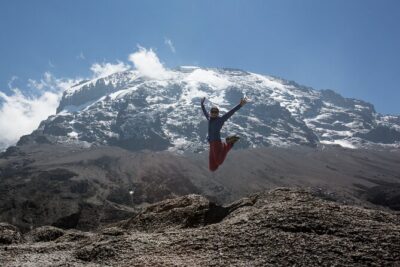
And yes, the scenery matters here. You’ll be moving through forest, moorland, upland desert, lava ridges, and alpine desert, with Kibo views at different points of the trek. Even if you’re not obsessed with photos, you’ll want your camera ready, because the views come fast and they keep changing.
Safety and altitude support that feels more than paperwork
Kilimanjaro is not a casual hike, and the operator’s stance here is clear: safety comes first. Your guides do regular health checks on climbers, and they’re trained to spot altitude sickness early. That means you’re not just guessing how you feel day to day, which is a big deal at altitude.
You also get emergency oxygen and a first aid kit included. Oxygen does not mean you will need it, but it means you’re not relying only on luck if something goes wrong.
One detail I like for peace of mind is how the trek builds in rest and pacing. There are short acclimatization walks and lighter-feeling days right before the summit phase. That helps you avoid the classic problem of going too hard too early, then paying for it later.
Getting to the trail with pickup and Moshi lodging already handled
This is the kind of trek where day one starts smoothly, not with a scramble. You get pickup offered and private transportation, and the trek begins after pre-hike formalities are handled for you at the gate area.
You’ll also have 2 night hotel in Moshi included, which matters more than it sounds. Landing and immediately starting a full mountain climb is tough. With a real base in Moshi, you can settle, eat normally, and start your first trekking day calmer.
You’ll start from the Londorossi Gate area at about 2,360 m, after transfer to the Lemosho gate on the west side. Then, at the end, you collect certificates at Mweka Gate and get driven back for a warm shower, which is exactly what your body will be thinking about.
Lemosho itineraries worth reading next
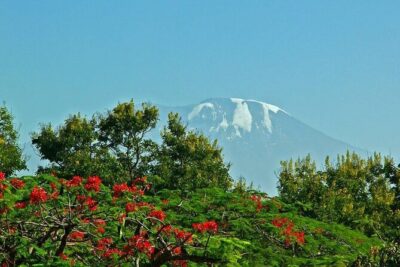
Day 1 to Day 3: rainforest start, Shira Plateau views, and acclimatization that actually happens
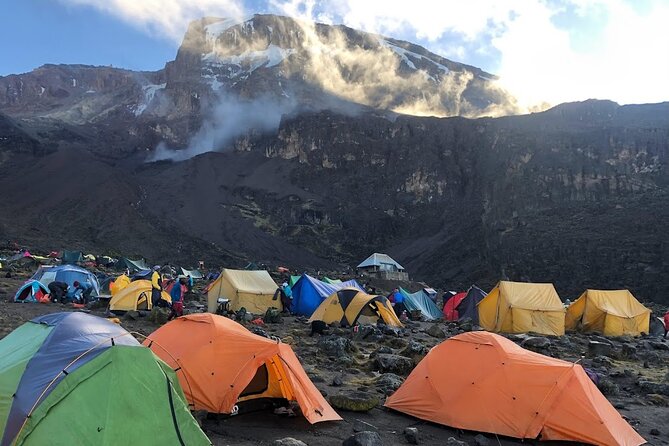
Day 1: Lemosho glades to Big Tree Camp
Your first trekking day walks you through the forests of the Lemosho glades, reaching Big Tree Camp for night one. This is where the mountain feels most alive. The air is cooler than the lowlands, but you’re still in a zone where your breathing feels more normal than later days.
Even if you’re eager to rush upward, day one is the day to find rhythm. It’s about setting a pace you can repeat for hours, not about conquering distance. Your first day hike is listed at around 4 hours, and you’ll sleep at camp with the trek’s full camping setup provided.
Day 2: Shira 1 Camp and Kibo appearing in the clouds
On day two you shift into grassy moorland and heather, with volcanic rock formations around you. Your goal is Shira 1 Camp, where the view story gets more dramatic, including Kibo Peak floating on clouds.
This day includes some steep sections, but it’s still framed as manageable for a range of fitness levels. Expect around 8.5 km and roughly 5 hours. The win here is altitude gain with enough structure that you can acclimate rather than brute force.
Day 3: Shira Plateau, ice fields views, and a short walk for better adaptation
Day three focuses on steady climbing across the Shira Plateau. You also get striking western-side views, including the Northern Ice fields and unusual Kibo angles.
After arriving at Shira 2 Camp, you’ll take a short acclimatization walk before returning to camp for dinner and sleep. That pattern is important. Small efforts at altitude can teach your body how to respond, and it often makes the next big day feel less like a shock.
Day 4 to Day 5: Lava Tower lunch, Great Barranco Wall, and moving through glaciers
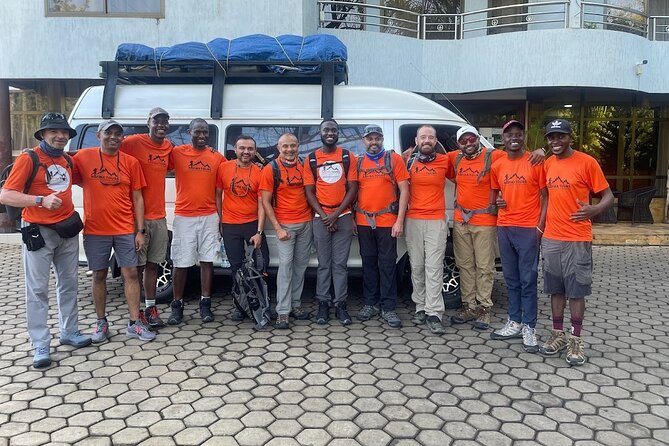
Day 4: Upland desert and the lava ridge climb to Lava Tower
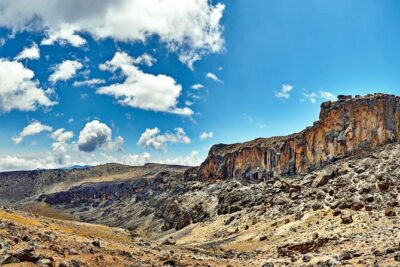
Day four ramps up. You start with an ascent that opens wide panoramic views, then enter the upland desert zone. The trail becomes more rugged, with lava ridges beneath the glaciers of the Western Breach.
Your highest point for the day is Lava Tower (4,640 m), where you stop for lunch. This is a great mental break, because it gives you a moment to enjoy height instead of racing through it. After lunch, you descend to a camp in the base area of the Great Barranco Valley at about 3,960 m.
This day runs longer, about 10 km and 7 hours. The trade-off is big views and a real sense of progress.
Day 5: Great Barranco Wall, Heim and Kersten glaciers, then a critical rest window
Day five includes the iconic Great Barranco Wall. You climb it as a steep obstacle that sounds intimidating, but is often described as easier than it looks when you go step by step. You’ll pass underneath the Heim and Kersten glaciers and head toward the Karanga Valley.
From the camp area you can look east and see Mawenzi’s jagged peaks, which makes the day feel like a “turning point” between earlier plateau hikes and the final push toward summit terrain.
This day includes a hot lunch and then a carefully planned afternoon. You’ll have time to rest, and it’s strongly recommended to take it. If you’re feeling strong, there’s a short mid-afternoon acclimatization walk up around 4,200 m before returning to camp. That timing is smart because summit day is coming, and your body needs sleep more than it needs extra bragging rights.
Day 6 to Day 7: Barafu to midnight summit, Stella Point sunrise, and Uhuru Peak
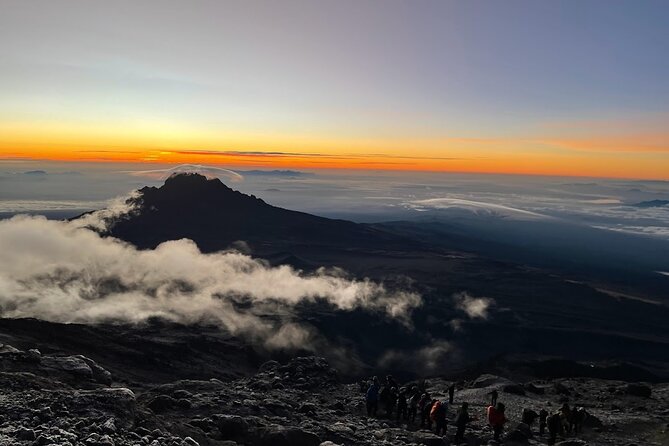
Day 6: Barafu Camp and the “short day, big purpose” effect
Day six is shorter on paper, but it matters a lot. After breakfast, you hike to Barafu Camp (4,640 m). You’ll pass through a more exposed, alpine feel where the air is thinner and the sky tends to look sharper.
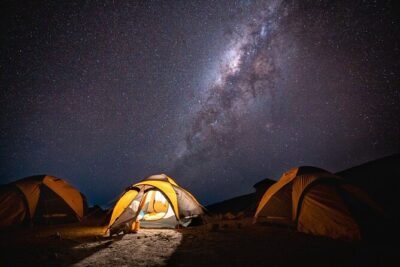
Once you arrive, lunch is provided, and the afternoon is about quiet rest. This is when you should take the trek seriously as a sleep and recovery game. Dinner is early, and you’re back in your tent because alarms go off around midnight.
This day is listed at about 4 km, but it’s an “energy management” day. Use it well and summit day feels more human.
Day 7: Midnight start, Stella Point at sunrise, Uhuru Peak, then descent
This is the signature day. You’re woken around midnight with light tea and breakfast, then start climbing at night. The ascent is about 4 to 5 hours, with a significant elevation gain over a shorter distance.
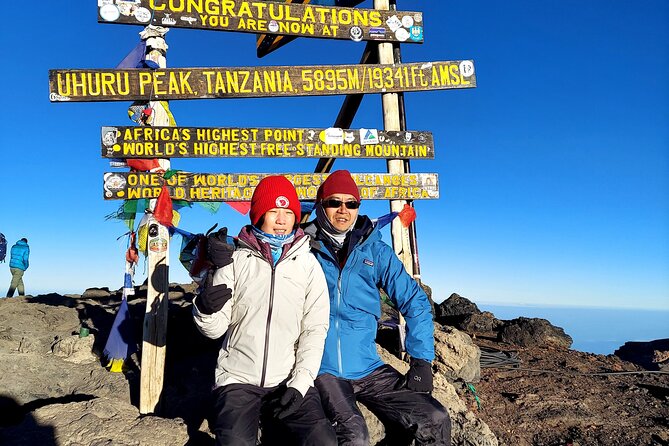
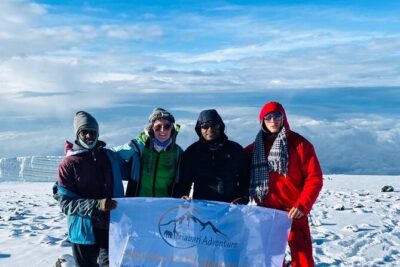
Then you reach the crater rim at Stella Point (5,756 m) as the sun begins to rise. After that, it’s about 1 hour more to Uhuru Peak (5,895 m).
Once you’re up, the plan includes celebrating and photos, then you start the descent back to Barafu Camp for lunch and rest. The day is long, listed around 13 hours, but it follows a clear rhythm: climb steadily, take in the sunrise moment, reach the top, then recover with the descent.
Dress matters a lot on summit night, even if the hike so far has felt manageable. Cold can sneak up fast once you’re above the cloud line and moving slower in thin air.
Day 8: the descent to Mweka Gate, certificates, and the feeling of air again
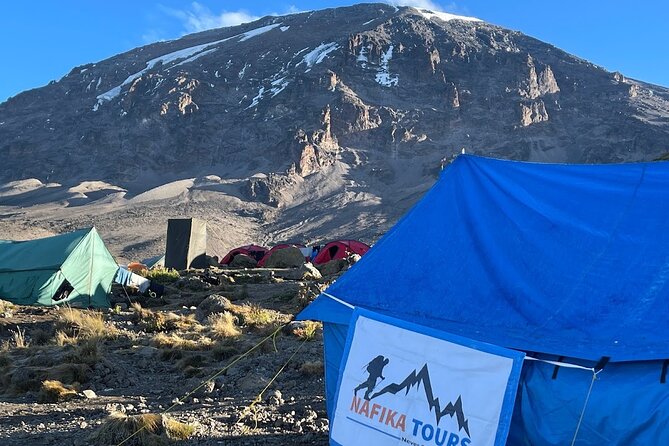
Day eight is when Kilimanjaro shifts from “survival mode” back to “moving for real.” After breakfast, you begin the final descent, described as a couple of hours walk from Millennium Campsite to Mweka Gate.
At the gate you collect your certificate, and you get that very deserved cold beverage. Then you say goodbye to your mountain guides and transfer by private car back to your hotel in Moshi for a warm shower.
You’ll finish in a different habitat zone, and that change is noticeable. The final leg through montane forest tends to feel warmer and more forgiving underfoot than the summit corridor.
Price and value: what $2,350 buys you here
At $2,350 per person, this trek is not a bargain, and it’s not meant to be. You’re paying for a multi-day mountain operation that includes staff, altitude planning, and full camping logistics. For many people, the biggest value is that you do not have to manage the messy parts yourself.
Here’s what’s included that you should actually think about:
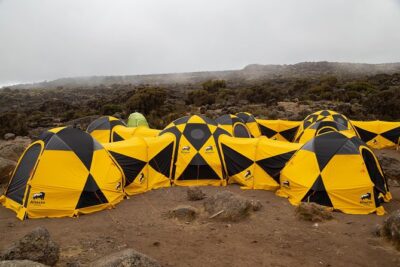
- Camping equipment and tents, including Mountain Hardware sleeping tents, sleep pads, and sleeping bags
- Meals (breakfast 8 times, lunch 8 times, dinner 7 times)
- Treated water through the trek
- Emergency oxygen and a first aid kit
- Professional guides plus a support network of porters and crews, with good salary support included
- 2 night hotel in Moshi
- Private transportation
Also important: admission ticket is included on the trek days listed, which removes another uncertainty.
What is not included is the visa (listed at $50). I’d plan that early, because it’s one of those details that can delay your peace of mind if you wait.
If you’re weighing this against other options, focus on what you personally would have to figure out yourself. When camping gear, water treatment, and emergency support are handled for you, your mental energy stays on the mountain.
The vibe on the mountain: small groups, strong crew care, and real daily attention
A maximum of 20 travelers means you’ll generally avoid the chaos of huge groups. The point is not to make it feel like a private expedition, but to keep day-to-day logistics workable.
In feedback for this operator, a recurring theme is staff attention. Guides do regular check-ins, and there’s an emphasis on safety, not just speed. There are also mentions of guides and teams being present and responsive in the moment, including help for people who feel uneasy on steeper or exposed sections.
There’s also a comfort angle that matters at altitude: tea breaks are set up with real table and sometimes chairs, not just a quick cup and go. And the chef support tends to get praise, with hot meals prepared along the route. At high elevation, food is fuel, and your mood depends on it.
If you’d like a more personal connection, ask who will be your team leader and who your lead guide is. In feedback, names like Alyce, Meshakii, Elias, Inocent, Musa, Eli, Diklan, and Abdala appear as people leading the experience. That helps you gauge the kind of leadership style you can expect.
Who should book this 8-day Lemosho climb, and who should rethink it
This climb fits you best if you want scenic variety, you understand altitude is part of the challenge, and you’re comfortable committing to a full schedule that includes a midnight summit start.
You should also be ready to walk, including steeper sections like the Great Barranco Wall and the longer day leading to and from Lava Tower. The trek is described as suitable for people with moderate physical fitness, but “moderate” still means you’ll feel it.
You might want to reconsider if you know you struggle with cold, long nights, or you can’t maintain a steady pace when you’re exhausted. Even with good guidance and safety systems, summit day is still summit day: cold air, thin oxygen, and hours of climbing.
Should you book this one?
I’d book this 8 Days Kilimanjaro Hike via Lemosho Route if you want the west-side experience and you like the idea of acclimatization that builds day by day. The safety setup, emergency oxygen, and regular health checks are exactly the kind of details that make a big difference at altitude.
It’s also a good match if you value comfort logistics, because camping gear, treated water, and meals are handled. Add in the chance to reach Stella Point for sunrise and then step onto Uhuru Peak, and this becomes more than a checklist hike.
If you’re unsure, ask yourself one question: can you commit to pacing, rest, and a summit-night start without rushing? If the answer is yes, this route is built to reward you.
FAQ
How long is the Kilimanjaro hike on the Lemosho route?
The trek runs 8 days approximately, starting on the west side and finishing with your descent through Mweka Gate.
Where do you start and where do you finish?
You start with pickup and transfer to the gate area on the west side, beginning at Londorossi Gate (about 2,360 m). You finish with descent to Mweka Gate, collect certificates, and then go back by private car.
What camping gear is included?
Nafika Tours provides all camping equipment, including Mountain Hardware sleeping tents, sleep pads, sleeping bags, and camp table and chairs.
Is emergency oxygen included?
Yes. Emergency oxygen is included, along with a first aid kit.
How many meals are included and is water provided?
The trek includes 8 breakfasts, 8 lunches, and 7 dinners. Treated water is provided through the trek.
What is summit day like in terms of timing?
You’re typically awoken around midnight with light tea and breakfast, then climb toward Stella Point (5,756 m) for sunrise and continue to Uhuru Peak (5,895 m) about an hour later.
Do I need a visa for Tanzania, and is it included?
A visa is not included. The price list shows $50 USD for the visa.
What is the group size limit?
The tour lists a maximum of 20 travelers.
Lemosho, Compared
- Lemosho Route
★ 5.0 · 21 reviews - Mountain Kilimanjaro Climbing 8 Days Lemosho Route
★ 5.0 · 10 reviews
Kilimanjaro, Route by Route
- 7 Days Kilimanjaro via Machame route affordable price
★ 5.0 · 110 reviews - Kilimanjaro Airport taxi to/from Moshi town/Arusha town
★ 5.0 · 60 reviews - 6 Days Climbing Mount Kilimanjaro Machame Route
★ 5.0 · 40 reviews - 7-Day Machame Route Kilimajaro
★ 5.0 · 28 reviews - Kilimanjaro Climbing 5 days Marangu route
★ 5.0 · 22 reviews
Just added from around Kilimanjaro
Kilimanjaro Lemosho Route, compared.
 ★ 5.0Kilimanjaro climb by Lemosho Route (7-day)From $3,476651 reviews
 ★ 5.08-Day Small-group Lemosho Kilimanjaro Summit TrekkingFrom $2,895186 reviews
 ★ 5.0Kilimanjaro Climbing Lemosho Route 8 Days.From $2,300186 reviews
 ★ 5.0Kilimanjaro climb, Lemosho Route (8-day)From $3,975148 reviews
 ★ 5.0Kilimanjaro climb, Lemosho Route (6-day)From $3,034129 reviews
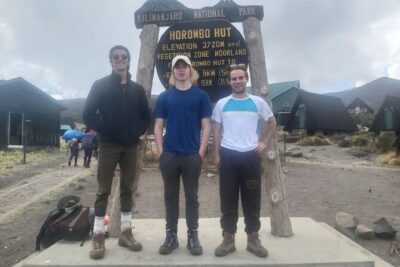 ★ 5.0Kilimanjaro Lemosho RouteFrom $2,89071 reviews
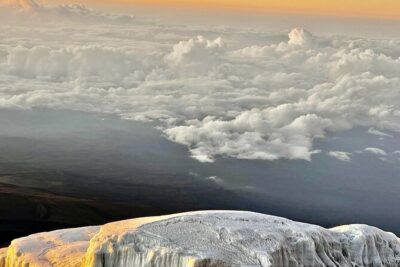 ★ 5.0Private Kilimanjaro Hike 7 Day Lemosho RouteFrom $2,45060 reviews
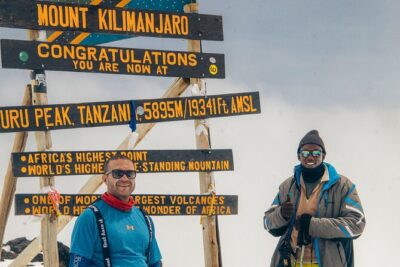 ★ 5.0Climbing Kilimanjaro through 8 days Lemosho RouteFrom $2,76052 reviews
Browse the lists this tour appears in