
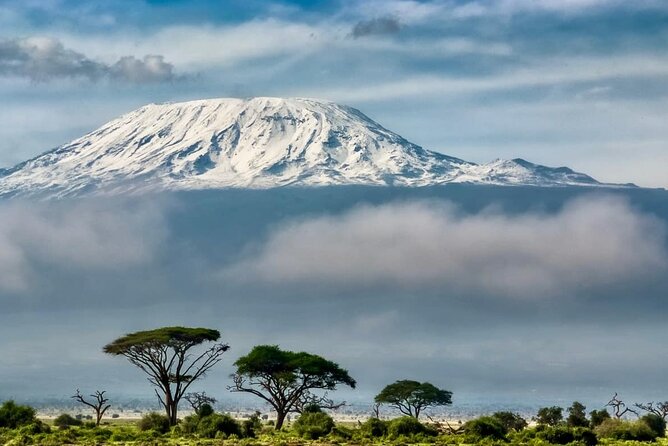
REVIEW · TANZANIA CAMPING AND BUDGET SAFARIS
7 Days Kilimanjaro via Machame route affordable price
If you want a famous summit with a slower pace, this route fits. The Machame Route is known for varied days, and this package aims to make it feel smooth with transfers, gear, and crew support. You also get the kind of summit day most people dream about: sunrise at Stella Point before you push higher.
I especially liked two things about this climb setup. First, the round-trip transfers from Moshi and park gate logistics mean you spend less time figuring things out and more time walking. Second, meals and camp support are handled for you, with lunch, breakfast, and dinner included, plus camping equipment and a professional guide.
The main drawback to plan for is the reality of altitude and effort, even on a “less difficult than you might think” route. You still gain a lot of height fast on day 1, and the summit night is mentally and physically demanding, so you need to pace yourself and be ready for early starts.
In This Review
- Key things to know before you go
- Machame Route on a budget, what makes it work
- Price and logistics, what $2,400 covers in real terms
- Your crew and guide support, why it matters on summit night
- Day 1: Moshi to Kilimanjaro National Park Gate, rainforest mud and permit time
- Day 2: Rainforest ridges to Shira camp, cooler air and rocky transitions
- Day 3: Shira Plateau acclimatization, Lava Tower and Arrow Glacier area
- Day 4: Barranco Wall and Karanga Valley, then Barafu Camp for summit night
- Day 5: Midnight to Stella Point sunrise, then a long descent
- Day 6: Summit certificates at Mweka Gate, wet trail, then Moshi again
- What makes this package feel “private,” not just pre-booked
- Gear and fitness, the stuff you should prepare before you pay
- Who this Machame 6-day climb suits best
- Should you book this Machame route for $2,400?
- FAQ
- What is the duration of this Kilimanjaro trek?
- Does the tour include pickup from Moshi?
- Are meals included?
- Is a guide included?
- What is not included in the price?
- What is the cancellation policy?
Key things to know before you go
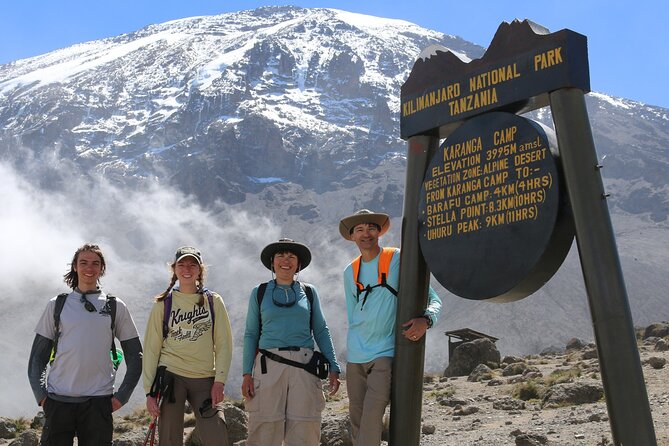
- Private group experience so your pace stays controlled, not rushed.
- Hotel to trailhead transfers remove a big hassle in Moshi.
- Meals plus camping support so you can focus on walking, not logistics.
- Acclimatization built into the days with Shira Plateau and Lava Tower timing.
- Stella Point sunrise potential after an early midnight to 2 a.m. start.
- Complimentary oxygen cylinder included for extra safety comfort at altitude.
Other ways up Kilimanjaro we reviewed
- Kilimanjaro Airport taxi to/from Moshi town/Arusha town★ 5.0 · 60 reviews
- 6 Days Climbing Mount Kilimanjaro Machame Route★ 5.0 · 40 reviews
- 8 Days Kilimanjaro Hike via Lemosho Route★ 5.0 · 39 reviews
- 7-Day Machame Route Kilimajaro★ 5.0 · 28 reviews
Machame Route on a budget, what makes it work
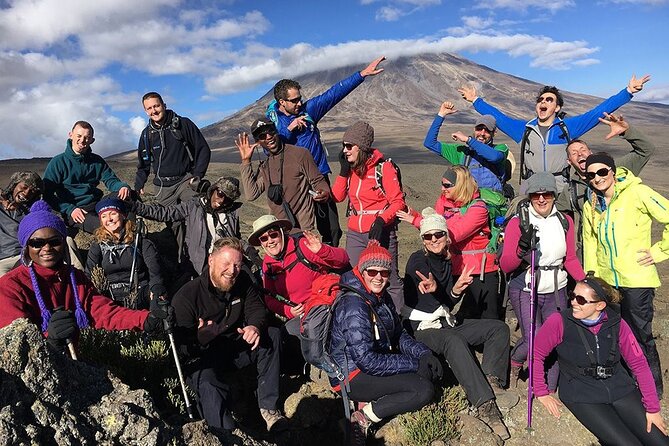
Kilimanjaro climbs get sold as one big grind, but Machame is the route that often feels most “managed” because it mixes forests, ridges, and alpine terrain over several days. The idea here is simple: you take time, the crew keeps the rhythm steady, and you build up gradually before the summit push.
What you’re really buying is a structured plan that tries to reduce the common mistakes. The itinerary includes acclimatization moments like spending time around the Shira Plateau and heading toward features like the Lava Tower and the Arrow Glacier area before you drop down to Barranco Camp. That matters because pacing is half the battle on Kili.
Also, this trek is built around the summit payoff. You’re targeting 19,341 feet and sunrise, with a rest stop at Stella Point on the crater rim. Even if you’ve seen sunrise on documentaries, being there in cold wind and thin air feels completely different.
Price and logistics, what $2,400 covers in real terms
At $2,400 per person, this is not the cheapest Kilimanjaro option around, but it is also not inflated into “luxury only” pricing. The value comes from the package being more than just a guide and a route.
Here’s where you get leverage for your money:
- Private transportation and airport transfers help from day one.
- All fees and taxes are included, so you’re not surprised by line-item costs at the gate.
- All accommodations plus meals are covered across the trek days, including six lunches, five breakfasts, and six dinners.
- Kilimanjaro camping equipment is included, which can save you from renting tents and core gear if you do not travel packed.
- Gate transfers are included, including the vehicle portion after the descent.
- Complimentary oxygen cylinder is included for additional comfort.
The one area to watch is that tips for guide and crew are not included. Also visa fees, international travel insurance, and renting climbing gears are not included. If you already own boots, a warm jacket, and a headlamp, your out-of-pocket gear costs may be low. If not, plan a budget for renting essentials.
One more practical point: this trek is often booked about 17 days in advance on average. That does not mean it sells out instantly, but it does mean you should not wait until the last minute.
Your crew and guide support, why it matters on summit night
On Kilimanjaro, the guide is not just a person holding a map. A good guide keeps you moving at the pace that protects your altitude and helps your team work as a unit. The feedback you get through this provider’s reputation tends to focus on exactly that kind of follow-through.
In the reviews tied to this company, the owner is mentioned as Adidas, and guides named include Washington and Nicholas. That lines up with what you should expect from a serious operation: consistent communication, and a crew that is ready to manage gear checks, meals, and timing without panic.
You’ll also feel the benefit of crew support in the day-to-day rhythm. The plan includes meals handled by the crew, and you also get camping equipment through the package. That’s a big deal because on Kili your energy is limited. You do not want to spend your mental bandwidth on “Where is dinner?” or “Who has the stove?” when you’re trying to focus on breathing.
One more subtle benefit from the package design: it’s limited to just your group. That makes it easier to keep pacing consistent, which is useful if you are coming in with a slightly slower rhythm or you want time to regroup after tougher sections.
More Machame departures, compared
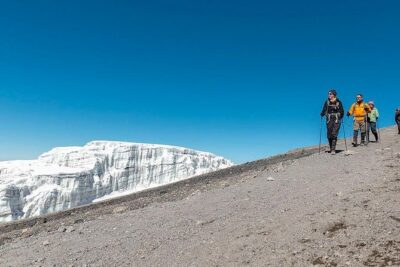
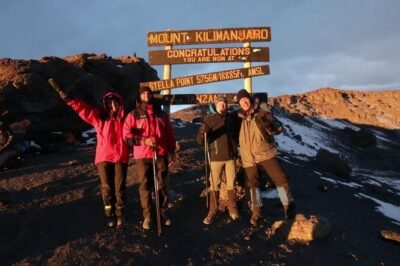
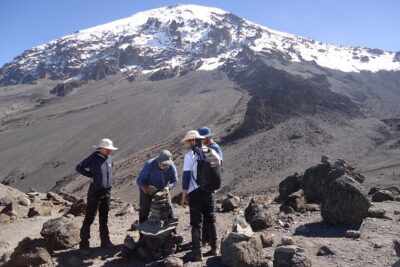
Day 1: Moshi to Kilimanjaro National Park Gate, rainforest mud and permit time
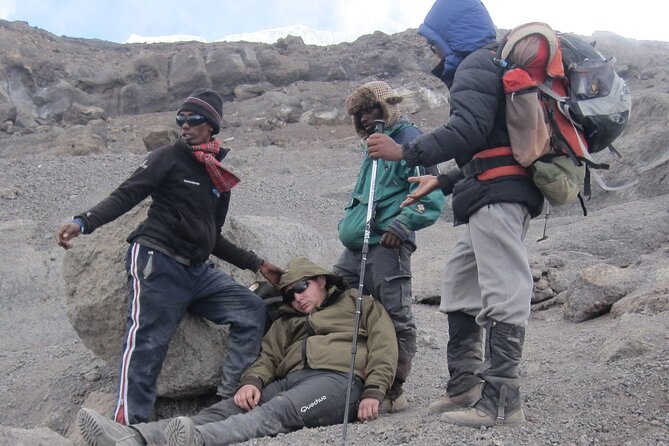
Day 1 starts with a 45-minute drive from Moshi, passing through the village of Machame to the park gate. You’re not sprinting here. You will wait for permits to be issued, and during that pause you get your first real feel for the mountain logistics: teams getting ready, guides checking details, and the start of the climb becoming real.
You then hike from about 1,811 m (5,942 ft) up to 3,021 m (9,911 ft). That’s a gain of roughly 1,210 m in one day, so even though the pace should be controlled, you still need to take it seriously. Rainforest conditions can be wet, muddy, and slippery, especially on early sections.
Practical tip for this day: bring gaiters and trekking poles if you have them. The goal is simple, save your footing and reduce strain on your knees and ankles while the trail is slick.
Day 2: Rainforest ridges to Shira camp, cooler air and rocky transitions
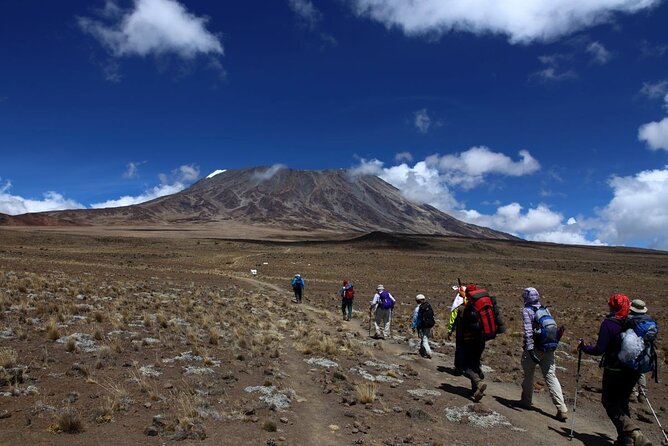
On day 2 you climb from 3,021 m (9,911 ft) to around 3,839 m (12,595 ft), gaining about 818 m. The route shifts as you leave deeper rainforest character behind and start moving through ascending terrain with more exposure to wind and temperature changes.
You’ll cross a valley along a steep rocky ridge, then angle into a river gorge route before reaching Shira campsite. This day often feels like a transition day, where the effort becomes more about steady breathing than scrambling or dramatic climbs.
What I like about this structure for you is that it sets up the next phase. You don’t “jump” to summit terrain immediately. You’re still building stamina while your body adapts to thinner air and cooler temperatures.
Day 3: Shira Plateau acclimatization, Lava Tower and Arrow Glacier area
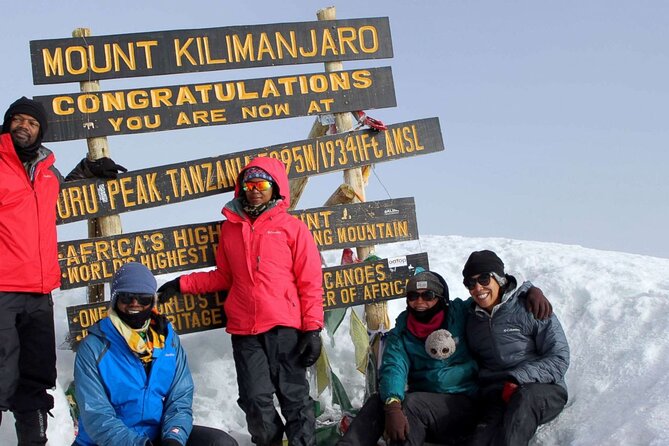
Day 3 is where acclimatization starts to feel intentional rather than accidental. The numbers look light on paper, but the goal is the timing.
You end the day around the same elevation you started, moving from about 3,839 m (12,595 ft) to 3,986 m (13,077 ft), for an altitude gain of roughly 147 m. Yet you also climb higher during the day as you head east from Shira Plateau and pass key junctions near Kibo peak before pushing toward the Lava Tower.
The Lava Tower area sits around 4,650 m (15,250 ft), and from there the route connects toward the Arrow Glacier section. Then you descend to Barranco Camp for the overnight.
This is a day I’d call “useful suffering.” You’re working, but in a way that helps your body prepare for later. If you want to improve your odds on summit day, days like this are the ones where you should resist the temptation to race. Let your guide manage pace and let your body do what it needs.
Day 4: Barranco Wall and Karanga Valley, then Barafu Camp for summit night
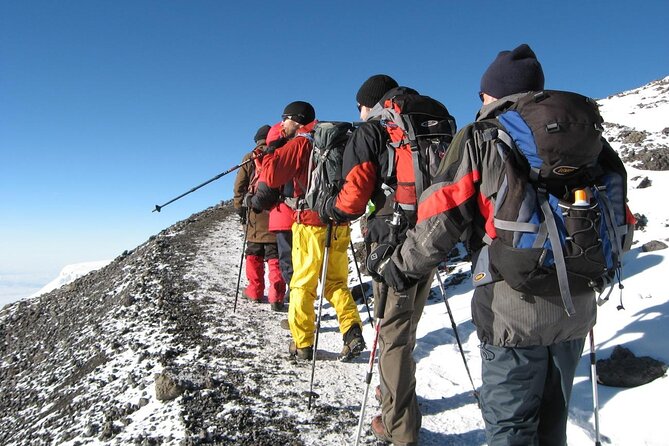
Day 4 has a classic Kilimanjaro feature: the Barranco Wall. You climb from roughly 3,986 m (13,077 ft) toward 4,034 m (13,235 ft) and up to 4,662 m (15,295 ft), with altitude gain around 676 m.
After breakfast you head for the steep ridge to Barranco Wall, then continue through the Karanga Valley and reach a junction connecting with the Mweka Trail. This part is known for requiring real technique and patience, not speed. In the crew feedback tied to this provider, people often highlight how smoothly the team handles these tougher sections, which matters because a good crew can keep you steady when the trail feels steep.
From there you continue up to Barafu Camp. The important transition is what comes next: an early dinner and rest so you can prepare for summit night.
If you’re wondering how to handle day 4 mentally, treat it like prep. Don’t try to “win” the mountain on this day. Save the energy. The summit night is the main event.
Day 5: Midnight to Stella Point sunrise, then a long descent
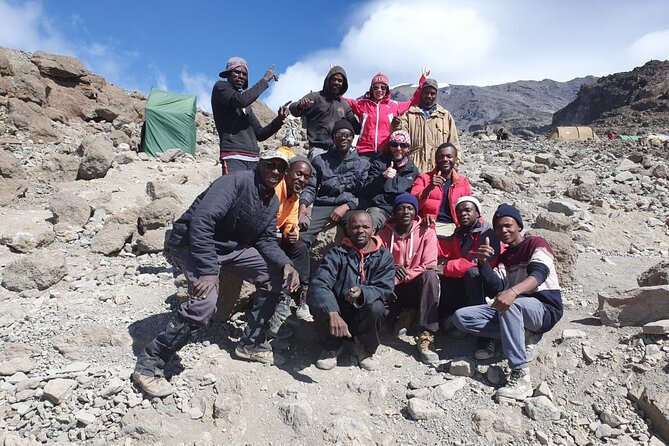
This is the day you’ve been waiting for. Your early start happens between midnight and 2 a.m. That timing is brutal in the “body clock” sense, even before you consider altitude and cold.
You’ll move toward the summit between the Rebmann and Ratzel glaciers, staying warm and focused as you climb through heavy scree and switchbacks toward Stella Point on the crater rim. The reward described in the trek rhythm is a magnificent sunrise during your short rest at Stella Point.
Once you’ve handled the summit section and the return, you descend all the way down to about 3,106 m (10,190 ft). That’s an altitude loss around 2,789 m for the day. It sounds like “easy because you’re going down,” but descending at altitude can still feel rough. Your legs do a lot of work and your body remains cold.
The best mindset for day 5 is calm urgency. You move forward, you follow your guide’s pacing, and you don’t burn energy chasing views. Sunrise is there, but your job is to get there safely.
Day 6: Summit certificates at Mweka Gate, wet trail, then Moshi again
Day 6 starts with a recovery vibe, but you still have work to do. After breakfast you have a heartfelt ceremony for team appreciation and bonding with your crew. That moment is more meaningful than it sounds, because the relationship between you and the crew is built during days of shared pace and shared discomfort.
Then you continue the descent to the Mweka Park Gate to receive your summit certificates. After that, a vehicle meets you at Mweka village and drives you back to your Moshi hotel in about 30 minutes.
You should expect a temperature shift. The terrain down low is described as wet, muddy, and steep, so the same practical advice applies, gaiters and trekking poles are still a good idea for the final miles.
Finally, this package includes an overnight at Kilele lodge B&B, plus time for an overdue hot shower, dinner, and celebrations. This is one of those “you will appreciate it more than you expect” parts of the trek.
What makes this package feel “private,” not just pre-booked
A lot of tours say private. On Kili, private means more than just room assignment. It means the day-to-day pace can match your group. You’re not squeezed into someone else’s schedule, and it’s easier for your guide to monitor how you’re coping.
I also like that the plan includes complimentary oxygen cylinder. You should not treat oxygen as a guarantee, and nothing replaces good acclimatization and pacing. But it does provide an extra layer of comfort and preparedness.
Another value piece is the crew wage approach. The inclusions specify fair and sustainable crew wages, which matters in Tanzania because the human side of mountain work is real. If your crew is treated well, you often see the difference in how they manage your experience.
Gear and fitness, the stuff you should prepare before you pay
The tour notes that you should have moderate physical fitness. That’s not a promise of ease. It’s a reality check. Machame gives you a strong plan, but you’re still hiking in altitude, cold, and rough footing.
Because the package includes “Kilimanjaro equipments for camping,” you do not need to bring your own tents and camp systems. But the tour also says renting climbing gears is not included. That means if you do not have key items like warm layers, boots, and a headlamp, you may need to rent them locally.
The itinerary already hints at the most common comfort issues:
- Day 1 can be muddy and slippery, so foot protection and traction are key.
- Day 6 can be wet, muddy, and steep, so poles and gaiters help your legs survive.
If you’re a solo climber, the reviews also point to this being workable for budget-focused travelers, as long as you’re comfortable with the reality that you are paying for support and logistics rather than hotel luxury at altitude.
Who this Machame 6-day climb suits best
This is a strong fit if you want:
- A classic Kili route known for variety and strong summit payoff.
- A plan that includes full meals, camping equipment, and guided logistics.
- A private group setup so you can pace without feeling crowded.
- An experience that still feels structured, not chaotic.
It’s also a good option if you’re in Moshi and want the mountain experience to feel organized from the first drive to the final return. The included airport transfers, park access handling, and gate timing mean you can arrive, get briefed, and move.
If you hate early mornings, understand that day 5 starts between midnight and 2 a.m. That’s not optional. You are choosing Kili, so you’re choosing the cold wake-up routine too.
Should you book this Machame route for $2,400?
Book this if you want the most practical blend of support and affordability: transfers from Moshi, full meals, camping equipment, park fees handled, and a crew that has a track record of doing the work smoothly. For many people, those inclusions are what turn Kilimanjaro from a stressful project into a guided hike with a clear plan.
I’d think twice if you already know you will need lots of personal gear rentals, because the package does not include climbing gear rental. Also, if you are worried about early summit night timing, be honest with yourself. The sunrise at Stella Point is amazing, but only if you can handle the midnight to 2 a.m. start and keep your pace under control.
If your goal is a well-run Machame climb with a genuine summit moment, this is the kind of setup that makes the hardest parts feel more manageable.
FAQ
What is the duration of this Kilimanjaro trek?
The trek is listed as 6 days (approx.).
Does the tour include pickup from Moshi?
Yes. It includes pickup offered and hassle-free round-trip transfers from your Moshi hotel.
Are meals included?
Yes. Lunch is included for 6 days, breakfast for 5 days, and dinner for 6 days.
Is a guide included?
Yes. A professional and knowledgeable guide is included, along with all required Kilimanjaro equipment for camping.
What is not included in the price?
Not included items are personal expenses, tips for the guide and crew, visa fees, international travel insurance, and renting climbing gears.
What is the cancellation policy?
Free cancellation is available up to 24 hours in advance for a full refund. If you cancel less than 24 hours before the start time, the amount paid is not refunded.
More Under Canvas
- The World’s Best 1 Day Tarangire Budget Group Safari From Arusha
★ 5.0 · 3 reviews
More Machame Departures
- 6 Days Climbing Mount Kilimanjaro Machame Route
★ 5.0 · 40 reviews - 7-Day Machame Route Kilimajaro
★ 5.0 · 28 reviews - 6 Days Machame Route Kilimanjaro Trekking
★ 5.0 · 13 reviews - Mount Kilimanjaro 7 Days – Machame Route
★ 5.0 · 5 reviews - Mount Kilimanjaro 6 days – Machame route
★ 4.0 · 5 reviews
Kilimanjaro, Route by Route
- Kilimanjaro Airport taxi to/from Moshi town/Arusha town
★ 5.0 · 60 reviews - 6 Days Climbing Mount Kilimanjaro Machame Route
★ 5.0 · 40 reviews - 8 Days Kilimanjaro Hike via Lemosho Route
★ 5.0 · 39 reviews - 7-Day Machame Route Kilimajaro
★ 5.0 · 28 reviews - Kilimanjaro Climbing 5 days Marangu route
★ 5.0 · 22 reviews
Just added from around Kilimanjaro
Tanzania Camping and Budget Safaris, compared.
 ★ 5.04 Days Group Camping SafariFrom $9001,101 reviews
 ★ 5.05 Days Group Camping SafariFrom $1,100730 reviews
 ★ 5.03 Days Serengeti & Ngorongoro Group Camping SafariFrom $815574 reviews
 ★ 5.05 Days Camping Tarangire, Serengeti & Ngorongoro crater & Visiting MaasaiFrom $1,254229 reviews
 ★ 5.05 Days Budget Private Safari, TanzaniaFrom $0191 reviews
 ★ 5.06 Days Private Budget SafariFrom $2,300163 reviews
 ★ 5.02 Days Tarangire and Ngorongoro Group Camping SafariFrom $550146 reviews
 ★ 5.06 Days Tanzania Budget Camping SafariFrom $1,600145 reviews
Browse the lists this tour appears in