
REVIEW · KILIMANJARO MACHAME ROUTE
7 Day Tour Machame Route
Seven days, one serious mountain. The 7-Day Machame Route is a classic Kilimanjaro plan that mixes slow acclimatization with big ecosystem changes, from forest paths up toward the high alpine zone.
I like how it stays practical and structured, so you get real altitude support along the way, especially with stops like Lava Tower and the Barranco section. I also really value the human side of the trip, with an English-speaking guide team (including Emanuele and Joseph) plus porters and cooks who run food and camp life in a way people remember.
The main drawback to plan for is effort: the summit push starts early and Day 6 is long and tough, around 18 km total with a steep climb before your descent. If you are not used to sustained uphill days, you will feel it.
In This Review
- Key highlights on the Machame Route (7 days)
- Machame Route 7-day trek, what you are really buying
- Price and what makes it feel fair at $2,205
- Getting to the trail and first-day flow (Kilimanjaro Airport, 7:30 am)
- Your team on the mountain: Emanuele, Joseph, porters, and camp food
- Day 1: Machame Gate to Machame Camp (rainforest start at about 3,000 m)
- Day 2: Shira Camp moorland shift (about 5 km to ~3,800 m)
- Day 3: Lava Tower altitude work, then down to Barranco Camp (~10 km)
- Day 4: Barranco Wall challenge to Karanga Camp (~6 km)
- Day 5: Barafu Camp, last stop before summit attempt (~4 km to ~4,600 m)
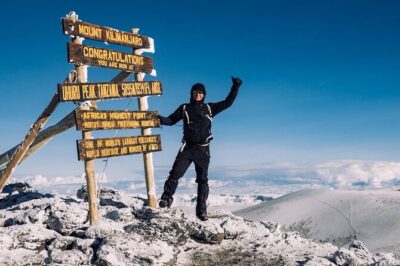
- Day 6: Uhuru Peak at dawn, then a tough descent to Mweka Camp (~18 km)
- Day 7: Mweka Gate descent and summit certificates
- What makes this itinerary work (and where it can feel hard)
- Training, gear, and altitude safety, the practical checklist
- Who this trek suits best
- Should you book the 7-day Machame Route with Spirit of Kilimanjaro?
- FAQ
- What is the meeting point and start time for this trek?
- How long is the Machame Route tour?
- What is included in the price?
- What is not included?
- Is oxygen provided during the climb?
- How large is the group, and can you cancel for a full refund?
Key highlights on the Machame Route (7 days)
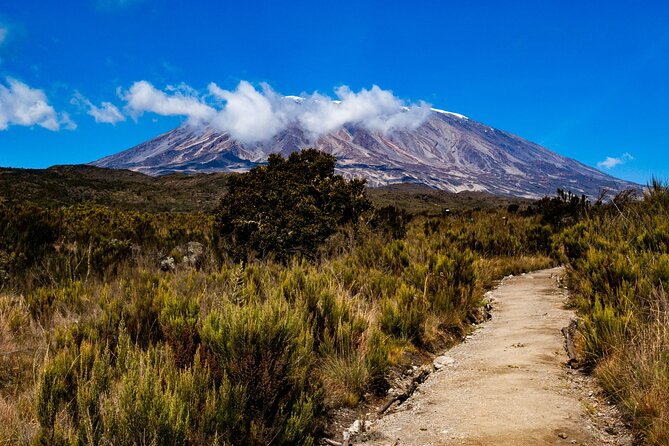
- Day 3 includes Lava Tower for higher-altitude acclimatization before dropping back down
- Barranco Wall on Day 4 gives you that memorable, steep Kilimanjaro challenge
- Early summit attempt on Day 6 targets Uhuru Peak with a long descent to Mweka
- Full board meals and drinking water included from day to day, not just snacks
- Complimentary oxygen cylinder is part of the package for added reassurance
- Group size max 30 helps keep the trek feeling organized and not chaotic
More Machame departures, compared
- 7 Days Kilimanjaro via Machame route affordable price★ 5.0 · 110 reviews
- 6 Days Climbing Mount Kilimanjaro Machame Route★ 5.0 · 40 reviews
- 7-Day Machame Route Kilimajaro★ 5.0 · 28 reviews
- 6 Days Machame Route Kilimanjaro Trekking★ 5.0 · 13 reviews
Machame Route 7-day trek, what you are really buying
The Machame Route is popular for a reason: it has variety. You start in rainforest, then you move into moorland, and later the air gets thinner and the terrain gets rougher as you head for the summit zone. That mix matters, because Kilimanjaro is not only about reaching Uhuru Peak, it is also about managing your body while the environment changes fast.
This trek is set up around acclimatization and pacing. You climb, you go higher, then you spend time at altitudes that help you adjust before pushing again. That design is one of the best parts of the Machame plan, especially if you want a route that feels challenging but still thoughtful.
And there is a second thing you are buying that is easy to overlook: logistics handled for you. You get accommodations, meals, guides, park access (fees and taxes), and a crew that keeps things running. That means you can focus on walking, resting, and eating, instead of solving camp-life problems with cold hands and limited time.
Price and what makes it feel fair at $2,205
At $2,205 per person for about 7 days, this is not a budget outing. But the price is not only for a “walk with a guide.” It includes all fees and taxes, accommodations, full board meals across 7 days, drinking water, a professional English-speaking guide, and a complimentary oxygen cylinder.
So the value calculation looks like this:
- If you priced out park fees, guide services, camp support, and a full meal plan, the total usually grows fast.
- This option also includes fair and sustainable crew wages, which affects how seriously the company runs the mountain team side of things.
- The package is clear on what is included versus not included, like tips and towels.
What it does not include is also important. You are responsible for tips and towels, and that can change your true cost. Still, if you want a guided, supported summit trek with meals and core safety add-ons, the total feels more “complete” than many cheaper options.
Getting to the trail and first-day flow (Kilimanjaro Airport, 7:30 am)
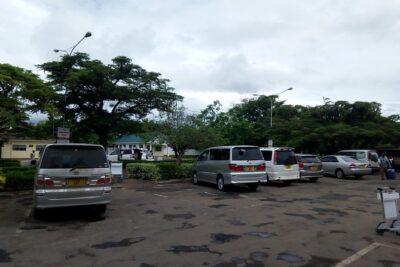
Your start is set for 7:30 am at Kilimanjaro Airport, and the end brings you back to the same meeting point. This matters because trekking schedules in Kilimanjaro are tight. You do not want “somewhere near the airport” confusion on day one.
Also, pickup is offered and you get a mobile ticket, which usually means fewer pieces of paper to manage once you arrive. The trip also caps at 30 travelers, which helps keep the team coordination smoother, especially in the early days when everyone is still finding their rhythm.
If you are flying in, plan for the fact you likely need to be ready early. Mountains do not care about jet lag, and a delayed start means you just lose precious time on the route.
Your team on the mountain: Emanuele, Joseph, porters, and camp food
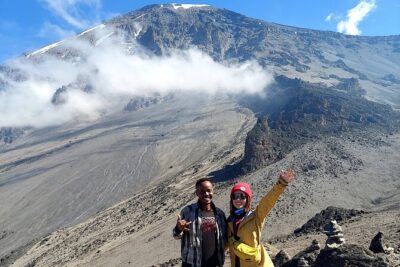
The biggest praise in this kind of trek usually comes down to the team. Here, the guidance and camp support are clearly part of the experience, with English-speaking guides named in feedback: Emanuele and Joseph.
What you should care about is how that support shows up in real life:
- A good guide helps you keep a steady pace, handle small route decisions, and focus on acclimatization rather than ego.
- The porters and cook team shape your day more than you might think, because camp setup and meals affect your energy for the next climb.
- In feedback, the food is described as very high quality, even compared to a 5-star style meal. That is not a guarantee for every day, but it tells you what kind of standard the company aims for.
You are also told crew wages are fair and sustainable, which is a big deal in mountain tourism. When a company invests in its team, you often see fewer problems and more consistent service.
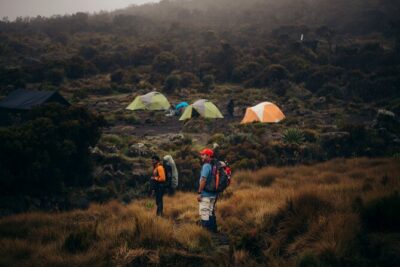
Day 1: Machame Gate to Machame Camp (rainforest start at about 3,000 m)
Day 1 begins at Machame Gate, where you handle registration and meet your guides and porters. Then you walk through rainforest, about 11 km, with the trail rising gradually to Machame Camp around 3,000 m.
Why Day 1 matters: it sets your breathing and your routine. In the rainforest, the air can feel warmer and wetter, and your body works harder even at “lower” altitude. A gradual climb helps you avoid starting too fast.
Practical note: you will cover only about half the typical daily effort of the harder summit days. That is intentional. You are building momentum, not winning a race.
At the end, you sleep at camp altitude and get your first real chunk of rest for acclimatization.
Day 2: Shira Camp moorland shift (about 5 km to ~3,800 m)
After breakfast, Day 2 moves you out of the rainforest and into moorland. The trek distance is shorter, about 5 km, ending at Shira Camp around 3,800 m.
This is a smart day because it gives you a clean transition in scenery. You will notice the air feels different, and your pace will likely slow a bit. The shorter distance helps, because your goal here is altitude adjustment, not maximum mileage.
If you tend to push when you feel good, this is the day to rein it in. Moorland and higher camps punish overconfidence fast.
Day 3: Lava Tower altitude work, then down to Barranco Camp (~10 km)
Day 3 is where the Machame Route starts feeling more serious in terms of altitude. You go up toward Lava Tower at about 4,600 m, then you continue to Barranco Camp around 3,960 m. Total distance is about 10 km.
This is a classic acclimatization pattern: you climb high, then you end the day lower. That helps your body learn what thin air feels like without forcing you to sleep at the highest point you reach that day.
Expect Day 3 to be mentally demanding even if the distance is manageable. The higher you go, the more you notice every movement. Slow steps win here.
Day 4: Barranco Wall challenge to Karanga Camp (~6 km)
Day 4 includes the famous Barranco Wall climb, followed by a trek to Karanga Camp around 4,035 m. You cover about 6 km.
This is the day for balance, steady footwork, and calm breathing. A wall like this tests more than stamina. If you get tense in your upper body, your breathing usually gets worse too. Keep shoulders relaxed and take it step by step.
The payoff is that you build confidence. If you get through Barranco Wall, the mountain stops feeling like an unknown threat and starts feeling like a route with steps you can handle.
Day 5: Barafu Camp, last stop before summit attempt (~4 km to ~4,600 m)
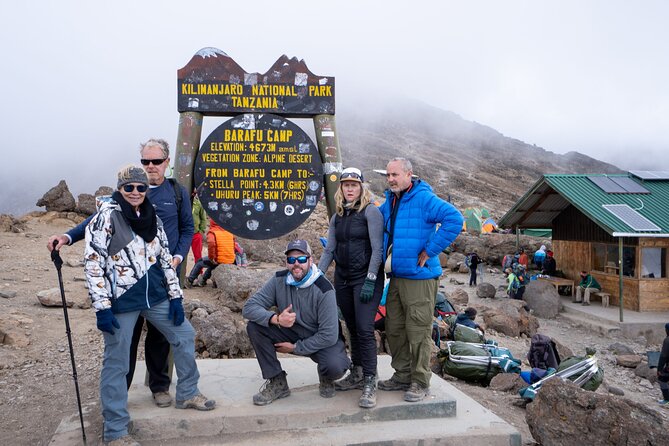
Day 5 is shorter, about 4 km, to Barafu Camp around 4,600 m. This camp is your last major stop before the summit attempt.
The shorter distance can fool you. This is not a rest day. You are already living at altitude, and you will likely need to conserve energy for the hours to come.
In practical terms, you want to:
- eat what is offered, even if your appetite is small
- keep warm at camp, because nights at altitude can be cold
- follow guide instructions closely, especially if you are asked to pace or rest in specific ways
Barafu Camp is where “summit day planning” happens, not just walking.
Day 6: Uhuru Peak at dawn, then a tough descent to Mweka Camp (~18 km)
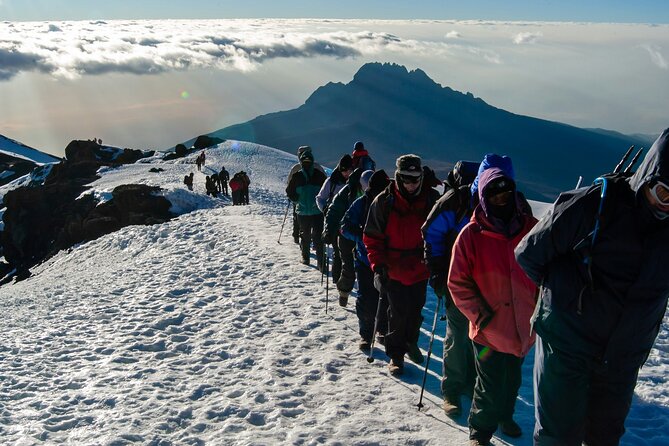
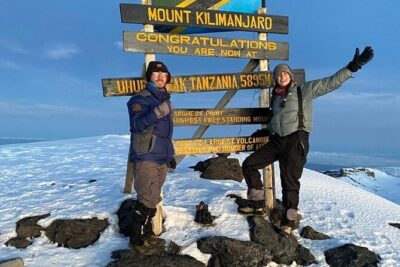
This is the pinnacle day. You start very early, before dawn, aiming for Uhuru Peak, then you descend to Mweka Camp around 3,100 m. Total distance is about 18 km, and the day is described as long and challenging.
Early summit is common for a reason: conditions in the high summit zone change quickly as the day warms up. Starting early also helps you keep the route manageable.
What you should be ready for:
- The climb to the peak is steep and demanding.
- Even after you reach Uhuru Peak, your work is not done. The descent is long, and your legs may feel heavy.
- Getting through the descent is how you protect tomorrow’s mood. By the time you reach Mweka Camp, you want your body to feel like it can recover.
The good news is that your camp sits much lower than the summit zone, around 3,100 m, which helps you settle after the peak.
Day 7: Mweka Gate descent and summit certificates
On the final day, you trek from Mweka Camp to Mweka Gate, about 10 km, descending through the rainforest zone. When you reach the gate, you receive your summit certificates, then your tour wraps back at the meeting point.
This is a satisfying close because it feels like the mountain hands you back to the earth. Rainforest air and greenery can feel like relief after the high, exposed zones.
Day 7 is also where you remember the whole climb as a single story. The ecosystems you saw across the days become one continuous journey ending at the gate.
What makes this itinerary work (and where it can feel hard)
The Machame Route succeeds because it layers altitude challenges over time. Day 3 gives you the Lava Tower height work. Day 4 adds the Barranco Wall technical climb. Then Day 5 positions you for the summit push at Barafu.
That sequence is not random. It is designed to build capability, then force a final push while reducing the chance you will sleep at the maximum altitude too early.
Still, it can feel hard because:
- you are stacking bigger days as you go
- summit day covers around 18 km total, and long descents can be rough on knees
- early mornings require you to be mentally ready before you fully wake up
If you are the type who hates waiting or dislikes early starts, this route might test you. If you like a structured plan, you will appreciate it.
Training, gear, and altitude safety, the practical checklist
You are told to have moderate physical fitness. That is exactly the right starting point for most people. The trek is not a gentle walk, but it is not designed as a technical rock scramble either.
Instead, success usually comes from consistent effort:
- Train for uphill hiking before you go.
- Practice steady pacing so you do not surge when the trail feels good.
- Plan for the fact that altitude slows you down more than your legs do.
Gear advice matters, but your package only explicitly says towels are not included. Tips are also not included. That means you should bring a towel and be ready to budget for gratuities.
Also, the trip includes a complimentary oxygen cylinder. That is reassuring, but it is not a magic shield. Think of it as a support tool, while your real defense is pacing, hydration, and listening to your guide.
Who this trek suits best
This Machame Route is a strong fit if you:
- want a classic Kilimanjaro route with gradual acclimatization
- like a clear day-by-day plan with meaningful stops like Lava Tower and Barranco Wall
- value a supportive team with English-speaking guidance and solid camp service
It may be less ideal if you:
- want a very easy hike or very short days every day
- dislike early mornings and long summit-day effort
- are looking for fully self-guided travel (this is a crew-supported experience)
The group limit of 30 travelers also helps. You still get the benefits of a shared trekking group, without it feeling like an endless line.
Should you book the 7-day Machame Route with Spirit of Kilimanjaro?
If you want a route that feels both adventurous and well managed, I would lean toward booking this. The itinerary hits the key Kilimanjaro milestones you want: forest start, moorland transition, Lava Tower acclimatization, Barranco Wall, a high camp at Barafu, then the Uhuru Peak summit attempt followed by a rainforest finish and certificates.
The best reasons to book are the practical package and the team standard: full board meals, drinking water, English-speaking guides like Emanuele and Joseph, and camp support that people describe as especially good. The only real “think twice” is summit-day reality. Day 6 is long and demanding, so choose this route only if you can commit to pacing and altitude discipline.
If that sounds like you, this Machame trek is a solid, classic way to chase the Roof of Africa.
FAQ
What is the meeting point and start time for this trek?
The trek starts at Kilimanjaro Airport in Tanzania, with a start time of 7:30 am.
How long is the Machame Route tour?
It runs for 7 days approximately.
What is included in the price?
The price includes all fees and taxes, accommodations, drinking water, and full board meals (breakfast, lunch, and dinner for 7 days), plus a professional English-speaking guide and a complimentary oxygen cylinder.
What is not included?
Tips and towels are not included.
Is oxygen provided during the climb?
Yes, a complimentary oxygen cylinder is included.
How large is the group, and can you cancel for a full refund?
The maximum group size is 30 travelers. Free cancellation is available up to 24 hours in advance for a full refund.
More Machame Departures
- 7 Days Kilimanjaro via Machame route affordable price
★ 5.0 · 110 reviews - 6 Days Climbing Mount Kilimanjaro Machame Route
★ 5.0 · 40 reviews - 7-Day Machame Route Kilimajaro
★ 5.0 · 28 reviews - 6 Days Machame Route Kilimanjaro Trekking
★ 5.0 · 13 reviews - Mount Kilimanjaro 7 Days – Machame Route
★ 5.0 · 5 reviews
Just added from around Kilimanjaro
Kilimanjaro Machame Route, compared.
 ★ 5.0Kilimanjaro climb, Machame Route (7-day)From $3,377262 reviews
 ★ 5.0Climbing Kilimanjaro – Machame RouteFrom $2,322170 reviews
 ★ 5.0Climbing Kilimanjaro through 7 days Machame RouteFrom $2,425151 reviews
 ★ 5.07-Day Machame Kilimanjaro Summit Tour from ArushaFrom $2,695125 reviews
 ★ 5.07 Days Kilimanjaro via Machame route affordable priceFrom $2,400110 reviews
 ★ 4.2#1. Best Kilimanjaro Day hike Tour-Machame Route-ISMANIFrom $11547 reviews
 ★ 5.07 Days Machame route – KilimanjaroFrom $2,85045 reviews
 ★ 5.0The Best of Machame Route in 6 Days: Your World’s Summit GuideFrom $1,15044 reviews
Browse the lists this tour appears in