
REVIEW · KILIMANJARO MACHAME ROUTE
Mount Kilimanjaro 7 Days – Machame Route
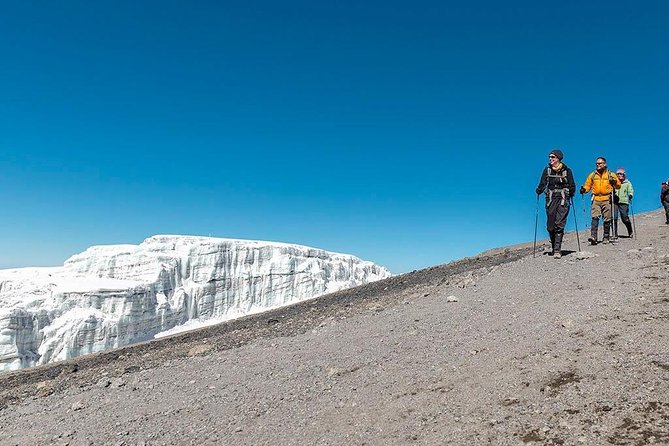
The Machame ascent is a real test of will. This Kilimanjaro Machame route feels like the classic challenge on purpose, with long days, steep hiking, and that high-altitude moment at Stella Point when the sun finally shows up.
I especially like how much support you get on the mountain. In the recent experiences I reviewed, guides like Alan and Shefii led the way, and chef J4 kept feeding the team with solid meals even when conditions got messy. I also like that the package covers the practical stuff, from the hotel before and after to camping gear and hot water for washing each day.
One thing to think about: Machame is crowded, and that can chip away at the magic. It is also a difficult route with longer, steeper walking, so you’ll want to be comfortable with sustained uphill efforts.
In This Review
- Key Things That Matter on This Kilimanjaro Machame 7-Day Climb
- Machame Route, the Whiskey Trail, and Why It Feels Like the Real Deal
- Your 7-Day Rhythm: How the Altitude Plan Works
- Day 1, Machame Gate to Machame Camp: Rainforest Walking and Mud Reality
- Day 2, Into the Park: Shira Plateau Ascent and Rocky Ridge Work
- Day 3, Shira to Barranco: The Lava Tower Shark’s Tooth Moment
- Day 4, Barranco Wall to Karanga Valley: The Steep Ridge Day
- Day 5, Barafu Camp: The Rest, Views, and Summit Prep Day
- Day 6, Midnight to Stella Point and the Summit at 5,895 m
- Day 7, Mweka Descent to Certificates and Back to Moshi
- Price and Value: What $2,530 Buys You on Machame
- What the Included Team Really Means for Your Experience
- Gear, Comfort, and Small Choices That Prevent Big Headaches
- Who Should Choose This Machame 7-Day Climb
- Should You Book This Machame Route with Intrepid Explorer Tanzania?
- FAQ
- What route is this and how long is the trek?
- Where does the trek start and end?
- Is pickup offered?
- What is the highest elevation on the route?
- How hard is the Machame route compared to other routes?
- What time does the summit attempt start?
- What’s included in the price?
- What’s not included?
- Do I need my own camping or summit gear?
- Can I cancel for a full refund?
Key Things That Matter on This Kilimanjaro Machame 7-Day Climb
- Machame is the steeper Whiskey route, with longer trekking days than Marangu
- Acclimatization is built in, including an important day at and around the Shira and Barranco areas
- Midnight to 2 am summit push sets up the big payoff at Stella Point and the summit at 5,895 m
- Your mountain team is staffed and equipped, including guides, assistant guides, porters, and a cook
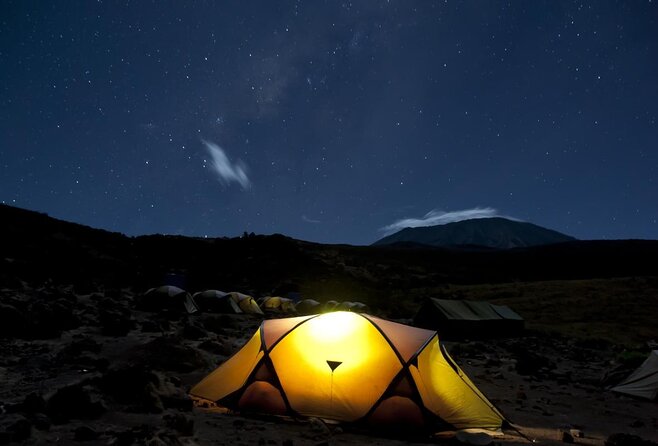
- Comfort basics are included, like tents, camp chairs, mattresses, fresh drinking water, and hot water for washing
Other ways up Kilimanjaro we reviewed
- Kilimanjaro Airport taxi to/from Moshi town/Arusha town★ 5.0 · 60 reviews
- 6 Days Climbing Mount Kilimanjaro Machame Route★ 5.0 · 40 reviews
- 8 Days Kilimanjaro Hike via Lemosho Route★ 5.0 · 39 reviews
- 7-Day Machame Route Kilimajaro★ 5.0 · 28 reviews
Machame Route, the Whiskey Trail, and Why It Feels Like the Real Deal
The Machame route on Kilimanjaro is often called the Whiskey route, and it fits the nickname. This is not a casual walk. It is longer and steeper than some popular alternatives, which means you spend more time working uphill and less time coasting.
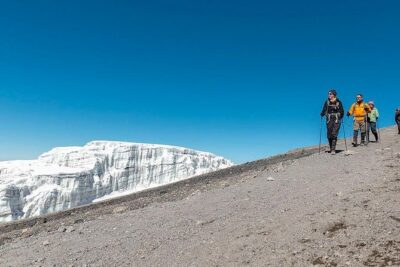
If you’re the type who enjoys rhythm hiking, cranking steadily, and taking the altitude slowly but seriously, you’ll probably gel with Machame. You start from the south, then move east and eventually traverse under the southern ice field before aiming for the top. That means the scenery changes as your body adapts, from rainforest paths to rocky ridges, to the stark high-altitude world near the crater.
Now the honest trade-off. Machame is also the most popular route in many seasons, so you can run into heavy crowds on parts of the trek. On a mountain this big, crowds can make the experience feel more like a busy trail than a personal adventure. If you hate sharing viewpoints, that is the main mental hurdle to plan for.
Your 7-Day Rhythm: How the Altitude Plan Works
What I like about this 7-day structure is that it does the right things for acclimatization without turning the trip into a long slog. You are climbing in stages, topping out early, lowering again, then climbing higher for the summit attempt.
The route’s pacing is built around the idea that you’ll benefit from getting used to altitude in small steps. A key example is the day after Shira and another day around the Barranco area. One day ends around a similar elevation level to where it started, but it still helps your body adapt. That sounds odd on paper, but on a mountain, your physiology cares less about the number and more about the stress patterns.
Expect one brutal day on summit night. Everything before that is about getting you ready for that midnight departure.
Also, remember you’re sleeping at different heights each night. That is part of the plan. Machame puts you through that cycle so you don’t shock your system all at once.
Day 1, Machame Gate to Machame Camp: Rainforest Walking and Mud Reality
You start with a 45-minute drive from Moshi to the Kilimanjaro National Park Gate. From there, you walk into a rain forest on a winding trail that climbs up a ridge.
This first day is about getting moving and warming up your legs, but it can also be slippery. At lower elevations, the trail can be muddy and slick. That’s not the place to rely on good intentions and flip-flops. Bring gaiters if you have them, and use trekking poles if you want stability on uneven ground.
At the end of the day, you reach Machame Camp, with your elevation rising from about 1,830 m up to roughly 3,050 m. Distance is around 11 km, with hiking time commonly in the 5 to 6 hour range. It is a full first day, but not the day where you should panic about altitude. If you feel winded, slow down and let everyone settle into the pace.
More Machame departures, compared
Day 2, Into the Park: Shira Plateau Ascent and Rocky Ridge Work
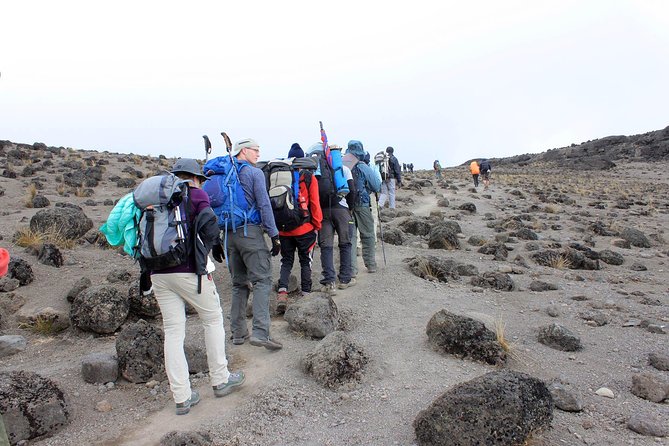
Day 2 pushes higher. You leave the rainforest glades and move onto an ascending path, then cross a valley along a steep rocky ridge.
This is the kind of day where your form matters. Shorter steps, steady breathing, and moving consistently help. The walking time is listed at about 4 to 5 hours over roughly 5 km, but steep terrain can make a short distance feel long.
After the ridge work, the route turns west onto a river gorge until you reach Shira campsite. You’re going from about 3,050 m to about 3,850 m. It’s a meaningful altitude gain, and it’s a good day to start treating water intake and pacing as a serious job, not an afterthought.
Day 3, Shira to Barranco: The Lava Tower Shark’s Tooth Moment
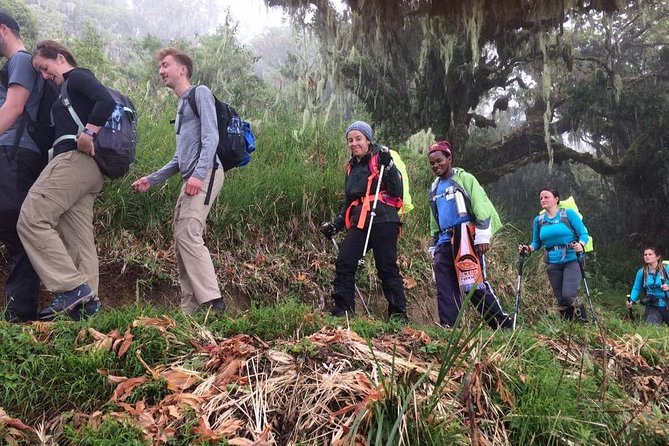
Day 3 is a classic Machame day: steady climbing, big high-altitude landmarks, and an acclimatization-focused finish at Barranco Camp.
From Shira Plateau, you continue east up a ridge and pass key junction areas that lead toward Kibo. Then the direction shifts southeast toward the Lava Tower, nicknamed the Shark’s Tooth, at about 4,650 m (15,250 ft). That name makes it sound dramatic, because it is. You’ll see the terrain shift as you approach it, and you’ll feel your pace slow naturally.
Shortly after, there is a second junction associated with the Arrow Glacier area, and you then continue down toward Barranco Camp. Even though you end around a similar elevation to where you began that day, this day still matters. It gives your body altitude exposure without jumping straight into the summit grind.
Distance is listed around 10 km, hiking time about 5 to 6 hours. This is often the day that makes people realize Machame is not only about height, it is also about switching terrain types while your lungs adjust.
Day 4, Barranco Wall to Karanga Valley: The Steep Ridge Day
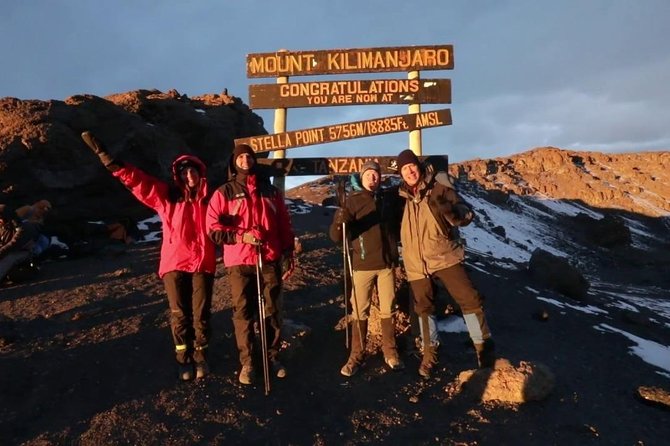
Day 4 starts at Barranco and continues with a sharp climb up the Barranco Wall to the Karanga Valley area.
Then you reach the junction that connects with the Mweka Trail. In other words, you’re moving from the South Circuit portion into the stage that leads you toward Barafu and eventually the summit attempt.
You climb from about 4,000 m to about 4,050 m, with a short distance listed around 5 km and hiking time about 3 to 4 hours. The numbers look modest, but the trail is described as a steep ridge climb. That steepness is what you feel in your legs and your breathing, even if the distance seems manageable.
This is a day to keep your effort smooth. If you go hard early, you’ll pay later. Save your energy for the next day’s Barafu camp prep and the summit night.
Day 5, Barafu Camp: The Rest, Views, and Summit Prep Day
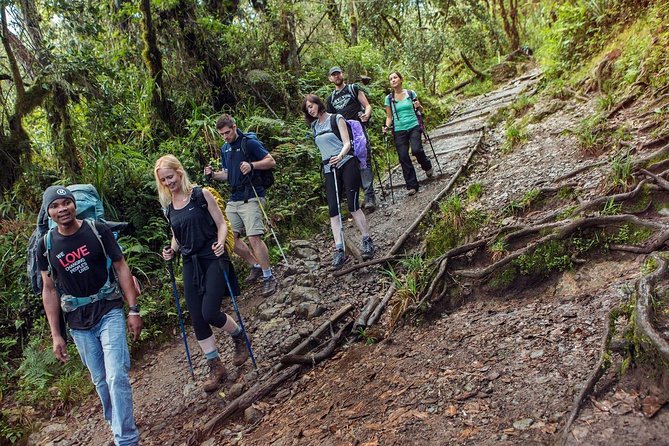
Day 5 is a key transition day because you head up to Barafu Camp.
Your elevation rises from about 4,050 m to about 4,700 m, over only around 4 km, hiking time about 3 to 4 hours. That means the day feels like a steady push rather than a long trek, and then you stop and start living like a summit athlete.
This is also where you typically appreciate the South Circuit. The route offers views of the summit from multiple angles, and you’re camping in a place where everyone’s energy changes from hiking focus to summit focus.
At camp, you rest, eat dinner, and prepare for the midnight push. This is where your head matters as much as your legs. You need calm. You need hydration. And you need to manage warmth, because early mornings at these heights can get serious.
Day 6, Midnight to Stella Point and the Summit at 5,895 m
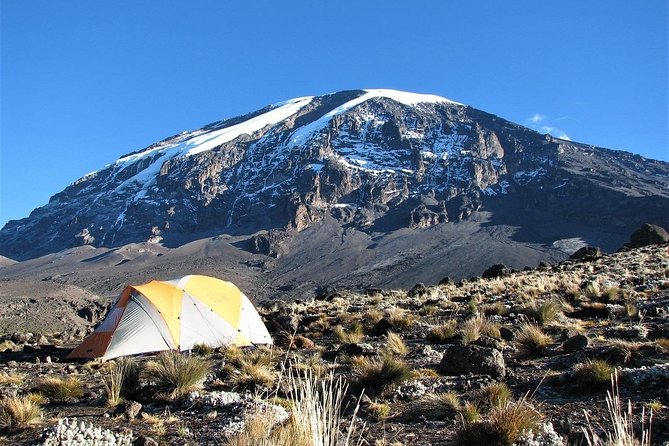
This is the day people remember, and it’s not because it’s easy. It’s because it’s hard in very specific ways.
You start very early, between midnight and 2 am. The route goes through heavy scree and climbs toward Stella Point on the crater rim. You also head in a northwesterly direction and travel between the Rebmann and Ratzel glaciers.
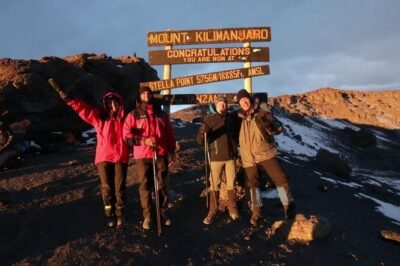
From there, you stop at Stella Point for a short rest. This is the sunrise moment, and it’s described as one of the most magnificent sunrises you’re likely to see. Faster hikers may view the sunrise from the summit, but Stella Point is the classic breather-and-burn time where you reset.
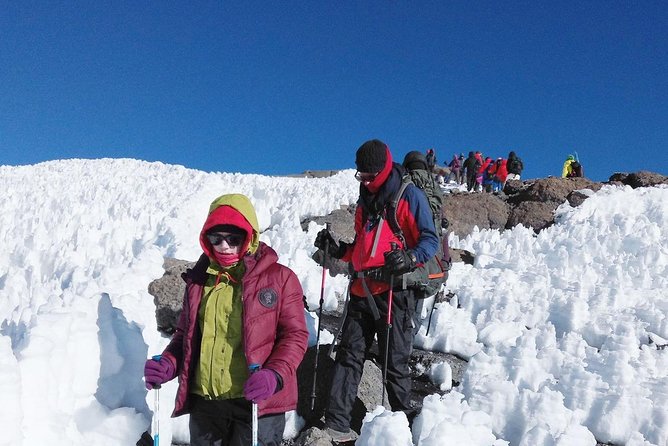
After Stella Point, there is an about 1-hour ascent to the summit, and you may encounter snow along the way. You’re dealing with cold, altitude fatigue, and uneven ground. Mentally, it helps to keep your focus small: one step, then the next, then the next.
This day is listed as about 13 hours total, with around 5 km (up) and a much longer descent afterward. Even if you feel strong during the climb, the descent is its own challenge. Your legs will work again, just in a different way.
Day 7, Mweka Descent to Certificates and Back to Moshi
The final day is mostly about getting down safely and collecting your summit certificates.
You head down from around 3,090 m to about 1,680 m, hiking around 10 km with roughly 3 to 4 hours on foot. At lower elevations, it can be wet and muddy, so again, gaiters and trekking poles make sense for footing.
After reaching Mweka Park Gate, you receive summit certificates. Then you continue about another hour to Mweka Village, where a vehicle meets you and drives you back to your hotel in Moshi, around 30 minutes away.
What I like here is the simple finish. You’re not still climbing when you feel done. You get the paperwork, you get off the mountain, and you get a proper return to normal life.
Price and Value: What $2,530 Buys You on Machame
At $2,530 per person for a 7-day Machame climb, the price is not cheap. But the value is in what’s covered, not in what’s missing.
Here’s what’s included:
- All fees and taxes
- Return transfers between Kilimanjaro airport and Moshi
- Hotel the night before and the night after, with dinner and breakfast included
- Guides and support staff, including qualified mountain guides, assistant guides, porters, and a cook
- Emergency oxygen for emergencies only
- Basic first aid kit
- Camping equipment like tents, camp chairs, tables, and sleeping mattress
- Fresh water for drinking and hot water for washing up daily
- Meals: breakfast (6), lunch (7), and dinner (6)
The practical takeaway is this: much of what costs extra on self-arranged climbs is already handled. You’re paying for experienced staff, camp setup, meal planning, and the mountain logistics that keep the trek moving.
What is not included:
- Flights, visas, medical and travel insurance
- Personal items
- Personal gear (though rentals are available from their equipment store)
- A portable toilet (optional but highly recommended)
- Snacks, personal medicine, and water purifying tablets
So if you compare this to a do-it-yourself approach or a barebones organizer, the price makes more sense. It’s structured around a supported, staffed expedition with comfort basics and emergency readiness.
What the Included Team Really Means for Your Experience
Kilimanjaro is not only a physical challenge. It’s a coordination challenge.
In the experiences shared, I saw clear praise for the people running the show: guides like Alan and Shefii, and chef J4 handling food well even when weather turned. Another repeated theme is responsiveness, with the owner, Mr. Wenceslaus Tarimo, available by phone and message to guide people as they planned.
That kind of support matters most in three moments:
- When you need to trust the pace and the plan, especially on summit night
- When you need consistent meal timing and warm camp meals
- When you need reassurance if something feels off
Also, note that the trek is a private tour, so only your group participates. That can be a real quality-of-life upgrade when you’re sharing cramped logistics at altitude.
Gear, Comfort, and Small Choices That Prevent Big Headaches
You will not be able to hike like a casual tourist on Machame. The course is uneven and sometimes muddy, then it turns into heavy scree during summit ascent.
Based on the route notes, I’d focus on:
- Gaiters and trekking poles for mud and slippery sections
- A plan for warmth, especially for the summit start in the midnight to 2 am window
- Rain gear plus warmer layers available, since the trek can bring wet conditions at lower elevations and cold conditions at high points
The good news is the package provides camp basics: tents, camp chairs, tables, and sleeping mattress, plus hot water for washing. That means you can pack less and focus on the hiking essentials.
One optional item you should treat as more than optional is the portable toilet. It’s marked as highly recommended, and on a multi-day trek, it can make daily life easier.
Finally, don’t forget water purification tablets and personal medicine. Those are not included, but the itinerary expects you to handle them.
Who Should Choose This Machame 7-Day Climb
This is for you if:
- You’re comfortable hiking uphill for hours at a time
- You have at least some trekking or backpacking experience
- You want the more challenging, scenic, varied route that includes the ice-field traverse under the southern side
- You like being part of a group with strong guide and crew support
It’s probably not a fit if:
- You want the easiest Kilimanjaro option
- You dislike crowded trails and shared camps
- You’re not prepared for a steep, high-altitude summit day that starts between midnight and 2 am
If you’re a first-time trekker, Machame can still work, but you should be honest with yourself about fitness and hiking stamina. This route is called difficult for a reason.
Should You Book This Machame Route with Intrepid Explorer Tanzania?
If you want the challenge of Kilimanjaro without DIY chaos, I think this Machame option makes sense. The structure is clear, the staffing is built in, and the inclusions are practical, from transfers and hotels to camping gear, meals, and emergency oxygen.
My biggest caution is crowd reality. Machame is popular, so you won’t get the quiet solitude every moment. If you can accept that, and you train for the steep, longer hiking days, the payoffs are big: varied terrain, built-in acclimatization steps, and the sunrise moment at Stella Point.
If you’re aiming for a serious trek with strong local support, you’ll likely appreciate what you get here.
FAQ
What route is this and how long is the trek?
This is the Kilimanjaro Machame Route, often called the Whiskey route, and it runs for about 7 days.
Where does the trek start and end?
It starts at Machame Gate – Mount Kilimanjaro National Park (Barangata, Tanzania). It ends back at the meeting point, with a final descent to Mweka Park Gate and then onward to Mweka Village for a vehicle back to Moshi.
Is pickup offered?
Yes. Pickup offered is listed as an additional feature.
What is the highest elevation on the route?
The summit is listed at 5,895 m.
How hard is the Machame route compared to other routes?
Machame is described as difficult, with longer and steeper walks than Marangu, and it’s best suited for adventurous hikers with some hiking or backpacking experience.
What time does the summit attempt start?
You begin the summit ascent very early, between midnight and 2 am, and you reach the summit during the early morning hours.
What’s included in the price?
The package includes all fees and taxes, return transfers between Kilimanjaro airport and Moshi, a hotel night before and after with dinner and breakfast, emergency oxygen (for emergencies only), a basic first aid kit, qualified guides and crew, camping equipment, fresh drinking water, hot water for washing, and meals (breakfast 6, lunch 7, dinner 6).
What’s not included?
Not included are flights, visas, medical and travel insurance, items of personal nature, personal gear (rentals may be available), optional portable toilet, and snacks, personal medicine, and water purifying tablets.
Do I need my own camping or summit gear?
The trek includes camping equipment. Personal hiking gear is not included, but the operator says some gear can be rented from their equipment store in Tanzania.
Can I cancel for a full refund?
Yes. Free cancellation is offered if you cancel up to 24 hours in advance for a full refund, with local-time cutoff rules.
More Machame Departures
- 7 Days Kilimanjaro via Machame route affordable price
★ 5.0 · 110 reviews - 6 Days Climbing Mount Kilimanjaro Machame Route
★ 5.0 · 40 reviews - 7-Day Machame Route Kilimajaro
★ 5.0 · 28 reviews - 6 Days Machame Route Kilimanjaro Trekking
★ 5.0 · 13 reviews - Mount Kilimanjaro 6 days – Machame route
★ 4.0 · 5 reviews
Kilimanjaro, Route by Route
- 7 Days Kilimanjaro via Machame route affordable price
★ 5.0 · 110 reviews - Kilimanjaro Airport taxi to/from Moshi town/Arusha town
★ 5.0 · 60 reviews - 6 Days Climbing Mount Kilimanjaro Machame Route
★ 5.0 · 40 reviews - 8 Days Kilimanjaro Hike via Lemosho Route
★ 5.0 · 39 reviews - 7-Day Machame Route Kilimajaro
★ 5.0 · 28 reviews
Just added from around Kilimanjaro
Kilimanjaro Machame Route, compared.
 ★ 5.0Kilimanjaro climb, Machame Route (7-day)From $3,377262 reviews
 ★ 5.0Climbing Kilimanjaro – Machame RouteFrom $2,322170 reviews
 ★ 5.0Climbing Kilimanjaro through 7 days Machame RouteFrom $2,425151 reviews
 ★ 5.07-Day Machame Kilimanjaro Summit Tour from ArushaFrom $2,695125 reviews
 ★ 5.07 Days Kilimanjaro via Machame route affordable priceFrom $2,400110 reviews
 ★ 4.2#1. Best Kilimanjaro Day hike Tour-Machame Route-ISMANIFrom $11547 reviews
 ★ 5.07 Days Machame route – KilimanjaroFrom $2,85045 reviews
 ★ 5.0The Best of Machame Route in 6 Days: Your World’s Summit GuideFrom $1,15044 reviews
Browse the lists this tour appears in