
REVIEW · TANZANIA CAMPING AND BUDGET SAFARIS
5 Days Group Camping Safari
Big cats are the point, but the setup matters. This 5 day group camping safari from Arusha is built around private game drives and a tight route through Tanzania’s top wildlife areas. I like how it moves from Tarangire’s elephants and baobabs to the Serengeti plains, then finishes in Ngorongoro’s crater.
Two things I really like: you get two UNESCO World Heritage stops (Serengeti and Ngorongoro), and the package includes your meals plus camping-style accommodation. The only caution is the camping vibe, it is not a resort stay, and safari days can be long inside the vehicle.
In This Review
- Key highlights at a glance
- How This Arusha Camping Safari Works, Day By Day
- Price and value: What $1,100 gets you in Tanzania
- Day 1 Tarangire National Park: Elephants, Baobabs, and big herds
- Day 2 Lake Manyara: Flamingos by season, plus the hippo pond
- Days 3 and 4 Serengeti: Seronera river area and the timing that helps
- Day 4 en route to Ngorongoro, then overnight near the crater
- Day 5 Ngorongoro Conservation Area: the crater drop, predators, and Lake Magadi
- Camping reality: comfortable tents, good meals, and what to expect
- Your guide and vehicle time: where the magic usually happens
- Who should book this safari, and who should skip it
- Should you book this 5 day camping safari from Arusha?
- FAQ
- What parks are included on this 5 day safari?
- Is pickup from Arusha included?
- How big is the group?
- Is there a private guide and vehicle?
- How long is the tour?
- Are meals included?
- Is accommodation included?
- Are park admission tickets included?
- Does the tour use a mobile ticket?
- Can I cancel for a full refund?
- Which parts are UNESCO World Heritage sites?
Key highlights at a glance
- Private guide plus private 4×4 drives keeps the pace flexible and the spotting sharp
- Four parks in five days: Tarangire, Lake Manyara, Serengeti, then Ngorongoro Conservation Area
- UNESCO World Heritage circuit focused on Serengeti and Ngorongoro
- Camping safari with meals included so you are not hunting for food between parks
- Small group size (max 7) which helps the experience feel more manageable
More camping safaris at this price
- 4 Days Group Camping Safari★ 5.0 · 1,101 reviews
- 5 Days Group Camping Safari★ 5.0 · 730 reviews
- 3 Days Serengeti & Ngorongoro Group Camping Safari★ 5.0 · 574 reviews
- 5 Days Camping Tarangire, Serengeti & Ngorongoro crater & Visiting Maasai★ 5.0 · 229 reviews
How This Arusha Camping Safari Works, Day By Day
This is a safari that runs on a simple rhythm: breakfast, game drive time, lunch at the lodge or as picnic lunch, then another drive before the next move. You start in Arusha with pickup offered, and the trip finishes back at the same meeting point.
A key detail for expectation setting: even though it is a “group” safari (up to 7 travelers), the tour is described as private safari with a private 4×4 safari vehicle. In practice, that usually means your wildlife time is not a slow, mixed crowd shuffle. It is more like, you get your own guide-led drive plan, while logistics (like camping setup) can still involve a small shared group.
Price and value: What $1,100 gets you in Tanzania
At $1,100 per person, this is not a budget-only option. The value comes from how many high-demand areas you cover in a short window, and what is included.
Here is what you are paying for, in real terms:
- Park visits that include admission listed as free for each day segment
- Your guide, plus safari driving in a 4×4
- All meals during the trip window (breakfast 5, lunch 5, dinner 4)
- Accommodation in a camping format
If you price this out separately, the math gets more obvious. A multi-park safari with a guide, vehicle time, park access, and lodging can add up fast. This package is built to keep you from doing that split-yourself work, while still giving you a “real Africa” camping experience.
My practical note: the $1,100 price is easiest to justify if you want concentration. You are stacking Tarangire, Manyara, Serengeti, and Ngorongoro into one plan instead of taking weeks to do the same route slowly.
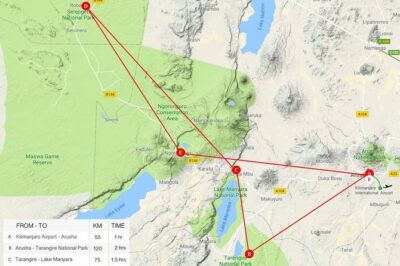
Day 1 Tarangire National Park: Elephants, Baobabs, and big herds
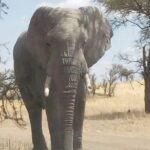
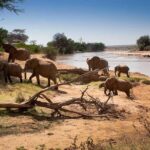
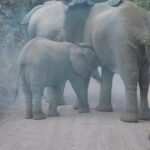
You depart Arusha after breakfast, with pickup starting around 08:30 to 09:00. The first stop is Tarangire, one of Tanzania’s best parks for elephants, and it is famous for its baobab trees.
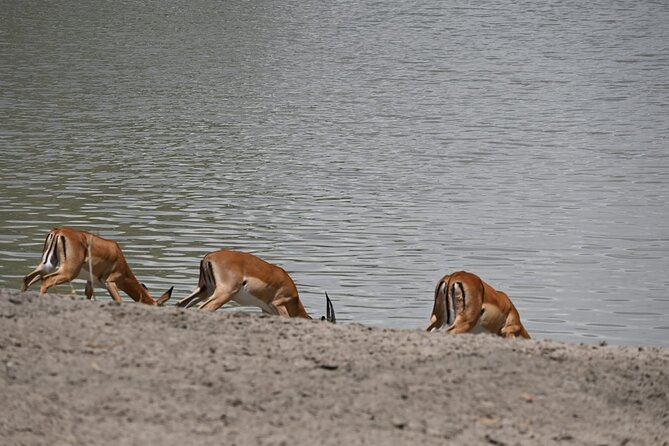
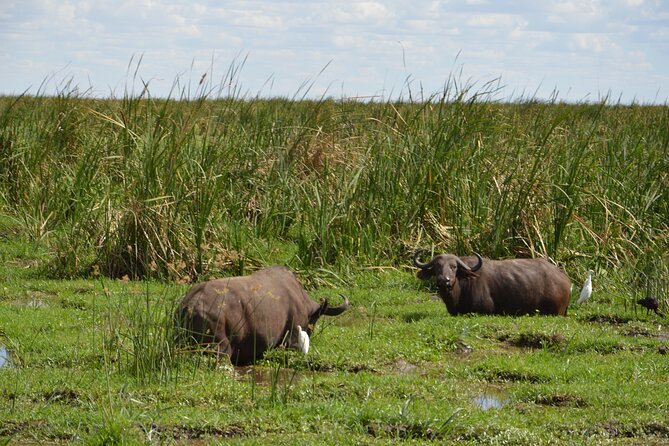
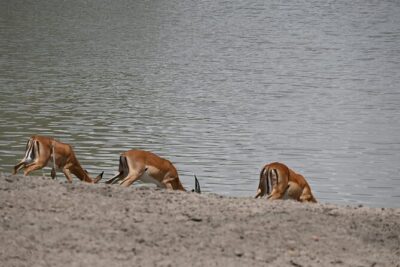
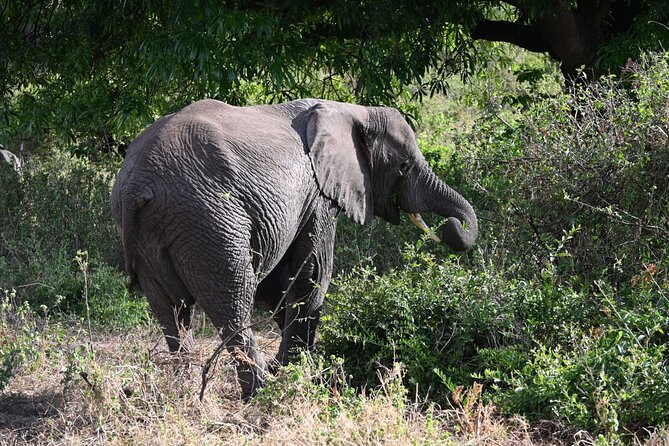
Tarangire’s wildlife style is very “dry season practical.” During June to November, visitors can expect large herds, including zebra, wildebeest, and cape buffalo, plus lots of elephant activity. Even when you are not there in peak dry season, the park is still a solid mix: giraffe, impala, eland, Grant’s gazelle, vervet monkey, and olive baboon are all listed as common residents.
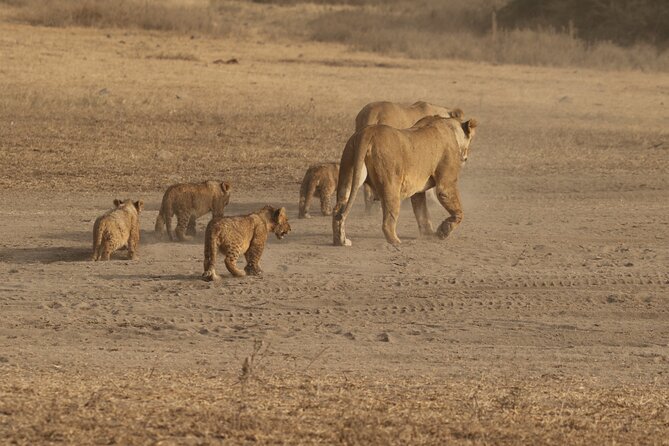
For predator chances, Tarangire is not just herbivores and trees. Predators mentioned include African lion, leopard, cheetah, caracal, honey badger, and African wild dog. That is a lot of “possible encounters” for day one, and it matters because spotting often comes down to time on the ground, not just luck.
What I’d watch for on this day: baobabs make Tarangire visually distinct. If you care about photos and about learning the ecosystem, this is a great “first chapter” because the landscape element is as much a character as the animals.
Day 2 Lake Manyara: Flamingos by season, plus the hippo pond
After breakfast at the lodge, you start again around 08:30 to 09:00. You head straight to Lake Manyara for an extended game drive, with a picnic lunch included.
Lake Manyara is known for flamingos, but the timing is everything. During wet season, flamingos can show up in flocks of thousands along lake edges. During the dry season, the flamingos are much less present. So if flamingos are your one must-see, plan your expectations by the season you are traveling.
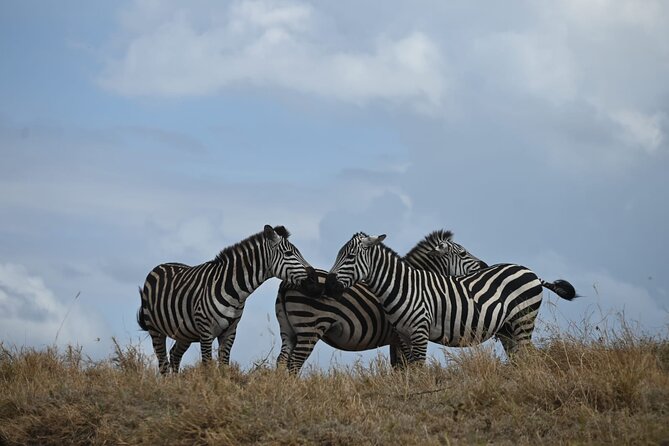
Beyond birds, Manyara is listed with a broad set of animals you can see year-round. The park includes leopards, East African lions, cheetahs, elephants, blue monkeys, dik-dik, gazelles, hippopotamus, Masai giraffe, impala, and zebras, among others. There is also a hippo pond at one end of the park, which gives you a more predictable place to scan for hippos.
One small consideration: Manyara is often “interesting in variety,” but it can feel different from the Serengeti. Here, the payoff is often in birdlife and a dense mix of animals rather than endless open plains.
Days 3 and 4 Serengeti: Seronera river area and the timing that helps
Getting to Serengeti is part of the story. On day 3 you travel via Karatu farmland and the Ngorongoro Conservation Area, moving from the highlands down toward the Serengeti ecosystem. The tour then heads to the central park area, the Seronera area, which is described as one of the richer wildlife habitats in the park because the Seronera River supplies water.
This is the kind of detail that can help your spotting. In a place as large as Serengeti, “where you drive” matters. An area with reliable water tends to pull wildlife into a more concentrated zone.
Day 3 runs to lunch and then an afternoon game drive. Day 4 is the workday version of Serengeti. You start with early morning coffee, tea, and biscuits, then go for an early drive from 08:00 to 14:30 using lunch boxes. After that, you leave Serengeti and drive toward the Ngorongoro Conservation Area, with dinner and overnight arranged where you are based for the crater day.
If you like your wildlife with a little structure, you will enjoy this. Two days in Serengeti also means you get a second chance, and animal activity can shift between mornings and afternoons.
Day 4 en route to Ngorongoro, then overnight near the crater
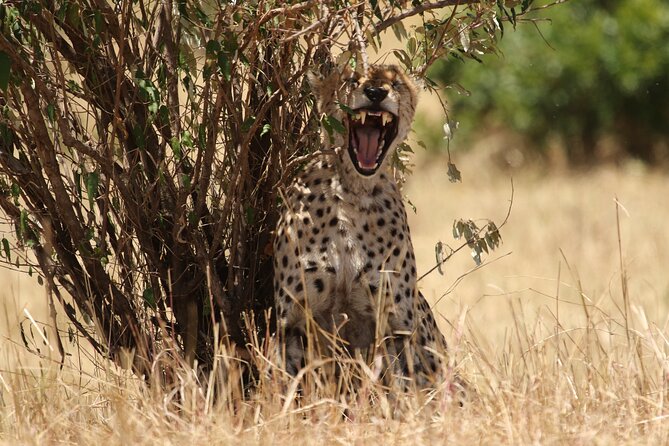
When you leave Serengeti on day 4, you do it with game drive time en route. That is a smart choice because it reduces dead transit. The itinerary also includes dinner and overnight before crater day, which sets you up for a more dramatic start on day 5.
Why this matters: Ngorongoro’s best wildlife viewing depends on being ready to descend at the right time. Sleeping closer to the crater cuts friction. It gives you the best shot at “crater light,” when animals are easier to spot against the crater floor.
Day 5 Ngorongoro Conservation Area: the crater drop, predators, and Lake Magadi
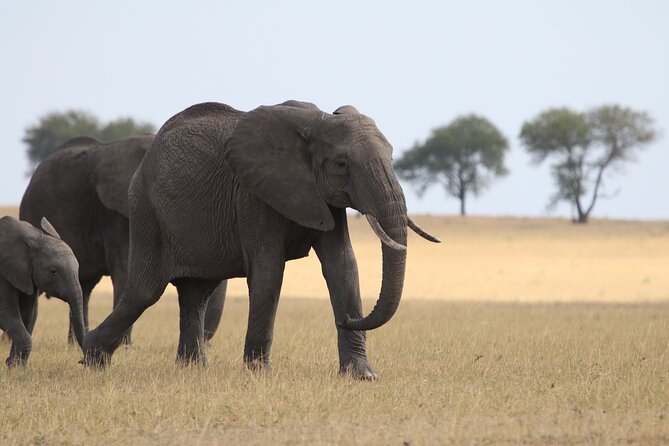
Day 5 begins with an early breakfast, including coffee. Then you descend into the crater, described as over 600 meters down. That vertical change is the whole point of Ngorongoro, because the crater floor supports wildlife with a year-round water supply and fodder.
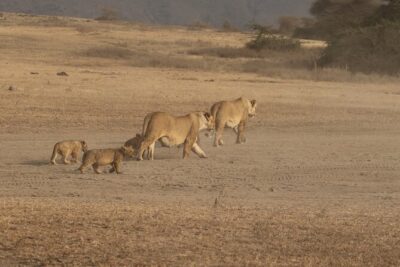
The animal list on day 5 is long and practical. You might see herds of wildebeest, zebra, buffalo, eland, warthog, hippo, and giant African elephants. Then the tour adds another layer, predator concentration. Lions, hyenas, jackals, cheetahs, and the elusive leopard are all mentioned, and leopard spotting is framed as requiring a trained eye.
There is also a specific stop inside the crater ecosystem: Lake Magadi, a large but shallow alkaline lake in the southwestern corner. It is listed as a major feature of the crater. So you are not only driving random roads, you have at least one anchored sight point with a distinct environment.
If you want a “big day” finish, this is it. Tarangire gives you elephants and baobabs, Serengeti gives you plains ecology, then Ngorongoro compresses a lot of that into one crater-shaped viewing bowl.
Camping reality: comfortable tents, good meals, and what to expect
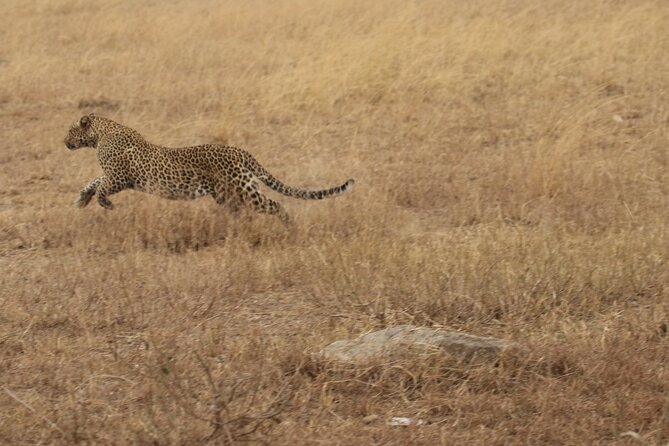
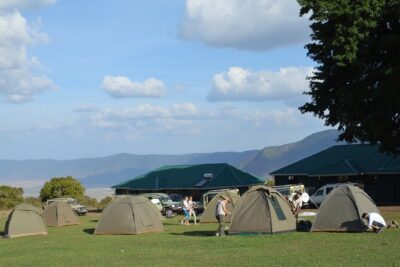
This is called a camping safari for a reason. One review notes that tents were very comfortable. Another mentions the cook by name, Salim, and describes the food as abundant and excellent.
So yes, you should think camping, but camping with real care. The itinerary includes meals throughout your days: breakfast 5, lunch 5, and dinner 4, which matters because it prevents the classic safari frustration of arriving hungry with no food plan. When food and timing are handled, your game drives stay focused.
A possible drawback to consider: because it is a camping style experience, you may not get the quiet, cushy comforts of a lodge resort. If you are the kind of person who struggles with basic accommodation, you might feel the difference.
Still, the whole point is the blend of wildlife access and “you are actually in the bush” atmosphere. That is often what makes people remember the trip, not just the animals.
Your guide and vehicle time: where the magic usually happens
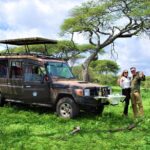
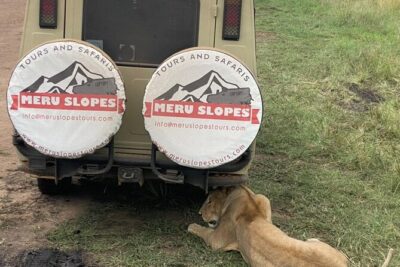
The tour is guided by a private guide, and the driving is done in a private 4×4 safari vehicle. That combination matters more than people think. Good spotting is part biology and part behavior reading. Your guide’s job is to know where animals are likely to be, and how to interpret what you are seeing.
Names that show up in feedback include guides like Amiri and Max, and a chef named Salim. Even if you do not get those exact team members, the pattern is clear: strong organization and food quality are being noticed, and that is a good sign for a group camping safari where details can make or break the day.
My practical advice: ask your guide how they structure game drive stops. When the plan is explained, you relax and you notice more.
Who should book this safari, and who should skip it
This tour fits best if you want a high-coverage wildlife route without having to plan it yourself. It also suits people who like learning the ecosystem and not only chasing species names. The itinerary is explicitly built around ecosystem understanding from the guide, and the parks are chosen to show different wildlife patterns across Tanzania.
You might skip it if you:
- Need lodge-level comfort over camping style accommodation
- Want lots of free time with no driving schedule
- Prefer “one park, slow pace” over a tight four-park stack
If your goal is to see major Tanzanian wildlife zones in a focused 5 day window, this is a strong match.
Should you book this 5 day camping safari from Arusha?
I’d book it if you want a guided, meal-included camping safari that hits Tarangire, Lake Manyara, Serengeti, and Ngorongoro with UNESCO stops built in. The value is strongest because you get a multi-park circuit, park access listed as free in the itinerary, and a private guide-led structure inside a small group capped at 7.
I would not book it if camping-style accommodation is a hard no for you, or if long drive days are your weak spot. That is not a flaw in the tour, it is just a match problem.
If you fall in the “yes, I can handle camping” camp, this is a clean way to turn 5 days into a real Tanzania wildlife hit, with plenty of chances to spot big game and the elusive predator hunt energy that makes Ngorongoro and Serengeti so famous.
FAQ
What parks are included on this 5 day safari?
The itinerary includes Tarangire National Park, Lake Manyara National Park, Serengeti National Park, and Ngorongoro Conservation Area.
Is pickup from Arusha included?
Pickup is offered. The tour starts at a meeting point in Arusha and returns you back to that same meeting point.
How big is the group?
This activity has a maximum of 7 travelers.
Is there a private guide and vehicle?
Yes. The tour includes a private guide and a private 4×4 safari vehicle.
How long is the tour?
The duration is 5 days (approx.).
Are meals included?
Yes. Breakfast is included 5 times, lunch 5 times, and dinner 4 times.
Is accommodation included?
Yes, accommodation is included, and the experience is described as camping safari style.
Are park admission tickets included?
The itinerary lists admission ticket free for the park days.
Does the tour use a mobile ticket?
Yes, the tour features a mobile ticket.
Can I cancel for a full refund?
Yes. There is free cancellation up to 24 hours in advance for a full refund.
Which parts are UNESCO World Heritage sites?
The highlights state there are two UNESCO World Heritage sites included, which align with Serengeti National Park and Ngorongoro Conservation Area.
More Under Canvas
- 4 Days Group Camping Safari
★ 5.0 · 1,101 reviews - 3 Days Serengeti & Ngorongoro Group Camping Safari
★ 5.0 · 574 reviews - 5 Days Camping Tarangire, Serengeti & Ngorongoro crater & Visiting Maasai
★ 5.0 · 229 reviews - 5 Days Budget Private Safari, Tanzania
★ 5.0 · 191 reviews - 6 Days Private Budget Safari
★ 5.0 · 163 reviews
Just added from around Arusha
Tanzania Camping and Budget Safaris, compared.
 ★ 5.04 Days Group Camping SafariFrom $9001,101 reviews
 ★ 5.03 Days Serengeti & Ngorongoro Group Camping SafariFrom $815574 reviews
 ★ 5.05 Days Camping Tarangire, Serengeti & Ngorongoro crater & Visiting MaasaiFrom $1,254229 reviews
 ★ 5.05 Days Budget Private Safari, TanzaniaFrom $0191 reviews
 ★ 5.06 Days Private Budget SafariFrom $2,300163 reviews
 ★ 5.02 Days Tarangire and Ngorongoro Group Camping SafariFrom $550146 reviews
 ★ 5.06 Days Tanzania Budget Camping SafariFrom $1,600145 reviews
 ★ 5.07 Days Kilimanjaro via Machame route affordable priceFrom $2,400110 reviews
Browse the lists this tour appears in