
REVIEW · KILIMANJARO MARANGU ROUTE
Kilimanjaro Climbing 5 days Marangu route
Kilimanjaro in five days is a real test. What makes this Marangu climb worth your time is the clear schedule, the professional team running it, and the mountain hut rhythm that keeps you focused when your body starts arguing. You’ll go from rainforest into moorland, sleep in huts at high altitude, then do the classic midnight summit bid.
I like two things a lot. First, the human support: guides and porters handle the heavy lifting of logistics and morale, and reviewers specifically called out guides like Victor, Tyson, and Thomas for steady encouragement. Second, the food setup: you get proper meals all the way up, and at least one climber reported the chefs accommodated a vegan diet without making things weird.
One thing to consider: the national park fee is not included. One review mentioned a late park-fee surprise, so I’d treat that as part of your real budget from day one, not a detail you discover later.
In This Review
- Key highlights before you lace up
- Why this 5-day Marangu route works for many first-timers
- Day 1: Marangu Gate to Mandara Hut, 1,600 m to 2,700 m
- Day 2: Mandara to Horombo Hut, then the moorland shift at 3,700 m
- Day 3: Horombo to Kibo Hut, two route options and a Mawenzi climb segment
- Day 3 into Day 4: Kibo Hut, then the midnight push to Uhuru Peak
- Day 4: The descent back to Horombo, where legs finally get to rest
- Day 5: Horombo to Mandara to Marangu Gate, 3 hours plus 2 hours through forest
- Guides, chefs, and porters: the team energy you can feel
- Price and what you should budget so you do not get stuck later
- What your body and gear need in a 5-day plan like this
- Should you book this 5-day Marangu route with Kilinge Adventures?
Key highlights before you lace up
- Marangu route hut stays keep the trip structured and more comfortable than fully camping the whole time
- Midnight summit plan (wake around 11pm, start around midnight) gives you a predictable rhythm
- Rainforest to moorland changes start immediately, so you’ll feel the altitude and terrain shift fast
- Support-forward guides and porters come through in the toughest moments, with names like Victor, Tyson, and Thomas showing up in feedback
- Food with options is a real plus, including reported vegan accommodation through the chefs
- Maximum group size of 50 helps you understand how crowded logistics might feel on the mountain
Other ways up Kilimanjaro we reviewed
- Kilimanjaro Airport taxi to/from Moshi town/Arusha town★ 5.0 · 60 reviews
- 6 Days Climbing Mount Kilimanjaro Machame Route★ 5.0 · 40 reviews
- 8 Days Kilimanjaro Hike via Lemosho Route★ 5.0 · 39 reviews
- 7-Day Machame Route Kilimajaro★ 5.0 · 28 reviews
Why this 5-day Marangu route works for many first-timers
The Marangu route is often chosen for one big reason: it’s more “mountain trip” than “roughing it in the wild.” You’re walking through multiple ecosystems, but you’re doing it with mountain hut nights and a guided plan that keeps your days from turning into guesswork. That matters when you’re tired, cold, and altitude is already doing its quiet work.
The schedule is also simple to follow. Day 1 is a gentle rainforest climb to Mandara Hut. Day 2 stretches out across moorland to Horombo Hut. Day 3 positions you for summit night by getting you up to Kibo Hut. Then you do the big push from Kibo to Uhuru Peak early, followed by a descent that is long enough to feel like a victory lap.
If you want a climb where you can spend your brainpower on pacing and breathing, this structure helps. If you’re the type who gets stressed by too many moving parts, the guide-led logistics are a comfort.
Day 1: Marangu Gate to Mandara Hut, 1,600 m to 2,700 m
Your day starts with a transfer from the Moshi area, and the stated meeting point is Kilimanjaro International Airport with an 8:00 am start time. Either way, the first phase is straightforward: you reach the Marangu Gate area at about 1,600 metres, then step into the rainforest.
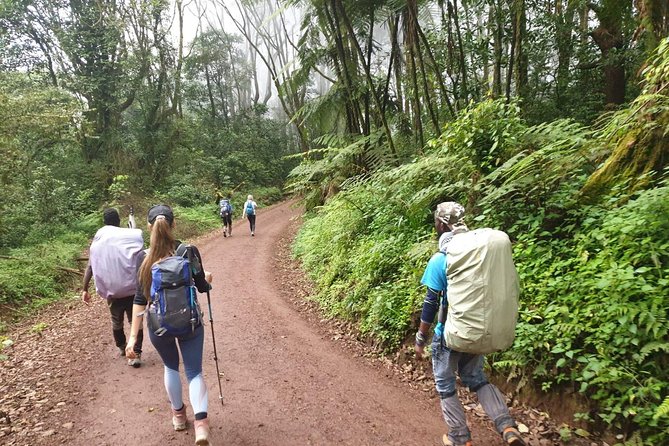
This is a “warm up your system” day. The walk to Mandara Hut is around 4 hours at a gentle pace. You’ll still be climbing, but it’s not the brutal kind of uphill that makes you feel instantly doomed. Instead, you’re letting your heart rate rise gradually while your body adjusts to higher altitude.
What I like here is the payoff. The rainforest section makes the early hours feel less like a punishment and more like a real hike. Then Mandara Hut at 2,700 m gives you that first hard reality check that you’re not just hiking a hill, you’re going high enough for cold nights and thin air.
Potential drawback: because it’s comfortable and “easy-ish,” some people start too fast anyway. The rainforest tempts you to keep a normal hiking pace. Your job on Day 1 is to go slower than you think you should.
Day 2: Mandara to Horombo Hut, then the moorland shift at 3,700 m
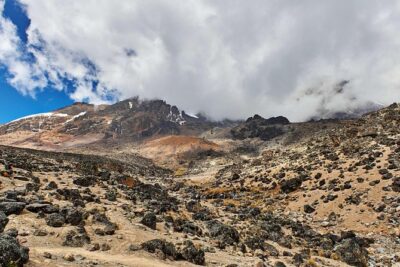
Day 2 starts around 9:00 am, and the first part keeps you in the forest. After roughly the first half hour, the trail emerges into alpine moorland. That shift is more than scenic. Moorland means fewer trees, more exposure to wind and cold, and a different kind of footing underfoot.
The walk to Horombo Hut is about 7 hours, ending at around 3,700 metres. This is the longest “steady day” in the plan, and it’s where you learn how your breathing changes when you’re climbing continuously.
One of the best values of a structured Day 2 is that you’ll feel the mountain teach you in steps. By the time you reach Horombo, you’re high enough to notice the air, but you’re not thrown into summit-night conditions yet. It’s a strong acclimatization day on paper, and in practice it lets you practice a calm rhythm.
What to watch: moorland can feel deceptively manageable. People often expect “easy trail” because it’s not as steep as it looks. But long hours at height still add up. Keep your pace controlled even when you feel good at the start.
Marangu, other operators and other lengths
Day 3: Horombo to Kibo Hut, two route options and a Mawenzi climb segment
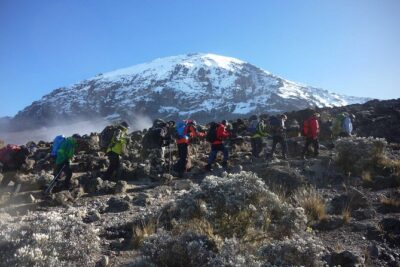
Day 3 is about positioning yourself for summit night. You’ll leave Horombo Hut and head toward Kibo Hut, and the plan notes there are two paths. One is the older “upper route,” which heads quite steeply uphill from Horombo to the foot of Mawenzi, climbing about 600 metres before descending to the saddle.
Even if you do not have the details of which path you’ll take, you should expect a Day 3 that feels more intense than Day 1 or Day 2. The terrain changes and the uphill push to the Mawenzi area can make you feel the effort in your legs.
Why this day matters for your success: summit night depends on fatigue management. If you climb Day 3 like you’re racing, you’ll pay for it at midnight. If you climb Day 3 like you’re saving energy, you’ll arrive at Kibo with a better chance to handle the cold and the slow grind uphill.
This is also where the guide team’s job gets real. In the feedback, names like Victor and Tyson show up as supportive guides who helped people keep going both mentally and physically. On Kilimanjaro, that “keep going” part is not fluff. It’s the difference between quitting in frustration and continuing with steady steps.
Day 3 into Day 4: Kibo Hut, then the midnight push to Uhuru Peak
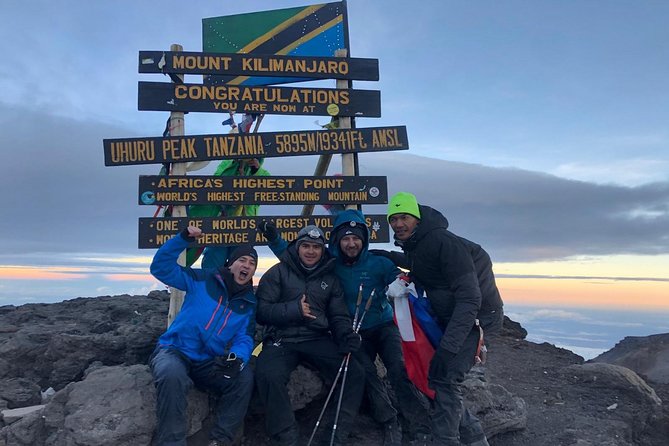
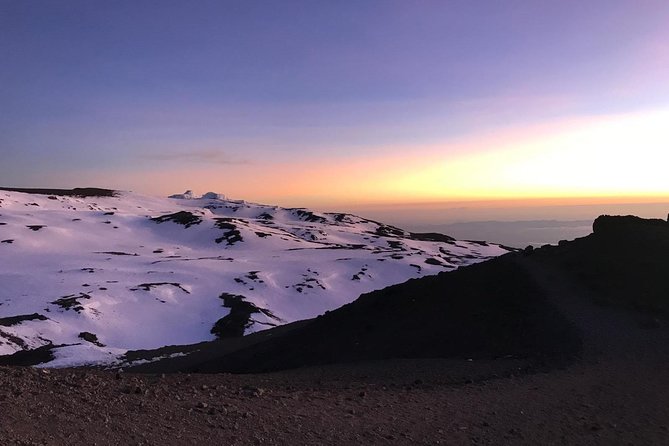
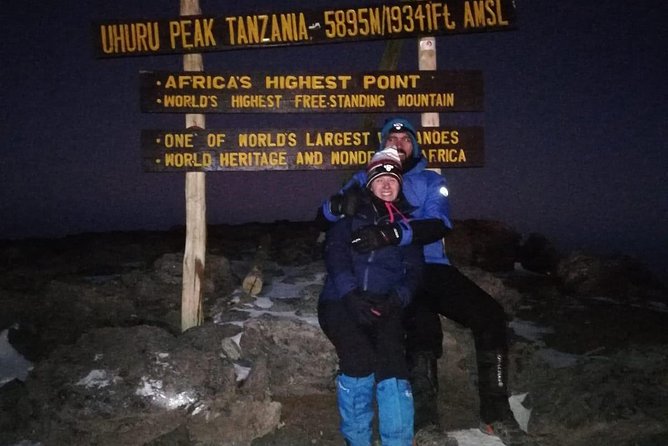
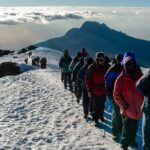
The summit day starts early. You’ll be woken around 11:00 pm, dressed in your warm layers, given a hot drink, and then set off at about midnight. This timing is not random. It’s built around getting you to the summit in the hours when conditions are often better and your body can handle the uphill effort before exhaustion hits its peak.
You’re climbing during the coldest and most demanding hours of the trip. Even if the route is well-marked and the guide team keeps you organized, summit night still feels like a personal test. Expect slow uphill walking where the goal is efficiency: small steps, steady breathing, and not burning your legs too early.
A key detail I appreciate about this plan: it’s honest about warm clothing and routine. You’re not sent out half-ready. You’ll wake, get warmed, and depart with the team fully prepared. That matters because cold plus altitude stress can make even confident hikers second-guess themselves.
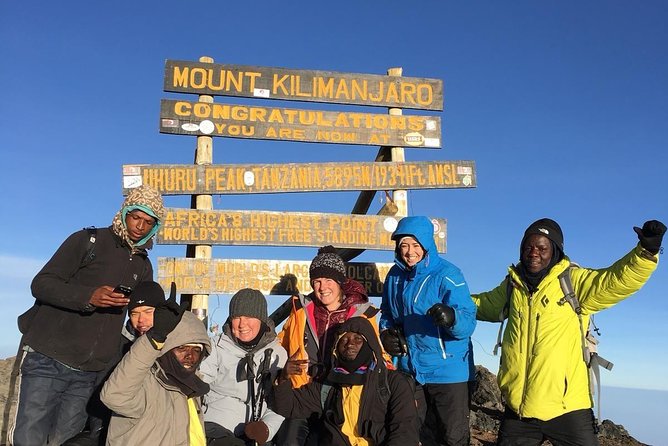
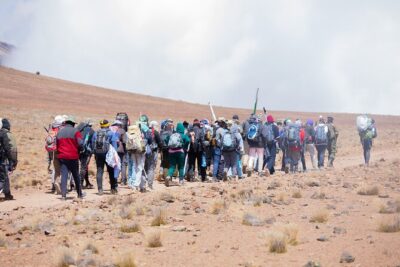
From Kibo, you target Uhuru Peak (5,895 metres). Then, after the summit, you descend back toward Horombo Hut. Reviews also mention people making it to the top together, with one group of eight reaching the summit thanks to the crew’s support. That’s a reminder that success here is often teamwork, not just personal willpower.
Day 4: The descent back to Horombo, where legs finally get to rest
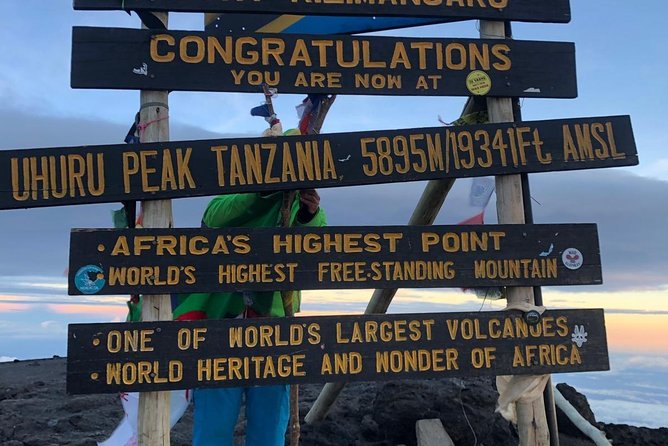
After the summit, your challenge shifts from climbing to surviving the descent. The plan has you returning to Horombo Hut, and in practical terms it means managing tired legs on a route that can be hard on knees and feet.
This part is often where people underestimate the mountain. You might feel “done” mentally, but physically you’re still moving high-altitude slopes. Your guide’s pacing and your own foot placement matter.
If you’re the type who gets excited and tries to speed up, the descent is where you rein that in. Moving too fast on loose or uneven sections can turn your tiredness into an injury risk.
Day 5: Horombo to Mandara to Marangu Gate, 3 hours plus 2 hours through forest
Day 5 is described as a descent that takes around 3 hours from Horombo to Mandara Hut, then about 2 more hours through the forest back to Marangu Gate. That’s a long enough finish that you’ll feel real relief only after you step out of the forest section at the gate.
This last day is also the “mental decompression” day. Once you’re down from the highest points, you can breathe easier and start thinking like a traveler again. You’ll still be tired, but the focus becomes stamina, not intensity.
Why I like how this ending is laid out: it gives you a concrete, timed conclusion. That reduces the stress of wondering how long you’ll be walking after you’ve already done the hard work.
Guides, chefs, and porters: the team energy you can feel
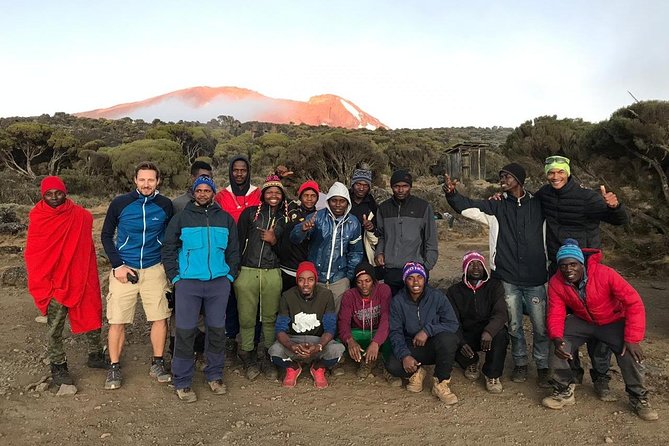
This climb is only as good as the people running it. In the feedback, the same pattern shows up: guides lead and encourage, porters handle the heavy loads while staying friendly, and cooks keep meals consistent.
Several guide names show up, including Victor, Tyson, and Thomas. That’s a good sign, because it suggests you’re not relying on one lucky match. If the guide is strong, you’ll typically move better, take fewer wrong turns, and handle altitude moods with more patience.
Chefs also get real credit. Chef Joseph was specifically mentioned as the best chef by one reviewer, and another climber said the kitchen accommodated a vegan diet. That matters because on summit night and summit day, hunger and low energy can turn into bad decisions. Good food isn’t a luxury here. It’s fuel.
Porters deserve their own category. Multiple reviews praised porters carrying heavy loads with warmth and hot meals every day. You’re paying for the system that allows you to focus on climbing. Treat that system with respect, and you’ll feel it in how you’re cared for.
Price and what you should budget so you do not get stuck later
The listed price is $900 per person for a 5-day Marangu route with meals, mountain hut nights, and the guide team system. That’s a reasonable base price for a guided Kilimanjaro experience, especially because the plan includes breakfasts, lunches, dinners, guides, porters, and cook salaries, plus clean purified drinking water.
But here’s the part to manage carefully: the Tanzania visa is $50 per person on arrival, and the Kilimanjaro National Park fee is not included. One review complained about being told shortly before the start that they needed to add $750 per person for park fees. You do not know your exact number until the final paperwork, but the lesson is clear: budget for park fees and plan to handle them without stress.
Value check for you:
- If you want fewer decisions and more structure, this price likely feels fair because logistics are handled.
- If you are already bringing your own equipment and think you can “DIY” the rest, Kilimanjaro still punishes mistakes, so guided support is often worth it.
- If you dislike surprise costs, treat park fees and visa as part of your total now, not later.
What your body and gear need in a 5-day plan like this
This is a high-altitude climb with modest time between huts, and the plan suggests it suits people with moderate physical fitness. That does not mean it’s easy. It means it’s realistic if you can walk several hours a day and follow pace guidance.
A good strategy is to think in terms of effort control. You will likely feel your breathing change first, then your legs. Your job is to respond early, not after you’re already overheated or depleted. Drink regularly, eat even when you do not feel hungry, and keep your pace “boringly steady.”
Clothing matters a lot on summit night. The plan specifically calls out dressing in warm layers before leaving around midnight. One review also mentioned equipment like a sleeping bag and lounge clothing, but the only safe way to think about that is: confirm what’s provided when you book, then pack the rest based on cold weather needs.
Also, altitude affects everyone differently, so bring a mindset that you are managing your body, not proving something. The summit is earned through patience.
Should you book this 5-day Marangu route with Kilinge Adventures?
I’d book it if you want:
- A guided, structured climb with clear hut-based days
- A team approach, especially support from guides like Victor, Tyson, or Thomas, and strong kitchen service like Chef Joseph being recognized in feedback
- A route that uses rainforest and moorland variety without the chaos of constant tent camping logistics
I’d think twice if:
- You hate budgeting surprises. The national park fee is not included, and at least one recent experience flagged late information about fees.
- You’re looking for a “set your own pace” DIY-style hike. This is organized and guide-run, and you’ll do best leaning into that system.
If you’re ready to plan your total cost up front, accept the midnight grind as the center of the trip, and trust the team that’s been doing this for years, this Marangu 5-day climb can deliver a real, emotional payoff.
The Marangu Trail
- 6 Day Kilimanjaro Climbing Via Marangu Route
★ 5.0 · 6 reviews
Kilimanjaro, Route by Route
- 7 Days Kilimanjaro via Machame route affordable price
★ 5.0 · 110 reviews - Kilimanjaro Airport taxi to/from Moshi town/Arusha town
★ 5.0 · 60 reviews - 6 Days Climbing Mount Kilimanjaro Machame Route
★ 5.0 · 40 reviews - 8 Days Kilimanjaro Hike via Lemosho Route
★ 5.0 · 39 reviews - 7-Day Machame Route Kilimajaro
★ 5.0 · 28 reviews
Just added from around Kilimanjaro
Kilimanjaro Marangu Route, compared.
 ★ 5.0Kilimanjaro climb, Marangu route (6-day)From $2,90272 reviews
 ★ 5.0Climbing Kilimanjaro – Marangu RouteFrom $2,00465 reviews
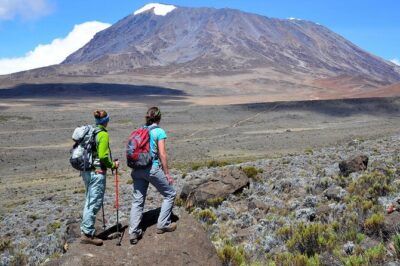 ★ 5.0Private Full Day Hiking Experience to Marangu RouteFrom $26061 reviews
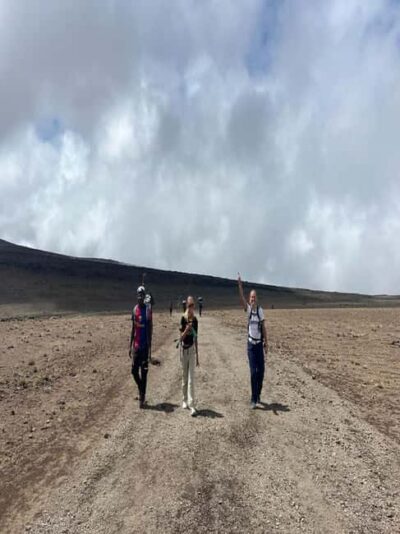 ★ 4.5From Arusha/Moshi: Kilimanjaro Hike Marangu Route Day TripFrom $10154 reviews
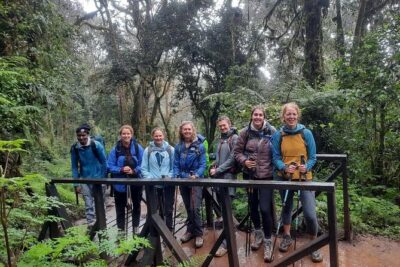 ★ 5.0Mount Kilimanjaro Day Hike Through Marangu Route to Mandara HutFrom $26537 reviews
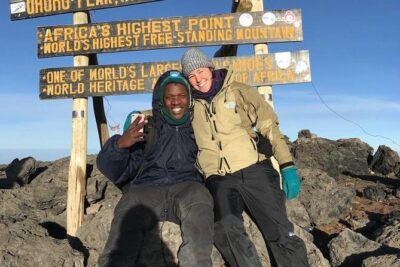 ★ 5.0Best Kilimanjaro Adventures 6 Days Marangu Route ExperienceFrom $1,00018 reviews
 ★ 5.0Kilimanjaro Private Climbing in 6 Days Marangu RouteFrom $2,00016 reviews
 ★ 5.06 Days Mount Kilimanjaro Trek Marangu RouteFrom $2,35015 reviews
Browse the lists this tour appears in