
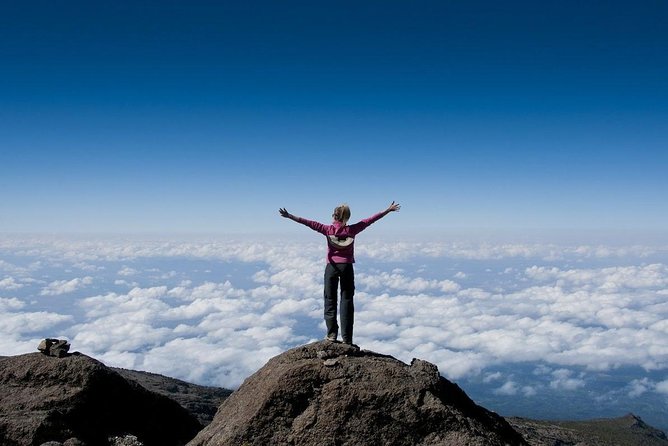
REVIEW · KILIMANJARO MARANGU ROUTE
6 Days Mount Kilimanjaro Trek Marangu Route
Kilimanjaro from the Marangu side feels old-school and civilized. This 6-day trek blends rainforest walking, hut nights, and a built-in acclimatization day so you are not just rushing toward the summit. It is the classic Marangu route, also nicknamed the Coca-Cola route, approached from the mountain’s southeast.
What I like most is the steady rhythm: you go up in stages, sleep in the huts (dorm-style), and get the extra day at Horombo to help your body adjust. I also like the way the trip is handled end-to-end, with hotel nights in Moshi, airport transfers, and a support team that focuses on keeping you fed, warm, and moving safely.
The main thing to consider is that even on the so-called easier route, Uhuru Peak is still a brutal long day in cold air and thin oxygen, and summit success is never guaranteed. If you are picky about sleep comfort, the dorm-style huts may feel basic, even when you are exhausted in the best way.
In This Review
- Key highlights worth knowing
- Why the Marangu route (Coca-Cola route) is a practical choice from Moshi
- Day 1: Moshi to Marangu Gate, Mandara Hut rainforest, and Maundi Crater views
- Day 2: Mandara to Horombo Hut across timberline into heath and moor
- Day 3: The Horombo acclimatization day to Mawenzi Ridge or Zebra Rock
- Day 4: The long push to Kibo Hut via Last Water and the saddle
- Day 5: Midnight ascent to Uhuru Peak, sunrise at Gillman’s Point, and the long descent
- Day 6: Descend back through rainforest, finish at the park gate, and celebrate in Moshi
- Hut nights, meals, and the support details that make or break your mood
- How the guide and porter team affects the whole experience
- Price and value: what you pay for in a $2,350 per person Marangu trek
- What to pack and how to prepare, based on what’s included and what’s not
- Should you book this 6-day Marangu Kilimanjaro trek?
- FAQ
- How long is the Kilimanjaro trek on this itinerary?
- Where do I start and where do I end?
- Is the tour private?
- What accommodation style is used on the mountain?
- Are meals included?
- Does the package include airport transfers and hotel nights?
- Is emergency oxygen included?
- What is included in the price, and what is not?
- What is the cancellation policy?
Key highlights worth knowing
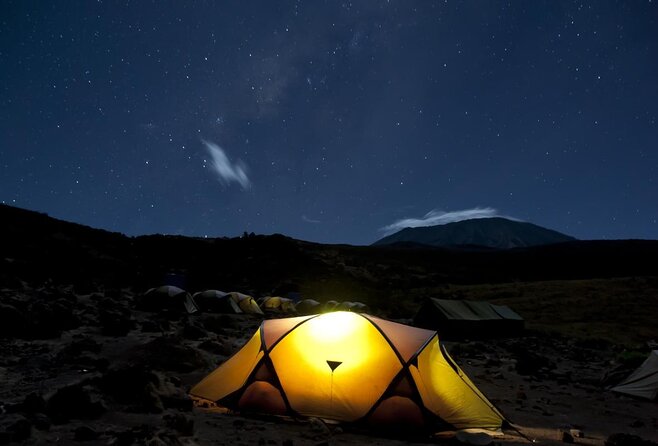
- Marangu route huts, not tents: dorm-style sleeping at Mandara, Horombo, and Kibo
- One extra acclimatization day at Horombo in a 6-day plan
- Rainforest start with Maundi Crater views on Day 1
- Midnight summit push timing designed around sunrise at Gillman’s Point
- Support team includes guides, porters, and cooks, plus daily water and hot-water washing
- Airport-to-Moshi transfers and Moshi hotel nights take logistics off your plate
Other ways up Kilimanjaro we reviewed
- Kilimanjaro climb by Lemosho Route (7-day)★ 5.0 · 651 reviews
- Kilimanjaro climb, Machame Route (7-day)★ 5.0 · 262 reviews
- Kilimanjaro Climbing Lemosho Route 8 Days.★ 5.0 · 186 reviews
- Climbing Kilimanjaro – Machame Route★ 5.0 · 170 reviews
Why the Marangu route (Coca-Cola route) is a practical choice from Moshi
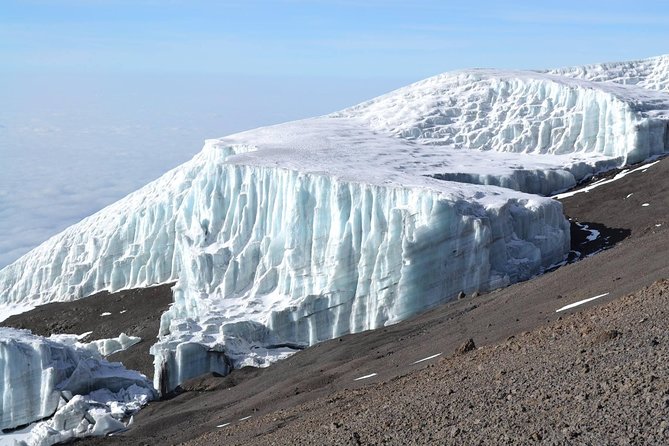
The Marangu route is the oldest established way up Kilimanjaro and that matters. You are walking on a path with long-term infrastructure and a tried-and-true pacing plan. Many people choose it because it is considered the easiest route on the mountain, especially compared with the more rugged alternates.
The big appeal for you is comfort and simplicity. Marangu is the only Kilimanjaro route in this set-up that offers sleeping huts in dormitory-style accommodations, so you are not stuck in cold tent life. That does not make Kilimanjaro easy, but it does remove one layer of stress when you need energy for the climb.
This itinerary also reflects a reality you should plan around: the minimum number of days for Marangu is five, but the chance of reaching the summit in that time is lower. With this schedule, you get a recommended acclimatization day on the mountain, which is one of the smartest ways to improve your odds without adding a whole extra week.
Day 1: Moshi to Marangu Gate, Mandara Hut rainforest, and Maundi Crater views
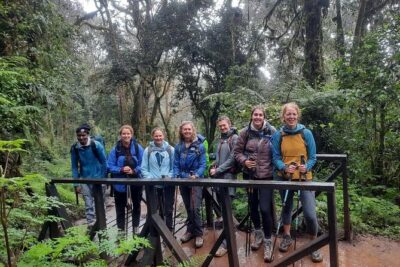
Your trek starts with a pickup from your lodge in Moshi to the Marangu gate, where you complete the necessary paperwork. Once you start hiking, the environment shifts right away into dense rainforest. Expect thick greenery, constant footing attention on a trail that is active with wildlife, and at least a chance to spot primates along the way.
You walk about 8.3 km (roughly 5.2 miles) to Mandara Hut, and the schedule gives you about 5 hours for this first stage. After you rest, your guide can take you to Maundi Crater for wide views back over the Kenyan interior.
Why this first day is more than just a warm-up: rainforest footing can be slippery and humid, so your body gets an early lesson in steady pacing. It also helps you settle into the gear routine. You are not just training your legs, you are learning how your breathing feels before altitude starts to bite harder.
Day 2: Mandara to Horombo Hut across timberline into heath and moor
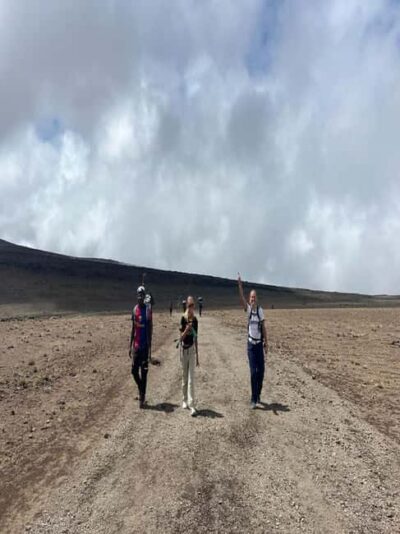
Day 2 begins with an early breakfast and a climb that slowly changes the scenery and air. After leaving Mandara Hut, you reach the timberline and then transition into the heath and moor zone. This is the part where Kilimanjaro starts to feel more exposed, cooler, and less forgiving.
You cover about 12.5 km (about 7.8 miles) to reach Horombo Hut. The total time is around 9 hours, and the route typically has you arriving after roughly 4 to 6 hours of hiking. Horombo sits at about 3,700 meters, and from the hut you get strong views toward Mawenzi and Kibo, plus the wide plain of the Masai steppe.
For me, Horombo views are part of the psychological boost. You arrive at a point where the mountain looks real, not just a silhouette in the distance. Still, this is also your first day where fatigue can stack up. If you push too hard, you will feel it later when the air gets thin.
Marangu, other operators and other lengths
Day 3: The Horombo acclimatization day to Mawenzi Ridge or Zebra Rock
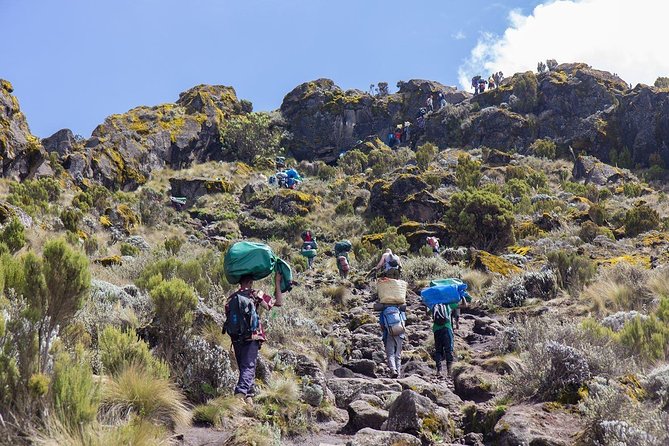
This is the day that makes the 6-day plan smarter. Instead of forcing another fast climb, you stay at Horombo and hike partway higher for acclimatization. The idea is simple: you stress your body gently at altitude, then you return to sleep lower than where you are pushing your limits.
You hike to Mawenzi Ridge or Zebra Rock and then go back to Horombo Hut for lunch. After that, the schedule builds in rest until dinner and your overnight stay. The hiking portion is about 4 hours.
You should treat this day like a gift, not an optional bonus. It gives you time to adjust to the altitude shift from Day 2, and it helps reduce the risk that you spend the rest of the trek paying for a “too fast” start. If you want a practical rule, it is this: on Kilimanjaro, being patient is not slow, it is strategy.
Day 4: The long push to Kibo Hut via Last Water and the saddle
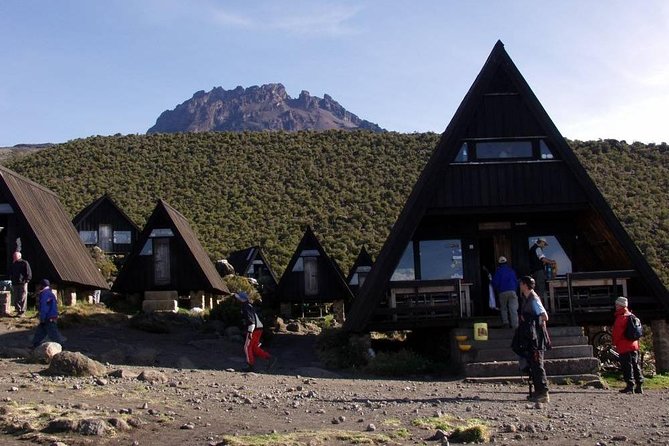
Day 4 is where the climb stops feeling like a hike and starts feeling like an expedition. You are heading for Kibo Hut, and you cover about 9.5 km (around 5.9 miles) in about 7 hours, typically described as a long and tough stage.
The trail passes the Last Water point, then moves through the so-called saddle, a near-vegetation-less plateau that connects the main summit area of Kibo with Mawenzi. The goal is getting to Kibo Hut before you lose daylight and before the cold ramps up.
You usually reach Kibo Hut in about 6 to 7 hours. Then you eat early and go to bed early because nighttime will feel short and the next day’s summit plan starts around midnight.
What you will notice here is how altitude changes your pace. Even if your legs feel okay, breathing can become the limiter. The best way to handle it is to keep your steps controlled and avoid the urge to speed up because you feel like you are “getting used to it.” Kibo day is a place where calm beats bravado.
Day 5: Midnight ascent to Uhuru Peak, sunrise at Gillman’s Point, and the long descent
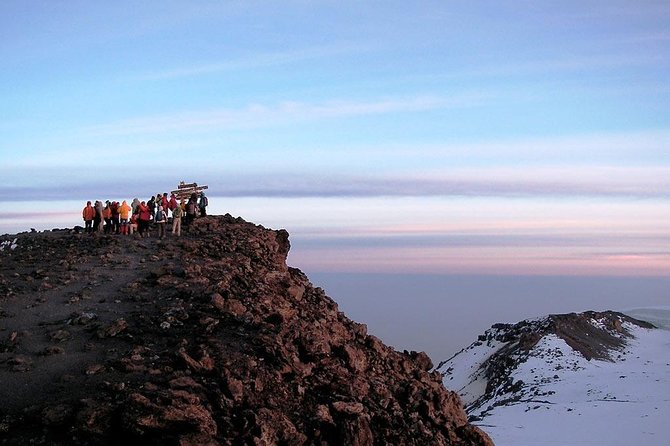
This is the big day, the one you plan for mentally for weeks. Your final ascent begins around midnight. You climb past Hans Meyer Cave at about 5,220 meters, and the route goes upward slowly, but it is steady work the whole time.
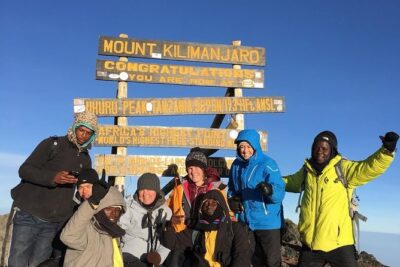
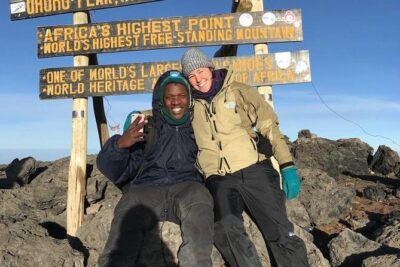
At sunrise, you reach Gillman’s Point at about 5,681 meters, which sits on the crater rim. After that, you keep going another 1 to 2 hours and then you reach Uhuru Peak at 5,895 meters.
From there, the schedule includes the return to Kibo Hut for a warm meal, followed by a 1 to 2-hour break before continuing down to Horombo Hut. This day can take 12 to 15 hours total.
A practical way to think about this: you do not climb Kilimanjaro on strength alone. You climb it on temperature management, pacing, and accepting that you will probably go slower than you expect. Cold is real here, and thin air makes simple effort feel big.
If the summit is your lifelong dream, this is still the part where you respect your limits. Your guides will be the people steering the pace and decisions, and the best outcome is not just a peak photo, it is finishing the trek safely.
Day 6: Descend back through rainforest, finish at the park gate, and celebrate in Moshi
Day 6 is a victory lap, but it is also still a trail day. You pass through the heath and moor zones and then return to Mandara Hut at about 2,700 meters for a warm lunch. After that, you shift back into tropical rainforest walking.
You continue down to the Kilimanjaro National Park Gate at about 1,860 meters. The total trekking time is listed as about 6 hours, with around 8 hours total when you include the transfer and wrap-up.
After saying goodbye to your mountain guides, you get a short transfer back to your hotel in Moshi. Then you can take a warm, relaxing shower and celebrate your climb.
This last day is also when your body tells the truth. Descents can be harder on your knees than you expect. You might feel like you are done, but plan to walk carefully on the trail and keep your steps short.
Hut nights, meals, and the support details that make or break your mood
Marangu’s hut system is a big deal. You are sleeping in dormitory-style accommodations at huts like Mandara Hut, Horombo Hut, and Kibo Hut. That means you should expect basic conditions and shared space. The upside is you have a roof and you are not fully dependent on campsite setups.
What I like about this itinerary is how it supports you with the daily comfort basics. The package includes fresh water for drinking and hot water for washing daily. That small detail can keep you feeling human instead of just surviving.
Food matters too. The schedule includes 5 breakfasts, 5 dinners, and 6 lunches. In the feedback you provided, the most praised pieces are the meals and the way staff keeps things running smoothly, with guides and cooks doing a solid job keeping you fueled.
There is also an emphasis on safety and smooth organization. Multiple comments mention timely transfers, good communication before and during the trek, and guides who make sure you feel looked after. One guest noted a team that made them feel like home away from home, which is exactly what you want when you are living in cold and altitude for several days.
How the guide and porter team affects the whole experience
On Kilimanjaro, your guide is not just a leader, they are a translator between your body and the mountain. This package includes a qualified mountain guide, assistant guides, and porters and cook, with their wages covered.
That matters for two reasons. First, it reduces uncertainty. You are not wondering if you packed the right gear for a resource-limited environment, because the team handles a lot of the trek operation. Second, it supports pacing and safety. In the feedback, people repeatedly point to safety being a priority, and that is what you should look for in a quality operator.
The name Wence Tarimo shows up in responses tied to the team. If you want a personal touch, this is the kind of operator where communication and accountability seem to be part of the culture, not an afterthought.
The bottom line: if you get along with your guide and you trust their pacing choices, the climb feels more manageable. If you fight the plan, you will feel it. This itinerary builds a plan that tries to keep you in the right altitude rhythm.
Price and value: what you pay for in a $2,350 per person Marangu trek
At $2,350 per person, you are not just buying a climb, you are buying logistics. This includes all fees and taxes, plus return transfers between Kilimanjaro airport and Moshi. You also get hotel nights the night before and the night after the climb, with dinner and breakfast included.
Then there is the work behind the scenes. The package covers wages for guides, porters, and the cook, and includes trek equipment like tents, camp chairs, tables, and sleeping mattresses. It also includes daily water and hot water for washing.
You might notice that admission tickets are described across days as free or included. The overall “all fees and taxes” line plus what is marked per day suggests entrance costs are handled as part of the package rather than added later.
What you should budget extra for:
- visas, flights, and travel health insurance
- personal hiking and trekking gear (the data says gear can be rented from an equipment store)
- personal items and personal medicine
- water purifying tablets and snacks, including a portable toilet which is described as highly recommended
So is $2,350 good value? For Kilimanjaro, the real question is what is taken off your plate. Here, you are covered for transfers, meals, water, guide and support staffing, and the structured hut-based route. If you want fewer moving parts and you are okay with dorm-style hut lodging, it is a strong match.
What to pack and how to prepare, based on what’s included and what’s not
Because the package includes major trekking operations, you can focus on the stuff that protects you day to day.
The essentials you should consider bringing or renting:
- personal trekking clothes and layering for cold nights and early-morning summit time
- personal medicine and any items you know you need
- water purifying tablets, since you are also advised to bring them
- snacks and a portable toilet, described as highly recommended
You might also want to double-check what you are responsible for personally versus what is provided. This package covers a lot, including camp equipment and mattresses, but it does not list personal gear as included. The data does say gear can be rented from an equipment store in Tanzania, so you have options if you travel light.
Finally, your fitness level should be moderate, which is stated directly. Kilimanjaro is not just cardio, it is also endurance at altitude. Train for sustained uphill effort, then keep your expectations realistic. Even the easier route is still a serious commitment.
Should you book this 6-day Marangu Kilimanjaro trek?
I would book this if you want the classic Marangu hut experience, you prefer a route with established infrastructure, and you value a plan that includes an acclimatization day at Horombo. It is also a good choice if you want transfers and meals handled cleanly and you do not want to wrestle with logistics in Moshi.
I would hesitate if you need maximum privacy at night, because hut sleeping is dorm-style. I would also think twice if you are counting on a guaranteed summit. This itinerary is designed to improve your odds, but it cannot eliminate altitude risk or weather issues, and Uhuru Peak remains a long, cold, demanding push.
If your goal is a well-run, traditional route with real support behind you, this 6-day Marangu plan is the kind of trip that can turn a bucket-list climb into a story you actually want to tell for years.
FAQ
How long is the Kilimanjaro trek on this itinerary?
The trek is listed as 6 days (approx.), with a full schedule from pickup in Moshi through the final descent and return to Moshi.
Where do I start and where do I end?
You start with pickup in Moshi and travel to Marangu Gate for Day 1. You finish by returning down to the park gate, then take a transfer back to your hotel in Moshi.
Is the tour private?
Yes. It is described as a private tour/activity, with only your group participating.
What accommodation style is used on the mountain?
Marangu is known for sleeping huts, and this itinerary follows that approach with hut nights at Mandara Hut, Horombo Hut, and Kibo Hut in dormitory-style accommodations.
Are meals included?
Yes. The included meals listed are 5 breakfasts, 5 dinners, and 6 lunches.
Does the package include airport transfers and hotel nights?
Yes. It includes return transfers between Kilimanjaro airport and Moshi, plus hotel the night before and the night after the climb, with dinner and breakfast included.
Is emergency oxygen included?
Yes. Emergency oxygen is included for use in emergencies only and is not presented as summit aid.
What is included in the price, and what is not?
Included: all fees and taxes, guides and support staff, camping equipment, daily water and hot water for washing, and the listed meals. Not included: visas, flights, travel and health insurance, personal hiking gear (gear can be rented), personal items, personal medicine, water purifying tablets, and snacks including a portable toilet which is described as highly recommended.
What is the cancellation policy?
Free cancellation is offered if you cancel up to 24 hours in advance of the experience start time for a full refund, based on the experience’s local time.
The Marangu Trail
- Kilimanjaro climb, Marangu route (6-day)
★ 5.0 · 72 reviews - Climbing Kilimanjaro – Marangu Route
★ 5.0 · 65 reviews - Best Kilimanjaro Adventures 6 Days Marangu Route Experience
★ 5.0 · 18 reviews - Kilimanjaro Private Climbing in 6 Days Marangu Route
★ 5.0 · 16 reviews - 6 Days Climb Kilimanjaro Through Marangu Route
★ 4.5 · 15 reviews
Kilimanjaro, Route by Route
- Kilimanjaro climb by Lemosho Route (7-day)
★ 5.0 · 651 reviews - Kilimanjaro climb, Machame Route (7-day)
★ 5.0 · 262 reviews - Kilimanjaro Climbing Lemosho Route 8 Days.
★ 5.0 · 186 reviews - Climbing Kilimanjaro – Machame Route
★ 5.0 · 170 reviews - Climbing Kilimanjaro through 7 days Machame Route
★ 5.0 · 151 reviews
Just added from around Moshi
Kilimanjaro Marangu Route, compared.
 ★ 5.0Kilimanjaro climb, Marangu route (6-day)From $2,90272 reviews
 ★ 5.0Climbing Kilimanjaro – Marangu RouteFrom $2,00465 reviews
 ★ 5.0Private Full Day Hiking Experience to Marangu RouteFrom $26061 reviews
 ★ 4.5From Arusha/Moshi: Kilimanjaro Hike Marangu Route Day TripFrom $10154 reviews
 ★ 5.0Mount Kilimanjaro Day Hike Through Marangu Route to Mandara HutFrom $26537 reviews
 ★ 5.0Kilimanjaro Climbing 5 days Marangu routeFrom $90022 reviews
 ★ 5.0Best Kilimanjaro Adventures 6 Days Marangu Route ExperienceFrom $1,00018 reviews
 ★ 5.0Kilimanjaro Private Climbing in 6 Days Marangu RouteFrom $2,00016 reviews
Browse the lists this tour appears in