
REVIEW · KILIMANJARO MARANGU ROUTE
6 Days Climb Kilimanjaro Through Marangu Route
Kilimanjaro feels close, even on a 6-day climb. This guided Marangu Route trek strings together rainforest, moorland views, a rest day, and that midnight-to-early-morning summit push to Uhuru Peak. You also get pickup from Moshi and a mountain crew built to keep the hard parts on schedule.
I really like how much gets handled for you, from tents with comfortable sleeping mattresses to a mess setup for meals, boiled water, and first aid support. I also like the clear structure of the days, including a Day 3 break at Horombo that gives you time to adjust before going higher. One consideration, though, is that Marangu still asks a lot, and the big summit start is very early, so altitude sensitivity and stamina matter.
In This Review
- Key things that make this Kilimanjaro climb worth your attention
- Marangu’s Huts, Rainforest Footsteps, and a Summit Goal
- Day 1 to Mandara Hut: Rainforest to Maundi Crater country
- Day 2 to Horombo Hut: Moorlands, Mawenzi views, and altitude cues
- Day 3 Rest Day at Horombo: the planned breather that helps
- Day 4 to Kibo Hut: the saddle walk and the moonscape shift
- Day 5 Midnight to Uhuru Peak: Gilman’s Point and the long descent
- Day 6 Horombo to Moshi: the muddy forest exit and the last hill
- What you get for the $1,899 price, and what you still handle
- Guides, encouragement, and the human side of the summit
- Packing and readiness for Marangu’s mix of cold, mud, and early starts
- Final call: Should you book this Marangu Kilimanjaro climb?
- FAQ
- How long is the Kilimanjaro climb on the Marangu route?
- Where does the tour start, and how do you get back to Moshi?
- Does this trip use huts or tents?
- Are meals included during the climb?
- When do you start the summit climb?
- Is this a private tour?
- What is not included in the price?
- What happens if the climb is canceled due to weather?
Key things that make this Kilimanjaro climb worth your attention
- Qualified guides plus a dedicated mountain crew, not just a solo guide and prayers
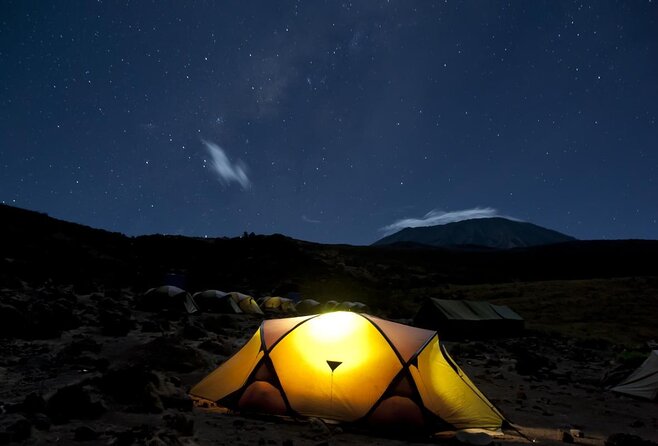
- Huts at key stops and tents elsewhere, so you are not living in a total survival camp
- All mountain meals with waiter and cook support, plus boiled water
- Pulse oximeters and a first aid kit included, for extra caution at altitude
- Return transport from Moshi to the start and back at the end
- Marangu specifics like the Maundi Crater side trip and the wet, muddy lower descent
Other ways up Kilimanjaro we reviewed
- Kilimanjaro climb by Lemosho Route (7-day)★ 5.0 · 651 reviews
- Kilimanjaro climb, Machame Route (7-day)★ 5.0 · 262 reviews
- Kilimanjaro Climbing Lemosho Route 8 Days.★ 5.0 · 186 reviews
- Climbing Kilimanjaro – Machame Route★ 5.0 · 170 reviews
Marangu’s Huts, Rainforest Footsteps, and a Summit Goal
If you like having a plan, Marangu delivers. This route moves you from montane rainforest into open moorlands, then up into heathland and alpine desert. You get a classic Kilimanjaro “zoning” experience, where the environment changes day by day instead of staying the same grind all week.
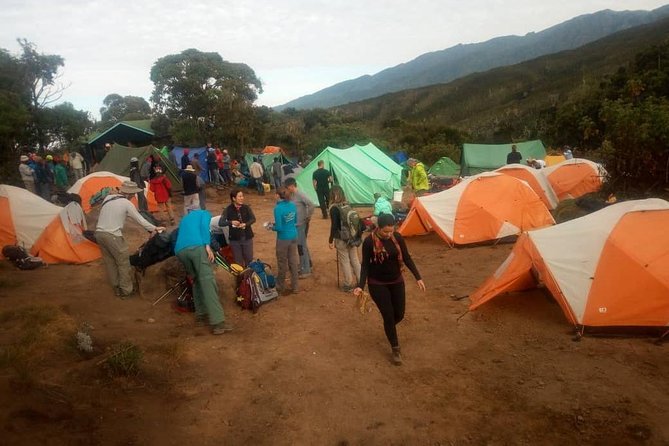
The biggest value for most people is the sleep and food setup. You are not responsible for hauling everything yourself. The trek includes tents and comfortable sleeping mattresses, plus huts at different stops. That matters because Kilimanjaro is not just a walking challenge. It is a rest and recovery challenge, and bad sleep can turn normal altitude discomfort into a rough week.
The summit is also straightforward in terms of timing and staging. On the big push, you start between midnight and 2 am, move up steep sections, reach Gilman’s Point on the crater rim, then continue to Uhuru Peak. That is the headline, but the day is also about pacing and not burning matches too early.
Day 1 to Mandara Hut: Rainforest to Maundi Crater country
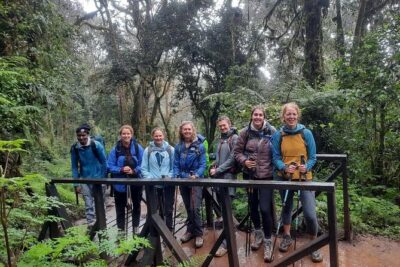
Day 1 starts with a drive from Moshi to the Kilimanjaro National Park Gate, about an hour, then registration before you begin walking. The climb begins through rainforest. This is the part people forget to be excited about, because everyone is focused on the summit. But rainforest walking is where you warm up your muscles in a gentler setting, and it is cooler and more alive.
Expect towering eucalyptus trees and plenty of bird life. Colobus monkeys can be on the menu for sightings, if you slow down long enough to look up. There is also a side trip option to Maundi Crater, a great way to orient yourself and get early views over northern Tanzania and Kenya.
From about 1,860 m (6,100 ft) up to 2,700 m (8,875 ft), you will cover roughly 8 km (about 5 miles) in about 3 to 4 hours. Lunch and dinner are included, and you end at Mandara Hut for the night.
What to watch for on Day 1: keep your pace steady. You are not aiming to win the rainforest. You are setting up your breathing for altitude later.
Day 2 to Horombo Hut: Moorlands, Mawenzi views, and altitude cues
Day 2 feels like the route opening up. You leave the forest glades and climb through ascending paths on open moorlands toward Horombo. This is the day where the views become a daily habit. You will get strong sightlines to Mawenzi and the summit of Kibo, and you can start feeling the altitude effects, even if they are mild at first.
Vegetation shifts too. You might spot giant lobelias and groundsel type plants as the trail climbs out of the lush cover. The day is longer than Day 1: about 12 km (around 7.5 miles) and about 5 to 6 hours walking.
You gain a lot of elevation too, from 2,700 m (8,875 ft) up to about 3,700 m (12,200 ft). Breakfast, lunch, and dinner are included. Horombo Hut is your base overnight.
My practical advice: if your breathing feels “off,” do not try to solve it with speed. Use a slower rhythm and let the guide set the pace. Altitude is sneaky, and early control beats late panic.
Marangu, other operators and other lengths
Day 3 Rest Day at Horombo: the planned breather that helps
Day 3 is the reason Marangu works for many people who want a little less suffering. You stay at Horombo Hut with breakfast, lunch, and dinner included, and you get to rest.
There is an optional hike by Mawenzi Peak. The schedule lists it as short, with about 1 hour and no extra distance logged, but the point is to let you move if you feel good while giving the option to keep it easy if you do not.
This kind of rest day is valuable because altitude does not care about your motivation. Even when you feel okay, you are still asking your body to adjust at higher elevations. The rest gives you time to eat, hydrate, and simply let the day pass without adding another big climbing push.
If you are the type who hates doing nothing, you still have a job. Wear your layers properly, drink what is provided, and sleep when you can. You are saving energy for the moon-scape day later.
Day 4 to Kibo Hut: the saddle walk and the moonscape shift
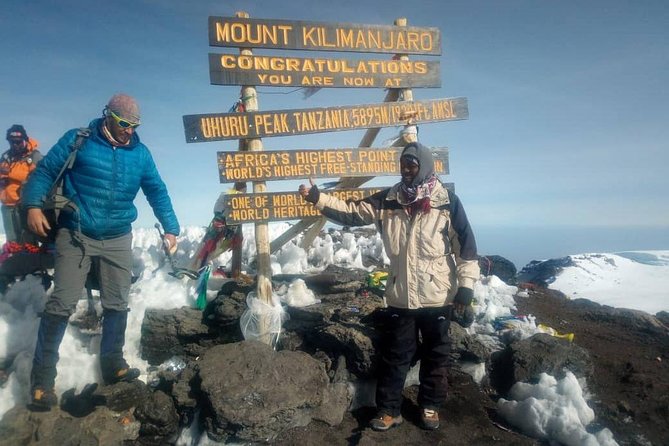
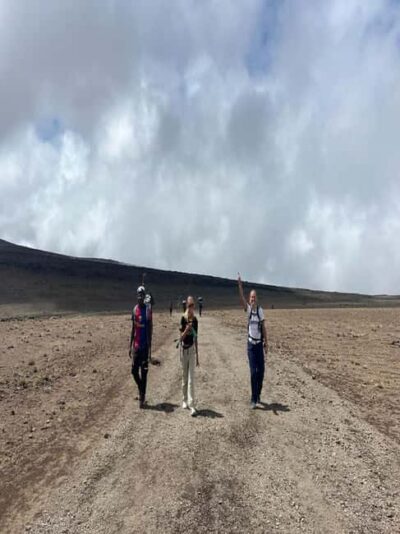
Day 4 is where the trail begins to feel like a different planet. You ascend from Horombo Hut toward Kibo Hut, passing the last watering point, then walking onto the saddle between Kibo and Mawenzi.
Vegetation changes in a big way. You go from upper heathland and then vegetation starts disappearing into a “moonscape” feel. The air is drier and the terrain gets more serious. Dinner is included, and you are also preparing for the summit climb the next day.
This is a strong elevation day. You climb from about 3,700 m (12,200 ft) up to about 4,700 m (15,500 ft). Distance is about 9 km (around 5.5 miles) with 5 to 6 hours of hiking.
Here is the practical takeaway: do not treat Day 4 like just another day. You are setting yourself up for cold and effort after midnight. If you feel even slightly tired, it is usually the right time to scale back and save energy.
Day 5 Midnight to Uhuru Peak: Gilman’s Point and the long descent
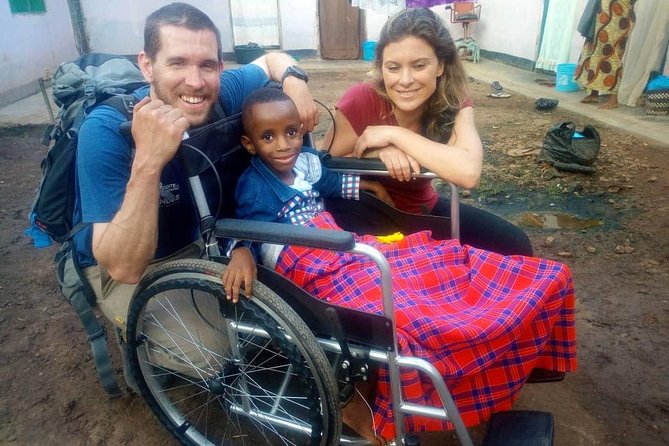
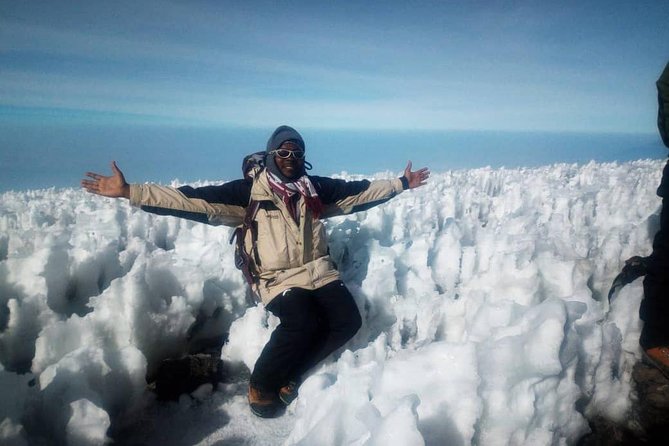
This is the dramatic day. You start very early, between midnight and 2 am, and climb steep sections on heavy scree or snow toward Gilman’s Point located on the crater rim. That “steep and heavy” description is not a throwaway line. You will feel it in your legs and your breathing.
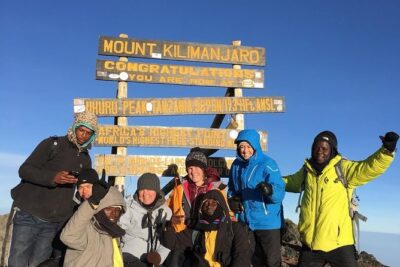
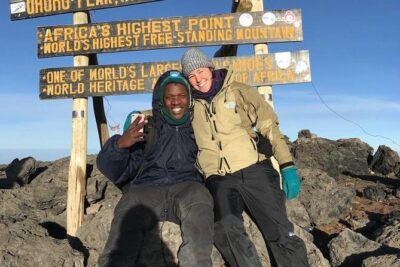
From Gilman’s Point, you continue to Uhuru Peak, the highest point in Africa. Views happen constantly, and you have the chance to get summit photos to share with friends and family.
Then comes the part people underestimate: descending. You descend from about 5,895 m (19,340 ft) down to around 3,700 m (12,200 ft). The schedule shows roughly 6 km (4 miles) upward and about 15 km (9 miles) down, with hiking time listed as 6 to 8 hours up and 15 km of descending time included in the overall effort.
After reaching Uhuru, the route includes a lunch and rest at Kibo before continuing back to Horombo. This is a long day in total, even though the summit moment is the part everyone remembers.
On summit night, my best advice is boring and effective: follow the guide’s pacing, keep your breathing calm, and do not stop too long. Cold can steal momentum faster than you think.
Day 6 Horombo to Moshi: the muddy forest exit and the last hill
Day 6 is all about coming down. After breakfast, you descend steadily through moorland to Mandara Hut, then continue descending through a lush forest path to the park gate on the Marangu side.
Lower on the mountain, it can be wet and muddy. The route guidance specifically notes that gaiters and trekking poles help. Shorts and t-shirts are likely enough for many hikers during lower sections, but you should keep rain gear and warmer clothing handy because weather changes at elevation and during the descent.
The schedule lists about 20 km (about 12.5 miles) and about 4 to 5 hours walking. Elevation drops from around 3,700 m (12,200 ft) down to about 1,700 m (5,500 ft). You finish at the Marangu gate, where a vehicle is waiting to take you back to your hotel in Moshi, about an hour.
If you want the easiest final day, prioritize foot care and pacing. Mud is tiring, and slipping wastes energy you will want later when you finally sleep normally.
What you get for the $1,899 price, and what you still handle
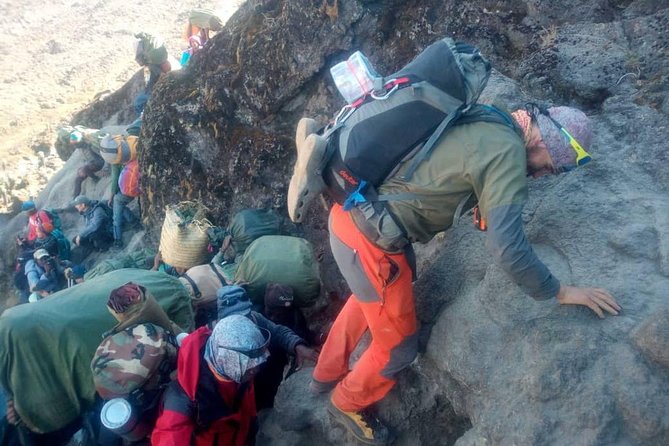
At $1,899 per person, the value is mostly about logistics and risk management. This climb includes national park fees, qualified guides, and a mountain crew. You also get tents with sleeping mattresses, plus the dining setup (mess tent, eating utensils). Meals are included every day on the mountain, and boiled water is provided.
Safety and monitoring show up in the included items too. The trek includes a first aid kit and pulse oximeters. It also includes rescue fees. Those details are not glamorous, but on a mountain like this, they can reduce stress when altitude symptoms show up.
Also included:
- Return transport from Moshi for the start and finish
- Guides, porters, cook, and waiter salaries
- Waiter and cook services for mountain meals
- Camping equipment and mini camping chairs
- Tents and sleeping mattresses
What is not included:
- Tips for guides, porters, cook, and waiters
- Gear for your climb
- Emergency oxygen
- Visas, personal items, and unspecified nature items
- Meals and drinks not specified
One practical note: this is listed as a private tour/activity, meaning it is set up for your group rather than being part of a random shared hiking pool.
Guides, encouragement, and the human side of the summit
The technical part matters on Kilimanjaro. But the human part is often what makes you believe you can keep going when you feel your limits.
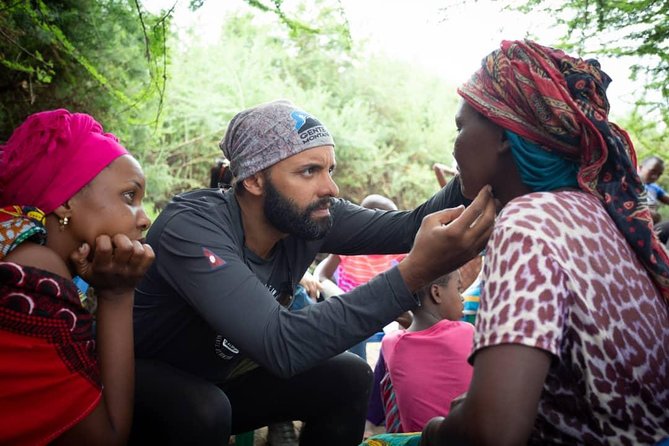
In the positive experiences linked to operators connected with this trek style, guides like Teacher (Edward Lazaro), Tuliza, Temba, and support staff such as Joseph and Goodluck come up again and again for being friendly and attentive. One theme is that guides and crew do more than point the way. They step in to carry loads if needed, explain what to expect, and keep motivation going during tough hours.
Another theme is the cultural rhythm on the mountain. Some groups highlight a slower pace described as pole pole, along with singing and team energy like jambo bwana traditions. That matters because pole pole is not just a catchphrase. It is a strategy for keeping your breathing steady when the altitude hits harder than your pride wants to admit.
The balanced reality check: one negative account mentions poor organization, lack of communication, an inexperienced guide, and subpar accommodation and transport. You can reduce your risk by asking pointed questions before you go, especially about pickup timing, who your guide will be, and exactly what sleeping setup you will get on your dates.
Packing and readiness for Marangu’s mix of cold, mud, and early starts
This trip is built around the realities of Kilimanjaro weather and terrain shifts. You will be exposed to rainforest humidity early, then colder, drier conditions at higher elevations, and a very early start on summit night.
From the route details, you should plan for:
- Rain gear plus warmer clothing, especially for the higher and early-morning hours
- Gaiters and trekking poles for the muddy sections during the descent
- Shorts and t-shirts may be fine for lower elevations, based on the guidance given for Day 6
One tip that comes up from hikers doing a fast 6-day climb is bringing eye shades and ear plugs. If you are sensitive to light or noise in huts or tents, this can make rest easier on turnaround days.
And because gear is not included, build your kit around your comfort at altitude. Do not assume the mountain will provide what you need for cold fingers and tired legs.
Final call: Should you book this Marangu Kilimanjaro climb?
You should seriously consider booking if you want:
- A structured 6-day Marangu plan with a rest day
- Huts and tents with mattresses, plus full meals on the mountain
- Qualified guides and a crew who handle the camp setup and daily logistics
- Monitoring support like pulse oximeters and a first aid kit
- Return transport from Moshi so you are not piecing logistics together
You might want to think twice if:
- You know altitude or early starts hit you hard
- You rely on the operator for communication and detailed planning, because you will want to confirm details up front
- Your budget does not allow for extra costs like tips, and you still need to buy or rent climb gear
If you go in with realistic expectations and you follow your guide’s pace, this is a strong option for tackling the roof of Africa without turning the trip into a self-managed camping expedition.
FAQ
How long is the Kilimanjaro climb on the Marangu route?
The trek is about 6 days.
Where does the tour start, and how do you get back to Moshi?
The experience starts in the Mount Kilimanjaro area with pickup offered from Moshi, and it ends back at the meeting point. On the final day, a vehicle takes you from the Marangu gate back to your hotel in Moshi, about 1 hour.
Does this trip use huts or tents?
You can camp in the camping area or stay in provided huts at different stops. Tents and sleeping mattresses are included.
Are meals included during the climb?
Yes. All meals on the mountain are included, including breakfast, lunch, and dinner depending on the day. Boiled water is provided on the mountain.
When do you start the summit climb?
You begin the summit climb very early, between midnight and 2 am.
Is this a private tour?
Yes. It is a private tour or activity, so only your group participates.
What is not included in the price?
Tips are not included. Also not included are climb gear, visas, emergency oxygen, and personal items. Meals and drinks that are not specified are also not included.
What happens if the climb is canceled due to weather?
This experience requires good weather. If it is canceled due to poor weather, you will be offered a different date or a full refund.
The Marangu Trail
- Kilimanjaro climb, Marangu route (6-day)
★ 5.0 · 72 reviews - Climbing Kilimanjaro – Marangu Route
★ 5.0 · 65 reviews - Best Kilimanjaro Adventures 6 Days Marangu Route Experience
★ 5.0 · 18 reviews - Kilimanjaro Private Climbing in 6 Days Marangu Route
★ 5.0 · 16 reviews - Top 6 Days Mt. Kilimanjaro Bike trek Tour by Marangu-Kilema Route
★ 5.0 · 15 reviews
Kilimanjaro, Route by Route
- Kilimanjaro climb by Lemosho Route (7-day)
★ 5.0 · 651 reviews - Kilimanjaro climb, Machame Route (7-day)
★ 5.0 · 262 reviews - Kilimanjaro Climbing Lemosho Route 8 Days.
★ 5.0 · 186 reviews - Climbing Kilimanjaro – Machame Route
★ 5.0 · 170 reviews - Climbing Kilimanjaro through 7 days Machame Route
★ 5.0 · 151 reviews
Just added from around Moshi
Kilimanjaro Marangu Route, compared.
 ★ 5.0Kilimanjaro climb, Marangu route (6-day)From $2,90272 reviews
 ★ 5.0Climbing Kilimanjaro – Marangu RouteFrom $2,00465 reviews
 ★ 5.0Private Full Day Hiking Experience to Marangu RouteFrom $26061 reviews
 ★ 4.5From Arusha/Moshi: Kilimanjaro Hike Marangu Route Day TripFrom $10154 reviews
 ★ 5.0Mount Kilimanjaro Day Hike Through Marangu Route to Mandara HutFrom $26537 reviews
 ★ 5.0Kilimanjaro Climbing 5 days Marangu routeFrom $90022 reviews
 ★ 5.0Best Kilimanjaro Adventures 6 Days Marangu Route ExperienceFrom $1,00018 reviews
 ★ 5.0Kilimanjaro Private Climbing in 6 Days Marangu RouteFrom $2,00016 reviews
Browse the lists this tour appears in