
REVIEW · KILIMANJARO MARANGU ROUTE
Top 6 Days Mt. Kilimanjaro Bike trek Tour by Marangu-Kilema Route
Pedal up Africa, then ride it down. This 6-day Kilimanjaro bike trek on the Marangu-Kilema route mixes hassle-free transfers from Moshi with the only bike-accessible summit approach, so your logistics are handled and your legs do the climbing. The catch is altitude and cold are serious, and some rocky stretches can slow you down or push you into walking.
What I really like is that this is built as a proper trek, not just a scenic bike ride. You get mountain hut stays, meals handled for you, and porter support, which matters once you are dealing with thin air.
In This Review
- Key highlights to know before you go
- Kilimanjaro by Bike on the Marangu-Kilema Route: Why it works
- Price and logistics: What $3,668 buys you in real terms
- Day 1: Kilema Gate (1,950m) to Horombo Hut (3,705m)
- Day 2: Alpine desert pedaling and the Mawenzi-area loop
- Day 3: Rocky first kilometers, the Saddle, then the hard push toward Kibo
- Day 4: Kibo Hut summit preparation, optional orientation hike, then a night ascent plan
- Day 5: 4:00 am zigzags, Hans Meyer’s Cave, Gilman’s Point, Uhuru Peak, then downhill to Stella Point
- Day 6: The final ride through alpine and rainforest down to Kilema, then back to Moshi
- Bikes, guides, and crew support that actually matter
- What to pack, and the training that helps you enjoy it
- Should you book this Kilimanjaro bike trek?
- FAQ
- How long is the Kilimanjaro bike trek on the Marangu-Kilema route?
- Where does the tour take place and where do you start?
- What is included in the price?
- What is not included?
- Do you have to summit Uhuru Peak?
- What fitness level do you need?
- What if the weather is poor or I need to cancel?
Key highlights to know before you go
- Kilema Route summit plan on a bike-capable itinerary
- Mountain hut sleeping with meals and porter help
- Altitude pacing with a rhythm that includes ridge riding and harder climbs
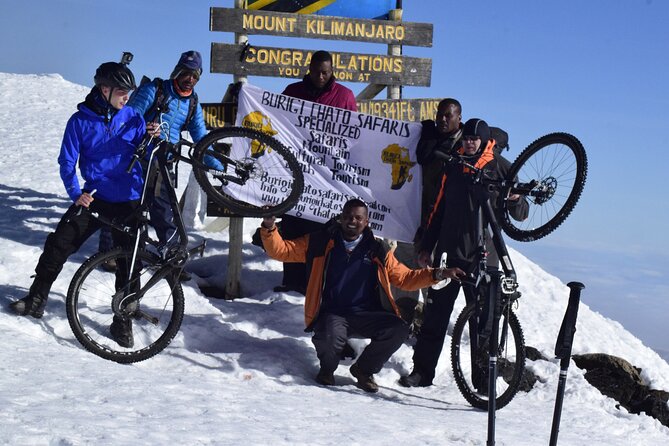
- Early-morning summit start, then downhill riding to the next point
- Cold-weather planning for headlamp batteries and frozen water risks
- A guide riding alongside you for bike technique and route choices
Other ways up Kilimanjaro we reviewed
- Kilimanjaro climb by Lemosho Route (7-day)★ 5.0 · 651 reviews
- Kilimanjaro climb, Machame Route (7-day)★ 5.0 · 262 reviews
- Kilimanjaro Climbing Lemosho Route 8 Days.★ 5.0 · 186 reviews
- Climbing Kilimanjaro – Machame Route★ 5.0 · 170 reviews
Kilimanjaro by Bike on the Marangu-Kilema Route: Why it works
If you want Kilimanjaro but you also want wheels, this is one of the few ways to make it real. The big idea here is that the Kilema Route is bike-accessible, so you spend multiple days pedaling through Kilimanjaro’s altitude zones, then you aim for Uhuru Peak early and ride back down.
You still get the classic Kilimanjaro drama: huts, big elevation gains, cold nights, and that moment when your body starts bargaining with the air. But instead of only trekking, you get long stretches where biking is the main mode. That makes the experience feel different day to day, not like you are doing the same climb with a bike strapped on.
One rider in the past travel notes even called out their guide Gabriel and the advice to move around a bit at Horombo Hut after day one. That small detail matters. Loosening up and staying comfortable in hut downtime can help your head and legs feel less tight before the next push.
Price and logistics: What $3,668 buys you in real terms
At $3,668 per person, this is not a budget activity. The value is in how much is bundled and how little you have to manage yourself.
Included items you should care about most:
- Private transportation, plus gate transfers
- Airport pickup and drop-off
- All fees and taxes
- Hotel accommodation before and after the trek
- Meals (5 breakfasts, 6 lunches, 6 dinners)
- Crew wages, plus porter support tied to the trek setup
- Mountain bike trekking bike logistics, but note that mountain bike hiring is not listed as included, so you need to confirm what you personally will use
What is not included, so you need to plan ahead:
- Flights
- Tipping crew
- Visas
- Trekking mountain bike hiring
- Personal mountain trekking gear
For many people, the cost feels easier to swallow when you compare it to the real expenses of independent organizing: park logistics, hut stays, food support, porters, and transfers. Here, you show up in Moshi and someone else handles a big chunk of the moving parts. You still do the hard part, but you are not also running a logistics company at 4:00 am.
Also, you start at 9:00 am, and the trek caps at a maximum of 200 travelers. In practice, you should treat this as a group trip with guide oversight, not a solo expedition.
Day 1: Kilema Gate (1,950m) to Horombo Hut (3,705m)
On day one you start with the paperwork rhythm of Kilimanjaro. You drive to the Marangu gate and register at the park office, which is required for hikers. Then you continue onward to the Kilema gate.
Once you arrive, you do a final readiness check. You confirm you have your daypack basics like drinking water, your lunch pack, and extra clothing, then you do a last look at your bike setup.
The biking part begins with a 16 km ride guided alongside you, from Kilema gate (1,950m) to Horombo Hut (3,705m). It is long enough to warm you up, but high enough to start reminding you that this is Kilimanjaro, not a gentle downhill loop.
Practical tip: Horombo Hut downtime is more than rest. One practical piece of advice you may hear from guides is to move around a little after arriving. Short, easy motion can help your breathing feel less stuck and your legs feel less like bricks.
Marangu, other operators and other lengths
Day 2: Alpine desert pedaling and the Mawenzi-area loop
Breakfast kicks off day two, then you ride into the alpine desert. The route notes call out that you will ride on small stone in places, which is where biking skills matter. You are not only dealing with altitude. You are also dealing with traction.
Today is described as about 90% riding, with a 10 km cycling distance. That sounds neat on paper, but expect the timing to stretch because high altitude slows your pace and cold conditions can make your body feel less efficient even when you are not going very far.
There is also a specific vibe to this day: desert-like vegetation, open views, and a sense that you are riding across a high-elevation world that feels harsh but strangely beautiful. It is the kind of terrain where you want to stay smooth on the bike, avoid panic braking, and let your legs settle into a steady tempo.
If you are prone to going too hard early, this is the day to resist. Save energy. You still have multiple altitude steps before the summit push.
Day 3: Rocky first kilometers, the Saddle, then the hard push toward Kibo
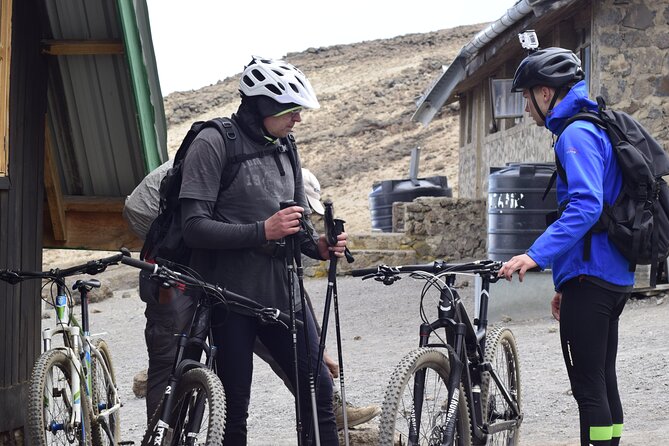
Day three starts early and focuses on ascent into alpine desert habitat. The key detail is that the first 3 km are very rocky, and cycling can be very difficult because the trail is stony and eroded. Translation: even with a bike trek, this is still a mountain climb.
After that rough start, the route improves and cycling becomes possible again. The ride then reaches the Saddle, the area between Mawenzi and Kibo, which is relatively flatter and easier to ride.
The challenge returns as you move toward Kibo Hut. The notes flag a 7 km section that becomes strenuous due to high altitude, low oxygen, and cold conditions. The final kilometer before Kibo Hut is especially tough.
This is the day where you learn your personal altitude reality. If you feel breathy, it is not a character flaw, it is physiology. Ride slower than your ego wants. Drink water steadily, even if you do not feel like it. Cold and altitude both mess with hydration cues.
Day 4: Kibo Hut summit preparation, optional orientation hike, then a night ascent plan
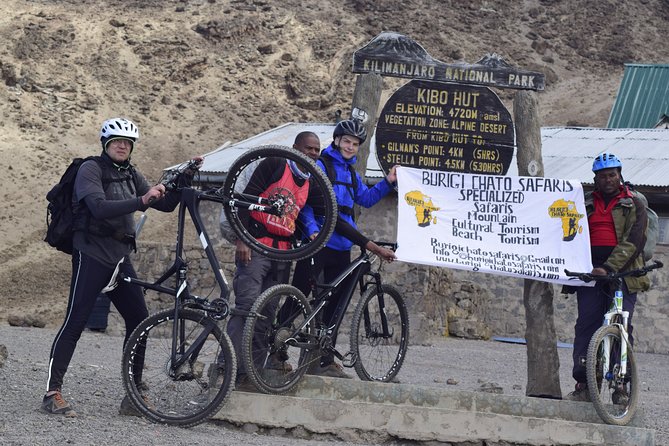
After breakfast you head back up toward Kibo Hut for summit preparation. The route described suggests a good biking trail for the final 7 km to Kibo Hut, then you get lunch and time to rest.
There is an optional move here that you should treat as useful, not mandatory. Around 16:00, depending on how you feel, you may be able to hike partially up the summit path to get your bearings for the later summit attempt that night.
Then comes the summit-night setup. The final ascent is planned the same night, with Uhuru Peak 1195 m further up. Before the night climb, you prepare thermal clothing, and the notes explicitly mention replacing headlamp batteries and camera batteries, plus having spares available.
Cold can turn a battery life test into an ugly surprise. One practical warning that shows up in past trip experience is that water can freeze in a camelback during the summit period. So if you have a hydration bladder, you will want a strategy for keeping it from icing over, not just packing it.
Day 5: 4:00 am zigzags, Hans Meyer’s Cave, Gilman’s Point, Uhuru Peak, then downhill to Stella Point
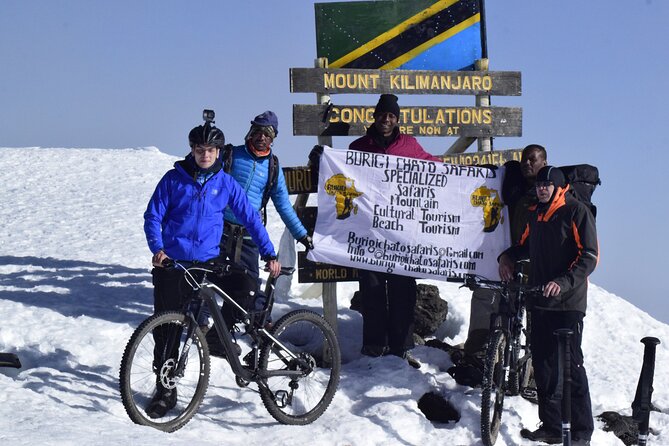
This is the big day, the early one. You get awakened around 4:00 am, then start the zigzag climb on what is described as a scree slope.
After about two hours, you reach Hans Meyer’s Cave. From there, the gradient gets steeper. You continue for about three more hours to Gilman’s Point.
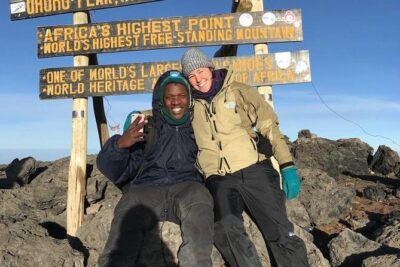
Then the bike element takes back over. Porters handle the bike transfer setup, and you start riding from that point toward Uhuru Peak. You reach Uhuru, spend a few minutes there for photos, then ride down to Stella Point.
After lunch, you ride down to Horombo.
The route notes also call out vegetation by section. From Kibo to Uhuru it is described as alpine desert, then Kibo to Horombo becomes more consistently alpine desert and icecap conditions. Translation: it is cold, it is thin-air, and it is not the place to expect comfort.
What I appreciate about this design is that the hardest emotional part is the early climb. Once you are up top and you shift into downhill movement, it becomes a different kind of challenge, one that rewards focus and technique.
Day 6: The final ride through alpine and rainforest down to Kilema, then back to Moshi
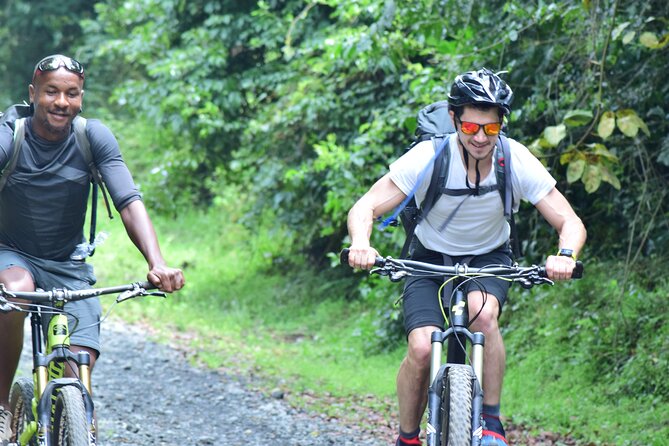
After breakfast you do the last ride down, aiming for the Kilema gate. The descent is described as crossing alpine and then rainforest to the gate area.
This is the day that makes the whole trip feel worthwhile. You transition from high, stark altitude zones toward greenery and a more familiar feel. You then transfer to the Marangu gate for check out and continue back to your hotel in Moshi.
The ride and transfer day is described as about 2 hours, which is short compared to the earlier days. Still, your body might feel tired from summit night and the previous elevation changes. Think of this as closure, not a new workout.
Bikes, guides, and crew support that actually matter
A Kilimanjaro summit attempt is not only about strength. It is about support that keeps you moving safely and sanely.
A few things in the trip notes that you should treat as a big deal:
- The guide is on a mountain bike alongside you, so you are not left to interpret trail chaos alone.
- Porters play a key role in camp setup. In past trips, riders have arrived at camps to find tents already affixed.
- If altitude sickness symptoms hit, the crew has provided first aid treatment, which can be the difference between falling behind and continuing.
One thing to remember: even with porter support, you still need to ride and climb with your own discipline. You cannot outsource hydration, slow pacing, and cold management. But you can absolutely outsource the heavy logistics, the camp setup, and the route guidance.
If you are worried about whether the bike trek will feel like a gimmick, this is the antidote. It is a trekking-style operation with bikes as the tool that changes how the trail feels.
What to pack, and the training that helps you enjoy it
Your daypack needs basics like drinking water, a lunch pack, and extra clothing. For summit night, the route notes are clear: bring thermal clothing, protect your headlamp and camera batteries, and pack spares.
Beyond that, here is the reality you should plan for:
- Cold at altitude can drain batteries fast and stiffen hands.
- Water can freeze if it is not protected during overnight cold periods.
- Rocky sections can turn into a push-and-carry moment if you lose traction or energy.
Training advice that fits the terrain:
- Practice mountain biking on rough surfaces if possible, not just smooth paths.
- Train for endurance, but also for controlled effort. The summit plan relies on patience, not hero rides.
- Get comfortable riding at lower intensity for long stretches, because some days are more about staying steady than chasing speed.
You do not need to be a downhill racer. You do need to be calm on technical surfaces and willing to adjust your pace fast when altitude says no.
Should you book this Kilimanjaro bike trek?
I would book this if you want Kilimanjaro with a clear plan that includes bike time, hut sleeping, and guided support, and you are okay with cold nights and rocky sections. The biggest draw is the Kilema Route bike-access concept, plus the early Uhuru Peak summit bid followed by a downhill ride.
I would hesitate if you do not have mountain biking confidence on rough terrain, or if you are hoping for an easy summit where you never slow down. This is still high altitude trekking, just with bikes in the mix.
If you are the kind of traveler who likes doing the hard thing while also enjoying the small wins, like reaching a hut zone, resetting, and rolling again, this trek fits your style. Just go in with your eyes open: thin air, freezing temperatures, and technical trail moments are part of the deal.
FAQ
How long is the Kilimanjaro bike trek on the Marangu-Kilema route?
It runs for approximately 6 days.
Where does the tour take place and where do you start?
The experience is based in Moshi, Tanzania, and it includes transfers from Moshi. It starts at 9:00 am.
What is included in the price?
The price includes private transportation, crew wages, gate transfer plus airport pickup and drop-off, all fees and taxes, hotel accommodation before and after the trekking portion, and meals (5 breakfasts, 6 lunches, 6 dinners).
What is not included?
Not included are flights, tipping the crew, tips for visas, mountain bike hiring, and personal mountain trekking gear.
Do you have to summit Uhuru Peak?
Non-summit itineraries are available, so you do not necessarily have to do the full summit plan.
What fitness level do you need?
The tour notes ask for travelers with moderate physical fitness, and it also mentions you need good fitness and mountain biking skills for the riding sections, depending on road conditions.
What if the weather is poor or I need to cancel?
The trek requires good weather. If it is canceled due to poor weather, you are offered a different date or a full refund. You can cancel up to 24 hours in advance for a full refund.
The Marangu Trail
- Kilimanjaro climb, Marangu route (6-day)
★ 5.0 · 72 reviews - Climbing Kilimanjaro – Marangu Route
★ 5.0 · 65 reviews - Best Kilimanjaro Adventures 6 Days Marangu Route Experience
★ 5.0 · 18 reviews - Kilimanjaro Private Climbing in 6 Days Marangu Route
★ 5.0 · 16 reviews - 6 Days Climb Kilimanjaro Through Marangu Route
★ 4.5 · 15 reviews
Kilimanjaro, Route by Route
- Kilimanjaro climb by Lemosho Route (7-day)
★ 5.0 · 651 reviews - Kilimanjaro climb, Machame Route (7-day)
★ 5.0 · 262 reviews - Kilimanjaro Climbing Lemosho Route 8 Days.
★ 5.0 · 186 reviews - Climbing Kilimanjaro – Machame Route
★ 5.0 · 170 reviews - Climbing Kilimanjaro through 7 days Machame Route
★ 5.0 · 151 reviews
Just added from around Moshi
Kilimanjaro Marangu Route, compared.
 ★ 5.0Kilimanjaro climb, Marangu route (6-day)From $2,90272 reviews
 ★ 5.0Climbing Kilimanjaro – Marangu RouteFrom $2,00465 reviews
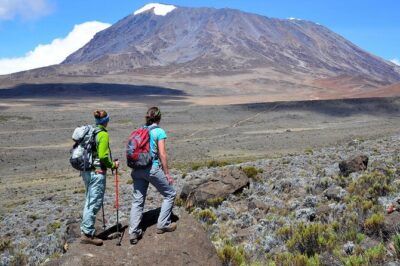 ★ 5.0Private Full Day Hiking Experience to Marangu RouteFrom $26061 reviews
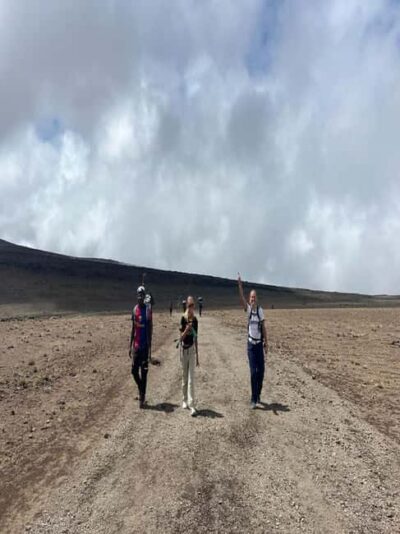 ★ 4.5From Arusha/Moshi: Kilimanjaro Hike Marangu Route Day TripFrom $10154 reviews
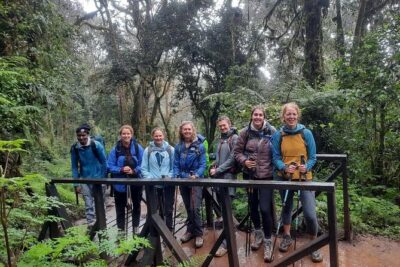 ★ 5.0Mount Kilimanjaro Day Hike Through Marangu Route to Mandara HutFrom $26537 reviews
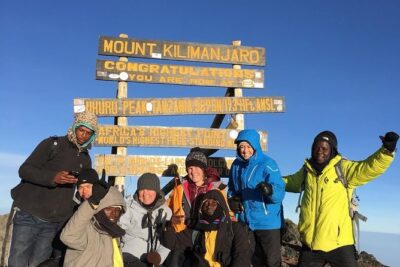 ★ 5.0Kilimanjaro Climbing 5 days Marangu routeFrom $90022 reviews
 ★ 5.0Best Kilimanjaro Adventures 6 Days Marangu Route ExperienceFrom $1,00018 reviews
 ★ 5.0Kilimanjaro Private Climbing in 6 Days Marangu RouteFrom $2,00016 reviews
Browse the lists this tour appears in