
REVIEW · KILIMANJARO LEMOSHO ROUTE
Small-group 7-day Lemosho Route Kilimanjaro Climb from Arusha
The Lemosho route is Kilimanjaro at its best. This 7-day climb starts on the western side of Mt Kilimanjaro, crossing the rainforest belt before the trail opens into heath and moorland with ferns and ericas. I like the small-group setup (max 6) and the clear focus on acclimatization, including a day that keeps your altitude gains gentle even while the scenery gets wild, guided by leaders like Kenedy with second support from Julius.
One thing to keep in mind: the Lemosho route is not a walk in the park. Expect steep passages and slippery, muddy ground at lower elevations and again on the wetter descent, so you should plan for gaiters and trekking poles and come with solid trekking fitness.
In This Review
- Key things that make this Lemosho climb worth your attention
- Why the 7-day Lemosho route from Arusha feels different
- Price and value: what $2,400 covers on this route
- Meeting point, timing, and your first climb toward the park gate
- Day-by-day: your 7 days from rainforest to Uhuru Peak
- Day 1: From the gate into rainforest, muddy feet included
- Day 2: Rainforest to the Shira Plateau rim, temperatures dropping
- Day 3: A crucial acclimatization day plus Lava Tower, then down to Barranco Camp
- Day 4: Barranco Wall to Karanga Valley, where porters and technique matter
- Day 5: Toward Barafu Camp, complete the South Circuit, then rest early
- Day 6: Summit night between the Rebmann and Ratzel glaciers, Stella Point to Uhuru Peak
- Day 7: Descent to Mweka Gate, hot shower time after a proper celebration
- Pacing and acclimatization: how this schedule protects your body
- Crew, food, and safety equipment that build confidence
- What to pack for a climb that includes rainforest mud and summit snow
- Who this trek is best for (and who should think twice)
- Should you book this 7-day Lemosho climb with MERU SLOPES TOURS AND SAFARIS?
- FAQ
- What time does the trek start?
- How big is the group?
- Is pickup available?
- Where does the trip begin geographically?
- What is included in the price?
- Are flights included?
- Do I need a visa?
- What equipment is provided for camping?
- Is the tour cancellable if weather is bad?
Key things that make this Lemosho climb worth your attention
- The western-side start gives you a different vibe than the more common routes, with rainforest early and moorland later
- A smart acclimatization day keeps altitude gains modest while you still work toward key points like Lava Tower
- Barranco Wall day is one of the most memorable stretches, with your crew helping it feel manageable
- Summit sunrise from Stella Point is built into the schedule, with snow likely on the final push
- Safety gear use is part of the plan, including oxygen and pulse oximeters (as described in past feedback)
- Good food and strong guiding show up again and again in feedback, from English-speaking leadership to attentive porters
Other ways up Kilimanjaro we reviewed
- 8-Day Small-group Lemosho Kilimanjaro Summit Trekking★ 5.0 · 186 reviews
- 7-Day Machame Kilimanjaro Summit Tour from Arusha★ 5.0 · 125 reviews
- Mountain Kilimanjaro Day Hike★ 5.0 · 102 reviews
- 4 days Best experience Kilimanjaro Hike, Serengeti &Ngorongoro★ 5.0 · 54 reviews
Why the 7-day Lemosho route from Arusha feels different
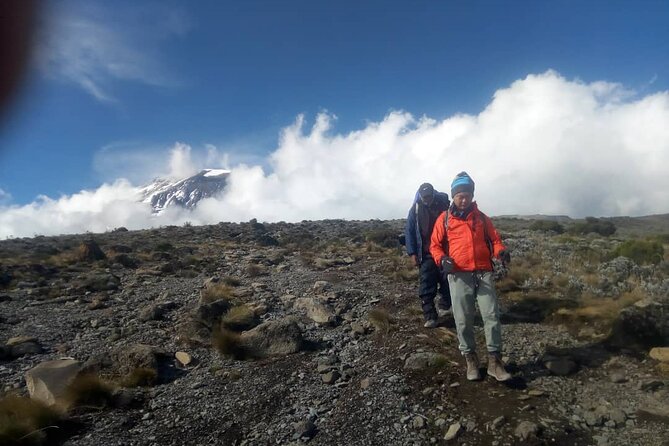
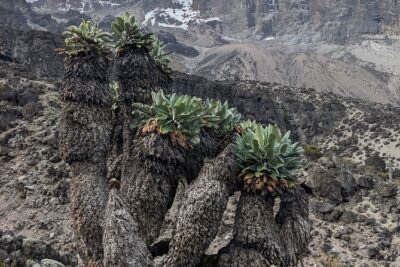
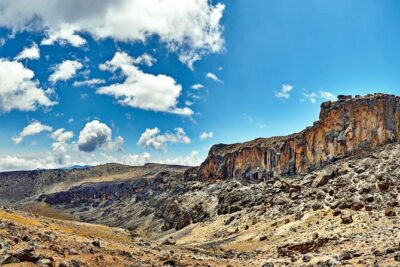
If your goal is Kilimanjaro, you could pick a standard route and move on with life. If your goal is a climb that feels varied from day one, the Lemosho route does that job. The first two days cross thick rainforest, then temperatures drop and the environment shifts into heath and moorland, with ferns and ericas along the way.
This route also tends to feel less crowded, and the operator caps group size at 6 travelers. That matters on summit night and around camps, because you are not constantly queuing or getting bumped off pace.
Price and value: what $2,400 covers on this route
At $2,400 per person, this is a serious investment. The key value is what is included: all fees and taxes, English-speaking guide, mountain crew (cook and porters), overnight stays in tents plus mountain camping equipment, and meals plus clean drinking water throughout the itinerary.
You also get bottled water, coffee or tea, and the transfers mentioned as part of the plan. On Kilimanjaro, the difference between a cheap trip and a solid trip often comes down to staff support and logistics, not just whether you have a guide’s name on the paperwork. Here, you are paying for a full moving base camp and the team that runs it.
What’s not included is also important: flights, visa fees, tips, and alcohol or soft drinks. If you already know you want to tip well, build that into your budget early so you are not calculating under stress at the end.
Meeting point, timing, and your first climb toward the park gate
The start time is 8:30 am, and the meeting point is listed as near public transportation. You can also expect pickup to be offered, which helps if you are staying in Moshi or the Arusha area and want to avoid juggling connections.
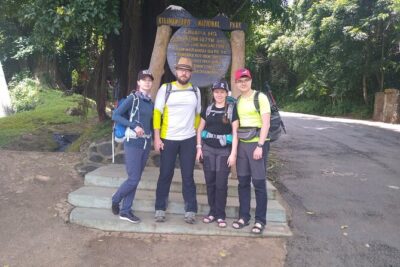
Day 1 begins with a drive from Moshi that takes about 45 minutes toward the Kilimanjaro National Park gate. You will pause while permits are issued, and you get your first taste of how active the park is behind the scenes.
Lemosho itineraries worth reading next
Day-by-day: your 7 days from rainforest to Uhuru Peak
Below is how the trip unfolds, with what each day is doing for you, not just where you sleep.
Day 1: From the gate into rainforest, muddy feet included
Elevation goes from about 2389 m to 2785 m, with an altitude gain of 396 m. You climb through rainforest scenery with windy trails, and the biggest practical detail is that conditions at these lower elevations can be muddy and slippery.
This is where your gear choices show up fast. The plan strongly recommends gaiters and trekking poles because the ground can slide under you even when you feel fine.
Day 2: Rainforest to the Shira Plateau rim, temperatures dropping
Elevation rises from about 2785 m to 3895 m, a jump of 1110 m, and you leave the rainforest behind. The trail climbs steadily with wide views as you reach the rim of the Shira Plateau, and temperatures start to drop.
This day is a steady engine. It’s not the hardest summit-style push yet, but the big altitude gain means you should focus on controlled breathing and a pace you can keep for hours.
Day 3: A crucial acclimatization day plus Lava Tower, then down to Barranco Camp
Day 3 is built for your body’s adjustment. You end the day around 3986 m, only +91 m from where you started the morning, but the route sends you along a ridge and toward high points.
You pass a junction connected to Kibo peak before continuing southeast toward Lava Tower, nicknamed the Shark’s Tooth at 4650 m. After that, you head past another junction toward the Arrow Glacier before descending to Barranco Camp.
This is a key pattern on the Lemosho route: your legs work, but your plan protects your acclimatization. By the end, you are lower for the night, which helps you wake up feeling less crushed.
Day 4: Barranco Wall to Karanga Valley, where porters and technique matter
Elevation goes from about 3986 m to 4034 m, with a small gain of 48 m. After breakfast, you tackle a steep ridge toward the Barranco Wall and then continue into the Karanga Valley toward the junction connecting with the Mweka Trail.
If you want a day that tests balance and confidence, this is it. The trip highlights the impressive way your crew zips over the Barranco Wall, and that’s your clue that footwork and steady movement are more important than speed.
Day 5: Toward Barafu Camp, complete the South Circuit, then rest early
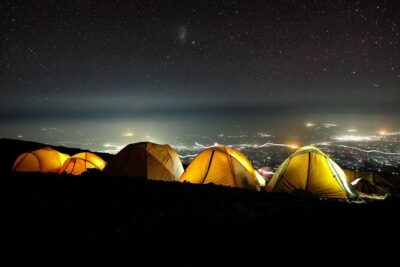
Elevation climbs from about 4034 m to 4662 m, gaining 628 m. Once you reach Barafu Camp, you have completed the South Circuit, and you are now in the phase where summit night feels close even if you do not start that night yet.
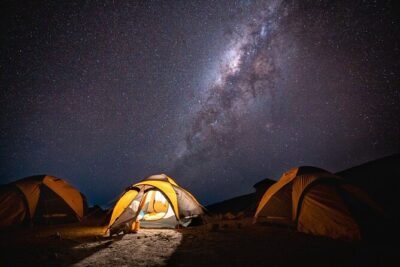
You get early dinner and rest as you prepare for the summit push. This is where you want to be strict with your energy: eat what you can, keep warm, and treat sleep like part of the hike.
Day 6: Summit night between the Rebmann and Ratzel glaciers, Stella Point to Uhuru Peak
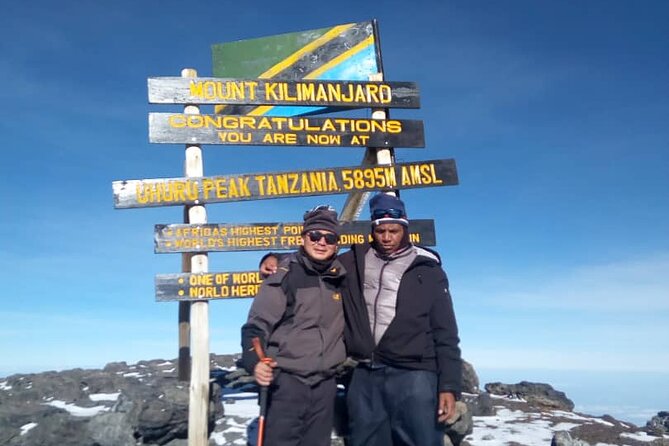
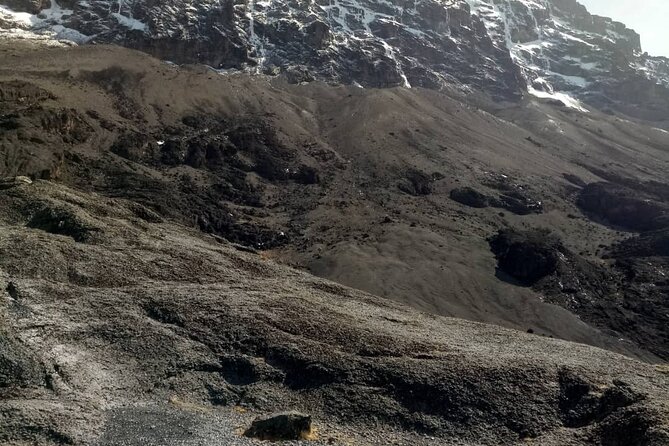
Day 6 is the long day, listed at about 12 hours. You continue our way to the summit between the Rebmann and Ratzel glaciers, then switchback northwest and ascend through heavy scree toward Stella Point on the crater rim.
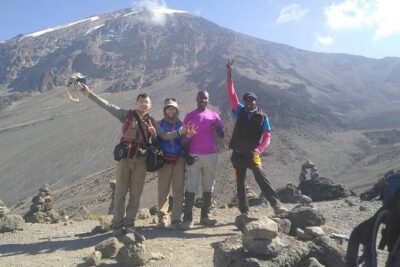
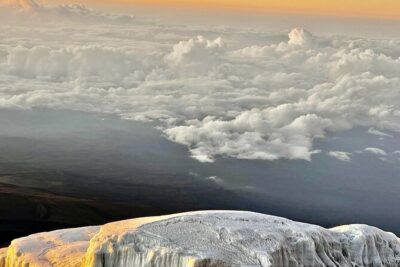
You get a reward at Stella Point with the most magnificent sunrise during a short rest. Faster hikers may reach the sunrise from Uhuru Peak, but the schedule is clearly designed so the majority can enjoy it without racing.
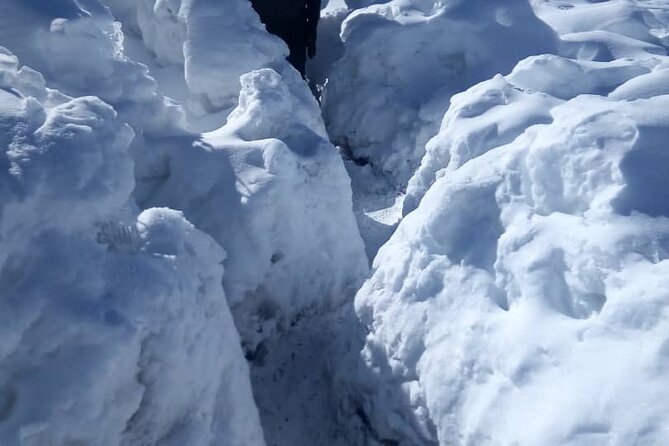
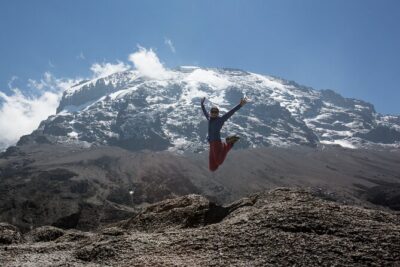
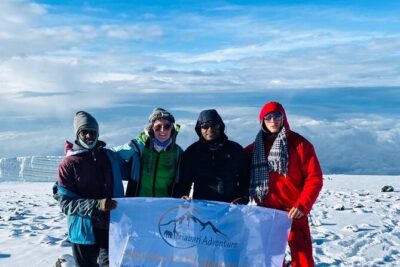
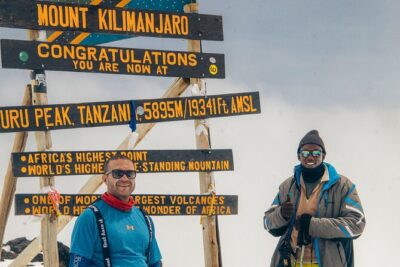
From Stella Point, you have about one more hour ascent to Uhuru Peak, and the plan notes that you are likely to encounter snow all the way. This means the climb is not just mental, it is physical and cold, too.
After summit photos and celebrations, you begin the descent. Even if you feel euphoric at the top, plan for the reality that moving down takes stamina, especially on scree.
Day 7: Descent to Mweka Gate, hot shower time after a proper celebration
On Day 7 you drop from about 3106 m to 1633 m, losing 1473 m. After breakfast, the plan includes a heartfelt ceremony of appreciation and team bonding with your crew, then you continue down to the Mweka Park Gate for your summit certificates.
The weather is warmer and the terrain can be wet, muddy, and steep. Gaiters and trekking poles are again strongly recommended, because slipping on the way down wastes the whole point of earning your summit.
After the gate, a vehicle meets you at Mweka village for the drive back to your hotel in Moshi, about 30 minutes. The timing is designed so you get to shower, eat, and celebrate while you still remember what that sunrise felt like.
Pacing and acclimatization: how this schedule protects your body
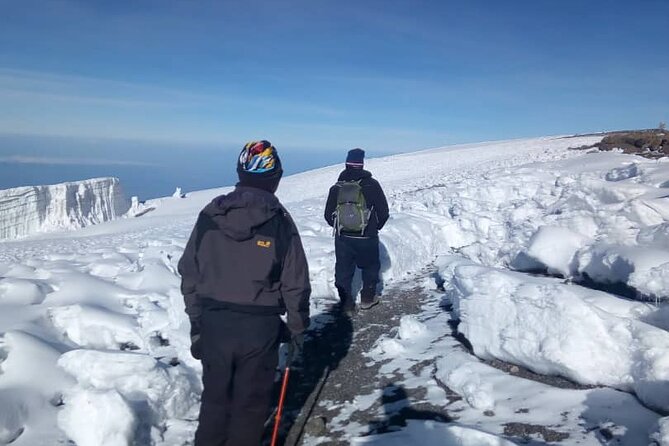
The Lemosho route is more challenging than the Marangu and Rongai routes, and the plan reflects that with a climb that mixes higher and lower nights. The altitude math matters because it tells you when your body is expected to adjust.
Day 2 is the big altitude gain into Shira Plateau rim, then Day 3 becomes your buffer day. You go up toward Lava Tower at 4650 m, then you sleep at Barranco Camp, which helps you acclimatize instead of just stacking altitude every day.
Day 4 again keeps gains modest at +48 m, while Day 5 pushes up toward Barafu at 4662 m so you can set up for summit night. This is how a 7-day itinerary earns its keep: not by being exciting every hour, but by creating the right balance between work and recovery.
Crew, food, and safety equipment that build confidence
One of the best parts of this kind of Kilimanjaro trip is the human system behind it: guides, cooks, porters, and camp support. Past feedback on this operation mentions English-speaking leadership, strong porter support, and meals that are described as very good.
I also like that the approach to safety is not vague. Feedback specifically calls out the presence and appropriate use of safety gear such as oxygen and pulse oximeters. You want to feel that the team is prepared to respond, not improvising when altitude symptoms show up.
Group size helps here, too. With a maximum of 6 travelers, you are less likely to get lost in the shuffle, and your guide can watch your pace and breathing more closely.
What to pack for a climb that includes rainforest mud and summit snow
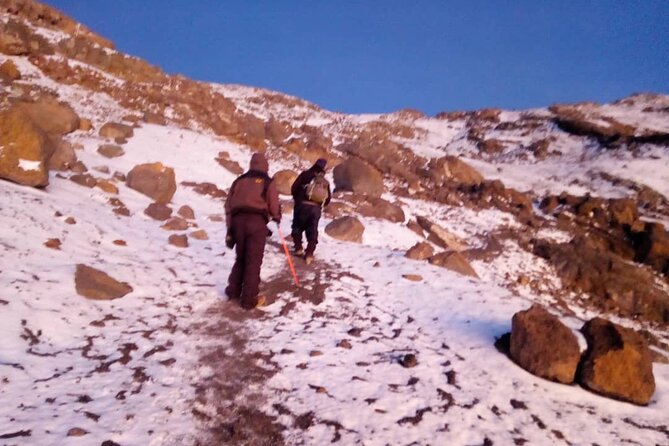
The itinerary explicitly recommends gaiters and trekking poles for slippery sections, especially Day 1 and on the descent. It also warns that you may encounter snow on the final ascent around Uhuru Peak, so you should prepare for cold, not just altitude.
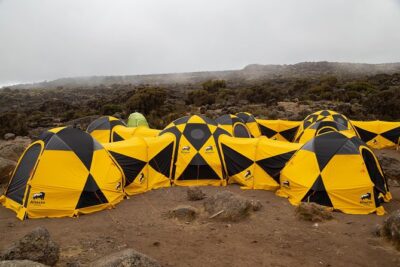
You will have camping equipment provided, including tents and sleeping mats, plus chairs and tables for camp life. That reduces what you need to carry, but it also means you should focus on comfort and stability where you do your own work: footing, warmth, and hydration habits.
Also note that clean drinking water and bottled water are included. That means you can plan your hydration without worrying about sourcing at camp, which is a big deal once the temperatures drop.
Who this trek is best for (and who should think twice)
This is a good match if you want the western Lemosho experience, including the rainforest start, the varied terrain, and the chance to tackle the Barranco Wall and the crater rim summit route.
It is also a strong choice if you value a small-group feel and professional guidance. The limit of 6 travelers matters when you want steady pacing and less crowd pressure.
You should think twice if you are sensitive to steep, muddy footing or you are not comfortable with a route that is described as more challenging than other well-known Kilimanjaro routes. Lemosho rewards grit, and you need to bring your own consistency.
Should you book this 7-day Lemosho climb with MERU SLOPES TOURS AND SAFARIS?
I would book this if you want a Kilimanjaro climb that feels complete, not rushed. The combination of rainforest to moorland variety, a schedule that includes an acclimatization-focused approach, and summit timing that centers sunrise makes this plan attractive.
The value equation also makes sense for many people at this price point because meals, camping setup, guide and crew support, water, and fees are included. You are not just buying the summit, you are buying the machine that gets you there and brings you down safely.
If you hate steep and slippery trails, or you are hoping for a gentler first-timer path, you may find this route demanding. But if you want a real challenge with solid staff support, this Lemosho trek is one of the more satisfying ways to aim for Uhuru Peak.
FAQ
What time does the trek start?
The experience start time is listed as 8:30 am.
How big is the group?
The tour has a maximum of 6 travelers.
Is pickup available?
Pickup is offered.
Where does the trip begin geographically?
The tour is based around Arusha, and the itinerary includes a drive from Moshi toward the Kilimanjaro National Park gate.
What is included in the price?
All fees and taxes, a professional English-speaking guide, mountain crew (cook and porters), overnight stays in tents and mountain tents, camping equipment, meals according to the itinerary, clean drinking water, bottled water, coffee and/or tea, and the mentioned transfers are included.
Are flights included?
No. Flights are not included.
Do I need a visa?
Visa fees are not included.
What equipment is provided for camping?
Camping equipment is included, including tents, sleeping mats, and camp items like chairs and tables.
Is the tour cancellable if weather is bad?
Yes. The experience requires good weather, and if it is canceled due to poor weather, you will be offered a different date or a full refund.
Lemosho, Compared
- 8-Day Small-group Lemosho Kilimanjaro Summit Trekking
★ 5.0 · 186 reviews - 8 Days Mountain Kilimanjaro Lemosho Route
★ 5.0 · 22 reviews - 7 Day Kilimanjaro Climb Lemosho Route & 2 Day Safari
★ 5.0 · 16 reviews - Kilimanjaro Climb- Lemosho Route
★ 5.0 · 9 reviews - Lemosho Route 7 Days Trekking at Mount Kilimanjaro
★ 5.0 · 7 reviews
Kilimanjaro, Route by Route
- 8-Day Small-group Lemosho Kilimanjaro Summit Trekking
★ 5.0 · 186 reviews - 7-Day Machame Kilimanjaro Summit Tour from Arusha
★ 5.0 · 125 reviews - Mountain Kilimanjaro Day Hike
★ 5.0 · 102 reviews - 4 days Best experience Kilimanjaro Hike, Serengeti &Ngorongoro
★ 5.0 · 54 reviews - From Arusha/Moshi: Kilimanjaro Hike Marangu Route Day Trip
★ 4.5 · 54 reviews
Just added from around Arusha
Kilimanjaro Lemosho Route, compared.
 ★ 5.0Kilimanjaro climb by Lemosho Route (7-day)From $3,476651 reviews
 ★ 5.08-Day Small-group Lemosho Kilimanjaro Summit TrekkingFrom $2,895186 reviews
 ★ 5.0Kilimanjaro Climbing Lemosho Route 8 Days.From $2,300186 reviews
 ★ 5.0Kilimanjaro climb, Lemosho Route (8-day)From $3,975148 reviews
 ★ 5.0Kilimanjaro climb, Lemosho Route (6-day)From $3,034129 reviews
 ★ 5.0Kilimanjaro Lemosho RouteFrom $2,89071 reviews
 ★ 5.0Private Kilimanjaro Hike 7 Day Lemosho RouteFrom $2,45060 reviews
 ★ 5.0Climbing Kilimanjaro through 8 days Lemosho RouteFrom $2,76052 reviews
Browse the lists this tour appears in