
REVIEW · TANZANIA CAMPING AND BUDGET SAFARIS
Mt Kilimanjaro 360° Trek with Once-in-a-Lifetime Crater Camping
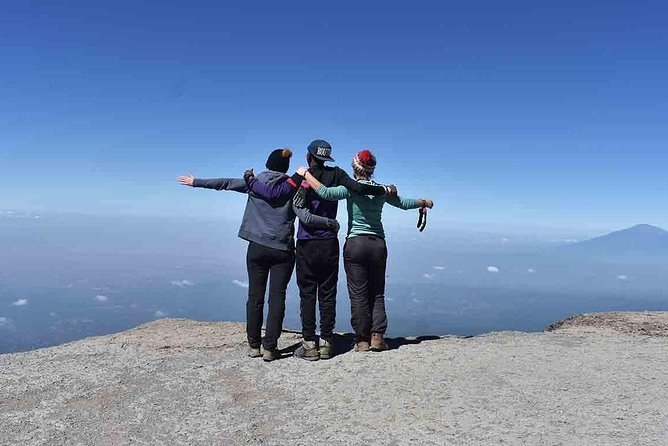
Kilimanjaro gets serious, fast. This Northern Circuit trek from Moshi mixes low-traffic paths with big-altitude days and ends with crater camping beneath Kilimanjaro’s glaciers. The route is built for calmer pacing and strong acclimatization, so you’re not just chasing a summit selfie.
Two things I really like are the attention to the details that matter, like a guide team and camp setup, and the way the itinerary keeps you moving through distinct ecosystems, from rainforest to alpine desert. I also like the crater-night concept, because sleeping at the edge of the big volcanic bowl feels totally different than the usual summit-and-go-home approach.
One drawback to consider: even with a good acclimatization schedule, the summit push is still long and cold. If you’re not already comfortable hiking several hours at altitude in darkness, you’ll feel it.
In This Review
- Key highlights worth focusing on
- Moshi start: getting to the gate without wasting energy
- Day 1 in the rainforest: Mti Mkubwa Camp and the muddy warm-up
- Shira Plateau days: cold nights, bigger views, and steady climbs
- Acclimatization day with Lava Tower: how the Barranco-style design helps
- Northern slopes to Buffalo Camp: the long views day
- Rongai side flavor with Pofu and Third Cave: a calmer altitude day
- Summit prep at School Hut: the long night starts early
- Uhuru Peak and the crater night: the unique payoff
- Ash Pit morning and Millennium Camp: recovery without rush
- Mweka Gate descent: finishing through rainforest feels like exhaling
- Value for about $4,211: what the price covers (and why it can be worth it)
- The human side: professional guide teams and day-zero care
- Who should book this Kilimanjaro 360-style Northern Circuit?
- Should you book it?
- FAQ
- Where does the trek start and end?
- How long is the Kilimanjaro trek?
- How hard is it?
- Are transfers included from the airport?
- What trekking and camping support is included?
- What food and water are provided?
- Is emergency oxygen provided?
- What is not included that I should plan for?
- What is the cancellation refund window?
Key highlights worth focusing on
- Northern Circuit routing for quieter trekking and wide-open views
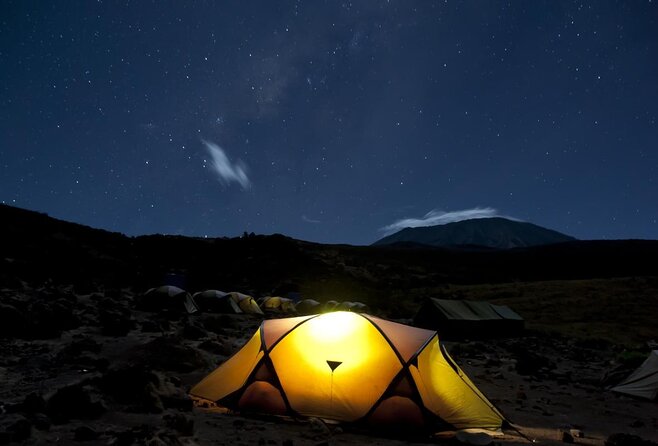
- Crater camping under the glaciers, including a morning look at the Ash Pit
- Camping gear and camp comfort handled for you, including tents and camp chairs
- Acclimatization-focused day design, especially the Shira to Barranco sequence
- Emergency oxygen and first aid, for use in emergencies only
- Airport and Moshi transfers plus an included hotel night after the climb
Other ways up Kilimanjaro we reviewed
- Kilimanjaro climb by Lemosho Route (7-day)★ 5.0 · 651 reviews
- Kilimanjaro climb, Machame Route (7-day)★ 5.0 · 262 reviews
- Kilimanjaro Climbing Lemosho Route 8 Days.★ 5.0 · 186 reviews
- Climbing Kilimanjaro – Machame Route★ 5.0 · 170 reviews
Moshi start: getting to the gate without wasting energy
Your trip starts in Moshi, with return transfers arranged between Kilimanjaro airport and Moshi. That matters more than it sounds. On Kilimanjaro, the schedule is tight, and you don’t want to burn your first day negotiating transport after a flight.
From Moshi to the national park gate, you drive about 45 minutes through mountainside villages. You’ll wait for permits to be issued while you watch crews preparing for the trek ahead. Then you’ll step into the rainforest and start walking on muddy, sometimes slippery trails.
This is the day to be practical. Use trekking poles and gaiters, especially if it’s damp. Your knees will thank you later, and you’ll spend less energy fighting footing.
Day 1 in the rainforest: Mti Mkubwa Camp and the muddy warm-up
You gain altitude on day one as you move from the low slopes up toward Mti Mkubwa Camp. It’s not just a warm-up on paper. The walking is often slick, and your footing skills get tested right away.
The guide’s role here is more than “pointing the way.” You’ll learn about local flora and fauna, and you’ll see the rainforest as an ecosystem, not just a green tunnel. If the group is moving at a calm pace, you’ll get used to how the air feels at these elevations without feeling like you’re already sprinting.
The camp includes basic setup gear, and you’ll have water and wash support, which helps you get through the next couple of days with less grime.
Shira Plateau days: cold nights, bigger views, and steady climbs
Day two takes you out of the rainforest and onto a steady climb to the rim of the Shira Plateau. You’ll feel the temperature drop. Even if you’re moving well, cold air can make you work harder, so it helps when camp logistics and warm-up routines are handled smoothly.
Day two ends at Shira Camp One, and day three climbs again to Shira Camp Two. This is classic high-altitude trekking: you’re above tree line for stretches, the sky is sharper, and the wind can turn the cold up quickly. One of the best small choices you can make here is to go a bit higher for views when you have the energy. From Shira II Camp, the vantage is over the valley below, including a look toward the Western Breach.
Potential drawback on these plateau nights: the plateau is exposed, and temperatures can fall below zero. Bring the right layers, and make sure your gloves and warm hat are actually accessible, not buried under your whole bag.
More camping safaris at this price
Acclimatization day with Lava Tower: how the Barranco-style design helps
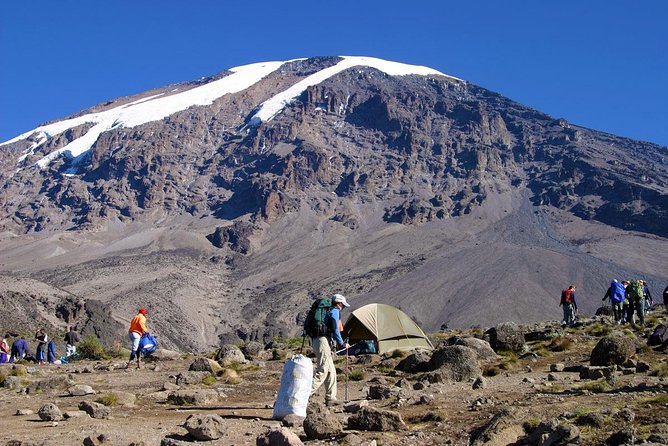
Day four keeps things interesting. Even though you end the day around roughly the same elevation you started, the route is engineered to help your body adjust. You’ll move up a ridge, pass junction points tied to Kibo and the surrounding areas, then head toward the Lava Tower, often called the Shark’s Tooth.
After that, you connect toward the Arrow Glacier area, then descend to Barranco Camp. That up-and-down pattern is purposeful. Your body gets a chance to experience higher air without locking you into a higher camp too fast.
What you should watch: energy management. This is a long day at altitude, even if it feels like “same height, different track.” Keep your pace consistent and avoid the urge to race to the next landmark.
Northern slopes to Buffalo Camp: the long views day
Day five brings another change in rhythm. You’ll climb out of Moir Valley, with a moderately steep start, then keep moving through a series of inclines and declines around the northern slopes of Kibo.
There’s also an optional detour to Little Lent Hill at about 4,375 meters, then you return to the main trail. If you have the energy and want the extra payoff, this detour can be worthwhile. If not, you’re not missing the main point by skipping it.
The big reason day five feels special is the views. You’ll arrive at Buffalo Camp just after midday for lunch and rest, and the scenery stretches across plains north of Kilimanjaro toward the Kenyan and Tanzanian border area.
This is one of those days where you’ll feel like you’re walking above ordinary life. That also means cold wind and sun exposure can stack up, so layer up and protect your eyes.
Rongai side flavor with Pofu and Third Cave: a calmer altitude day
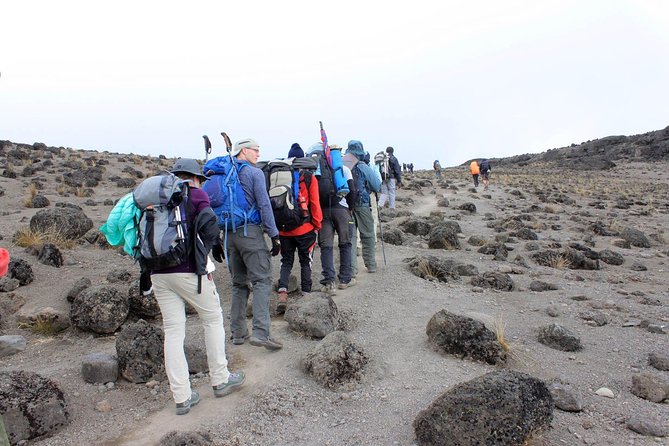
Day six is shorter and often feels better because you’re already acclimatizing. You’ll climb up Buffalo Ridge and then descend into Pofu Camp for lunch. After lunch you continue east around Kilimanjaro’s northern slopes toward Rongai Third Cave.
The day is described as shorter than day five, and that fits the overall acclimatization strategy. By the time you reach this point, you should be feeling more settled at altitude, not less.
If you’re the type who gets anxious about altitude, day six is where your confidence should rebuild. Keep moving steadily, breathe slowly, and let the scenery do its job. The goal is to arrive at the cave area around mid-afternoon, well enough to relax before the next big push.
Summit prep at School Hut: the long night starts early
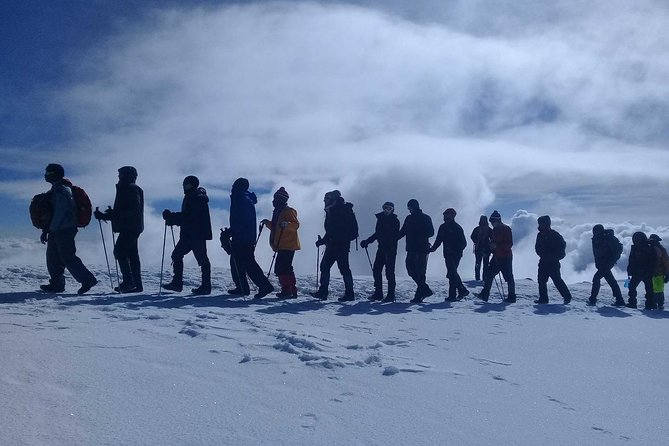
Day seven is where the trek turns into the summit reality. You’ll climb steadily and cross the saddle between Kibo and Mawenzi, then continue to School Hut. Dinner is served early, and the plan is to rest before the summit start, which begins just before midnight.
This is one of those nights where small mistakes matter. Before you sleep, you need to get your gear ready: warm clothing, insulated water bottles, headlamp, snacks, and your camera. Anything you leave for later becomes a problem in the dark.
Also, remember the trek’s difficulty level is listed as medium, but the summit effort is intense. Medium often means the overall route management and acclimatization are sensible, not that the summit day is easy.
Uhuru Peak and the crater night: the unique payoff
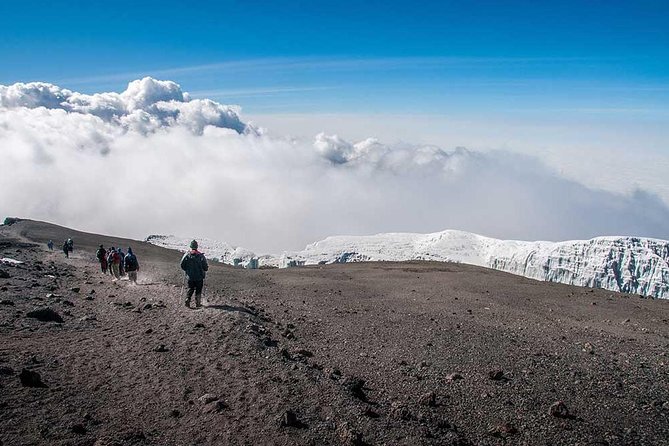
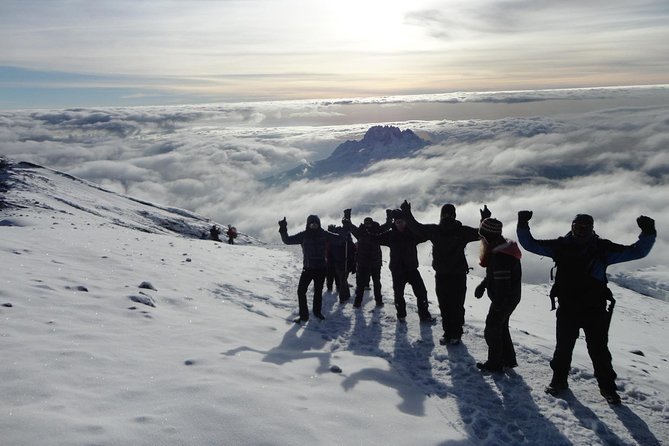
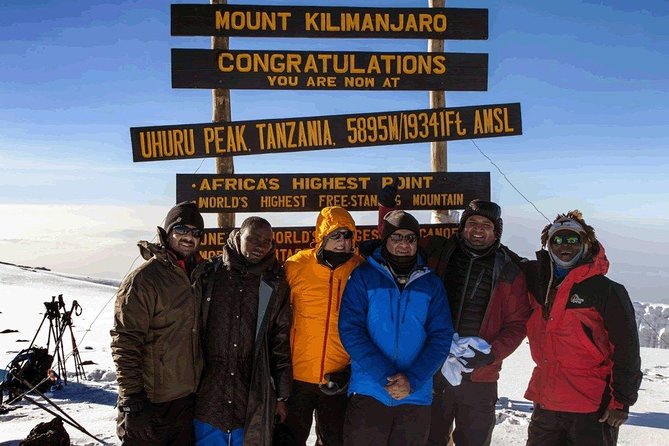
Day eight is the big one. You’ll ascend to Uhuru Peak, Africa’s highest point, before dawn. Trekking time is listed as roughly 7 to 9 hours, and that range makes sense because pace and conditions vary.
After your summit moment, you’ll descend into Kilimanjaro’s crater for an unforgettable night at Crater Camp, just beneath the glaciers. This is the part most people do not get to experience. You’re not just standing at the highest point and calling it a day. You’re camping inside the volcano system itself.
What you should be prepared for: cold that feels sharper because of the crater setting and wind exposure. You’ll want dry layers, good gloves, and a plan for sipping water even when you don’t feel thirsty.
Ash Pit morning and Millennium Camp: recovery without rush
Day nine is a mix of wonder and recovery. You explore the crater area, including the Ash Pit, then descend to Millennium Camp.
The walking time is listed at about 5 to 6 hours, which usually feels like a big relief after the summit day. Still, you’re at serious altitude, so keep the pace controlled.
This is the day to eat and drink like your body matters. Because after the crater night, your appetite may be weird. That’s normal. Push calories in small portions and keep hydration steady.
Mweka Gate descent: finishing through rainforest feels like exhaling
Day ten ends with a descent that changes the entire tone of the trek. You’ll complete the walk through lush rainforest to Mweka Gate for your certificate of achievement. Then you drive back to Moshi for celebration and relaxation.
This is a great moment to take stock. On Kilimanjaro, the last day often feels surprisingly emotional, because your body finally stops “trying to cope” with altitude and starts “enjoying” scenery again.
If you’re tight on time or motivation, don’t rush. Crooked footing and tired legs can turn the final meters into a clumsy mess.
Value for about $4,211: what the price covers (and why it can be worth it)
At $4,211.27 per person, this trek isn’t a budget weekend. The value comes from what’s handled for you and what risks it tries to reduce.
Included items you should notice:
- All fees and taxes, which usually means permits and park costs are taken care of
- Return transfers between the airport and Moshi
- Qualified guide team, plus assistant guides, porters, and cook wages aligned to KINAPA standards
- Camping equipment, including tents, camp chairs, tables, and sleeping mattresses
- Fresh drinking water and hot water for wash daily
- Meals during the trek (breakfast, lunch, dinner)
- Emergency oxygen and a basic first aid kit (for emergencies only)
- A hotel night after the climb with breakfast included
Not included, and worth planning for:
- Visas and flights, plus travel and health insurance
- Personal items and personal trekking gear, which you can rent in Moshi
- A portable toilet is optional but highly recommended
- Personal medicine, water purifying tablets, and snacks or extra drinks
For me, the smartest way to evaluate the price is this: Kilimanjaro is not only about steps. It’s about permits, logistics, camp comfort, food, and safety systems. When those are clearly included, you can spend your energy on acclimatization instead of chasing supplies.
The human side: professional guide teams and day-zero care
One of the most praised parts of Pinnacle’s operations in accounts I read is how the team handles day zero. Airport pickup and clear attention from the start sets the tone. You arrive, you’re guided, and you’re not left scrambling.
The guide and assistant structure also shows up as a real strength. A chief guide like JT is often paired with an assistant such as Jobeth, and other teams have included guides named Jacob and Kennedy. That usually means better pacing control, better safety check-ins, and fewer “solo decisions” when weather or altitude gets tough.
There’s also mention of porters going out of their way for small comforts, like fresh fruit and vegetables during the trek. Those details are not necessary for survival, but they do make the days feel more human. When you’re tired and cold, feeling cared for matters.
Who should book this Kilimanjaro 360-style Northern Circuit?
I think this trek fits best if you want:
- Quieter hiking with low traffic on the northern route
- Strong emphasis on acclimatization, not just pushing meters
- The crater night experience, including time around the Ash Pit
- A guided, camping-based trip where equipment and meals are handled
It’s also a smart pick if you like variety. You’ll walk through rainforest and then transition into high plateau terrain, lava-tower country, and crater camps. That change keeps you mentally engaged, and it breaks up the monotony some people feel on long altitude routes.
If you get nervous about long summit nights or you’re unsure about your cold-weather layering, consider training and doing a reality check on your fitness first. The summit effort is serious even with a good schedule.
Should you book it?
If you want Kilimanjaro with real route management, and you care about the ending, crater camping is the reason to say yes. The combination of northern scenery, acclimatization-friendly design, and a crater night beneath the glaciers is hard to match.
I’d book it if you’re excited by a structured trek with camping logistics handled, and you’re willing to take altitude seriously, especially on the midnight-to-dawn summit push.
I would hesitate only if you know you struggle with cold, darkness, or long endurance hikes at altitude. In that case, you might still dream of Kilimanjaro, but you’ll need a plan that matches your limits.
FAQ
Where does the trek start and end?
The trek starts in Moshi, Tanzania (Moshi Urban) and ends back at the meeting point.
How long is the Kilimanjaro trek?
The duration is listed as about 10 days.
How hard is it?
The difficulty is listed as medium. You should have a moderate physical fitness level.
Are transfers included from the airport?
Yes. Return transfers between Kilimanjaro airport and Moshi, plus Moshi back to Kilimanjaro airport, are included.
What trekking and camping support is included?
Camping equipment is included, including tents, camp chairs, tables, and sleeping mattresses. A qualified mountain guide, assistant guides, porters, and cook are also included.
What food and water are provided?
Meals are included during the trek (breakfast, lunch, and dinner). Fresh water for drinking and hot water for wash daily are also included.
Is emergency oxygen provided?
Yes. Emergency oxygen is provided for use in emergencies only, along with a basic first aid kit.
What is not included that I should plan for?
Visas and flights are not included, and travel and health insurance are not included. Personal items and personal medicine are also not included, and you handle personal hiking or trekking gear (renting is available in Moshi).
What is the cancellation refund window?
You can cancel up to 3 days in advance for a full refund. If you cancel less than 3 full days before the experience starts, the amount paid is not refunded.
More Under Canvas
- 5 Days Camping Tarangire, Serengeti & Ngorongoro crater & Visiting Maasai
★ 5.0 · 58 reviews - 4 Days Group Joining Camping Safari to Tarangire Serengeti Ngorongoro Crater
★ 5.0 · 50 reviews - 4 days adventure camping safari
★ 5.0 · 44 reviews - 6 Days Tanzania Budget Camping Safari with Migration
★ 5.0 · 31 reviews - 5 days Tanzania Camping Safari
★ 5.0 · 29 reviews
Kilimanjaro, Route by Route
- Kilimanjaro climb by Lemosho Route (7-day)
★ 5.0 · 651 reviews - Kilimanjaro climb, Machame Route (7-day)
★ 5.0 · 262 reviews - Kilimanjaro Climbing Lemosho Route 8 Days.
★ 5.0 · 186 reviews - Climbing Kilimanjaro – Machame Route
★ 5.0 · 170 reviews - Climbing Kilimanjaro through 7 days Machame Route
★ 5.0 · 151 reviews
Just added from around Moshi
Tanzania Camping and Budget Safaris, compared.
 ★ 5.04 Days Group Camping SafariFrom $9001,101 reviews
 ★ 5.05 Days Group Camping SafariFrom $1,100730 reviews
 ★ 5.03 Days Serengeti & Ngorongoro Group Camping SafariFrom $815574 reviews
 ★ 5.05 Days Camping Tarangire, Serengeti & Ngorongoro crater & Visiting MaasaiFrom $1,254229 reviews
 ★ 5.05 Days Budget Private Safari, TanzaniaFrom $0191 reviews
 ★ 5.06 Days Private Budget SafariFrom $2,300163 reviews
 ★ 5.02 Days Tarangire and Ngorongoro Group Camping SafariFrom $550146 reviews
 ★ 5.06 Days Tanzania Budget Camping SafariFrom $1,600145 reviews
Browse the lists this tour appears in