
REVIEW · SERENGETI NATIONAL PARK SAFARIS
Serengeti Wildebeest Migration.
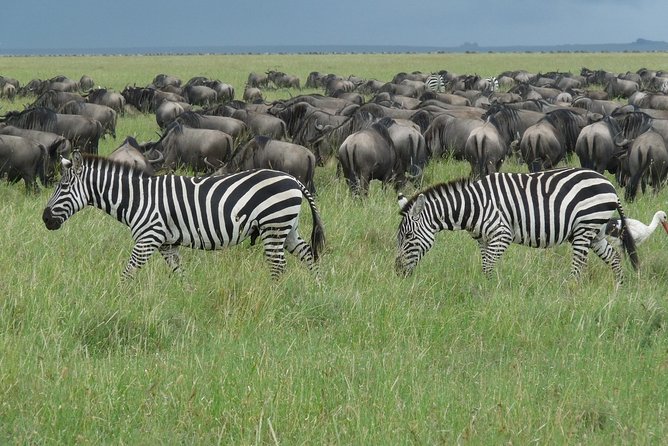
Wildebeest migration gets real fast. This safari gives you real chances to see the Great Wildebeest Migration, with guided drives across Tarangire, the Serengeti, and Ngorongoro crater. I especially liked the practical setup, private 4×4 comfort, and how the schedule is built around peak river-crossing windows. One thing to keep in mind, though, is that migration and crossings are nature first, so the exact action depends on weather and timing.
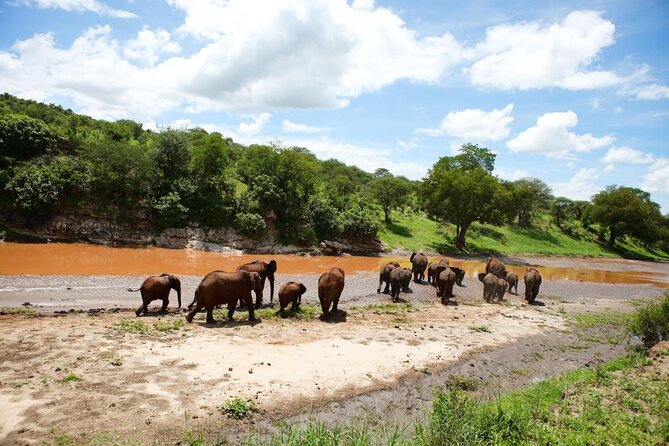
What makes this trip feel special is the mix of habitats. You start with Tarangire’s elephant concentration and baobabs, then you move into Serengeti’s lion-rich Seronera area, and you finish with Ngorongoro’s classic crater wildlife. In one review, the experience was described as stress free from start to finish, and the guide Fredy was singled out for making things smooth and organized.
The main consideration for your expectations is pacing. One review called the trip a bit rushed at times, and the itinerary is packed with early starts and long drives. If you want lots of downtime, you may feel the schedule more than you expect.
In This Review
- Key highlights to know before you go
- Timing the migration: why July to October changes everything
- Moshi to Tarangire: baobabs, elephants, and an easy first win
- Into Serengeti: endless plains, kopjes, and the Seronera predator rhythm
- Mara River crossing day: how to watch for action without stressing out
- Central Serengeti and Seronera: steady big cat viewing, fewer guarantees than river days
- Ngorongoro rim and the crater start: from rim views to a wildlife bowl
- Private jeep comfort and real-world logistics that help
- Price and value: is $4,185 worth it?
- Who should book this migration safari
- Should you book Bujo Tours for Serengeti wildebeest migration?
- FAQ
- Where does pickup happen?
- What parks are included on this safari?
- What is the main migration viewing goal?
- What is included in the price besides the safari drives?
- Is there emergency medical coverage included?
- Is a mobile ticket provided?
- What does the tour include for admission tickets?
- What is not included?
- What are the visa fees listed for this tour?
- What is the cancellation window?
Key highlights to know before you go
- River crossing odds in July-August or Sep-Oct: your timing aims at the busiest migration corridors
- Seronera zone for predators: lions and big cat activity tend to be steady here
- Private 4×4 with charging and a pop-up roof: better viewing angles without the hassle
- AMREF Flying Doctors emergency coverage: reassuring for remote travel
- Ngorongoro at dawn: early crater access helps you get more wildlife time
More of the Serengeti, drive by drive
- Safari Serengeti And Ngorongoro★ 5.0 · 288 reviews
- 5 Days Camping Tarangire, Serengeti & Ngorongoro crater & Visiting Maasai★ 5.0 · 58 reviews
- 4 Days Group Joining Camping Safari to Tarangire Serengeti Ngorongoro Crater★ 5.0 · 50 reviews
- 4 Day Private Tour Throughout Tarangire, Serengeti and Ngorongoro★ 5.0 · 42 reviews
Timing the migration: why July to October changes everything
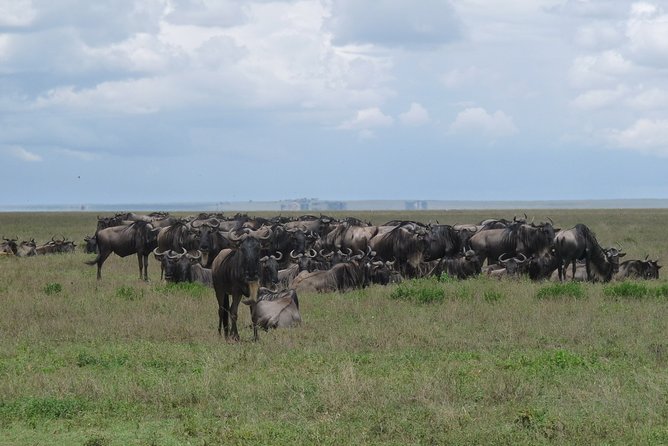
The Great Wildebeest Migration is not one set event. It is a rolling cycle driven by rain, grass, and water. That matters because river crossings are where the story gets intense, and those moments are seasonal.
In the months around July and August, the migration is commonly in the direction of the Masai Mara, and this is often when you hear about the start of Masai Mara river crossings. The same season is also linked with Serengeti mating season. In other words, the herds can move faster and you may see more concentrated drama as they push for water and greener grazing.
Then there is the second big window, around September and October, when the crossing rhythm reverses. If your goal is to maximize your odds, this is why your trip timing is so important, even if you cannot control where the herds will be that exact day.
Also, crossings are not only about wildebeest. The tour information explicitly points to crocodile encounters as a possibility. That does not mean it is guaranteed, but it does mean you should watch the riverbanks and take the guide’s cues seriously when you reach crossing country. Nature gives you a warning that things can get dangerous, and your best viewing is usually steady, patient, and from the right spot.
Moshi to Tarangire: baobabs, elephants, and an easy first win
Your safari begins in the morning with pickup from Moshi or Arusha, then a drive toward Tarangire National Park. The road time is about three hours from Arusha to Tarangire, so you get moving quickly.
Tarangire is a great first stop because it contrasts with the wide-open Serengeti feel. You get ancient, gigantic baobab trees, and the park is known for having nine different vegetation zones. That variety helps animals show up in different places, and it can make your photos look less repetitive.
One of the strongest reasons to start here is elephants. The tour info calls out Tarangire as having the highest concentration of elephants. I like this because elephants often behave like normal family groups, with routines you can actually observe, not just quick sightings.
Expect a game drive in the afternoon, ending with a return to your lodge for dinner and sleep. There is also a picnic lunch break during the drive. This is smart early pacing. You are not thrown straight into full-day long drives right away, and you still get serious wildlife time the first day.
Into Serengeti: endless plains, kopjes, and the Seronera predator rhythm
On day two, you head into Serengeti after breakfast. Serengeti is described as the land of endless plains, and it really does change how you see the horizon. The scale is big, with land area listed as 14,763 square kilometers, so your guide’s route choices matter.
You will spend time in and around the central part of Serengeti, especially the Seronera area. This is where the tour info points to the Seronera River as a key water source. Water draws animals in the dry period, and that creates a more predictable viewing pattern for predators.
A few specific things to watch for in this zone:
- Lions in prides are a focus here, because the area supports strong activity year-round.
- Kopjes are a big deal for spotting. These are massive granite boulders rising from grass, and they act like natural lookout points and shelters.
The schedule keeps you on the road multiple times in this region. Your day two includes game-drive time of about four hours, then more game driving time around the Serengeti area. The point is not to rush one snapshot. It is to give you repeat chances to see movement around water and cover.
Day three continues the Serengeti exploration, this time starting from 8:00 am and shifting from the usual plains toward the northern side. The terrain becomes more hilly and broken as you head toward the Kogatende region. That change matters because animals do not spread the same way in different terrain types, and your sighting variety can improve.
The northern day also includes a picnic lunch during the drive. Based on arrival timing, you may get a few hours by the Mara River. That is useful even if you miss a full crossing, because the river corridor is often where you see signs of migration movement.
Chasing the herds? Compare these first
Mara River crossing day: how to watch for action without stressing out
One of the biggest “if it happens, it is unforgettable” moments in this safari is the day focused on the Mara River crossing. The tour info is direct about what you might see: the river can be fierce, deep, and heavily rain fed, and it can take a heavy toll on the migrating herds. It also calls out drowning and crocodile encounters as part of that natural drama.
Here is the practical part for your expectations. If your goal is river crossings, you need patience and a good watching mindset. This is not the kind of day where you can scroll photos and expect the universe to line up. Watch the water direction, scan for herd movement, and listen when your guide points out where the action is building.
If you are lucky, you will witness a crossing and see the herd surge through strong current. The info also notes you might see mating-related movement during this July period when herds begin moving faster, so activity can feel extra intense around the same time window.
One warning I would give you: do not lock yourself into one spot mentally. Even when you think you have found the best view, herd behavior can change quickly. A good guide helps you reposition and interpret what you are seeing so you do not spend your best time waiting in the wrong place.
Central Serengeti and Seronera: steady big cat viewing, fewer guarantees than river days
Later in the trip, the route turns back south toward the central Serengeti. The driving time from the Mara River area back toward the centre is described as about four hours, moving through hill country, the Lobo area, woodlands, and then returning into the Seronera terrain.
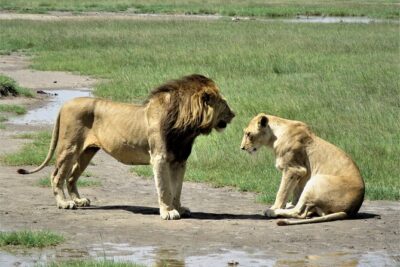
This is a good day to shift your focus from migration drama to predator rhythm. The tour information emphasizes big cat action in this part of Serengeti, including lions, leopards, and cheetah. It also highlights that the dry season can make wildlife congregate around permanent water sources in valleys, improving sightings.
Seronera again shows up as a key theme. The guide is likely to look for the same strengths that make this zone reliable:
- Water-related animal movement
- Lion prides using cover and space
- Grassland visibility with kopjes as reference points
The day includes picnic lunch and then dinner back at your accommodation. If you felt tense on the crossing day, this kind of “steady viewing” day can feel like a reset. You still drive and scan a lot, but you are not solely waiting for a single dramatic event.
Ngorongoro rim and the crater start: from rim views to a wildlife bowl
On day six, you branch from Serengeti toward Ngorongoro Conservation Area. The day begins at 9:00 am and includes a short game drive in Serengeti first. Then you drive to the Ngorongoro crater rim. The drive is listed as 75 km and about 2.5 hours, with mild game action en route.
Ngorongoro crater is described in impressive scale terms. It is the world’s largest inactive, intact, unfilled volcanic caldera, with a floor area of about 260 square kilometers and a depth over 2000 feet. Those numbers matter because the crater creates a natural closed system. Animals often concentrate on the crater floor, and you get big density without having to chase across endless distances.
Day six includes a half-day game drive and picnic lunch, then dinner and rest.
Day seven is where timing really counts. You get an early start around 6:30 am for the descent. The crater floor drive is listed as about five hours. This matters because animals are most active in early light, and you get more time to search multiple areas before the day heats up and movement changes.
The crater viewing list includes African elephant, buffalo, black rhino, hippos, hyenas, cheetahs, and lions. There is also a picnic lunch at the hippo pool. That is a classic Ngorongoro experience because hippos are loud, obvious, and active when the light is right.
After lunch, you ascend to exit the crater. The itinerary says the climb is steep, so bring yourself to the fact that this is an active end to an already full safari day.
Private jeep comfort and real-world logistics that help
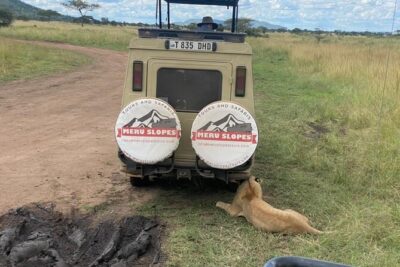
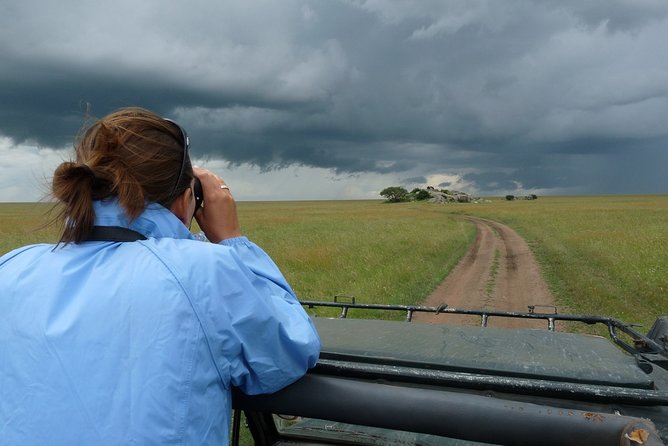
A big part of why this trip feels manageable is the transport setup. You travel in a private Jeep 4×4 equipped with a refrigerator, portable charging stations, and a pop-up roof. Those details might sound minor until you are out on long drives. A pop-up roof can make viewing easier, especially for tall grass and for the quick moments when you spot something moving at the edge of visibility.
The refrigerator is also practical. It likely helps keep water cooler during the day, and the itinerary includes mineral water on all days. Charging stations are useful because phones and cameras burn battery faster than you expect in the sun.
Your start times are early on multiple days, especially the crater descent. That means you should pack for quick transitions: a hat, sunscreen, and something warm for mornings. The tour info does not list clothing, so I am going to state the obvious based on experience, early mornings can feel cooler, and you will be out of the car less than you think, just enough for the temperature to matter.
Also, you are traveling with a guide who handles routing and spotting. Reviews highlight Fredy by name for stress-free coordination. That kind of guidance matters a lot on migration safaris, because the difference between a good sighting and a missed one can be where your jeep stops and how quickly the guide reads animal movement.
Price and value: is $4,185 worth it?
This safari is priced at $4,185 per person. That is not cheap, but safari pricing rarely is. The value question is what you get for that money, and here the list looks fairly strong.
First, you get private transport in a 4×4 with useful built-in features. Second, the tour includes breakfast, lunch, and dinner with specific counts listed as breakfast (6), lunch (7), and dinner (6). Third, you get mineral water every day.
Fourth, you have AMREF Flying Doctors insurance included for emergency evacuations. That is not an everyday concern until it suddenly is, and it is a major confidence boost for remote travel.
Fifth, admission tickets show as free in the itinerary blocks, and the tour includes all mentioned activities. That means you are not adding extra park fees on top of the main cost, at least based on the provided inclusions.
What is not included matters too. Flights are not included, and tips are not included. Alcohol and soft drinks are not included. Visa fees are listed, with $100 for Americans and $50 for non-Americans. If you forget those add-ons, the final number can creep up.
So is it worth it? For me, it becomes worth it if you are specifically chasing the migration odds and you want the support of a private guide and organized routing. If you just want generic wildlife, there are cheaper safaris. But if migration is the goal, the timing-based planning and the included emergency coverage justify a big chunk of the price.
Who should book this migration safari
This is a strong match for you if:
- Migration viewing is your top priority, and you can travel in the July-August or Sep-Oct windows.
- You want a guided, private experience rather than joining a mixed group.
- You like structured days with a mix of open plain viewing and crater wildlife.
It may not be ideal if:
- You get cranky with early starts and long days in a vehicle.
- You expect the crossing to be guaranteed on a specific river day.
Also, if this is your first safari, the setup can be reassuring. One review specifically described it as their first safari, with strong confidence built through how smooth the trip felt with Bujo Tours and guide Fredy.
Should you book Bujo Tours for Serengeti wildebeest migration?
I would book this if you want a migration-focused Serengeti trip with a realistic route plan, private comfort, and crater payoff at the end. The best part is how the schedule layers different wildlife strengths: Tarangire for elephants, Serengeti for predator-rich viewing around Seronera and kopjes, a crossing day for maximum drama when your timing lines up, then Ngorongoro for dense crater wildlife.
I would not book it if you are looking for a slow, relaxed vacation with lots of downtime, because the itinerary is full and you will spend big chunks of the day driving and searching for wildlife. Also, keep your crossing expectations flexible. The tour is built for odds, not promises.
If you do book, pack for early mornings, plan for sun exposure, and bring patience for the river day. When it clicks, it is one of those wildlife moments you will keep thinking about long after you return home.
FAQ
Where does pickup happen?
Pickup is offered from Moshi or Arusha, starting at 8:00 am.
What parks are included on this safari?
You visit Tarangire National Park, Serengeti National Park, and Ngorongoro Conservation Area (including the crater).
What is the main migration viewing goal?
The focus is on witnessing the Great Wildebeest Migration, including the best chances of river crossings during the migration windows mentioned for July-August and September-October.
What is included in the price besides the safari drives?
The tour includes the activities mentioned, mineral water on all days, and meals: breakfast (6), lunch (7), and dinner (6). It also includes private 4×4 transportation with refrigerator, portable charging stations, and a pop-up roof.
Is there emergency medical coverage included?
Yes. Flying Doctors insurance (AMREF) is included for emergency evacuations during the safari.
Is a mobile ticket provided?
Yes. The experience includes a mobile ticket.
What does the tour include for admission tickets?
Admission is listed as free in the itinerary day details provided.
What is not included?
Not included are international flights, alcoholic and soft drinks, tips for the safari guide, personal expenses (such as souvenirs), travel insurance, and visa fees.
What are the visa fees listed for this tour?
Visa fees are listed as $100 for American travelers and $50 for non-American travelers.
What is the cancellation window?
Free cancellation is allowed up to 24 hours in advance for a full refund. If you cancel less than 24 hours before the start time, the amount paid is not refunded.
Following the Migration
- 6 Days Tanzania Budget Camping Safari with Migration
★ 5.0 · 31 reviews - Tanzania Safari – The Great Migration in the North of the Serengeti and Lake Natron
★ 5.0 · 25 reviews - 5 Days Tanzania Safari – Migration and Big 5 Safaris
★ 5.0 · 14 reviews - Latest Updates On The Top Best 3 day Serengeti Migration Safari
★ 5.0 · 9 reviews - 5 Days Special Safari to see migration
★ 5.0 · 8 reviews
The Serengeti, Three More Ways
- Safari Serengeti And Ngorongoro
★ 5.0 · 288 reviews - 5 Days Camping Tarangire, Serengeti & Ngorongoro crater & Visiting Maasai
★ 5.0 · 58 reviews - 4 Days Group Joining Camping Safari to Tarangire Serengeti Ngorongoro Crater
★ 5.0 · 50 reviews - 4 Day Private Tour Throughout Tarangire, Serengeti and Ngorongoro
★ 5.0 · 42 reviews - 7 Days Safari. Serengeti, Tarangire, Lake Manyara & Ngorongoro Crater.
★ 5.0 · 34 reviews
Just added from around Moshi
Serengeti National Park Safaris, compared.
 ★ 5.0Serengeti Balloon Safari and authentic bush breakfastFrom $5502,480 reviews
 ★ 5.0Balloon Safari & Bush Breakfast in Serengeti – Miracle ExperienceFrom $5991,646 reviews
 ★ 5.03 Days Serengeti & Ngorongoro Group Camping SafariFrom $815574 reviews
 ★ 5.05-Day Highlights mid-Range Crater, Serengeti, TarangireFrom $2,327296 reviews
 ★ 5.0Safari Serengeti And NgorongoroFrom $2,845288 reviews
 ★ 5.03-Day Classic Serengeti SafariFrom $1,455263 reviews
 ★ 5.0Private 6-Day Tarangire Manyara Crater and Serengeti with Mid-Range LodgesFrom $2,685238 reviews
 ★ 5.05 Days Camping Tarangire, Serengeti & Ngorongoro crater & Visiting MaasaiFrom $1,254229 reviews
Browse the lists this tour appears in