
REVIEW · SERENGETI NATIONAL PARK SAFARIS
7 Days Safari. Serengeti, Tarangire, Lake Manyara & Ngorongoro Crater.
Big five country starts on day one. This 7-day safari from Moshi strings together Tarangire, Serengeti, Ngorongoro, and Lake Manyara, with early pickups, long game drives, and nights that keep you close to wildlife action.
I love that the package takes care of the practical costs that often surprise people, with park fees and transportation included. I also like the guide approach behind the scenes, with praised guides like Michael and Hillary known for spotting animals and putting what you see into context.
One consideration: the days are early and drives between parks take time, and Ngorongoro rim nights can feel cold and windy around 7,500 ft (2,286 m). Pack for chill, not just sun.
In This Review
- Key things that make this safari work
- Entering the Big Safari Circuit From Moshi
- Day 1 Tarangire National Park: elephants, giraffes, and baobabs
- Day 2 Serengeti arrival: crossing highlands and easing into predator country
- Day 3 Full-day Serengeti Heritage: the long game drive day
- Day 4 Central Serengeti morning hunts: when predators do the work
- Day 5 Ngorongoro Conservation Area: caldera views, big herd energy, and rim cold
- Day 6 Ngorongoro Crater descent: UNESCO wildlife bowl, early and unforgettable
- Day 7 Lake Manyara finale: flamingos, tree-climbing lions, and a bird lover’s pause
- Price and value: what $1,850 buys you in real terms
- The guide effect: Michael, Hillary, Steve, Shirima, and what to look for
- Best fit for your travel style, and who should rethink it
- Should you book this 7-day safari?
- FAQ
- How long is the safari?
- Where does the safari start?
- What parks are included?
- What is the price per person?
- What meals are included?
- Are park admission fees included?
- Is the entry visa included?
- Are flights included?
- Where do you sleep during Ngorongoro?
- When is the tour operated, and what if weather is poor?
Key things that make this safari work
- A tight circuit of four top Tanzanian ecosystems, from river elephants to crater wildlife
- Long Serengeti game-drive time, including both full-day touring and central-predator mornings
- Ngorongoro crater is the star, but you sleep near the rim since overnight inside the crater is not permitted
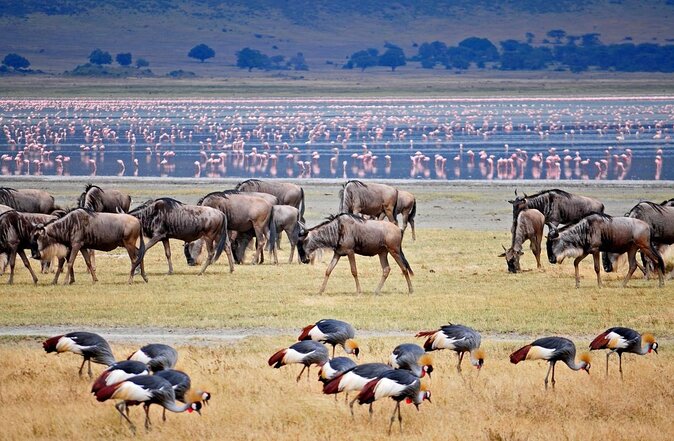
- Lake Manyara adds birds and variety, with flamingos and the chance of tree-climbing lions
- Meals are built into the schedule, so you’re not hunting food options between parks
- A private setup means it’s only your group in the vehicle, not a bus full of strangers
More of the Serengeti, drive by drive
- Safari Serengeti And Ngorongoro★ 5.0 · 288 reviews
- 5 Days Camping Tarangire, Serengeti & Ngorongoro crater & Visiting Maasai★ 5.0 · 58 reviews
- 4 Days Group Joining Camping Safari to Tarangire Serengeti Ngorongoro Crater★ 5.0 · 50 reviews
- 4 Day Private Tour Throughout Tarangire, Serengeti and Ngorongoro★ 5.0 · 42 reviews
Entering the Big Safari Circuit From Moshi
This is a classic Tanzania “greatest hits” route, but it’s built with enough time in each area that it doesn’t feel like a drive-through. You start from the Moshi region, then you work your way north and into the Ngorongoro area before finishing with Lake Manyara.
The big win is how the parks complement each other. Tarangire tends to deliver reliable elephant and giraffe sightings along the Tarangire River, while Serengeti is where you spend your longest stretches looking for predators. Ngorongoro adds the dramatic caldera bowl experience, and Lake Manyara brings a different pace, with birds and the famous tree-climbing lion possibility.
This tour is also set up to reduce friction. You’ll get hotel pickup (listed as pickup offered), travel in an air-conditioned vehicle, and have on-board WiFi during transfers. Park admissions and related fees are included, which matters because safari costs can balloon if you have to pay park entry on top of everything else.
Day 1 Tarangire National Park: elephants, giraffes, and baobabs
Your day starts early, with pickup around 6:00 am from your hotel and a drive of about 3 to 4 hours to Tarangire National Park. Plan on a full day that begins with a game drive, breaks for lunch, then continues with more wildlife time before nightfall.
Tarangire is especially famous for two things you’ll feel immediately once you’re in the park: elephants and giraffes. The Tarangire River is the magnet. Wildlife concentrates along the river system, so you’re not randomly driving for hours hoping the habitat delivers. You’ll also see plenty of baobab trees, which give the park its distinctive look and a more scenic feel than many grassland-heavy reserves.
In the middle of the drive, you pause for a box lunch inside the park. That small detail matters. It keeps the day moving and helps you stay focused on sightings instead of timing lunch stops around logistics.
Night is spent at a campsite, lodge, or tented camp in the Tarangire area. That’s a good fit for day one because it balances comfort with the rhythm of safari life.
Day 2 Serengeti arrival: crossing highlands and easing into predator country
On Day 2 you head to Serengeti National Park with another 3 to 4 hours of driving. You travel through the Ngorongoro Conservation Area highlands, but the crater itself is not what you’re entering on this day. This is more of a transition day that sets you up for real Serengeti time once you arrive.
When you reach Serengeti, the schedule shifts into game-drive mode right away. You keep going until evening, then you settle in for the night at a campsite, lodge, or tented camp inside Serengeti.
Staying inside Serengeti is a practical advantage. It cuts down on long back-and-forth drives and lets you start early the next day. It also means you’re already positioned for the animals’ daily rhythm.
Other ways down into the Ngorongoro Crater
Day 3 Full-day Serengeti Heritage: the long game drive day
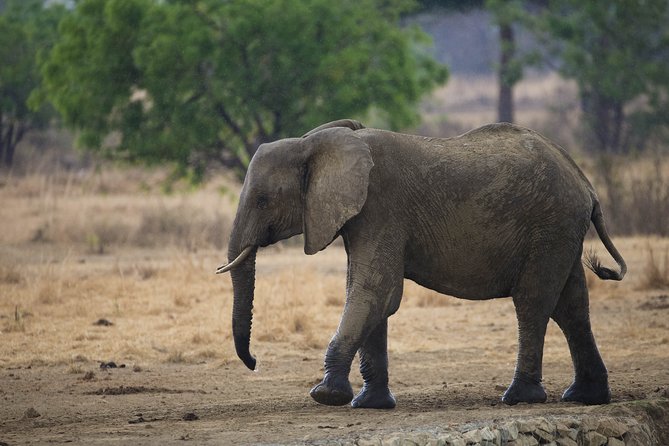
Day 3 is your full-day Serengeti Heritage slot, with about 10 hours in the park. This is the day that helps you move beyond the first-impression sightings and into deeper exploration.
Expect a real rhythm: breakfast, then an extended stretch of game driving. You’ll carry a lunch box, and you’ll have time to stop, relax, and reset before continuing. Late afternoon you return to camp or lodge for dinner and overnight.
Why this matters: Serengeti is huge, and wildlife encounters are partly about being in the right places at the right times. A full day gives your guide the freedom to adjust to what’s happening that day, instead of being boxed into a strict “two hours here, two hours there” schedule.
The operator’s guiding reputation is a good match for this day structure. In past trips with this company, guides like Michael have been praised for strong animal identification skills and for explaining what’s going on, not just naming species.
Day 4 Central Serengeti morning hunts: when predators do the work
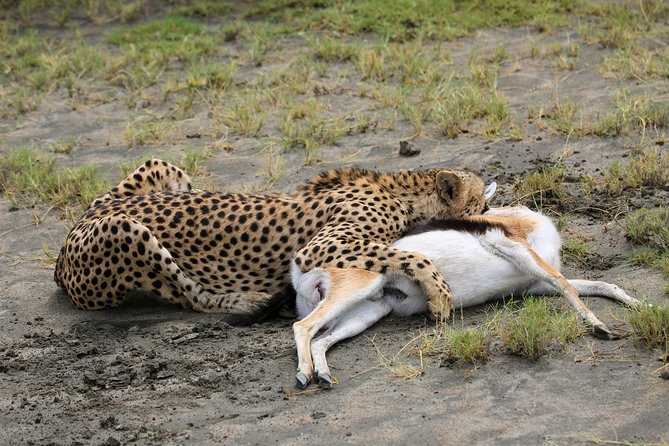
Day 4 is another 10-hour day in Serengeti, but it’s framed more around morning predator action. Your early drive can line up with lions and other predators during their morning hunt, when activity often feels more focused and purposeful.
You’ll have a whole day in central Serengeti, with overnight again inside the park. Meals are included, and the day is described as breakfast plus lunch and dinner (with lunch timing variations like brunch on some schedules).
This morning-hunt focus is one of the more meaningful parts of the plan. If you only ever do afternoon game drives, you miss out on a chunk of predator behavior. Early hours also help reduce heat pressure, and they can improve visibility for both animals and scenery.
Day 5 Ngorongoro Conservation Area: caldera views, big herd energy, and rim cold
Day 5 is where the route begins to shift from “endless plains” to “dramatic geography.” You drive about 1 hour into the Ngorongoro Conservation Area, with roughly 4 hours of game drive time.
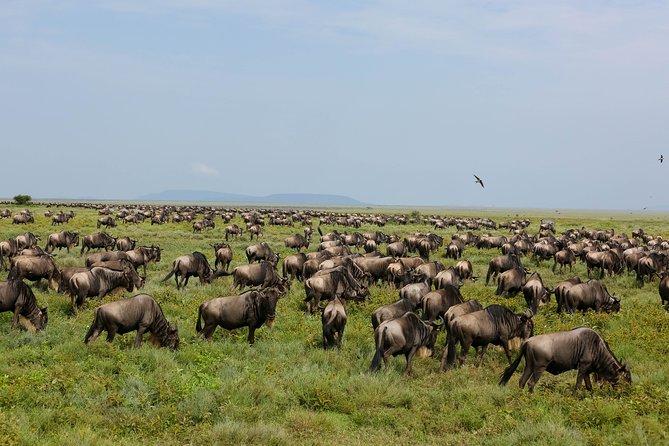
You’re not descending into the crater yet, but you’re moving toward that iconic landscape where the caldera dominates everything. The description also highlights why this area gets so much attention: the crater region supports huge numbers of grazers and carnivores. Even without entering the crater floor that day, you’re still in an ecosystem built for constant animal movement.
Important practical detail: overnights are not permitted inside the crater, so lodging happens outside the crater, most often near the rim. That changes the feel of your evening. The area sits at altitude, around 7,500 ft (2,286 m), and it tends to be windy. Even if your daytime safari is warm, you’ll likely feel cooler temperatures at night.
If you want to enjoy your downtime instead of rushing back to warmth, bring a knit cap and light gloves. They’re not “optional style points” here. They’re about comfort during the windy rim hours.
Day 6 Ngorongoro Crater descent: UNESCO wildlife bowl, early and unforgettable
Day 6 is the day most people picture when they think of Ngorongoro: an early morning descent into the crater floor. You go down the 600 m high walls to experience the caldera as a wildlife habitat.
The schedule includes about 6 hours in the crater, with breakfast, lunch, and dinner included (with dinner plus either lunch or brunch depending on the day flow). You’ll also have time to look for high-value sightings, and the itinerary specifically mentions the chance of an endangered rhino.
This is also a “pace matters” day. Because you’re descending early, you’re betting on the best light and animal activity. Your best tool here is patience. Ngorongoro can feel like a living panorama, where animals appear, move, and disappear into the terrain without you needing to chase them miles and miles.
Night is spent at Heaven nature Campsite. Again, that’s outside the crater, which is consistent with the overnight rules and the rim-based lodging approach.
Day 7 Lake Manyara finale: flamingos, tree-climbing lions, and a bird lover’s pause
Your last day is Lake Manyara National Park. You’ll have about 4 to 5 hours in the park, then you drive back to Moshi or toward the airport, with about 4 hours of transfer time.
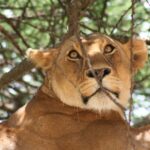
Lake Manyara sits in the Great Rift Valley, and it has a very different vibe from the broad Serengeti grasslands. The park is known for tree-climbing lions, and it also has a soda-ash lake element tied to the area’s ecology.
If you like birds, this is a highlight. The itinerary calls out flamingos and says the shoreline can attract more than 400 species of birds. Some of those are migrants or waterfowl, so you get a mix of resident and seasonal life. Even if you don’t hunt sightings like a contest, this day is worth it for how alive the environment feels.
You end the trip with breakfast and lunch included, then you’re on the road again. It’s the kind of finish that lets you savor the safari rather than push into another night in the wild.
Price and value: what $1,850 buys you in real terms
At $1,850 per person for a roughly 7-day safari, the value depends on what’s included, not just the headline number. Here, a lot is wrapped into the cost.
You’re getting:
- Transportation with hotel pickup and an air-conditioned vehicle
- Park fees and related expenses listed as included, including things like admission, fuel surcharge, gratuities, and parking
- Meals: breakfast for 6 days, lunch for 7 days, and dinner for 6 days
- A mobile ticket
- On-board WiFi
What’s not included is also clearly stated: entry visa and flights.
For many travelers, the “hidden budget stress” on safari is park admission plus transfer costs plus guides and logistics. When those pieces are bundled, you’re usually more likely to feel in control and enjoy the trip instead of tracking receipts all day.
The one tradeoff is that safaris like this are intense. Your days are packed with wildlife time and long drives. If you’re the type who likes slow mornings and short outings, you’ll feel the early starts and travel days more than someone who’s built for adventure.
The guide effect: Michael, Hillary, Steve, Shirima, and what to look for
Safaris rise or fall on the guide. And the guiding themes tied to this operator are easy to spot in the feedback names you’ll see attached to experiences: Michael, Hillary, Steve, Shirima, and others.
The common strengths that matter most to you are practical:
- Animals identified quickly, including predators and big mammals
- Explanations that connect behavior to habitat, like how animals use the river corridors
- A calm approach in the vehicle, even with families and mixed comfort levels
- Vehicles described as up to date and safe
When you pick a safari, ask yourself what you want from game drives. If you want silent spotting with no interpretation, any guide can point. If you want to understand why animals are there and what you’re seeing in real time, guide skill turns the dial from good to memorable.
Best fit for your travel style, and who should rethink it
This safari is a strong match if you want:
- A big-picture wildlife itinerary with multiple top parks in one week
- Plenty of game-drive time, especially in Serengeti
- Comfort with early mornings and a busy schedule
- A private setup, where the vehicle is just your group and you can ask more questions
It might be less ideal if:
- You want a low-energy vacation with minimal driving
- You get cold easily at altitude, since the rim area around Ngorongoro can be windy and chilly at roughly 7,500 ft
- You prefer to sleep directly inside the crater, since overnight inside Ngorongoro Crater is not permitted
If you’re traveling with kids, the tour structure still works because days are timed around wildlife visibility rather than long, aimless road loops. You’ll just want to bring snacks, sun protection, and something warm for mornings and rim evenings.
Should you book this 7-day safari?
I think you should book this if your priority is a classic Tanzania route that hits the big habitats without feeling rushed. The strongest reasons are the combination of Tarangire for elephants, Serengeti for long game drives, Ngorongoro for the crater bowl experience, and Lake Manyara for birds plus tree-climbing lion country.
Before you click confirm, be honest about two things. First, you must be okay with early starts and long travel days. Second, plan for cold rim weather on Ngorongoro nights, even if the rest of your trip feels sunny.
If those two points don’t bother you, this is a solid, practical package, especially because many of the costly logistics are already handled in the price.
FAQ
How long is the safari?
It’s listed as about 7 days.
Where does the safari start?
The start point is Kilimanjaro Airport in Tanzania, with pickup also offered for your hotel.
What parks are included?
You visit Tarangire National Park, Serengeti National Park, Ngorongoro Conservation Area, Ngorongoro Crater, and Lake Manyara National Park.
What is the price per person?
The price is $1,850.00 per person.
What meals are included?
Breakfast is included for 6 days, lunch is included for 7 days, and dinner is included for 6 days.
Are park admission fees included?
Yes. The tour includes fees, and the itinerary shows admission tickets as included or free across the park days.
Is the entry visa included?
No. Entry visa is not included.
Are flights included?
No. Flights are not included.
Where do you sleep during Ngorongoro?
Overnights are not permitted inside Ngorongoro Crater. You stay outside the crater, near the rim, with one night listed at Heaven nature Campsite.
When is the tour operated, and what if weather is poor?
The experience requires good weather. If it’s canceled due to poor weather, you’ll be offered a different date or a full refund.
Tarangire and Its Baobabs
- 5 Days Camping Tarangire, Serengeti & Ngorongoro crater & Visiting Maasai
★ 5.0 · 58 reviews - 4 Days Group Joining Camping Safari to Tarangire Serengeti Ngorongoro Crater
★ 5.0 · 50 reviews - 3-Day Ngorongoro Crater Manyara and Tarangire Safari from Arusha
★ 5.0 · 49 reviews - 4 Day Private Tour Throughout Tarangire, Serengeti and Ngorongoro
★ 5.0 · 42 reviews - 5-Day Lake Manyara, Serengeti, Ngorongoro Crater and Tarangire
★ 5.0 · 28 reviews
Still Thinking About the Crater?
- Safari Serengeti And Ngorongoro
★ 5.0 · 288 reviews - 5 Days Camping Tarangire, Serengeti & Ngorongoro crater & Visiting Maasai
★ 5.0 · 58 reviews - 4 Days Group Joining Camping Safari to Tarangire Serengeti Ngorongoro Crater
★ 5.0 · 50 reviews - 3-Day Ngorongoro Crater Manyara and Tarangire Safari from Arusha
★ 5.0 · 49 reviews - 4 Day Private Tour Throughout Tarangire, Serengeti and Ngorongoro
★ 5.0 · 42 reviews
The Serengeti, Three More Ways
- Safari Serengeti And Ngorongoro
★ 5.0 · 288 reviews - 5 Days Camping Tarangire, Serengeti & Ngorongoro crater & Visiting Maasai
★ 5.0 · 58 reviews - 4 Days Group Joining Camping Safari to Tarangire Serengeti Ngorongoro Crater
★ 5.0 · 50 reviews - 4 Day Private Tour Throughout Tarangire, Serengeti and Ngorongoro
★ 5.0 · 42 reviews - Safari in Tanzania 5 days: Manyara, Ngorongoro, Serengeti
★ 5.0 · 29 reviews
Just added from around Moshi
Serengeti National Park Safaris, compared.
 ★ 5.0Serengeti Balloon Safari and authentic bush breakfastFrom $5502,480 reviews
 ★ 5.0Balloon Safari & Bush Breakfast in Serengeti – Miracle ExperienceFrom $5991,646 reviews
 ★ 5.03 Days Serengeti & Ngorongoro Group Camping SafariFrom $815574 reviews
 ★ 5.05-Day Highlights mid-Range Crater, Serengeti, TarangireFrom $2,327296 reviews
 ★ 5.0Safari Serengeti And NgorongoroFrom $2,845288 reviews
 ★ 5.03-Day Classic Serengeti SafariFrom $1,455263 reviews
 ★ 5.0Private 6-Day Tarangire Manyara Crater and Serengeti with Mid-Range LodgesFrom $2,685238 reviews
 ★ 5.05 Days Camping Tarangire, Serengeti & Ngorongoro crater & Visiting MaasaiFrom $1,254229 reviews
Browse the lists this tour appears in