
REVIEW · SERENGETI NATIONAL PARK SAFARIS
Safari in Tanzania 5 days: Manyara, Ngorongoro, Serengeti
Five days, three parks, huge wildlife odds. This private 4×4 safari is built for a classic route, with Ngorongoro Crater giving you an unusually dense view of wildlife fast. I like the strong pacing that strings together very different habitats, and I also like the human touch, with guides and leaders such as Rocco and rangers like Jerimiah or Hassan mentioned for organized, animals-first guiding. One drawback to keep in mind: Ngorongoro is the one place where giraffes are explicitly noted as not finding enough nourishment, so if that is your must-see, temper expectations.
You also get practical value baked into the package. Park fees, full board (breakfast, lunch, dinner), transfers, water on board, and AMREF insurance are included, so your days stay focused on safari time instead of constant add-on decisions. The long drive blocks, listed as 6 to 8 hours on safari days, mean you should be ready for a steady routine and time off the vehicle only when the game drives allow it.
In This Review
- Quick takeaways before you go
- Why this Manyara, Ngorongoro, Serengeti route makes sense in 5 days
- Day 1 at Lake Manyara: baboons, bird life, and Rift-wall variety
- Day 2 in Ngorongoro Crater: the ancient caldera where wildlife gets packed
- Days 3 and 4 in Serengeti: big numbers, repeated chances, and a wider world
- Day 5: the Rift-wall descent back to Arusha, with time for one last meal
- Vehicle, guiding style, and what “private” changes for your safari
- Price and value: what $3,050 includes, and what that means for your budget
- Best-fit for your safari style, and who might want a different route
- Should you book Safari Crew Tanzania for this 5-day safari?
Quick takeaways before you go
- A tight loop that covers three “must” areas: Manyara, Ngorongoro, and Serengeti in about 5 days.
- Photo safari style, not just passing through: multiple full hours inside each park.
- Ngorongoro’s built-in wildlife density: a caldera known for very high concentrations of large animals.
- Manyara’s season bonus for flamingos: pink flamingos are specifically associated with December to March.
- Full board and park fees included: you budget once, then safari time stays simple.
- Experienced Italian-capable guiding in practice: names like Hassan, Naftal, Emmanuel, and Kahim come up as examples of capable local guidance.
More of the Serengeti, drive by drive
- Safari Serengeti And Ngorongoro★ 5.0 · 288 reviews
- 5 Days Camping Tarangire, Serengeti & Ngorongoro crater & Visiting Maasai★ 5.0 · 58 reviews
- 4 Days Group Joining Camping Safari to Tarangire Serengeti Ngorongoro Crater★ 5.0 · 50 reviews
- 4 Day Private Tour Throughout Tarangire, Serengeti and Ngorongoro★ 5.0 · 42 reviews
Why this Manyara, Ngorongoro, Serengeti route makes sense in 5 days
This is the kind of itinerary that works because it follows how Tanzania “changes shape” as you travel. You start at Lake Manyara under the Rift Valley escarpment, move into the ancient volcanic bowl of Ngorongoro, then switch to the wide-open Serengeti ecosystem where animal numbers are described in staggering scale.
What I like for your planning is the clear logic. Each day is long enough to matter, with real time in the parks listed as about 7 to 8 hours on safari days. And because this is a photo safari, your driver-guide can prioritize sighting opportunities during those hours, rather than turning your trip into a quick drive-by checklist.
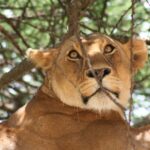
The route also gives you multiple chances to see big cats and other predators indirectly. You are not only visiting one park once, you’re visiting Serengeti on two separate days, which is a practical advantage when wildlife behavior changes day to day.
Day 1 at Lake Manyara: baboons, bird life, and Rift-wall variety
Lake Manyara National Park is small on paper, about 330 square kilometers, but the description gives away why it feels bigger in real life. The park sits under the Rift Valley escarpment, and it contains dense forests fed by resurgences, savannah areas, and marshy lake-side zones.
That mix matters for photos because you can get very different scenes without changing parks. One moment you’re in a greener, more sheltered setting, and the next you’re watching open-country wildlife. The itinerary also calls out a prime wildlife and bird theme: large colonies of baboons and vervet monkeys, plus elephants and giraffes, along with a noted total of up to 380 bird species.
A fun detail that’s worth planning around is the flamingo timing. During December to March, large flocks of pink flamingos settle here. If your trip lands in that window, Lake Manyara can turn into a bird-photo day as much as a land-wildlife day.
Practical notes for your expectations:
- The day starts with a morning departure from Arusha to the park, then it’s a full photo safari block listed at about 7 hours.
- Admission ticket is included for this stop, so you’re not juggling entry fees mid-trip.
- Expect a relaxed but active day. Lake Manyara’s variety is the point, and you will likely spend time scanning different habitat edges rather than focusing on a single landscape feature.
One thing to consider: Lake Manyara can feel more “local ecology” than “huge open plains.” If you’re chasing the classic wide Serengeti look first, you may find this day more varied and close-up than panoramic.
Day 2 in Ngorongoro Crater: the ancient caldera where wildlife gets packed
Ngorongoro Crater is the day that turns a safari into a jaw-drop geology lesson. The crater is described as the remains of an ancient volcanic cone, whose summit collapsed about 2.5 million years ago. What you get now is a caldera, a kind of natural bowl, often compared to a frying pan, with a diameter noted as 16 to 20 kilometers and raised edges about 600 meters above the crater floor.
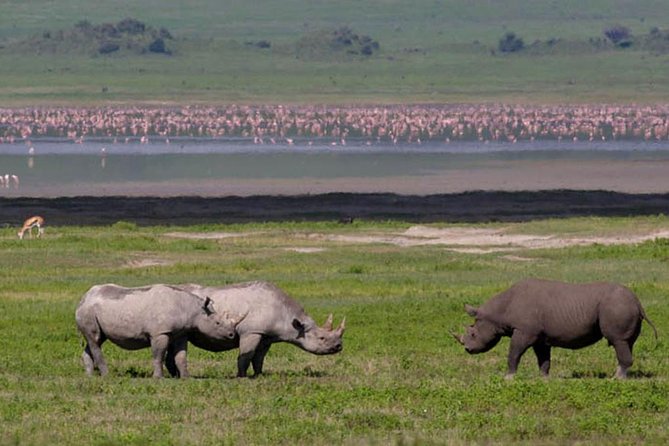
Why you should care: the tour information states that more than 25,000 large animals live inside the crater area. Even if you never study ecology graphs, that sentence translates into practical safari odds. Higher concentrations mean you spend less time waiting in empty stretches and more time locating wildlife.
You also get a strong altitude context. The edge is noted at about 2,300 meters above sea level, which helps explain why the crater can feel cooler and why clothing choices on safari days can matter. (I’m not telling you what to pack, but I am saying: don’t assume “warm all day” just because you’re in Tanzania.)
Species expectations are also spelled out with one big “gotcha.” The information says all typical species live in Ngorongoro except giraffes, because they do not find nourishment there. So if giraffes are your personal must, this is the one day you should not build your plan around.
Your day is a full photo safari block at about 8 hours, with admission included. That gives you enough time for the usual rhythm of spotting, stopping, photographing, and moving on when the light or action changes.
If you want a simple strategy for your mindset: go to Ngorongoro thinking “dense sightings,” not “complete variety of every animal Tanzania has.” You’ll likely be happier that way.
Other ways down into the Ngorongoro Crater
Days 3 and 4 in Serengeti: big numbers, repeated chances, and a wider world
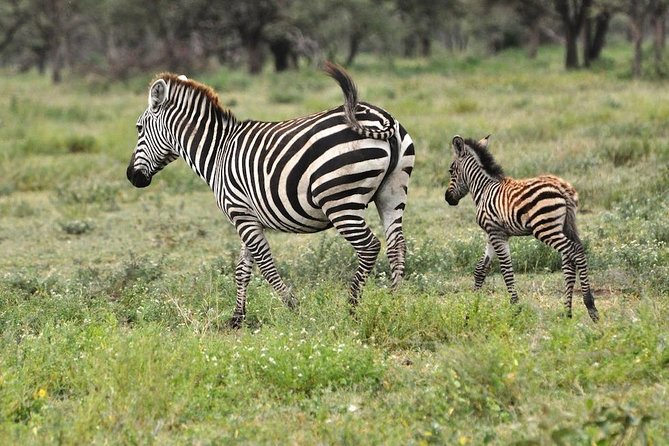
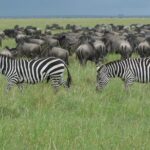
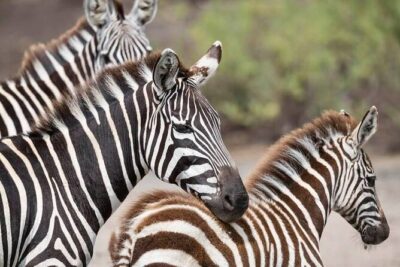
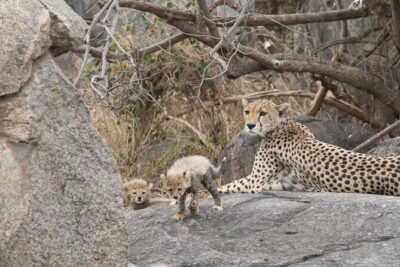
Serengeti is the iconic name for a reason, and the tour description gives you the numbers to prove it. The ecosystem is cited as home to more than 1,500,000 wildebeests, about 300,000 zebras, roughly 500,000 Thompson’s gazelles, and big-carnivore populations noted as more than 2,700 lions, about 1,000 leopards, and around 500 cheetahs. It also calls out huge herds of elephants and a long list of other species, plus hippos and crocodiles in water areas and more than 400 bird species overall.
Now, here is the practical interpretation for you. When wildlife numbers are that large, the “finding” part of safari becomes more efficient. You can cover more sighting opportunities without feeling like you’re searching an empty park all day.
Why two Serengeti days help:
- It reduces the risk of getting one “quiet” day where animals are harder to spot.
- It lets your guide adjust where they focus based on where activity is showing up.
- It increases your odds of different species showing at different times and distances.
Day 3 is listed as an 8-hour Serengeti safari block. Day 4 is also an 8-hour photosafari, then you proceed toward the Ngorongoro Plains and reach Karatu in the evening.
That transition is meaningful. It means you’re not just driving from one famous place to another and calling it a day. You’re also getting the context around the crater area again via the plains route, which can change what you see compared with the crater-only day.
One balanced expectation check:
- Serengeti can offer dramatic scenes, but it’s also a working ecosystem, not a zoo. Sometimes your best photos come from watching behavior quietly for longer instead of chasing one big moment.
- Your itinerary supports this by giving you substantial time in each park. The structure is doing you a favor.
Day 5: the Rift-wall descent back to Arusha, with time for one last meal
After Karatu in the evening on Day 4, Day 5 focuses on the return. The itinerary goes from Karatu back to Arusha along a scenic road that descends winding along the Rift wall. Lunch is included in Arusha, then you transfer to Kilimanjaro or Arusha airport.
This day is a good time to reset. Safari days are long, and even though the drive can be scenic, it’s also not “in-park action” time. The payoff is that you finish with a clear end point, rather than an awkward scramble to catch flights.
If you’re the type who wants the trip to close cleanly, this schedule helps. You get a final included meal, then you head to the airport transfer.
Vehicle, guiding style, and what “private” changes for your safari
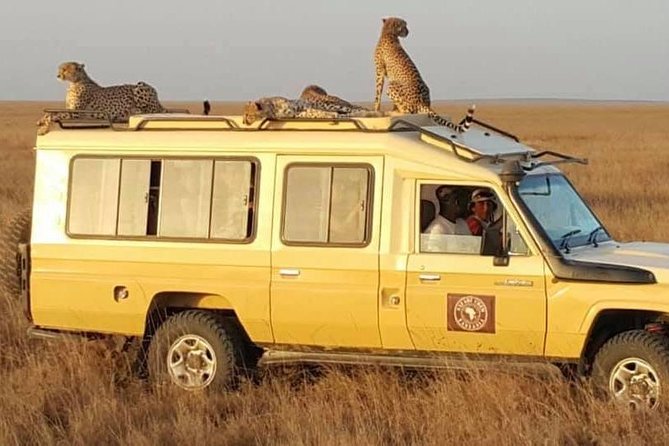
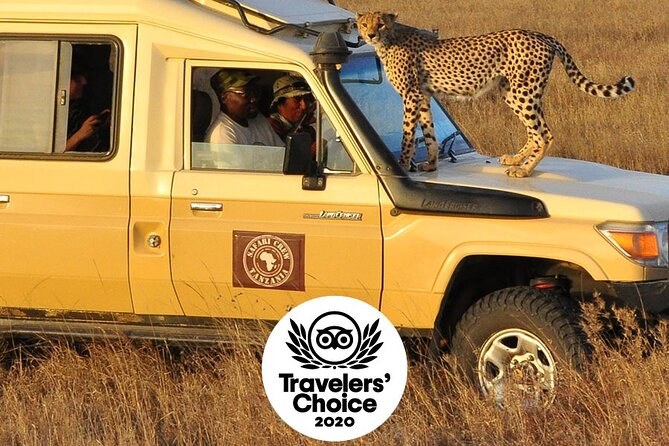
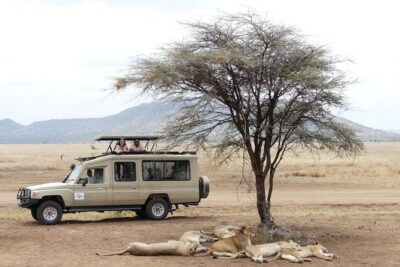
This is a private tour with private transportation, and it runs on a 4×4 safari circuit. That matters more than people think. A private setup usually means your ranger and driver can manage your day around sighting priorities, rather than sticking to a rigid group parade.
The operation is described as a Tanzanian safari specialist with over twenty years of experience organizing trips in the Rift Valley. In practice, that often shows up in small things like smooth handoffs, planning that avoids unnecessary waiting, and guides who can work effectively in the languages you need. Past experiences tied to this company include guides such as Jerimiah, Naftal, Hassan, Emmanuel, and Kahim, and multiple mentions of Italian-speaking guiding as a highlight.
What I like for your comfort and photo time:
- Water on board is included, so you’re not doing stop-and-buy hydration every day.
- AMREF insurance is included, which gives you an extra layer of reassurance for a remote-country day.
- The itinerary’s “photo safari” language signals you’re meant to stop for sightings, not just drive past them.
One consideration: because the driving blocks are listed as 6 to 8 hours on park days, you should be comfortable spending long stretches in the vehicle. The trade is bigger wildlife time when you are in the parks, not constant hotel-style breaks.
Price and value: what $3,050 includes, and what that means for your budget
At $3,050 per person for roughly 5 days, this isn’t a cheap safari. So the value question is really about what’s bundled, and the list of inclusions is where this package earns its keep.
Here’s what’s included:
- Full board: breakfast (4), lunch (5), dinner (4)
- Park fees (admission ticket included for park days)
- Transfers, plus private transportation
- Safari circuit in 4×4
- Water on board
- AMREF insurance
- All fees and taxes
It also lists pickup offered and paper ticket, plus it’s positioned as private and “only your group will participate.”
What you’re really paying for is reduced friction. When park fees, meals, and transport are already handled, you avoid the common safari budget trap of adding up small charges day by day. That keeps you focused on the primary activity: the drives, the sightings, and the time inside Serengeti, Ngorongoro, and Manyara.
What’s not included is also clear:
- International and local flights
- Entry visa
- Drinks at lodges
- Personal extras
- Tips or mance
So if you’re the kind of person who hates surprises, this price structure is helpful. If you’re traveling with strict control over spending, you’ll still want to plan for visa, flights, and on-the-ground discretionary costs like drinks and tips, since those are not covered.
Best-fit for your safari style, and who might want a different route
This itinerary is a strong fit if you want:
- Three heavy-hitter areas in one compact run, with time blocks that are long enough to matter.
- A photo safari focus, where your guide is set up to help you find and frame wildlife.
- The convenience of full board plus park fees included.
You might think twice if:
- You’re specifically obsessed with giraffes. Ngorongoro is the one park in this plan that explicitly excludes giraffes as finding nourishment there.
- You prefer a lighter day with lots of breaks. The schedule is built for 4×4 time, with safari blocks listed at about 7 to 8 hours.
Should you book Safari Crew Tanzania for this 5-day safari?
I’d book this route if you want a clear, classic circuit that prioritizes substantial park time and reduces logistics headaches. The best reason is the way inclusions line up with the real costs of safari travel: meals, park fees, transfers, water, and insurance are already handled, so your budget stays more predictable.
Book with confidence if you can handle long days in the vehicle and you’re flexible on what wildlife shows up on any given day. And if flamingos matter to you, check your dates because Manyara’s pink-flamingo season is specifically tied to December to March.
If you want me to tailor this decision even more, tell me your travel month, group size, and whether giraffes or flamingos are your top must-see.
Down at Lake Manyara
- 3-Day Ngorongoro Crater Manyara and Tarangire Safari from Arusha
★ 5.0 · 49 reviews - 7 Days Safari. Serengeti, Tarangire, Lake Manyara & Ngorongoro Crater.
★ 5.0 · 34 reviews - 5-Day Lake Manyara, Serengeti, Ngorongoro Crater and Tarangire
★ 5.0 · 28 reviews - 6 Days: Classic Camping( Tarangire, Manyara, Serengeti And Ngorongoro).
★ 5.0 · 26 reviews - 4 Days, 3 Nights Group budget Safari, Lake Manyara, Serengeti, Ngorongoro
★ 5.0 · 18 reviews
Still Thinking About the Crater?
- Safari Serengeti And Ngorongoro
★ 5.0 · 288 reviews - 5 Days Camping Tarangire, Serengeti & Ngorongoro crater & Visiting Maasai
★ 5.0 · 58 reviews - 4 Days Group Joining Camping Safari to Tarangire Serengeti Ngorongoro Crater
★ 5.0 · 50 reviews - 3-Day Ngorongoro Crater Manyara and Tarangire Safari from Arusha
★ 5.0 · 49 reviews - 4 Day Private Tour Throughout Tarangire, Serengeti and Ngorongoro
★ 5.0 · 42 reviews
The Serengeti, Three More Ways
- Safari Serengeti And Ngorongoro
★ 5.0 · 288 reviews - 5 Days Camping Tarangire, Serengeti & Ngorongoro crater & Visiting Maasai
★ 5.0 · 58 reviews - 4 Days Group Joining Camping Safari to Tarangire Serengeti Ngorongoro Crater
★ 5.0 · 50 reviews - 4 Day Private Tour Throughout Tarangire, Serengeti and Ngorongoro
★ 5.0 · 42 reviews - 7 Days Safari. Serengeti, Tarangire, Lake Manyara & Ngorongoro Crater.
★ 5.0 · 34 reviews
Just added from around Moshi
Serengeti National Park Safaris, compared.
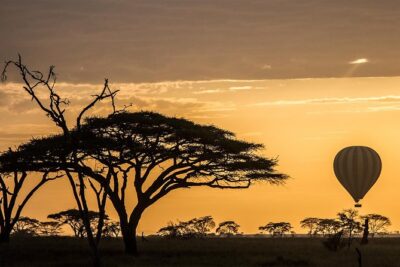 ★ 5.0Serengeti Balloon Safari and authentic bush breakfastFrom $5502,480 reviews
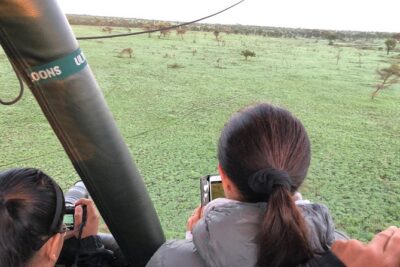 ★ 5.0Balloon Safari & Bush Breakfast in Serengeti – Miracle ExperienceFrom $5991,646 reviews
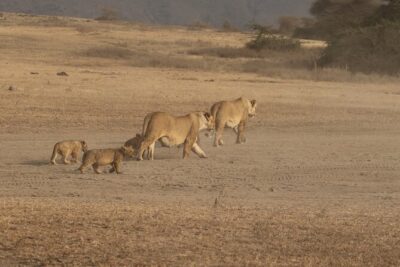 ★ 5.03 Days Serengeti & Ngorongoro Group Camping SafariFrom $815574 reviews
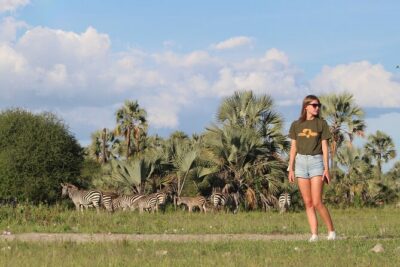 ★ 5.05-Day Highlights mid-Range Crater, Serengeti, TarangireFrom $2,327296 reviews
 ★ 5.0Safari Serengeti And NgorongoroFrom $2,845288 reviews
 ★ 5.03-Day Classic Serengeti SafariFrom $1,455263 reviews
 ★ 5.0Private 6-Day Tarangire Manyara Crater and Serengeti with Mid-Range LodgesFrom $2,685238 reviews
 ★ 5.05 Days Camping Tarangire, Serengeti & Ngorongoro crater & Visiting MaasaiFrom $1,254229 reviews