
REVIEW · KILIMANJARO RONGAI UMBWE AND SHIRA ROUTES
Mountain Kilimanjaro Climbing 7 Days Rongai Route
Rongai feels quieter than most Kilimanjaro routes. This is a 7-day Kilimanjaro climb that approaches from the north, near the Kenyan border, where the hike stays calmer and the skies can be more forgiving during wetter months. I like that the trek pairs real wilderness time with a clear path to the summit plan.
I love the structured acclimatization built into the days, including stops like Second Cave and a separate acclimatization walk to Third Cave. I also like how the route rewards you with frequent “wow” moments, from big views over the Kenyan plains to Mawenzi’s dramatic cliffs and the crater rim at sunrise.
The main drawback is simple: summit night starts around midnight and is long and strenuous. If you show up tired, the altitude has no mercy.
In This Review
- Key Highlights Worth Your Attention
- Why Rongai From Moshi Makes Sense for First-Time Summiteers
- From Moshi to NaleMuru: Day 1 Through Farmland and Pines to Simba Camp
- Second Cave and Third Cave: How Rongai Builds Your Acclimatization
- Moorland to Kikelewa Caves: Day 3’s Mawenzi Detour
- Grass Slopes to Mawenzi Tarn: Day 4’s Big Views Before the Rest
- The Saddle Day to High Camp: Day 5’s Long Step Into the Summit Zone
- Midnight Ascent to Uhuru Peak: Day 6 and the Sunrise Payoff
- Down to Mandara Hut and Back Through the Rainforest: Day 7’s Finish
- Price, Group Size, and What You Get for $2,628.72
- Exceed Expectations Tours: Communication and Small-Group Feel
- Who Should Choose This 7-Day Rongai Climb
- How to Prep for the Midnight-to-Sunrise Grind
- Should You Book This 7-Day Rongai Climb?
- FAQ
- Where do you start the Rongai route?
- How long is the climb on the Rongai route?
- Is pickup included?
- How big is the group?
- Are admission tickets included?
- What is the cancellation window for a full refund?
Key Highlights Worth Your Attention
- Rongai’s north-side approach brings low traffic and a quieter feel than the busier southern routes.
- Acclimatization is scheduled, not guessed, with cave stops and camp time before the summit push.
- Wild moorland days keep the hike feeling remote before you connect to the Marangu-style descent.
- Small group limit of 15 helps keep the pace manageable and logistics smoother.
- Summit timing aims for sunrise at Uhuru Peak, with a mid-climb check at Gillman’s Point.
- Warm support at camp stops plus guidance for where to go next make the long days easier to handle.
Other ways up Kilimanjaro we reviewed
- Kilimanjaro climb by Lemosho Route (7-day)★ 5.0 · 651 reviews
- Kilimanjaro climb, Machame Route (7-day)★ 5.0 · 262 reviews
- Kilimanjaro Climbing Lemosho Route 8 Days.★ 5.0 · 186 reviews
- Climbing Kilimanjaro – Machame Route★ 5.0 · 170 reviews
Why Rongai From Moshi Makes Sense for First-Time Summiteers
If your mental picture of Kilimanjaro is a crowded trail, Rongai can feel like a reset. This route climbs from the northern side close to the Kenyan border, where traffic is lower and the overall vibe tends to be more remote. It is also often chosen for rainy-season climbing because the north side receives less precipitation.
What that means for you is less time sharing narrow paths and more time settling into your own rhythm. You will still deal with big altitude, cold mornings, and the classic long Kilimanjaro days, but the route style helps you feel like you are in the mountains, not stuck in a line.
This climb is also described as moderately difficult, and it is highly recommended for people with less backpacking experience. That does not mean it is easy. It means the day-by-day structure is designed to be workable with the right pace, guidance, and planning.
From Moshi to NaleMuru: Day 1 Through Farmland and Pines to Simba Camp
The experience starts in Moshi with a drive to the village of NaleMuru, the starting point for the Rongai route. Day 1 begins with a mix of farmland and pine forests, which is a nice change of pace after travel. It also gives you a gentler introduction to the effort before the mountain starts stacking altitude.
As you hike, you may spot Colobus monkeys. If you are lucky, you might see elephants or buffalo too. It is not guaranteed, but it is one of those small thrills that makes the morning feel alive.
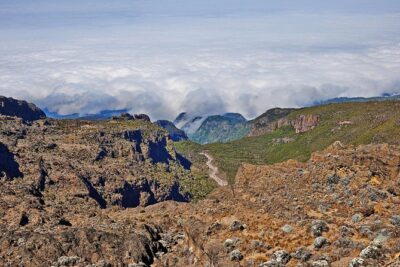
You finish at Simba Camp (2625m) at the edge of the moorland zone. The draw here is the broad views out over the Kenyan plains. Even if you are not thinking about summit success yet, this is the moment you start to understand the scale of what you are doing.
Practical note: Day 1 lists about 4 hours of hiking, and the pace early on sets the tone for the rest of the week. Take your time here. Save your legs.
Second Cave and Third Cave: How Rongai Builds Your Acclimatization
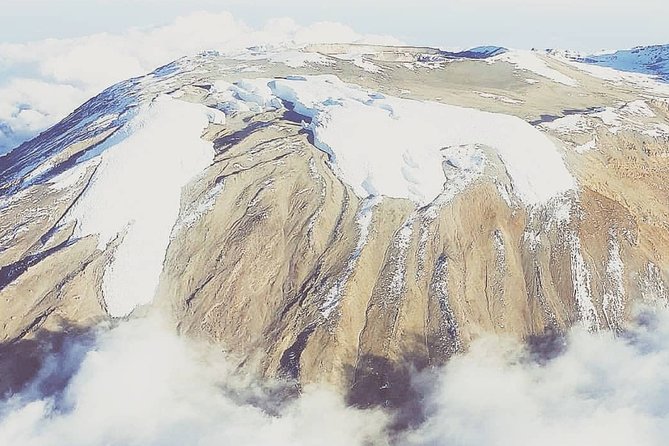
Day 2 keeps the climb steady as you move toward Second Cave (3450m). The highlight is the crater rim views, especially Kibo and the Eastern ice fields. Sunrise or clear-sky conditions can make these moments feel unreal, like you are seeing a different planet.
After a hot lunch, you get rest time at camp. Then you can do an acclimatization walk to Third Cave in the afternoon. This is smart hiking design. You get movement without turning the day into a blow-up.
Why this matters for you: Kilimanjaro is not just a “fitness test.” It is also an “altitude timing” test. The route keeps you climbing, but it also gives you chances to adjust before pushing higher.
Day 2 is listed around 4 hours total, so you get a full day rhythm without being rushed.
Quieter Kilimanjaro routes we walked through
Moorland to Kikelewa Caves: Day 3’s Mawenzi Detour
Day 3 is where the trail starts to feel more like open mountain travel. You leave the pine forest behind and step into moorland. Again, you get crater rim views of the Eastern ice fields and Kibo, the highest of Kilimanjaro’s three volcanoes.
Then the route makes a move that many climbers enjoy: you leave the main trail and head across moorland on a smaller path toward the jagged peaks of Mawenzi, Kilimanjaro’s second volcano. This is one of those parts that can make the Rongai route feel especially “Kilimanjaro,” not just a straight line to the top.
You camp today near Kikelewa caves at 3630m. It is sheltered, and it helps you sleep better before the next day’s rise toward Mawenzi Tarn.
Day 3 is listed around 4 hours of hiking. It is not the longest day, but moorland travel can feel slow and steady rather than dramatic and fast.
Grass Slopes to Mawenzi Tarn: Day 4’s Big Views Before the Rest
Day 4 starts with a short but steep climb on grassy slopes. You earn a superb view over the Kenyan plains to the north, which ties the whole north-side approach together. It is also a reminder that you are not just climbing rock and snow, you are climbing weather and horizons.
Next you reach Mawenzi Tarn Hut, sitting directly below the towering cliffs of Mawenzi. This is where the mood shifts from “scenery” to “scale.” Mawenzi’s rock faces can be intimidating, even on a day when you are not summiting.
In the afternoon, you rest or explore nearby terrain for acclimatization. Day 4 is listed around 4 hours, and that is your chance to conserve energy without going totally sedentary.
If you tend to get restless, this is a good day to set your expectations. The mountain demands recovery.
The Saddle Day to High Camp: Day 5’s Long Step Into the Summit Zone
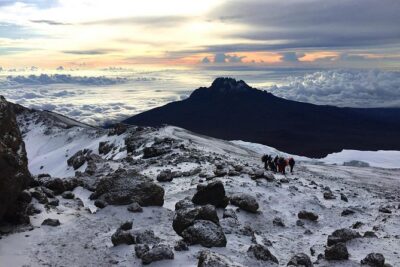
Day 5 is where you start crossing into a more exposed, lunar-feeling world. You leave your campsite and cross the ‘saddle’ between Mawenzi and Kibo, described as a lunar desert. After a couple hours, you reach a spectacular vantage point where the summit rises in the background and your trail to high camp stretches out before you.
Then you arrive at camp and spend the remainder of the day resting. You will do an early night because the summit attempt comes next.
This is a key day for your success. You want your body to be ready for the cold hours and the steady upward effort that starts in darkness.
Day 5 is listed around 6 hours. Plan to move calmly and protect your energy, even if you feel tempted to rush.
Midnight Ascent to Uhuru Peak: Day 6 and the Sunrise Payoff
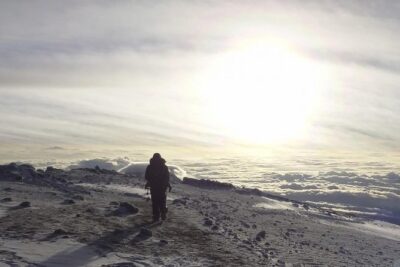
Day 6 is the day people remember. You start the final ascent around midnight. The climb passes Hans Meyer Cave at 5220m, then gradually pushes higher through long, steady uphill terrain.
At sunrise, you reach Gillman’s Point (5681m), the crater rim. Then the route continues about 1 to 2 more hours until you reach Uhuru Peak (5895m). You return toward Kibo Hut for a warm meal, and then you take a break before descending back down to Horombo Hut.
The listed duration is about 15 hours, so yes, it is a full-body, long-haul day. You also get the logic of it: you climb in the coldest hours, you aim for sunrise on the rim, and you then shift into recovery mode with food before descending.
For you, the best way to think about Day 6 is not as one “big moment.” It is a sequence:
1) midnight effort,
2) steady altitude gain,
3) sunrise rim,
4) peak,
5) meal,
6) descent.
If you pace the early hours, you give yourself a real chance to reach the top with enough control to enjoy it, instead of just surviving it.
Down to Mandara Hut and Back Through the Rainforest: Day 7’s Finish
Day 7 begins with a passage through heath and moor zones and continues down to Mandara Hut (2700m). A warm lunch meets you there, and that matters because you are already in the grind of going down.
Soon you pass through tropical rainforest and hike toward the Kilimanjaro National Park Gate (1860m). Total hiking time is listed around 6 hours, with a final transfer back to Moshi after you say goodbye to your mountain guides.
One part I appreciate here is the guidance on tipping. The day includes a reminder to tip your guides, cooks, and porters when you finish. In practice, that is how you close the loop on the team effort that carries you up and back safely.
Day 7 is listed around 7 hours including the overall wrap-up flow.
Price, Group Size, and What You Get for $2,628.72
The price listed is $2,628.72 per person for this 7-day Rongai climb. That is not “cheap,” but it is also not just paying for walking. You are paying for a multi-day summit program: guiding, camp structure, and the mountain permits that keep the trek legal and organized.
One clear inclusion you do have here is admission ticket coverage, shown as included across all the days. You also get pickup offered and a mobile ticket, which reduces the day-of stress when you are coordinating early mountain travel.
A useful value lens: Rongai can be less crowded, and the hike plan includes multiple acclimatization steps before summit night. If you are someone who wants a manageable approach without sacrificing the real wilderness feeling, this route format can feel like good value for the experience you actually get.
What I would still watch in your planning: the data does not spell out gear rental costs, flight costs, or personal expenses. And there is also the practical tipping expectation at the end. So keep your budget flexible for those human parts of the climb.
Exceed Expectations Tours: Communication and Small-Group Feel
This climb is provided by Exceed Expectations Tours & Safari. I like small-group setups for Kilimanjaro, and this one caps at 15 travelers. That makes it easier for your team to manage pacing and for you to stay mentally calm when the mountain does its thing.
The company’s communication style also comes through in the experiences shared about Oscar. In particular, people describe Oscar as responsive and helpful through messaging groups, including customizing planning around needs. On the ground, Mtei is mentioned as part of the team for a successful Rongai climb and follow-on safari.
That matters because Kilimanjaro planning is mostly about the invisible details: the right expectations, the right pacing, and not panicking when you are at 5000m with cold wind.
Who Should Choose This 7-Day Rongai Climb
This is a great fit if you:
- want a less busy route with a more remote north-side feel,
- are climbing during a time when you want to reduce precipitation risk,
- want a moderate difficulty approach that still takes you to the summit,
- prefer a climb with scheduled acclimatization rather than improvising,
- like structured days with clear camp targets.
It might feel less ideal if you:
- hate very early nights or long nights, because the summit push starts around midnight,
- know you struggle with long endurance days, since Day 6 can run about 15 hours.
How to Prep for the Midnight-to-Sunrise Grind
This tour doesn’t sell mystery. It tells you what happens. You start climbing around midnight, you pass Hans Meyer Cave, reach Gillman’s Point at sunrise, then keep going to Uhuru Peak at 5895m. After that you still hike down.
So your preparation should match the plan:
- Train for long uphill effort, not just a single hard workout.
- Bring layers for cold conditions during the midnight hours, and expect the air to change fast.
- Plan your summit-day mindset. Focus on rhythm, not speed.
- Pace yourself earlier in the week so your legs are not cooked by the time you hit the saddle and high camp.
If you treat the summit night like a whole-day event, it feels more manageable.
Should You Book This 7-Day Rongai Climb?
If your goal is a Kilimanjaro summit with a quieter north-side route, Rongai is a strong choice, and this 7-day plan is built around the right rhythm: acclimatize, rest, then go for sunrise at the rim.
I would book it if you:
- want low traffic and more remote hiking,
- appreciate a clearly timed summit strategy,
- are okay with a long, strenuous Day 6.
I would pause if you are not ready for the reality of a midnight start and a full-day summit effort.
FAQ
Where do you start the Rongai route?
You drive to the village of NaleMuru for the starting point of the Rongai route, and the trek later finishes at the Kilimanjaro National Park Gate before transferring back to Moshi.
How long is the climb on the Rongai route?
The tour runs for 7 days approximately. The route minimum is listed as six days, and seven days are recommended.
Is pickup included?
Yes. Pickup is offered, and after the trek you also have a short transfer back to your hotel in Moshi.
How big is the group?
This activity has a maximum of 15 travelers.
Are admission tickets included?
Admission tickets are listed as included throughout the trek days in the provided plan.
What is the cancellation window for a full refund?
You can cancel up to 24 hours in advance for a full refund, and changes within 24 hours of the start time are not accepted.
The Quieter Kilimanjaro Trails
- Kilimanjaro climb, Rongai Route (7-day)
★ 5.0 · 40 reviews - Kilimanjaro climb, Rongai Route (6-day)
★ 5.0 · 15 reviews - Mount Kilimanjaro Rongai Route
★ 5.0 · 10 reviews - 6-Day Rongai Route Trek in Mount Kilimanjaro
★ 5.0 · 8 reviews - Rongai Route 6 Days 5 Nights/Kilimanjaro climb
★ 5.0 · 7 reviews
Kilimanjaro, Route by Route
- Kilimanjaro climb by Lemosho Route (7-day)
★ 5.0 · 651 reviews - Kilimanjaro climb, Machame Route (7-day)
★ 5.0 · 262 reviews - Kilimanjaro Climbing Lemosho Route 8 Days.
★ 5.0 · 186 reviews - Climbing Kilimanjaro – Machame Route
★ 5.0 · 170 reviews - Climbing Kilimanjaro through 7 days Machame Route
★ 5.0 · 151 reviews
Just added from around Moshi
Kilimanjaro Rongai Umbwe and Shira Routes, compared.
 ★ 5.0Kilimanjaro climb, Rongai Route (7-day)From $3,50740 reviews
 ★ 5.0Kilimanjaro climb, Rongai Route (6-day)From $3,06415 reviews
 ★ 5.0Mount Kilimanjaro Rongai RouteFrom $2,70010 reviews
 ★ 5.06-Day Rongai Route Trek in Mount KilimanjaroFrom $2,3538 reviews
 ★ 5.0Rongai Route 6 Days 5 Nights/Kilimanjaro climbFrom $1,8507 reviews
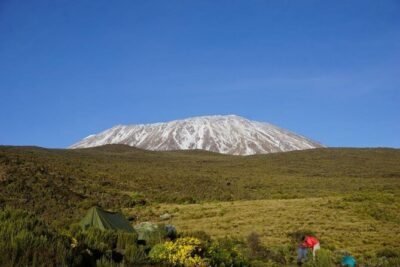 ★ 5.0Mt. Kilimanjaro: Shira plateau to Cathedral point 3872m Day hikeFrom $3207 reviews
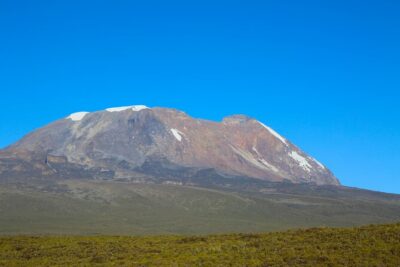 ★ 5.0Kilimanjaro Climbing Rongai RouteFrom $2,8406 reviews
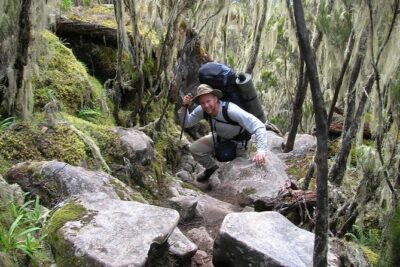 ★ 5.06-Day Kilimanjaro Umbwe Route–Steep,Adventurous, Challenging PathFrom $2,3106 reviews
Browse the lists this tour appears in