
REVIEW · KILIMANJARO RONGAI UMBWE AND SHIRA ROUTES
Rongai Route 6 Days 5 Nights/Kilimanjaro climb
Rongai is not really Rongai. That little naming twist aside, I like this 6 day climb for its north side scenery toward Kenya and the fact that you’ll tackle the summit with a very slow, torchlight start around 1am. The route also gives you a solid acclimatization climb, with nights at Kikelelwa Caves, Mawenzi Tarn, and Kibo Hut. One real consideration: Day 5 is long, and the early wake up plus near summit altitude means you need to take the pace seriously.
I also appreciate the practical setup around Moshi, including hotel pickup and smooth transfers, plus a maximum group size of 15. And because it’s a camping style trek with meals handled for you, your day to day focus stays on walking, hydrating, and sleeping as best you can at altitude.
In This Review
- Key points before you choose this Kilimanjaro route
- Rongai’s real name: Loitokitok, Nalemuru signs, and the closed border trail
- Moshi pickup and registration, then the walk begins at Nale Moru
- Day 2 toward Kikelelwa Caves: steady ascent, big views, and a higher camp
- Day 3 to Mawenzi Tarn Hut: shorter day, steeper sections, and acclimatization on purpose
- Day 4 crossing the saddle between Mawenzi and Kibo, then early dinner at 4,700 m
- Summit night on Day 5: 1am wake up, Gilman’s Point sunrise, then Uhuru Peak
- Day 6 descent to Marangu Park gate at 1,700 m, then transfer to Moshi or Arusha
- Price and value: $1,850 with camping gear, meals, and park fees handled
- Guides and small-team feel: Amos, Vitalis, and Eric show up in real trip notes
- What this Rongai route is really like, day by day
- Who should book this Kilimanjaro climb (and who should think twice)
- Should you book Migration Venture Africa for Rongai 6 days 5 nights?
- FAQ
- What is the duration of the Kilimanjaro Rongai climb?
- Where does the climb start and where do you finish?
- What time does the experience start?
- Is pickup included?
- What is included in the price?
- What is not included?
- Do I need to have climbing experience?
- What is the summit day schedule like?
- How many people are in the group?
Key points before you choose this Kilimanjaro route
- Loitokitok route, often called Rongai, with signs that may show Nalemuru or Nalemoru along the way
- Kikelelwa Caves day includes a long walk up toward Second Cave (about 3,450 m) and big crater views if weather cooperates
- Acclimatization built into the schedule, including an afternoon altitude walk after reaching Mawenzi Tarn Hut
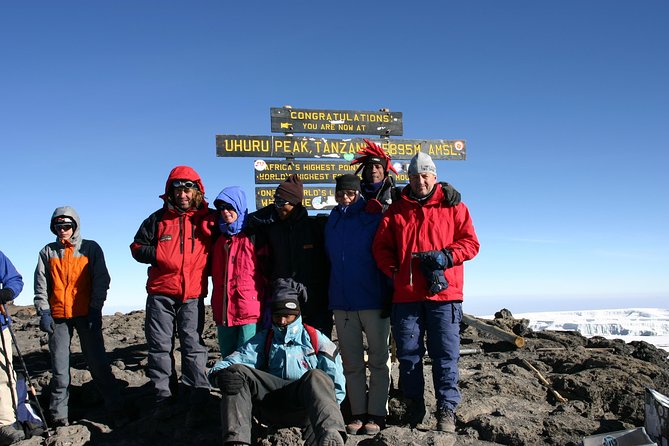
- Summit night begins near 1am, with Gilman’s Point at about 5,685 m, then Uhuru Peak at about 5,895 m
- Camping gear and park fees are included, which usually saves you from a messy add on shopping list later
- Group size capped at 15, so logistics stay manageable without feeling cramped
Other ways up Kilimanjaro we reviewed
- Kilimanjaro climb by Lemosho Route (7-day)★ 5.0 · 651 reviews
- Kilimanjaro climb, Machame Route (7-day)★ 5.0 · 262 reviews
- Kilimanjaro Climbing Lemosho Route 8 Days.★ 5.0 · 186 reviews
- Climbing Kilimanjaro – Machame Route★ 5.0 · 170 reviews
Rongai’s real name: Loitokitok, Nalemuru signs, and the closed border trail
Here’s the part that can confuse first time Kilimanjaro planners. The popular name Rongai is used everywhere, but the original “Rongai Route” used to start at a border village that was later closed by authorities. What most trekkers do today, for a north side approach, follows the trail often connected with the village near the start, the Loitokitok Route.
Then comes the fun part. On the trail, you may see signs using Nalemuru (and sometimes Nalemoru). Even if you’ve read guidebooks, don’t be alarmed if the paper name and the sign name don’t match perfectly. What matters is the walking order, altitude plan, and your guide’s instructions. If you’re the type who likes everything to line up, ask your head guide on Day 1 which names you’ll see and when.
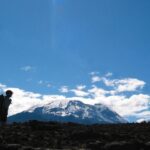
The payoff for all this naming chaos? You get a quieter approach compared with the busier corridors on other sides of the mountain, plus that north facing view angle. On clear days, that can mean big crater drama plus distant plains you can actually pick out.
Moshi pickup and registration, then the walk begins at Nale Moru
Your day starts after breakfast with a head guide pickup and a drive into Kilimanjaro National Park for registration. From there, you head onward by vehicle to Nale Moru, around 1,950 m, which is where your trekking day truly begins.
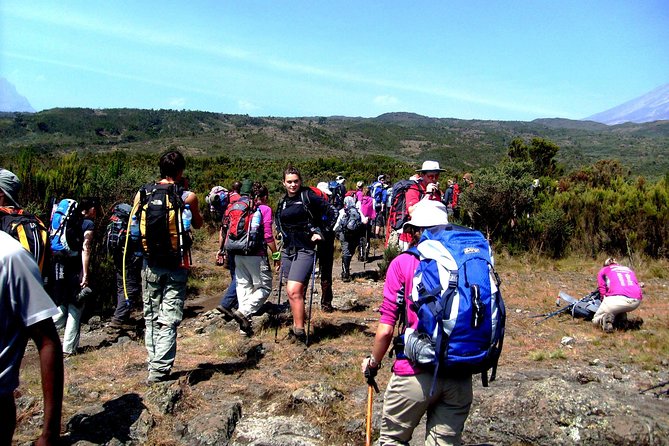
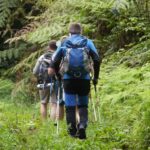
Day 1 is a gentler on paper, still active walk of about 3 to 4 hours. You start along a small path winding through fields of maize and potatoes before entering pine forest. The practical value of this first day is simple: it warms your legs up without throwing you straight into steep altitude. As you climb, you gradually move toward moorland, with broad views over the Kenyan plains as a highlight.
One detail I’d take seriously is rain. The rainforest can be wet, so it’s smart to have waterproofs you can reach fast. When you’re damp at 2,000 m, you feel it later. Keeping your clothes manageable and dry when you can makes the rest of the trek easier.
Day 2 toward Kikelelwa Caves: steady ascent, big views, and a higher camp
After breakfast at camp, you go after the Kikelelwa Caves. This is a longer walking day, around 5 to 6 hours, with steady ascent. You’re aiming to reach Second Cave at about 3,450 m.
At that altitude, the terrain and effort start to feel more “mountain” than “hike.” The walk is designed to keep you moving steadily rather than sprinting. If weather is good, Second Cave is one of the rewards of the route, with views toward Kibo (the summit mass) and the Eastern ice fields around the crater rim.
Then you camp near Kikelelwa Caves at about 3,800 m. That matters because it helps you settle into higher altitude before the next day asks you to go even further. You’re not just chasing height. You’re letting your body get used to it.
Quieter Kilimanjaro routes we walked through
Day 3 to Mawenzi Tarn Hut: shorter day, steeper sections, and acclimatization on purpose
Day 3 is shorter in walking time, roughly 3 to 4 hours, but it has steeper sections. That combination is actually useful for a lot of bodies. You get some breathing room in total time, but you still build climbing strength while your system is already higher.
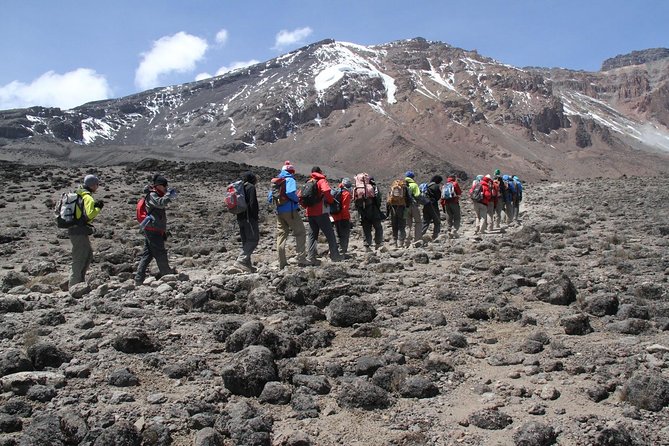
The vegetation zone fades as you climb, which tends to make the trek feel wilder and more open. It’s the kind of day where you’ll notice the mountain changing in front of you: less forest cover, more sky, and more exposure to wind and temperature shifts.
You finish at Mawenzi Tarn Hut at about 4,330 m. Then, you do an afternoon acclimatization walk up to around 4,500 m. That “up a bit, back down a bit” logic is one of the quiet reasons people do better on summit day. Your body gets repeated altitude contact, not just one big jump.
The walking distance is about 6 km, around 3.7 miles, with roughly 730 m altitude gain. It’s not easy, but it’s controlled. And control is your friend at Kilimanjaro.
Day 4 crossing the saddle between Mawenzi and Kibo, then early dinner at 4,700 m
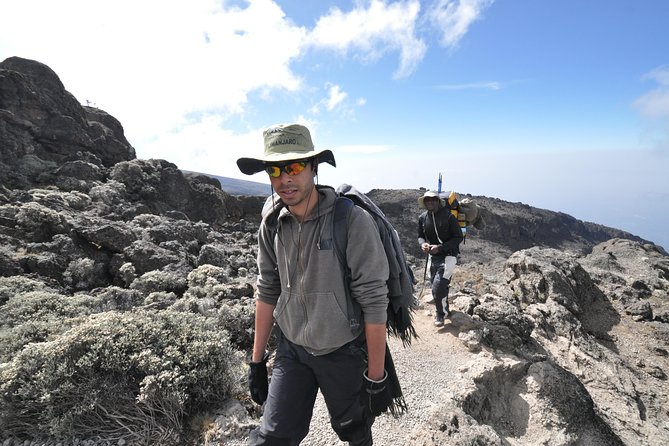
Day 4 is about 4 to 5 hours of walking, around 9 km total distance. Your path crosses the saddle between Mawenzi and Kibo. That area is often described as lunar desert, and you can expect to feel it in the trail itself: fewer trees, more stark terrain, and a wide feel to the world.
The altitude gain here is smaller, around 370 m. That helps because you’re building toward summit day without stacking massive altitude changes back to back.
You’ll have early dinner and overnight at Kibo Hut, about 4,700 m. This is one of those “important nights” where sleep can make or break how you feel on summit morning. Keep it calm, eat what’s given to you, and follow your guide’s advice for staying warm.
Summit night on Day 5: 1am wake up, Gilman’s Point sunrise, then Uhuru Peak
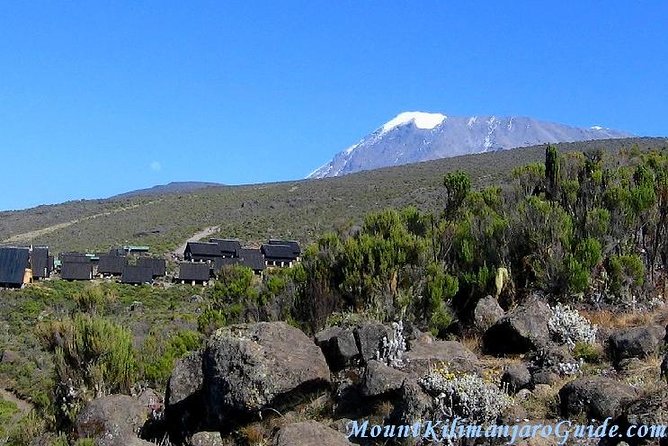
Day 5 is the one everyone remembers. You’ll be woken early around 1am for a hot drink and snack. Then you trek very slowly by torchlight to reach Gilman’s Point at about 5,685 m.
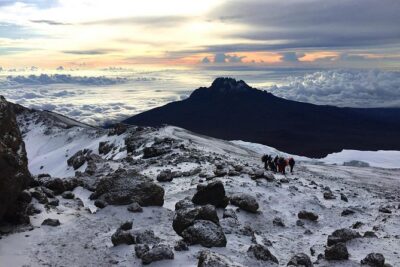
At Gilman’s Point, you rest briefly, then enjoy the sunrise over Mawenzi peak, weather permitting. That sunrise moment is why people accept the cold and fatigue. You’re high enough that the mountain feels like the whole planet’s roof.
After that, you continue to Uhuru Peak at about 5,895 m, the roof of Africa. Then you descend back to Kibo Hut around 4,700 m for rest and brunch. After the break, you go down further to Horombo Hut at about 3,720 m.
This is also where you should understand the time commitment. The schedule lists total walking time anywhere from roughly 10 to 16 hours depending on conditions, with the main ascent and the descent stretching the day out. So if you’re tempted to think Day 5 is a short push, don’t. It’s a marathon at altitude.
Day 6 descent to Marangu Park gate at 1,700 m, then transfer to Moshi or Arusha
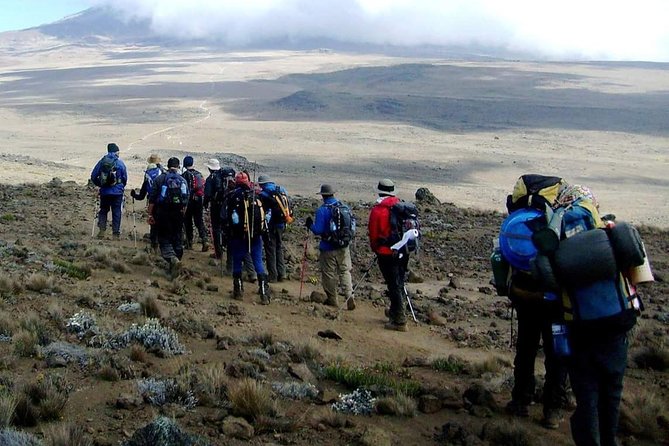
The final day is about 5 to 7 hours of descending, roughly 20 km, around 12.5 miles. You’re going down to Marangu Park gate at about 1,700 m, and then you sign out of the mountain.
The walk is through lush forest on good paths, which is psychologically huge after the rocky, exposed feeling of the higher sections. Your legs may still feel heavy, but the footing tends to be friendlier. Once you’re done, a driver meets you and transfers you to your hotel in Moshi or Arusha.
This is your decompression day. You’ll want to drink, eat normally if your stomach allows it, and let your body cool down after the altitude effort. Even though you’re moving for hours, the mood is different. You’re done. You’re heading back to real life.
Price and value: $1,850 with camping gear, meals, and park fees handled
At $1,850 per person, you’re paying for a full trekking package that includes camping equipment, all park fees, crew salary, accommodation and airport transfers, and meals. Breakfast is listed for 5 days, lunch for 6 days, and dinner for 5 days, so you’re not scrambling for food mid-trek.
The biggest value takeaway is that logistics are largely solved. You get the gear and the route operations, and you don’t need to piece together a separate checklist for permits, camp setup, and most meals.
What’s not included is also clear. You’ll need to budget for your international flight, visa, and alcohol and soft drinks. If you’re trying to keep costs tight, plan your spending around what’s excluded. If you want to buy drinks on the trail, those are on your tab.
In other words, this price is less about “just walking” and more about “having the mountain infrastructure managed.” That matters because Kilimanjaro is not just a hike. It’s a managed environment with permits, rangers, and camp support.
Guides and small-team feel: Amos, Vitalis, and Eric show up in real trip notes
The human side is where a Kilimanjaro climb becomes smoother. Migration Venture Africa is directed by Amos, and in past Rongai climbs people specifically highlighted guides such as Vitalis and Eric.
I care about that because on summit night, you need calm leadership, not just a person holding a map. The schedule here asks you to move slowly, start in the dark, handle multiple altitude steps, and keep your energy organized. A good guide team makes that feel doable instead of chaotic.
You also have a maximum group size of 15. That’s important. With too many people, you can lose the pacing rhythm and the ability to respond quickly if someone needs extra support. Smaller groups tend to feel more workable, especially on narrow, technical sections and in camp logistics.
What this Rongai route is really like, day by day
This trek has a pattern: easy to moderate start, then progressively higher nights, then the summit push.
Day 1 eases you in from around 1,950 m in pine forest toward moorland, with views over the Kenyan plains. Day 2 lengthens and raises you, taking you to the Kikelelwa Caves area and Second Cave at 3,450 m, then camping near 3,800 m. Day 3 keeps walking time reasonable but adds steeper sections, finishing at Mawenzi Tarn Hut at 4,330 m and including an afternoon acclimatization walk up around 4,500 m.
Day 4 is the visual shift, saddle crossing between Mawenzi and Kibo, then early dinner at Kibo Hut around 4,700 m. Day 5 is the big night, torchlight ascent starting around 1am, sunrise at Gilman’s Point, continuation to Uhuru Peak at about 5,895 m, and a long descent back down to Horombo Hut at 3,720 m.
Finally, Day 6 is a long but simpler descending day through lush forest to Marangu Park gate around 1,700 m, then back to Moshi or Arusha.
If you’re the type who likes clear milestones, you’ll like this schedule. Each day has a “why” tied to altitude and readiness.
Who should book this Kilimanjaro climb (and who should think twice)
I’d point you here if you want a 6 day, camping style Kilimanjaro climb with included park fees and meals, plus the north side approach that can feel less crowded than other routes.
It’s also a good fit if you can handle a moderate fitness base. The trip info says you should have moderate physical fitness, and the schedule itself includes steeper segments and a very demanding summit day. If you’ve done day hikes with elevation before and you can comfortably walk for hours at a steady pace, you’re in the right neighborhood.
Think twice if you know you struggle with very early starts, like around 1am. Also consider that Day 5 can stretch to a long overall day, with the main movement happening in low visibility. If you dislike cold and night hiking, that’s not something you can fully avoid here.
Should you book Migration Venture Africa for Rongai 6 days 5 nights?
If you want a well organized Kilimanjaro climb from Moshi with included camping gear, park fees, and most meals, this package looks like strong value. The altitude plan is thoughtfully paced, with an acclimatization walk on Day 3 and a summit night that is slow and structured rather than rushed.
I’d book this if you’re choosing Rongai for the north side views and you’re mentally ready for the long, cold summit day. It’s not a casual walk, but the schedule makes sense.
I’d skip it if your priority is a short, low effort hike or if you know you cannot handle the early wake up and near summit altitude stress. For most people who are ready to commit, though, this route offers clear milestones, real wilderness feel, and the kind of crater sunrise moment you plan for months ahead.
FAQ
What is the duration of the Kilimanjaro Rongai climb?
It runs for 6 days (5 nights).
Where does the climb start and where do you finish?
You start with pickup in Moshi, then drive to Kilimanjaro National Park and to the village of Nale Moru around 1,950 m. On the last day you descend to Marangu Park gate around 1,700 m, then transfer to your hotel in Moshi or Arusha.
What time does the experience start?
The start time is 9:00 am.
Is pickup included?
Yes, pickup is offered.
What is included in the price?
Included items are camping equipment, all park fees, crew salary, accommodation and airport transfers, and meals (breakfast for 5 days, lunch for 6 days, dinner for 5 days).
What is not included?
International flight, visa, and alcohol and soft drinks are not included.
Do I need to have climbing experience?
The info says you should have a moderate physical fitness level, and the schedule includes steady ascents, steeper sections, and a long summit day.
What is the summit day schedule like?
You are woken around 1am for a hot drink and snack, then you trek slowly by torchlight to Gilman’s Point at about 5,685 m for sunrise, and then continue to Uhuru Peak at about 5,895 m. Afterward you descend back to Kibo Hut for rest and brunch, then continue to Horombo Hut.
How many people are in the group?
The maximum number of travelers is 15.
The Quieter Kilimanjaro Trails
- Kilimanjaro climb, Rongai Route (7-day)
★ 5.0 · 40 reviews - Kilimanjaro climb, Rongai Route (6-day)
★ 5.0 · 15 reviews - Mount Kilimanjaro Rongai Route
★ 5.0 · 10 reviews - 6-Day Rongai Route Trek in Mount Kilimanjaro
★ 5.0 · 8 reviews - 6-Day Kilimanjaro Umbwe Route–Steep,Adventurous, Challenging Path
★ 5.0 · 6 reviews
Kilimanjaro, Route by Route
- Kilimanjaro climb by Lemosho Route (7-day)
★ 5.0 · 651 reviews - Kilimanjaro climb, Machame Route (7-day)
★ 5.0 · 262 reviews - Kilimanjaro Climbing Lemosho Route 8 Days.
★ 5.0 · 186 reviews - Climbing Kilimanjaro – Machame Route
★ 5.0 · 170 reviews - Climbing Kilimanjaro through 7 days Machame Route
★ 5.0 · 151 reviews
Just added from around Moshi
Kilimanjaro Rongai Umbwe and Shira Routes, compared.
 ★ 5.0Kilimanjaro climb, Rongai Route (7-day)From $3,50740 reviews
 ★ 5.0Kilimanjaro climb, Rongai Route (6-day)From $3,06415 reviews
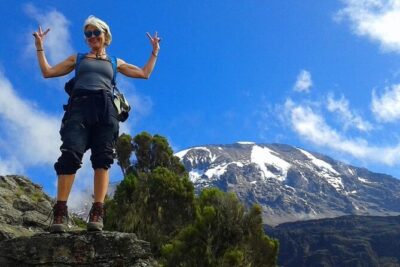 ★ 5.0Mount Kilimanjaro Rongai RouteFrom $2,70010 reviews
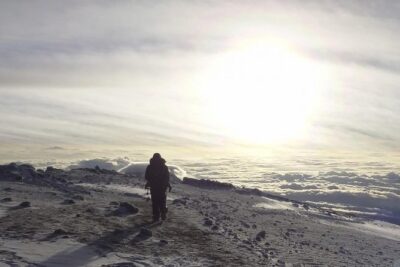 ★ 5.06-Day Rongai Route Trek in Mount KilimanjaroFrom $2,3538 reviews
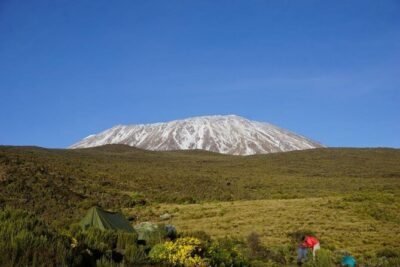 ★ 5.0Mt. Kilimanjaro: Shira plateau to Cathedral point 3872m Day hikeFrom $3207 reviews
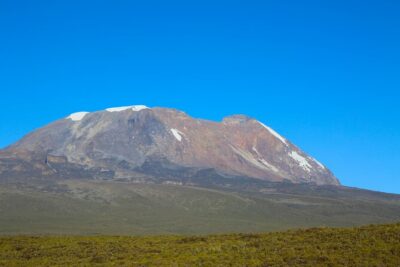 ★ 5.0Kilimanjaro Climbing Rongai RouteFrom $2,8406 reviews
 ★ 5.06-Day Kilimanjaro Umbwe Route–Steep,Adventurous, Challenging PathFrom $2,3106 reviews
 ★ 5.0Kilimanjaro climb, Kilimanjaro Crater route (10-day)From $6,4665 reviews
Browse the lists this tour appears in