
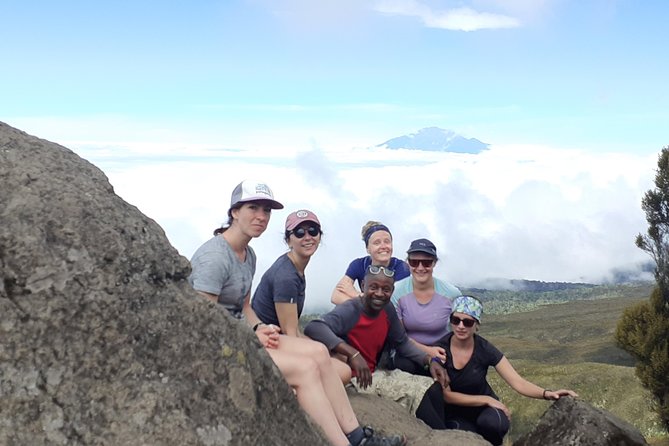
REVIEW · KILIMANJARO LEMOSHO ROUTE
climb the KILIMANJARO via Lemosho route
Kilimanjaro is not a one-size-fits-all hike. This Lemosho route leans into slow altitude gain and gives you a real sense of Tanzania on the way up, from farm roads to rainforest, moorland, rock desert, and finally the summit ridgeline toward Uhuru Peak. The experience is designed for a private group, with pickup from Arusha or Moshi and a dedicated guide and cook team.
What I like most is the way the itinerary gives you multiple chances to adjust to altitude, including an optional day that can go higher earlier (Shira Cathedral) or follow a lower option (Moe hut campus). I also really value the human side, especially the guide leadership. One guide named Paul Bernad comes up again and again, and the common theme is responsiveness to abilities, solid food, and calm problem-solving when the mountain gets tough.
One thing to consider: this climb asks for real commitment. You need moderate physical fitness, you should plan for cold on summit timing, and the price is high enough that you will want to be sure Kilimanjaro is truly the trip you want right now.
In This Review
- Key highlights to know before you go
- Lemosho route: why starting at Londorossi feels like the right first step
- Day 1: Londorossi Gate (2200m) to Forest Camp (2830m), the rainforest warm-up
- Day 2: Big Tree to Shira 1 (3509m), moorland ridges and Kibo sightings
- Day 3: Shira Cathedral option or Moe hut campus option, the altitude choice day
- Day 4: Lava Tower (4605m) to Great Barranco Camp (3940m), rock desert payoff with a descent
- Day 5: Barranco wall to Karanga Camp (4000m), when steady effort beats speed
- Day 6: Karanga to Barafu to Stella Point (5756m) and Uhuru Peak (5896m)
- Day 7: The longest-feeling day, down to Mweka Hut (3100m)
- Day 8: Mweka Gate (1760m) sign-out, rainforest descent, and your certificate
- Food and camp support, the difference between surviving and actually enjoying it
- Price and what $2,564.11 gets you on an 8-day private Kilimanjaro
- Practicalities: pickup, mobile tickets, and admission timing across days
- Should you book the Kilimanjaro climb via Lemosho?
- FAQ
- How long is the Kilimanjaro climb via Lemosho?
- Is pickup included from Arusha or Moshi?
- Is this a private tour?
- What physical fitness level do I need?
- Are park admission tickets included?
- What if the climb is canceled due to weather?
- What is the cancellation window for a full refund?
Key highlights to know before you go
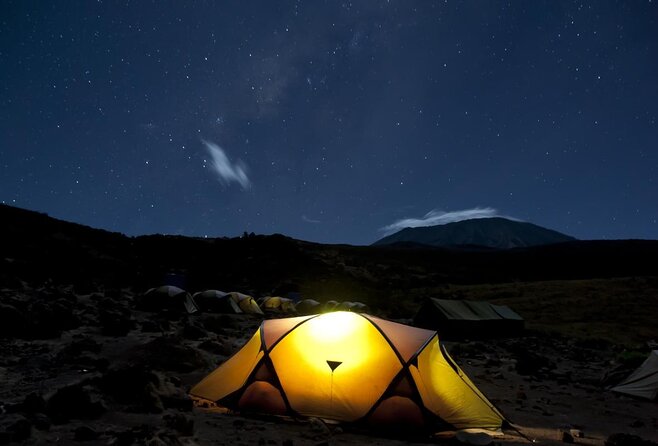
- Londorossi Gate start with early rainforest walking and wildlife spotting along the way
- Shira Plateau pacing that supports acclimatization, including two choices on day 3
- Rock desert and Lava Tower stage that trades easy footing for big altitude gains
- Barranco wall and Karanga sections that feel steep, but keep the route moving forward
- Summit day focus on Stella Point and Uhuru Peak with a controlled return to Barafu Hut
- Paul Bernad type of guiding: responsive to your pace, with good food at camp
Other ways up Kilimanjaro we reviewed
- 8-Day Small-group Lemosho Kilimanjaro Summit Trekking★ 5.0 · 186 reviews
- 7-Day Machame Kilimanjaro Summit Tour from Arusha★ 5.0 · 125 reviews
- Mountain Kilimanjaro Day Hike★ 5.0 · 102 reviews
- 4 days Best experience Kilimanjaro Hike, Serengeti &Ngorongoro★ 5.0 · 54 reviews
Lemosho route: why starting at Londorossi feels like the right first step
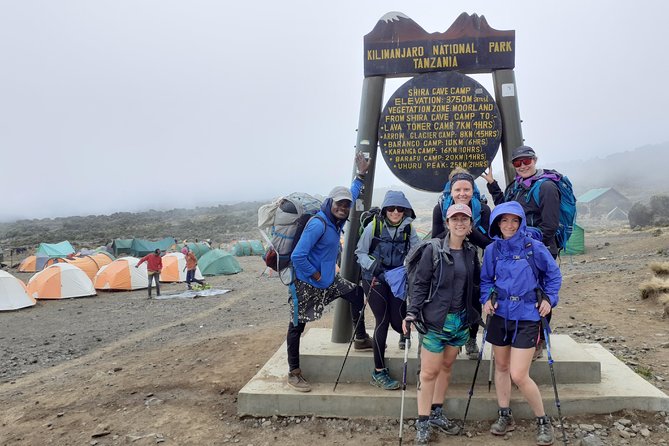
Most Kilimanjaro routes push you into altitude quickly. The Lemosho approach starts with a drive to Londorossi Gate (2200m / 7330ft), then gets you walking through varied environments before the big mountain work begins. That matters because your body needs time to adjust to the idea of higher air, thinner oxygen, and colder temperatures as days go on.
On this route, Day 1 moves you into rainforest after registration. You also get a taste of Tanzania beyond the mountain itself: the route passes working farms with mixed plantings and farm life before the trek turns into forest paths. By the time you reach Forest Camp (2830m / 9430ft), you are already warmed up for the next steps, not just dropped into a steep climb.
The other big reason Lemosho works is the way the mid-route stages are laid out. You build up through Shira (mooreland vibes and ridge walking), then you switch into rock desert terrain with Lava Tower, and only then do you hit the Barranco wall energy. It is a mix of effort and payoff, and the pacing aims to keep you moving forward without rushing the altitude curve too hard.
Day 1: Londorossi Gate (2200m) to Forest Camp (2830m), the rainforest warm-up
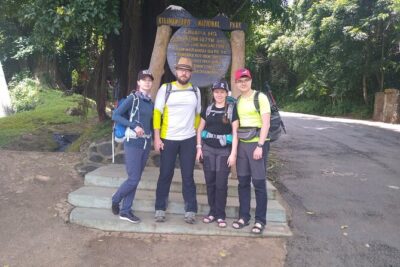
Your day starts with a drive from your hotel area in Arusha or Moshi to Londorossi Gate for registration at around 2200m (7330ft). After paperwork, you head back toward the trek start, crossing through farm areas with farmers’ mixed trees and vegetables. It is a quiet reminder that Kilimanjaro is right beside real communities, not just a distant peak on a postcard.
Then comes the trek into the rainforest. You start with a roughly 5km walk that can take about 4 hours, and the terrain stays walkable while you ease into the day’s rhythm. This is also where you might see wildlife. The route notes include animals like elephants, buffalo, Eland, and birds, plus small flowers, which is exactly the kind of moment that makes the first day feel alive rather than routine.
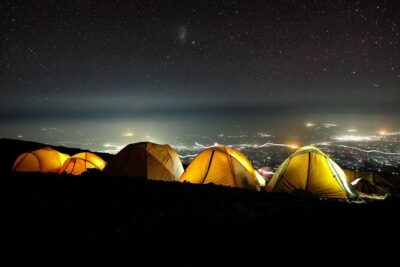
You finish at Forest Camp (2830m / 9430ft) for dinner and overnight. One practical takeaway for Day 1: take it slower than you think. You are going to be tempted to “bank speed” early, but this is where you should focus on steady breathing, not hero pacing.
Day 2: Big Tree to Shira 1 (3509m), moorland ridges and Kibo sightings
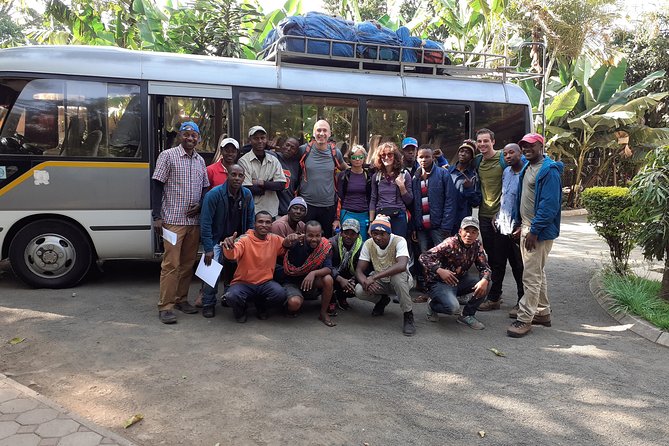
Day 2 is about moving from lower forest vibes toward the Shira Plateau. The walking segment is listed around 7km and about 4 to 6 hours, climbing toward Shira 1 Camp (3509m / 11690ft). The route goes through narrow paths and into Heather moorland as you gain height.
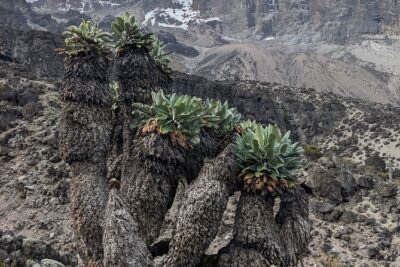
The vegetation shifts noticeably. The route notes point to Erica family tree species and savanna grassland, which means you trade thick rainforest shade for open stretches and cooler air. It is also a day where visibility can pay off. If the sky is clear, you can view Kibo from camp, which helps you visually connect what you are climbing toward.
The main “why it matters” part of Day 2 is mental. You are high enough now that the mountain starts feeling like a real project, not a warm-up. Camp time becomes important, too. After dinner and overnight at Shira 1, you are preparing for Day 3’s choice and the next step up.
Lemosho itineraries worth reading next
Day 3: Shira Cathedral option or Moe hut campus option, the altitude choice day
Day 3 gives you two options, and this is one of the smartest parts of the plan. After a heavy breakfast, you either take an upper route or a lower route.
The upper route heads toward Shira Cathedral (3920m / 13060ft) for acclimatization, then continues to Shira 2 Camp (3840m / 12800ft). The walking time is roughly 4 to 5 hours, around 6km total. Even if you are not sure you want to climb higher that day, this is the kind of acclimatization move that can help your body handle what comes next.
The lower route crosses the rescue road and goes more directly toward Moe hut campus (4200m / 14000ft). This option is listed around 4 to 5 hours and then dinner and overnight.
Either way, you end the day higher than yesterday. That is the trade. The benefit is that you get a tailored approach that can match weather, your pace, and how you feel at breakfast. If your body is already struggling, this kind of flexibility tends to reduce panic later.
Day 4: Lava Tower (4605m) to Great Barranco Camp (3940m), rock desert payoff with a descent
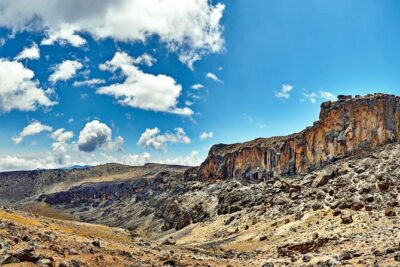
Day 4 starts after breakfast with a climb through the rock desert zone, including a route via Lava Tower at about 4605m (15350ft). This is a longer day than it sounds, roughly 5 to 6 hours and about 9.5km on the walking portion.
You likely take lunch at Lava Tower, then you descend down to Great Barranco Camp (3940m / 13130ft). That descent is important. It is not a free rest day, but it can help your legs recover before you tackle the next ridge and wall sections.
The route notes call out amazing views during this stage. What I found most useful here is the combination of effort and change: rock desert terrain forces focus on footing and breath control, while the camp arrival reminds you that the itinerary is not just straight-up suffering. Dinner and sleep at Great Barranco set you up for Day 5’s more technical feeling.
Day 5: Barranco wall to Karanga Camp (4000m), when steady effort beats speed
Day 5 is described as a shorter walking distance, about 5.5km and 3 to 4 hours, but it is also labeled as rock climbing around the Barranco wall at roughly 4200m (14000ft). Then you continue to Karanga Camp (4000m / 13330ft).
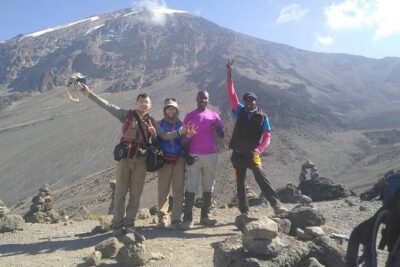
This is the kind of day where you will feel the altitude in your breathing even when the clocks look manageable. It is also where having a guide who adjusts to your ability becomes more than a nice-to-have. One review emphasizes how Paul Bernad led a small group based on everyone’s abilities and kept the climb moving without rushing.
You get hot lunch around the middle of the day, which is a small detail that adds up. Food and warmth matter when your body is burning extra energy and you are not moving as fast as usual. After gate rest at Karanga and overnight, you are ready for the big push on Day 6.
Day 6: Karanga to Barafu to Stella Point (5756m) and Uhuru Peak (5896m)
Day 6 is the summit day. It begins with a morning ascent from Karanga Camp to Barafu Hut (4620m / 15400ft) in about 3 to 4 hours and around 5km. Then the plan is a longer summit effort: a 6-hour block listed as a 5.5km climb that focuses on the final ridge.
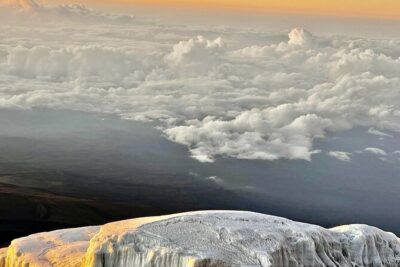
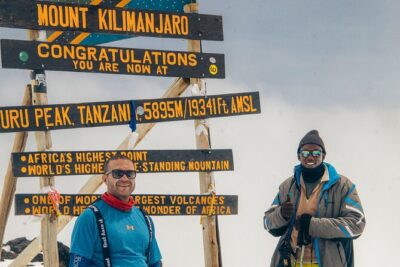
You go to Stella Point (5756m / 19180ft), then continue to Uhuru Peak (5896m / 19650ft). The itinerary notes that at the top you take only a few minutes for photos, then you descend about 3 hours back to Barafu Hut.
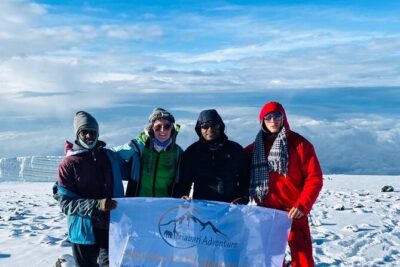
Here is the realistic part: the summit will feel cold, slow, and mentally demanding. One practical tip that came through clearly is to plan for the cold and do not rely on your phone for pictures. That is not about photography skill, it is about how phones behave in cold conditions and how the moment can slip past if you are stuck managing your device.
What you should do instead is treat the summit as a sequence. Keep moving at a pace you can sustain. Take photos if you can, but also look up and absorb the view. The best memories are usually the ones you do not have to watch through a screen.
Day 7: The longest-feeling day, down to Mweka Hut (3100m)
Day 7 is all about getting down. After a short 1-hour food rest, you continue descending all the way to Mweka Hut (3100m / 10330ft) for the last night, plus dinner.
This day can be emotionally tricky. You have already done the hard part, but your body still has to work. Your knees will want to complain, your energy might lag, and the cold might linger. The good news is that the route gives you a clear endpoint and the chance to focus on safe steps rather than summiting again.
By the time you reach Mweka Hut, it feels like your journey has completed its arc. That feeling matters for morale on the final morning.
Day 8: Mweka Gate (1760m) sign-out, rainforest descent, and your certificate
On Day 8 you start early with breakfast, then descend about 4 hours and roughly 8km through the rainforest to Mweka Gate (1760m / 5860ft). You sign out and receive a certificate of hard work, then drive back to your hotel area with another schedule.
This is one of the best days for recovery. Rainforest walking tends to feel easier than the high rocky zones, and psychologically it confirms you are moving away from the thin air and toward normal life.
Also, note the emotional payoff: a certificate is not just paperwork. It is a visible marker that the climb is done, especially helpful if the final day feels too quick.
Food and camp support, the difference between surviving and actually enjoying it
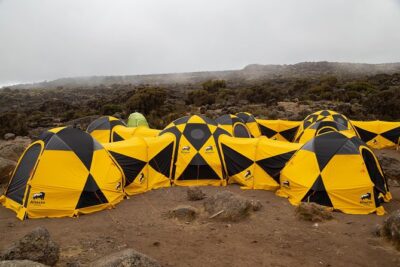
Kilimanjaro is not only about the summit. It is about what happens between the big moments: camp meals, rest routines, and a crew that can keep things organized.
The itinerary repeatedly mentions dinners at camp, hot lunch on longer or more demanding days, and overnight stops that keep you locked into a rhythm. One review summed up the crew energy as possibly the best on the mountain, and another highlighted that the food was great and that the group reached the top. Even without comparing menus, those two themes tell you the same story: you get taken care of.
This is where a private guide and cook team can matter more than you expect. When you are tired and cold, logistics and meals become comfort. When something goes wrong, it matters even more.
If you do this route, I recommend treating camp time like part of the climb. That means eating what is offered, resting like you mean it, and letting your guide handle the timing so you do not have to think too much.
Price and what $2,564.11 gets you on an 8-day private Kilimanjaro
At $2,564.11 per person for roughly 8 days, this is not a budget trek. But it also is not paying for a fancy hotel. You are paying for a structured high-altitude operation: a private tour format, pickup from Arusha or Moshi, and the guide and cook support that keeps you moving between specific camps and gates.
What boosts the value here is the combination of route choice and pacing support. The Lemosho route is longer and more involved than some alternatives, and Day 3’s option structure is a meaningful feature. That flexibility can be the difference between feeling in control and feeling trapped.
The main drawback is simple: if you are not fully committed to the training and planning side, the cost will feel steep. Also, the price is per person, so if you are traveling solo, you are likely paying at the high end.
Practicalities: pickup, mobile tickets, and admission timing across days
This experience includes pickup offered and uses a mobile ticket. You are driven to Londorossi Gate for the Day 1 registration, and you also get a drive back after you sign out at Mweka Gate on Day 8.
On admissions, the details are split by day. Day 1 lists admission ticket included. Days 2 through 6 list admission ticket free. Days 7 and 8 list admission ticket not included. That means you should confirm what you personally need to pay on the final stretch, rather than assuming everything is rolled in.
Also, the itinerary is built for moderate physical fitness. That does not mean it is easy. It means the route is structured for people who prepare and move consistently.
Should you book the Kilimanjaro climb via Lemosho?
I think you should book if you want a route that supports altitude adaptation instead of rushing. The Lemosho storyline starts with rainforest and farm roads, then builds through Shira and Lava Tower, hits Barranco and Karanga, and culminates in a summit day structured around Stella Point and Uhuru Peak. If having a guide like Paul Bernad, with leadership that adjusts to your abilities, sounds like the kind of support you want, this private setup is a strong match.
Skip it, or at least delay it, if you are not ready for cold conditions on the summit timing, or if you cannot handle multiple days of 3 to 8 hour hiking blocks at high altitude. Also, if you are counting on your phone to handle summit photos, take that tip seriously and plan for a backup or a lower expectation.
If you want, tell me your age range, fitness level, and travel month. I can help you judge whether this 8-day pacing fits your comfort level and what to focus on in training for the cold summit push.
FAQ
How long is the Kilimanjaro climb via Lemosho?
The duration is listed as 8 days (approx.).
Is pickup included from Arusha or Moshi?
Yes, pickup is offered, including a drive from your hotel area in Arusha/Moshi to Londorossi Gate.
Is this a private tour?
Yes. It is described as a private tour/activity, and only your group participates.
What physical fitness level do I need?
The info provided says travelers should have a moderate physical fitness level.
Are park admission tickets included?
Day 1 shows admission ticket included. Days 2 through 6 list admission ticket free. Days 7 and 8 list admission ticket not included.
What if the climb is canceled due to weather?
The experience requires good weather. If it is canceled due to poor weather, you will be offered a different date or a full refund.
What is the cancellation window for a full refund?
You can cancel up to 6 days in advance for a full refund. A full refund requires canceling at least 6 full days before the experience’s start time.
Lemosho, Compared
- 8-Day Small-group Lemosho Kilimanjaro Summit Trekking
★ 5.0 · 186 reviews - 8 Days Mountain Kilimanjaro Lemosho Route
★ 5.0 · 22 reviews - 7 Day Kilimanjaro Climb Lemosho Route & 2 Day Safari
★ 5.0 · 16 reviews - Kilimanjaro Climb- Lemosho Route
★ 5.0 · 9 reviews - Lemosho Route 7 Days Trekking at Mount Kilimanjaro
★ 5.0 · 7 reviews
Kilimanjaro, Route by Route
- 8-Day Small-group Lemosho Kilimanjaro Summit Trekking
★ 5.0 · 186 reviews - 7-Day Machame Kilimanjaro Summit Tour from Arusha
★ 5.0 · 125 reviews - Mountain Kilimanjaro Day Hike
★ 5.0 · 102 reviews - 4 days Best experience Kilimanjaro Hike, Serengeti &Ngorongoro
★ 5.0 · 54 reviews - From Arusha/Moshi: Kilimanjaro Hike Marangu Route Day Trip
★ 4.5 · 54 reviews
Just added from around Arusha
Kilimanjaro Lemosho Route, compared.
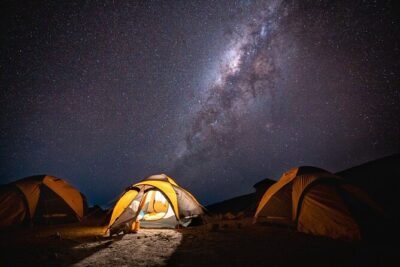 ★ 5.0Kilimanjaro climb by Lemosho Route (7-day)From $3,476651 reviews
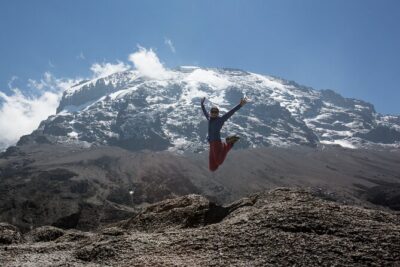 ★ 5.08-Day Small-group Lemosho Kilimanjaro Summit TrekkingFrom $2,895186 reviews
 ★ 5.0Kilimanjaro Climbing Lemosho Route 8 Days.From $2,300186 reviews
 ★ 5.0Kilimanjaro climb, Lemosho Route (8-day)From $3,975148 reviews
 ★ 5.0Kilimanjaro climb, Lemosho Route (6-day)From $3,034129 reviews
 ★ 5.0Kilimanjaro Lemosho RouteFrom $2,89071 reviews
 ★ 5.0Private Kilimanjaro Hike 7 Day Lemosho RouteFrom $2,45060 reviews
 ★ 5.0Climbing Kilimanjaro through 8 days Lemosho RouteFrom $2,76052 reviews
Browse the lists this tour appears in