
REVIEW · KILIMANJARO LEMOSHO ROUTE
8 Days Lemosho Route Kilimanjaro Trekking
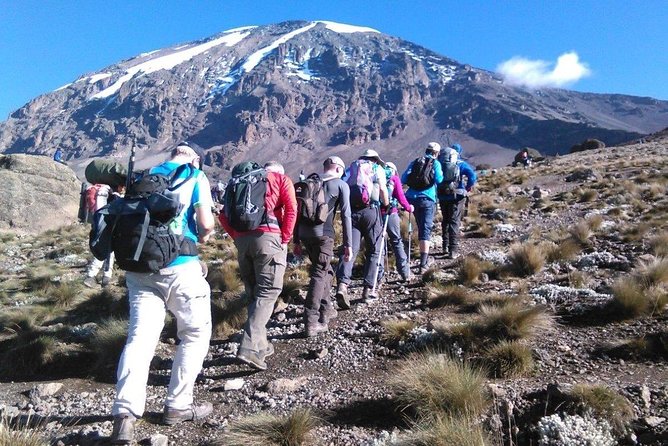
Forest to summit, in one continuous story. The 8 Days Lemosho Route Kilimanjaro Trekking itinerary is built for variety, starting in forest near Londorossi, then stepping onto the open Shira Plateau where you get that Kibo view people dream about. I love how the route moves through real habitat changes, from rainforest to moorland to alpine desert, without feeling rushed.
The second thing I like a lot is the team behind the trek. Mafie Adventures owner Erastus handles communication and adjustments smoothly, and the guides, including Oliver, are known for being friendly and organized. One consideration: the last stretch before the summit includes an exposed Barafu ridge night, and there’s no accessible water at Barafu Camp, so you’ll want to follow the staff’s routines and pack your basics early.
In This Review
- Key highlights you should care about
- Why the Lemosho route earns real respect on Kilimanjaro
- Getting there: Arusha pickup and the Londorossi trailhead start
- Day 1 camp rhythm, what to expect
- Days 1 to 3: rainforest breathing, then Shira Plateau wide-open skies
- Day 2: Moorland climb to Shira Ridge and Shira 1
- Day 3: Shira 2 and the approach under the Northern Ice Fields
- Days 4 to 6: Lava Tower, Barranco Wall, and the exposed Barafu night
- Day 4: from moorland east to Lava Tower and Arrow Glacier area, then down to Barranco
- Day 5: Karanga Camp and the Great Barranco Wall
- Day 6: Barafu Hut, the last water reality, and wind management
- Summit night at 23:30: Stella Point sunrise and the Uhuru Peak push
- What you’ll feel most on summit day
- Day 8: celebration on the mountain, then descent to Mweka Gate
- Mafie Adventures and the crew factor that makes this worth the money
- Price and logistics: is $2,700.52 good value for a Lemosho 8-day trek?
- Gear and altitude reality checks you should take seriously
- Who should book this Lemosho route, and who might rethink it
- Should you book the 8 Days Lemosho Route with Mafie Adventures?
- FAQ
- What route is this, and where does it start?
- How long is the trek?
- What time does the trek start each day at the beginning?
- Is pickup offered?
- Is a mobile ticket included?
- What hikes and habitats are included on the main days?
- How does summit day work (timing)?
- What meals and gear are included?
- What is not included for packing and budgeting?
- Can I cancel or change the booking?
Key highlights you should care about
- Rainforest start near Londorossi gives you an easy first warm up through undisturbed forest
- Shira Plateau views of Kibo show up early and stay on your mind
- Acclimatization days that feel purposeful with moorland and moorland-to-desert transitions
- Baranco Wall is the confidence check before the summit push
- Summit wake up at 23:30 with Stella Point sunrise on the crater rim
- Colored completion certificates: green for Stella Point, gold for Uhuru Peak
Other ways up Kilimanjaro we reviewed
- 8-Day Small-group Lemosho Kilimanjaro Summit Trekking★ 5.0 · 186 reviews
- 7-Day Machame Kilimanjaro Summit Tour from Arusha★ 5.0 · 125 reviews
- Mountain Kilimanjaro Day Hike★ 5.0 · 102 reviews
- 4 days Best experience Kilimanjaro Hike, Serengeti &Ngorongoro★ 5.0 · 54 reviews
Why the Lemosho route earns real respect on Kilimanjaro
If you want one Kilimanjaro route that feels like it has a point, not just a goal, Lemosho is a strong pick. It’s considered scenic because it starts in rainforest, crosses the Shira Plateau, and later connects with the Machame route around the southern circuit viewpoints. The practical payoff is that you’re not trudging through one single-looking environment for days.
I also like the way Lemosho manages your time on the mountain. The trek uses a sequence of camp moves that keep you climbing, then giving your body breathing room. That matters because altitude does not care about your motivation. It reacts to how steadily you gain elevation, and Lemosho’s pace is designed around that reality.
Crowd levels are another advantage. Lemosho has lower crowds early on, and it only becomes busier after it combines with Machame. That usually means a calmer start when you’re still collecting your rhythm.
Getting there: Arusha pickup and the Londorossi trailhead start
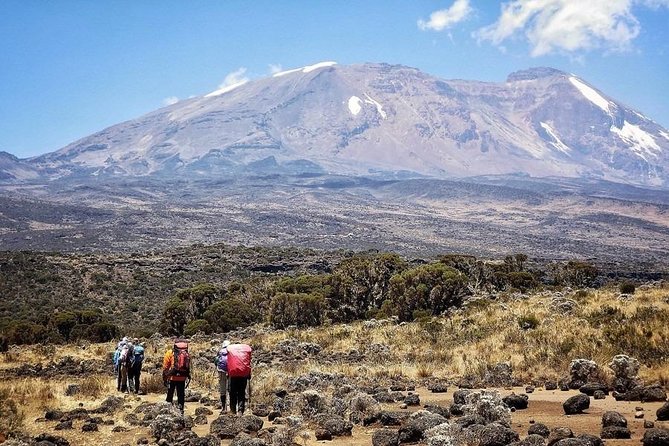
Your day begins with the practical stuff, a pickup in Arusha and a 6:00 am start. Then you ride about two hours from Arusha (around 1400m) to Londorossi Park Gate (around 2100m). After entry formalities near Londorossi, it’s another about one hour to reach the trailhead.
What I like about this structure is that it splits the travel load into two digestible segments, instead of throwing you straight into elevation. By the time you reach the trailhead, you eat lunch and start walking through rainforest.
On Day 1 you hike about 6 km for 3 to 4 hours, winding through forest to your first camp. This is the part of the trek that feels like you’re stepping into a different world, but it’s also your chance to learn how you move on this trail, with your pace set by your guide.
Day 1 camp rhythm, what to expect
- Cool, damp, and shaded rainforest walking
- Steady uphill feel rather than steep, punchy climbs
- A first camp day where you’re mostly learning the routine: go slow, drink, eat on schedule
Lemosho itineraries worth reading next
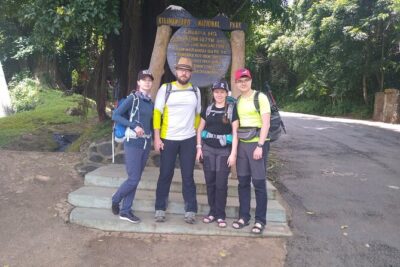
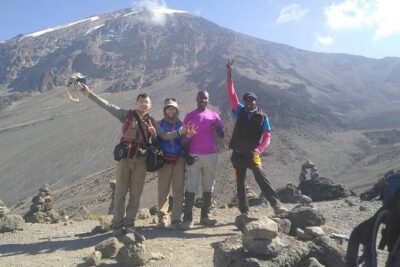
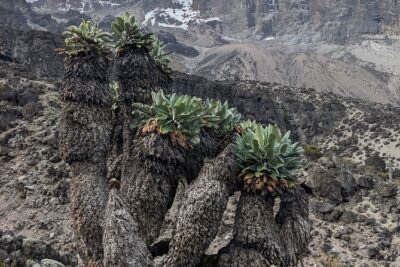
Days 1 to 3: rainforest breathing, then Shira Plateau wide-open skies
Day 2: Moorland climb to Shira Ridge and Shira 1
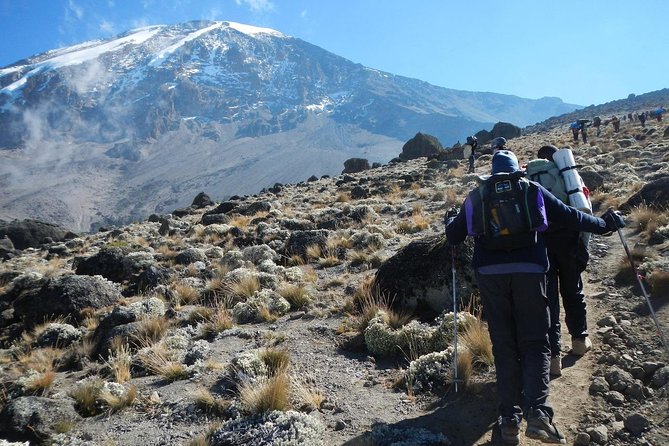
On Day 2 you shift from forest into moorland. The hike is about 8 km and roughly 5.5 hours. You’ll ascend through rolling hills and cross streams, then reach Shira Ridge before dropping to Shira 1 camp.
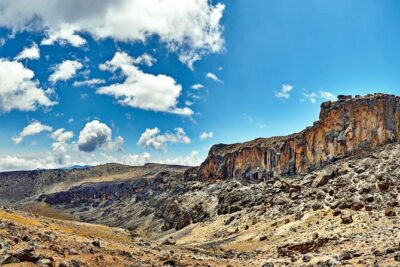
This is where the scenery changes from “dark green tunnel” to open plateaus draped in grasses, heather, and lichen. And that’s where the Kibo view starts to land hard. You’re not just seeing mountain from far away, you’re seeing it from a perspective that makes the summit feel real and close, even though it’s still far.
Day 3: Shira 2 and the approach under the Northern Ice Fields
Day 3 is longer, about 15 km and 5 to 7 hours. You head east toward Kibo’s glaciered peak area, crossing the plateau toward Shira 2 camp on moorland meadows by a stream.
Today’s big feature is the feel of the route itself. The walk under the looming glacier zone can be oddly emotional. Not because it’s dramatic like a movie, but because it’s so tangible. You’re on volcanic high country, and the mountain is directly in your field of view.
After Shira 2, the route continues toward Moir Hut, described as a little used site near the base of the Lent Hills. That matters because it turns one day into an acclimatization window. The Lent Hills option is mentioned as offering a variety of walks, which is exactly what you want at this stage: movement with purpose.
Days 4 to 6: Lava Tower, Barranco Wall, and the exposed Barafu night
Day 4: from moorland east to Lava Tower and Arrow Glacier area, then down to Barranco
Day 4 takes you into semi-desert, about 7 km and around 7 hours. From Moir Hut you continue east up a ridge, pass a junction toward Kibo’s peak area, then shift direction to the southeast toward Lava Tower, also called the Shark’s Tooth.
After that, you reach a second junction and climb toward the Arrow Glacier at around 16,000 ft, then descend to Barranco Hut at around 13,000 ft.
This day is important even though the altitude starts and ends closer than Day 7 or Day 8. It’s the “keep your body adapting” day. The work is not only in the legs, it’s in giving your system a chance to handle high elevation while you still have enough energy for later climbing.
Day 5: Karanga Camp and the Great Barranco Wall
Day 5 is a shorter hike on paper, about 5 km and 4 to 5 hours, but it’s psychologically big. You set out to conquer the Great Barranco Wall. It’s noted as a Class 2 style hike and hikers often find it easier than it looks at first glance.
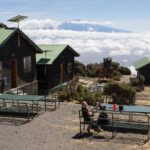
At the top, you’re rewarded with views of the Heim Glacier, and you’re above the clouds. Then the trail winds up and down in the Karanga Valley to Karanga Camp at 3950m.
This is one of the best “systems check” days on Kilimanjaro. You get a taste of steeper terrain and exposed feeling, then you still end the day at a camp that lets you recover for what comes next.
Day 6: Barafu Hut, the last water reality, and wind management
Day 6 is about 4 km and 3 to 4 hours. You begin your ascent after breakfast and reach Barafu Hut after about an hour. This is also when the route intersects with the Mweka route, the one used later for descent.
The key detail here is water. Barafu is described as the last water stop for porters, and there is no accessible water at Barafu Camp. That means your hydration timing matters, and you should treat the staff instructions like gospel.
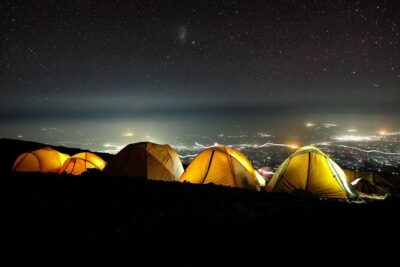
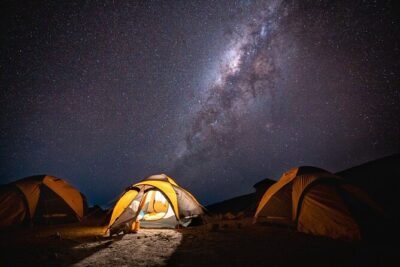
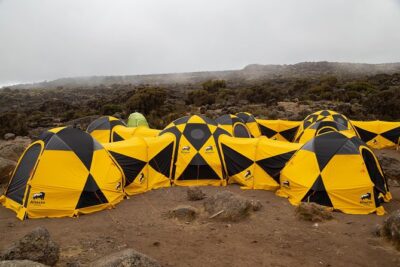
Barafu Camp sits on a rocky exposed ridge at around 4550m. Tents face wind and rocks, so you’ll want to get comfortable with the campsite layout before dark. It’s also an early dinner, then rest, because you’re saving energy for the midnight push.
Summit night at 23:30: Stella Point sunrise and the Uhuru Peak push
Day 7 is the big one. You wake around 23:30 for tea and biscuits, then start the summit attempt. The route heads northwest over stone scree. This is described as the most mentally and physically challenging part of the climb, and it makes sense. You’re pushing when you’re tired, and you’re pushing on loose ground that slows your legs.
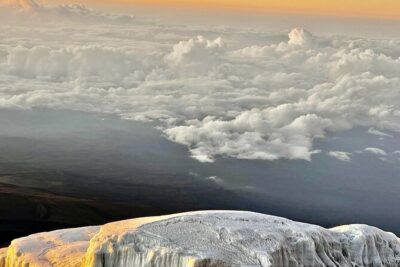
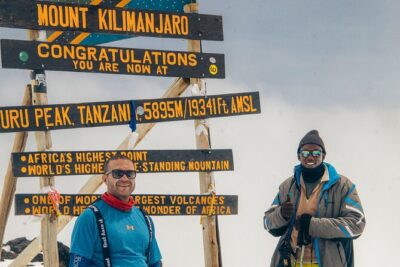
You reach Stella Point at 5685m in about 6 hours, then enjoy sunrise on the crater rim. After that, the plan continues with another about 2 hours on a snow-covered trail to Uhuru Peak at 5895m.
Here’s the thing to plan for: the climb up is only half the story. The descent is long and physical too. After the summit, you descend back to Mweka, taking about 7 to 8 hours, with the trek segment described as about 23 km descent after a roughly 7 km ascent.
What you’ll feel most on summit day
- Early darkness and cold while your body is waking up
- Loose scree requiring small, steady steps
- Long descent that taxes knees, even when the altitude is lower
Day 8: celebration on the mountain, then descent to Mweka Gate
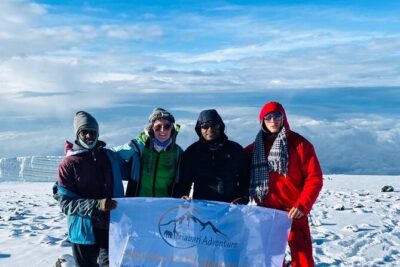
Day 8 starts with a breakfast you’ll genuinely appreciate. Then there’s a celebration on the mountain, with dancing and singing, and it’s the moment where you present tips to the guide, assistant guides, chef(s), and porters.
Completion certificates are part of the ritual. You sign names for the park certificates. If you reach Stella Point (5685m) you receive a green certificate, and if you reach Uhuru Peak (5895m) you receive a gold certificate.
After the ceremony, you descend about 3 hours back to Mweka Gate. Then there’s an additional short walk into the Mweka village for about 1 hour. It’s a satisfying finish because it turns the summit into an actual ending, not just a collection of numbers on a GPS screen.
Mafie Adventures and the crew factor that makes this worth the money
Let’s talk about the part that often decides whether Kilimanjaro feels smooth or stressful: the crew. This trip is run by Mafie Adventures, and the reviews consistently praise how the team handles people.
Erastus, the owner/organiser, is highlighted for quick communication and for being responsive through email and Whatsapp. That matters before the trek, because you’re likely juggling travel days and questions. You want fast answers and a plan that can adjust.
The guide Oliver is mentioned as a friendly leader, and the broader team is described as the reason the experience felt memorable. You’re not just buying a route, you’re buying a system: meals, camp setup, porterage, and the day-to-day pace management that helps you stay safe and sane.
Also, this is described as a private tour, so it’s only your group. That can make a big difference on the mountain, because your timing and comfort can stay consistent instead of being stretched by mixing group speeds.
Price and logistics: is $2,700.52 good value for a Lemosho 8-day trek?
At $2,700.52 per person, this is a serious investment. The value comes down to what’s included and what you avoid needing to source yourself.
Your included items are substantial:
- Camping equipment like mess tent, mattress, and all cooking equipment
- Porterage
- All accommodation during the trek
- Rescue fees and parking fees
- All taxes/VAT
- Meals: breakfast (7), lunch (8), dinner (7)
- A professional driver/guide
What’s not included is also clear, and this affects budgeting:
- Climbing gear (available for rent)
- Sleeping bag (available for rent)
- Bath towels
- Tips
- International flights and accommodations before and at the end
- Personal items, travel insurance, and potential visa fees
- Any government imposed increases in taxes or park fees
So the practical way to judge the price is this: you’re paying for a fully supported camping trek with meals and porterage, not a bare-bones hike where you must bring the whole kit. For many people, that makes the cost feel more reasonable because it reduces stress and logistical risk when you’re high on a mountain with zero room for mistakes.
Gear and altitude reality checks you should take seriously
Even if you’re fit, Kilimanjaro is still a weather and altitude game. This route passes from rainforest to moorland to alpine desert, with cold and wind possible at the highest camps.
Here are the supported, practical points you can plan around:
- Climbing gear is not included, but rental is available
- Sleeping bag is not included, but rental is available
- At Barafu Camp, there is no accessible water, and tents can be exposed to wind and rocks
- Camp days include specific long hikes, so you should treat each day as training for the next one
Also, bring a realistic mindset about summit night. You’ll start around 23:30, walk hours in darkness, then climb to Stella Point and continue to Uhuru Peak. Even with an experienced team, your body will do what it does. The best strategy is to follow the guide’s pacing and your own hydration schedule.
Who should book this Lemosho route, and who might rethink it
This trek is described as suitable for most travelers. It’s a good fit if you want:
- A lower-crowd start before the route combines with Machame
- A route with real habitat variety, not just one biome
- A trekking schedule that includes acclimatization steps like the Lent Hills area and the Barranco Wall day
You might rethink if you strongly dislike:
- Exposed conditions at Barafu where wind and rocky terrain are part of the setup
- Long summit-day time on stone scree and a long descent
If you like having a plan and a team that coordinates every day, Mafie Adventures seems well matched to that style, especially with the emphasis on responsiveness from Erastus and the friendly leadership from guides like Oliver.
Should you book the 8 Days Lemosho Route with Mafie Adventures?
I’d book it if you want a classic Kilimanjaro route with a calm early start, strong scenery from forest through the Shira Plateau, and a summit day that follows the standard rhythm of Stella Point sunrise and then Uhuru Peak.
I’d pause and ask more questions if you’re worried about cold and wind at higher camps, or if you’re not planning to rent climbing gear and a sleeping bag. The trek is well structured, but it is still outdoors in changing conditions, and Barafu is the place to be mentally ready for exposed camping.
If your priority is a well-run crew and smooth communication, this one has a real advantage. The focus on Erastus organizing well and guides like Oliver leading with friendliness shows up repeatedly, and that can make your mountain time feel far more manageable.
FAQ
What route is this, and where does it start?
This trek follows the Lemosho route and starts in Arusha, Tanzania. The trip begins with travel to Londorossi Park Gate and then to the Lemosho trailhead.
How long is the trek?
The duration is 8 days (approx.).
What time does the trek start each day at the beginning?
The listed start time is 6:00 am.
Is pickup offered?
Yes, pickup is offered.
Is a mobile ticket included?
Yes, the experience includes a mobile ticket.
What hikes and habitats are included on the main days?
You’ll hike through multiple habitats, including rain forest, moorland, semi-desert, and alpine desert, and you’ll reach areas like Shira Ridge, Lava Tower (Shark’s Tooth), Arrow Glacier, Barranco, Karanga, Barafu, Stella Point, and Uhuru Peak.
How does summit day work (timing)?
On summit day, you wake around 23:30 for tea and biscuits. You reach Stella Point at 5685m in about 6 hours, then continue about 2 hours to Uhuru Peak at 5895m, with a long descent to Mweka afterward.
What meals and gear are included?
Included meals are breakfast (7), lunch (8), and dinner (7). Included trekking camp support includes camping equipment, such as the mess tent, mattress, and cooking equipment.
What is not included for packing and budgeting?
Not included are climbing gear (available for rent), a sleeping bag (available for rent), bath towels, tips, international flights, and accommodation before and at the end.
Can I cancel or change the booking?
No. The experience is non-refundable and cannot be changed for any reason once you cancel or request an amendment.
Lemosho, Compared
- 8-Day Small-group Lemosho Kilimanjaro Summit Trekking
★ 5.0 · 186 reviews - 8 Days Mountain Kilimanjaro Lemosho Route
★ 5.0 · 22 reviews - 7 Day Kilimanjaro Climb Lemosho Route & 2 Day Safari
★ 5.0 · 16 reviews - Kilimanjaro Climb- Lemosho Route
★ 5.0 · 9 reviews - Lemosho Route 7 Days Trekking at Mount Kilimanjaro
★ 5.0 · 7 reviews
Kilimanjaro, Route by Route
- 8-Day Small-group Lemosho Kilimanjaro Summit Trekking
★ 5.0 · 186 reviews - 7-Day Machame Kilimanjaro Summit Tour from Arusha
★ 5.0 · 125 reviews - Mountain Kilimanjaro Day Hike
★ 5.0 · 102 reviews - 4 days Best experience Kilimanjaro Hike, Serengeti &Ngorongoro
★ 5.0 · 54 reviews - From Arusha/Moshi: Kilimanjaro Hike Marangu Route Day Trip
★ 4.5 · 54 reviews
Just added from around Arusha
Kilimanjaro Lemosho Route, compared.
 ★ 5.0Kilimanjaro climb by Lemosho Route (7-day)From $3,476651 reviews
 ★ 5.08-Day Small-group Lemosho Kilimanjaro Summit TrekkingFrom $2,895186 reviews
 ★ 5.0Kilimanjaro Climbing Lemosho Route 8 Days.From $2,300186 reviews
 ★ 5.0Kilimanjaro climb, Lemosho Route (8-day)From $3,975148 reviews
 ★ 5.0Kilimanjaro climb, Lemosho Route (6-day)From $3,034129 reviews
 ★ 5.0Kilimanjaro Lemosho RouteFrom $2,89071 reviews
 ★ 5.0Private Kilimanjaro Hike 7 Day Lemosho RouteFrom $2,45060 reviews
 ★ 5.0Climbing Kilimanjaro through 8 days Lemosho RouteFrom $2,76052 reviews
Browse the lists this tour appears in