
REVIEW · KILIMANJARO MARANGU ROUTE
Top 5 Days Kilimanjaro Hiking | Climbing Tour by Marangu Route
Hitting Uhuru Peak is the whole reason. This 5-day Kilimanjaro climb on the Marangu Route has a clear rhythm, from rainforest hiking to higher, emptier terrain, and it builds in an acclimatization pause before the midnight summit push. I like that you get a professional guide plus full meals along the way, so you can focus on pacing instead of logistics. I also like the Marangu-style hut stops like Mandara Hut, Horombo Hut, and Kibo Hut, which make the trek feel structured. One thing to consider is the altitude and the long, cold-feeling night hike, which is described as extremely challenging even on the “easier” crater access.
In This Review
- What makes this trek feel practical
- Quick reality check before you commit
- Key things to know before you go
- Moshi and the Marangu Route: what you’re really signing up for
- Day 1: Marangu Gate to Mandara Hut, then Maundi Crater for views
- Day 2: Horombo Hut acclimatization, Kibo and Mawenzi on clear days
- Day 3: Saddle between Kibo and Mawenzi to Kibo, then summit prep
- Day 4: Uhuru Peak from the crater rim, long steps and altitude tiredness
- Day 5: Marangu Gate descent through the cloud forest, go slow on slippery trails
- Price and value: what $674 buys, and what it does not
- Transfers, meeting point, and avoiding the day-1 scramble
- Guides, support, and what the experience feels like in real life
- Who this Marangu 5-day climb suits best
- Should you book this tour?
What makes this trek feel practical
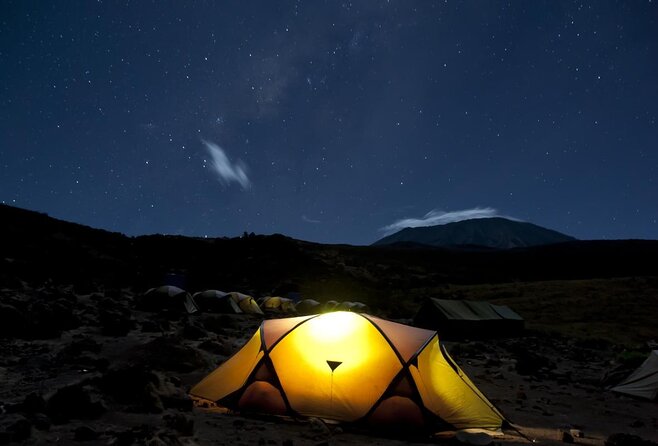
You start in Moshi and the plan includes a private transfer to the activity area, plus pickup offered. The day-by-day schedule is detailed, including when you’ll be hiking most days and exactly when summit preparations kick in late night. The price is $674 per person, and it works best if you’re already ready to handle your own flight and gear needs, since key items like hiking equipment and travel insurance are not included.
Other ways up Kilimanjaro we reviewed
- Kilimanjaro climb by Lemosho Route (7-day)★ 5.0 · 651 reviews
- Kilimanjaro climb, Machame Route (7-day)★ 5.0 · 262 reviews
- Kilimanjaro Climbing Lemosho Route 8 Days.★ 5.0 · 186 reviews
- Climbing Kilimanjaro – Machame Route★ 5.0 · 170 reviews
Quick reality check before you commit
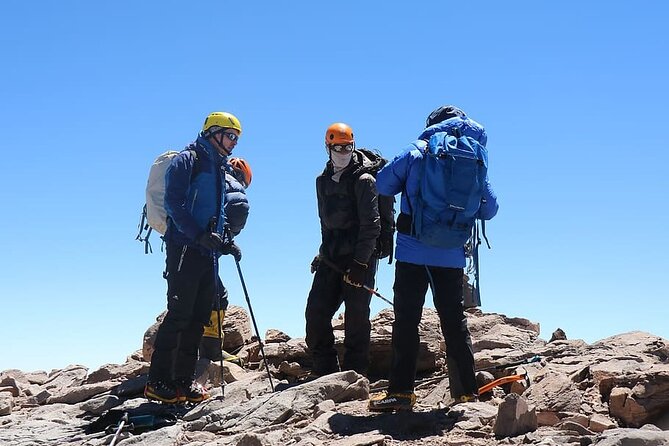
This tour is “most travelers can participate,” but the summit day is still tough by design. If you want a laid-back hike with lots of time to wander, this isn’t that. It’s more of a focused endurance climb where good pacing and being ready for a long summit climb matter more than sightseeing stops.
Key things to know before you go
- Marangu Route hut stops help keep the days organized, from Mandara to Horombo to Kibo.
- One full acclimatization day at Horombo Hut is built in, not added later.
- Summit timing is late-night focused, with preparations starting around 11:30 p.m. and a midnight wake-up described for Uhuru Peak.
- Big visual moments show up on clear days, especially views of Kibo and Mawenzi.
- Food is handled on the mountain, with breakfast, lunch, and dinner included across the trek.
- Your descent is part of the story, including a cloud forest section that can be slippery.
Moshi and the Marangu Route: what you’re really signing up for
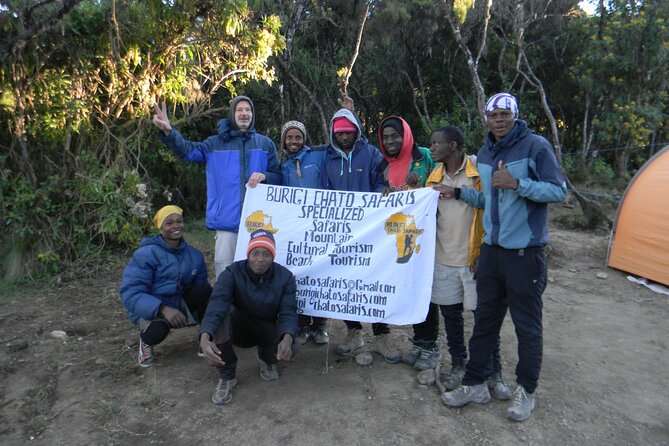
Moshi is the launching point for this climb, and you begin at a defined meeting spot: BURIGI CHATO SAFARIS CO LTD on Mkwawa Street in Shanty town, with a start time of 8:30 am. The experience ends back at the same meeting point, which helps if you want predictable transportation planning after five days of hiking.
The Marangu Route is built around hut stops, so each day has a “landmark” place to aim for: Mandara Hut on day 1, Horombo Hut on day 2, and Kibo later in the trek. That matters because a route like this is not just about getting from point A to point B. It’s also about rest timing, meal timing, and mental recovery between altitude challenges.
And yes, the payoff is the headline. You’re aiming for the top of Africa, Uhuru Peak. But the experience is also about the climb’s middle days, when your body and mind adapt to higher air and thinner comfort. This is why the schedule includes a dedicated acclimatization day.
Marangu, other operators and other lengths
Day 1: Marangu Gate to Mandara Hut, then Maundi Crater for views
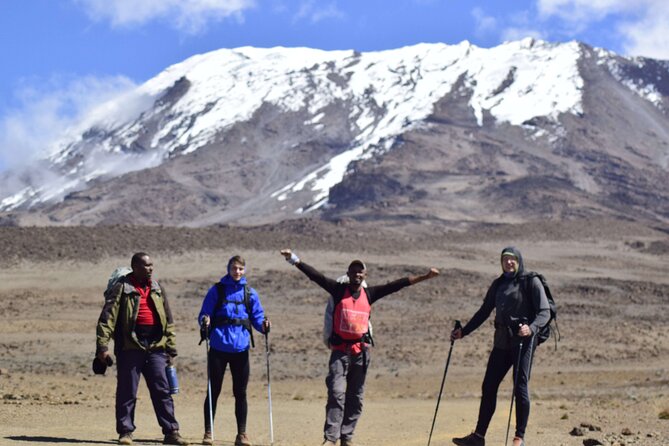
On day 1, you drive to Kilimanjaro National Park Gate (about 45 minutes) and check in at the Kilimanjaro National Park Authority office. Then the ascent starts with rainforest hiking to Mandara Hut at roughly 9,000 ft / 2,740 m.
Rainforest hiking at altitude is still hiking, but the rainforest section can feel like a different world from what most people picture when they think of Kilimanjaro. Expect steady effort rather than a constant dramatic climb. The schedule also includes a detour to Maundi Crater, which is a smart way to break up the day and give you a wider view of northern Tanzania.
This day typically runs about 4 hours, and meals are included (breakfast, lunch, and dinner). That’s practical because day 1 can be where nerves show up. Eating on schedule helps you keep energy stable without constantly checking supplies.
Practical tip: If you’re sensitive to changes in temperature, keep layers ready. Rainforest sections can feel warmer early, while higher sleeping elevations shift the comfort quickly.
Day 2: Horombo Hut acclimatization, Kibo and Mawenzi on clear days
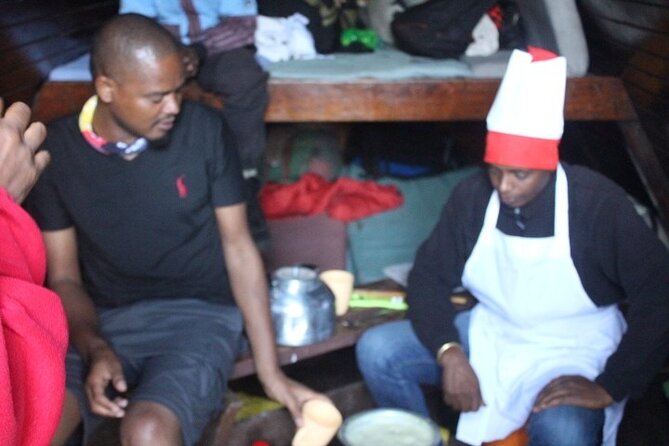
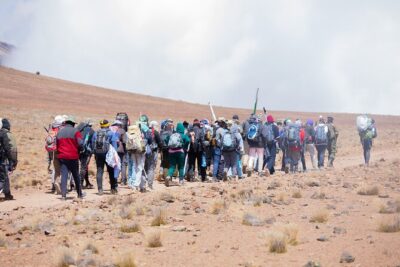
Day 2 is where the climb starts teaching patience. After a breakfast departure around 8:30 a.m., you hike toward Horombo Hut for about 6 hours.
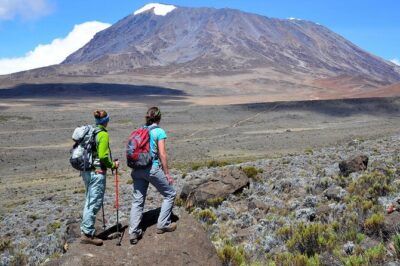
The route transitions from rainforest to more open ground. You leave the forest after about an hour, then follow a steep path across open terrain to Horombo Hut. The payoff here is visual. The schedule explicitly calls out that on clear days you can see Mount Kibo and Mount Mawenzi. It’s the kind of moment that makes the effort feel real, not just mechanical steps.
There are also plant moments. Giant lobelias and groundsels are mentioned as part of the scenery you’ll run into along the way. They’re not just decoration. On mountains like this, plants are part of the altitude story, slowly showing how the air and environment change.
Most important: this is also the acclimatization day. Horombo Hut is described as the place climbers often use to get acquainted and, if needed, spend an extra day. The tour’s plan uses Horombo as a key staging point, so you’re not jumping straight into summit efforts.
Meal support continues (breakfast, lunch, dinner included). That matters because day 2 is often when people feel the climb most in their breathing. Getting food handled means you can keep your attention on staying steady.
Day 3: Saddle between Kibo and Mawenzi to Kibo, then summit prep
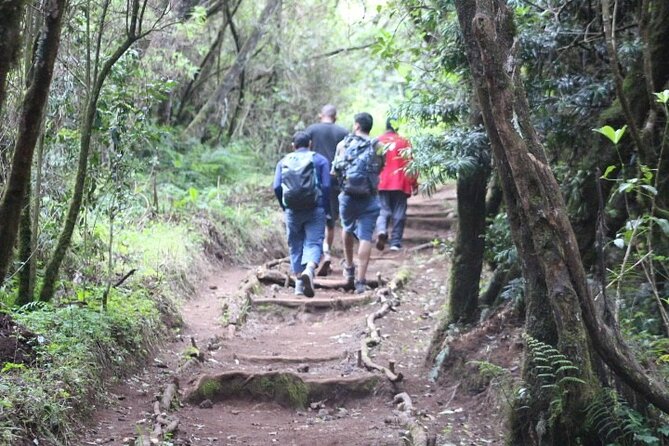
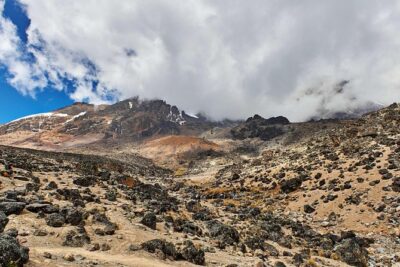
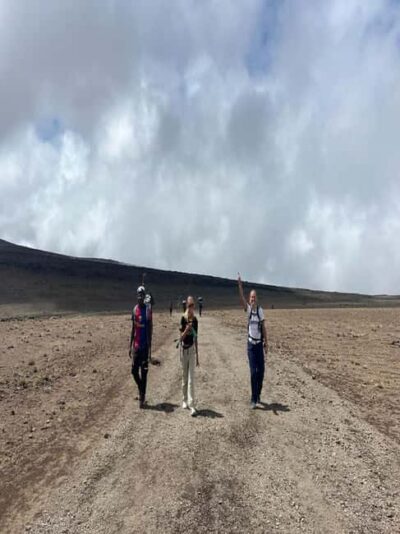
By day 3, you’re in the “this is getting serious” phase. The hike heads to the final waterhole, and then you walk in the saddle of Kilimanjaro between Kibo and Mawenzi peaks. The description notes the vegetation begins but then disappears into a more desert-like structure. Translation: fewer distractions, more focus on your pace and your footing.
Day 3 is also the staging day for the summit night. At Kibo, you have dinner and take a nap. Then around 11:30 p.m., you get ready for the summit.
The total hiking time listed is about 6 hours, with breakfast, lunch, and dinner included. This is a packed day mentally. Even if you are physically fine, the anticipation can wear you out. The best strategy here is simple: follow the plan, eat when offered, and don’t burn energy trying to speed up the summit preparation schedule.
Practical tip: Night prep can feel chaotic if you try to do it all at once. If you pack your small essentials early in the day, you reduce stress when you’re half-awake later.
Day 4: Uhuru Peak from the crater rim, long steps and altitude tiredness
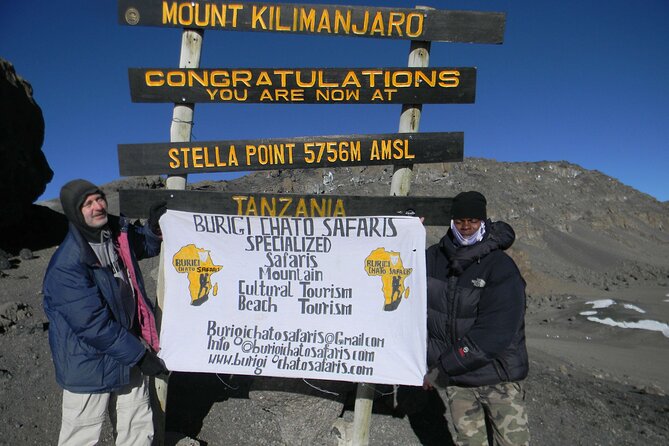
This is summit day, and it starts with a wake-up. Around midnight, you go for Uhuru Peak, the roof of Africa.
The hike begins with a 5-hour push to Gillman’s Point at the crater rim. It’s described as extremely challenging even if it’s considered the easiest of the three crater ascents. The route includes William’s Point at about 5,000 meters, and it’s about a two-hour walk from Kibo Hut. After that, you continue for about 30 minutes, then start a rocky backtrack route that continues toward Gillman’s Point (listed at 5,681 meters).
From Gillman’s to Uhuru Peak, the climb is described as a gradual climb. The key point is right there in the tour description: even if it is gradual, the altitude makes the hike long and tiring.
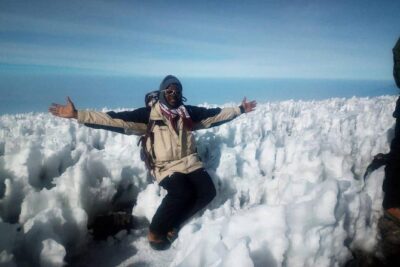
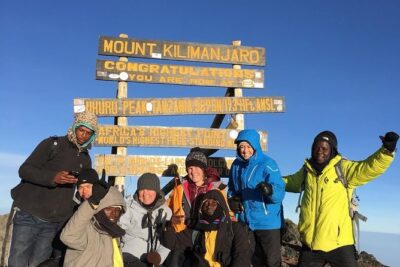
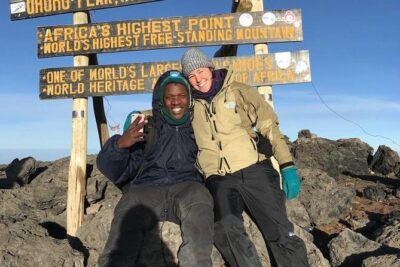
When you reach Uhuru, there’s a moment for photos with your guide and group at the summit. Then you start down, beginning the descent back toward Horombo Hut.
Day 4 is listed at 8 hours total and includes all meals again. That meal consistency matters because summit day is not when you want to manage your energy with snacks alone.
Practical tip: Summit night is where people feel cold hardest. Layering, gloves, and a hat are not luxuries here. The tour doesn’t include personal hiking gear, so this is one area where you should invest thoughtfully rather than improvising.
Day 5: Marangu Gate descent through the cloud forest, go slow on slippery trails
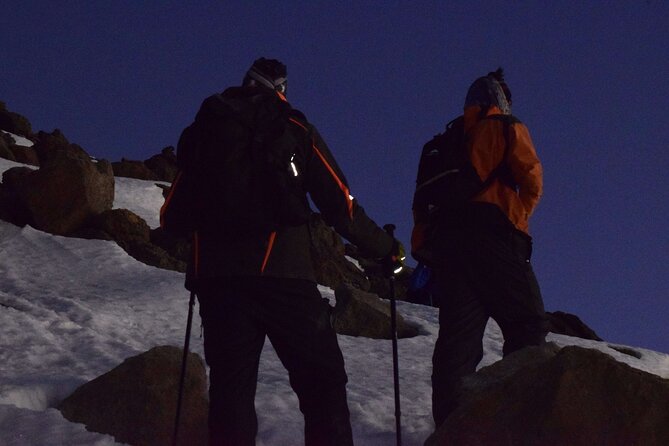
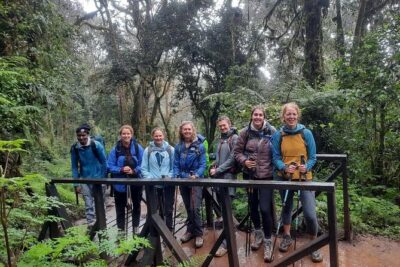
After breakfast, the tour ends with the descent to Marangu Gate. The final hiking section is described as amazing, and it includes a hike through the Kilimanjaro Cloud Forest.
It’s still hiking, and the plan warns that you should watch your steps because the trail can be slippery. That’s more than a random note. On the last day, legs are tired and attention drops. Slippery footing plus fatigue is a common way to ruin an otherwise great trip, so treat this day as controlled, not celebratory-speedwalking.
The final day takes about 5 hours, with an admission ticket included. Your car is waiting at Marangu Gate to take you back to Moshi, ending the experience back at the meeting point.
Price and value: what $674 buys, and what it does not
At $674 per person, this climb is priced as an organized package with core essentials covered. What’s included is the stuff that usually costs time and stress: a professional experienced guide, private transfer to the activity area, and meals. The meal counts are listed as breakfast (4), lunch (5), and dinner (4). That means you’re not guessing what you’ll eat, and you’re not carrying your entire fuel plan for five days.
Also included are admission tickets, listed as admission ticket included each day. In a destination like Kilimanjaro, park access is part of the real cost, not just a line item.
What’s not included matters just as much:
- Tipping the crew
- Visa, medical or travel insurance
- Personal hiking gears
- Airport pick up and drop off
- Hotel accommodation cost
- Local and international flights
So I think of the price as best value for people who already have flights and know their gear plan. If you need help with equipment sourcing, you’ll want to budget extra. If you want airport pickup, you should confirm whether you need an add-on, because it’s not included here.
One more small value signal: the tour offers group discounts. You might not control whether you end up in a discount group, but it can help if you’re booking as part of a multi-person plan.
Transfers, meeting point, and avoiding the day-1 scramble
If you’ve ever arrived in Moshi and immediately had to solve transportation and paperwork chaos, you’ll appreciate that this tour has a built-in start structure.
You meet at BURIGI CHATO SAFARIS CO LTD in Moshi at 8:30 am. There’s also a note that pickup is offered, plus the tour includes private transfer to the area of activities. That means you should spend less time bargaining with drivers and more time preparing mentally.
I also like that confirmation is stated to be received at booking time, and the experience uses mobile ticket. Paper tickets can get lost. Phone-based ticketing is one more small friction reducer.
Group size is a bit of a mystery here because the only cap listed is a maximum of 500 travelers. In practice, a Kilimanjaro climb can still feel like a small world with your immediate group and guide. Just know that the tour operator sets an upper limit, but you won’t see the exact daily group size in the provided details.
Guides, support, and what the experience feels like in real life
The tour includes a professional experienced guide, and that shows up in the kind of experiences people describe with this operator. In particular, one review mentions a guide named Gabriel who took very good care of the group when a climber got sick, and the trip still stayed on track toward the goal of summiting.
I take that as a strong signal of practical leadership, not just “someone who points the way.” When conditions change, it’s the guide’s job to keep the group safe and moving at a pace that makes sense.
Another review highlights a “home feeling” vibe and credits the operator for making good on a summit promise. That’s what you want to hear, even if nobody can guarantee a summit in every weather situation.
And speaking of weather, the tour is clear that the experience requires good weather. If weather cancels your date, you’ll be offered a different date or a full refund.
Who this Marangu 5-day climb suits best
This tour fits best if you want:
- A structured 5-day schedule with hut stops and clear milestones
- Meals included so you can focus on altitude pacing rather than food logistics
- A route that includes an acclimatization day at Horombo
- A summit-focused plan with a late-night start that follows a known rhythm
It may not be ideal if you:
- Prefer very flexible trail timing or frequent free-roam stops
- Get thrown off by cold nights and long summit climbs
- Don’t plan to bring personal gear (boots, layers, and other essentials are not included)
If you’re traveling from Moshi and want to keep things simple, this is a solid choice. It also pairs well with the kind of Tanzania trip that stacks mountains and safari time, because the same operator is mentioned in connection with adding Mount Meru in a separate three-day effort.
Should you book this tour?
I’d book this Marangu Route 5-day Kilimanjaro climb if you want an organized climb with meals, a professional guide, and a proven hut-based pacing plan that ends at Uhuru Peak and returns you to Moshi. The strongest reasons are the structure: rainforest to open terrain, a dedicated acclimatization day, then a summit night with a defined route to Uhuru.
I would think twice if you are not ready for a long, altitude-tired summit hike or if you still need to figure out your gear and logistics. Since personal hiking gear, airport transfers, and travel insurance are not included, you’ll get the smoothest trip when you show up prepared.
If you want a climb that feels purposeful, with a clear plan and strong guide support signals, this one makes sense.
The Marangu Trail
- Kilimanjaro climb, Marangu route (6-day)
★ 5.0 · 72 reviews - Climbing Kilimanjaro – Marangu Route
★ 5.0 · 65 reviews - Best Kilimanjaro Adventures 6 Days Marangu Route Experience
★ 5.0 · 18 reviews - Kilimanjaro Private Climbing in 6 Days Marangu Route
★ 5.0 · 16 reviews - 6 Days Climb Kilimanjaro Through Marangu Route
★ 4.5 · 15 reviews
Kilimanjaro, Route by Route
- Kilimanjaro climb by Lemosho Route (7-day)
★ 5.0 · 651 reviews - Kilimanjaro climb, Machame Route (7-day)
★ 5.0 · 262 reviews - Kilimanjaro Climbing Lemosho Route 8 Days.
★ 5.0 · 186 reviews - Climbing Kilimanjaro – Machame Route
★ 5.0 · 170 reviews - Climbing Kilimanjaro through 7 days Machame Route
★ 5.0 · 151 reviews
Just added from around Moshi

Kilimanjaro Marangu Route, compared.
 ★ 5.0Kilimanjaro climb, Marangu route (6-day)From $2,90272 reviews
 ★ 5.0Climbing Kilimanjaro – Marangu RouteFrom $2,00465 reviews
 ★ 5.0Private Full Day Hiking Experience to Marangu RouteFrom $26061 reviews
 ★ 4.5From Arusha/Moshi: Kilimanjaro Hike Marangu Route Day TripFrom $10154 reviews
 ★ 5.0Mount Kilimanjaro Day Hike Through Marangu Route to Mandara HutFrom $26537 reviews
 ★ 5.0Kilimanjaro Climbing 5 days Marangu routeFrom $90022 reviews
 ★ 5.0Best Kilimanjaro Adventures 6 Days Marangu Route ExperienceFrom $1,00018 reviews
 ★ 5.0Kilimanjaro Private Climbing in 6 Days Marangu RouteFrom $2,00016 reviews
Browse the lists this tour appears in