
REVIEW · KILIMANJARO LEMOSHO ROUTE
Mt Kilimanjaro Climb – 8 days Lemosho
Kilimanjaro is big, and Lemosho is built for respect. I love how the Lemosho route eases you toward higher altitude with a longer, scenic approach, and I love that an oxygen cylinder and ox meter are included for extra peace of mind. When you get a strong guide team, like Amnaay and Musa, the whole experience feels more organized and less scary, even as the mountain ramps up.
Here’s the main consideration: the summit push is a serious day, with a very steep, long climb starting from Barafu and continuing toward Uhuru Peak and Stella Point, in conditions that can be cold and altitude can affect you. If you’re not comfortable with long hiking hours and cold, this is the part to plan for carefully.
In This Review
- Key things that make this Lemosho climb special
- First impressions in Moshi: starting the Lemosho climb on purpose
- Day 1: Lemosho Gate to Big Tree Camp at 2,780 m
- Days 2 and 3: Big Tree to Shira 1, then to Shira 2
- Day 4: Shira 2 to Barranco Camp, plus the Wall moment
- Day 5: Barranco to Karanga, steady grinding over ups and downs
- Day 6: Karanga to Barafu Camp at 4,640 m
- Day 7: Barafu to Uhuru Peak and down toward Mweka Camp, a long steep reality check
- Day 8: Mweka Camp down to Mweka Gate at 1,630 m
- What $3,500 buys you on this Lemosho package, and why it can be good value
- The Nyange Adventures team: what the best experiences tend to have in common
- How to prepare mentally and physically for the route you’re buying
- Who should choose Lemosho 8 days, and who should rethink it
- Should you book this 8-day Lemosho climb with Nyange Adventures?
- FAQ
- Where do we start on the Lemosho route?
- What is the overall duration of the trek?
- How does the itinerary change altitude over the climb?
- What is included in the price?
- Are tips for the team included?
- Is personal climbing gear included?
- Does the trek include oxygen support?
- Is cancellation free?
Key things that make this Lemosho climb special
- Western start with smarter pacing beneath the Shira area, which helps your body adjust
- Included oxygen cylinder and ox meter, plus water, meals, and rescue fees
- Food and team support that aim to keep individuals cared for, not just the average hiker
- Barranco Wall payoff with big views and a real sense of progress
- A summit day designed for effort (long, steep, and often cold), followed by a hard but rewarding descent
Other ways up Kilimanjaro we reviewed
- Kilimanjaro climb by Lemosho Route (7-day)★ 5.0 · 651 reviews
- Kilimanjaro climb, Machame Route (7-day)★ 5.0 · 262 reviews
- Kilimanjaro Climbing Lemosho Route 8 Days.★ 5.0 · 186 reviews
- Climbing Kilimanjaro – Machame Route★ 5.0 · 170 reviews
First impressions in Moshi: starting the Lemosho climb on purpose
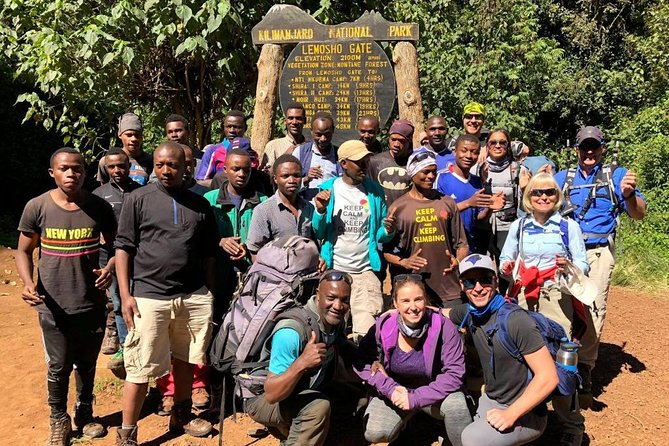
You’re based in Moshi, and that matters because it keeps the trip practical. You get hotel pickup and drop-off, and your start time is 8:00 am, so you’re not scrambling before the first steps. The climb begins at Lemosho Gate (2,385 m), which feels like a real “start line,” not a vague warm-up.
The Lemosho route is a newer approach that starts on the western side of Kilimanjaro, just under the Shira route. That positioning is part of the appeal, because it helps distribute the climb over more days, instead of pushing too hard too soon. And you get a lot of time living at intermediate altitudes, which is exactly what your body needs if you want a better chance of staying comfortable as you go higher.
You also have an optional add-on some groups choose: an overnight stay in Kibo Crater. That’s for people who have time and budget to trade a little convenience for an extra dose of summit-area experience.
Day 1: Lemosho Gate to Big Tree Camp at 2,780 m
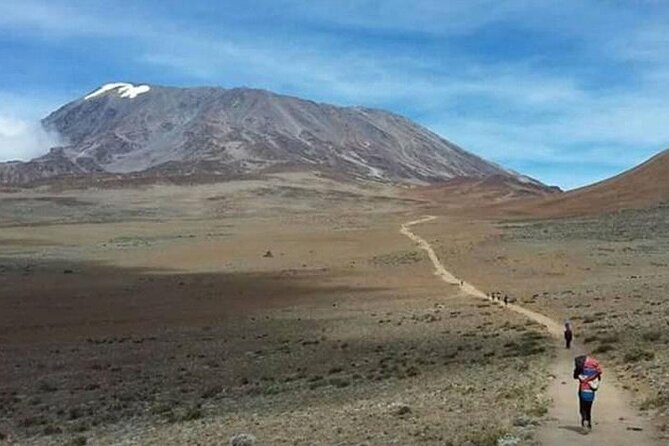
Day 1 is a gentle way to begin, with a walk time of about 2 to 3 hours and an altitude gain of about 395 m. You finish at Big Tree Camp (2,780 m), which feels like the first “real camp” moment, where you settle in and learn the rhythm you’ll keep for days.
This start is more than just a warm-up. It helps you get used to thin air, camp timing, and the hiking pace that guides expect you to hold. If you’ve ever been tempted to go too fast on day one, I’d treat this day as your chance to practice restraint.
At this stage, you’ll want to focus on small wins, not big speed. A smooth start helps everything that comes after, especially when the climbs start turning steeper.
Days 2 and 3: Big Tree to Shira 1, then to Shira 2
Day 2 goes from Big Tree Camp (2,780 m) to Shira Camp 1 (3,500 m). It’s a bigger jump on paper, around 720 m of altitude gain, and you walk about 4 to 5 hours. This is where Lemosho’s longer structure starts to make sense, because you’re not bouncing to the highest points immediately, you’re building toward them.
Day 3 continues from Shira Camp 1 (3,500 m) to Shira Camp 2 (3,900 m). That’s a smaller climb, roughly 400 m and 3 to 4 hours of walking. That “up, then adjust” pattern is the core of acclimatization, and it’s also why this route is often described as highly recommended for people trying to climb smart.
What I like about this mid-route design is how it gives you a chance to notice your own signals. You’ll learn how your breathing responds, how your legs feel, and what pace keeps you steady. The goal is not hero mode on these days, it’s controlled progress.
Lemosho itineraries worth reading next
Day 4: Shira 2 to Barranco Camp, plus the Wall moment
Day 4 takes you from Shira Camp 2 (3,900 m) to Barranco Camp (3,960 m). You gain about 740 m and also descend about 680 m, with a longer walking day around 6 to 7 hours. This is one of the route days that can surprise people because it feels like more walking than the altitude numbers suggest.
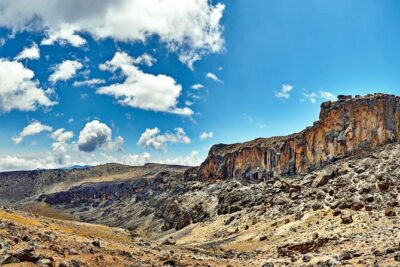
The big feature here is the Barranco Wall. You’ll climb it with a rewarding payoff, including views toward Kibo’s southern glacier. It’s a “work then reward” kind of day, and that’s psychologically helpful when the mountain starts to feel more serious.
If you’re the kind of hiker who worries about technical sections, this is still very doable, but you should expect effort. The mountain doesn’t care how confident you felt on day two.
Day 5: Barranco to Karanga, steady grinding over ups and downs
Day 5 starts at Barranco Camp (3,960 m) and finishes at Karanga Camp (4,035 m). It’s a gentle net change, about 100 m up and 25 m down, with roughly 3 to 4 hours of walking. But don’t let the numbers fool you, because the day still includes a steep climb over the Barranco Wall area earlier in the route sequence, and you’ll keep feeling the altitude.
This day matters because you’re moving closer to the “pre-summit” zone. By now, your body is used to lower oxygen than at sea level, but you’re also not at the end of the challenge. It’s a good day for steady pacing and listening to how you feel, especially at camp time.
If you get the chance, I’d make this your day to focus on recovery habits. You’re building momentum for Barafu and the long night ahead.
Day 6: Karanga to Barafu Camp at 4,640 m
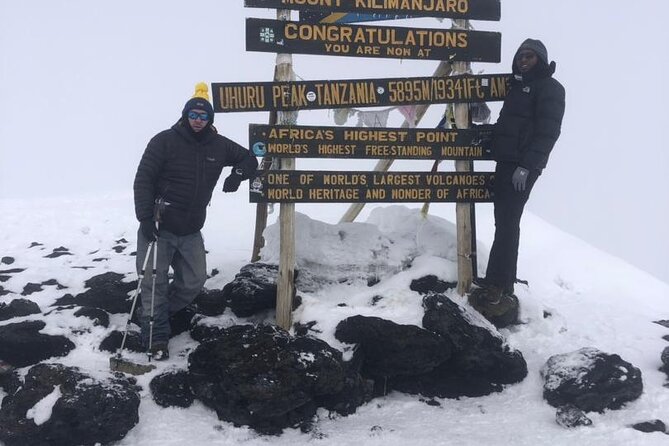
Day 6 climbs from Karanga Camp (4,035 m) to Barafu Camp (4,640 m). That’s a climb of about 615 m with walking time around 3 to 4 hours.
This camp is the gateway to the summit attempt. You’re not just walking to another location, you’re setting up for the longest and coldest day. At Barafu, people often feel a mix of excitement and stress, because you can finally see how the summit plan becomes real.
I like that this schedule gives you a relatively shorter walking day before the push. You need your energy. You also need time to mentally prepare, because the next day can start hours before sunrise and keep going far longer than most hikes.
Day 7: Barafu to Uhuru Peak and down toward Mweka Camp, a long steep reality check
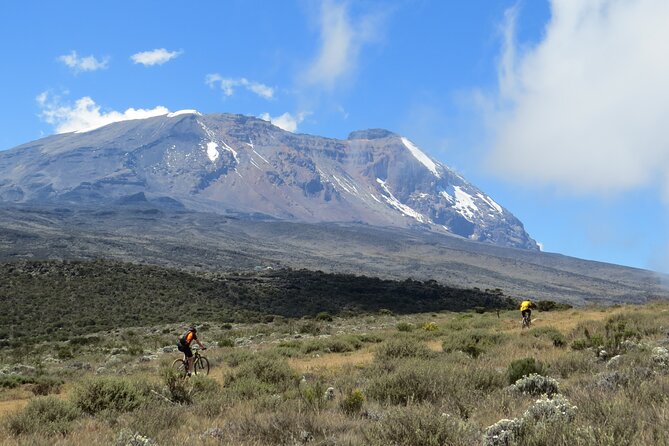
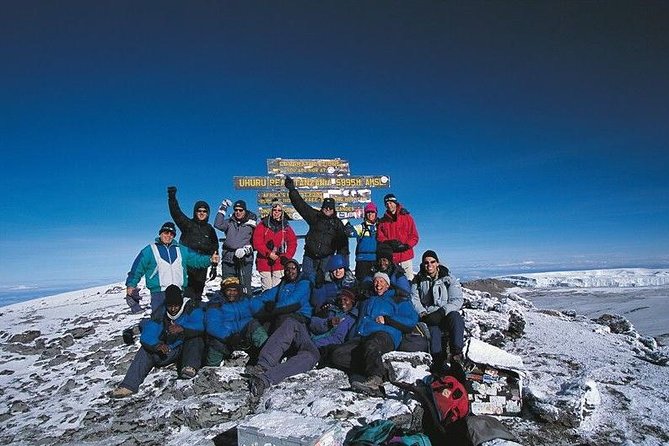
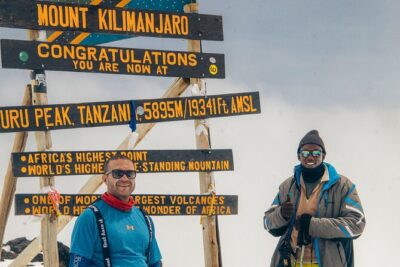
Day 7 is the defining day. You start at Barafu Camp (4,640 m) and head to Uhuru Peak (5,895 m), then continue down to Mweka Camp (3,080 m). Walking time is listed as 10 to 14 hours, with a massive drop and recovery in between, and the text also notes this is a very steep, long climb to Stella Point.
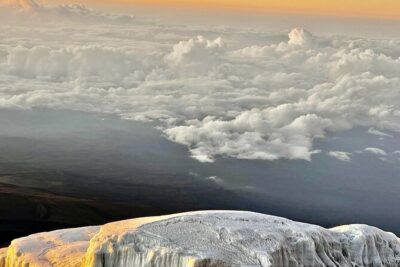
This is the day where altitude can influence how you feel, and cold is very possible. The summit ridge panorama is part of the reward, including views over the crater area and toward the summit.
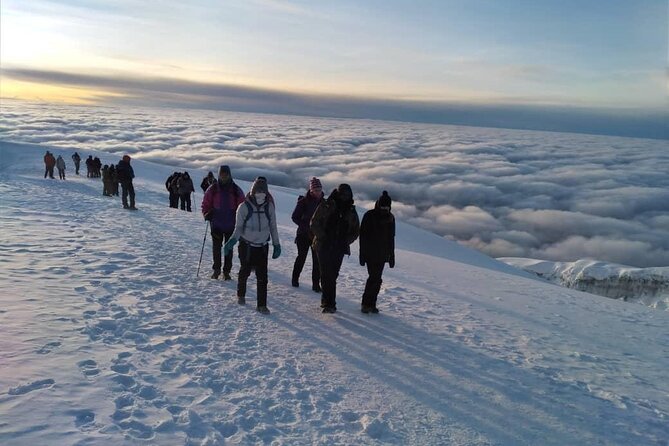
Here’s the practical mindset I’d use: think of the summit as a series of small decisions. Slow steps, consistent breathing, and staying calm matter more than raw stamina. If your pace is steady on the climb, the descent becomes safer too, even though it’s still steep and long.
And then comes the part that surprises many first-timers: after reaching the top, the rest of the day still takes real stamina. You’re descending toward Mweka Camp, and your legs will feel it.
Day 8: Mweka Camp down to Mweka Gate at 1,630 m
Day 8 finishes at Mweka Gate (1,630 m), starting from Mweka Camp (3,080 m). You’ll descend about 1,450 m, and the walking time is about 2 to 3 hours.
This is a celebratory day, but it’s not a stroll. Your body is adjusting back to thicker air, and your knees and ankles will appreciate careful steps. The last day tends to be emotionally easier, but physically still requires attention.
When you reach the gate, it signals the end of the climb. You’ll have time to decompress and absorb the achievement, which is the kind of feeling you remember for a long time.
What $3,500 buys you on this Lemosho package, and why it can be good value
At $3,500 per person, this isn’t a cheap outing. The value comes from what’s included, not just the route name.
You’re paying for major upfront costs and core trip logistics, including:
- All park fees (entry, camping, forest department, and rescue fees)
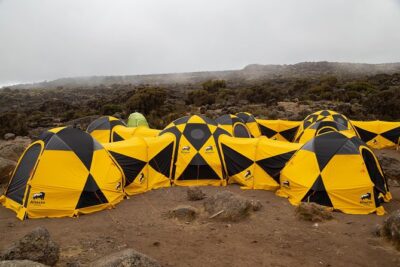
- Seven nights accommodation and camping facilities like tents and mattresses
- Three meals a day during the trek
- Drinking water
- A professional guide, plus a team built with ethical salary standards aligned with KPAP guidelines
- Transport to and from the gate
- Oxygen cylinder and ox meter
The oxygen support is a big deal in the real world, because it’s not something you have to rent, hunt down, or manage yourself. Also, having park fees and rescue fees handled is one less administrative headache before you ever step into the altitude.
What’s not included is also important for budgeting. Tips for the team are not included, and you’ll cover travel insurance yourself. Personal climbing gear and equipment are not included either, so you’ll need to bring or arrange that through your own planning.
For many people, the best way to judge value is simple: can you relax and focus on hiking rather than juggling logistics? With what’s included, this package is designed to let you do that.
The Nyange Adventures team: what the best experiences tend to have in common
The most praised theme here is support, not just guiding. People talk about feeling safe, respected, and taken care of throughout the trip, including on the summit night and during the long descent. Guides are highlighted by name in multiple accounts, such as Amnaay, Musa, Davis, Ibrahim, Joy, Geopron, and Francis.
Food also shows up again and again as a highlight, with one account calling out local organic food as amazing. That matters because high-altitude appetite can be weird, and you want meals that keep people functioning.
There’s also practical extras that make camp life smoother. Some people note that guides take an interest in individual needs, and you may find that support includes help with camera moments, so you’re not constantly juggling your hands while hiking.
A final nice detail is that one account describes the climb becoming a solo experience when group signups changed last minute, which gave the hiker flexibility. Even if group dynamics don’t affect your situation, it’s a reminder that good operators handle changes calmly.
How to prepare mentally and physically for the route you’re buying
Your fitness level needs to be at least moderate. The route is long, and on summit night you’re committing to a very steep, long push, listed as 10 to 14 hours total for Day 7. That’s not just a walking day, it’s a mental endurance day.
I’d also take the altitude profile seriously. The route climbs, dips, and climbs again, with big highs around the summit attempt. Your best strategy is to follow the guide pace, not the pace that feels good for the first hour.
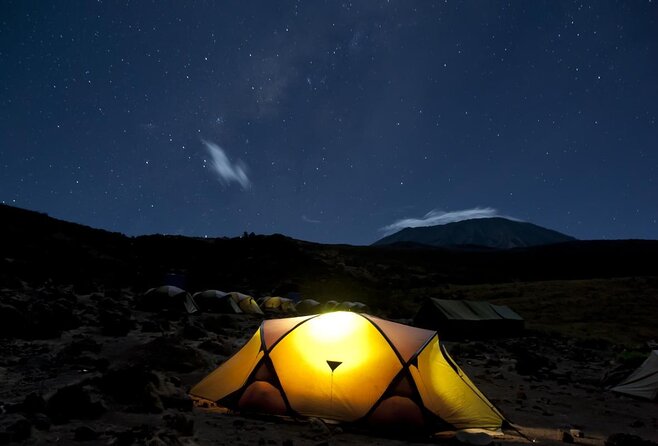
Because you’re camping, plan for cold nights at higher elevations. Since oxygen and an ox meter are included, you get extra support systems, but those tools still don’t replace a smart pace and steady effort.
Finally, make sure you bring what you need because personal gear is not included. The tour can manage tents, mattresses, food, water, and oxygen support. You’re still responsible for your own mountain setup.
Who should choose Lemosho 8 days, and who should rethink it
This climb suits hikers who want strong acclimatization value. The longer schedule with intermediate camps gives your body more time to adjust, which is why it’s often picked by people who care about climbing with a plan.
It also fits people who want a private experience, since it’s listed as private, meaning your group is the only one participating. If you prefer a more personal rhythm with fewer coordination issues, that’s a plus.
I’d rethink if you strongly dislike long hiking days or if you know you struggle with steep, cold summit conditions. The route gives you challenges on purpose, and the summit day is the clearest example.
If you want a big achievement with structure, this route is one of the better ways to do Kilimanjaro.
Should you book this 8-day Lemosho climb with Nyange Adventures?
If you want a route that’s designed around acclimatization and you like the idea of having oxygen cylinder and ox meter included, this is a solid choice. The pricing looks more reasonable when you compare what’s covered, including park fees, meals, camping setup, transport, and a professional guide plus team support.
Book it if you’re ready for the summit day reality, you’ll follow your guide’s pace, and you can handle cold and long hours. Skip it if you’re hoping Kilimanjaro will feel like a casual hike, because Day 7 is the proof that it isn’t.
If you can get the right team match, the experience can feel like a partnership with your guide and crew. And that combination of planning and human support is exactly what gets this climb recommended again and again.
FAQ
Where do we start on the Lemosho route?
You start at Lemosho Gate at 8:00 am, with an opening altitude of 2,385 m.
What is the overall duration of the trek?
The trek is listed as 8 days approximately.
How does the itinerary change altitude over the climb?
The route gains altitude over multiple days, topping out at Uhuru Peak at 5,895 m on Day 7, then descends significantly to Mweka Camp and Mweka Gate on the final day.
What is included in the price?
The package includes all park fees, three meals a day, seven nights accommodation, camping facilities, ethical salaries for the team, transport to and from the gate, drinking water, oxygen cylinder and ox meter, a professional guide, and hotel pickup and drop-off.
Are tips for the team included?
No. Tips for the guide, cook, and porters are not included.
Is personal climbing gear included?
No. All personal mountain climbing gear and equipment is not included.
Does the trek include oxygen support?
Yes. An oxygen cylinder and ox meter are included.
Is cancellation free?
Free cancellation is offered if you cancel at least 24 hours before the experience starts for a full refund.
Lemosho, Compared
- Kilimanjaro climb by Lemosho Route (7-day)
★ 5.0 · 651 reviews - Kilimanjaro Climbing Lemosho Route 8 Days.
★ 5.0 · 186 reviews - Kilimanjaro climb, Lemosho Route (8-day)
★ 5.0 · 148 reviews - Kilimanjaro climb, Lemosho Route (6-day)
★ 5.0 · 129 reviews - Kilimanjaro Lemosho Route
★ 5.0 · 71 reviews
Kilimanjaro, Route by Route
- Kilimanjaro climb by Lemosho Route (7-day)
★ 5.0 · 651 reviews - Kilimanjaro climb, Machame Route (7-day)
★ 5.0 · 262 reviews - Kilimanjaro Climbing Lemosho Route 8 Days.
★ 5.0 · 186 reviews - Climbing Kilimanjaro – Machame Route
★ 5.0 · 170 reviews - Climbing Kilimanjaro through 7 days Machame Route
★ 5.0 · 151 reviews
Just added from around Moshi

Kilimanjaro Lemosho Route, compared.
 ★ 5.0Kilimanjaro climb by Lemosho Route (7-day)From $3,476651 reviews
 ★ 5.08-Day Small-group Lemosho Kilimanjaro Summit TrekkingFrom $2,895186 reviews
 ★ 5.0Kilimanjaro Climbing Lemosho Route 8 Days.From $2,300186 reviews
 ★ 5.0Kilimanjaro climb, Lemosho Route (8-day)From $3,975148 reviews
 ★ 5.0Kilimanjaro climb, Lemosho Route (6-day)From $3,034129 reviews
 ★ 5.0Kilimanjaro Lemosho RouteFrom $2,89071 reviews
 ★ 5.0Private Kilimanjaro Hike 7 Day Lemosho RouteFrom $2,45060 reviews
 ★ 5.0Climbing Kilimanjaro through 8 days Lemosho RouteFrom $2,76052 reviews
Browse the lists this tour appears in