
REVIEW · KILIMANJARO MARANGU ROUTE
Kilimanjaro Summit Challenge: 6 Days via Marangu Route
There is a reason the Marangu Route is so popular. This classic 6-day Kilimanjaro trek runs the well-known, hut-based path many people call the Coca-Cola route, with clear changes in scenery as you gain altitude toward Uhuru Peak. I like the comfort of overnight mountain huts instead of tent camping, and I also like the steady support team setup, with qualified guides, porters, and cooks taking care of the hard logistics. One drawback to plan for is that summit day is brutally long, with the midnight start and a late descent, so stamina matters.
You’ll start in Moshi and climb in stages, with a true acclimatization rhythm built in. The itinerary also includes emergency oxygen for emergencies only, plus basic first aid and daily health checks, which gives me confidence in the overall safety approach. If you’re hoping for a relaxed stroll, this is not that, but if you want the most straightforward route to the summit with a real support team, it can be a smart choice.
In This Review
- Key things that make this Kilimanjaro trek work
- Kilimanjaro via Marangu in 6 Days, what you’re really signing up for
- Entering Moshi and getting ready, transfers and a real start point
- Day 1 to Mandara Huts: rainforest walking and your first altitude jump
- Day 2 to Horombo: the last rainforest to moorlands, and big views of Kibo and Mawenzi
- Day 3: Mawenzi acclimatization hike to about 4,600 m, then back to Horombo
- Day 4 to Kibo Huts: the alpine desert zone and saving energy for what’s next
- Day 5 summit day to Uhuru Peak: midnight start, Gilman’s Point, and sunrise timing
- Day 6 descent to Moshi: rainforest and moorlands, certificates, and a proper reset
- Price and value at $2,213 per person, what’s actually included
- Pace, altitude reality, and who this Marangu 6-day plan suits best
- Should you book the Kilimanjaro Summit Challenge via Marangu?
- FAQ
- Where does this Kilimanjaro trek start and end?
- What route is used for the summit attempt?
- What are the main hut stops during the trek?
- Are airport transfers included?
- Is emergency oxygen provided?
- What meals are included in the price?
- Do I need to bring trekking gear, or can I rent it?
- What is the cancellation refund rule?
Key things that make this Kilimanjaro trek work
- Hut sleeping on the Marangu Route: Mandara, Horombo, and Kibo huts keep things simpler at high altitude.
- A real acclimatization pause on Day 3: a hike toward Mawenzi ridge at about 4,600 m helps your body adjust.
- Summit push starts around midnight: expect a long day, including Gilman’s Point and sunrise at the top area.
- Support all the way up: qualified mountain guides, assistant guides, porters, and cooks are included.
- Hot water wash daily: a small thing that feels huge when you’re tired and cold.
- Emergency oxygen is on hand: designed for emergencies only, not as a routine summit aid.
Other ways up Kilimanjaro we reviewed
- Kilimanjaro climb by Lemosho Route (7-day)★ 5.0 · 651 reviews
- Kilimanjaro climb, Machame Route (7-day)★ 5.0 · 262 reviews
- Kilimanjaro Climbing Lemosho Route 8 Days.★ 5.0 · 186 reviews
- Climbing Kilimanjaro – Machame Route★ 5.0 · 170 reviews
Kilimanjaro via Marangu in 6 Days, what you’re really signing up for
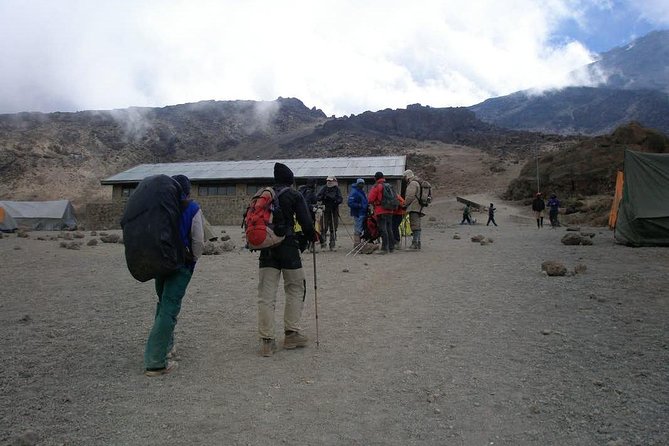
Kilimanjaro is high, and the Marangu Route is the “classic” way up for a reason. You get hut stays at Mandara, Horombo, and Kibo, plus a route that tends to feel direct compared with more complex multi-route itineraries. Over six days, you move from rainforest to moorlands and eventually into harsher, colder terrain as you approach Kibo.
What I appreciate most is the structure. You don’t just rush upward. You climb Day 1 and Day 2 to reach workable sleeping altitudes, then you add an acclimatization day before the final push. That matters because altitude is not just about effort. It’s about how your body reacts, hour by hour.
There’s also the practical value of support. This is not a DIY hike. The package includes the people who make a big trek possible: a qualified mountain guide, assistant guides, porters, and a cook, with wages covered. You’re not stuck negotiating logistics while you’re exhausted.
Entering Moshi and getting ready, transfers and a real start point
Your trek starts in Moshi Urban, Tanzania. You’ll also have return transfers included between Moshi and Kilimanjaro airport. That matters because Kilimanjaro trips can fall apart when people underestimate driving time and early schedules. Here, you’re set up to show up, check in, and begin.
Pickup is also offered, and there are group discounts available. The listing notes the activity is private, meaning only your group participates. That can be a quality boost if you want to keep the pace consistent and avoid the awkward “everyone’s doing their own version” feeling that sometimes happens on shared adventures.
Once you arrive, you’ll still need to be mentally ready for the climb. The Marangu Gate check-in kicks off your first day. After that, the mountains do not care about your travel plans or your photos. Your schedule becomes the mountain’s schedule.
Day 1 to Mandara Huts: rainforest walking and your first altitude jump
Day 1 begins after breakfast with a drive to Marangu Gate, where you’ll register for the climb. Then it’s into dense rainforest, gaining altitude from about 1,870 m to roughly 2,720 m.
You hike around 8 km for about 3 to 4 hours. That’s a solid first day, not a “light warm-up” and not a long grind. I like this balance because it gets your legs moving while you still feel fresh.
The best part of the Mandara Huts start is the change in vibe. Rainforest on Kilimanjaro is not like walking in the city after a rain shower. It’s its own world, and it can include wildlife sightings like colobus monkeys. Even if you don’t see animals, the sounds and humidity of the forest zone make Day 1 feel like an entrance, not just a commute.
Potential drawback: your body is already being introduced to altitude. Even though you’re not near the summit yet, that first elevation gain can make you feel slightly out of sync. Pace yourself and don’t treat this like a “beat your friend up the trail” day.
Marangu, other operators and other lengths
Day 2 to Horombo: the last rainforest to moorlands, and big views of Kibo and Mawenzi
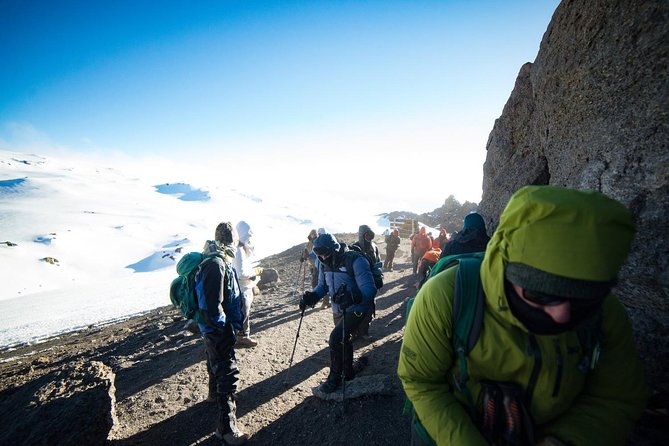
On Day 2, you go from about 2,720 m up to around 3,720 m. The hike is about 12 km and takes about 6 to 7 hours, which is a step up in time and effort from Day 1.
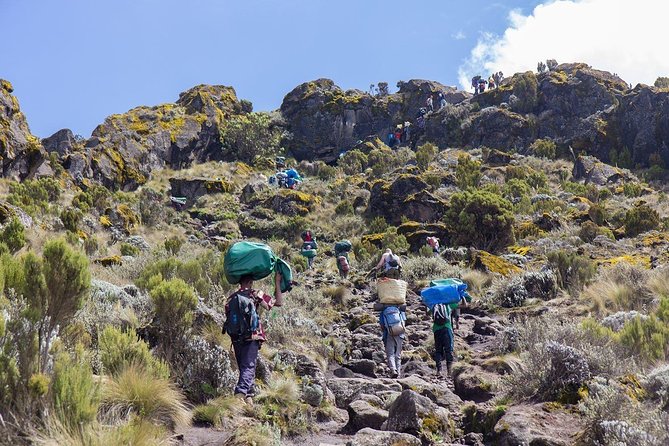
You start in the last section of rainforest and continue into moorlands. This is often where the mountain starts showing off. Horombo Hut becomes your base for the night, and you’re treated to impressive views of Kibo and Mawenzi peaks.
Why this day matters: it’s the transition into open, higher altitude walking. Your breathing changes. Your legs get worked a bit longer. And the terrain starts to feel less forgiving than the first-day forest path.
Practical tip from the way this trek is structured: bring your focus to steady effort. If you push hard on Day 2, you usually pay for it later when you need energy for the big altitude work.
Day 3: Mawenzi acclimatization hike to about 4,600 m, then back to Horombo
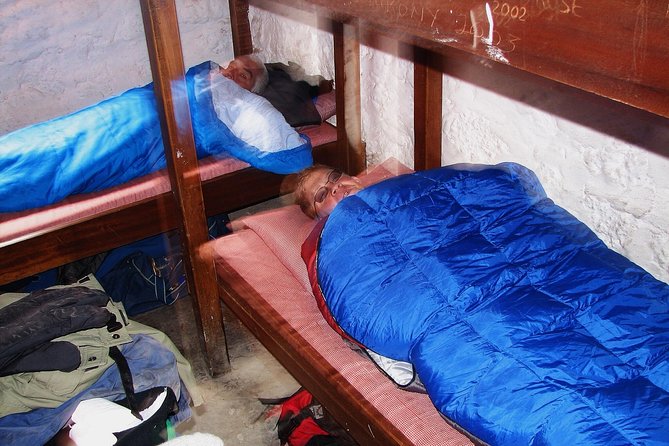
Day 3 is an intentional adjustment day. After breakfast at Horombo Hut, you do a hike toward Mawenzi ridge at around 4,600 m. You’ll spend time at altitude, have lunch at the ridge, then descend back to Horombo for dinner and overnight.
The total hiking time is about 4 hours. That sounds short compared with summit day, and that’s the point. You’re giving your body altitude stimulus without trying to conquer the entire mountain on Day 3.
This acclimatization step is one of the most valuable parts of the schedule. It’s not a random “free day.” It’s a guided day that helps you handle the higher sleeping altitude and the coming cold, rugged zone.
Possible consideration: even though the hike time is shorter, high-altitude walking can feel harder than expected. Stay controlled. Keep your breathing calm and don’t chase speed.
Day 4 to Kibo Huts: the alpine desert zone and saving energy for what’s next
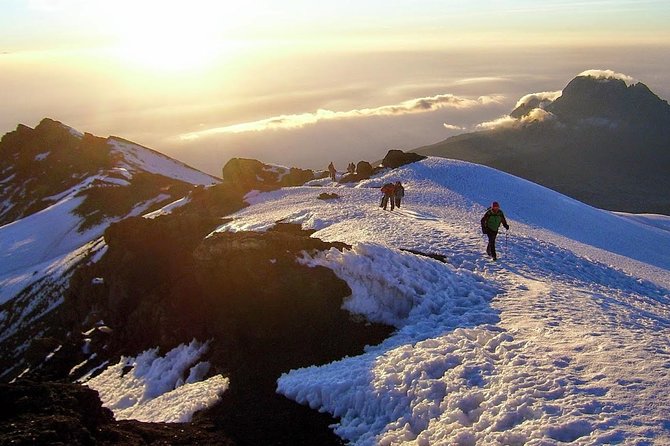
By Day 4, you’re moving into the highest huts before the summit push. You hike from about 3,720 m to about 4,703 m, about 10 km, in roughly 5 to 6 hours.
The key shift is the terrain. You leave behind more forgiving areas and enter the alpine desert zone. The trail becomes more rugged, and your energy management becomes part of the job.
Kibo Hut is the final stop before the summit attempt. In other words, Day 4 is where your choices start affecting how you feel at night. If you burn too much energy here, summit day will feel like an uphill argument with your own lungs.
What I like about this staging: it keeps you at Kibo long enough to rest before the midnight ascent. You’re not just arriving and instantly sprinting upward. Kibo acts like a staging area, and that gives you a better chance to come into the summit push with workable strength.
Day 5 summit day to Uhuru Peak: midnight start, Gilman’s Point, and sunrise timing
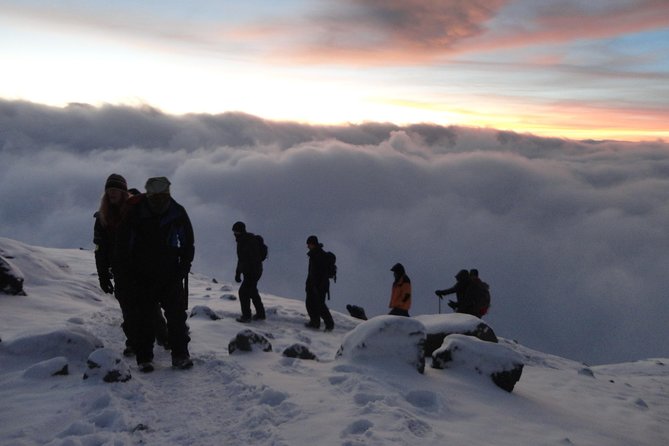
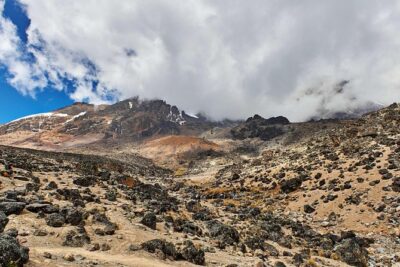
Day 5 is the main event. You begin the summit push around midnight and hike steeply over scree and volcanic rock.
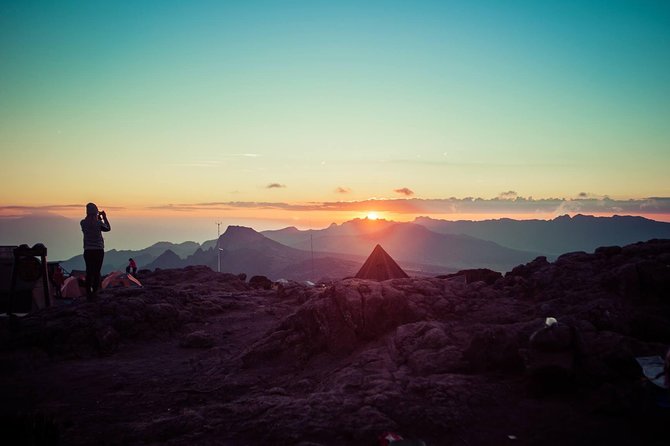
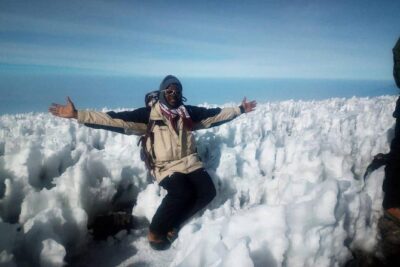
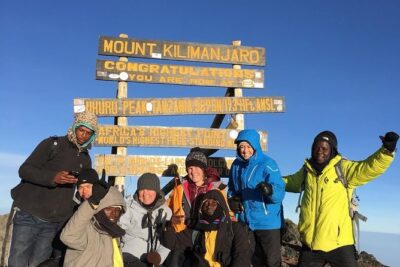
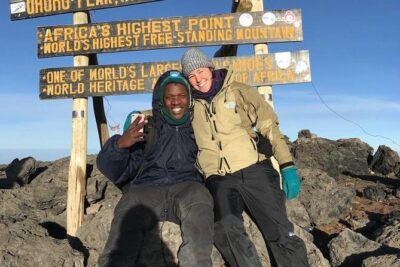
The route takes you first to Gilman’s Point at about 5,685 m, then onward to Uhuru Peak at about 5,895 m, the highest point on Kilimanjaro. The goal is to reach the top area in time to enjoy sunrise from the Roof of Africa before you start descending.
This is also a very long day. Hiking time is estimated around 10 to 14 hours, and it typically includes a difficult ascent, a high-altitude return climb to Kibo for a short rest, and then onward descent back toward Horombo Hut.
This is where the support team really matters. The included structure includes qualified guides, assistant guides, and porters, and the package also includes basic first aid and emergency oxygen for emergencies only. That last detail is important. It’s there for safety, not as a substitute for pacing and acclimatization.
From the service feedback I’ve seen for this kind of trek, health monitoring is taken seriously, including health checks twice a day. On summit day that kind of attention often makes the difference between pressing on and making a wise call when your body is struggling.
Practical drawback: cold, fatigue, and long hours are unavoidable variables. You can manage them with pacing, clothing layers you bring or rent, and a mindset that expects discomfort. But if you’re expecting to feel fresh all day, you’ll be disappointed.
Day 6 descent to Moshi: rainforest and moorlands, certificates, and a proper reset
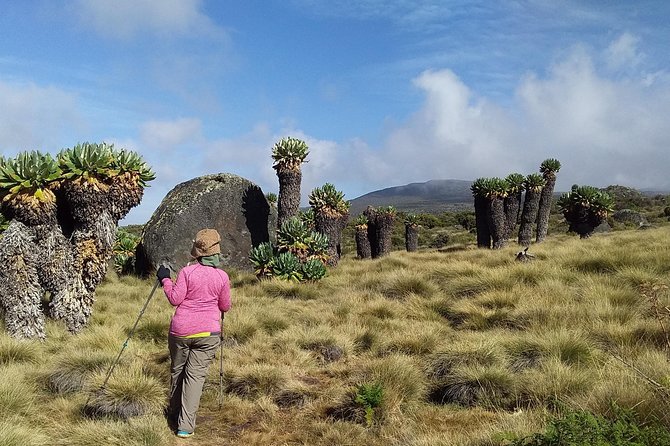
You finish with a descent hike from about 3,720 m down to around 1,870 m and then toward Moshi. The hiking distance is about 20 km and takes about 6 to 7 hours.
You descend through moorlands and rainforest, passing Mandara Hut on the way down to Marangu Gate. At the gate, you receive your summit certificates, then you’re driven back to Moshi for a celebratory evening.
This last day is not a victory lap in the “easy stroll” sense. It’s a long downhill. Your knees will remember it.
But it’s also the best time to process the trip. One minute you’re in altitude withdrawal mode, the next you’re back in the lower zones where breathing feels normal again. Hot water wash and the included meal rhythm earlier in the trek make the end feel earned, not rushed.
Price and value at $2,213 per person, what’s actually included
At $2,213 per person, this trek sits in the mid to higher range you’ll see for well-managed hut-based Kilimanjaro trips. The value comes from the fact that the essentials are bundled, not because it’s cheap.
Here’s what’s included:
- Return transfers between Kilimanjaro airport and Moshi
- Emergency oxygen for emergencies only, plus a basic first aid kit
- Qualified mountain guide, assistant guides, porters, and cooks, with their wages covered
- Fresh drinking water, plus hot water for a wash daily
- All fees and taxes
- Meals: breakfast included on five days, lunch on six days, and dinner on six days
What’s not included is equally important:
- Visas and flights
- Health and travel insurance
- Personal trekking gear (you can rent some in Tanzania)
- Portable toilet (optional but highly recommended)
- Personal medicine and water purifying tablets
- Meals and drinks not specified beyond the included meal plan
One more health note: yellow fever vaccination is compulsory. If you don’t have that sorted before you go, you’ll have problems.
So is it worth it? I think it can be, if you want hut comfort and a full support team without negotiating costs along the way. If you already have your gear, you’re fit for summit day, and you appreciate guided logistics, $2,213 can make sense. If you’re trying to trim every cost and you prefer a more self-directed approach, you may find cheaper trekking options elsewhere, but you’ll likely trade away some of this bundled support.
Pace, altitude reality, and who this Marangu 6-day plan suits best
This is a six-day trek with a summit attempt on Day 5. The summit day is the time bottleneck: midnight start, long hike hours, steep volcanic rock, and a high point near 5,895 m.
The good news is that the route design includes acclimatization:
- Day 3 includes a guided hike to Mawenzi ridge at about 4,600 m
- Sleeping and hiking altitudes step upward in a way that gives your body at least some structured recovery
That said, you still need to take altitude seriously. High altitude can hit anyone, even with good preparation. Your best strategy is to treat the early days as training for patience, not as a race.
Who it suits best:
- First-time Kilimanjaro hikers who want huts instead of camping
- Travelers who want clear staging, guides, porters, and cooks handling the hard parts
- People who can commit mentally to a long summit day and a longer descent
Who should think twice:
- Anyone with a serious fear of long hikes or long hours at altitude
- People who want a relaxed schedule with minimal discomfort
- Anyone who expects the emergency oxygen to be used like normal gear, because it’s only for emergencies
Should you book the Kilimanjaro Summit Challenge via Marangu?
I’d book this if you want the classic, hut-based Marangu experience with strong logistics. The included support team, emergency oxygen, hot water wash daily, and the Mawenzi acclimatization hike are the kind of details that make a difference when you’re tired and altitude is talking back.
I would not book it if you’re looking for an easy hike or a short, low-stress adventure. Summit day is a long push, and you need to plan your effort accordingly.
If you’re ready for Kilimanjaro the way most people experience it, with structure, support, and real mountain time, this can be a solid match.
FAQ
Where does this Kilimanjaro trek start and end?
It starts at Moshi Urban, Tanzania, and ends back at the same meeting point.
What route is used for the summit attempt?
The itinerary follows the 6-day Marangu Route, also known as the Coca-Cola route.
What are the main hut stops during the trek?
You stay at Mandara Huts (Day 1), Horombo Hut (Days 2 and 3, with the Day 4 transition to Kibo), and Kibo Huts (Day 4 and part of Day 5).
Are airport transfers included?
Yes. Return transfers between Kilimanjaro airport and Moshi are included, plus the drive back to Moshi after the trek.
Is emergency oxygen provided?
Yes. Emergency oxygen is included for use in emergencies only, not as summit aid, along with a basic first aid kit.
What meals are included in the price?
Breakfast is included on five days, and lunch and dinner are included on six days. Meals and drinks not specified are not included.
Do I need to bring trekking gear, or can I rent it?
Personal hiking or trekking gear is not included, but you can rent some gear from trekking equipment stores in Tanzania.
What is the cancellation refund rule?
You can cancel up to 3 days in advance of the experience for a full refund. If you cancel less than 3 days before the start time, the amount paid is not refunded.
The Marangu Trail
- Kilimanjaro climb, Marangu route (6-day)
★ 5.0 · 72 reviews - Climbing Kilimanjaro – Marangu Route
★ 5.0 · 65 reviews - Best Kilimanjaro Adventures 6 Days Marangu Route Experience
★ 5.0 · 18 reviews - Kilimanjaro Private Climbing in 6 Days Marangu Route
★ 5.0 · 16 reviews - 6 Days Climb Kilimanjaro Through Marangu Route
★ 4.5 · 15 reviews
Kilimanjaro, Route by Route
- Kilimanjaro climb by Lemosho Route (7-day)
★ 5.0 · 651 reviews - Kilimanjaro climb, Machame Route (7-day)
★ 5.0 · 262 reviews - Kilimanjaro Climbing Lemosho Route 8 Days.
★ 5.0 · 186 reviews - Climbing Kilimanjaro – Machame Route
★ 5.0 · 170 reviews - Climbing Kilimanjaro through 7 days Machame Route
★ 5.0 · 151 reviews
Just added from around Moshi
Kilimanjaro Marangu Route, compared.
 ★ 5.0Kilimanjaro climb, Marangu route (6-day)From $2,90272 reviews
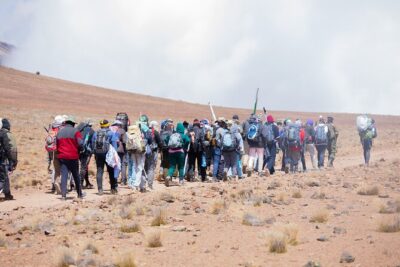 ★ 5.0Climbing Kilimanjaro – Marangu RouteFrom $2,00465 reviews
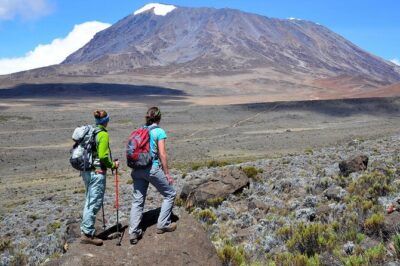 ★ 5.0Private Full Day Hiking Experience to Marangu RouteFrom $26061 reviews
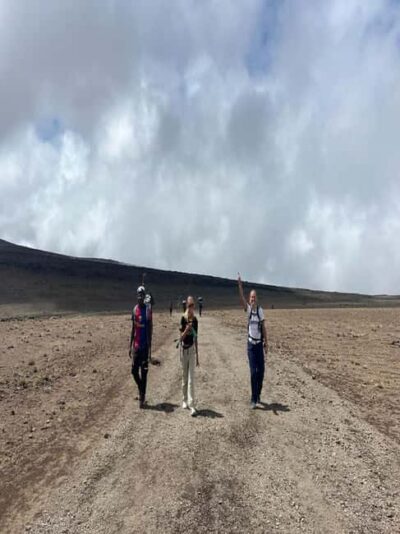 ★ 4.5From Arusha/Moshi: Kilimanjaro Hike Marangu Route Day TripFrom $10154 reviews
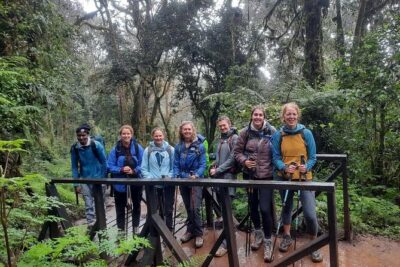 ★ 5.0Mount Kilimanjaro Day Hike Through Marangu Route to Mandara HutFrom $26537 reviews
 ★ 5.0Kilimanjaro Climbing 5 days Marangu routeFrom $90022 reviews
 ★ 5.0Best Kilimanjaro Adventures 6 Days Marangu Route ExperienceFrom $1,00018 reviews
 ★ 5.0Kilimanjaro Private Climbing in 6 Days Marangu RouteFrom $2,00016 reviews
Browse the lists this tour appears in