
REVIEW · KILIMANJARO LEMOSHO ROUTE
Kilimanjaro Lemosho Route 7 Days
Kilimanjaro feels less chaotic with Lemosho. This 7-day private climb appeals to me because you get a quieter approach on the first two days, plus you travel with real mountain support gear, including VHF radios and emergency oxygen. The result is a route that feels focused on pace and staying steady, not just pushing altitude.
One thing to consider up front, even with good acclimatization planning, is that you still hike long days at high altitude. If you do not train for walking uphill and carrying your own essentials, the mountain will make that decision for you.
Along the way, you will likely hear familiar faces and names from past groups, like guides such as Joseph, Eli, Paul, and Ibi, and organizers such as George or Benjamin coordinating the details. You are not just signing up for a hike, you are signing up for a full system: people, food, sleep, safety, and the rhythm of the mountain.
In This Review
- Key Things I’d Mark on Your Kilimanjaro Checklist
- Kilimanjaro Lemosho From Moshi: The Quiet-Route Advantage
- What You Pay, and Why It Adds Up (2,669.88 Per Person)
- Your Team and the Safety Gear You Actually Want at Altitude
- Camps, Sleeping, and Toilet Tents: The Comfort That Lets You Sleep
- Day 1: Londorossi Park Gate to Mti Mkubwa Camp (Gentle Start at 2,700 m)
- Day 2: Shira Camp 1 to Shira Camp 2 (Altitude Steps Without Chaos)
- Day 3: Shira Camp 2 to Barranco Camp (The Route Gets More Interesting)
- Day 4: Barranco to Karanga Valley Camp (Shorter Lift, Useful Breathing Time)
- Day 5: Karanga Valley to Barafu Camp (The Camp Before Summit Pressure)
- Day 6: Uhuru Peak and the Long Descent to Mweka Camp
- Day 7: Mweka Gate Descent Plus Certificate and Summit Party
- Food, Hydration, and the Daily Wash Water That Saves Your Sanity
- Who This Private 7-Day Lemosho Climb Fits Best
- Should You Book Kilimanjaro Brothers’ Lemosho 7-Day Plan?
- FAQ
- What safety equipment is included on this Kilimanjaro climb?
- Are meals and drinking water included?
- Do you provide camping gear and toilet setup?
- How does the summit day work in this 7-day plan?
- Is this a private tour?
- Are porter services included for the summit attempt?
- Is there free cancellation, and what if weather is poor?
Key Things I’d Mark on Your Kilimanjaro Checklist
- Quieter first days on Lemosho, which can make acclimatization feel less like a crowd-control game
- Safety stack on the mountain, including VHF radios, emergency oxygen, pulse-oximeter checks, and a Gamow bag
- Meals that are built for altitude fuel, including fresh, nutritious food and accommodations for vegetarian requests when possible
- Practical camp comfort, with waterproof tents, sleeping mats, solar LED lights, and toilet tents with a flash toilet
- A long, serious summit day plan, with Uhuru Peak followed by a controlled descent toward Mweka Camp
- Hotel time at both ends plus transfers, so you can arrive, recover, and celebrate without chasing logistics
Other ways up Kilimanjaro we reviewed
- Kilimanjaro climb by Lemosho Route (7-day)★ 5.0 · 651 reviews
- Kilimanjaro climb, Machame Route (7-day)★ 5.0 · 262 reviews
- Kilimanjaro Climbing Lemosho Route 8 Days.★ 5.0 · 186 reviews
- Climbing Kilimanjaro – Machame Route★ 5.0 · 170 reviews
Kilimanjaro Lemosho From Moshi: The Quiet-Route Advantage
Lemosho is one of those routes that attracts hikers who value breathing room. The big win here is that the first couple days stay relatively calmer, letting your body start adjusting without the same constant pressure you can feel on busier approaches.
You start in Moshi, which is a practical base for Kilimanjaro climbs. The tour includes arrival and departure transfers and all destination transportation, so you are not trying to figure out drivers or schedules while you are already carrying adrenaline and gear.
This is also a private tour, meaning only your group participates. That matters because the pace, the questions, and the small adjustments tend to feel more tailored when the team is not splitting attention across strangers.
What You Pay, and Why It Adds Up (2,669.88 Per Person)
At $2,669.88 per person, this is not a budget whim. It is closer to a full-service climb where you are paying for the mountain logistics and the safety and comfort layer.
Here is what makes the price more understandable: government and park entrance fees are included, all meals on the mountain are included, and the package brings a full camp setup. You are also getting emergency-focused items like emergency oxygen tanks, VHF radios, a pulse-oximeter, and a Gamow bag (hyperbaric chamber). Those are not small-line items.
You also get hotel accommodations on both ends, plus pickup, transfers, and transportation in the destination area. In other words, the cost covers the full arc, not just the hours you are hiking.
The one budget reality: tips and personal expenses are not included. You will want to plan for that so you are not doing math at the gate while your head is already in summit mode.
Your Team and the Safety Gear You Actually Want at Altitude
The most praised part of this kind of climb is not the view, even though the views are why you are here. The most important part is the support system, especially when the air is thin and your body is deciding to be dramatic.
This tour emphasizes safety with a toolset that you can feel good about, including:
- VHF handheld radios, carried on each trek for communication
- Emergency oxygen tanks
- Gamow bag, designed as an emergency hyperbaric option
- Pulse-oximeter to measure oxygen levels
- Rescue fees on mountain
That is a lot of hardware. More importantly, it is matched with an experienced, English-speaking mountain guide team and a porter team that is treated with fair and ethical care, based on the tour’s inclusion. In the reviews, people repeatedly mention professionalism and teamwork, and they note that porters appeared well supported.
There is also a practical detail that helps during the hardest part of the climb: you get a porter to carry your day-pack during the summit attempt. That means you are not doubling effort with extra weight right when your legs and lungs are already working overtime.
Lemosho itineraries worth reading next
Camps, Sleeping, and Toilet Tents: The Comfort That Lets You Sleep
Sleeping well on Kilimanjaro is not about luxury bedding. It is about having enough shelter, enough warmth at night, and enough sanity to wake up functional.
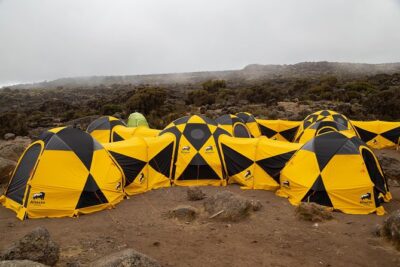
You will camp in waterproof tents with sleeping mats, plus solar LED lights. Those sound like small comforts until you have to find your boots in the dark at 4 a.m. Trust me, the light matters.
Toilets are also built into the plan. The tour includes a toilet tent setup and a portable personal flash toilet. That is a big deal for morale because it means you are not improvising hygiene in conditions where you do not want to improvise anything.
Daily warm washing water is included, along with clean, purified drinking water. That combination helps you feel human. It also reduces the “everything is sticky” feeling that builds up fast when you hike for hours and sweat in cool air.
Day 1: Londorossi Park Gate to Mti Mkubwa Camp (Gentle Start at 2,700 m)
Day 1 is a classic warm-up move. You drive to Londorossi Park Gate at 2,385 m, then hike for about 3 to 4 hours over roughly 8 km to reach Mti Mkubwa Camp at 2,700 m.
This is your chance to settle into the rhythm. You are gaining altitude, but the hike is short enough that you can focus on steady movement and breathing, not heroic speed.
Practical expectations: you will start to notice how your breathing changes even when the route feels manageable. Use the day to get your layers dialed in and keep water intake consistent. If you are the kind of person who forgets to drink until you are thirsty, this is where you change that habit.
Day 2: Shira Camp 1 to Shira Camp 2 (Altitude Steps Without Chaos)
Day 2 pushes a bit more. You hike from Mti Mkubwa up toward Shira Camp 1 at 3,500 m, then continue to Shira Camp 2 at 3,840 m.
The day includes a longer first hiking segment, then another climb to the second Shira camp. You are looking at multiple blocks of hiking totaling around 5 to 6 hours plus additional time, depending on the pace your guides set. Distances listed are about 6 km to Shira Camp 1 and then another segment around 8 km to Shira Camp 2.
The point of this kind of staging is acclimatization. Even with that, you should treat the day as a “slow and careful” day. Go easy on big bursts. Let your body catch up.
If you are prone to headaches or nausea when stressed, tell your guide early. The tour includes oxygen and oxygen-adjacent tools like the pulse-oximeter and VHF radios, which makes it easier for the team to respond if anyone needs attention.
Day 3: Shira Camp 2 to Barranco Camp (The Route Gets More Interesting)
On Day 3, you climb from Shira Camp 2 (3,840 m) to Barranco Camp (3,950 m). Expect about 6 to 7 hours of hiking over roughly 8 km.
This is where Lemosho starts feeling more alive. The route is not just a straight up grind. It tends to keep you working and thinking about footing, which can help with that mental loop of monotony.
A balanced tip for this day: stay focused on your footsteps and your breathing, not on how high you are getting. The height is real, but the mountain pays you back when you stay calm and consistent.
Day 4: Barranco to Karanga Valley Camp (Shorter Lift, Useful Breathing Time)
Day 4 hikes from Barranco Camp (3,950 m) to Karanga Valley Camp (3,995 m). This is a shorter push, about 4 to 5 hours and around 5 km.
Why it matters: after a longer Day 3, this “shorter but still high” day gives your body a little room to reset. It also helps the team keep the group moving at a safer pace rather than forcing everyone to muscle through.
You will still feel altitude, but the climb is more manageable. Use it to check gear, tighten boot laces if needed, and keep your water steady.
Day 5: Karanga Valley to Barafu Camp (The Camp Before Summit Pressure)
Day 5 takes you to Barafu Camp at 4,550 m, climbing about 4 to 5 hours over roughly 4 km.
The shorter distance does not mean it is easy. Altitude makes every step cost more. This is also a transition day emotionally, because you are now close to the summit attempt window.
Treat the camp time seriously. Eat well. The tour includes fresh, nutritious meals daily while on the mountain, and the overall approach emphasizes food as fuel. On the mountain, nutrition is not a side quest. It is survival math.
Day 6: Uhuru Peak and the Long Descent to Mweka Camp
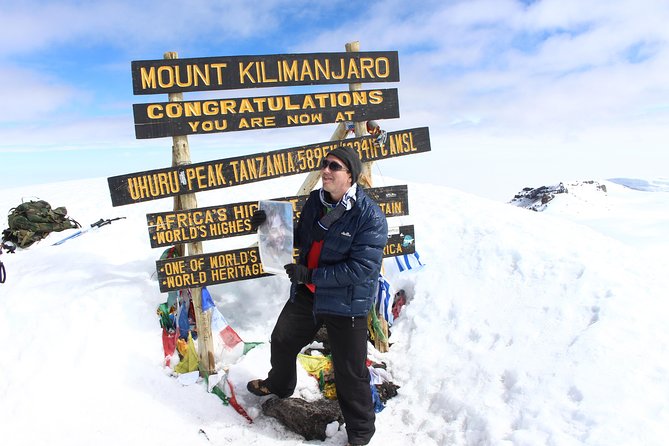
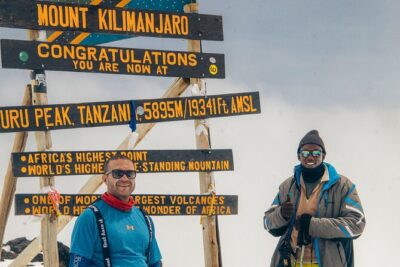
This is the day everyone remembers. You go for the summit at Uhuru Peak (5,895 m) after hiking for about 7 to 8 hours over roughly 5 km. Then you descend through Barafu for a short rest and continue down to Mweka Camp (3,060 m) for about 4 to 5 hours over around 12 km.
That is a huge day. It is not just a summit hike. It is summit, reset, then another hike. If your legs only have energy for one part, the second part will punish you.
This is where the support kit matters. With VHF radios for communication, emergency oxygen ready, and a pulse-oximeter used to monitor oxygen levels, the team can respond quickly if someone needs help. The Gamow bag is also included as part of the emergency readiness.
Your porter support during the summit attempt helps here. By carrying your day-pack, you reduce one major source of fatigue right when you most need oxygen and leg strength.
Food also matters. People highlighted in reviews that the meals feel high quality and substantial, and even vegetarian options were accommodated when requested. If you have dietary needs, communicate them early so the team can plan meals that keep your energy stable.
Day 7: Mweka Gate Descent Plus Certificate and Summit Party
Day 7 is the payoff and the release. You hike down to Mweka Gate at 4,600 m for about 4 to 5 hours over roughly 4 km, then you transfer back to your previous hotel.
The tour also includes a certificate and a summit party ceremony after the descent. That is a nice final touch because it turns the climb into a complete experience, not just a series of bus stops and camps.
Physically, you might feel every step in your knees. Mentally, you will probably feel lighter once you hit the gate. The mountain can be tough, but the end point is clear and celebrated.
Food, Hydration, and the Daily Wash Water That Saves Your Sanity
The camp experience is not only about tents. It is about the daily routine that keeps you functional.
You get purified drinking water, plus warm washing water every day. That small comfort makes a difference when you have been hiking for hours and sleeping in cold air. It helps you reset without having to find your own solution at altitude.
Meals are included every day while on the mountain, and the emphasis is on fresh, healthy, nutritious foods with large portions. In reviews, people specifically praised the food quality, including the idea that the meals are designed like fuel for altitude effort.
If you do not eat meat, or you have dietary preferences, you might be able to request alternatives like vegetarian meals, and the company also mentions they can offer special dietary options like vegan, Halal, and Kosher, plus support for allergies. I still recommend sharing needs early in writing so expectations match your preferences.
Who This Private 7-Day Lemosho Climb Fits Best
This climb is built for people with moderate physical fitness who can handle long hiking days at high altitude. The hiking blocks are not short strolls, especially around Barranco and the summit day.
It is a strong choice if:
- You want a route that is quieter early on
- You value safety tools like oxygen, radios, and emergency readiness
- You care about camp comfort, including proper tents and toilet setup
- You want all meals handled, so you can focus on pacing and rest
It might not be your best fit if you are looking for a very gentle trek with minimal walking. Even on the shorter days, you are still in a high-altitude environment where effort feels heavier than you expect.
Should You Book Kilimanjaro Brothers’ Lemosho 7-Day Plan?
I would book this style of climb if you want a focused, well-supported Kilimanjaro experience where safety and food are treated like first-order priorities.
The biggest strengths are the on-mountain safety gear and the camp routine, especially the included warm washing water and the practical toilet setup. The quieter start on Lemosho is also a real benefit if you do not love crowds and want your acclimatization to feel more controlled.
The main reason to hesitate is simply altitude reality. This is still a high-stakes climb. If you are not prepared for long days and the mental patience that comes with slow pacing, you might feel stressed even with a great guide and support team.
If you are training, flexible, and ready to follow the team’s plan, this trip looks like a solid value for what you receive: guides, safety readiness, meals, camping gear, hotel time, and transport.
FAQ
What safety equipment is included on this Kilimanjaro climb?
The tour includes emergency oxygen tanks, VHF handheld radios carried on each trek, a Gamow bag (hyperbaric chamber), a pulse-oximeter to measure oxygen level, and rescue fees on the mountain.
Are meals and drinking water included?
Yes. You get all meals while on the mountain, and the tour includes clean, purified drinking water daily. Warm washing water is also provided every day.
Do you provide camping gear and toilet setup?
Yes. The package includes waterproof tents, sleeping mats, solar LED lights, and toilet tents. It also includes a portable personal flash toilet.
How does the summit day work in this 7-day plan?
You hike to Uhuru Peak on Day 6, then descend through Barafu for a short rest and continue down to Mweka Camp the same day.
Is this a private tour?
Yes. It is described as a private tour or activity, and only your group participates.
Are porter services included for the summit attempt?
Yes. A porter is included to carry your day-pack during the summit attempt.
Is there free cancellation, and what if weather is poor?
Free cancellation is available if you cancel at least 24 hours in advance for a full refund. The experience requires good weather, and if it is canceled due to poor weather, you are offered a different date or a full refund.
Lemosho, Compared
- Kilimanjaro climb by Lemosho Route (7-day)
★ 5.0 · 651 reviews - Kilimanjaro Climbing Lemosho Route 8 Days.
★ 5.0 · 186 reviews - Kilimanjaro climb, Lemosho Route (8-day)
★ 5.0 · 148 reviews - Kilimanjaro climb, Lemosho Route (6-day)
★ 5.0 · 129 reviews - Kilimanjaro Lemosho Route
★ 5.0 · 71 reviews
Kilimanjaro, Route by Route
- Kilimanjaro climb by Lemosho Route (7-day)
★ 5.0 · 651 reviews - Kilimanjaro climb, Machame Route (7-day)
★ 5.0 · 262 reviews - Kilimanjaro Climbing Lemosho Route 8 Days.
★ 5.0 · 186 reviews - Climbing Kilimanjaro – Machame Route
★ 5.0 · 170 reviews - Climbing Kilimanjaro through 7 days Machame Route
★ 5.0 · 151 reviews
Just added from around Moshi
Kilimanjaro Lemosho Route, compared.
 ★ 5.0Kilimanjaro climb by Lemosho Route (7-day)From $3,476651 reviews
 ★ 5.08-Day Small-group Lemosho Kilimanjaro Summit TrekkingFrom $2,895186 reviews
 ★ 5.0Kilimanjaro Climbing Lemosho Route 8 Days.From $2,300186 reviews
 ★ 5.0Kilimanjaro climb, Lemosho Route (8-day)From $3,975148 reviews
 ★ 5.0Kilimanjaro climb, Lemosho Route (6-day)From $3,034129 reviews
 ★ 5.0Kilimanjaro Lemosho RouteFrom $2,89071 reviews
 ★ 5.0Private Kilimanjaro Hike 7 Day Lemosho RouteFrom $2,45060 reviews
 ★ 5.0Climbing Kilimanjaro through 8 days Lemosho RouteFrom $2,76052 reviews
Browse the lists this tour appears in