
REVIEW · KILIMANJARO LEMOSHO ROUTE
Kilimanjaro Lemosho Route 7 Days
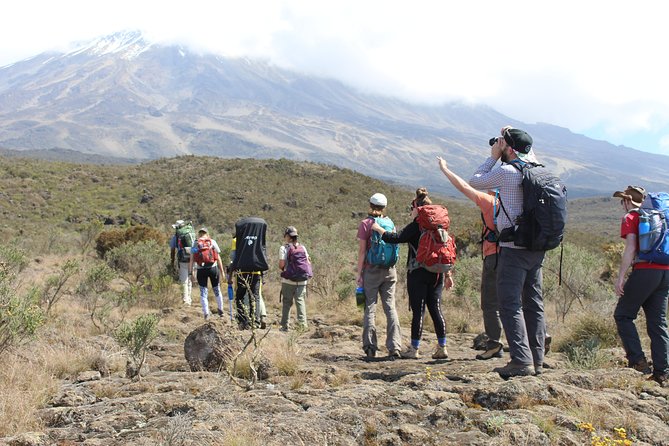
Kilimanjaro starts with pine trees and ends at 5,895m. What makes the Kilimanjaro Lemosho 7 days plan interesting is the pacing, the variety of ecosystems, and how often you get big viewpoints without rushing. I like the slow acclimatization rhythm built into the route, and I also like the way Jaribu Africa Adventures supports you on the logistics and safety side.
One thing to consider: this is still a serious hike. You have long days, a very tough final summit push, and conditions like cold or slippery trail sections can make it feel harder than you expect.
In This Review
- Key things that make this trek tick
- Why the Lemosho Route helps your body adjust
- Moshi to the trailhead: what the first day really feels like
- A practical note for Day 1
- Day 1: Londrossi Gate to Lemosho Glades (7km, pine air, and setup)
- Day 2: Montane forest to Shira Plateau (7 hours and pole pole)
- Possible drawback to plan for
- Day 3: Shark’s Tooth and the high desert shift
- How to make this day easier
- Day 4: Lava Tower lunch, optional rock scramble, and Barranco descent
- The trade-off
- Day 5: Great Barranco Wall, Heim Glacier views, and Karanga Valley cold
- What to wear and why
- Day 6: The midnight start, Stella Point, and the final ascent to Uhuru
- How this operator’s support helps on summit day
- Day 7: Mweka rain forest descent, certificates, and back to Arusha
- What you get for your $2,500 price: where the value is
- What is not included that can affect your final budget
- The kind of traveler this trek fits best
- Who runs this, and what that likely means for you
- Should you book the Kilimanjaro Lemosho 7 Days?
- FAQ
- Do you provide pickup from Moshi?
- What accommodation is included before the climb?
- What kind of sleeping and bathroom setup is provided on the trek?
- How does the tour handle altitude safety?
- Are park entrance and rescue fees included?
- What is included, and what should I plan to pay for?
- What happens if the weather is poor?
Key things that make this trek tick
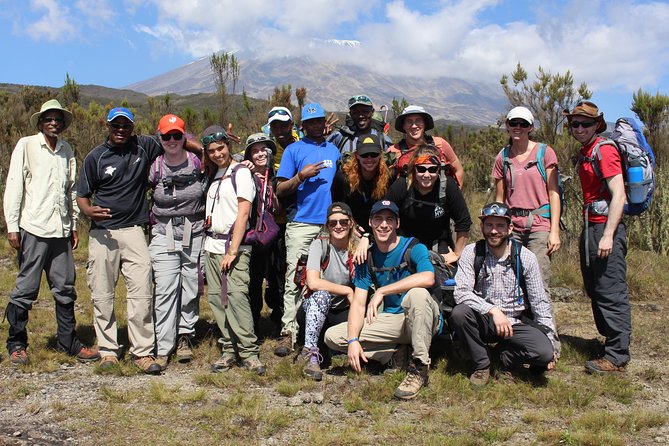
- Trek high, sleep low rhythm to lower your altitude risk while still getting you to higher ground
- Big view moments at places like Lava Tower and the Great Barranco area
- Safety gear and monitoring including oxygen, a Gamow bag, and pulse oximeter checks
- Porter weight control with duffle bags weighed so loads stay within the 20kg limit
- Good on-trek comfort for a camping trek like a wash tent, hot towels, and a private flush toilet setup
Other ways up Kilimanjaro we reviewed
- Kilimanjaro climb by Lemosho Route (7-day)★ 5.0 · 651 reviews
- Kilimanjaro climb, Machame Route (7-day)★ 5.0 · 262 reviews
- Kilimanjaro Climbing Lemosho Route 8 Days.★ 5.0 · 186 reviews
- Climbing Kilimanjaro – Machame Route★ 5.0 · 170 reviews
Why the Lemosho Route helps your body adjust
Kilimanjaro is one mountain, but you climb through several worlds. That matters because the route goes high, then lets you sleep a bit lower, which is one of the best ways to help your body handle altitude. You will feel this in the day-to-day pattern, not just in theory.
This 7-day plan also keeps the pace realistic. You do long hours on hiking days, but the strategy is to move steadily, not sprint. That is especially true in the forest-to-plateau transition and again as you work your way into the high desert.
The other reason this route is smart is the timing of views. You get scenery breaks that help you focus and keep morale up, like the panoramic stop at Lava Tower. Those are not just nice photos, they are also moments to breathe, eat, and reset your legs before the next section.
Moshi to the trailhead: what the first day really feels like
You start in Moshi, and pickup is offered. The big goal on Day 1 is to get you through park formalities and onto the trail with everyone ready to go.
You travel by 4WD to Londrossi Gate, where you meet your guides and mountain crew. This is also where they register the climbers and weigh duffle bags to keep each porter’s load within the mandatory 20kg limit. That part might sound administrative, but it is worth paying attention to. It is one of the clearer signs that the operation is trying to run safely and ethically.
After registration, you drive about 11km along narrow dirt roads through pine plantations, gradually climbing to Lemosho Glades. Then you begin hiking. Expect 4 to 5 hours and around 7km, starting around 1,981m and ending around 2,780m.
A practical note for Day 1
If you are the kind of person who wants to get moving immediately, you still need to treat Day 1 as a warm-up. You will get enough hiking soon. Use the first day for steady steps, calm breathing, and good hydration, even if you feel great.
Lemosho itineraries worth reading next
Day 1: Londrossi Gate to Lemosho Glades (7km, pine air, and setup)
Day 1 is short compared to later days, but it has a lot of value. You get your first altitude lift, you meet the team, and you settle into the routine of camp life.
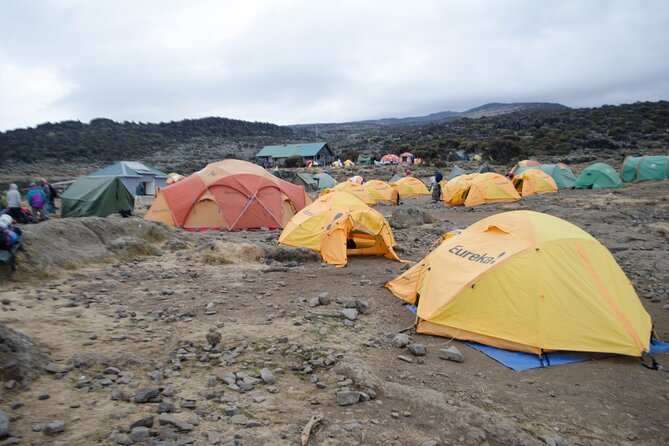
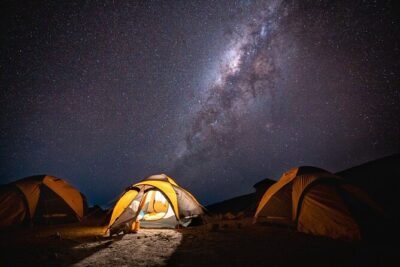
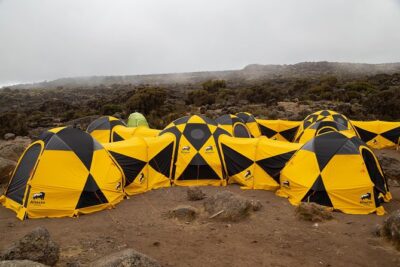
You also see how the trip is organized. The tent setup is already built into the included package: you use 3-person expedition tents with 2 clients per tent, plus a shower and wash tent. There is also a portable tented private flush toilet, which is a bigger deal than people think on multi-day treks in cold and wind.
At this stage, your work is simple: follow the guide’s pace, eat properly, and let the altitude climb feel gradual.
What I like here: the logistics start before you even start hiking. That reduces mental load, which helps you save energy for the mountain.
Day 2: Montane forest to Shira Plateau (7 hours and pole pole)
Day 2 is a long one: about 7 hours and roughly 12km. You climb from around 2,780m to about 3,511m, moving through Montane Forest into Moorland. This is where Kilimanjaro starts showing its personality.
You walk past trees such as giant heather and erica, then you enter a zone where you can spot giant lobelia and giant groundsel. If you enjoy noticing life at high altitude, this day gives you plenty to look at besides your own breathing.
The important part is the pace. The trip’s mantra is pole pole, slowly slowly in Swahili. That is not just culture, it is altitude strategy. You do not need to force speed. You need your body to keep adjusting as the air thins.
Day 2 ends with camp near the Shira Plateau area. You will likely feel the air get drier, cooler, and sharper.
Possible drawback to plan for
Day 2 can feel longer than it looks on paper because it is on narrow tracks and the trail can wind in and out of ridges. If you show up already tired, you will feel it more here than later, when you are warmed up by weeks of trekking on your legs. No worries, just be honest with your energy and stick to the slow pace.
Day 3: Shark’s Tooth and the high desert shift
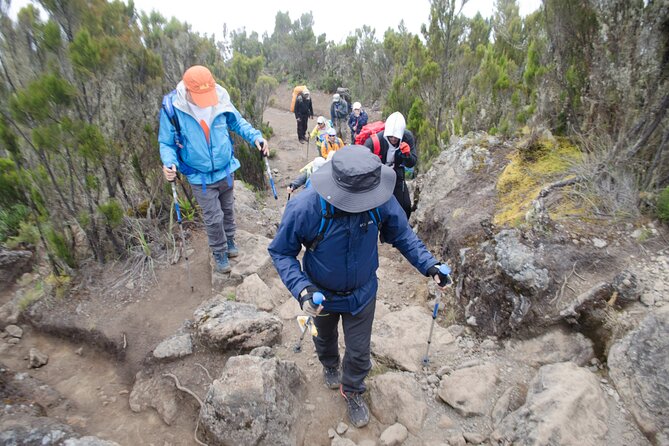
On Day 3 you go from the 3,500m range into the 4,175m range, hiking about 5 to 6 hours and roughly 9km. The environment changes dramatically into Alpine Desert.
You trek northwards through heather, then the trail opens into barren high altitude desert toward the landmark called Shark’s Tooth. This is a key acclimatization style day. You gain altitude steadily and keep walking in a way that helps you adjust without spiking your exertion too hard.
The high desert plants look tough because they are. You will see hardy everlastings and small senecios. And you may notice big volcanic features like the Lent Group, massive volcanic dykes that sit above you.
How to make this day easier
On a desert section, people often focus on the rocks underfoot and forget to drink. Do not. Dry air makes thirst sneak up on you. Keep taking small sips and eat regularly, even if you do not feel ravenous.
Day 4: Lava Tower lunch, optional rock scramble, and Barranco descent
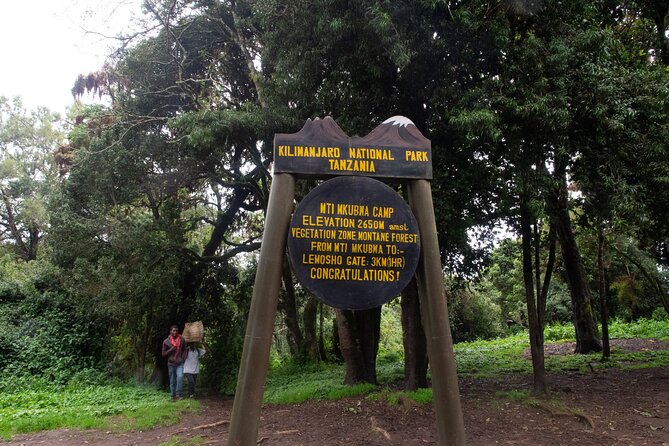
Day 4 is a great example of why this route is popular. You climb to a high viewpoint area and then you head toward the next valley.
You descend along a rocky scree path to Lava Tower around 4,530m for lunch. If you feel up to it, there is an optional non-technical rock scramble to the top of Lava Tower for wide panoramic vistas. The scenery payoff is real here, with views that can stretch across Shira Plateau and the Western Breach area.
After Lava Tower, the day turns into a descent. You drop steeply for about 2 hours into the Great Barranco Valley, with photo-friendly angles along the way.
The trade-off
Scree paths and steep descents can be hard on knees and ankles. Even if you are feeling strong, keep your steps controlled. Use trekking poles if you have them. If you do not, you might still manage, but poles make Day 4 and Day 5 much more comfortable for most people.
Day 5: Great Barranco Wall, Heim Glacier views, and Karanga Valley cold
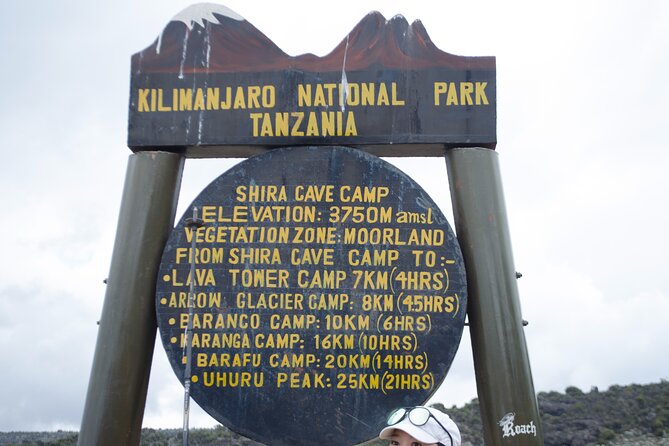
Day 5 is where you tackle the Great Barranco Wall. This is described as an imposing face above Barranco camp, and it lives up to that reputation.
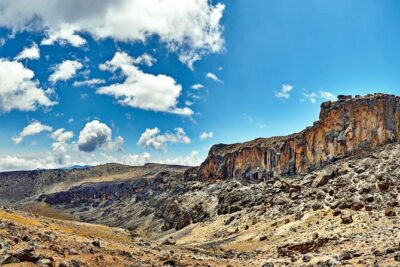
You climb steadily up the eastern wall to just below the Heim Glacier, where you may get views of the Heim Glacier and Mount Kilimanjaro depending on cloud cover and weather. Then you continue down into the alpine desert of the Karanga Valley.
The distance is around 9km, with about 6 to 7 hours. You finish around the 4,600m level in the itinerary data, but the day’s bigger story is the temperature shift. As you move into Karanga Valley, it grows colder.
What to wear and why
Cold can sneak up faster than heat loss on the mountain. Plan for this day with warm layers even if the morning feels mild. The trail can expose you to wind, and you will get less chance to warm up once you are descending or scrambling.
Day 6: The midnight start, Stella Point, and the final ascent to Uhuru
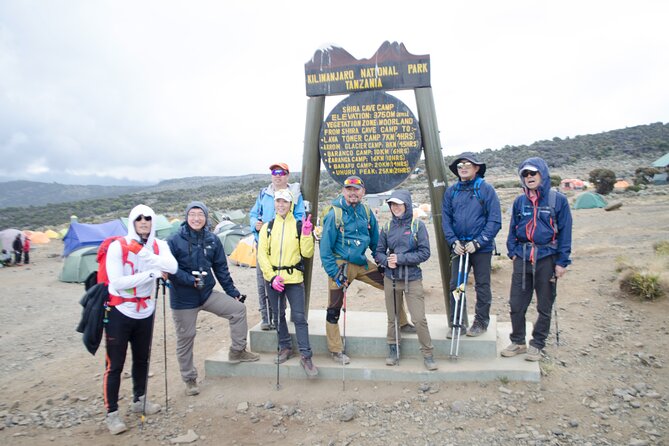
Day 6 is the main event. You rise early and leave camp around 12am after a warm drink and light snack. Then the hike becomes slow, strenuous, and mental.
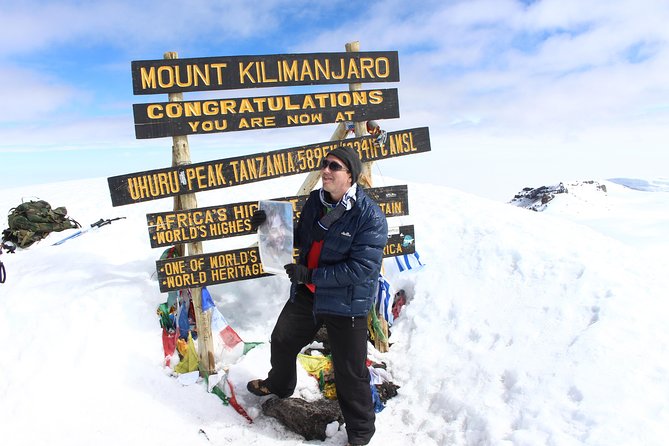
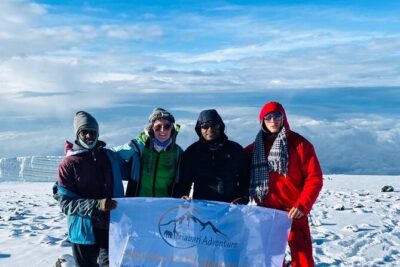
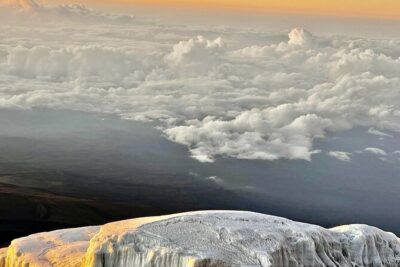
After about 6 hours of slow but hard hiking, you reach the rim of the main crater at Stella Point, around 5,685m. You stop to rest, eat lunch, and take in views over the clouds if conditions allow.
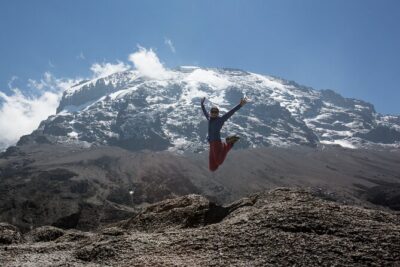
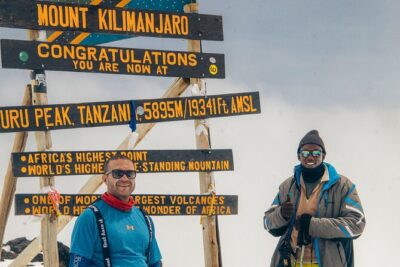
From Stella Point, the trail is normally snow-covered, and the final ascent to Uhuru Peak is challenging. You move along the iridescent blue Rebmann and Tarzel glaciers and reach Elveda Point around 5,882m, where Uhuru Peak is minutes away.
This is a long day, listed at about 12 hours. The altitude is high, and even fit hikers feel it.
How this operator’s support helps on summit day
You are not left to guess or hope. The package includes emergency oxygen, a Gamow bag (portable hyperbaric chamber), and vital sign monitoring with a pulse oximeter. That does not replace your own pace, but it adds real backup if someone shows signs of severe altitude issues.
Also, your team setup includes radios and a mobile phone for communication. That matters when you are far up on the mountain.
Day 7: Mweka rain forest descent, certificates, and back to Arusha
After the summit day, your job on Day 7 is to get down safely. You descend steeply through lush Mweka rain forest. The itinerary notes that the trail can be slippery if it is wet, so watch your footing.
You follow the crest of a broad ridge separating two river valleys until it meets with a road. The last stretch is about 40 minutes to the Mweka Park Gates.
You stop for a picnic lunch, then you receive summit certificates from the Kilimanjaro National Park Authority. Gold is for Uhuru Peak, and green is for Stella Point. That is a nice touch because it gives you a clear, official way to mark your achievement.
After celebrations, you transfer either by private bus or Jeep to your hotel in Arusha.
What you get for your $2,500 price: where the value is
$2,500 per person is not cheap, and Kilimanjaro is not a bargain destination. The reason this can still feel like good value is that the package includes a lot that usually costs extra or gets cut on cheaper treks.
Here are the items that usually change the whole experience:
- Park fees and rescue fees included (plus VAT on park entrance fees)
- Mountain safety support included, including emergency oxygen, a Gamow bag, and vital sign monitoring with a pulse oximeter
- Staffing is fully covered, including salaries for guides, cooks, and porters, plus support like a wilderness first responder trained guide
- Tents and camp setup are handled, including expedition tents, sleeping comfort items, and a shower/wash tent
- Comfort upgrades for a camping trek, such as hot washing water morning and evening, hot steamy towel, and wine and champagne at the summit
You also get 2 nights of accommodation on a bed-and-breakfast basis at either Ameg Lodge or Salinero Hotels, which helps you avoid the scramble of finding places to stay before and after.
What is not included that can affect your final budget
You still need to budget for things that are not covered: visas, international airfare, personal trekking equipment, and staff gratuities. Personal expenses and laundry are also not included. If you arrive underprepared with gear, that can quietly add cost.
The kind of traveler this trek fits best
This 7-day Lemosho trek is ideal if you want a classic Kilimanjaro route with strong acclimatization logic and real scenery rewards. You should also be the type who enjoys a steady pace, long days, and a serious physical effort.
It is a fit for a moderate physical fitness level, but that phrase only works if you take it seriously. Day 6 is long and high. Day 2 and Day 5 can feel heavy. Day 7 can be slippery and steep if the weather turns.
If you want comfort like you get on luxury safaris, you will be disappointed. This is camping on the mountain. The good news is that your comfort camp items and toilets are thoughtfully included.
Who runs this, and what that likely means for you
Jaribu Africa Adventures is the named provider, and the organization has a reputation for smooth end-to-end handling, especially around pickup, hotels, and keeping the trek well planned. In the feedback I saw, there were specific kudos for guides and leadership figures such as Jacob and Joseph, with praise for going above and beyond.
For you, the main benefit is simple: fewer surprises. When logistics work, you can focus on the mountain. When the team is organized, your day-to-day rhythm feels calmer.
Should you book the Kilimanjaro Lemosho 7 Days?
I would book this trek if you want a route that balances altitude management with high-quality mountain days and clear support. The package is stacked with safety gear and monitoring tools, and the included camp comforts make the camping format less punishing.
Skip it or rethink it if you are chasing an easy hike. This plan is demanding, especially the summit day and the steep sections like Great Barranco and the Mweka descent. Also, you will need to bring personal trekking equipment and handle visas and international airfare on your own.
If you do have the fitness and mindset for a real climb, this is a strong value bet at this price point because so much of the trip is genuinely included.
FAQ
Do you provide pickup from Moshi?
Pickup is offered, and airport transfers are included. There are also return transfers connected to your time around the park gates and Arusha.
What accommodation is included before the climb?
The package includes 2 nights of accommodation on a bed-and-breakfast basis at either Ameg Lodge or Salinero Hotels.
What kind of sleeping and bathroom setup is provided on the trek?
You use 3-person expedition tents with 2 clients per tent. There is also a shower/wash tent and a portable tented private flush toilet.
How does the tour handle altitude safety?
The trek uses an acclimatization approach and slow pacing. The included safety setup covers emergency oxygen, a Gamow bag (portable hyperbaric chamber), and vital sign monitoring with a pulse oximeter, with AMREF Flying doctors listed for medical evacuations.
Are park entrance and rescue fees included?
Yes. Kilimanjaro National Park entrance, camping or hut fees, rescue fees, and VAT on park entrance fees are included.
What is included, and what should I plan to pay for?
Included items cover most on-trek meals, guide and porter support, tents and camping equipment, and medical supplies. Not included are visas, international airfare, personal trekking equipment, staff gratuities, and personal expenses.
What happens if the weather is poor?
The experience requires good weather. If it is canceled due to poor weather, you will be offered a different date or a full refund. You also get free cancellation up to 24 hours in advance for a full refund.
Lemosho, Compared
- Kilimanjaro climb by Lemosho Route (7-day)
★ 5.0 · 651 reviews - Kilimanjaro Climbing Lemosho Route 8 Days.
★ 5.0 · 186 reviews - Kilimanjaro climb, Lemosho Route (8-day)
★ 5.0 · 148 reviews - Kilimanjaro climb, Lemosho Route (6-day)
★ 5.0 · 129 reviews - Kilimanjaro Lemosho Route
★ 5.0 · 71 reviews
Kilimanjaro, Route by Route
- Kilimanjaro climb by Lemosho Route (7-day)
★ 5.0 · 651 reviews - Kilimanjaro climb, Machame Route (7-day)
★ 5.0 · 262 reviews - Kilimanjaro Climbing Lemosho Route 8 Days.
★ 5.0 · 186 reviews - Climbing Kilimanjaro – Machame Route
★ 5.0 · 170 reviews - Climbing Kilimanjaro through 7 days Machame Route
★ 5.0 · 151 reviews
Just added from around Moshi
Kilimanjaro Lemosho Route, compared.
 ★ 5.0Kilimanjaro climb by Lemosho Route (7-day)From $3,476651 reviews
 ★ 5.08-Day Small-group Lemosho Kilimanjaro Summit TrekkingFrom $2,895186 reviews
 ★ 5.0Kilimanjaro Climbing Lemosho Route 8 Days.From $2,300186 reviews
 ★ 5.0Kilimanjaro climb, Lemosho Route (8-day)From $3,975148 reviews
 ★ 5.0Kilimanjaro climb, Lemosho Route (6-day)From $3,034129 reviews
 ★ 5.0Kilimanjaro Lemosho RouteFrom $2,89071 reviews
 ★ 5.0Private Kilimanjaro Hike 7 Day Lemosho RouteFrom $2,45060 reviews
 ★ 5.0Climbing Kilimanjaro through 8 days Lemosho RouteFrom $2,76052 reviews
Browse the lists this tour appears in