
REVIEW · KILIMANJARO LEMOSHO ROUTE
Kilimanjaro Climb & Safari – Lemosho Route – 13 Day
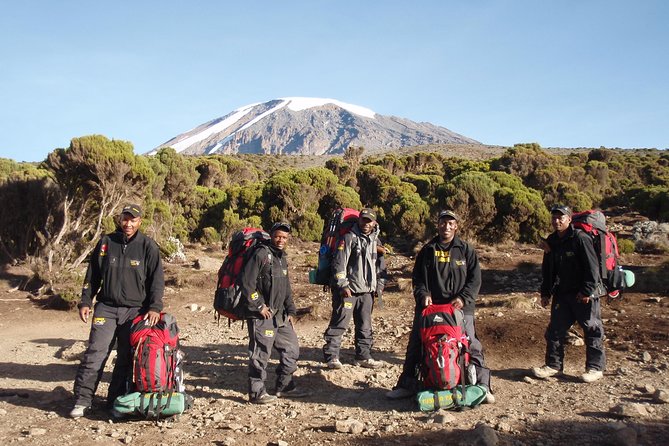
Kilimanjaro gets easier with the right crew. What makes this trip tick is the mix of a classic Lemosho route and Tusker’s long-running mountain support, including high-altitude first responder trained guides, culinary-trained mountain chefs, and custom walk-in tents. I especially like how the plan gives you real acclimatization steps on the way up, and how the food shows up as a priority, not an afterthought. One consideration is the price, and climbing gear and clothing rental are not included, so you will likely spend extra to get set up.
This is also not just a climb and done. You start in Moshi, settle in at Bristol Cottages Hotel, then finish with time in Lake Manyara National Park at a traditional wildlife lodge on the Rift Valley escarpment.
Finally, pace matters on a 13-day mountain trek, because you will still be hiking day after day. If you want a relaxed vacation where you mostly stroll, this is not that.
In This Review
- Key things I’d flag before you go
- Tusker Trail and the Lemosho route, where support matters
- Moshi base at Bristol Cottages Hotel, your buffer zone
- Orientation day in Moshi, plus the market stop
- Day 3 on: Lemosho Glades, rain-forest trekking, and the first wildlife hits
- Day 4: Shira Plateau caldera edge and your first view of Kibo
- Day 5: Shira Plateau to Moir Camp, plus walking beneath a lava flow
- Day 6: Lava Tower lunch break, then down into Barranco Canyon
- Day 7: Barranco Wall climb, then Karanga Valley to Karanga Camp
- Day 8: Barafu High Camp, the “ice” stage and the summit tomorrow feeling
- Day 9: Sunrise summit climb, Uhuru Peak, and a crater camp option
- Day 10 and 11: Scree descent, Millennium Camp, and the National Park Gate finale
- Lake Manyara National Park: the safari reset after altitude
- Price and value: is $8,188 worth it for this package?
- Who this Lemosho climb suits best, and who should reconsider
- Should you book this 13-day Lemosho climb and Lake Manyara safari?
- FAQ
- Where is this tour based?
- What Kilimanjaro route does this climb use?
- How long is the experience?
- Do I get pickup?
- Where do I stay during the climb and before the mountain?
- Are meals included?
- Is climbing gear and clothing rental included?
- What is the safari part of the trip?
- Can I choose what to do on summit day after reaching Uhuru Peak?
- What happens if there is poor weather?
- Is this a private tour?
Key things I’d flag before you go
- Tusker’s “first responder” climbing team setup: the company highlights expert High Altitude First Responder guides as part of the safety approach.
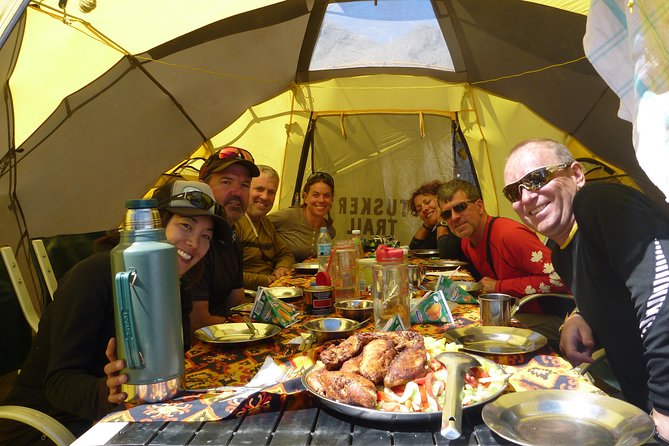
- Culinary-trained mountain chefs and farm-to-table style meals: food is built into the experience, which matters when altitude changes your appetite.
- Lemosho’s slow, smart climb rhythm: from Lemosho Glades into Shira Plateau, then Lava Tower, then Barranco, you build altitude in stages.
- The summit morning is planned like a mission: you climb before sunrise, reach the crater rim by mid-day, and aim for Uhuru Peak.
- A real finish, not just a summit photo: Millennium Camp and the downhill walk to the National Park Gate close the loop.
- Lake Manyara safari right after Kili: you get a lodge stay on the escarpment, with options that can connect you to other major parks.
Other ways up Kilimanjaro we reviewed
- Kilimanjaro climb by Lemosho Route (7-day)★ 5.0 · 651 reviews
- Kilimanjaro climb, Machame Route (7-day)★ 5.0 · 262 reviews
- Kilimanjaro Climbing Lemosho Route 8 Days.★ 5.0 · 186 reviews
- Climbing Kilimanjaro – Machame Route★ 5.0 · 170 reviews
Tusker Trail and the Lemosho route, where support matters
This climb is operated by Tusker Trail Kilimanjaro Adventures, and they position themselves as a long-time specialist. The big idea is that you are buying more than transportation and a permit. You are paying for systems, staffing, and the small details that reduce stress when your body is doing complicated things at altitude.
Tusker also emphasizes a crew-first approach. They state they provide the highest pay for their crew plus pensions and medical benefits for their families. They also partner with the Lions Club to support community development, including a school for deaf children. None of this changes the weather on summit day, but it does tell you how the company thinks about people. On a trip like this, that often shows up in how smoothly camp life runs and how consistently guides communicate.
You are also not doing this as a huge public group. The trip is private, meaning only your group participates. For many climbers, that helps with comfort and with following the exact acclimatization pace your team sets.
Moshi base at Bristol Cottages Hotel, your buffer zone
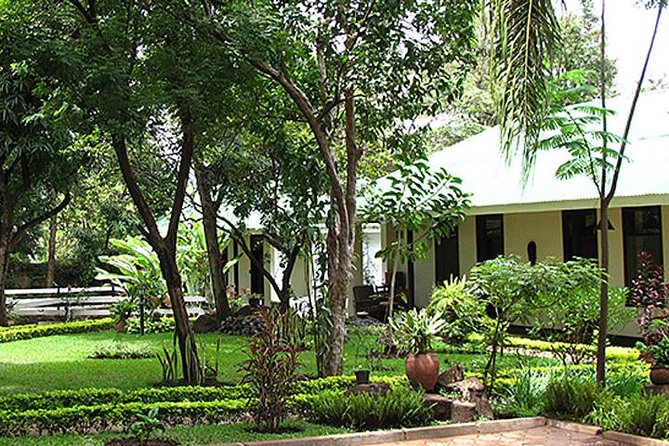
Your first two nights are at Bristol Cottages Hotel in Moshi. That matters more than you might think. Before Kilimanjaro, the goal is to get sleep, eat well, and take care of small logistics like hydration and gear checks without rushing around.
You get a driver on arrival to transfer you to the hotel. After you settle in, you have time for a meal, a shower, and a real bed before the mountain routine starts. Then, after you finish Kilimanjaro, the trip returns you back to the hotel for a hot shower and a cold drink, followed by a celebratory group dinner. That gives the whole arc a satisfying reset, instead of ending with a scramble.
Orientation day in Moshi, plus the market stop
Before you head out onto the trail, you meet your Tusker Mountain Guides for orientation and a final equipment check. This is the part that can quietly make or break your experience. Gear mistakes at altitude are not funny. You want your team to confirm the essentials and help you avoid the usual pain points like worn boots, wrong layering, or missing small items.
After the gear check, you grab lunch in Moshi with your guides. You also have time to explore the Moshi market at the base of Kilimanjaro. Even if you do not shop much, it helps you get your bearings fast. You see how locals live with the mountain always in view, and you can pick up a few last-minute items if needed.
Lemosho itineraries worth reading next
Day 3 on: Lemosho Glades, rain-forest trekking, and the first wildlife hits
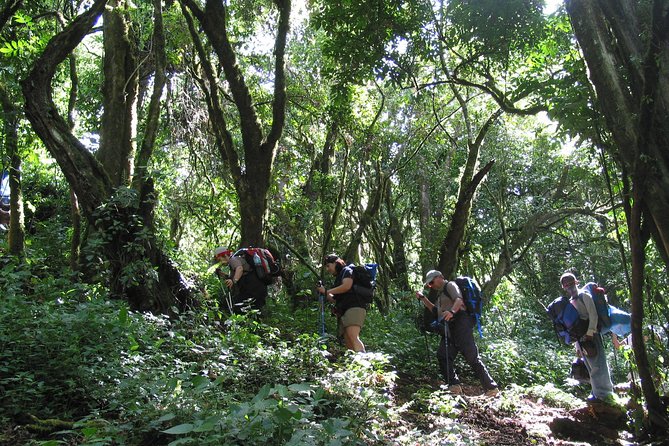
Day 3 starts from Londerossi on the western slopes and enters the Lemosho Glades through montane forest. This is where the hike feels alive. The trail takes you past dense greenery, and you have the chance to spot wildlife and learn the local plants along the way.
The guide-led component is a standout here. Tusker’s materials mention using Eddie and Amy Frank’s Field Guide to the Flora of Kilimanjaro. That means you are not just walking through trees, you are learning what you are looking at. You might even hear guides call out birds like Hartlaub’s Turaco, plus monkeys like colobus, as you move along.
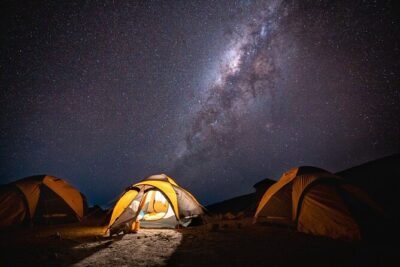
The day ends at Tusker camp in the rain-forest, among the towering trees of Mti Mkubwa. You should expect a camp rhythm that feels different from the high, windy zones later. In the rainforest, humidity and temperature swings can feel subtle, so this stage is a good “learn your body” day before the real altitude work begins.
Day 4: Shira Plateau caldera edge and your first view of Kibo
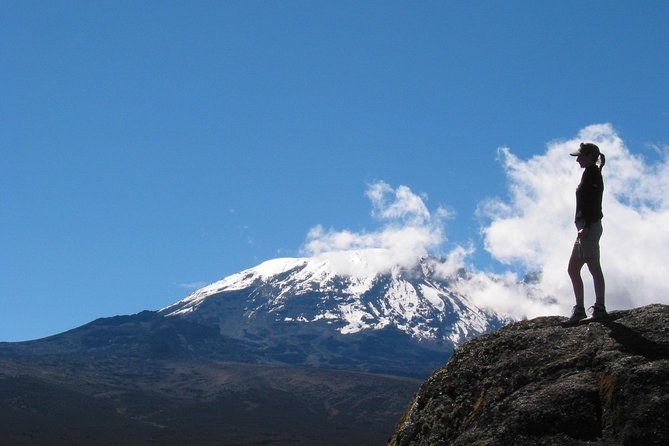
After breakfast, you climb out of the rain-forest and head toward the Shira Plateau, described as a caldera formed by the collapse of one of Kilimanjaro’s original peaks. You climb toward the caldera edge at about 11,560 ft / 3,534 m, then break for lunch and continue along the ridge.
What makes this day special is the scenery change. You move from tree cover into moorland and heath, and the landscape opens up. That first real view of Kibo Peak gives you a psychological boost. When you see what you are chasing, the mountain starts to feel more real and less theoretical.
A practical consideration here: days like this can feel long even when the altitude steps are reasonable. You want to keep your effort steady. Going too hard early can make you pay later.
Day 5: Shira Plateau to Moir Camp, plus walking beneath a lava flow
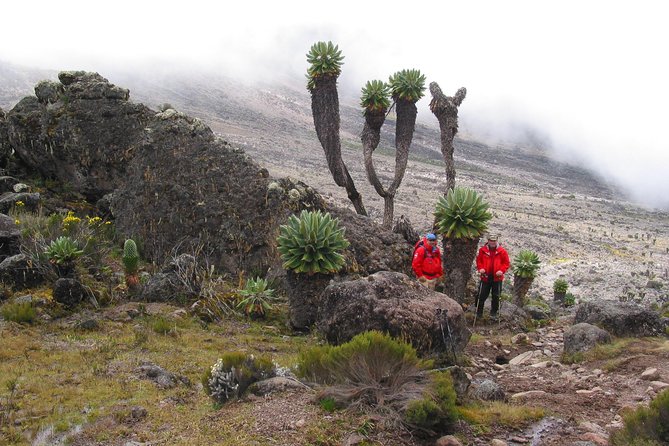
Day 5 pushes across the Shira Plateau toward Moir Camp, which is described as a hidden gem at the end of a large gorge with a giant lava flow nearby. Before reaching the final camp, you stop for hot lunch at Fisher Camp.
This is also where route knowledge helps. The Lemosho route is known for giving you time in different environments. That variety is not just for photos. It can help your acclimatization because your body gets repeated altitude exposure without jumping too fast.
At Moir Camp, the setting is more dramatic and more exposed than rainforest. You will likely feel more wind and more temperature swing. Dress in layers and keep your routine tight.
Day 6: Lava Tower lunch break, then down into Barranco Canyon
Day 6 moves you uphill toward Lava Tower at about 15,200 ft / 4,633 m. The plan includes lunch at the foot of the 320 ft / 98 m tower. That’s a classic Kilimanjaro setup, because you gain altitude, stop to eat, then do a descent. That pattern supports acclimatization.
After lunch, you descend steeply into Barranco Canyon, passing habitats where giant senecios tower and solitary lobelias appear along the trail. Then you camp at the foot of Barranco Wall.
This day is important because it sets up the next test. Barranco Wall can feel intimidating, but the prior descent into the canyon helps you find your rhythm.
Day 7: Barranco Wall climb, then Karanga Valley to Karanga Camp
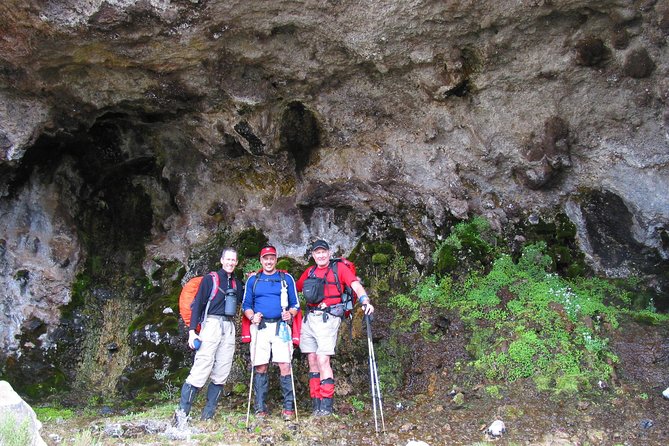
Day 7 starts with the first major obstacle, the Barranco Wall. This is where you use endurance and agility. You are climbing a signature section of Kilimanjaro, and you get constant views of Kibo Peak, described as towering over you like a guardian.
Then you descend into Karanga Valley and make the final ascent to Karanga Camp, placed at the foot of Kibo. This is a sweet spot in the journey. You feel like you are getting closer, but you still have time to settle into higher altitude before summit day.
A wise approach here is to keep your expectations flexible. Some people feel great on Barranco, others feel slow. Either way, you want to follow your guide’s pacing.
Day 8: Barafu High Camp, the “ice” stage and the summit tomorrow feeling
Day 8 takes you slowly toward Barafu High camp over rocky terrain. Thin air forces more breaks. The camp is called Barafu, and it means ice in Swahili, which hints at how cold you can feel here.
This is the emotional peak before the final push. Even if you are exhausted, there is an electric energy because tomorrow is the summit. The plan also mentions Mawenzi peak looming behind you with warm African sun hues at times, which sounds like one of those moments where your mind finally catches up to your body.
Sleep can be hard at Barafu because you are excited and cold. Bring whatever helps you comfort yourself. Staying warm is part of your safety plan.
Day 9: Sunrise summit climb, Uhuru Peak, and a crater camp option
Day 9 is the summit day plan, starting before sunrise. The ascent is steep and demanding, and you reach the crater rim by mid-day.
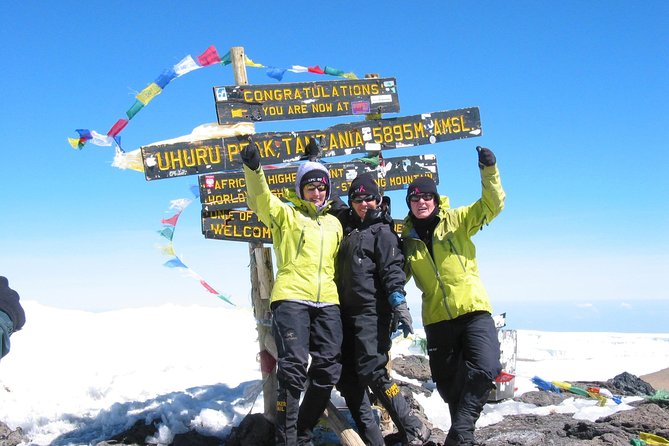
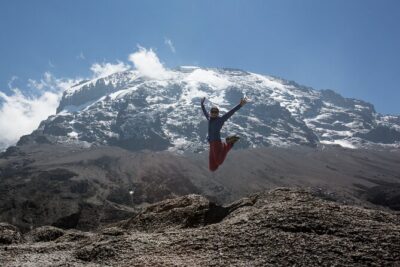
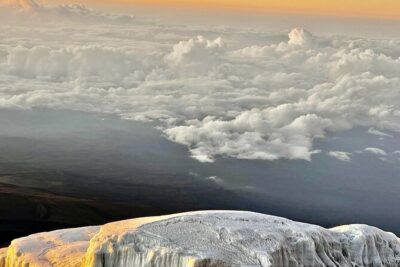
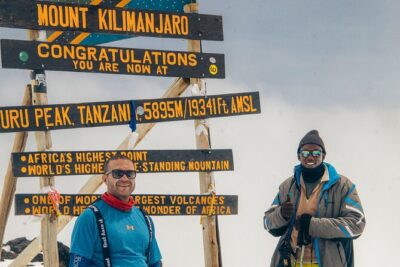
From there, the ultimate prize is Uhuru Peak, the highest point in Africa. The timeline in the plan suggests Uhuru Peak is about an hour away from the crater rim, which helps you picture the day as a sequence. At the summit, you take in views that you will not forget.
There is also a specific fork in the road built into the plan. You can descend into the crater and camp for the night just below the summit, or continue down to Barafu Camp. Either way, you are not just hitting one moment. You are managing the descent phase, which is a big part of whether you feel good by the end.
Day 10 and 11: Scree descent, Millennium Camp, and the National Park Gate finale
Day 10 starts with an adrenaline-filled descent through scree. You hike downhill for about two hours, stop for lunch at Barafu, then continue to Millennium Camp for the night.
Day 10 matters because the downhill can be rough on knees and feet. Even when you feel triumphant, you still need careful steps. Short, controlled movement beats rushing.
Day 11 is your final walking day on the mountain, a downhill hike from Millennium Camp to the National Park Gate. After you sign out, you head back to Bristol Cottages Hotel in Moshi for a hot shower, then a celebratory group dinner.
That dinner is more than a reward. It is the moment your brain finally absorbs what you just did.
Lake Manyara National Park: the safari reset after altitude
After the climb, you transition to safari with Lake Manyara National Park. Day 12 describes time for an extraordinary encounter with Africa’s wild animals, plus staying at a traditional wildlife lodge perched on the edge of the Rift Valley escarpment with views over the plains.
Day 13 continues the safari portion. The plan says you will be picked up for safari drives, and if you chose the broader safari option you can go through other gates connected to major wildlife areas including Serengeti Plains, Ngorongoro Crater, Tarangire, and Lake Manyara. The data also mentions an option to hop on a short flight to Zanzibar.
Two practical points. First, you will be tired after Kilimanjaro. A lodge with a good view helps your recovery. Second, safari is schedule dependent, so be ready for long drives and early starts, even if you are sleeping in a lodge.
Price and value: is $8,188 worth it for this package?
At $8,188.00 per person, this is not a budget climb. But on Kilimanjaro, price is really a proxy for staffing intensity, guide quality, and camp standards.
What you get here that can justify the cost, at least on paper:
- A long-running specialist operator with a stated 99% summit success rate and a 5-star rating with 100% recommendation in the provided info.
- High-altitude first responder trained guides.
- Custom walk-in tents and a chef-led food program described as farm-to-table.
- Two nights in Moshi at Bristol Cottages Hotel before the mountain.
- The Kilimanjaro portion includes admission tickets in the day-by-day schedule.
- A safari component in Lake Manyara National Park with lodge accommodations.
Where you should budget extra:
- Climbing gear and clothing rental is not included. The note says to call for details, so you should price that early rather than guessing.
- Personal items and tips are not listed as included, so treat those as your responsibility unless you confirm otherwise.
- Safari scope can vary based on which gates and parks you opt into on your days at Lake Manyara.
If your priority is safety systems plus high-quality food and smoother camp operations, this package aims squarely at that. If your priority is spending as little as possible, you may find cheaper options, but on Kilimanjaro the cheapest route often means you carry more stress, not less.
Who this Lemosho climb suits best, and who should reconsider
This is a strong match for you if you want:
- A structured acclimatization path with multiple altitude and descent steps (Shira, Lava Tower, Barranco, Karanga, Barafu).
- Guides who are trained for altitude emergencies and who also teach you along the way using local flora knowledge.
- A clear plan for summit day starting before sunrise, with a choice between continuing the descent or camping in the crater area.
- A safari payoff that turns your victory into a wildlife vacation, not just a logistics shuffle.
You might want to think twice if:
- You are not willing to invest in proper gear, since rental is not included.
- You want minimal hiking. Even with the gradual plan, you are still climbing and descending daily, including a demanding summit morning.
Should you book this 13-day Lemosho climb and Lake Manyara safari?
Yes, you should strongly consider booking if you want a Kilimanjaro climb where food, staffing, and safety training are treated as core parts of the product, not add-ons. The Lemosho route also tends to feel more gradual than the faster routes, and your schedule includes the kind of “go up, then down” steps that help your body adjust.
Before you commit, do two smart checks:
- Ask what climbing gear and clothing rental costs, and whether any essentials are provided or must be brought.
- Confirm exactly which safari option you are selecting for Day 13, since the plan mentions additional parks beyond Lake Manyara.
If those two items line up with your budget and comfort, this looks like a well-built plan that aims to get you to the top and then keeps the celebration going.
FAQ
Where is this tour based?
The tour is based in Moshi, Tanzania. You start with transfers and a hotel stay in Moshi, and you return to Moshi after the mountain portion.
What Kilimanjaro route does this climb use?
This climb uses the Lemosho route.
How long is the experience?
It runs for about 13 days.
Do I get pickup?
Pickup is offered.
Where do I stay during the climb and before the mountain?
You stay at Bristol Cottages Hotel in Moshi for the first two nights. On the mountain, the tour mentions custom walk-in tents.
Are meals included?
Yes. Breakfast, lunch, and dinner are listed as included.
Is climbing gear and clothing rental included?
No. Climbing gear and clothing rental is not included, and the note says to call for details.
What is the safari part of the trip?
The safari is at Lake Manyara National Park. You stay at a traditional wildlife lodge on the edge of the Rift Valley escarpment, and safari drives are described as being arranged from the lodge.
Can I choose what to do on summit day after reaching Uhuru Peak?
The plan says you can descend into the crater and camp for the night just below the summit, or continue down to Barafu Camp.
What happens if there is poor weather?
The experience requires good weather. If it is canceled due to poor weather, you will be offered a different date or a full refund.
Is this a private tour?
Yes. It is listed as a private tour/activity, and only your group will participate.
Lemosho, Compared
- Kilimanjaro climb by Lemosho Route (7-day)
★ 5.0 · 651 reviews - Kilimanjaro Climbing Lemosho Route 8 Days.
★ 5.0 · 186 reviews - Kilimanjaro climb, Lemosho Route (8-day)
★ 5.0 · 148 reviews - Kilimanjaro climb, Lemosho Route (6-day)
★ 5.0 · 129 reviews - Kilimanjaro Lemosho Route
★ 5.0 · 71 reviews
Kilimanjaro, Route by Route
- Kilimanjaro climb by Lemosho Route (7-day)
★ 5.0 · 651 reviews - Kilimanjaro climb, Machame Route (7-day)
★ 5.0 · 262 reviews - Kilimanjaro Climbing Lemosho Route 8 Days.
★ 5.0 · 186 reviews - Climbing Kilimanjaro – Machame Route
★ 5.0 · 170 reviews - Climbing Kilimanjaro through 7 days Machame Route
★ 5.0 · 151 reviews
Just added from around Moshi
Kilimanjaro Lemosho Route, compared.
 ★ 5.0Kilimanjaro climb by Lemosho Route (7-day)From $3,476651 reviews
 ★ 5.08-Day Small-group Lemosho Kilimanjaro Summit TrekkingFrom $2,895186 reviews
 ★ 5.0Kilimanjaro Climbing Lemosho Route 8 Days.From $2,300186 reviews
 ★ 5.0Kilimanjaro climb, Lemosho Route (8-day)From $3,975148 reviews
 ★ 5.0Kilimanjaro climb, Lemosho Route (6-day)From $3,034129 reviews
 ★ 5.0Kilimanjaro Lemosho RouteFrom $2,89071 reviews
 ★ 5.0Private Kilimanjaro Hike 7 Day Lemosho RouteFrom $2,45060 reviews
 ★ 5.0Climbing Kilimanjaro through 8 days Lemosho RouteFrom $2,76052 reviews
Browse the lists this tour appears in