
REVIEW · KILIMANJARO MARANGU ROUTE
Discover Our Latest 6 Days Climbing Kilimanjaro – Marangu Route
Kilimanjaro feels more doable with a steady rhythm. This 6-day private guided climb on the Marangu route from Moshi is built around the classic beats most people want, forest to alpine meadows, then acclimatization and a summit push.
What I like most is the way the schedule supports acclimatization, especially the full day at Horombo Huts. I also appreciate that the trek is organized around your own group with your guide and porters, rather than tossing you into an unfamiliar crowd. One thing to consider: you’re sleeping in basic dorm-style huts and you should expect cold, especially on summit night, even if the days feel sunny.
In This Review
- Key highlights you’ll feel on the mountain
- Moshi to Marangu Gate: where your Kilimanjaro day starts calm
- Day 1 on Marangu: Mandara Hut and the slow climb out of the gates
- Day 2 from Mandara to Horombo Huts: the forest fades, altitude talks
- Day 3 at Horombo Huts: acclimatization that actually earns its place
- Day 4 toward Kibo Hut: saddle country and summit prep
- Day 5 Uhuru Peak summit: midnight start, frozen scree, and dawn timing
- Day 6 down to Moshi: the pace picks up, but don’t rush
- Huts, meals, and your crew: what “private-party” really means
- Price and value: $1,150 for the Marangu experience, plus the extra costs to plan
- Who should pick the Marangu option from Moshi
- Should you book this 6-day Kilimanjaro Marangu climb?
- FAQ
- How long is the Kilimanjaro climb on the Marangu route?
- Where does the trek start and where do you return to?
- What route is used to climb Kilimanjaro?
- Is this tour private, or shared with other people?
- What kind of accommodation do you stay in on the mountain?
- Are meals included during the trek?
- What isn’t included in the $1,150 price?
- What time do you start the summit attempt?
- What is the cancellation policy if weather is bad?
Key highlights you’ll feel on the mountain
- Private party guiding on the Marangu route, so you can set a realistic pace
- Acclimatization day at Horombo Huts, plus a well-known walk toward Mawenzi
- Dawn-focused summit timing on Day 5, starting shortly after midnight
- Dorm-style hut accommodation along the route, with limited amenities
- Moshi hotel pickup and drop-off, plus briefing and a trekking certificate
Other ways up Kilimanjaro we reviewed
- Kilimanjaro climb by Lemosho Route (7-day)★ 5.0 · 651 reviews
- Kilimanjaro climb, Machame Route (7-day)★ 5.0 · 262 reviews
- Kilimanjaro Climbing Lemosho Route 8 Days.★ 5.0 · 186 reviews
- Climbing Kilimanjaro – Machame Route★ 5.0 · 170 reviews
Moshi to Marangu Gate: where your Kilimanjaro day starts calm
Most Kilimanjaro days live or die by the morning start. Here, you get picked up from your hotel in Moshi and driven to Marangu Gate early, then you register before the climb really begins. It’s a practical way to avoid the kind of rushed morning that makes altitude feel harder than it already is.
Once you’re through the gate, you step into forest. This is where the Marangu route earns fans, because it starts with motion that feels natural: you climb gradually, watching birds and monkeys, spotting colorful wildlife activity, and noticing plants like mosses, lichens, and orchids along the way. If your brain likes details, this first day keeps it busy.
As a reader, you should know one key reality: the first day still matters for altitude. That forest section is beautiful, but you’re already gaining elevation. So I’d treat Day 1 as a warm-up, not a speed test.
Day 1 on Marangu: Mandara Hut and the slow climb out of the gates
You’ll spend roughly 4 to 5 hours hiking on Day 1, moving from park buildings into the climb toward Mandara Hut. This leg is long enough to feel the altitude, but not so punishing that you’re wrecked before your body adapts.
The payoff is that you’ll be surrounded by changing forest textures. You might see colobus monkeys and other monkey species, and the ground-level greenery is where a lot of the “this is why I came” moments happen. If you’re the type who likes photos, this is also a day where you can grab them without sprinting.
Practical note: Day 1 ends at Mandara Hut, where your focus shifts to conserving energy. Bring layers you can manage easily, since mornings can feel cool and afternoons can feel warmer.
Day 2 from Mandara to Horombo Huts: the forest fades, altitude talks
Day 2 is a clear transition day. After breakfast, you climb out of rainforest and into open moorland. The rhythm changes quickly, and that matters because your body has to adjust to different footing and different air.
You’ll gain about 1,000 meters of elevation and hike roughly 5 to 7 hours, with the day often taking around 9 hours total in the program. The scenery opens up, and you start seeing both summits in the distance: snow-capped Kibo and rocky Mawenzi sitting across the skyline. It’s one of those days where the mountain feels like it’s watching you back.
This is also where you should keep your pace honest. Marangu can tempt you to walk confidently because it feels straightforward compared to steeper routes. Don’t speed up just because the trail looks friendly. A steady pace is what helps your chances later.
Marangu, other operators and other lengths
Day 3 at Horombo Huts: acclimatization that actually earns its place
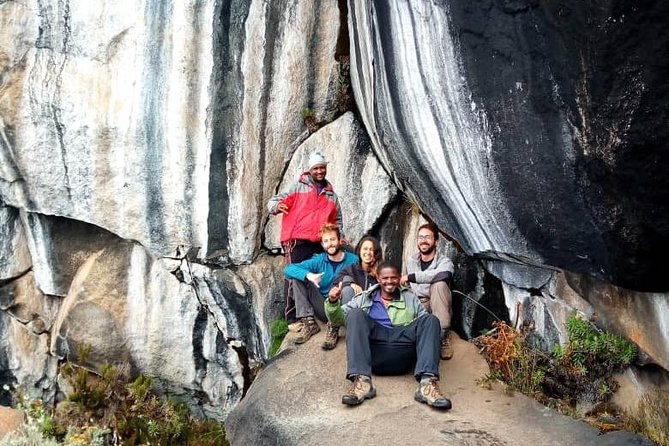
Day 3 is the reason Marangu works for so many people. You rest at Horombo Huts, and instead of calling it a wasted day, you use it to acclimatize step by step.
You’ll have time for a famous acclimatization walk, going toward the base of Mawenzi Peak. The walk takes about 4 to 5 hours round trip, reaches around 4,600 meters, and then you return for dinner and overnight at Horombo. It’s a solid approach: you get extra altitude exposure without turning the day into a summit attempt.
If you’re worried about altitude fatigue, this is your built-in safety valve. I like days like this because they give your body a real chance to adjust, while also keeping you active enough to feel like you’re still moving toward the goal.
Day 4 toward Kibo Hut: saddle country and summit prep
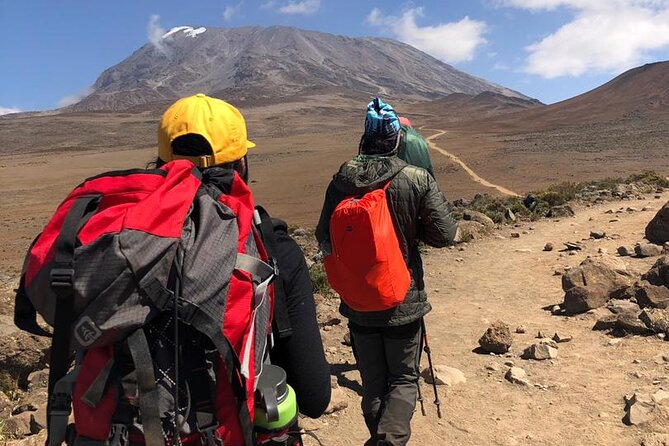
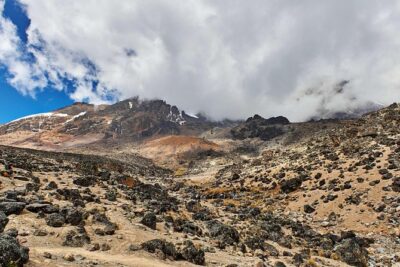
On Day 4, the terrain becomes more stony and arid. You’ll hike around 5 to 7 hours, and the day can take about 7 hours in the program, heading toward Kibo Hut. Along the way you’ll skirt Mawenzi Peak, pass the Last Water point, and cross a desolate, almost lunar stretch.
Then you reach the Saddle, the broad tundra desert between Mawenzi and Kibo. This is where the air feels thin in a way you can’t ignore. The views are dramatic, but your body’s comfort becomes the headline.
You’ll arrive at Kibo Hut at around 4,705 meters. The hut is described as having dorms and limited amenities. Translation: you should plan for basics, not comfort. Repacking also matters here. The program notes you should repack and pass unnecessary items to the porters before summit night, so you’re not carrying extra weight up to the crater rim.
The most practical mindset for Day 4 is simple: treat it as preparation, not peak excitement. The big work comes next.
Day 5 Uhuru Peak summit: midnight start, frozen scree, and dawn timing
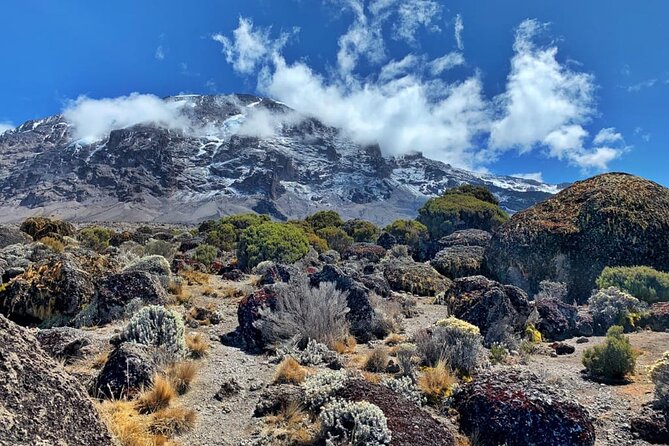
Day 5 is the long one, and it’s where good guiding shows up. You’ll be awakened shortly after midnight, torch in hand, and start climbing a long slope of scree. The program notes that the scree is frozen at this time, which can make walking on it simpler, even if it still feels exhausting.
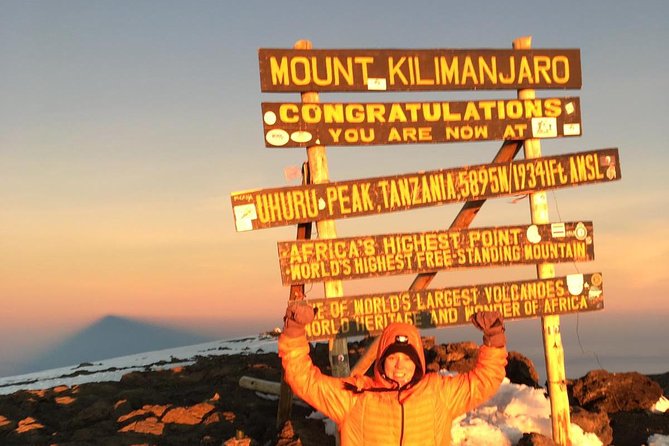
You’ll aim for Hans Meyer’s Cave after about two hours, then continue to Johanne’s Notch at around three hours more. From there the ascent gets steeper. The goal is to reach Gillman’s Point (5,685 meters) in time for dawn, because the sunrise moment is part of the whole Kilimanjaro experience.
The day is listed at about 12 hours. That’s a real commitment, and it’s why you should listen to your guide about pace and breathing. On summit day, it’s not about speed. It’s about endurance and control.
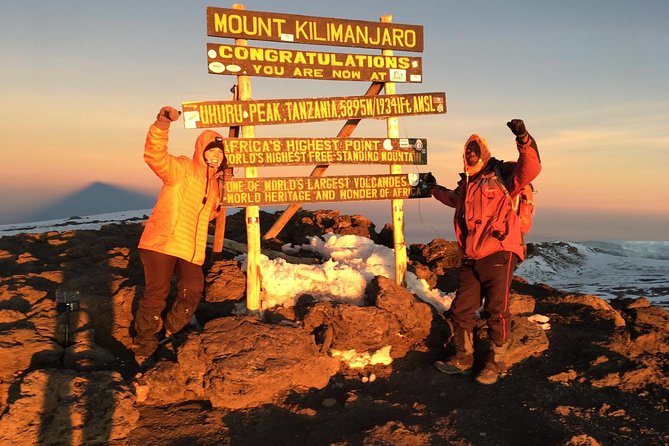
And yes, the payoff described is the kind that sticks in your memory: sunrise over the ice fields, with Mawenzi’s jagged peaks lit up as you keep climbing. If you’ve been thinking about this climb for weeks, this is the moment that turns it from a plan into a story.
Day 6 down to Moshi: the pace picks up, but don’t rush
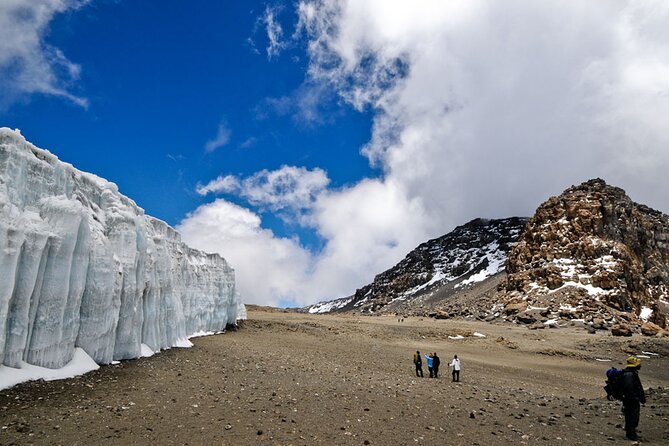
After summit, Day 6 is about safe descent and finally getting back to the comfort of Moshi. The program describes hiking back across alpine meadow and then through rainforest past Mandara Hut to Marangu Gate, where you board the vehicle to return to Moshi.
It’s still a long day, listed at about 8 hours. But the pace often feels faster because you’re moving downhill and because your biggest goal is already done. That’s exactly when people make mistakes, so keep your footing attention strong. Even if you feel energized, sore knees and tired legs are still a factor.
If you’re watching your effort, Day 6 is a good chance to practice a calm finish. You’ll land at the gate and get dropped at your Moshi hotel, which makes the ending feel organized instead of chaotic.
Huts, meals, and your crew: what “private-party” really means
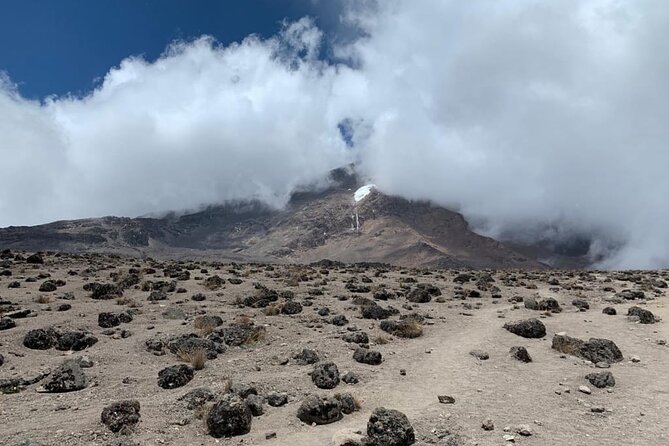
This climb includes hut accommodation, meals, and the mountain crew behind the scenes. Your route is supported with breakfast, lunch, and dinner during the trek, plus additional meals noted for the final day. The listing also includes camping fees, which aligns with the on-route lodging and organization.
Hut life on Kilimanjaro is basic. You’re in dormitory-style accommodations, and in Kibo Hut especially, amenities are limited. What matters most is what you bring to stay functional: warm layers, a plan for hydration, and the right socks and footwear you trust after days of hiking.
Now for the crew. Your professional guide and porters are part of the core value here, and the praise in the provided feedback centers on support. One standout point is that a supportive guide, along with the porters and chef, helped someone push through to the summit. That’s not a small detail. On summit night, encouragement and pacing help you make the next right step.
If you like a trip that feels managed, this setup is a good fit. If you prefer lots of downtime and quiet, you’ll still get the mountain experience, but you’ll also feel the structure. It’s not an independent trek, and that’s the point.
Price and value: $1,150 for the Marangu experience, plus the extra costs to plan
The price is $1,150 per person. For Kilimanjaro, that’s in the ballpark where you’re paying for people, organization, and the heavy logistics. This includes pickup and drop-off in Moshi, guiding, and meals, plus a trekking certificate and a briefing.
Here’s what you should budget beyond the listed price, because it can surprise people:
- Kilimanjaro park fees are not included. The data says you can pay them direct to the park or via the operator.
- Tips to the mountain crew are not included.
- Travel and medical insurance are not included.
- Airport pick up and drop off and hotel before and after are not included.
- Personal hiking gear is not included.
- Flights are also not included.
So what’s the value math? You’re paying for a guided climb with hut lodging and meals, plus private return transport from Moshi. You’re not paying for the universal extras that happen around every long trek, like insurance, hotels, park fees, tips, and your gear.
My practical advice: ask yourself if you want the work handled. If you’d rather not think through crew, logistics, and the mountain plan, this price makes sense. If you’re trying to build everything from scratch, you’ll need to add the same costs yourself, and the convenience disappears.
Who should pick the Marangu option from Moshi
This route is often chosen because it’s the classic approach and it includes an acclimatization day that you can use strategically. The climb is described as suitable for most travelers, and the total group size for the activity has a maximum of 90 travelers.
What “most travelers” means in real life is this: you still need to be prepared for altitude, cold on summit night, and multi-hour days. If you’re new to high-altitude trekking, Day 3 at Horombo is a big help. If you’re experienced and you want a straightforward route with hut stops, Marangu can feel efficient.
This is also a strong choice if you value structure. You’ll get hotel pickup in Moshi, a briefing, guide support, and transport back to town.
If you hate basic accommodations, this may not be your style. The huts are functional, not luxurious. But if you can accept simplicity to earn the summit goal, it’s a very fair trade.
Should you book this 6-day Kilimanjaro Marangu climb?
I’d book it if you want a classic Kilimanjaro route, guided by a professional team, and you care about an acclimatization day that is built into the plan. The mix of hut lodging, meals, and Moshi pickup and drop-off makes the trip easier to manage, and the emphasis on guide support is exactly what you want for summit night.
I would hesitate only if you’re expecting hotel-like comforts at altitude, or if you’re not ready to handle add-on costs like park fees, tips, and your own gear and insurance. Those are normal parts of Kilimanjaro, but they’re still worth planning for.
If you’re deciding between “cheaper and confusing” versus “clear structure and real support,” this one leans toward the second option.
FAQ
How long is the Kilimanjaro climb on the Marangu route?
It’s listed as 6 days (approx.).
Where does the trek start and where do you return to?
The climb starts at Marangu Gate, and you return to Moshi after descending back to Marangu Gate.
What route is used to climb Kilimanjaro?
The tour uses the Marangu route.
Is this tour private, or shared with other people?
It’s described as a trek with your own private party rather than an unfamiliar group. The activity can have a maximum of 90 travelers.
What kind of accommodation do you stay in on the mountain?
You stay in dormitory-style huts along the route, with limited amenities at places like Kibo Hut.
Are meals included during the trek?
Yes. Breakfast, lunch, and dinner are included during the trekking, and breakfast and lunch are specifically noted for the final day.
What isn’t included in the $1,150 price?
Not included are travel/medical insurance, all Mount Kilimanjaro park fees, tips to the mountain crew, airport pick up and drop off, hotel before and after, flights, and personal hiking gears.
What time do you start the summit attempt?
You’re awakened shortly after midnight on Day 5 for the summit push.
What is the cancellation policy if weather is bad?
You can cancel for a full refund up to 24 hours in advance. If the experience is canceled due to poor weather, you’ll be offered a different date or a full refund.
The Marangu Trail
- Kilimanjaro climb, Marangu route (6-day)
★ 5.0 · 72 reviews - Climbing Kilimanjaro – Marangu Route
★ 5.0 · 65 reviews - Best Kilimanjaro Adventures 6 Days Marangu Route Experience
★ 5.0 · 18 reviews - Kilimanjaro Private Climbing in 6 Days Marangu Route
★ 5.0 · 16 reviews - 6 Days Climb Kilimanjaro Through Marangu Route
★ 4.5 · 15 reviews
Kilimanjaro, Route by Route
- Kilimanjaro climb by Lemosho Route (7-day)
★ 5.0 · 651 reviews - Kilimanjaro climb, Machame Route (7-day)
★ 5.0 · 262 reviews - Kilimanjaro Climbing Lemosho Route 8 Days.
★ 5.0 · 186 reviews - Climbing Kilimanjaro – Machame Route
★ 5.0 · 170 reviews - Climbing Kilimanjaro through 7 days Machame Route
★ 5.0 · 151 reviews
Just added from around Moshi

Kilimanjaro Marangu Route, compared.
 ★ 5.0Kilimanjaro climb, Marangu route (6-day)From $2,90272 reviews
 ★ 5.0Climbing Kilimanjaro – Marangu RouteFrom $2,00465 reviews
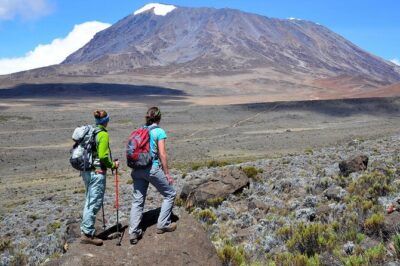 ★ 5.0Private Full Day Hiking Experience to Marangu RouteFrom $26061 reviews
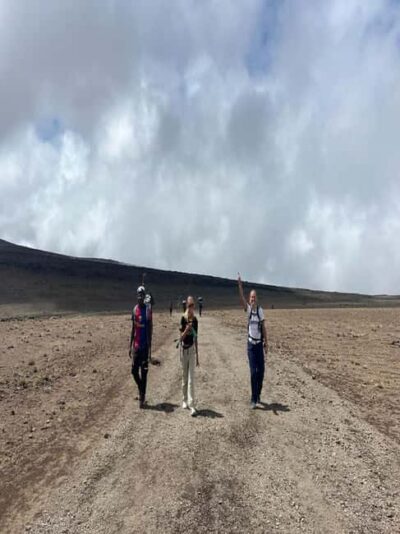 ★ 4.5From Arusha/Moshi: Kilimanjaro Hike Marangu Route Day TripFrom $10154 reviews
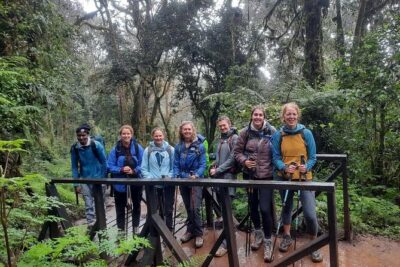 ★ 5.0Mount Kilimanjaro Day Hike Through Marangu Route to Mandara HutFrom $26537 reviews
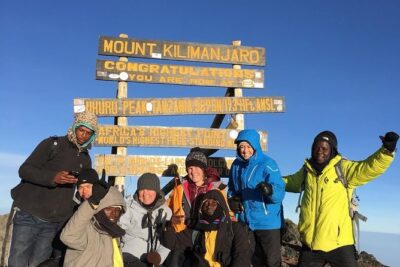 ★ 5.0Kilimanjaro Climbing 5 days Marangu routeFrom $90022 reviews
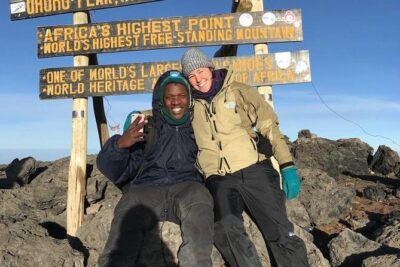 ★ 5.0Best Kilimanjaro Adventures 6 Days Marangu Route ExperienceFrom $1,00018 reviews
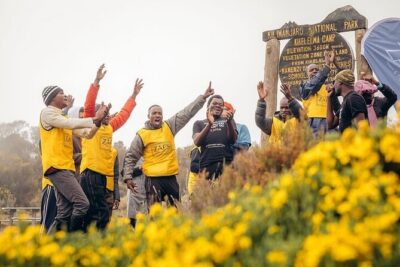 ★ 5.0Kilimanjaro Private Climbing in 6 Days Marangu RouteFrom $2,00016 reviews
Browse the lists this tour appears in