
REVIEW · KILIMANJARO MARANGU ROUTE
Conquer Kilimanjaro: 5-Day Marangu Route Adventure
Five days. One big mountain. This Kilimanjaro Marangu Route adventure aims to get you from Moshi up to Uhuru Peak and back using the classic hut system, with a qualified guide team and overnight stops high on the mountain. I like how it keeps logistics simple with meals, accommodation, and transfers included, and I also like the way the climb is structured around your guide and assistant guides being focused on you as a group. One thing to keep in mind: five days is a tight timeline for acclimatization, so your pace, hydration, and willingness to follow guide instructions matter a lot.
You start and finish in Moshi, and the climb is built for intermediate-plus hikers who want the Marangu route and have limited time. You’ll trek through rainforest, then moorlands, then alpine desert, and you’ll be dealing with serious altitude on the last two days. It is reassuring that they include emergency oxygen and a basic first aid kit, but that oxygen is for emergencies only, not summit support.
In This Review
- Key things I’d bet on before you go
- Moshi as your launch pad, and what included support really means
- Day 1 to Mandara Huts: rainforest warm-up and registration reality
- Day 2 to Horombo Huts: moorland views and the slow-acclimation test
- Day 3 to Kibo Hut: alpine desert and conserving energy
- Day 4 to Uhuru Peak: midnight start, steep scree, and sunrise payoffs
- Day 5 back to Moshi: moorlands descent and your certificates moment
- Price and value: where this climb feels fair, and where it is still a splurge
- The “included” list that actually helps you on the mountain
- What the guide team experience tends to feel like
- Who this Marangu climb suits best, and who should reconsider
- Packing and prep, based on what is not included
- Should you book Conquer Kilimanjaro on the 5-Day Marangu Route?
- FAQ
- What route does this Kilimanjaro tour use?
- Where does the tour start and end?
- How long is the climb?
- What is included in the tour price?
- Are airport transfers included?
- Is emergency oxygen included for summit help?
- Do I need a visa or flights included?
- Is trekking gear included?
- Is a portable toilet included?
- What cancellation terms apply?
Key things I’d bet on before you go
- Marangu route hut nights, from Mandara to Horombo to Kibo, so you are not sleeping on the ground
- Meals and water plans included, including hot water for a wash daily and fresh drinking water
- Guide-led climb pace, with a qualified mountain guide, assistant guides, and porter team
- Emergency oxygen and first aid included, for use in emergencies only
- Moshi transfers and summit certificates, so your trip has a clear start, finish, and payoff
Other ways up Kilimanjaro we reviewed
- Kilimanjaro climb by Lemosho Route (7-day)★ 5.0 · 651 reviews
- Kilimanjaro climb, Machame Route (7-day)★ 5.0 · 262 reviews
- Kilimanjaro Climbing Lemosho Route 8 Days.★ 5.0 · 186 reviews
- Climbing Kilimanjaro – Machame Route★ 5.0 · 170 reviews
Moshi as your launch pad, and what included support really means
Moshi is the common staging point for Kilimanjaro, and this tour handles the handoffs so you can focus on the climb. You meet in Moshi Urban, and you get transfer support to and from Kilimanjaro International Airport, plus pickup is offered. That matters because the first and last days can feel chaotic when transportation is on your own.
The price you pay covers a lot of the stuff that usually sneaks up on budgets. The tour lists all fees and taxes, plus accommodation in huts, meals, and transfers. In other words, you are not trying to piece together park costs, food logistics, and transportation while you are already tired from travel.
You also get daily basics that make a big difference on a cold mountain. Fresh drinking water is provided, plus hot water for a wash each day. That is not a luxury on Kilimanjaro, it is a morale boost. Dry socks, a quick wash, and a chance to reset your headspace can help you keep your energy for the next altitude jump.
Day 1 to Mandara Huts: rainforest warm-up and registration reality
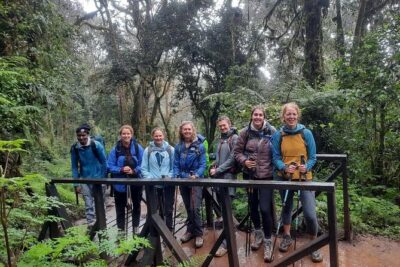
Your first driving segment lands you at the Marangu Gate, where you register for your climb. Then you start trekking through dense rainforest, and this is the day where the mountain can feel almost friendly at first. You’ll walk about 8 km in roughly 3 to 4 hours, climbing from around 1,870 m to about 2,720 m.
The prize on Day 1 is rhythm. You are not yet in the high altitude crunch, so you can settle into breathing, footwork, and the discipline of going slower than your ego wants. You might spot wildlife like Colobus monkeys, which is a nice reminder that Kilimanjaro is not just rock and numbers.
The overnight is at Mandara Hut, and the elevation jump helps you get your body moving upward without immediately hitting the toughest terrain. Drawback: rainforest can feel muggy under a load, and even a “warm-up” day can sap energy if you start too fast. Use this first day to practice the habit your guide will keep pushing, steady steps, consistent hydration, and no hero pace.
Day 2 to Horombo Huts: moorland views and the slow-acclimation test
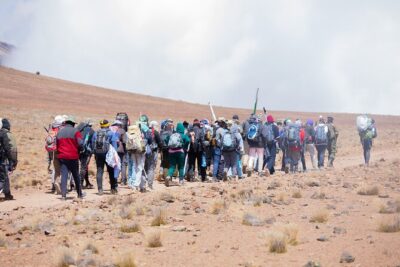
Day 2 stretches to about 12 km with 6 to 7 hours of hiking. You climb from around 2,720 m up to roughly 3,720 m, and the setting shifts as the rainforest fades and the rolling moorlands open up.
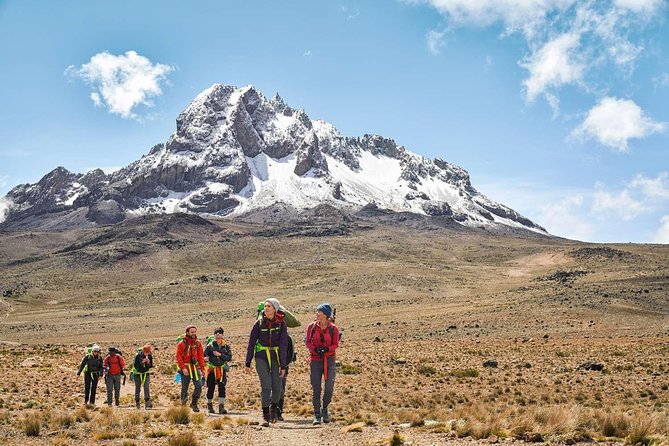
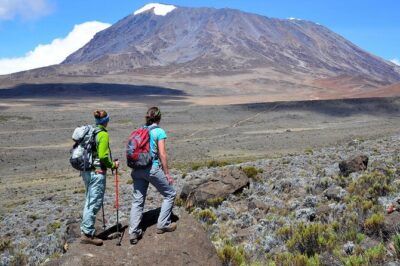
This is where you start earning those big Kilimanjaro views. Horombo Hut sits with standout sightlines toward Kibo and Mawenzi peaks, and you’ll feel that sense of the mountain “revealing itself” as you gain altitude.
The key value of this day is acclimatization time in a zone that is challenging but not yet the summit-night chaos. You are gaining height and spending time moving through changing conditions, which helps you and your guide gauge how your body is reacting.
Possible consideration: this is a long day, and fatigue can sneak in. Long hours at altitude can make you feel slower even if your pace is right. If you are sensitive to altitude, treat this day as seriously as you treat the summit day, because it often determines how you feel on the final push.
Marangu, other operators and other lengths
Day 3 to Kibo Hut: alpine desert and conserving energy
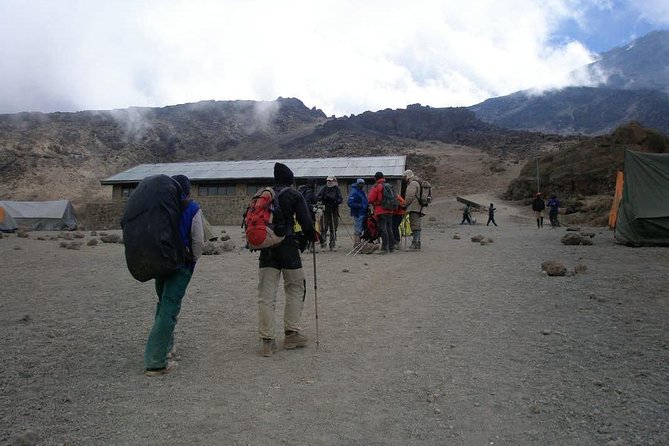
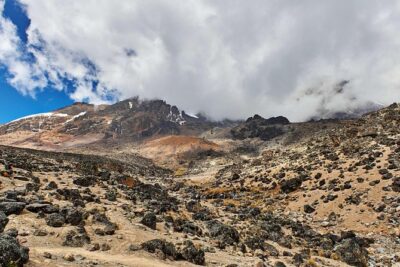
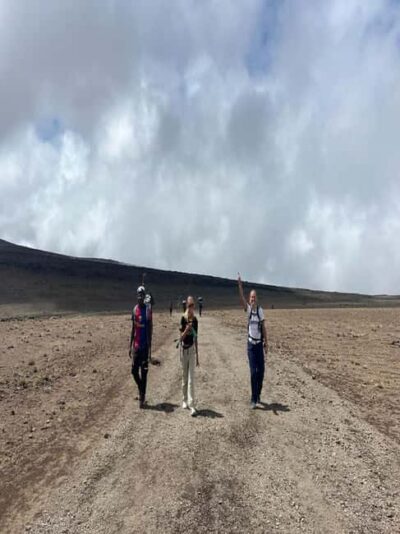
On Day 3, you hike about 10 km over roughly 5 to 6 hours, rising from about 3,720 m to around 4,703 m. The environment changes again, and the route shifts into an alpine desert with more rugged terrain.
You’ll head to Kibo Hut, which is your final stop before the summit attempt. That makes this day a turning point, because you are no longer just building altitude, you are preparing your body for steep work at the top.
What I like about the way this day is framed is that it keeps the summit day logic simple. You build up to Kibo, then conserve. Rugged footing means you need to move efficiently, not quickly, and you need to save what is left of your legs and your breath.
A practical drawback: the alpine desert can feel dry and harsh, so your hydration strategy becomes more important. If you underdrink or move too fast on Day 3, you will feel it when the summit push begins overnight.
Day 4 to Uhuru Peak: midnight start, steep scree, and sunrise payoffs
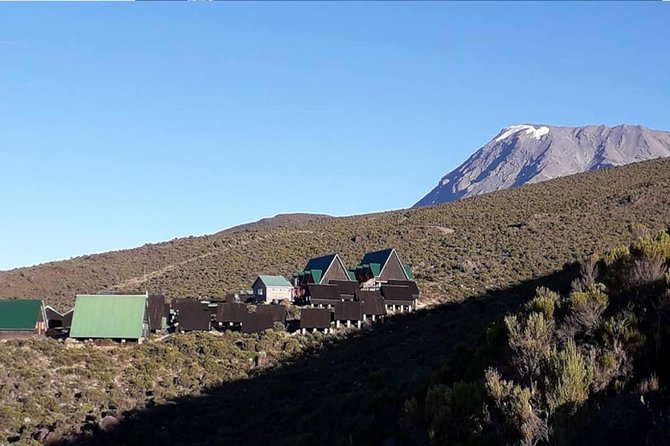
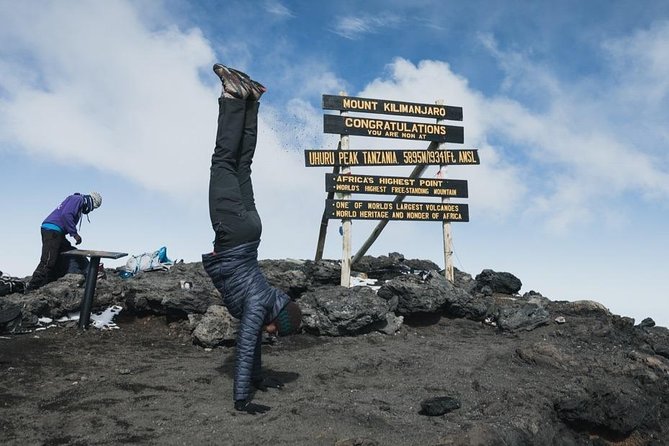
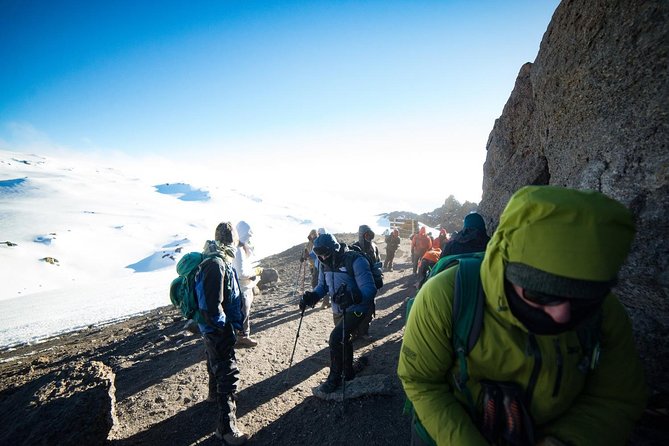
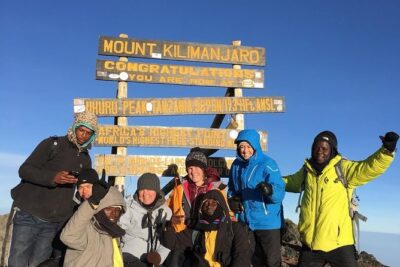
Day 4 is the summit day. You begin your push around midnight, and you tackle steep ascent over scree and volcanic rock. The route goes up to Gilman’s Point at about 5,685 m, then onward to Uhuru Peak, the highest point on Kilimanjaro.
This day is listed as 10 to 14 hours, depending on how you progress and how long you pause for sunrise and the needed breaks. Once you reach the top, you get that famous Roof of Africa sunrise experience. Then you descend back down to Kibo Hut for a short rest, and continue down to Horombo Hut.
Here is the real value of the included structure on summit day. You are not just hiking at night with guesswork. You have a qualified guide team and porter support, and the plan is designed around getting you from the high camp to the summit and back down safely.
Possible drawback: this is the hardest day by far, and the terrain is demanding. Scree and volcanic rock are slow and punishing. If you are the type who gets nervous about timing, you may feel better knowing the tour has a defined summit night start and then a planned descent to Horombo Hut the same day.
Day 5 back to Moshi: moorlands descent and your certificates moment
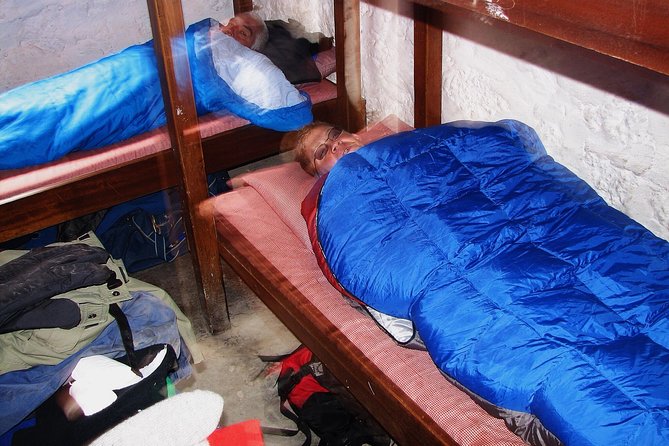
Day 5 is all about descending and recovering. You hike about 20 km in roughly 6 to 7 hours, moving from around 3,720 m down past Mandara Hut on the way to Marangu Gate. The elevation changes are dramatic on paper, and your body feels it in your knees and ankles.
The tour then drives you back to Moshi for a celebratory evening. You also receive your summit certificates at Marangu Gate, which gives you a concrete, official moment to mark what you just finished.
What I like here is the “closure.” Many hikes end with a chaotic scramble for transport, but this tour sets up a clear handoff back to Moshi. You are also not just rushing off the mountain without a plan for the final day.
One consideration: descending can feel longer than ascending. You will still be moving through moorlands and then rainforest. Take short breaks, keep your steps controlled, and use the day to think about recovery rather than speed.
Price and value: where this climb feels fair, and where it is still a splurge
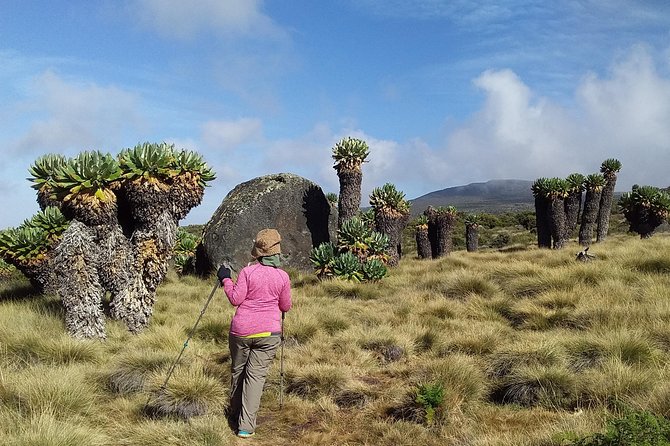
At $1,854 per person, this is not a bargain. But it also is not just a guide-led hike with “pay extra for everything” vibes. The big value pieces are built in: accommodation in huts, meals, transfers, and coverage of fees and taxes.
That bundle matters because Kilimanjaro costs do not just live in the guide fee. Once you add park fees, mountain meals, hut logistics, and transport, the total can rise quickly. Here, the tour explicitly includes a lot of those core items, which helps you budget without surprise line items.
One more value point is the support team. The tour includes a qualified mountain guide, assistant guides, porters, and a cook, plus their wages. On Kilimanjaro, that matters because you are relying on more than just the person holding a trekking pole. A functioning team keeps meals moving, equipment sorted, and the pace realistic.
Now the “still a splurge” part. You may want to budget for items not included, especially personal trekking gear, personal medicine, and water purifying tablets. The tour also lists that a portable toilet is optional but highly recommended, which is worth planning for, even if it is not included.
The “included” list that actually helps you on the mountain
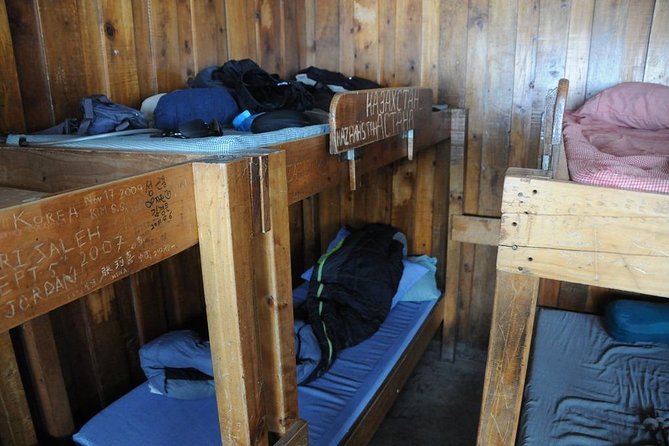
I pay attention to what is included, then I translate it into real mountain comfort. This tour includes:
- All fees and taxes plus transfers to and from Kilimanjaro International Airport
- Emergency oxygen and a basic first aid kit, specifically for emergencies only
- Fresh drinking water, plus hot water for a wash daily
- Meals: breakfast (5), lunch (5), dinner (4)
- Qualified guide and assistant guides, plus porters and cook with wages covered
That oxygen detail is important. Oxygen is for emergencies, not for helping you summit. So the best way to think about this is safety support, not a cheat code.
Also note the meal coverage: lunch is listed for 5 days, and dinners are listed for 4. That lines up with a typical hut-camp rhythm, and it means you are not constantly hunting food while you are exhausted.
What the guide team experience tends to feel like
Even when companies change, the human side is what you remember. In the feedback attached to this operator, guide names like Frazier, J.T., Jonas, Julius, Yassin, and Chris show up in positive ways, and porters and the cook are repeatedly praised for keeping things efficient and food worthwhile even on the mountain.
You should take that as a signal that the operator emphasizes teamwork, not just “we’ll assign whoever is available.” A guided climb works when the guide is patient with pace, reassuring when you feel altitude pressure, and consistent about safety decisions.
If you care about communication, this kind of team culture tends to make a difference. Summit day is not the time to be confused about what is happening. A good guide team reduces that stress.
Who this Marangu climb suits best, and who should reconsider
This tour is positioned for intermediate-plus climbers on limited time. If you already hike regularly, you have experience with long uphill days, and you follow instructions well, you’ll likely find the pace and route fit your abilities.
It is also a strong match if you want the Marangu hut style. Staying overnight in huts is a very specific Kilimanjaro experience, and it can feel more manageable for people who do not want a pure camping setup.
If you are new to hiking or you struggle with long days at elevation, the five-day timeline might feel aggressive. The Marangu route is a classic, but five days still means you are climbing fast relative to what some bodies prefer. When in doubt, you should choose a pace that gives you more time to acclimatize.
Packing and prep, based on what is not included
The tour makes it clear that personal trekking gear is not included. They also say you can opt to rent some gears in Tanzania. So your best move is to decide what you want to bring and what you prefer to rent.
Here are the categories you should plan for because they are not provided:
- Personal trekking gears
- Personal medicine
- Water purifying tablets
- Optional but highly recommended portable toilet
Also, visas and flight expenses are not included. And health and travel insurance are not included, with a specific note that Yellow Fever vaccination is compulsory if traveling to Tanzania and Kenya. This is a place where you should check your own travel rules early, then handle documentation before you arrive.
Should you book Conquer Kilimanjaro on the 5-Day Marangu Route?
Book it if you want a guided hut-based Kilimanjaro climb that handles the big logistics, with meals, accommodation, and transfers included. You are aiming for the Marangu route, you have intermediate-plus hiking fitness, and you like a structured plan with a midnight summit start and a clear descent and recovery sequence.
Consider a different option if you are worried about the five-day acclimatization window. Also consider it if you hate uncertainty, because summit outcomes depend on your body, conditions, and pacing, even with a strong guide team.
If you are ready for a fast but very guided mountain experience, this is the kind of trip that turns Kilimanjaro into something you can actually manage, instead of something you have to figure out on the fly.
FAQ
What route does this Kilimanjaro tour use?
It uses the Marangu Route.
Where does the tour start and end?
It starts in Moshi Urban, Tanzania, and ends back at the meeting point.
How long is the climb?
The duration is listed as 5 days (approximately).
What is included in the tour price?
The tour includes all fees and taxes, transfers to and from Kilimanjaro International Airport, emergency oxygen for use in emergencies only, a basic first aid kit, guides, assistant guides, porters and cook with their wages, fresh water for drinking, hot water for a wash daily, and meals including 5 breakfasts, 4 dinners, and 5 lunches.
Are airport transfers included?
Yes, transfer to and from Kilimanjaro International Airport is included.
Is emergency oxygen included for summit help?
No. Emergency oxygen is included for use in emergencies only, not as summit aid.
Do I need a visa or flights included?
Visas and flight expenses are not included.
Is trekking gear included?
Personal trekking gears are not included, but you may opt to rent some of the gear from equipment stores in Tanzania.
Is a portable toilet included?
A portable toilet is optional but highly recommended, and it is not listed as included.
What cancellation terms apply?
Free cancellation is available if you cancel up to 24 hours in advance for a full refund. Changes made less than 24 hours before the start time are not accepted.
The Marangu Trail
- Kilimanjaro climb, Marangu route (6-day)
★ 5.0 · 72 reviews - Climbing Kilimanjaro – Marangu Route
★ 5.0 · 65 reviews - Best Kilimanjaro Adventures 6 Days Marangu Route Experience
★ 5.0 · 18 reviews - Kilimanjaro Private Climbing in 6 Days Marangu Route
★ 5.0 · 16 reviews - 6 Days Climb Kilimanjaro Through Marangu Route
★ 4.5 · 15 reviews
Kilimanjaro, Route by Route
- Kilimanjaro climb by Lemosho Route (7-day)
★ 5.0 · 651 reviews - Kilimanjaro climb, Machame Route (7-day)
★ 5.0 · 262 reviews - Kilimanjaro Climbing Lemosho Route 8 Days.
★ 5.0 · 186 reviews - Climbing Kilimanjaro – Machame Route
★ 5.0 · 170 reviews - Climbing Kilimanjaro through 7 days Machame Route
★ 5.0 · 151 reviews
Just added from around Moshi
Kilimanjaro Marangu Route, compared.
 ★ 5.0Kilimanjaro climb, Marangu route (6-day)From $2,90272 reviews
 ★ 5.0Climbing Kilimanjaro – Marangu RouteFrom $2,00465 reviews
 ★ 5.0Private Full Day Hiking Experience to Marangu RouteFrom $26061 reviews
 ★ 4.5From Arusha/Moshi: Kilimanjaro Hike Marangu Route Day TripFrom $10154 reviews
 ★ 5.0Mount Kilimanjaro Day Hike Through Marangu Route to Mandara HutFrom $26537 reviews
 ★ 5.0Kilimanjaro Climbing 5 days Marangu routeFrom $90022 reviews
 ★ 5.0Best Kilimanjaro Adventures 6 Days Marangu Route ExperienceFrom $1,00018 reviews
 ★ 5.0Kilimanjaro Private Climbing in 6 Days Marangu RouteFrom $2,00016 reviews
Browse the lists this tour appears in