
REVIEW · KILIMANJARO LEMOSHO ROUTE
Climb Kilimanjaro 8-Day Lemosho Route with Stunning Scenic Views
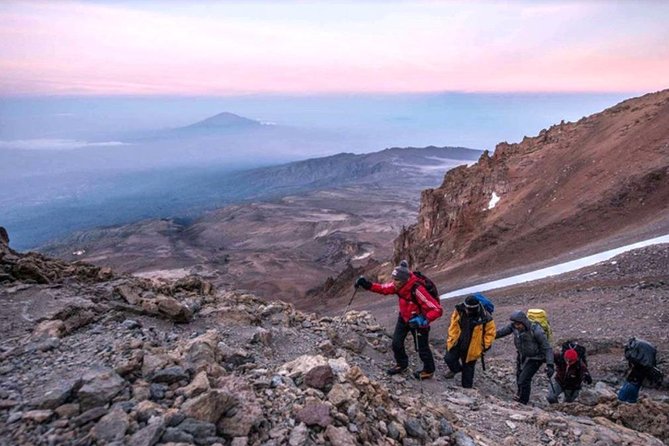
Kilimanjaro rewards patience. This 8-day Lemosho route from Moshi is designed for steadier acclimatization, with long days that still keep things manageable until summit night. You get big moments like Shira Plateau views and a midnight push that aims for sunrise on Uhuru Peak.
What I really like is the built-in support system. In feedback for PINNACLE ADVENTURES & SAFARIS LTD, people repeatedly highlight strong planning and leadership from named guides such as Justin JT and team lead Sam, plus smooth coordination from trip planning like Brian. Another standout: food quality is often called out as surprisingly good for a camping trek, which matters when you are trying to keep energy steady at altitude.
The main consideration is that this is still a serious mountain. Summit day is long, and you will be outside in the cold for hours, with the group’s emergency oxygen kept for emergencies only, not as summit aid. If you are not ready for the physical grind, the “easier route” label will not save you.
In This Review
- Key highlights worth knowing before you go
- Why the 8-Day Lemosho Route is a smart Kilimanjaro bet
- Moshi setup: pickup, who’s with you, and gear you handle yourself
- Day-by-day: rainforest begins, Shira opens the views, Lava Tower helps you adjust
- Day 1: Moshi area to Mti Mkubwa Camp
- Day 2: Mti Mkubwa to Shira Camp One
- Day 3: Shira Camp Two and panoramic acclimatization
- Day 4: Lava Tower (4,600m) to Barranco Camp
- Barranco Wall and Karanga Camp: where the route tests you
- Day 5: Karanga Camp via the Barranco Wall
- Barafu to Uhuru Peak: midnight start, long day, and a smart descent
- Day 6: Barafu Camp, your summit base
- Day 7: Uhuru Peak to Mweka Camp (the big one)
- Stella Point certificates
- Day 8: Mweka Gate finish, hot lunch, and Moshi recovery time
- Value and what’s actually included at this price
- Who this 8-day Lemosho climb fits best
- Should you book this 8-day Lemosho route?
- FAQ
- What is the duration of the Kilimanjaro 8-Day Lemosho route?
- Where does the tour start and end?
- Is pickup included?
- What is included in the price?
- Do I need technical climbing gear or rope work?
- What health requirement is compulsory?
- How close to the experience can I cancel for a full refund?
Key highlights worth knowing before you go
- Longer 8-day pacing gives your body more time to adjust before the hardest parts.
- Shira and Lava Tower acclimatization bring wide Kibo views and a useful high-altitude day before Barranco.
- Barranco Wall and Karanga Camp are the route’s big “prep” tests before Barafu.
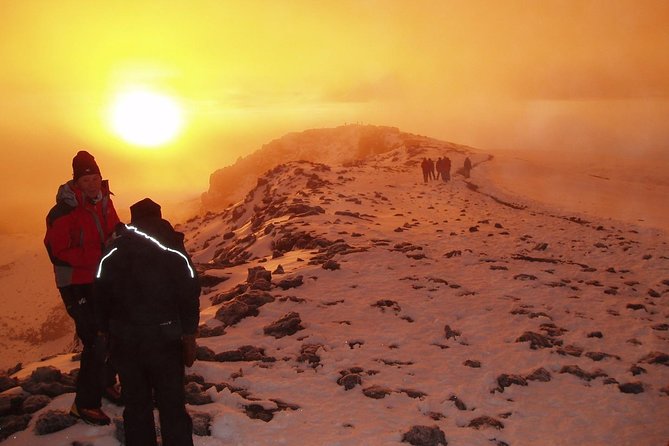
- Midnight summit strategy targets Uhuru Peak by sunrise, then a fast descent to Mweka Camp.
- Park certificates with clear milestones: green for Stella Point and gold for Uhuru Peak.
Other ways up Kilimanjaro we reviewed
- Kilimanjaro climb by Lemosho Route (7-day)★ 5.0 · 651 reviews
- Kilimanjaro climb, Machame Route (7-day)★ 5.0 · 262 reviews
- Kilimanjaro Climbing Lemosho Route 8 Days.★ 5.0 · 186 reviews
- Climbing Kilimanjaro – Machame Route★ 5.0 · 170 reviews
Why the 8-Day Lemosho Route is a smart Kilimanjaro bet
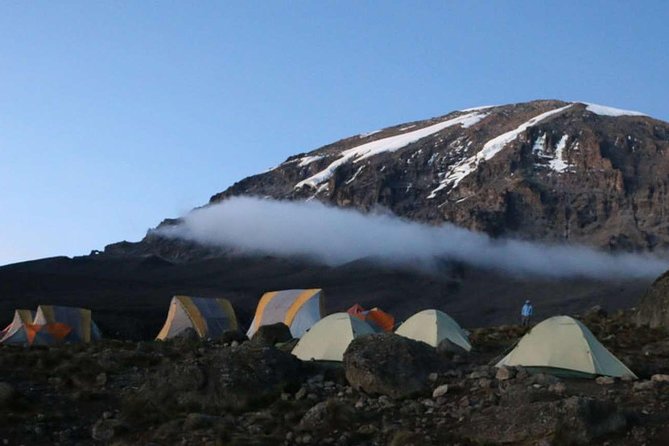
The Lemosho route is widely known as one of the friendlier ways up, mainly because it spreads the climb out. On Kilimanjaro, the math is simple but brutal: climb too fast and altitude wins. This 8-day schedule is built to help you avoid that trap by giving your body more days to adapt.
That extra time shows up in the rhythm. You trek through rainforest early on, then you transition onto plateaus and semi-desert terrain, and you do a high-point acclimatization stop before the route asks you for effort. By the time you reach the final camps, you have already trained your body to handle the altitude in smaller doses.
I also like that the route keeps the hardest work focused. You do not need technical climbing gear or ropes. Still, you do need real stamina for the summit push and the steeper sections around Barranco and the final approach to Barafu.
Moshi setup: pickup, who’s with you, and gear you handle yourself
Your trip starts in Moshi, Tanzania, with pickup offered and the meeting point in Moshi Urban. That matters, because Kilimanjaro trips often lose time in messy transfers. Here, you can plan around a single base in town and keep your mind on the climb.
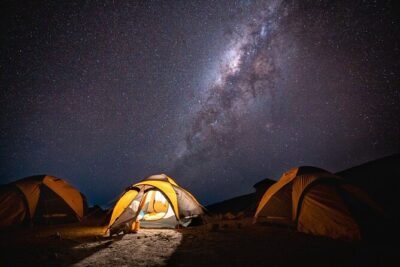
One of the biggest practical wins is that the support team is included as a staffed system, not just a name on a WhatsApp chat. You get a qualified mountain guide, assistant guides, porters, and a cook, and their wages are included. Camping equipment is also included, including tents, camp chairs, tables, and sleeping mattresses.
What you should plan to bring yourself is your personal hiking and trekking gear. The tour notes that you can rent gear from equipment stores in Moshi, so you do not have to haul everything internationally. Also, personal medicine and water purifying tablets are not included, so you need to handle those.
If you take one tip from this section, it’s this: plan your packing so you do not waste energy on avoidable stuff. Your body will already be working overtime once you get into thin air.
Day-by-day: rainforest begins, Shira opens the views, Lava Tower helps you adjust
This is an 8-day climb, and each day has a job. Some days are about moving. Others are about helping your body absorb altitude.
Lemosho itineraries worth reading next
Day 1: Moshi area to Mti Mkubwa Camp
You start after breakfast and transfer to Londorossi Gate for registration. Then you trek through lush rainforest to Mti Mkubwa. Expect a day that feels steady rather than punishing.
- Elevation: 2,100m to 2,780m
- Trekking time: about 3-4 hours
- Camp: Mti Mkubwa Camp
This is the day to get into the “Kili mindset.” Keep your pace calm. Enjoy the change in air and the greenery. You’re not there to win distance, you’re there to start building rhythm.
Day 2: Mti Mkubwa to Shira Camp One
You continue through rainforest, then reach the Shira Plateau. This is where your first real sense of Kibo Peak shows up.
- Elevation: 2,780m to 3,500m
- Trekking time: about 5-6 hours
- Camp: Shira Camp One
This is a good day for patience. The ground is higher and breathing feels different, even if your legs still feel okay.
Day 3: Shira Camp Two and panoramic acclimatization
You cross the Shira Plateau at a gentler angle, with panoramic views. The route also spotlights views of Mount Meru and the surrounding wilderness.
- Elevation: 3,500m to 3,850m
- Trekking time: about 4-5 hours
- Camp: Shira Camp Two
This day is valuable because it is not just scenery. It is acclimatization with a lighter trek load. You will likely feel better later because of it.
Day 4: Lava Tower (4,600m) to Barranco Camp
Now you start working with altitude more intentionally. You trek across semi-desert terrain up to Lava Tower at 4,600m, then descend to Barranco Camp under the Barranco Wall.
- Route includes a high point: 4,600m
- Elevation range: 3,850m to 3,900m via 4,600m
- Trekking time: about 6-7 hours
- Camp: Baranco Camp
This is a key acclimatization move. You go high, then you come down to sleep slightly lower. That “up and down” pattern is a classic way to help your body cope.
Barranco Wall and Karanga Camp: where the route tests you
After the Lava Tower work, the climb turns more demanding.
Day 5: Karanga Camp via the Barranco Wall
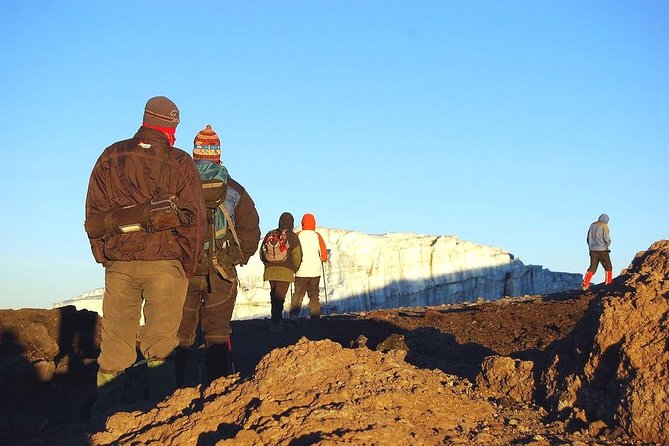
Today includes the Barranco Wall, challenging but rewarding. You climb it, then hike onward to Karanga Camp, which is designed to set you up for the summit push.
- Elevation: 3,900m to 4,035m
- Trekking time: about 4-5 hours
- Camp: Karanga Camp
This is where you should focus on steady effort. You do not need to sprint. You need to move with control, especially if you feel short of breath.
If you want one practical mindset shift: treat Barranco as training for summit night, not as a random obstacle.
Barafu to Uhuru Peak: midnight start, long day, and a smart descent
Day 6: Barafu Camp, your summit base
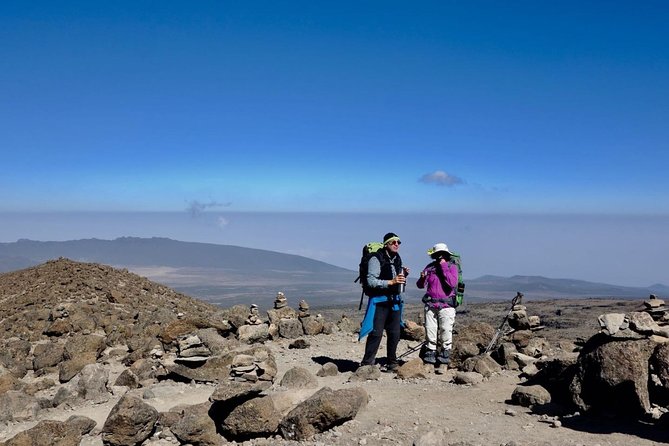
You ascend to Barafu Camp, your springboard for the summit attempt that starts after midnight.
- Elevation: 4,035m to 4,673m
- Trekking time: about 4-5 hours
- Camp: Barafu Stella Trail area
This is where you slow down mentally. The climb is still going up tomorrow, but the goal is to rest, fuel, and sleep as well as altitude allows.
Day 7: Uhuru Peak to Mweka Camp (the big one)
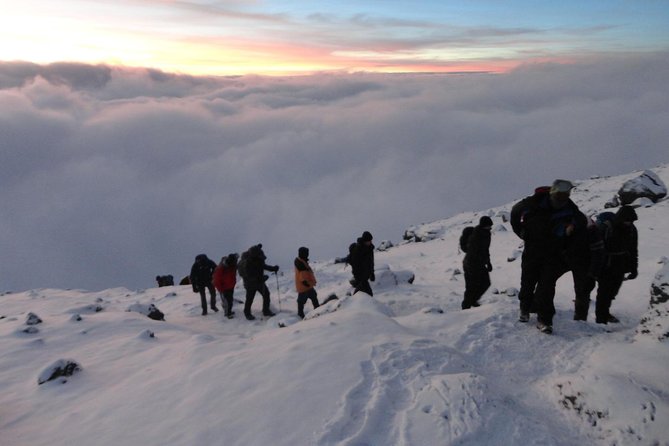
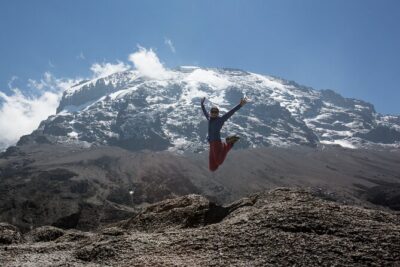
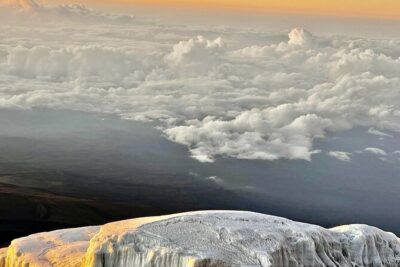
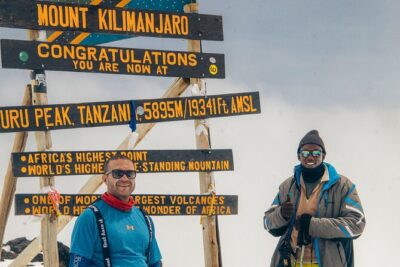
You start the summit attempt around midnight. You aim to reach Uhuru Peak, 5,895m, by sunrise. Then you descend all the way to Mweka Camp.
- Summit point: Uhuru Peak at 5,895m
- Total time on feet: about 12-14 hours
- Descent to: 3,068m
- Camp: Mweka Camp
This day is tough because it blends cold, low oxygen, and long walking time. The tour’s included emergency oxygen is for emergencies only, not as summit aid, so you must rely on steady pacing and your own acclimatization.
Also remember: this is not just about getting to the top. It is about getting down safely. That descent is part of the “win.”
Stella Point certificates
The National Park certificate system is built around your peak milestone. If you reach Stella Point (5,685m), you receive a green certificate. If you reach Uhuru Peak (5,895m), you receive a gold certificate. The process includes signing your name at the park for certificates of completion.
Day 8: Mweka Gate finish, hot lunch, and Moshi recovery time
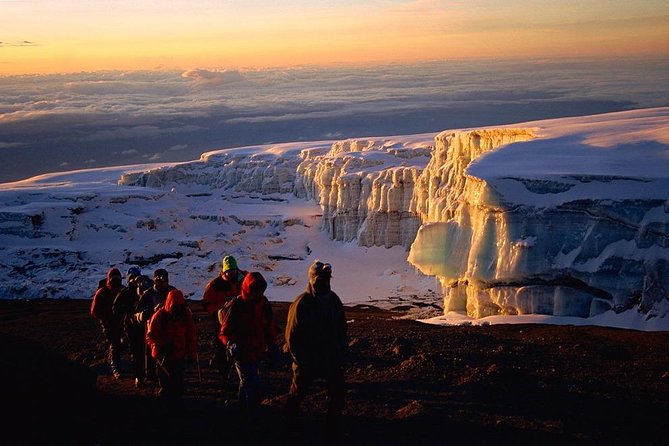
The last day is a real release. You descend through the rainforest to Mweka Gate, then transfer back to Moshi for rest. You are also served a hot lunch, followed by a chance to shower and celebrate.
There is also a cultural moment here. You present your tips to the guide, assistant guides, chef(s), and porters on the mountain after the big effort. Gratuities are not included, so this is part of your personal planning.
This final descent also matters for your body. Long treks can leave your legs cooked, and the downhill walk at the end can feel heavy, even when it is “just” the last day.
Value and what’s actually included at this price
At $3,373.24 per person, you are not just paying for a trek. You are paying for a full support structure. Here’s what the price covers based on what’s included:
- All fees and taxes
- Emergency oxygen and basic first aid kit (emergencies only)
- Qualified guide, assistant guides, porters, and cook plus wages
- Camping equipment: tents, chairs, tables, sleeping mattress
- Fresh water for drinking
- Hot water for wash daily
- Meals: breakfast 7, dinner 7, lunch 8
- Admission tickets are included on the trek days listed
That combination is the real value. Getting to the summit on Kilimanjaro requires people, logistics, and food. If you ever priced “just hire a guide, then figure out everything else,” you know how quickly costs and uncertainty climb.
What’s not included is also worth reading carefully:
- Visas and flights
- Travel and health insurance
- Yellow fever vaccination is compulsory
- Gratuities or tips
- Personal hiking gear (renting is available in Moshi)
- Optional but highly recommended portable toilet
- Personal medicine and water purifying tablets
If you want to protect your budget, plan for those add-ons early. The optional portable toilet is one of the easiest comfort upgrades to consider.
Who this 8-day Lemosho climb fits best
This route is a good match if you:
- Want the easier-pacing approach with extra days for acclimatization
- Are comfortable with a long summit day and steep sections like Barranco Wall
- Prefer a guided, supported camp experience rather than carrying everything
It is not technical climbing, but it is still a fitness test. The tour calls for moderate physical fitness. I’d interpret that as: you should be able to hike daily for multiple hours, and you should have trained for long walking days before you arrive.
Also, this is a private tour/activity, meaning only your group participates. If you value privacy, a calmer camp vibe, and less crowd energy, that’s a real plus.
Should you book this 8-day Lemosho route?
Book it if you want a summit attempt that respects acclimatization time and you value strong on-the-ground support. The 8-day pacing, the inclusion of porters and cook, the hot water for daily washes, and the clear summit milestone certificate system all make this feel like a complete expedition, not a bare-bones trek.
Think twice if you know your summit-night stamina is shaky. This climb can be long on the top day, and the emergency oxygen is there for emergencies only. If you cannot handle cold, long hours, and steady effort at high altitude, you should be honest with yourself and choose training and preparation first.
FAQ
What is the duration of the Kilimanjaro 8-Day Lemosho route?
The climb runs for about 8 days.
Where does the tour start and end?
It starts at Moshi Urban, Tanzania, and ends back at the same meeting point.
Is pickup included?
Pickup is offered.
What is included in the price?
The tour includes all fees and taxes, emergency oxygen for emergencies only, a basic first aid kit, qualified guide and support staff with their wages, camping equipment, fresh drinking water, hot water for washing daily, and the listed meals (breakfast 7, dinner 7, lunch 8).
Do I need technical climbing gear or rope work?
No technical climbing is required.
What health requirement is compulsory?
Yellow fever vaccination is compulsory, according to the tour information.
How close to the experience can I cancel for a full refund?
You can cancel up to 3 days in advance of the experience for a full refund, meaning you must cancel at least 3 full days before the start time.
Lemosho, Compared
- Kilimanjaro climb by Lemosho Route (7-day)
★ 5.0 · 651 reviews - Kilimanjaro Climbing Lemosho Route 8 Days.
★ 5.0 · 186 reviews - Kilimanjaro climb, Lemosho Route (8-day)
★ 5.0 · 148 reviews - Kilimanjaro climb, Lemosho Route (6-day)
★ 5.0 · 129 reviews - Kilimanjaro Lemosho Route
★ 5.0 · 71 reviews
Kilimanjaro, Route by Route
- Kilimanjaro climb by Lemosho Route (7-day)
★ 5.0 · 651 reviews - Kilimanjaro climb, Machame Route (7-day)
★ 5.0 · 262 reviews - Kilimanjaro Climbing Lemosho Route 8 Days.
★ 5.0 · 186 reviews - Climbing Kilimanjaro – Machame Route
★ 5.0 · 170 reviews - Climbing Kilimanjaro through 7 days Machame Route
★ 5.0 · 151 reviews
Just added from around Moshi
Kilimanjaro Lemosho Route, compared.
 ★ 5.0Kilimanjaro climb by Lemosho Route (7-day)From $3,476651 reviews
 ★ 5.08-Day Small-group Lemosho Kilimanjaro Summit TrekkingFrom $2,895186 reviews
 ★ 5.0Kilimanjaro Climbing Lemosho Route 8 Days.From $2,300186 reviews
 ★ 5.0Kilimanjaro climb, Lemosho Route (8-day)From $3,975148 reviews
 ★ 5.0Kilimanjaro climb, Lemosho Route (6-day)From $3,034129 reviews
 ★ 5.0Kilimanjaro Lemosho RouteFrom $2,89071 reviews
 ★ 5.0Private Kilimanjaro Hike 7 Day Lemosho RouteFrom $2,45060 reviews
 ★ 5.0Climbing Kilimanjaro through 8 days Lemosho RouteFrom $2,76052 reviews
Browse the lists this tour appears in