
REVIEW · KILIMANJARO LEMOSHO ROUTE
A Definitive Guide For the 7-day Kilimanjaro’s Lemosho Route 2025
Seven days, and Kilimanjaro feels doable. What makes this hike so appealing is the Lemosho route, built for a slower climb that helps your body adjust as altitude rises. You also get a clear structure with day-by-day elevation gains, so you know what kind of effort is coming.
Two things I really like: first, the itinerary leans into acclimatization, with more time spent at increasing heights before the big push. Second, the trip includes camping setup and meals, so you are not juggling extra logistics in the mountains.
The main drawback to watch is cost creep. The listed price is $1,250 per person, but Mount Kilimanjaro park fees and tips are not included, so your total budget will be higher once those are paid.
In This Review
- Key reasons the 7-day Lemosho works well
- Why Lemosho’s 7-day plan can feel more manageable at altitude
- Moshi to Londorossi Gate: logistics that keep you calm on day one
- Day 1, Londorossi Gate to Forest Camp: rain forest start and smart pacing
- Day 2, Forest Camp to Shira Camp: moorland exposure and steady breathing
- Day 3, Shira 1 to Shira 2 to Moir Hut: the acclimatization logic gets real
- Day 4, Moir Hut to Lava Tower to Barranco Camp: semi-desert views with a tougher feel
- Day 5, Barranco to Karanga to Barafu: the long day that tests stamina
- Day 6, Barafu to summit to Mweka Hut: the altitude peak, then the long descent
- Day 7, Mweka Camp to Moshi: rain forest air and a real finish
- Price and value: what $1,250 includes, and what you must budget
- Crew support you can feel: guides, pace, and summit help
- Who this 7-day Lemosho trek is best for
- Should you book this 2025 7-day Lemosho Kilimanjaro trek?
- FAQ
- What is the duration of the 7-day Kilimanjaro Lemosho route?
- Is pickup from Moshi included, and where do you go on day one?
- Are meals and camping equipment included?
- Are Mount Kilimanjaro park fees included in the price?
- What is the price for this trek?
- What is the fitness level expected for this trek?
- Does the package include hotel stays in Moshi before and after the trek?
- What is the cancellation policy?
- Is airport pickup or drop-off included?
Key reasons the 7-day Lemosho works well
- Extra acclimatization time before the summit push, which can lower stress from altitude
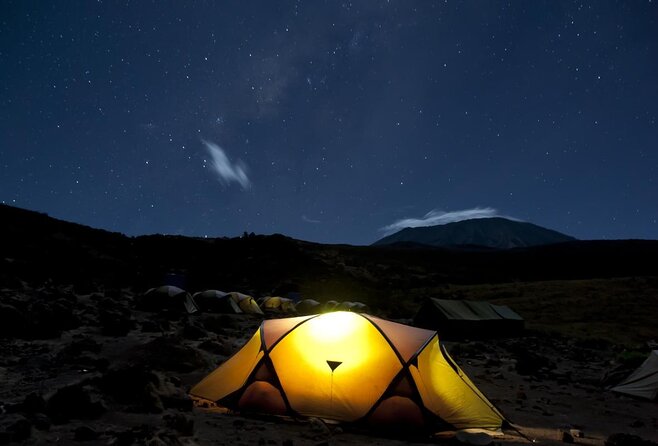
- Camping gear and food included, including tents and sleeping mattresses
- Longer, more accessible route that spreads out the ascent over multiple days
- Strong guide support and trekking pace designed for safety on summit day
- Best season timing matters, and the trek fits the recommended mid-Dec to March and mid-Jun to Oct windows
Other ways up Kilimanjaro we reviewed
- Kilimanjaro climb by Lemosho Route (7-day)★ 5.0 · 651 reviews
- Kilimanjaro climb, Machame Route (7-day)★ 5.0 · 262 reviews
- Kilimanjaro Climbing Lemosho Route 8 Days.★ 5.0 · 186 reviews
- Climbing Kilimanjaro – Machame Route★ 5.0 · 170 reviews
Why Lemosho’s 7-day plan can feel more manageable at altitude
Kilimanjaro is not just about willpower. It is about how your body handles thin air. This is why the Lemosho route is often chosen for a 7-day approach: you gain height gradually, then build in time at intermediate elevations before the summit attempt.
A big selling point here is the extra day for acclimatization. That does not mean the summit day is easy, but it can make the overall trek feel less abrupt. If you have ever had trouble with high altitude before, that pacing matters. It can also make your breathing feel steadier on the tougher sections, especially once you transition from forest and moorland into the harsher alpine zones.
Timing helps too. Climbing is recommended between mid-December and March or mid-June and October, when weather conditions are better. If you can pick your travel dates, aim for those drier windows. It is one of those rare cases where planning ahead directly affects comfort and safety.
Moshi to Londorossi Gate: logistics that keep you calm on day one
You start in Moshi, and pickup is included from your hotel in Moshi town to Londorossi Gate. That matters more than it sounds. Day one on Kilimanjaro starts early and moves fast, and having transport handled means you spend less time coordinating, more time settling in.
You also get a briefing and a trekking certificate. The briefing is not a fluffy talk, it is where your guide lines up expectations for pace, hydration, and what to watch for. The certificate is a nice touch for recordkeeping when you return home.
Group size is capped at a maximum of 50 travelers. That is important for atmosphere and organization. Larger crowds can make logistics feel hectic. Here, the cap helps keep things more manageable for the crew and for you.
Finally, the start is linked to Africa Natural Tours L.T.D at Mkwawa Avenue, and the activity ends back at the meeting point, with a drop-off to your Moshi hotel from Mweka Gate after the trek. In practice, it means you are not left trying to find transportation after you finish one of the hardest days of your life.
Day 1, Londorossi Gate to Forest Camp: rain forest start and smart pacing
Day 1 climbs from about 7,800 ft to roughly 9,500 ft, covering around 6 km. The hiking time is listed as 3 to 4 hours, and the habitat is rain forest.
This is the day to keep your effort controlled. When you start in the forest, temperatures can be warmer, and you may feel tempted to rush. Don’t. Your goal is to arrive feeling like you could walk a little longer, not like you just finished an all-out workout.
A rain forest start is actually a gift. It often means your body warms gradually, and the air feels more forgiving than later zones. You’ll still earn elevation, but the footing and the environment can feel more “human-scale” than the rocky, windy stretches higher up.
What I would do on day one: keep your pace smooth, drink steadily, and let your breathing settle. You are setting up your rhythm for the entire week.
Lemosho itineraries worth reading next
Day 2, Forest Camp to Shira Camp: moorland exposure and steady breathing
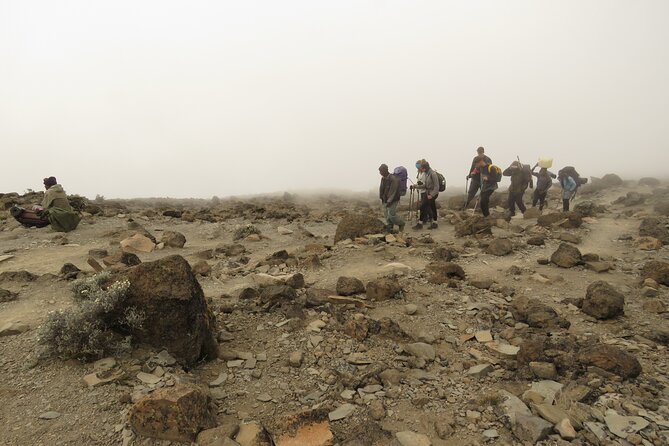
Day 2 moves from Forest Camp to Shira Camp, climbing from about 9,500 ft to 11,500 ft over 8 km. Hiking time is around 5 to 6 hours, and the habitat changes to moorland.
This is where you start to notice a shift. Moorland can feel colder, and the terrain tends to open up. With more exposed areas, you will feel wind and temperature changes more strongly. Your trekking layers become more important here, even if the day does not feel hard yet.
It is a longer day than day one. The challenge is not just distance, it is the combination of distance and altitude. If you keep your pace measured, this day becomes a useful step in acclimatization rather than a strain.
Practical tip: watch for subtle signs of altitude discomfort. If you feel headache or unusual nausea, do not “push through” aggressively. Tell your guide and adjust your breathing and pace right away.
Day 3, Shira 1 to Shira 2 to Moir Hut: the acclimatization logic gets real
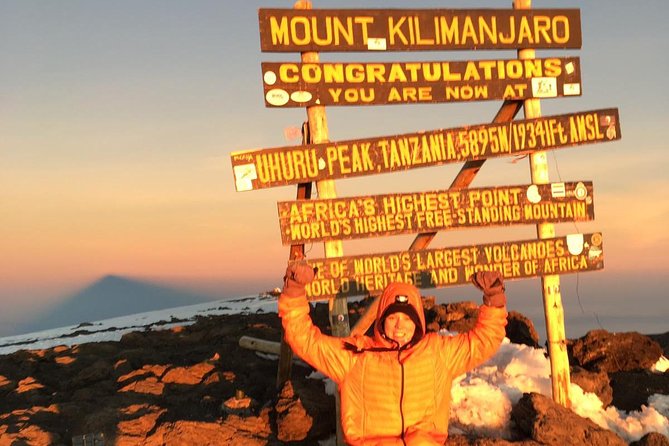
Day 3 goes from about 11,500 ft to 13,800 ft, covering 14 km in roughly 5 to 7 hours. The habitat stays in moorland.
This is a key acclimatization day. You are gaining elevation, but you are not yet in summit mode. You should think of it as helping your body adapt while keeping your movement efficient.
A longer day like this can also teach you something valuable: how to walk for hours without burning energy. The best strategy tends to be consistent steps, controlled breathing, and regular hydration. You do not need to sprint between rest stops, you need to save your legs for later.
If you are prone to fatigue, day 3 is when you should commit to a slower plan. The good news is that by now you have an established routine, and your mind knows what to expect.
Day 4, Moir Hut to Lava Tower to Barranco Camp: semi-desert views with a tougher feel
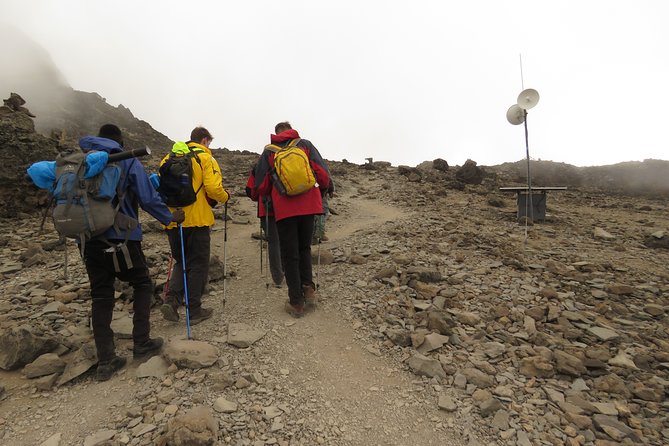
Day 4 climbs from around 13,800 ft down to about 13,000 ft, covering 7 km with 4 to 6 hours of hiking. Habitat shifts to semi desert, and you pass through Lava Tower before reaching Barranco Camp.
The semi-desert zone often feels stark. Less vegetation, more rock, and a cleaner view of the mountain. That can be spectacular, and it can also be more physically demanding than it looks. Longer stretches with less shade can tire you faster, and the air can feel sharper.
This is also where you start moving into the style of terrain you will keep seeing higher up: more exposed, more wind, and more attention to footing.
When you reach Barranco Camp, you want to feel ready to rest well. The next day is a big one, so treat the evening as part of the climb. Eat what is offered, drink what you can, and keep your body warm as temperatures drop.
Day 5, Barranco to Karanga to Barafu: the long day that tests stamina
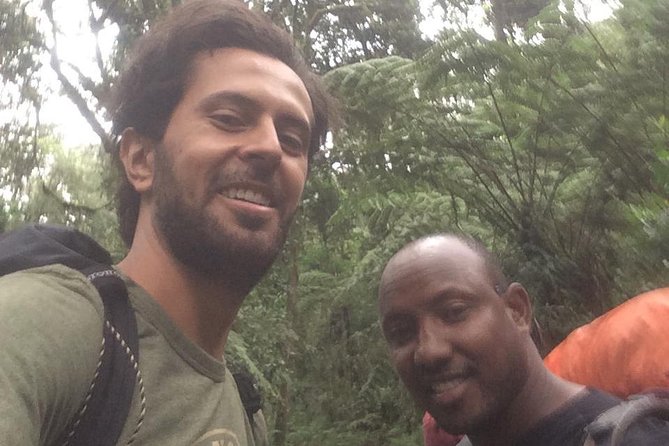
Day 5 covers about 9 km, and hiking time is 8 to 10 hours, climbing from roughly 13,000 ft to 15,000 ft. Habitat is alpine desert, and you will go Barranco Camp to Karanga Camp to Barafu Camp.
This is one of the most challenging days on the route. Even if the distances look moderate on paper, the time estimate tells you it is a grind. Alpine desert terrain tends to be unforgiving and exposes you to cold and wind.
This day is also where you learn your energy management. You cannot spend everything on the first half. Keep your pace even, take breaks before you feel wiped out, and keep your hydration steady. You want your body to feel “worked,” not “wrecked.”
Also, expect a mental shift. By now you know the summit is near, and motivation can spike. That is great, but do not let excitement turn into over-sprinting. Overdoing it on day 5 can rob you of comfort for the summit push.
Day 6, Barafu to summit to Mweka Hut: the altitude peak, then the long descent
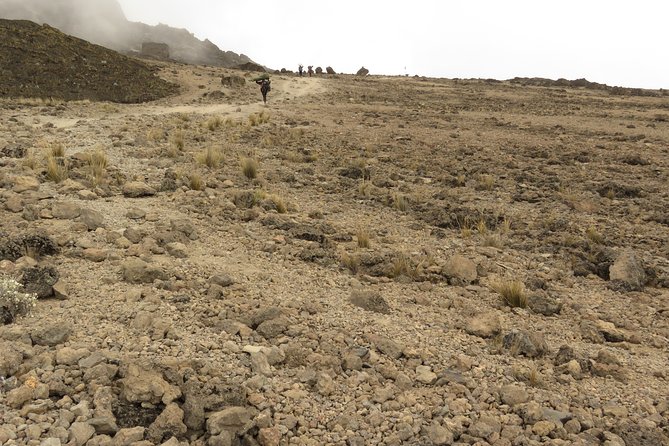
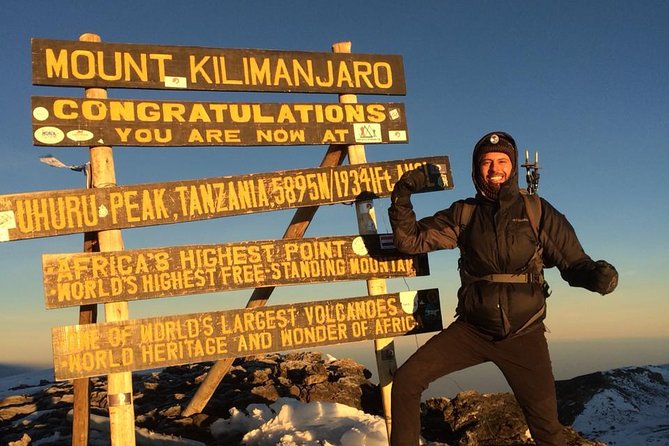
Day 6 is the heart of the week. You start around 15,300 ft, reach approximately 19,345 ft at the summit, then descend all the way to about 10,000 ft at Mweka Hut. Distance is listed as 5 km ascent and 12 km descent, with hiking time estimated at 7 to 8 hours for ascent and 4 to 6 hours for descent.
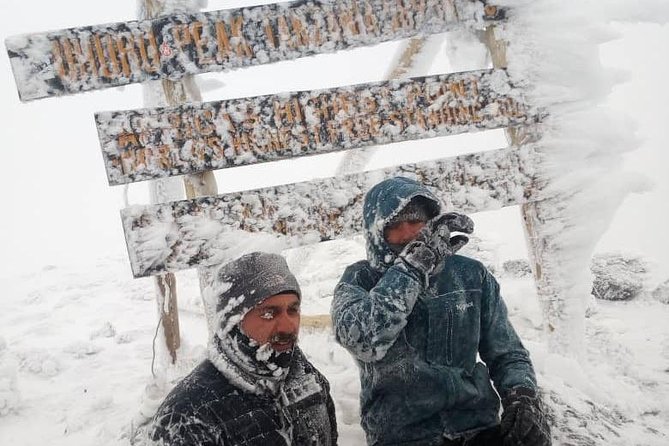
The habitat is arctic, so plan for extreme cold and rapidly changing conditions. This day is typically the one where proper gear matters most, even if the trekking package takes care of tents and mattresses. You will be moving in some of the harshest air on the mountain, and conditions can feel intense.
From a practical standpoint, how you climb during the summit push matters as much as how you climb during the descent. A steady pace, frequent small sips, and a focus on breathing are usually what get people through. If you have stomach sensitivity at altitude, tell your guide early. They can often help you manage pace and hydration choices.
Then you switch into descent mode. The descent to Mweka Hut is not gentle. Your legs will feel it, and gravity will turn the climb into a leg endurance test. Still, it is also where you start moving away from the highest, most demanding oxygen levels.
Day 7, Mweka Camp to Moshi: rain forest air and a real finish
Day 7 drops from about 10,000 ft down to around 5,400 ft, covering 10 km in 3 to 4 hours. Habitat returns to rain forest.
This is your release valve. After the summit day, the descent can feel almost like a stroll, especially with your energy returning as altitude drops. You still need to take it seriously. Your knees and ankles may be ready to protest, and rain forest trails can be slippery.
You’ll hike to Mweka area and then get transported back to Moshi. The trek includes drop-off to your hotel from Mweka Gate, and the overall activity ends back at the meeting point.
When you finish, take a moment to notice how your body reacts. Many people expect relief, but what they often feel is a mix of satisfaction and exhaustion. That is normal. Hydrate, eat, and plan for rest the rest of the day.
Price and value: what $1,250 includes, and what you must budget
At $1,250 per person, this 7-day Lemosho climb includes several big-ticket items that make a real difference in your comfort and logistics.
What is included:
- Quality tents and sleeping mattresses (camping equipment is provided)
- All meals during the trek: breakfast, lunch, and dinner
- A professional trekking guide plus a briefing
- A trekking certificate
- Pickup from your Moshi hotel to Londorossi Gate
- Drop-off back to your Moshi hotel from Mweka Gate
What is not included:
- All Mount Kilimanjaro Park Fees (you can pay direct to the park or via the operator)
- Tips for the mountain crew
- Hotel accommodations before and after the trek in Moshi
- Flight costs (domestic and international)
- Personal hiking gear
Here is how I think about the value. The included gear and meals reduce the biggest sources of hassle: you do not have to carry as much, and you do not have to arrange food while acclimatizing. The pickup and drop-off also removes one of the more annoying travel gaps.
But the budget risk is park fees and tips. So if you are comparing this trek to cheaper options, be sure you are comparing like to like. A lower price can vanish once fees, crew payments, and gear come into play.
Crew support you can feel: guides, pace, and summit help
Kilimanjaro runs on teamwork. Even when you are physically capable, having the right guidance can change how the trek feels day to day.
In the feedback connected to this company, guides are praised by name for being helpful on route, understanding the mountain area, and keeping people motivated. Names you may see include Edwin and Moodie, and the office contact Godfrey shows up in the communication side as well. That is a good sign: it suggests there is a consistent human team behind the adventure.
More importantly, you want a guide who will manage pacing rather than just chase height. On summit day, that can be the difference between feeling steady and feeling panicked. The best support usually looks like encouragement plus discipline: small, consistent steps, clear instructions, and quiet attention to how you are feeling.
Who this 7-day Lemosho trek is best for
This trek fits you best if:
- You want a longer acclimatization-focused route rather than a fast push.
- You prefer camping with your core needs handled (tents and mattresses, plus meals).
- You have moderate physical fitness and you are ready for daily hiking that can run 4 to 10 hours.
- You care about maximizing your odds by climbing during the recommended windows (mid-Dec to March or mid-Jun to Oct).
It may be less ideal if:
- You are on a tight budget and cannot flex for park fees and tips.
- You want hotel lodging included before and after the climb (that is not part of the package).
- You rely on airport transfers (airport pickup and drop-off are not included).
Should you book this 2025 7-day Lemosho Kilimanjaro trek?
I would book this trek if your top priorities are acclimatization, included camp comfort, and straightforward Moshi-to-gate logistics. The route profile is built to make the climb more gradual, and the package removes several everyday headaches like meals and camping equipment.
Before you commit, do a quick reality check:
- Make sure you understand what you will pay later for park fees and tips.
- Pack for cold and changing conditions, because day 6 moves into arctic habitat.
- Choose your timing wisely. If you can travel in mid-Dec to March or mid-Jun to Oct, you are lining up with the recommended drier periods.
If you want one clear reason this route makes sense, it is this: seven days gives you enough time for your body to catch up to the mountain.
FAQ
What is the duration of the 7-day Kilimanjaro Lemosho route?
The trek lasts 7 days approximately, with a day-by-day hiking plan that culminates in a summit attempt on day 6.
Is pickup from Moshi included, and where do you go on day one?
Yes. Pickup is included from the hotel you booked in Moshi town to Londorossi Gate.
Are meals and camping equipment included?
Yes. Camping equipment (quality tents and sleeping mattress) is included, as well as breakfast, lunch, and dinner during the trekking days.
Are Mount Kilimanjaro park fees included in the price?
No. Mount Kilimanjaro park fees are not included. You can pay them directly to the park or through the tour operator.
What is the price for this trek?
The price is $1,250.00 per person.
What is the fitness level expected for this trek?
This tour is recommended for travelers with a moderate physical fitness level.
Does the package include hotel stays in Moshi before and after the trek?
No. Hotel accommodations before and after the trek in town are not included.
What is the cancellation policy?
You can cancel for a full refund if you cancel at least 24 hours in advance of the experience start time. If you cancel less than 24 hours before, the amount paid is not refunded. If the trek is canceled due to poor weather, you are offered a different date or a full refund.
Is airport pickup or drop-off included?
No. Airport pickup and drop-off are not included.
Lemosho, Compared
- Kilimanjaro climb by Lemosho Route (7-day)
★ 5.0 · 651 reviews - Kilimanjaro Climbing Lemosho Route 8 Days.
★ 5.0 · 186 reviews - Kilimanjaro climb, Lemosho Route (8-day)
★ 5.0 · 148 reviews - Kilimanjaro climb, Lemosho Route (6-day)
★ 5.0 · 129 reviews - Kilimanjaro Lemosho Route
★ 5.0 · 71 reviews
Kilimanjaro, Route by Route
- Kilimanjaro climb by Lemosho Route (7-day)
★ 5.0 · 651 reviews - Kilimanjaro climb, Machame Route (7-day)
★ 5.0 · 262 reviews - Kilimanjaro Climbing Lemosho Route 8 Days.
★ 5.0 · 186 reviews - Climbing Kilimanjaro – Machame Route
★ 5.0 · 170 reviews - Climbing Kilimanjaro through 7 days Machame Route
★ 5.0 · 151 reviews
Just added from around Moshi
Kilimanjaro Lemosho Route, compared.
 ★ 5.0Kilimanjaro climb by Lemosho Route (7-day)From $3,476651 reviews
 ★ 5.08-Day Small-group Lemosho Kilimanjaro Summit TrekkingFrom $2,895186 reviews
 ★ 5.0Kilimanjaro Climbing Lemosho Route 8 Days.From $2,300186 reviews
 ★ 5.0Kilimanjaro climb, Lemosho Route (8-day)From $3,975148 reviews
 ★ 5.0Kilimanjaro climb, Lemosho Route (6-day)From $3,034129 reviews
 ★ 5.0Kilimanjaro Lemosho RouteFrom $2,89071 reviews
 ★ 5.0Private Kilimanjaro Hike 7 Day Lemosho RouteFrom $2,45060 reviews
 ★ 5.0Climbing Kilimanjaro through 8 days Lemosho RouteFrom $2,76052 reviews
Browse the lists this tour appears in