
REVIEW · KILIMANJARO LEMOSHO ROUTE
8 Day Kilimanjaro Lemosho Climb
Kilimanjaro gets quiet, then gets real. This 8-day Lemosho route is a non-technical camping trek that starts far west, so you spend more time in forest and moorland with fewer people around. I like that you get a true mountain climb feel through the Barranco Wall scramble, and you’re not stuck in a one-note hiking routine all week.
Two more things that make this climb worth your attention: the pacing is built around acclimatization, and the scenery changes in big, satisfying chunks (rainforest, Shira Plateau, alpine desert, then back to forest). One possible drawback to plan for is the summit night, it’s cold and steep, and you’ll be walking slowly over loose volcanic scree at very high altitude.
In This Review
- Why the Lemosho Route Works So Well
- Key Highlights You Should Care About
- Moshi to Lemosho Gate: Your First Taste of Kilimanjaro
- Days in Motion: Rainforest to Shira Plateau (and Why That Matters)
- Shira Cathedral Optional Detour
- Lava Tower and Barranco Valley: Acclimatization With Big Rewards
- Why “Steady” Helps You Later
- Barranco Wall: The Non-Technical Climb Feel You Came For
- Day 6 Into Summit Camp: Slow Steps, Serious Planning
- Summit Night to Uhuru Peak: The Cold, the Scree, the Prize
- A Note on Fitness and Altitude Health
- Day 8: Rainforest Descent and Back to Moshi
- Price and What It Really Covers at $3,125
- The Crew, Food, and Sleep Setup You’ll Depend On
- Who Should Choose This 8-Day Lemosho Climb
- Should You Book This Lemosho 8-Day Climb?
- FAQ
- What time does the trip start in Moshi?
- How long is the Kilimanjaro climb?
- Do I need technical climbing equipment?
- What are the key high points on the route?
- Are meals included?
- Is drinking water available during the trek?
- Is pickup and return transportation included?
- Do porters carry luggage?
- What emergency medical support is included?
- What is not included in the price?
Why the Lemosho Route Works So Well
The Lemosho route is popular for a reason: it mixes altitude support with variety, without requiring technical climbing gear. The starting point is remote enough that the early days feel calmer, and you gradually shape your way toward Kibo, the highest volcanic cone you’ll target.
As you go, you’ll notice the trail profile does what you want on Kilimanjaro. It gives you time to adjust before the big push. It also keeps you moving through different ecosystems, so the trip never feels like the same view on repeat.
Guides and crews matter on a trek like this, and Shah Tours’ teams have a strong reputation in the field. You might be led by head guides and assistants like Mathayo, Calvin, Hamza, Isaac, or John, depending on your departure. Either way, the vibe you want is calm, organized, and focused on safety during the altitude grind.
Other ways up Kilimanjaro we reviewed
- Kilimanjaro climb by Lemosho Route (7-day)★ 5.0 · 651 reviews
- Kilimanjaro climb, Machame Route (7-day)★ 5.0 · 262 reviews
- Kilimanjaro Climbing Lemosho Route 8 Days.★ 5.0 · 186 reviews
- Climbing Kilimanjaro – Machame Route★ 5.0 · 170 reviews
Key Highlights You Should Care About
- Quieter west start through forest reserve areas, which helps the early days feel more natural and less crowded.
- Non-technical summit route with a real scramble moment, especially on the Barranco Wall (hands and legs, not ropes).
- Acclimatization built into the schedule, including a high point at Lava Tower before you go deeper toward Kibo.
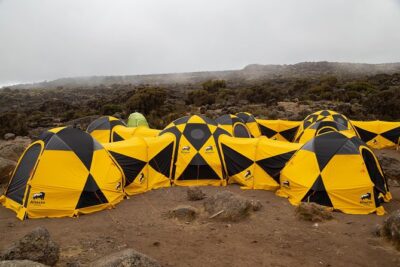
- On-mountain support that’s more than basic, with cooks, waiter service, and camp staff setting up tents and common areas.
- Emergency readiness, including an oxygen cylinder shared per group size and twice-daily health checks with an oximeter.
Moshi to Lemosho Gate: Your First Taste of Kilimanjaro
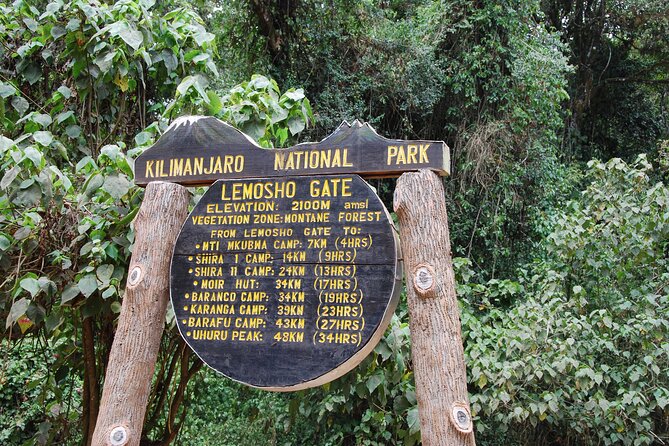
Your climb starts in Moshi with pickup arranged for your group, and a scheduled start time of 9:00 am. You’ll transfer by road to the Lemosho gate, then continue by 4×4 track until you’re at the trailhead.
Day 1 is about stepping into Kilimanjaro’s green world. The forest zone is thick and alive, with diverse flora and fauna. Rain can show up here, and when it does, the trail can get slippery. This is a good day to keep your effort steady and your footing careful, since you’re not yet in the altitude “test.”
The value of this first day is psychological. Kilimanjaro can feel overwhelming in your head before you arrive. Once you’re walking under trees and listening for birds instead of worrying about oxygen, the whole project becomes more manageable.
Days in Motion: Rainforest to Shira Plateau (and Why That Matters)
After leaving the rainforest, the trail changes quickly. You’ll climb out onto steeper sections that eventually open into heather and moorland. From there, the route crosses the Shira ridge, where views of Shira Peak can pop through the terrain in jagged, volcanic-looking slices.
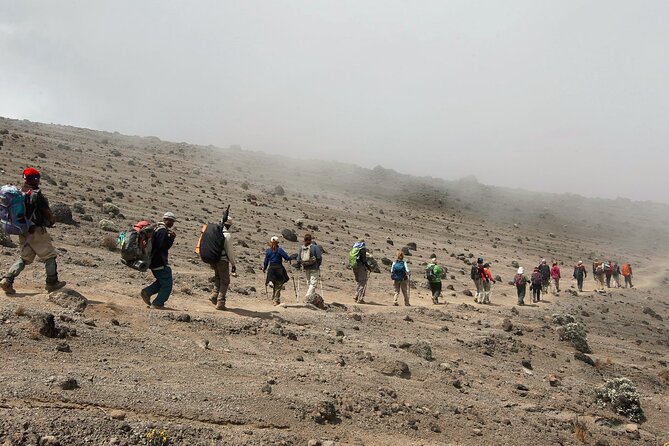
This middle stretch is where the Lemosho approach earns its popularity. Instead of rushing toward high ground, you’re moving into terrain that prepares your body for higher elevations. Your hike time is long enough to feel like a real trek, but it’s paced to help you keep breathing under control.
Lemosho itineraries worth reading next
Shira Cathedral Optional Detour
On the Shira Plateau, there’s an optional extra hike to Shira Cathedral (3880 m) before heading toward Shira Two camp. This is one of those “choose your effort” moments. If you’re feeling good, it can be a satisfying side goal. If you’re not, skipping it is not a personal failure. It’s altitude math, not a pride contest.
Lava Tower and Barranco Valley: Acclimatization With Big Rewards
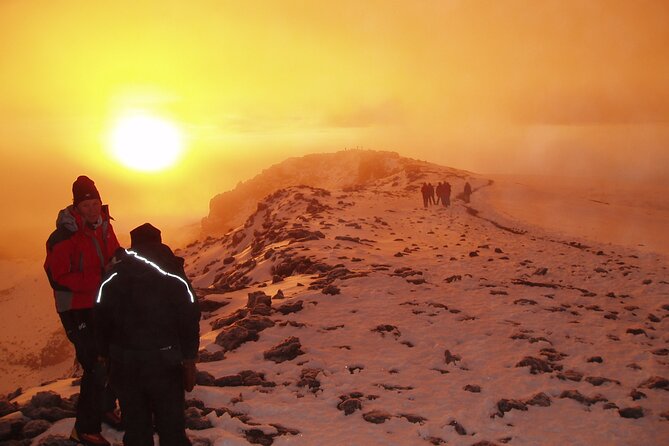
One of the smartest parts of this climb happens on the day you aim for Lava Tower (4630 m). You’ll steadily climb toward the Kibo cone, then reach this first major high-altitude checkpoint. The point here is acclimatization. You’re not just chasing a number, you’re testing how your body reacts while you still have support and time to adjust.
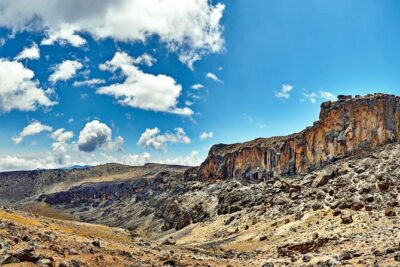
After Lava Tower, you descend and move around Kibo into the Barranco Valley. This is where the trek starts to feel more mountain-like. You’ll also pass distinctive plants, including large flowering cacti called Kilimanjaro Senecios.
What I like about this day is the mix of biology and geography. You’re not only dealing with altitude. You’re also learning how the ecosystem changes as you wrap around the volcano.
Why “Steady” Helps You Later
This is the kind of day where you win by not rushing. If you go too fast, you’ll feel it soon. If you keep a slower, steady pace, you’ll arrive ready for the next big moment.
Barranco Wall: The Non-Technical Climb Feel You Came For
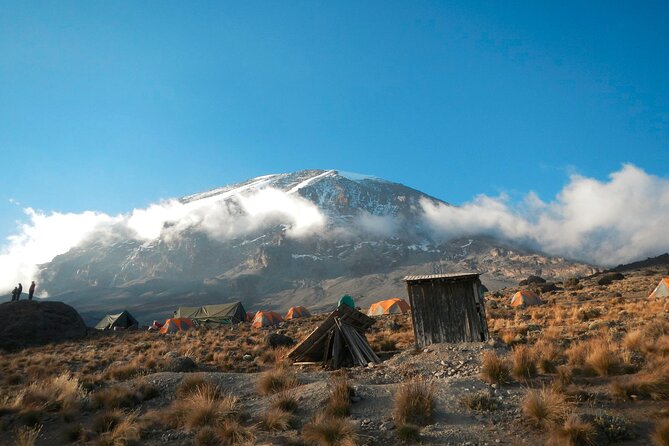
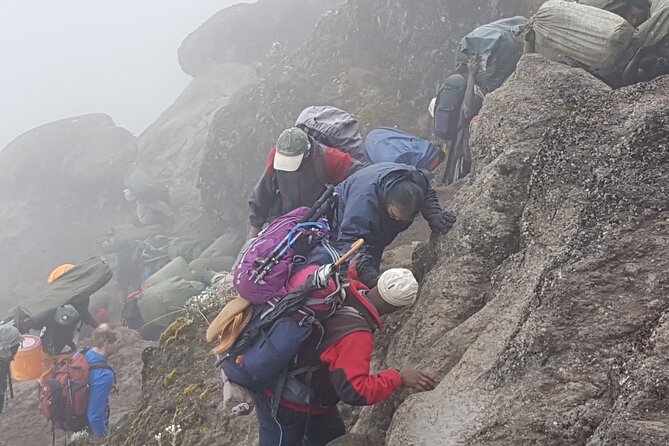
Day 5 brings the feature people talk about: the Barranco Wall. You’ll ascend the wall in a non-technical way, meaning you’ll use hands and legs on scrambling sections, but you are not expected to bring ropes or climbing gear. If you’ve been craving the feeling of a real mountain climb, this is where you get it.
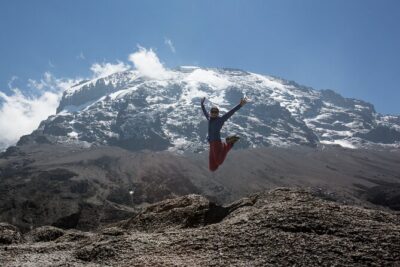
The payoff is also practical. At the top, you can look back toward where you camp and see the Heim glacier on the peak. You’ll then continue through alpine desert, winding around the mountain and descending into the Karanga Valley.
Karanga Valley is described as the last water point. That detail matters because it reminds you to respect your hydration plan. Even when you feel strong, Kilimanjaro doesn’t care about confidence. Water access and pacing are what keep you comfortable.
Day 6 Into Summit Camp: Slow Steps, Serious Planning
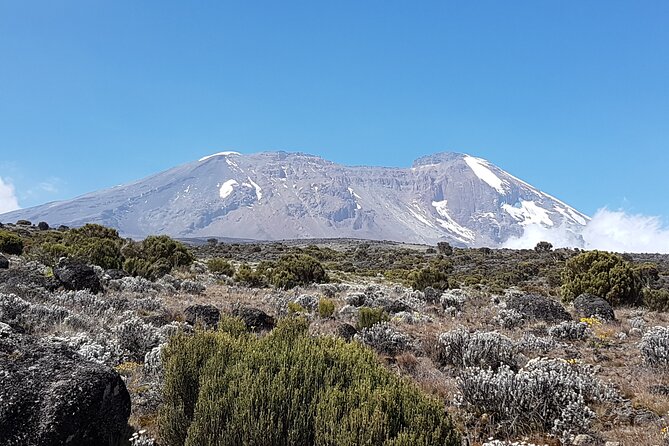
Day 6 is a long, patient walk through alpine desert. The climb is not described as extremely steep, but you’ll still want to keep a slow pace. At this stage, slow is not laziness. It’s altitude strategy.
Kibo cone gets closer, and you may finally glimpse Mawenzi peak to the east. That sight tends to light a fire in people’s minds, because it makes the whole volcano system feel real instead of theoretical.
Then you have a smaller distance on the day, which is a huge deal because it gives you time at the summit camp to rest and prepare for the summit attempt later that night. I like this design because summit day is not the place for complicated prep. You’ll want to have your gear sorted and your mind calm.
Summit Night to Uhuru Peak: The Cold, the Scree, the Prize
This is the day you plan for from the start. You’ll begin the final ascent around 00:00 am, moving through the arctic zone. Expect a steep hike over loose volcanic scree, in a zig-zag pattern. It’s dark, cold, and slow.
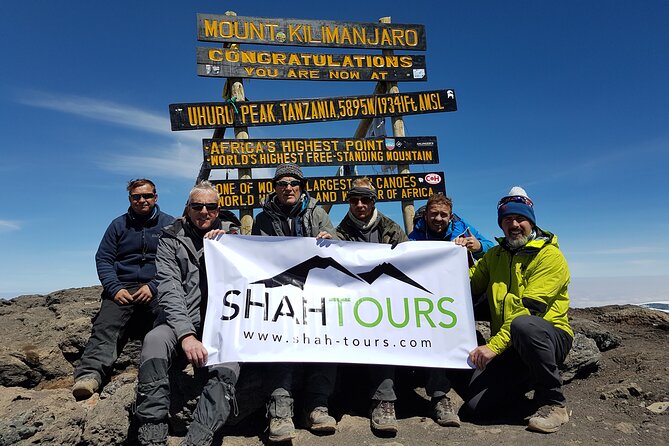
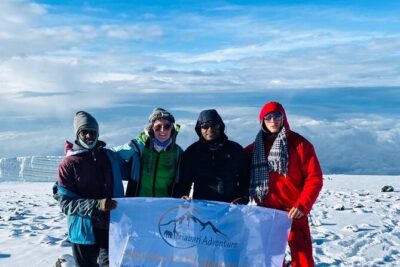
Your first big waypoint is Stella Point (5685 m). From there, you’ll make a short but difficult hike to Uhuru Peak (5895 m), the highest point in Africa.
A few key reality checks based on how this climb is described:
- You usually do not spend long at the summit because the altitude is extreme.
- After reaching Uhuru Peak, you descend back down to the base camp.
- You’ll then have breakfast or brunch there, then pack up and continue the descent through alpine desert.
This part is where having a good guide matters most. You’ll follow their pacing, their breathing advice, and their judgement about when to push and when to conserve energy. If you’re prone to panic, you’ll want to rely on their calm.
A Note on Fitness and Altitude Health
This climb is explicitly not recommended if you have lung problems or other known altitude-related medical conditions. Even with the support included, the environment is serious. If you’re unsure, talk to a medical professional before booking.
Day 8: Rainforest Descent and Back to Moshi
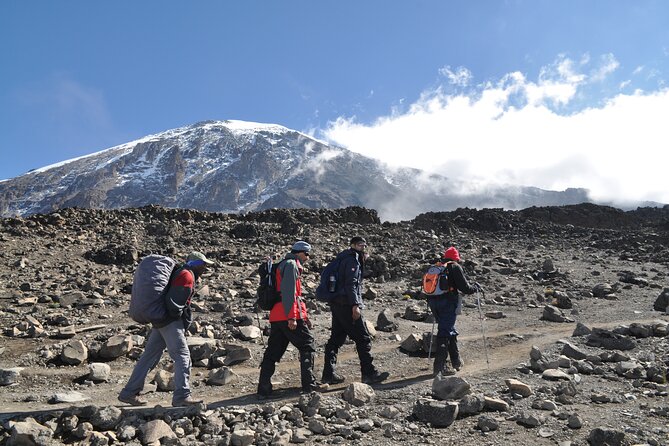
Your final day is a descent through the southern rain forest until Mweka gate, where a vehicle is waiting to take you back to Moshi. The experience is designed so the trek ends on the mountain, then you get a straightforward return to town.
You might get a clean goodbye moment too. The crew will often leave you at Mweka gate since they generally head home directly from the end gate. It’s a nice chance to say thank you properly to the people who carried your gear, cooked your meals, and kept you moving safely.
After a week on Kilimanjaro, that drop back into lower altitude air feels almost unreal.
Price and What It Really Covers at $3,125
At $3,125 per person, you’re paying for more than the hike. You’re paying for a whole operation built around safety, logistics, and food service.
Here’s what’s included in a meaningful way:
- Park entry, conservation, camping, and rescue fees (as applicable)
- Certified English-speaking mountain guides at minimum ratios
- One luggage porter per person carrying up to 15 kg
- A specialist tent crew to set up camps
- A trained mountain cook and waiter, plus all meals (breakfast, lunch, dinner)
- Pre-climb briefing and equipment check in Moshi
- Transfers from Moshi based lodge to park gates and back
- Boiled drinking water starting from the first camp onward
- Health checks twice daily with a high-grade medical oximeter
- Emergency oxygen cylinder shared per group size, plus a first aid kit
You also get comfort and basic sleep setup:
- Four-season tents
- Shared tents for even-numbered groupings, with one single for odd numbers
- Basic foam sleeping mattress (about 1 inch)
- Campsite wash stations and shared public toilet facilities
What’s not included matters too:
- Tips
- Beverages like soft drinks and alcohol
- International flights and insurance
- Pre or post climb accommodation
- Personal equipment such as sleeping bags, walking poles, and duffel bags
So is it good value? For many hikers, yes, because the price bundles the hard parts: guides, meals, and camp setup, plus real altitude monitoring. If you were to hire those separately, it would cost far more. If you already own all your gear and don’t want full-service camping, that’s the one scenario where you might feel the cost is heavy. But Kilimanjaro is not the place to DIY your food, camp, and emergency planning.
The Crew, Food, and Sleep Setup You’ll Depend On
On Kilimanjaro, you’re never “just hiking.” You’re living out of a camp, and the quality of that camp affects how you feel every day.
You’ll have:
- Luggage carried by a porter (up to 15 kg per person)
- A dedicated cook and waiter team
- Tent crew support so camps are set up for you
- Dining tent setup with chairs and tables
- Hand washing stations and a small wash basin at campsites
- Shared public toilet facilities
Food is also a big deal. The trek description includes full meals, and past climbers on this style of operation often emphasize that meals are cooked daily with a lot of choice. You should still expect food that’s designed to be practical at altitude, not heavy gourmet theater.
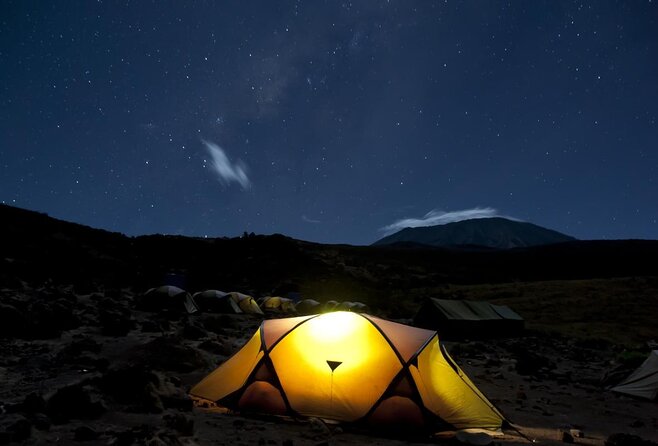
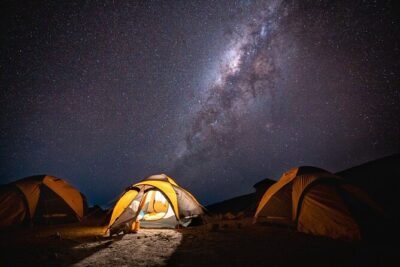
Sleep is basic by necessity. The tents are four-season, and you’ll have a foam mattress, but you’re still in cold mountain air. Bring layers you can tolerate overnight, and don’t underestimate how quickly temperature changes at altitude.
Who Should Choose This 8-Day Lemosho Climb
This is for you if you:
- Are in strong physical fitness and can handle long hiking days
- Want a non-technical route with a satisfying scramble moment on Barranco Wall
- Prefer a route that starts in a quieter west-side setting
- Value having a full camping operation with meals, porters, and ongoing health checks
It’s not a fit if you:
- Have lung issues or known altitude medical risks
- Expect a lightweight hiking-style daypack only. You’ll be provided porter support, but you still have to manage cold weather layers and trekking footwear.
Private group format can be a plus too, since this is described as private, meaning only your group participates. That tends to make pacing and communication feel tighter.
Should You Book This Lemosho 8-Day Climb?
If you want a classic Kilimanjaro experience without technical gear, I’d say this is a strong option. The route’s biggest strengths are the acclimatization days, the Barranco Wall scramble, and the fact that you’re not wandering alone in chaos. The support structure is detailed, including oxygen availability, twice-daily health checks, and real camp staffing.
I’d think twice if:
- Cold nights and summit-day effort will stress you out
- You’re unsure about altitude tolerance and don’t have medical clearance
- You hate camping comfort. The setup is solid, but it’s still camping at high elevation.
For most hikers with solid fitness and the right expectations, booking makes sense. You’re buying a well-run climbing week, not just a view.
FAQ
What time does the trip start in Moshi?
The start time is listed as 9:00 am, with pickup and transfer from Moshi to the park gates.
How long is the Kilimanjaro climb?
It is an 8-day climb, with the trek taking about 8 days approximately.
Do I need technical climbing equipment?
This is described as a non-technical Kilimanjaro route. You’ll have a scramble section on the Barranco Wall that uses hands and legs, but no advanced equipment is mentioned.
What are the key high points on the route?
You reach Lava Tower at 4630 m, Stella Point at 5685 m, and Uhuru Peak at 5895 m. You may also do an optional hike to Shira Cathedral at 3880 m.
Are meals included?
Yes. Breakfast (7), lunch (7), and dinner (7) are included, with utensils and eating setup provided.
Is drinking water available during the trek?
Boiled drinking water is provided starting from the first camp onward. Water on the first day of the trek is not included.
Is pickup and return transportation included?
Yes. There is a transfer from a Moshi based lodge to park gates per group, and a transfer from park gates back to a Moshi based lodge per group.
Do porters carry luggage?
Yes. Each person has 1 luggage porter to carry personal luggage up to 15 kg. There is also luggage storage while on trek.
What emergency medical support is included?
An oxygen cylinder is included at a ratio of 1 per 5 passengers, along with a first aid kit. Twice daily health checks are done with a medical oximeter.
What is not included in the price?
Tips or gratuities, beverages, international flights, insurance, visas, items of a personal nature, pre climb or post climb accommodation, extra single tents, and personal mountain equipment are not included.
Lemosho, Compared
- Kilimanjaro climb by Lemosho Route (7-day)
★ 5.0 · 651 reviews - Kilimanjaro Climbing Lemosho Route 8 Days.
★ 5.0 · 186 reviews - Kilimanjaro climb, Lemosho Route (8-day)
★ 5.0 · 148 reviews - Kilimanjaro climb, Lemosho Route (6-day)
★ 5.0 · 129 reviews - Kilimanjaro Lemosho Route
★ 5.0 · 71 reviews
Kilimanjaro, Route by Route
- Kilimanjaro climb by Lemosho Route (7-day)
★ 5.0 · 651 reviews - Kilimanjaro climb, Machame Route (7-day)
★ 5.0 · 262 reviews - Kilimanjaro Climbing Lemosho Route 8 Days.
★ 5.0 · 186 reviews - Climbing Kilimanjaro – Machame Route
★ 5.0 · 170 reviews - Climbing Kilimanjaro through 7 days Machame Route
★ 5.0 · 151 reviews
Just added from around Moshi
Kilimanjaro Lemosho Route, compared.
 ★ 5.0Kilimanjaro climb by Lemosho Route (7-day)From $3,476651 reviews
 ★ 5.08-Day Small-group Lemosho Kilimanjaro Summit TrekkingFrom $2,895186 reviews
 ★ 5.0Kilimanjaro Climbing Lemosho Route 8 Days.From $2,300186 reviews
 ★ 5.0Kilimanjaro climb, Lemosho Route (8-day)From $3,975148 reviews
 ★ 5.0Kilimanjaro climb, Lemosho Route (6-day)From $3,034129 reviews
 ★ 5.0Kilimanjaro Lemosho RouteFrom $2,89071 reviews
 ★ 5.0Private Kilimanjaro Hike 7 Day Lemosho RouteFrom $2,45060 reviews
 ★ 5.0Climbing Kilimanjaro through 8 days Lemosho RouteFrom $2,76052 reviews
Browse the lists this tour appears in