
REVIEW · KILIMANJARO LEMOSHO ROUTE
7 Days Kilimanjaro Climbing | Hiking Tour via the Lemosho Route
One week, one giant summit, real logistics. This 7 day Kilimanjaro climb via the Lemosho Route from Moshi is guide led and built around practical acclimatization, with meals and tents handled for you.
What I like most is how much is included up front: meals every day, park entry fees, and the camping setup so you can focus on walking. I also like the clear acclimatization rhythm, including a climb to the Lava Tower area before you head down toward Barranco.
The main consideration is the summit night gets brutally cold, and above 4000 meters you should expect limited water for washing. If you dislike cold mornings and short recovery windows, plan carefully before you commit.
In This Review
- Key highlights you should not miss
- The Lemosho Route and a 7 day schedule that feels realistic
- Meeting point in Moshi and the early start rhythm
- Day 1: Londorosi entry, Lemosho start, and Big Tree Camp at Mti Mkubwa
- Day 2: tropical jungle to Shira Camp 1, then onward to Shira Camp 2
- Day 3: Shira Plateau, Lava Tower acclimatization, and the descent to Barranco
- Day 4: Barranco Wall, Karanga valley rest, and an evening reset
- Day 5: the path toward Barafu camp and pre summit rest
- Day 6: Uhuru Peak (summit) timing, cold conditions, and the descent plan
- Day 7: Mweka Gate, sign out, certificates, and returning to Moshi
- Price of $965 and what makes it feel like value
- Who should book the Lemosho 7 day climb, and who should reconsider
- Should you book this 7 day Kilimanjaro via Lemosho?
- FAQ
- Where is the meeting point and what time does the tour start?
- How long is the Kilimanjaro climb?
- Is a guide included?
- What meals are included?
- Are camping tents or gear provided?
- Are transfers from Moshi included?
- What is included in the price?
- What is not included?
- Is free cancellation available?
- What happens if the trek is canceled due to poor weather?
Key highlights you should not miss
- Lemosho to Londorosi plan: You start through the park entry process at Londorosi before moving to the Lemosho start point
- Wildlife on the way up: Colobus monkeys spotted during the forest section
- Acclimatization that is actually built in: A day designed for Lava Tower and altitude adjustment
- Barranco Wall day: A long, tired but manageable step that helps set you up for the final push
- Barafu to Uhuru Peak timing: Pre summit rest starts late night, with a multi hour summit climb
- Mweka Gate exit and certificates: You sign out at the gate and get your trek documents before the drive back to Moshi
Other ways up Kilimanjaro we reviewed
- Kilimanjaro climb by Lemosho Route (7-day)★ 5.0 · 651 reviews
- Kilimanjaro climb, Machame Route (7-day)★ 5.0 · 262 reviews
- Kilimanjaro Climbing Lemosho Route 8 Days.★ 5.0 · 186 reviews
- Climbing Kilimanjaro – Machame Route★ 5.0 · 170 reviews
The Lemosho Route and a 7 day schedule that feels realistic
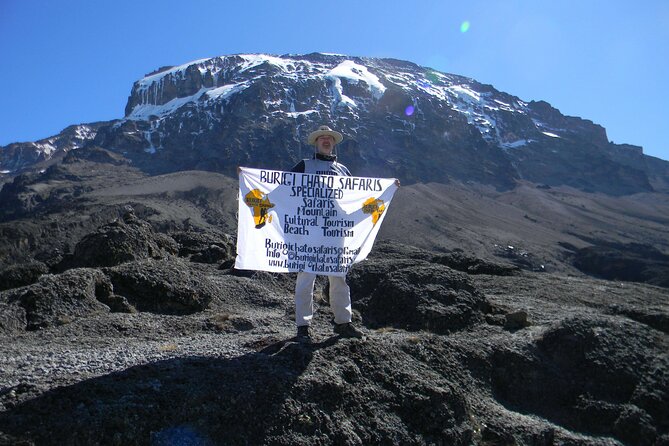
Kilimanjaro is the kind of trip where the details matter. This route gives you a steady progression through different terrain, from tropical jungle to moorland, then higher zones that start to feel more like high altitude desert. The big win of this 7 day plan is that it is not just a straight line upward. You get a dedicated acclimatization day, plus a longer day around Barranco before the final summit push.
The Lemosho approach in particular is a good fit if you like scenery changes rather than repeating the same view all day. You also get a major checkpoint at Shira, then another acclimatization moment near the Lava Tower level. That structure matters when you are trying to reduce the number of “fight the mountain” moments and increase the number of “pace, breathe, keep moving” moments.
Meeting point in Moshi and the early start rhythm
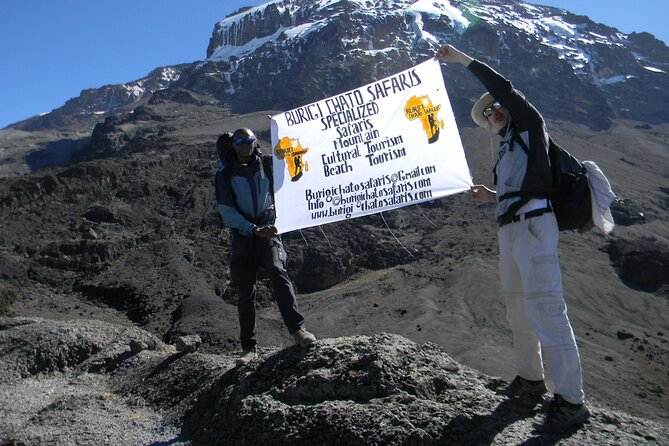
Your trip starts in Moshi, with the meeting point listed at BURIGI CHATO SAFARIS CO LTD on Mkwawa Street. The published start time is 8:30 am. On the climbing day, the driver pickup is described as happening around 10:00 am to 10:30 am, after breakfast at your inn, so build in time for that gap.
This matters because you want to arrive calm, not rushed. If you are the kind of person who needs coffee, a bathroom run, and a slow check of your layers, do yourself a favor and plan those things the night before. On Kilimanjaro, tiny delays add up fast.
Day 1: Londorosi entry, Lemosho start, and Big Tree Camp at Mti Mkubwa
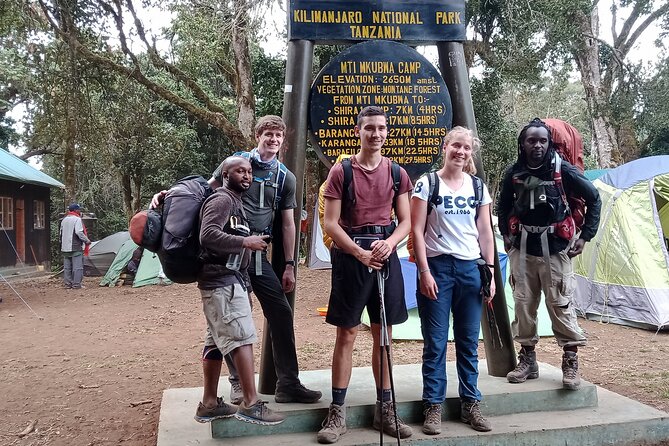
Day 1 is about getting into the park and easing your body into the rhythm. You drive from the Londorosi entry area toward the Lemosho start point, then begin your walk following a forest trail where wildlife shows up along the way. One specific thing noted is high contrast colobus monkeys, which is a fun reminder that the mountain starts in deep, living jungle, not cold rock.
You hike to Big Tree (Mti Mkubwa) Camp, which sets the tone for the week. The day is listed as about 4 hours, and the goal is not to sprint. You eat your dinner at camp and settle in for the next day.
Practical note: if you are packing light, you will still need to keep your personal items organized so your day bag is easy to access. Camping gear is provided, but you still want your essentials to be where you can reach them without digging through everything.
Lemosho itineraries worth reading next
Day 2: tropical jungle to Shira Camp 1, then onward to Shira Camp 2
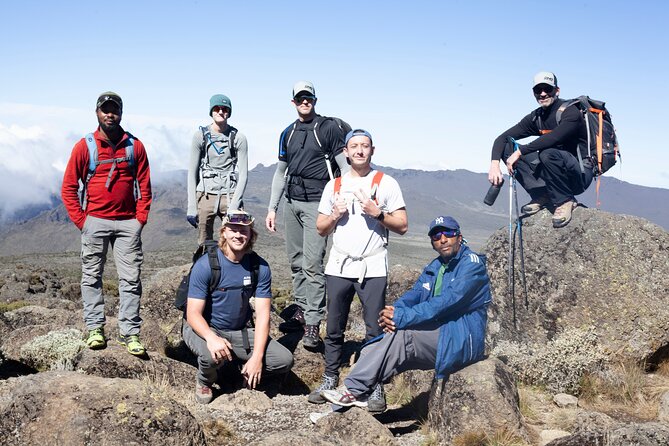
Day 2 is a longer day at about 6 hours, and it is where the scenery shift really starts to feel real. The route moves through tropical jungle and then transitions toward savannah and rough ground. There are also water streams to cross, so expect slippery footing at times.
You hike to Shira Camp 1 for lunch, then continue to Shira Camp 2 for the evening. A key detail here is the view potential: at Shira ridge, you get what is described as one of the best perspectives on Kibo, the main summit peak. Even when the weather is not perfect, having a strong view day early helps keep morale up.
Why this day matters: you are not just trekking for hours. You are learning the pace you can hold while moving through changing terrain types. This is the kind of day where you should walk “comfortably slow,” not “hero fast.”
Day 3: Shira Plateau, Lava Tower acclimatization, and the descent to Barranco
Day 3 is described as a key acclimatization day, about 5 hours total. You pass through moorland vegetation and a zone of monster heather, then reach the Shira Plateau. The plateau is singled out as one of the longer level stretches on the planet, so expect a more open feel underfoot compared with day 1’s forest.
Then comes the altitude moment: you do a short acclimatization walk up to Lava Tower at 4640 meters. You stop for lunch there. After that, you descend, spotting large Senecio kilimanjari trees on the way down, and you end at Barranco Camp (3960 meters).
This is the day I would watch most closely if I were advising a friend. The day gives you a planned altitude stress, plus a chance to come down afterward. That pattern, climb up then descend to camp, is exactly what you want when you are trying to help your body adjust.
Day 4: Barranco Wall, Karanga valley rest, and an evening reset
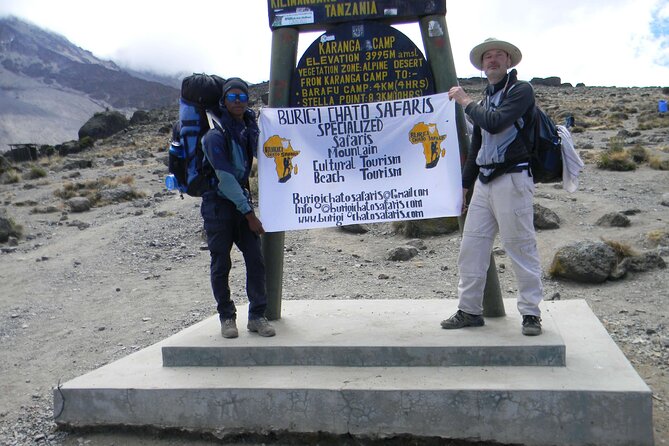
Day 4 brings Barranco Wall, and it is described as not extremely difficult, but specialized and lengthy and tiring. In other words, it is technical enough that you will use your footing and steadiness, and long enough that you will feel it in your legs.
After Barranco, you travel down to the Karanga valley (3963 meters) for rest and mingling, then eat before returning to your tent for the night. This day is about 5 hours.
Why this day is so important: by this point, you are building endurance for the higher, thinner air. Even though you are not yet doing the summit push, you are training your legs and your pacing strategy for the final days. Also, by the time you reach Karanga, you have a chance to take stock of your energy and hydration habits.
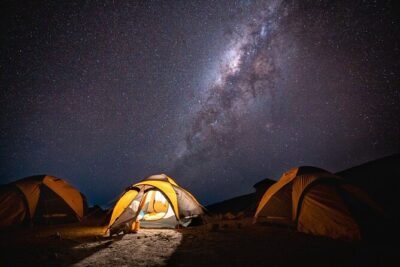
One small comfort detail from the itinerary is about camping setup. Tents are provided, so you can keep your pack lighter and not worry about hauling bulky items.
Day 5: the path toward Barafu camp and pre summit rest
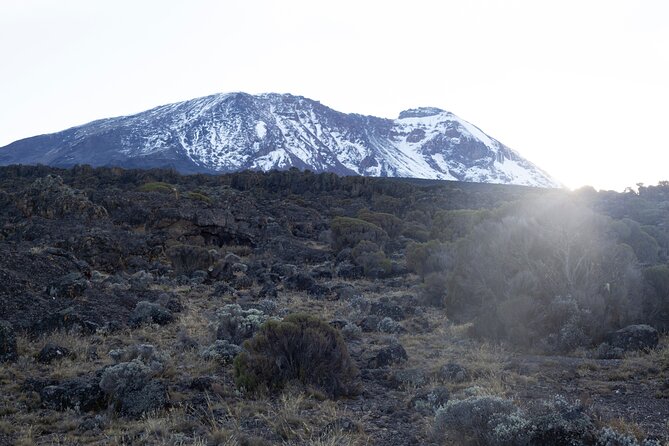
Day 5 starts after breakfast and climbs toward Barafu camp (4664 meters). The route follows a way described as going past a crevasse, then up toward the west edge, with cairns marking the path. The hike is described as another relatively short but troublesome 3 kilometer segment.
Once you reach Barafu, the area can be very cool. You have your initial supper, then the big move happens: you go for pre summit rest at night, with the wake up window described as starting around 11 to 12 am. This timing is crucial because it shapes your whole summit experience. You want sleep, layers ready, and the ability to start moving without chaos.
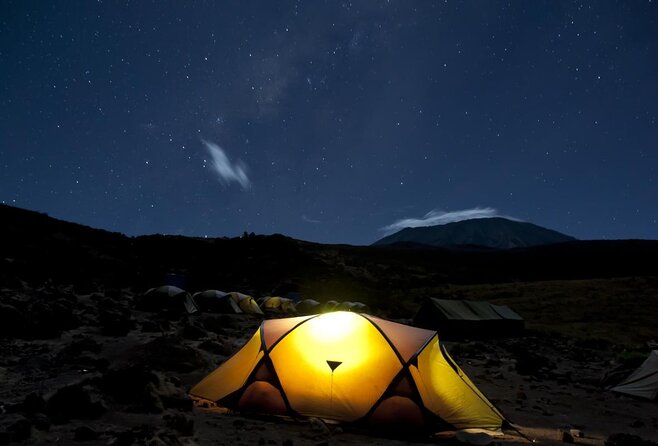
The itinerary notes that above 4000 meters you are in an area of elevated desert, with limited greenery, and birds such as a white necked raven may be spotted around the camping area. It also notes no water for wash above this rise and no water streams over that section.
If you are sensitive to the idea of not washing much, plan mentally for it now rather than hoping it will be comfortable. The payoff is that you will likely have less water-related slowdown. You will spend more energy on the trek, not on searching for cleanliness.
Day 6: Uhuru Peak (summit) timing, cold conditions, and the descent plan
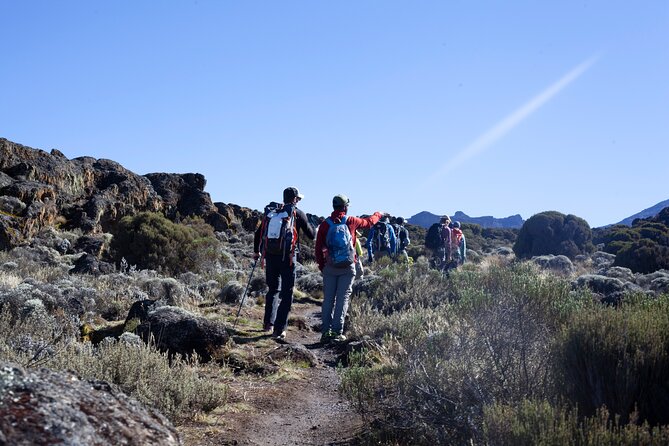
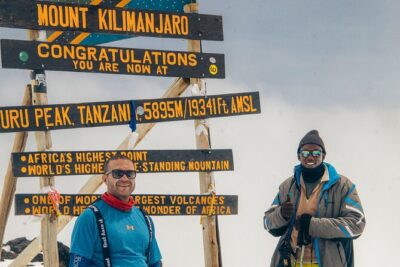
Day 6 is the summit day, described as about 8 hours. Before you head out, you have coffee and treats or rolls. Then you put on the rest of your layers, described as highest point garments, and you start the trek to Uhuru Peak.
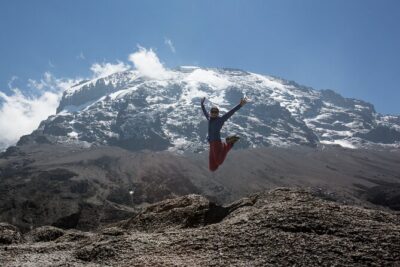
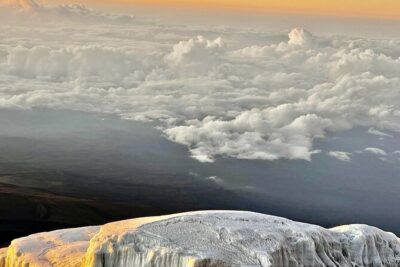
The climb from Barafu to Uhuru is described as six to seven hours, and once you reach the top you are supposed to be rewarded with stunning views and a spectacular dawn if weather allows it. After some short summit moments, you begin the descent in the same day.
Cold is not a side note here. The itinerary explicitly mentions temperatures can drop as low as minus 20 C in June. That is why your layering strategy and your ability to keep moving at a steady pace are so important. Slow walking is not just advice, it is the survival plan at altitude.
Also, expect the emotional mix: summit feels like victory, but the day still ends with fatigue management. The most successful summit experiences tend to come from travelers who treat the climb like work, not like a race.
Day 7: Mweka Gate, sign out, certificates, and returning to Moshi
Day 7 is the decompression day. After breakfast you descend to Mweka Gate, where you sign out and receive your certificates. Then the driver guide takes you back toward your lodging in Moshi Town along with your team.
This is also when you may want to rejoin your life on the ground. One fun detail included is that the driver guide is there for the moment when you can coordinate a quick celebration with the group, if you feel like it. Otherwise, you can simply rest, plan onward travel, or set up a safari.
If you have time and energy, Moshi itself can be a pleasant decompression stop. There are mentions of Moshi being clean and easy to enjoy, with local markets and shopping that are organized with pricing that feels more manageable than some other Tanzanian hubs. That is a nice way to end a trek week without jumping straight into another hard activity.
Price of $965 and what makes it feel like value
The price is listed at $965.00 per person for this 7 day Kilimanjaro climb. On paper, that sounds like a bargain or a red flag depending on what is included. Here, the key is that the package covers a lot of the mountain logistics that usually inflate costs.
Included items listed are:
- All fees and taxes
- A guide
- Meals: 6 breakfasts, 7 lunches, and 6 dinners
- Transfers from Moshi
- Camping support such as tents and gear
That is the heart of the value. Kilimanjaro costs money in the parts you cannot easily DIY: park entry fees, professional support, food at altitude, and camp operations. When those are handled, your budget stays predictable and your packing stays lighter.
What is not included matters too:
- Tipping the guide
- Visas
- Medical and travel insurance
- Flight costs
- Airport pickup costs
- One night hotel accommodation before the tour
If you do not already have insurance, factor that into your planning. If your arrival airport requires extra pickup, add that cost. The overall value depends on those gap items, but the core trek package is structured to remove the biggest unknowns.
Also, it is helpful to know the operator notes a maximum of 500 travelers for the activity. In practice, mountain group size may be much smaller, but the listing cap tells you this is organized at scale, not a one off scavenger hunt.
Who should book the Lemosho 7 day climb, and who should reconsider
This tour is best for you if you want a structured summit plan that includes your meals, tents, and a guided ascent with acclimatization built in. The itinerary includes clear altitude checkpoints: Shira Camp 1 and 2, Lava Tower at 4640 meters, then Barranco, then Barafu for the summit start.
You should also feel comfortable with cold mornings and late-night starts, because Day 5 includes pre summit rest around 11 to 12 am and Day 6 is a major cold weather push. If the idea of limited water for washing above 4000 meters bothers you a lot, think about how you handle discomfort and personal care while camping.
Who might reconsider:
- If you have trouble with early mornings and long trek days, even without fast hiking, this is still a full commitment week.
- If you need frequent creature comforts at altitude, this is more rugged than that.
- If you do not have the right readiness for cold conditions, you should plan with care before going.
That said, the listing says most travelers can participate, which suggests the company sees this as approachable for a range of fitness levels, as long as you take the mountain seriously.
Should you book this 7 day Kilimanjaro via Lemosho?
Yes, you should consider booking if you want a guided climb with the heavy lifting handled: meals, camping setup, and transfers from Moshi are built into the cost, and the itinerary includes an acclimatization moment at the Lava Tower level. The route also gives you a satisfying mix of environments, and the Barranco segment sets you up for the final push.
Hold off if you know you are not comfortable with cold temperatures at altitude, especially since the itinerary mentions minus 20 C in June conditions. Also, make sure you have your insurance and paperwork lined up, since visas and coverage are not included.
If you do book, focus on the basics that actually move your odds: pace steadily, follow your guide’s instructions, and treat sleep like part of your climb, not a bonus.
FAQ
Where is the meeting point and what time does the tour start?
The meeting point is BURIGI CHATO SAFARIS CO LTD at Mkwawa Street in Moshi, Tanzania. The start time is listed as 8:30 am.
How long is the Kilimanjaro climb?
The tour duration is listed as 7 days (approx.).
Is a guide included?
Yes. A guide is included in the package.
What meals are included?
Breakfast and dinner are included for 6 days each, and lunch is included for 7 days.
Are camping tents or gear provided?
Yes. Camping gear is provided, and tents are provided so you can pack light.
Are transfers from Moshi included?
Yes. Transfers from Moshi are included.
What is included in the price?
The price includes all fees and taxes, a guide, meals (breakfast, lunch, dinner as listed), and transfers from Moshi.
What is not included?
Not included are tipping the guide, visas, medical and travel insurance, international or local flight costs, airport pickup costs, and one night of hotel accommodation before the tour.
Is free cancellation available?
Yes. You can cancel up to 24 hours in advance for a full refund.
What happens if the trek is canceled due to poor weather?
The experience requires good weather. If it is canceled due to poor weather, you will be offered a different date or a full refund.
Lemosho, Compared
- Kilimanjaro climb by Lemosho Route (7-day)
★ 5.0 · 651 reviews - Kilimanjaro Climbing Lemosho Route 8 Days.
★ 5.0 · 186 reviews - Kilimanjaro climb, Lemosho Route (8-day)
★ 5.0 · 148 reviews - Kilimanjaro climb, Lemosho Route (6-day)
★ 5.0 · 129 reviews - Kilimanjaro Lemosho Route
★ 5.0 · 71 reviews
Kilimanjaro, Route by Route
- Kilimanjaro climb by Lemosho Route (7-day)
★ 5.0 · 651 reviews - Kilimanjaro climb, Machame Route (7-day)
★ 5.0 · 262 reviews - Kilimanjaro Climbing Lemosho Route 8 Days.
★ 5.0 · 186 reviews - Climbing Kilimanjaro – Machame Route
★ 5.0 · 170 reviews - Climbing Kilimanjaro through 7 days Machame Route
★ 5.0 · 151 reviews
Just added from around Moshi
Kilimanjaro Lemosho Route, compared.
 ★ 5.0Kilimanjaro climb by Lemosho Route (7-day)From $3,476651 reviews
 ★ 5.08-Day Small-group Lemosho Kilimanjaro Summit TrekkingFrom $2,895186 reviews
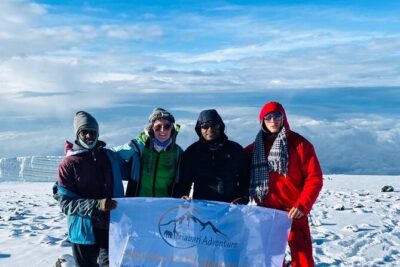 ★ 5.0Kilimanjaro Climbing Lemosho Route 8 Days.From $2,300186 reviews
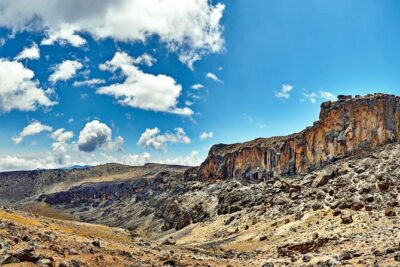 ★ 5.0Kilimanjaro climb, Lemosho Route (8-day)From $3,975148 reviews
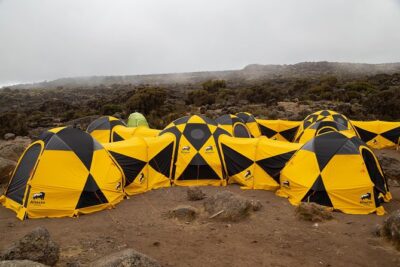 ★ 5.0Kilimanjaro climb, Lemosho Route (6-day)From $3,034129 reviews
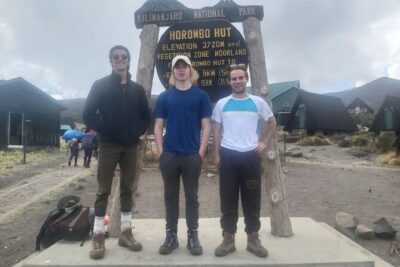 ★ 5.0Kilimanjaro Lemosho RouteFrom $2,89071 reviews
 ★ 5.0Private Kilimanjaro Hike 7 Day Lemosho RouteFrom $2,45060 reviews
 ★ 5.0Climbing Kilimanjaro through 8 days Lemosho RouteFrom $2,76052 reviews
Browse the lists this tour appears in