
REVIEW · GREAT WILDEBEEST MIGRATION SAFARIS
6Days Migration Safari
Migration season makes Tanzania feel alive. This 6-day safari strings together Ngorongoro crater wildlife with the Serengeti migration corridor, timing drives to Lobo and Wagakuria areas. You also get a proper arc through the Serengeti, not just a single park loop.
I like how well the trip is managed, with a local coordinator such as Faiza and guides like Laurent or Raymond keeping things moving and calm. I also like the small max group size of 6, because it leaves room for questions and for your guide to adjust the timing when needed.
One consideration: the migration route is normal for certain months, not a promise, so plan with flexible expectations if you are outside the July to August and August to October rhythm.
In This Review
- Key things I’d watch for on this 6-day migration safari
- Ngorongoro Crater, an over-600-meter descent from Arusha
- Serengeti Lobo Area, July-August and late October-November timing
- Lobo and the Grumeti River for resident game year-round
- Wagakuria in August to October, when migration can show up
- Grumeti River waterholes, hippos and huge crocodiles
- Back to Arusha via Kogatende airstrip, with a final game drive
- Price and value: what $3,700 per person really includes
- Logistics that matter: transfers, admissions, and a small group of 6
- Timing reality check: migration windows, not migration schedules
- What this safari is like on the ground, day after day
- Who should book this migration safari
- Should you book this 6-day migration safari?
- FAQ
- What are the start and end meeting points for this tour?
- How long is the safari?
- Is pickup offered?
- Is the group size limited?
- What is included in the price?
- What is not included?
- Are park admissions included?
- Can I cancel and get a full refund?
Key things I’d watch for on this 6-day migration safari
- Small group, big attention: Maximum 6 travelers tends to mean a more personal pace and easier coordination on game drives.
- Crater day with a big drop: You get an over-600-meter descent into Ngorongoro for afternoon wildlife viewing.
- Serengeti route tied to seasons: Lobo and Wagakuria timing can change your odds, especially for classic migration sightings.
- Year-round game option: The Lobo and Grumeti River areas can offer resident wildlife even when the herds are elsewhere.
- Grumeti River action: Hippos and large crocodiles show up in the Grumeti River zone, with waterholes often delivering peak viewing.
- Included essentials: Full board on safari plus transfers in both directions helps you avoid budget surprises.
Chasing the herds? Compare these first
- 6 Days Tanzania Budget Camping Safari with Migration★ 5.0 · 31 reviews
- Tanzania Safari – The Great Migration in the North of the Serengeti and Lake Natron★ 5.0 · 25 reviews
- Latest Updates On The Top Best 3 day Serengeti Migration Safari★ 5.0 · 9 reviews
- 5 Days Special Safari to see migration★ 5.0 · 8 reviews
Ngorongoro Crater, an over-600-meter descent from Arusha
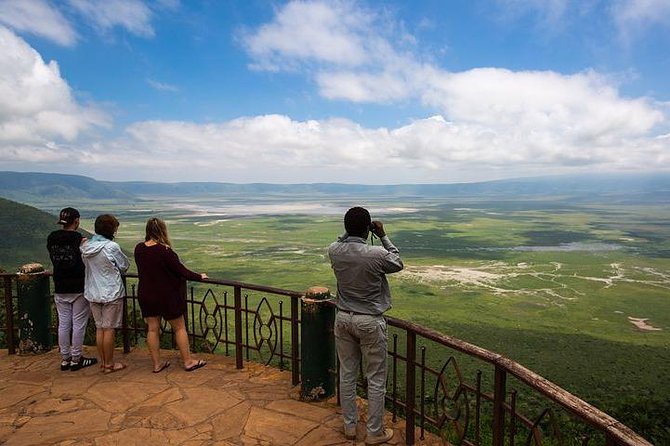
Ngorongoro is one of those places where the views do the talking. After pickup around the Arusha side, you spend an afternoon descending over 600 meters into the crater, aiming for wildlife sightings during those crater-view hours.
What I like here is the structure. An afternoon safari after a descent means you are not just passing through, you are positioned for wildlife when animals tend to be active. Also, park admission is marked as free in the tour details, so you are not juggling extra ticket math mid-trip.
If you are worried about comfort, don’t be. This is a long day on paper, but the big win is that transportation and safari logistics are bundled into the package, so you can focus on spotting rather than planning.
Serengeti Lobo Area, July-August and late October-November timing
The Serengeti migration corridor is where this trip earns its name. In the months around July and August, the migration can normally pass through the Lobo area on the way to other parts of the ecosystem. The other common swing is late October to November when the movement is heading toward the southern Serengeti National Park.
The practical value of this is simple: you are not guessing which part of the Serengeti to target. Your itinerary points you toward a section that tends to be in the right place when the herds are moving.
The trade-off is also straightforward. You can have the best route and still not see the exact moment you imagined, because migration is weather and grass driven. If you travel during peak window months you are stacking the odds, but you still need to treat it as a nature event, not a scheduled performance.
Lobo and the Grumeti River for resident game year-round
Not every day in the Serengeti needs to be a migration chase. Around Lobo and the Grumeti River, the area has good resident game throughout the year, so even if herds are far off in the distance, you still have wildlife to watch.
I like this balance because it makes the day feel complete. Instead of the trip hinging on one dramatic sighting, you get the chance to see the ecosystem work on different levels, from predators and grazers to smaller dramas around river edges.
It also helps if you are the kind of traveler who enjoys variety. The Serengeti is not just migration, it is also the constant wildlife traffic that happens when you are in the right zones.

Wagakuria in August to October, when migration can show up
If you are traveling in the August to October window, this is one of the sections that matters most. The itinerary calls out that wildebeest can normally be found in the Wagakuria area during those months, which is exactly the kind of seasonal targeting that improves your odds.
In practice, Wagakuria is a good place to be if your goal is that classic migration feel, where you can get repeated sightings rather than one quick glimpse. You are also staying in the Serengeti long enough that you are not constantly relocating like a checklist.
Still, keep expectations realistic. Migration routes are called normal, not guaranteed, so you should come ready for changes and listen closely to what your guide is seeing on the ground that day.
Grumeti River waterholes, hippos and huge crocodiles
This part of the trip leans hard into the river edges. The itinerary notes large pods of hippos and huge crocodiles in the Grumeti River zone, which is a very specific kind of wildlife watching. You are not looking for only one species, you are looking for an entire feeding and watering scene.
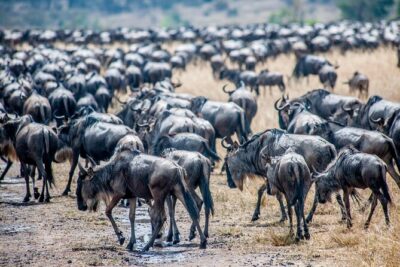
The timing clue is key: the wildebeest normally gather around waterholes in midmorning in densities that can look like ants swarming around a nest. That is the moment you want to be there, because waterholes can turn into a nonstop conveyor belt of action.
One reason I rate this section highly is that it is not limited to the migration. Even if the herds are thinner than hoped, hippos and crocodiles tend to keep the river interesting. It is also a great setting for watching how predators and prey share the same space at different moments of the day.
Back to Arusha via Kogatende airstrip, with a final game drive
After breakfast at the lodge, you depart to the Kogatende airstrip and enjoy a game drive en route back toward Arusha. This final stretch matters because it prevents the day from feeling like a boring finish line.
I like the idea of keeping wildlife time in the schedule right up to the handoff. You get one more chance to pick up any animals you missed earlier, and you end the safari with your eyes still tuned to spotting.
It also helps with pacing. Instead of ending abruptly, you finish with a structured transfer that still includes viewing time, which makes the overall flow feel less rushed.
Price and value: what $3,700 per person really includes
The price is listed at $3,700.00 per person for about 6 days in Tanzania. On its face, that’s a serious chunk of money, so here is the value check I’d do.
First, the tour includes all fees and taxes plus full board accommodation on safari. That means you are not paying extra for the typical core parts of the experience. It also includes transfers in both directions, which can be a huge hidden cost on independent trips.
Park admissions are marked as free in the details as well, which adds another layer of value. Add in that pickup is offered and you have a mobile ticket, and a lot of the coordination work is handled for you.
The one big budget item not included is the Tanzania visa. The tour data lists Tanzania visa costs as $50 for USA and Canada passport holders, and $100 for other passport holders. If you are from the USA or Canada, you should still budget for it, because it is not bundled.
If you’re deciding between a budget safari and this one, think about what you want most. If you want a clean, structured migration route plus crater time without the planning headache, the package pricing can make sense.
Logistics that matter: transfers, admissions, and a small group of 6
This safari is set up with a maximum of 6 travelers. That isn’t just a feel-good number. It usually helps with how smoothly the vehicle runs, how often you stop for sightings, and how easy it is to keep everyone on the same page.
The included transfer both directions is another real-world advantage. Getting from Moshi and surrounding areas into the parks, then back, can be time-consuming when you plan it yourself. Having it arranged in the package means you spend less energy on route questions.
I also pay attention to the human side of organization. In past experiences with guides and coordinators, the trips that feel safest and most relaxed tend to be the ones where you have direct local contact. This operator lists a local point of contact through phone access, and the guide experience you get can shape the whole rhythm of the day.
Timing reality check: migration windows, not migration schedules
Your best odds depend on month. Lobo is targeted around July and August, plus again in late October and November on the way toward the southern Serengeti. Wagakuria is targeted from August to October.
That means you should line up your travel dates with your expectations. If you are traveling in those windows, you are stacking the probabilities for classic sightings. If you are outside them, you can still enjoy resident game and river action, but you should expect the migration to be less predictable.
I treat migration days like weather days in the mountains. The goal is to be in the right region at the right time, then let nature decide the exact show you get.
What this safari is like on the ground, day after day
Because you are in the ecosystem for multiple days, the days don’t all feel identical. You get the crater drop for afternoon viewing, then multiple Serengeti blocks that focus on migration corridors and resident wildlife pockets.
Guides also matter more than people think. Local professionals such as Laurent and Raymond are highlighted as people who answer questions and adjust the timing when needed. That kind of flexibility can make a big difference when wildlife behavior changes and the best viewing window shifts.
The tour also includes admission tickets and full board accommodation on safari. That helps you keep your energy for game drives rather than worrying about daily meals and payments.
Who should book this migration safari
This is a strong fit for first-time Tanzania visitors who want a structured, wildlife-focused trip without micro-planning every detail. It is also a good pick for couples and honeymooners, because the small group size and the organized pacing usually feel romantic and calm, not chaotic.
If you love both big set-piece wildlife viewing and river-edge action, this itinerary makes sense. You get Ngorongoro crater time, then Serengeti migration zones, then Grumeti River scenes with hippos and crocodiles.
If you are the type who needs guarantee level control, you might find the migration component frustrating. But if you are okay with nature being nature, the itinerary choices are exactly the kind that improve your odds.
Should you book this 6-day migration safari?
I’d book it if three things are true. You can travel during, or close to, the seasonal windows for Lobo and Wagakuria. You want a clean package with transfers, full board, and included admissions. And you value guided organization, small-group pacing, and a trip plan that hits both crater wildlife and river action.
Skip it or re-think timing if you need guaranteed migration sightings. Migration can be normal for certain months, but it is still a living system that changes with conditions.
My final advice: check your dates against Lobo and Wagakuria months, then make sure your visa budget is ready. If you do that, you are likely to come away with the kind of safari memories that stick.
FAQ
What are the start and end meeting points for this tour?
The tour lists the start meeting point as Kilimanjaro Airport, Tanzania, and the end meeting point as Kilimanjaro International Airport, Kilimanjaro Airport Rd, Tanzania.
How long is the safari?
It is listed as 6 days (approx.).
Is pickup offered?
Yes, pickup is offered.
Is the group size limited?
Yes. The tour lists a maximum of 6 travelers.
What is included in the price?
The included items are all fees and taxes, full board accommodation on safari, and transfers both direction. It also lists admission ticket as free.
What is not included?
The Tanzania visa is not included. The tour data lists $50 for USA and Canada passport holders, and $100 for other passport holders.
Are park admissions included?
Yes. The itinerary shows Admission Ticket Free.
Can I cancel and get a full refund?
The policy states free cancellation, with a full refund if you cancel at least 24 hours in advance of the experience’s start time.
Following the Migration
- 6 Days Tanzania Budget Camping Safari with Migration
★ 5.0 · 31 reviews - Tanzania Safari – The Great Migration in the North of the Serengeti and Lake Natron
★ 5.0 · 25 reviews - 5 Days Tanzania Safari – Migration and Big 5 Safaris
★ 5.0 · 14 reviews - Latest Updates On The Top Best 3 day Serengeti Migration Safari
★ 5.0 · 9 reviews - 5 Days Special Safari to see migration
★ 5.0 · 8 reviews
Just added from around Moshi

Great Wildebeest Migration Safaris, compared.
 ★ 5.08 Days Great Wildebeest Calving Migration Safari from ArushaFrom $2,999254 reviews
 ★ 5.010-Day Serengeti Wildebeest Migration Safari from ArushaFrom $5,512218 reviews
 ★ 5.08 Day Spectacular Migration Serengeti mid -Range Tanzania SafariFrom $4,257161 reviews
 ★ 5.09-Day Serengeti Migration Footsteps Tanzania SafariFrom $4,53996 reviews
 ★ 5.07 days great migration safariFrom $4,51477 reviews
 ★ 5.0Great Migration Safari In TanzaniaFrom $3,90071 reviews
 ★ 5.0Private 6-Day Great Migration Ndutu Serengeti Safari TourFrom $2,82747 reviews
 ★ 5.04 Day Great Migration Safari Serengeti & Ngorongoro CraterFrom $2,68033 reviews
Browse the lists this tour appears in