
REVIEW · KILIMANJARO MARANGU ROUTE
6 Days MARANGU ROUTE (Kilimanjaro Trekk)
Six days to chase Africa’s highest sunrise. This Kilimanjaro trip tackles the Marangu Route with expert African guides, moving you through major altitude stages and ecosystems on the way to Uhuru Peak. You start in Moshi and follow a classic, well-paced rhythm built around acclimatization and an early summit attempt.
What I like most is the trip’s mix of comfort and structure. You get included meals and organized camping gear with spacious tents, and the days are planned around altitude changes like a pro, not guesswork. The human support shines too, with guides such as Rama, Sanke, and William praised for staying close to your health and mood during the hardest hours.
One drawback to consider is simple: the summit day is demanding, even on the best plan. Plan for a very early start and a real physical challenge, and budget for what is not included, like visa, travel insurance, personal gear, and tipping.
In This Review
- Key Things That Make This Kilimanjaro Trek Worth Your Time
- Kilimanjaro from Moshi, with Marangu’s hut-and-tent rhythm
- Route overview: six ecological zones, one big altitude story
- Day 1: Marangu Gate and Mandara Hut, rainforest legs that warm you up
- Day 2: rainforest fades into heathland, and Mawenzi shows up
- Day 3: acclimatization day at Horombo, Zebra Rocks option
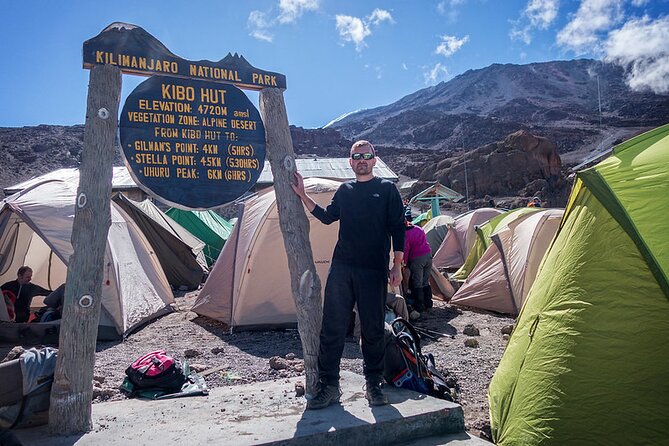
- Day 4: into alpine desert and toward Kibo Hut
- Day 5: summit attempt to Uhuru Peak before sunrise, then down to regroup
- Day 6: descent back to Marangu Gate, certificates and final views
- Guides, porters, and why support matters on Kilimanjaro
- Signature camping comfort: why tents and meals change the experience
- Price and logistics: what $1,980 includes, and what you must plan for
- Altitude expectations: why pacing and acclimatization are non-negotiable
- What to pack for the Marangu climb, using the trip’s gear reality
- Who this trek is best for in real life
- Should you book the 6-day Marangu Route with Spirit of Kilimanjaro?
- FAQ
- How long is the Kilimanjaro Marangu route trek?
- Where does the trek start?
- What time does the tour begin?
- Is pickup included?
- What is included in the price?
- What is not included?
- Does the trek include a summit attempt?
- Is there a cancellation window?
- How big is the group?
Key Things That Make This Kilimanjaro Trek Worth Your Time
- Marangu’s classic route: rainforest start, then heathland, alpine desert, and the cold edge of the arctic zone.
- Altitude-focused pacing: a dedicated acclimatization day at Horombo Hut helps your body adjust.
- Summit timing: you target Uhuru Peak just before sunrise, then descend in the same day.
- Included comfort and support: meals plus camping equipment, with professional guidance all the way.
- Watch wildlife on the way down: you may spot colobus monkeys and birds during the final descent.
- Real guide quality: past trekkers highlighted strong leadership from guides like Rama, Sanke, and William.
Other ways up Kilimanjaro we reviewed
- Kilimanjaro climb by Lemosho Route (7-day)★ 5.0 · 651 reviews
- Kilimanjaro climb, Machame Route (7-day)★ 5.0 · 262 reviews
- Kilimanjaro Climbing Lemosho Route 8 Days.★ 5.0 · 186 reviews
- Climbing Kilimanjaro – Machame Route★ 5.0 · 170 reviews
Kilimanjaro from Moshi, with Marangu’s hut-and-tent rhythm
Kilimanjaro is a big mountain, even when you do not feel that at the start. From Moshi, this trek gives you a straightforward entry point at Kilimanjaro National Park, and then it turns into a steady altitude climb that does not rush you.
The Marangu Route is often described as the most “classic” way up, and that shows in how the trek is organized. You will move through named stops like Mandara Hut, Horombo Hut, Kibo Hut, and the summit return, all part of the mountain’s altitude ladder.
Here’s the practical win: you are not spending your time figuring logistics. You have a full team, and the plan is set around keeping you safe, fed, and moving at a pace designed for acclimatization.
Route overview: six ecological zones, one big altitude story
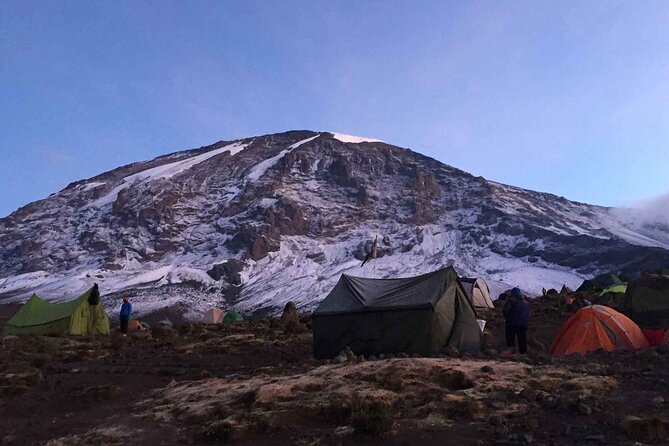
One of the best ways to understand this trek is to see it as an altitude movie. Over about six days, you cross from lush rainforest into heathland, then up into the alpine desert, and finally into the cold, high zone where conditions feel much more Arctic.
That change is not just for photos. It affects your breathing, your energy, and what your body feels like hour by hour. You go from warmer, wetter air to thin air and colder nights, so the trek’s structure matters.
And because this route is known for being scenic, you also get frequent visual payoffs. You catch views of Mawenzi Peak early, then later you see the volcanic formations and the saddle between Mawenzi and Kibo before the push higher.
Day 1: Marangu Gate and Mandara Hut, rainforest legs that warm you up
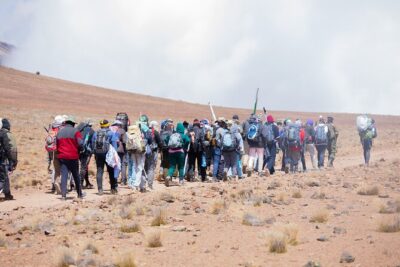
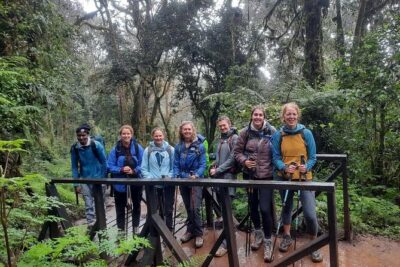
Your trek starts at the Marangu Gate in Kilimanjaro National Park. After you handle park formalities and meet your guides and porters, you are straight into lush rainforest walking.
This first day covers about 8 kilometers at an elevation that tops out around Mandara Hut, near 2,700 meters. It is described as relatively easy, and that matters, because you are using the day to get comfortable with trekking rhythm, layering, and how quickly you can get out of breath on the mountain.
You will likely notice the sounds and the plant life more on this day than later. It is the kind of contrast that makes the rest of the trek feel like a real journey, not just a climb.
Marangu, other operators and other lengths
Day 2: rainforest fades into heathland, and Mawenzi shows up
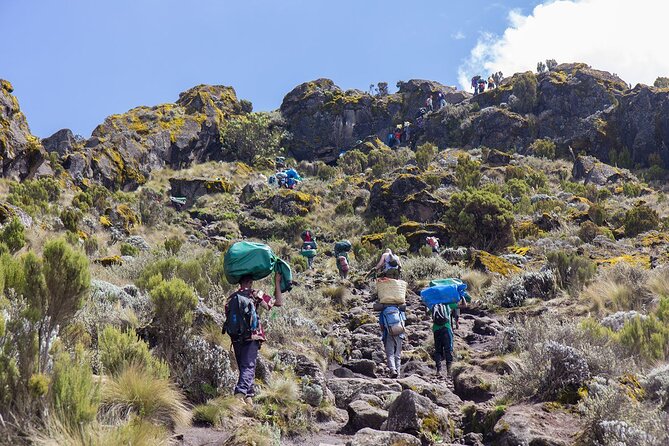
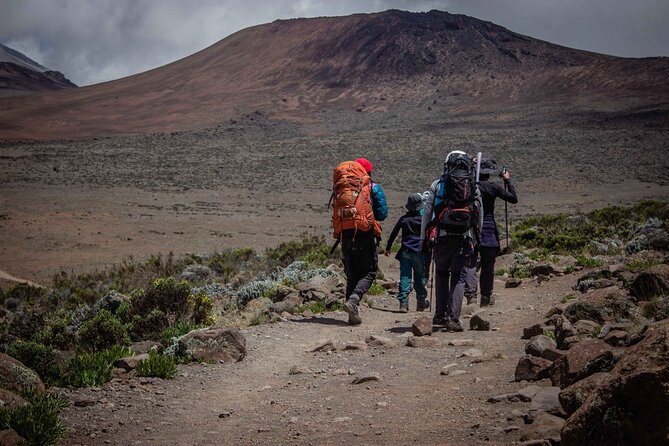
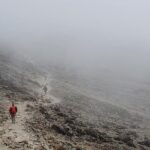
Day 2 continues the ascent and nudges you out of the lush rainforest and into heathland. Expect a real shift in temperature and vegetation as you go, and keep your eyes open because Mawenzi Peak appears in the distance.
You trek about 12 kilometers, then sleep at Horombo Hut around 3,700 meters. This is still not the summit grind, but it is where many people start to feel altitude more clearly than on day one.
Practical tip: keep your pace controlled, even if you feel good. On Kilimanjaro, “feeling good” can trick you into going too fast, which can backfire later.
Day 3: acclimatization day at Horombo, Zebra Rocks option
This day is about doing the smart thing, not the dramatic thing. You spend it at Horombo Hut for acclimatization, with the option of a shorter hike to Zebra Rocks.
Zebra Rocks gives you scenic views and a chance to stretch your legs without climbing to a much higher altitude. If you feel tired, you can simply relax at Horombo and focus on hydration and rest.
This is the day that often decides how the rest of your week goes. If you treat acclimatization as a chore and push too hard, you may pay for it on the climb toward Kibo and the summit night.
Day 4: into alpine desert and toward Kibo Hut
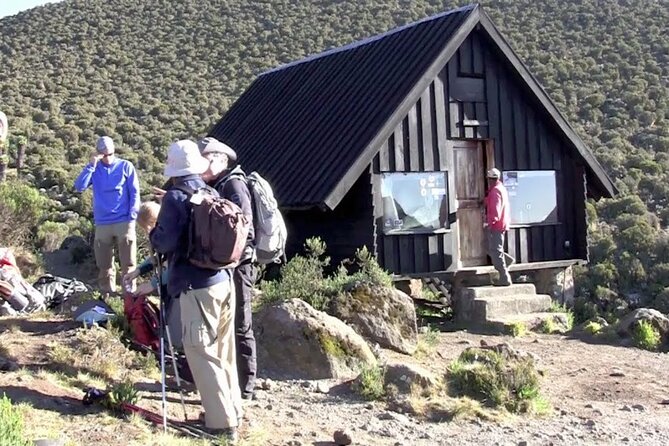
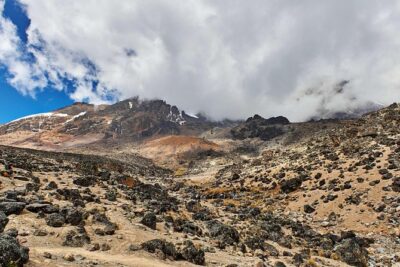
Day 4 is where the mountain starts to look and feel completely different. You hike up to Kibo Hut at about 4,700 meters, and the environment shifts into the alpine desert zone.
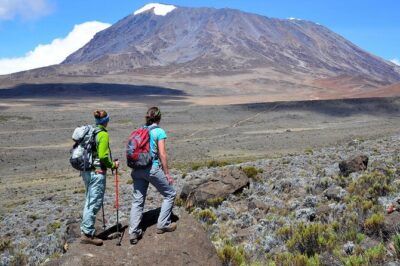
The climb can feel challenging due to altitude, even when the trail is not technical. You will also catch your first glimpse of the saddle between Mawenzi and Kibo, plus you get a clearer view of the volcanic shapes that dominate Kilimanjaro.
This is a good day to be disciplined about basics. Slow down, drink fluids, and keep breathing steady. Your goal is to arrive at Kibo Hut feeling like you can handle the next leg, not wiped out.
Day 5: summit attempt to Uhuru Peak before sunrise, then down to regroup
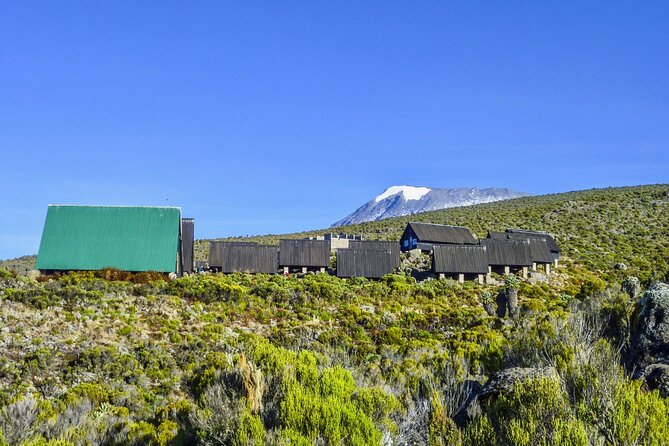
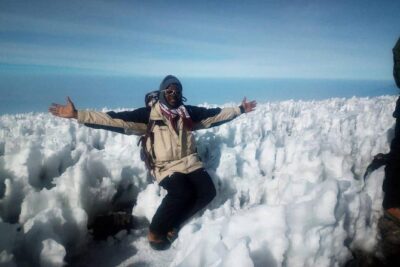
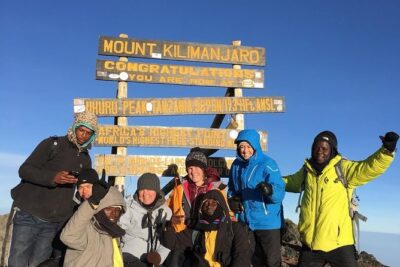
This is the hardest and most exciting day on the mountain. You start your ascent early so you can reach Uhuru Peak just before sunrise.
That timing is not random. Sunrise at altitude is often what makes the summit moment feel even bigger, but more importantly, you are managing temperatures and trail conditions for the day’s pace.
After celebrating at the summit, you descend first to Kibo Hut and then continue down to Horombo Hut. The descent still takes energy, but it also helps your body recover from the highest altitude you will reach on this trek.
Practical reality check: summit day stress comes from cold, thin air, and effort stacking on top of effort. A strong guide team is crucial here, and that is where you want to trust the people who set your pace and watch your symptoms.
Day 6: descent back to Marangu Gate, certificates and final views
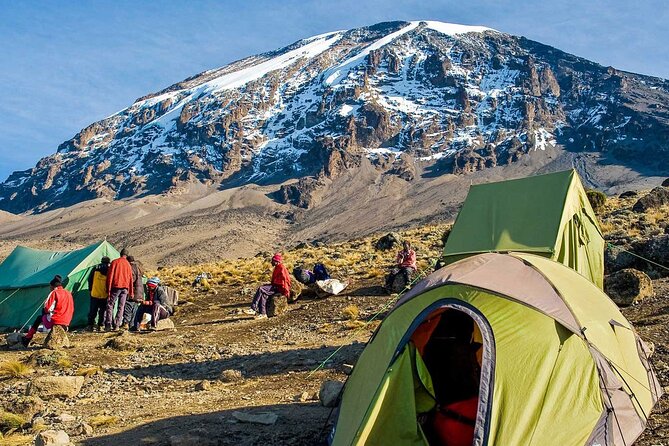
Your final day brings you down from Horombo Hut back toward the Marangu Gate. As you descend, you pass through heathland and rainforest zones again, so the temperature and air feel more familiar than on the high days.
You might spot wildlife like colobus monkeys and birds on the way down. The mountain tends to give a calmer, more “alive” feel during the descent compared to the stark high zone.
When you reach the Marangu Gate, you receive summit certificates and then say farewell to your guides and porters. It is a short ending, but it is a meaningful one, because the team has been with you every step of the way.
Guides, porters, and why support matters on Kilimanjaro
Kilimanjaro is not just a route, it is a long test of your body and decision-making. The strongest parts of this trek are the people guiding you through that test.
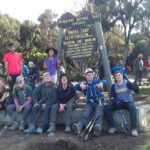
In past experiences, guides like Rama and Sanke were praised for being professional and actively checking on health and mood. Another guide named William stood out for helping people build courage for the six-day plan and keeping everything organized so trekkers could finish safely.
What I take from that pattern is simple. You want guides who understand altitude, who do not treat the mountain like a checklist, and who adjust pace and encouragement based on how you are doing that day.
Porters also matter, even if you never notice them much. With the trek’s equipment and camping setup handled, you can focus on breathing and walking, which is the real work on Kilimanjaro.
Signature camping comfort: why tents and meals change the experience
You are moving through cold nights and big altitude swings, so comfort is not a luxury on Kilimanjaro. This trip includes meals and camping equipment, and it promotes spacious tents and deluxe comfort.
That combination matters because you need more than a place to sleep. You need a place where you can dry out, warm up as much as possible, and actually rest so tomorrow does not feel impossible.
Meals also make a difference. When food is handled for you, you spend less energy thinking about timing and more energy focusing on hydration and steady effort.
Price and logistics: what $1,980 includes, and what you must plan for
At $1,980 per person, this is not a casual weekend purchase. The value comes from what is already covered, not just the headline cost.
Included items:
- Park fees and all fees and taxes
- Safety equipment
- Meals
- Camping equipment and accommodation
- Professional guide support
- All accommodation
Not included items:
- Visa
- Travel insurance
- Personal gear
- Tipping
So when you budget, think in terms of total cost readiness. You will likely still need to handle your visa paperwork and bring your own trekking clothing and footwear, but the heavy logistics and major trekking-day costs are covered.
Also note the trip starts at 9:00 am, and pickup is offered. That reduces early-day stress when you are already thinking about sleep, gear, and energy.
Finally, the group size has a stated maximum of 100. In practice, your experience will feel like a trek with a team rather than a city crowd, but the key point for planning is that you are not dealing with total solitude on the main route.
Altitude expectations: why pacing and acclimatization are non-negotiable
This trek hits meaningful elevations fast enough that acclimatization becomes part of the plan, not an optional extra. You move from around 2,700 meters on day one up to 3,700 meters on day two, then you hold at Horombo Hut on day three.
Then you climb further to Kibo Hut around 4,700 meters. Finally, you go above that for the summit push to Uhuru Peak.
If you are considering this trek, treat pacing as a skill. The guides will help, but you still need to choose a slow walking pace and drink consistently. The difference between a manageable climb and a painful one can be as simple as slowing down early.
What to pack for the Marangu climb, using the trip’s gear reality
The trip includes camping equipment, but it does not replace your personal trekking needs. Since personal gear is not included, you should plan your own kit around cold nights and high-altitude walking.
Bring:
- Your personal hiking boots and socks suitable for long days
- Warm layers for nights and the cold summit period
- A way to stay hydrated
- Any personal items you require for comfort
Since the operator includes safety equipment, you will not need to source that yourself, but it is still wise to bring what you know works for you.
If you are unsure about gear, ask the provider before you go. Your clothing choices matter because day temps and night temps can swing a lot on Kilimanjaro.
Who this trek is best for in real life
This is listed as suitable for most travelers, and the day-by-day plan supports that idea with an acclimatization day and structured stages.
It is a strong fit if you:
- Want a classic route with well-known stops
- Like the idea of structured support and included meals
- Prefer a plan that builds in rest and adjustment
- Want the summit goal with a team focused on safety
It may not be ideal if you:
- Know you dislike very cold summit-night conditions
- Are looking for a purely flexible, off-the-grid style trek
- Do not have the physical readiness to handle the summit day and descent
Should you book the 6-day Marangu Route with Spirit of Kilimanjaro?
I would book this if you want a straightforward, high-success style plan with a strong emphasis on organization and support. The combination of professional guides, included park fees and meals, and a dedicated acclimatization day makes it easier to trust the process when altitude is doing its thing.
I would think twice if you are not prepared for the summit-day effort and the early start. If you can train for a long climb, take the acclimatization seriously, and budget for visa, insurance, personal gear, and tipping, this trek can be a memorable way to reach the Roof of Africa.
FAQ
How long is the Kilimanjaro Marangu route trek?
The trek lasts about 6 days.
Where does the trek start?
It starts at Kilimanjaro National Park at the Marangu Gate, with Moshi as the location base.
What time does the tour begin?
The start time is 9:00 am.
Is pickup included?
Pickup is offered.
What is included in the price?
Included items are park fees, safety equipment, meals, all fees and taxes, camping equipment, professional guides, and all accommodation.
What is not included?
Not included are visa, travel insurance, personal gear, and tipping.
Does the trek include a summit attempt?
Yes. The route is aimed at summiting Mount Kilimanjaro at Uhuru Peak before sunrise.
Is there a cancellation window?
You can cancel for a full refund up to 24 hours before the experience start time, and free cancellation is available.
How big is the group?
The maximum number of travelers is listed as 100.
The Marangu Trail
- Kilimanjaro climb, Marangu route (6-day)
★ 5.0 · 72 reviews - Climbing Kilimanjaro – Marangu Route
★ 5.0 · 65 reviews - Best Kilimanjaro Adventures 6 Days Marangu Route Experience
★ 5.0 · 18 reviews - Kilimanjaro Private Climbing in 6 Days Marangu Route
★ 5.0 · 16 reviews - 6 Days Climb Kilimanjaro Through Marangu Route
★ 4.5 · 15 reviews
Kilimanjaro, Route by Route
- Kilimanjaro climb by Lemosho Route (7-day)
★ 5.0 · 651 reviews - Kilimanjaro climb, Machame Route (7-day)
★ 5.0 · 262 reviews - Kilimanjaro Climbing Lemosho Route 8 Days.
★ 5.0 · 186 reviews - Climbing Kilimanjaro – Machame Route
★ 5.0 · 170 reviews - Climbing Kilimanjaro through 7 days Machame Route
★ 5.0 · 151 reviews
Just added from around Moshi
Kilimanjaro Marangu Route, compared.
 ★ 5.0Kilimanjaro climb, Marangu route (6-day)From $2,90272 reviews
 ★ 5.0Climbing Kilimanjaro – Marangu RouteFrom $2,00465 reviews
 ★ 5.0Private Full Day Hiking Experience to Marangu RouteFrom $26061 reviews
 ★ 4.5From Arusha/Moshi: Kilimanjaro Hike Marangu Route Day TripFrom $10154 reviews
 ★ 5.0Mount Kilimanjaro Day Hike Through Marangu Route to Mandara HutFrom $26537 reviews
 ★ 5.0Kilimanjaro Climbing 5 days Marangu routeFrom $90022 reviews
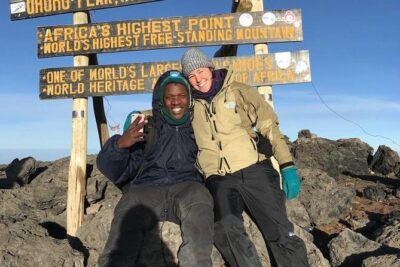 ★ 5.0Best Kilimanjaro Adventures 6 Days Marangu Route ExperienceFrom $1,00018 reviews
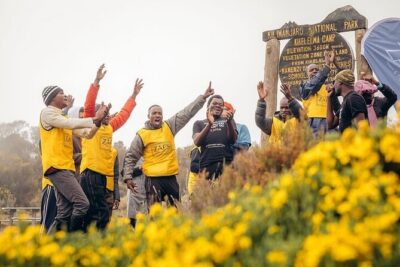 ★ 5.0Kilimanjaro Private Climbing in 6 Days Marangu RouteFrom $2,00016 reviews
Browse the lists this tour appears in