
REVIEW · KILIMANJARO MARANGU ROUTE
6 Days Kilimanjaro climb – Marangu route
Marangu makes Kilimanjaro feel more manageable. It is one of the classic ways up from Moshi, and I love that you sleep in mountain huts instead of camping every night. I also love the private, full-crew setup, the kind where you are not just a number, even if you slow down. The big consideration is altitude, cold, and wind, especially during the midnight summit push, because the mountain does not care how prepared you feel.
This route moves through several Kilimanjaro zones, so the trek never feels repetitive. Day 1 starts in rain forest, and at higher edges you might spot blue monkeys. By Day 5 you are in true high, cold conditions, and the payoff is the summit sunrise push from around Gilman’s point.
Price is not cheap at $2,000 per person, and tipping the crew is not included. If you are realistic about the effort and the risk of altitude sickness, this is a strong pick for a structured, classic climb.
In This Review
- Key points that matter before you go
- Marangu, the Coca-Cola route, and what that means on Kilimanjaro
- Moshi start, private support, and how your group actually gets managed
- Day 1: Rain forest climb to Mandara Hut (6,046 ft to 8,858 ft)
- Day 2: High moorland rise toward Kibo and Mawenzi (8,858 ft to 12,205 ft)
- Day 3: Acclimatization day with Mawenzi Ridge (12,205 ft to 14,400 ft and back)
- Day 4: Alpine desert, the Saddle crossing, and Kibo Hut at the crater wall
- Day 5: Midnight summit push to Uhuru Peak (and Gilman’s point at 18,600 ft)
- Day 6: Mweka Gate certificates, muddy trails, and back to Moshi
- Meals, permits, and why private pricing can still feel fair
- Who this Marangu climb fits best, and who should be cautious
- Should you book Destiny Explorers for this 6-day Marangu climb?
- FAQ
- FAQ
- What time does the Kilimanjaro climb start?
- Where do you start the trek, and how do you get there?
- Do you camp on the Marangu route?
- How long is the trek?
- What meals are included?
- Is this a private tour?
- Is the $2,000 price all-inclusive?
- Can I cancel and get a full refund?
Key points that matter before you go
- Hut sleeping on Marangu means no tent-camping rhythm, just steady hiking and rest
- A built-in acclimatization day with Mawenzi Ridge gives you a real chance to adjust
- Midnight summit timing helps you reach Uhuru Peak (19,341 ft) for the sunrise
- Meals are covered across most days, so you can focus on pacing and hydration
- Private trek support with a large crew means help is close if you fall behind
Other ways up Kilimanjaro we reviewed
- Kilimanjaro climb by Lemosho Route (7-day)★ 5.0 · 651 reviews
- Kilimanjaro climb, Machame Route (7-day)★ 5.0 · 262 reviews
- Kilimanjaro Climbing Lemosho Route 8 Days.★ 5.0 · 186 reviews
- Climbing Kilimanjaro – Machame Route★ 5.0 · 170 reviews
Marangu, the Coca-Cola route, and what that means on Kilimanjaro
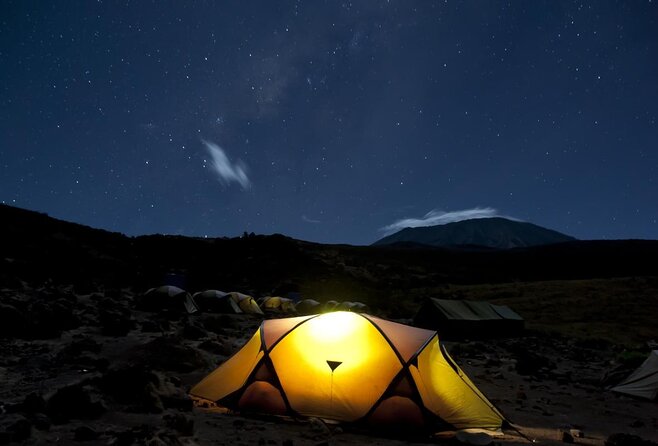
The Marangu route is famous for a nickname you will hear in Tanzania: the Coca-Cola route. The “why” is simple. It follows a classic line used by early summit attempts, and it is built around hut sleeping rather than camping. That makes it feel more approachable for many first-timers because your biggest logistics headache is less intense than on routes that require full campsite setups.
It also traces the broad path that Hans Meyer took as the first European to summit Kilimanjaro. You are not just walking toward a peak. You are following a well-trodden route with long-standing infrastructure, which matters when you are spending days adapting to altitude. You get a clear progression, from rain forest up into high moorland and then into the colder, drier zones above.
Hiking in these layers is part of the magic. You start in lush forest, then the vegetation thins as the air gets thinner. By the time you cross the Saddle between Mawenzi and Kibo, the terrain feels almost lunar. That “planet change” is one reason this route feels like an adventure, even though it is considered the more comfortable option.
Moshi start, private support, and how your group actually gets managed
The experience starts with meeting at 7:00 am in Moshi. From there, private transportation is part of the package, and you also get a mobile ticket. The big practical point is that this is a private trek, meaning only your group participates.
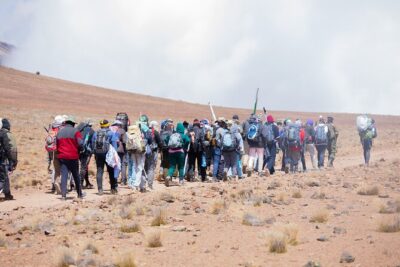
The support setup is where this kind of private climb can really feel different from the crowds. One group shared that with 6 climbers they had 27 people working around them, including guides, cooks, and porters. That kind of ratio matters when you hit rough altitude, when you need a slower pace, or when you simply cannot keep your plan the same way every hour.
You should expect a crew that is reliable and professional, and you should feel comfortable asking for clarification during the climb. The booking experience is also described as straightforward and responsive. In particular, Issa handled reservations and replied within a day with detailed explanations to questions. That is not a small thing. Getting answers quickly before you climb helps you show up calmer, which can help your trekking rhythm.
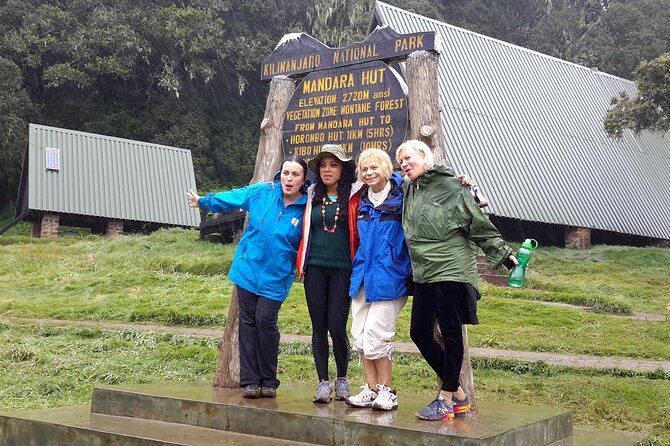
Day 1: Rain forest climb to Mandara Hut (6,046 ft to 8,858 ft)
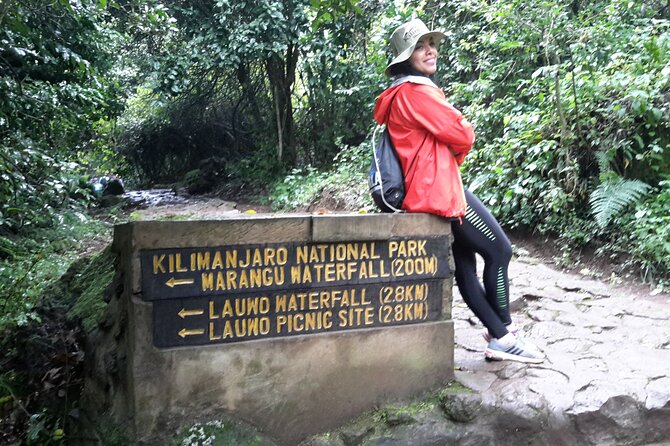
Day 1 is about getting your legs moving and letting the altitude start doing its subtle work. You start around 6,046 ft and climb up to 8,858 ft over about 4 to 5 hours, covering roughly 8 km or 5 miles.
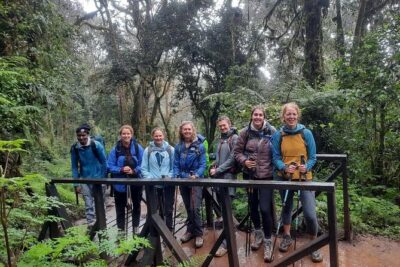
The trail begins in tropical rain forest. This is the part of Kilimanjaro that makes you forget you are walking toward a snow line. It can be humid, and the ground may feel slick depending on conditions. Early on, you can look out for wildlife such as blue monkeys, especially near the upper edge of the forest zone.
As the day goes on, the forest thins and the trail opens up. It widens, and you start seeing hillsides instead of just dense greenery. Then you reach Mandara Hut, where you settle in for the next push.
Practical tip: treat Day 1 as warm-up, even if you feel good. The goal is to finish feeling like you could walk a bit more, not like you already used up your best energy.
Marangu, other operators and other lengths
Day 2: High moorland rise toward Kibo and Mawenzi (8,858 ft to 12,205 ft)
Day 2 climbs from 8,858 ft to 12,205 ft. You are looking at about 6 to 8 hours and around 12 km or 7 miles. This is where you start leaving the lush forest feeling behind and moving into higher, cooler terrain.
The trail continues through forest before opening into high moorland. That shift is usually noticeable not just visually, but in how the air feels. You also start getting your first views of the main volcanic peaks you are aiming for, Kibo and Mawenzi.
Even on clear days, the weather can change quickly. At this altitude, plan for wind and chill, and treat your layers like part of your hiking gear, not something you adjust only when you stop.
Practical tip: keep your pace steady and your breathing controlled. Big early surges are one of the fastest ways to feel tired later, especially on Kilimanjaro.
Day 3: Acclimatization day with Mawenzi Ridge (12,205 ft to 14,400 ft and back)
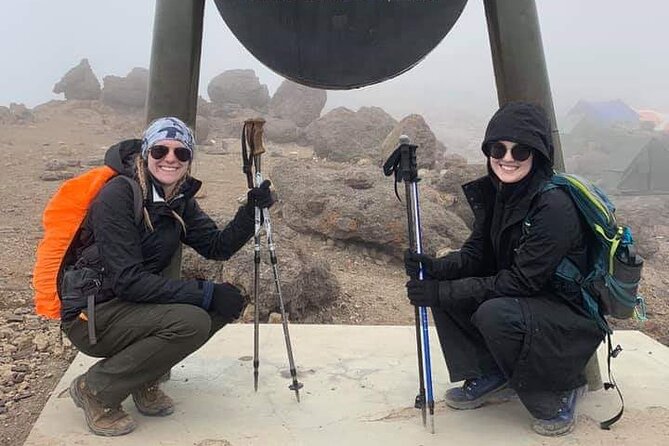
Day 3 is the acclimatization day, and it is one of the most important parts of the whole week. You start from Horombo Hut, climb to Mawenzi Ridge, then head back to Horombo Hut. The elevation range is about 12,205 ft up to 14,400 ft, then back down.
The hike is shorter in distance, about 5 km each way (roughly 3 miles each way). That is why you get a built-in buffer for your body. You spend about 2 to 3 hours going up and about 1 to 2 hours returning.
The reward is the view. Mawenzi Ridge has motivating sightlines toward Kibo and Mawenzi. This day is not only about oxygen. It is also about morale. You get to look at the summit area, and that can make the later summit push feel less like an abstract goal.
Practical tip: keep this day gentle. If you feel great, it is tempting to go hard because you can. Try not to. The point is acclimatization, not a personal best.
Day 4: Alpine desert, the Saddle crossing, and Kibo Hut at the crater wall
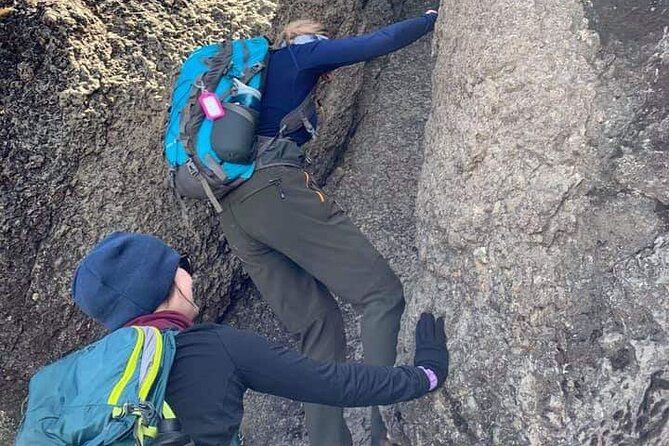
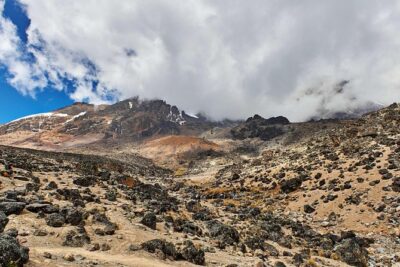
Day 4 climbs from 12,205 ft to 15,430 ft over about 6 to 8 hours, around 10 km or 6 miles. The habitat shifts into alpine desert, and the terrain changes from “walk through nature” to “walk across high, open ground.”
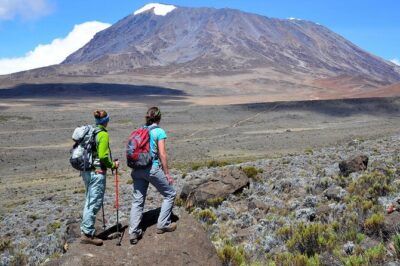
A standout moment is crossing the Saddle between Mawenzi and Kibo. The route passes through the lunar desert section, so it can feel both exposed and oddly quiet. On many climbs, this is the day when you finally feel like you are truly high altitude hikers now.
Then you reach Kibo Hut, positioned at the bottom of the Kibo crater wall. This is your last major rest point before the summit push. You settle in, rest up, and take an early dinner to prepare for the night climb.
Practical tip: do not treat this as a social day where you wait too long to sleep. The summit start is midnight, and your body benefits from real rest.
Day 5: Midnight summit push to Uhuru Peak (and Gilman’s point at 18,600 ft)
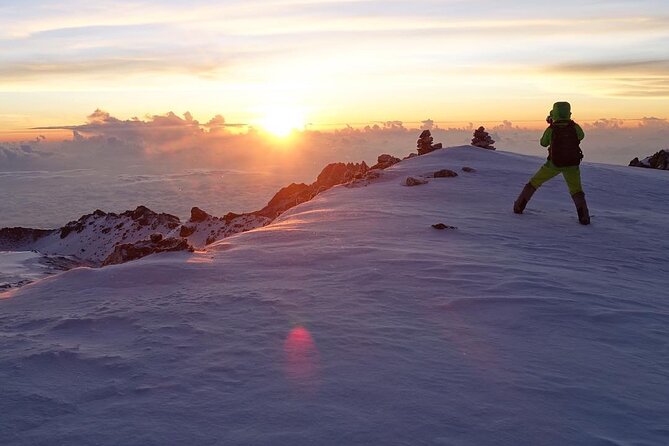
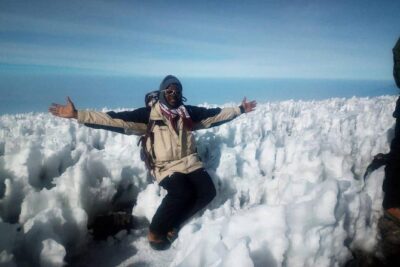
Day 5 is the big one. You start the push around midnight, and the climb is both mentally and physically demanding. You ascend from about 15,430 ft to 19,341 ft at Uhuru Peak. The schedule lists about 6 to 8 hours for the ascent, and the total day can be around 13 hours including the descent.
At this height, wind and cold can get extreme, especially in the dark. You will ascend in darkness for several hours and take frequent but short breaks. This part needs discipline. Moving too fast wastes energy, and moving too slowly can make you cold longer than you want.
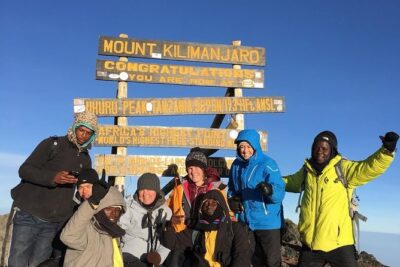
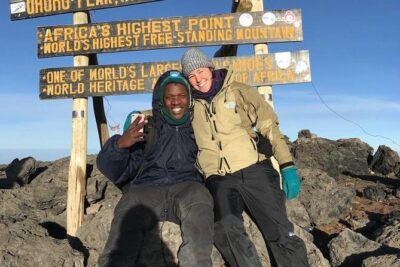
Then you reach Gilman’s point at 18,600 ft, where you get a major reward: a magnificent sunrise. The view is described as coming over the mountains as the day begins, and it is usually the moment that turns effort into story.
After Uhuru Peak, you descend back down to Horombo Hut. The descent time is about 4 to 5 hours, and the distance listed is about 16 km or 10 miles.
Practical tip: on summit day, your pace is less about speed and more about staying steady while managing heat loss. Small clothing adjustments and short breaks can make a big difference.
Day 6: Mweka Gate certificates, muddy trails, and back to Moshi
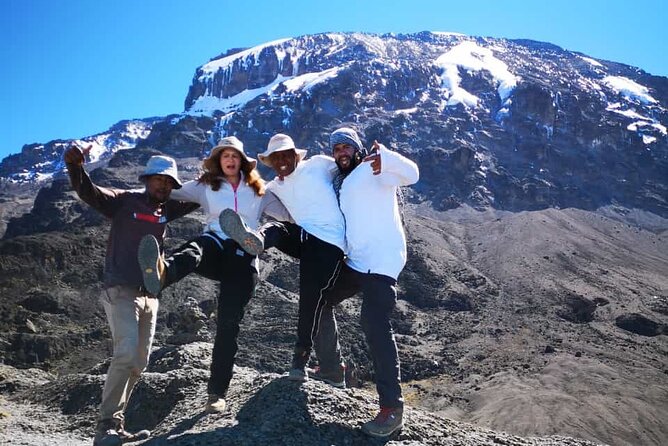
Your final day drops fast compared to the earlier climbing. You go from about 12,205 ft down to 6,046 ft, taking around 5 to 7 hours for roughly 20 km or 12 miles.
You continue down to Mweka Gate, where you collect summit certificates. That is a real milestone, because you are not just “surviving.” You are completing a sanctioned climb and getting the paperwork that proves you made it.
The route continues for about another hour to Mweka Village. From there, a vehicle meets you and drives you back to your hotel in Moshi.
Practical tip: expect wet and muddy conditions at lower elevations. Even if the sky looks calm, your boots can get messy. This is often the day when careful footwork matters most.
Meals, permits, and why private pricing can still feel fair
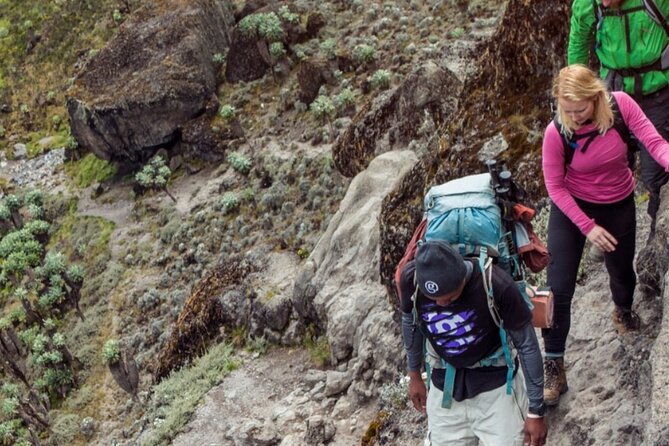
This is a 6-day experience with a clear food plan. Meals included are breakfast 5 times, lunch 6 times, and dinner 5 times. Admission tickets are included as well, which matters because permits are part of what makes Kilimanjaro climbs possible in the first place.
You also get private transportation, and you are not sharing logistics with other unrelated groups. That usually reduces stress. When your trek schedule is tight, fewer moving parts helps.
Now the price. At $2,000 per person, you might wonder what you are truly paying for. The answer is mostly support and structure: a private trek setup, meals, permits, and a dedicated crew including guides, cooks, and porters. In the example shared, 6 climbers had 27 people supporting them. That does not mean every climb has the exact same ratio, but it gives you a sense of what a well-run operation looks like on Kilimanjaro.
Two more practical notes:
- Tipping the mountain crew is not included, so you should budget for it if your plan is to tip.
- Personal expenses are not included, so keep a realistic daily budget ready.
Also, one thing that came up in feedback is fresh, delicious food. On summit day and altitude days, food is not only comfort. It is fuel.
Who this Marangu climb fits best, and who should be cautious
This route is described for people with moderate physical fitness. That matters because Marangu still climbs high, still includes a long summit day, and still can get cold and windy at the top.
I think Marangu is especially good if you want:
- Hut sleeping instead of camping every night
- A classic, well-known route with steady progression
- A climb that includes a true acclimatization day rather than rushing straight up
Be cautious if you know you are sensitive to altitude. Even experienced hikers can get altitude sickness. One person described suffering from altitude sickness and having to turn back, which is a reminder that you should take symptoms seriously and follow the crew’s guidance.
Should you book Destiny Explorers for this 6-day Marangu climb?
If you want a structured Kilimanjaro climb with hut nights, private support, and a clear plan from Moshi to Mweka, this kind of Marangu package makes sense. The best sign is the way the operation sounds in real terms: reliable, professional crew, good food, and a reservation process that is responsive. Issa, handling reservations, is mentioned as replying quickly and giving detailed answers, which helps you go into the climb confident.
My “yes” comes with a condition. Be honest about fitness, respect altitude, and plan for cold on summit night. If you do that, you give yourself the best shot at the sunrise moment from Gilman’s point and the satisfaction of finishing to get those certificates at Mweka Gate.
FAQ
FAQ
What time does the Kilimanjaro climb start?
The meeting start time is 7:00 am.
Where do you start the trek, and how do you get there?
You depart Moshi for Marangu Gate for the necessary formalities. Private transportation is included.
Do you camp on the Marangu route?
No. This route uses sleeping huts, so you do not have to camp on the Marangu itinerary.
How long is the trek?
It is listed as a 6-day climb (approx.).
What meals are included?
Breakfast is included 5 times, lunch is included 6 times, and dinner is included 5 times.
Is this a private tour?
Yes. It is described as a private tour/activity, so only your group participates.
Is the $2,000 price all-inclusive?
The price includes private transportation, meals, and admission tickets. It does not include tipping the mountain crew or person expenses.
Can I cancel and get a full refund?
Yes, free cancellation is offered up to 24 hours in advance for a full refund. If you cancel less than 24 hours before the start time, the amount paid is not refunded.
The Marangu Trail
- Kilimanjaro climb, Marangu route (6-day)
★ 5.0 · 72 reviews - Climbing Kilimanjaro – Marangu Route
★ 5.0 · 65 reviews - Best Kilimanjaro Adventures 6 Days Marangu Route Experience
★ 5.0 · 18 reviews - Kilimanjaro Private Climbing in 6 Days Marangu Route
★ 5.0 · 16 reviews - 6 Days Climb Kilimanjaro Through Marangu Route
★ 4.5 · 15 reviews
Kilimanjaro, Route by Route
- Kilimanjaro climb by Lemosho Route (7-day)
★ 5.0 · 651 reviews - Kilimanjaro climb, Machame Route (7-day)
★ 5.0 · 262 reviews - Kilimanjaro Climbing Lemosho Route 8 Days.
★ 5.0 · 186 reviews - Climbing Kilimanjaro – Machame Route
★ 5.0 · 170 reviews - Climbing Kilimanjaro through 7 days Machame Route
★ 5.0 · 151 reviews
Just added from around Moshi
Kilimanjaro Marangu Route, compared.
 ★ 5.0Kilimanjaro climb, Marangu route (6-day)From $2,90272 reviews
 ★ 5.0Climbing Kilimanjaro – Marangu RouteFrom $2,00465 reviews
 ★ 5.0Private Full Day Hiking Experience to Marangu RouteFrom $26061 reviews
 ★ 4.5From Arusha/Moshi: Kilimanjaro Hike Marangu Route Day TripFrom $10154 reviews
 ★ 5.0Mount Kilimanjaro Day Hike Through Marangu Route to Mandara HutFrom $26537 reviews
 ★ 5.0Kilimanjaro Climbing 5 days Marangu routeFrom $90022 reviews
 ★ 5.0Best Kilimanjaro Adventures 6 Days Marangu Route ExperienceFrom $1,00018 reviews
 ★ 5.0Kilimanjaro Private Climbing in 6 Days Marangu RouteFrom $2,00016 reviews
Browse the lists this tour appears in