
REVIEW · KILIMANJARO MARANGU ROUTE
5 Days Marangu Route Kilimanjaro hiking
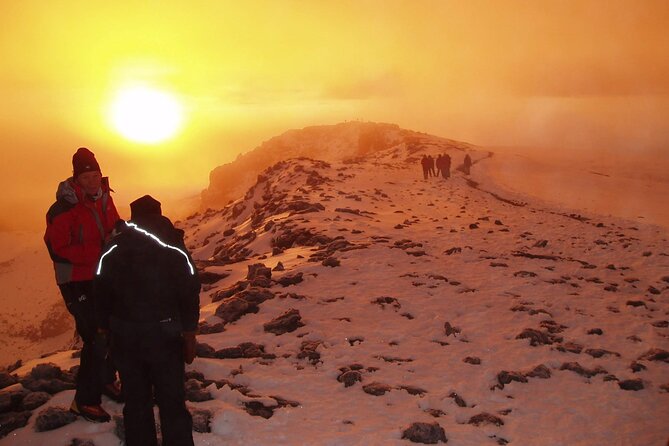
A good summit starts long before dawn. This 5 day Marangu Route climb to Uhuru Peak is for you if you want steady hiking over technical climbing, plus a crew that keeps the whole thing moving safely. You’ll follow the classic “Coca-Cola” style approach, see big changes in vegetation as altitude rises, and aim for sunrise views from Gillman’s Point.
I love how the route pacing is built for real acclimatization, not just tougher shoes and a stubborn attitude. I also like that the experience is packed with mountain moments, from the rainforest start and Maundi Crater sidetrack to the summit photo at Uhuru Peak. One possible drawback to know upfront: summit night is still brutally cold and steep, and you’ll be hiking in darkness for part of the climb.
In This Review
- Key Takeaways Before You Lace Up
- Marangu Route Kilimanjaro, the easy hike that still earns its stripes
- Price and what you’re really paying for at $1,014 per person
- The altitude plan, explained in plain language
- Day 1: Mandara Gate to Mandara Hut, rainforest walking plus Maundi Crater
- Day 2: Horombo encampment, Mawenzi and Kibo views while altitude starts to talk
- Day 3: the saddle between Kibo and Mawenzi, dinner before the summit prep
- Day 4: midnight start to Gilman’s Point and Uhuru Peak, the cold reality check
- Day 5: Mandara Hut and the wet rainforest exit to Marangu Gate
- Guides, crew, and the “team feels like family” effect
- Who this trek suits best, and who should think twice
- Should you book the 5 Days Marangu Route to Uhuru Peak?
Key Takeaways Before You Lace Up
- Marangu Route pacing: a gentler, gradual ascent compared to many other Kilimanjaro routes
- Acclimatization structure: higher walking days followed by rest moments before the summit push
- Gillman’s Point sunrise: you’re already high on the crater rim as dawn breaks
- Hut stays and meals included: Mandara Hut, plus hut nights at encampments along the way
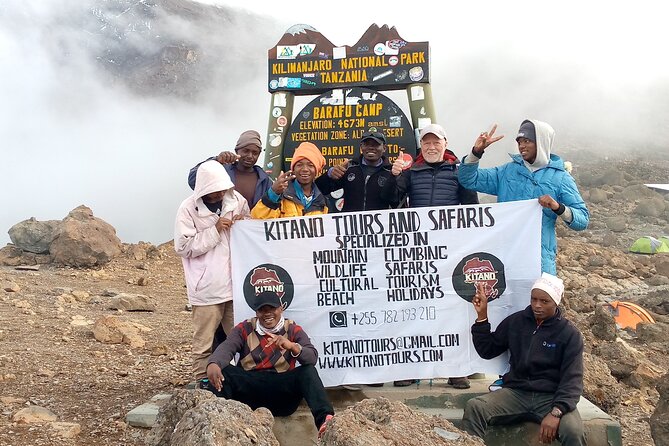
- Crew support matters: guides and porters reported as attentive and motivating, which helps on summit night
Other ways up Kilimanjaro we reviewed
- Kilimanjaro climb by Lemosho Route (7-day)★ 5.0 · 651 reviews
- Kilimanjaro climb, Machame Route (7-day)★ 5.0 · 262 reviews
- Kilimanjaro Climbing Lemosho Route 8 Days.★ 5.0 · 186 reviews
- Climbing Kilimanjaro – Machame Route★ 5.0 · 170 reviews
Marangu Route Kilimanjaro, the easy hike that still earns its stripes
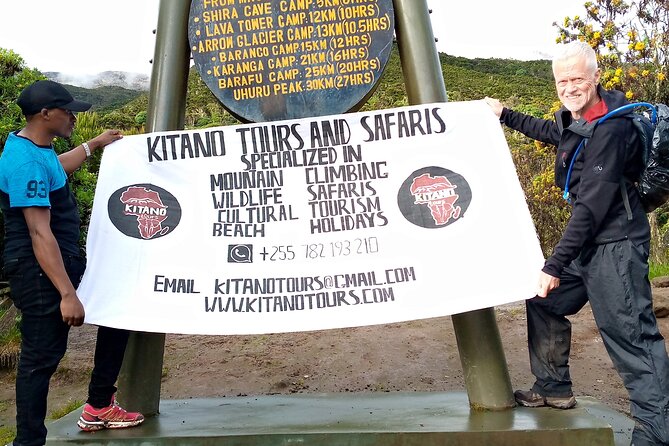
The Marangu Route is often called the Coca-Cola route because it is more gradual and straightforward. That matters because Kilimanjaro is not really a climbing problem, it’s an altitude problem. When the trail angle is calmer, you can keep your breathing steadier and focus on putting one foot in front of the other.
This itinerary keeps that idea front and center. You spend day 1 in rainforest, day 2 moving onto open moorland, and day 3 climbing into the dramatic upper zones. By the time you’re preparing for summit night, you’ve already had time to adjust to thinning air, not just jump straight into the toughest altitude.
Just remember: gradual does not mean easy. The final push to Uhuru Peak is still steep, and the night climb is cold enough to make you feel every layer choice. You’ll feel it in your legs even if the route itself is considered the friendlier one.
Price and what you’re really paying for at $1,014 per person
At $1,014.00 per person for about 5 days, this is not a bargain price. But it is also not just you paying for a map and a link. What you’re buying is a full expedition setup: guide and crew, cook and porters, gate transfer, and hut sleeping during the climb. Meals are also included across the trek days (breakfast, lunch, and dinner counts are listed in the inclusions).
That package can be good value if you want to reduce decision fatigue. You show up, get briefed, hike, and let the team handle route timing, logistics between encampments, and your day-to-day fueling.
Two budget gotchas to keep straight:
- Flights and visas are not included.
- Park Fees and Tax are listed as not included, even though the itinerary notes “Admission Ticket Free” on each day. That mismatch is worth confirming with the operator when you book, so you don’t get surprised later.
The altitude plan, explained in plain language
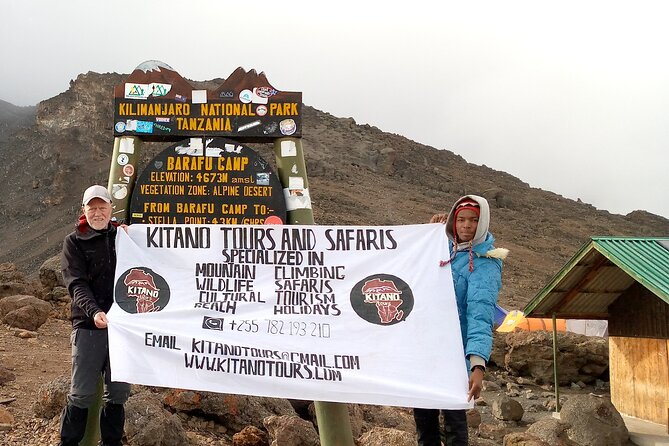
This trek gives you a classic 5 day rhythm: climb, walk higher, then rest and prepare, then make the summit attempt. The altitude targets listed here show why it can help most hikers.
- Day 1 goes from about 1,700 m to 2,740 m.
- Day 2 climbs to Horombo encampment with effects of altitude possible.
- Day 3 is much higher, about 3,700 m to 4,700 m, and you’re walking into the moor and “moonscape” zone.
- Day 4 takes you from around 3,700 m to 4,700 m during the summit approach and then includes the return descent stages.
- Day 5 drops from 3,700 m down to 1,700 m, finishing with the rainforest descent.
In other words, you’re not just grinding upward every single minute. You’re also given nights at huts/encampments to help your body adapt. That’s the real “easy mode” advantage of Marangu Route for many hikers.
Marangu, other operators and other lengths
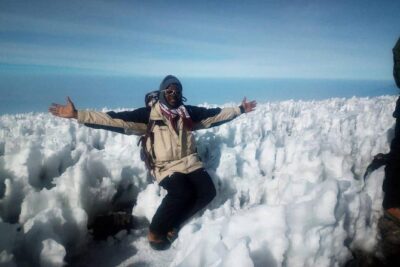
Day 1: Mandara Gate to Mandara Hut, rainforest walking plus Maundi Crater
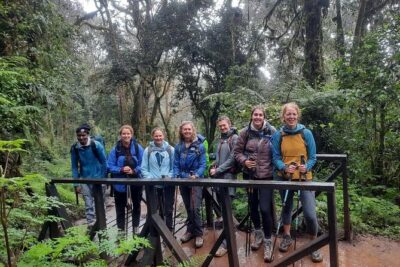
Day 1 starts with a drive to the Kilimanjaro National Park Gate, then a briefing and check-in. After that, you ease into the rainforest. This is where Kilimanjaro feels most alive. You’ll be moving through a shaded, lush zone with tall eucalyptus trees, birdlife, and Colobus monkeys (look for them if you slow down and actually scan the trees).
Distance is listed as 7 km for about 4 to 5 hours. Along the way, there’s a sidetrack possibility to Maundi Crater, which is a nice way to break up the day and see more of Northern Tanzania and Kenya from the surrounding views.
You finish at Mandara Hut, with lunch and dinner included. A small practical point: rainforest days are often the start of your gear habits. You’ll quickly learn what you can wear comfortably versus what becomes annoying when humidity is high.
Day 2: Horombo encampment, Mawenzi and Kibo views while altitude starts to talk
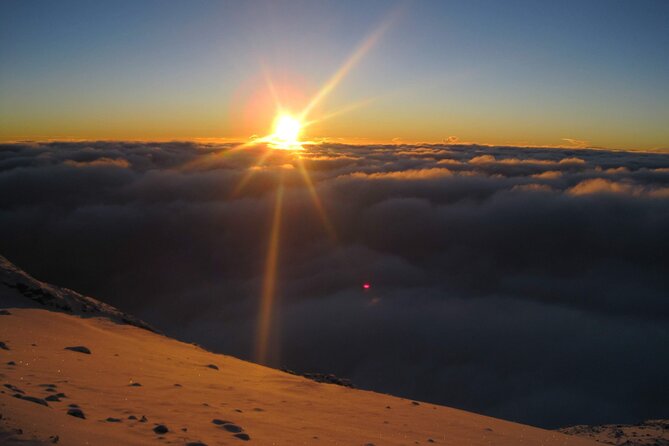
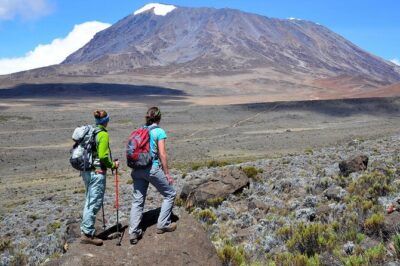
Day 2 moves you out of the rainforest and onto ascending moorlands. This is when the scenery opens up, and the mountain starts acting like the mountain: bigger, harsher, and less forgiving of wasted effort.
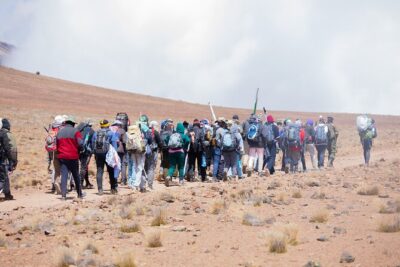
The hike is listed as 8 hours. You’re not just walking for distance, you’re walking to reach Horombo encampment while getting more comfortable with higher altitude. The notes call out that you may start to feel altitude effects. That is common. So if you feel slower or breathier, treat it as information, not failure.
Vegetation shifts are part of the experience. You’ll pass through open moorland where giant lobelias and groundsels show up. Along with that, views of Mawenzi and the summit area of Kibo make the day feel worth every step.
Day 3: the saddle between Kibo and Mawenzi, dinner before the summit prep
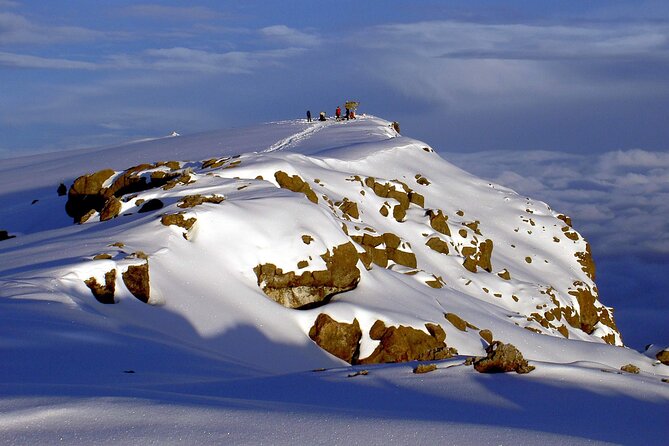
Day 3 is one of the key acclimatization days because it pushes you higher and then gives you time to recover. You’ll ascend past the last watering point, then walk onto the saddle area between the peaks of Kibo and Mawenzi.
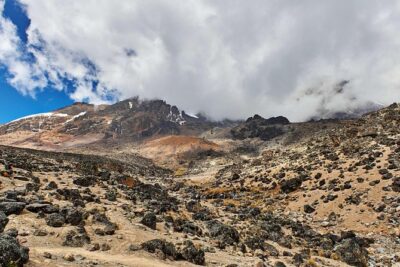
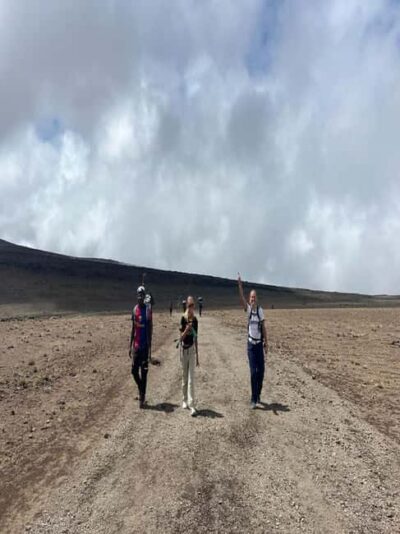
This is also where the environment changes fast. The description notes upper heathland before the vegetation disappears into a “moonscape” feel. That visual shift is not just scenery, it affects how you experience the hike. Fewer plants often mean you feel more wind and temperature changes sooner.
Altitude is listed as 3,700 m to 4,700 m, and distance is 10 km for 6 to 8 hours. You’ll have breakfast, lunch, and dinner during the day, plus rest afterward to prepare for summit night. This day is where you’ll benefit most from calm decision-making: eat on schedule, move steadily, and don’t try to “win” the pace.
Day 4: midnight start to Gilman’s Point and Uhuru Peak, the cold reality check
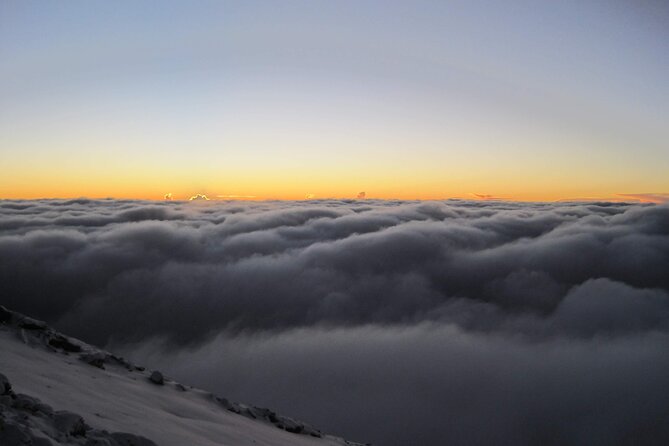
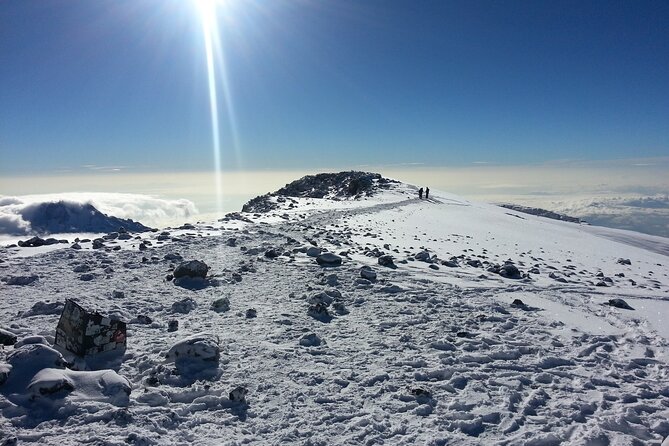
This is the day people remember. The plan calls for a very early start, between midnight and 2 am, climbing toward Gilman’s Point on the crater rim. Then you continue to Uhuru Peak, the highest point in Africa.
The terrain is described as steep and heavy scree or snow. That’s important. You need to be ready for slow, careful steps, and for the kind of discomfort that makes you want to rush. The route won’t reward rushing. It rewards steady effort and good teamwork.
For this part of the climb, the notes specifically call out cold and darkness. The descent begins after the summit, but you’ll likely be moving in the dark, so headlamps or flashlights matter. The guide team also matters here, because your summit night success often comes down to pacing, encouragement, and responding to how your body is behaving at extreme altitude.
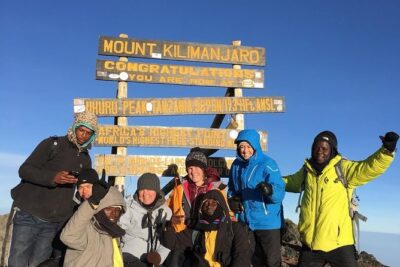
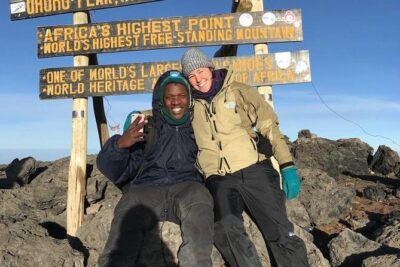
After reaching Uhuru Peak, the experience includes unbelievable views and a moment for a photo so you can show friends and family you actually did it. Then you descend, stopping for lunch and rest at Kibo, before continuing down toward Horombo encampment.
Day 5: Mandara Hut and the wet rainforest exit to Marangu Gate
Day 5 is about getting down safely. The itinerary lists a steady descent through moorland to Mandara Hut (about 5 to 7 hours for 18 km total), then continuing through the lush forest path toward the Marangu National Park gate.
At lower elevations, the notes warn that it can get wet and muddy. This is where your “small” items become big. The trek suggests gaiters and trekking poles to help with footing and comfort.
Clothing expectations are also practical here. Shorts and t-shirts may be plenty, but you should keep rain gear and warmer clothing handy because conditions can shift quickly. Expect your legs to be tired, so anything that reduces slipping and keeps you warm pays off.
At Marangu Gate, you meet a vehicle to return to your hotel in Moshi or Arusha. This is also the point in the day where the human part of the trip finishes. The notes specifically remind you to tip Tanzanian guides and porters. That matters, because the crew is the engine that makes your hike smoother.
Guides, crew, and the “team feels like family” effect
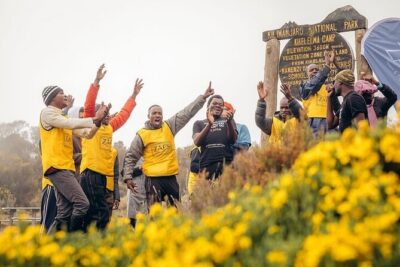
The biggest praise in the feedback is not just that people reached the summit. It’s how they got there. Multiple groups highlight guides and crew who were attentive, motivational, and focused on safety when conditions turn harsh.
You’ll see names come up often, including Muddy, Tadey, Emmanuel, Migaan, Michael, Martin, Gaby, Mathew, David, and Daniel. Not every name will be your guide, but it tells you something important about the operator’s staffing style: they build teams, and those teams are part of the success story.
Food quality gets mentioned too. Several comments say meals were good and tasty, which matters on Kilimanjaro more than you might think. When you’re tired and your appetite is weird, good consistent meals help keep you moving and reduce crankiness, which is basically a survival skill at altitude.
Equipment quality is also referenced in feedback, and safety is repeatedly called out. On summit night, that translates into more than reassurance. It means the team is likely managing pace, trail conditions, and the small decisions that prevent energy from getting wasted.
Who this trek suits best, and who should think twice
This 5 day Marangu Route climb is a strong fit if you want a non-technical, walk-up summit goal with hut nights and clear daily structure. If you’re traveling from Moshi and want an organized experience, this one aligns with that.
It also suits hikers who want time to adapt. The schedule includes higher-altitude walking days before summit night, plus a very early start for the final push.
You might think twice if you know you struggle with freezing temperatures or night hikes. The plan explicitly includes a midnight to 2 am start, a steep scree or snow ascent, and cold conditions. Even if Marangu is considered easier from a trail perspective, the summit day is still the summit day.
Should you book the 5 Days Marangu Route to Uhuru Peak?
If your goal is Uhuru Peak with the more gentle Marangu pacing, and you want a team that handles the heavy lifting of logistics, this trek looks like a solid choice. The value is in the package: hut sleeps, meals, gate transfers, and a guide plus porters and cooks who keep you safe and moving.
Book it if:
- you want steady acclimatization over a shorter high-altitude scramble
- you’d rather have strong crew support than manage everything yourself
- reaching Uhuru Peak is your priority, and you accept that summit night is the hardest part
Hold off or ask more questions first if:
- you are budget-sensitive and need clarity on park fees and tax versus the “Admission Ticket Free” notes
- you’re not comfortable with a midnight to early morning start and cold, dark conditions
If you’re ready for the altitude challenge and you want a classic route with strong team support, this is the kind of Kilimanjaro climb that can feel both well-paced and deeply memorable.
The Marangu Trail
- Kilimanjaro climb, Marangu route (6-day)
★ 5.0 · 72 reviews - Climbing Kilimanjaro – Marangu Route
★ 5.0 · 65 reviews - Best Kilimanjaro Adventures 6 Days Marangu Route Experience
★ 5.0 · 18 reviews - Kilimanjaro Private Climbing in 6 Days Marangu Route
★ 5.0 · 16 reviews - 6 Days Climb Kilimanjaro Through Marangu Route
★ 4.5 · 15 reviews
Kilimanjaro, Route by Route
- Kilimanjaro climb by Lemosho Route (7-day)
★ 5.0 · 651 reviews - Kilimanjaro climb, Machame Route (7-day)
★ 5.0 · 262 reviews - Kilimanjaro Climbing Lemosho Route 8 Days.
★ 5.0 · 186 reviews - Climbing Kilimanjaro – Machame Route
★ 5.0 · 170 reviews - Climbing Kilimanjaro through 7 days Machame Route
★ 5.0 · 151 reviews
Just added from around Moshi

Kilimanjaro Marangu Route, compared.
 ★ 5.0Kilimanjaro climb, Marangu route (6-day)From $2,90272 reviews
 ★ 5.0Climbing Kilimanjaro – Marangu RouteFrom $2,00465 reviews
 ★ 5.0Private Full Day Hiking Experience to Marangu RouteFrom $26061 reviews
 ★ 4.5From Arusha/Moshi: Kilimanjaro Hike Marangu Route Day TripFrom $10154 reviews
 ★ 5.0Mount Kilimanjaro Day Hike Through Marangu Route to Mandara HutFrom $26537 reviews
 ★ 5.0Kilimanjaro Climbing 5 days Marangu routeFrom $90022 reviews
 ★ 5.0Best Kilimanjaro Adventures 6 Days Marangu Route ExperienceFrom $1,00018 reviews
 ★ 5.0Kilimanjaro Private Climbing in 6 Days Marangu RouteFrom $2,00016 reviews
Browse the lists this tour appears in