
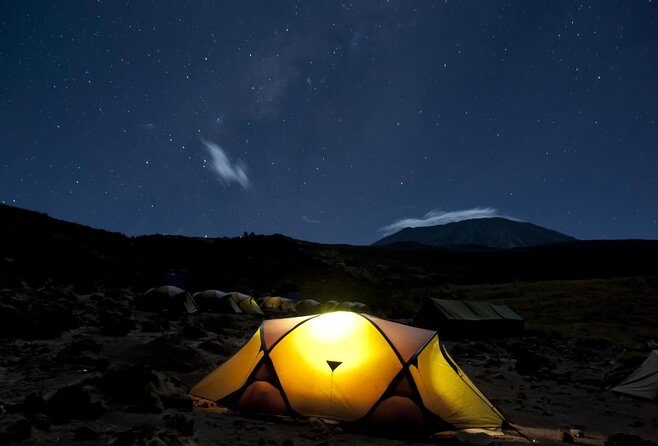
REVIEW · KILIMANJARO MARANGU ROUTE
5 Days Kilimanjaro Trekking – Marangu Route
Uhuru Peak takes commitment, not luck. This 5-day Kilimanjaro trek from Moshi follows the Marangu route, often called the Coca Cola route for its gentler profile, and includes hotel pickup plus a professional guide.
I love having a setup that handles the big moving parts for you, from the drive to the starting gate to the ride back down to Moshi.
I also like the way the climb is structured around acclimatization at Horombo huts. You get a full day at Horombo, plus an optional day trek up higher spots like Zebra Rocks (4200 m) and Mawenzi Tarn Hut (4300 m), so your body has a better chance to adjust before the final push.
The one real consideration is the summit push timing: you start between midnight and 2am and climb steep, heavy scree or snow toward Gilman’s Point, then up to Uhuru Peak. That means cold night effort, even on the easier-feeling Marangu profile.
In This Review
- Key reasons this Marangu trek works so well
- Why the Marangu Route from Moshi feels more manageable
- Pickup, private guiding, and how Afrishare keeps things moving
- Day-to-day: from starting gate to Horombo huts and Mawenzi views
- Horombo acclimatization day, Zebra Rocks, and Mawenzi Tarn Hut
- Summit night strategy: Gilman’s Point to Uhuru Peak
- Descent to Moshi: moorland steps, muddy sections, and the hot lunch at the gate
- Price and value at $1,460 per person (and when to book)
- Who this Marangu trek is best for
- Should you book the 5 Days Kilimanjaro Trekking – Marangu Route?
- FAQ
- How long is the Kilimanjaro trek on the Marangu route?
- Where does this trek start and where do you return to?
- Do you get hotel pickup and drop-off?
- Is the tour private?
- What parts of the trip are included in the price?
- What is not included?
- What is the summit timing like?
- Is the Horombo day only for resting?
- Are there vegetarian options?
- Can I cancel for a full refund?
Key reasons this Marangu trek works so well
- Marangu is the classic easier option, often described as more manageable than the toughest variants
- Two days at Horombo give you acclimatization time, not just a fast grind upward
- Optional altitude add-ons (Zebra Rocks and Mawenzi Tarn Hut) help you fine-tune your rhythm
- A real summit target with Gilman’s Point at 5861 m and Uhuru Peak at 5895 m
- Practical descent plan that takes you through moorland and down into lush forest toward the gate
- Included guide support and private tour feel for a more personal pace
Other ways up Kilimanjaro we reviewed
- Kilimanjaro climb by Lemosho Route (7-day)★ 5.0 · 651 reviews
- Kilimanjaro climb, Machame Route (7-day)★ 5.0 · 262 reviews
- Kilimanjaro Climbing Lemosho Route 8 Days.★ 5.0 · 186 reviews
- Climbing Kilimanjaro – Machame Route★ 5.0 · 170 reviews
Why the Marangu Route from Moshi feels more manageable
Kilimanjaro is no joke, but the route you choose matters a lot. The Marangu route is nicknamed the Coca Cola route because it’s often considered the easier, more straightforward way up, compared with steeper or more technical alternatives. You start from Moshi, Tanzania, and move through the big altitude “zones” that Kilimanjaro is famous for: rain forest, then moorlands, then higher, colder terrain.
This trek also gives you useful context about what you are climbing. Kilimanjaro has three major volcanic centers: Shira (around 4160 m), Kibo (the snow-capped peak at 5895 m), and Mawenzi. On the Marangu route, your climb is aimed toward the Kibo side and the final summit around the Kibo crater rim area.
Even if you are an experienced hiker, it helps to know what you are signing up for. You are going from roughly 2700 m down to 1830 m on the descent, then back up to near 5900 m on the summit. That range means your body will feel it, especially once you move away from the forest and into open moorlands.
One more good thing: you do not just sprint uphill. The plan includes a meaningful acclimatization stop, and that is one of the main reasons people like Marangu for a steadier experience.
Pickup, private guiding, and how Afrishare keeps things moving
This is a private tour, so it’s only your group. That matters on Kilimanjaro because the pace and timing need to feel calm, not rushed. You also get hotel pickup and drop-off, which is a small detail that becomes huge once you are tired and altitude-slow.
The operation here is Afrishare Trekking and Safaris. In past experiences shared with this provider, the director named Ibra coordinated plans for people doing more than one activity in Tanzania, including Kilimanjaro and safari time in Arusha. You’ll also see names like Alex and Godfrey mentioned as guides for some groups, alongside a team that included a chef and porters. I take that as a sign the company staffs the trek like a system, not just a single person leading a line.
You get a mobile ticket, and you can expect confirmation at booking time. The trek operates in all weather conditions, so your day-to-day comfort depends on your packing choices and your willingness to dress for rain and cold, not just sunshine.
And yes, you do get real support on the ground. A professional guide is included, plus all fees and taxes, plus accommodation for the nights you’ll spend on the mountain route.
Day-to-day: from starting gate to Horombo huts and Mawenzi views
Your first day starts with getting to the mountain. After arrival early in the morning, you will either be picked up from your airport straight to the starting gate, or picked up from your accommodation and driven to Marangu starting gate. That kind of direct transfer is a gift when you know you will need energy for the climb.
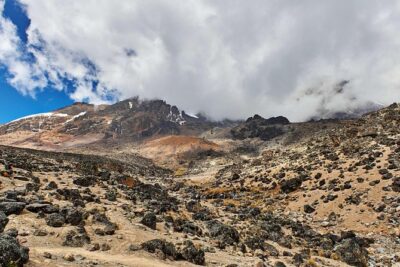
From there, the trek moves upward to the Mandara Hut level, then onward toward Horombo. A key point here is the change in scenery and walking conditions. Early you leave forest glades and follow an ascending path on more open moorlands. The open space is scenic, but it can also make weather feel more exposed.
As you approach Horombo at around 3700 m, you get classic high-mountain views. You’ll likely spot Mawenzi and the summit of Kibo from the moorlands. On a Marangu trek, that view can feel like proof that the numbers on your map are real.
Botanical details make this day memorable too. Keep an eye out for giant senecio and lobelias. They are not just decoration. Seeing those plants tells you you are in a distinct altitude band, and that helps you understand why the air gets thinner.
Altitude effects can start today, which is why your pace and rest pattern matters. The trek takes about 3 to 4 hours from Mandara Hut to Horombo Hut. That is long enough to work up a sweat, but not so long that you blow past your body’s comfort zone.
Accommodation is included for the four nights on this climb, so once you reach Horombo, you can settle in and focus on recovery.
Marangu, other operators and other lengths
Horombo acclimatization day, Zebra Rocks, and Mawenzi Tarn Hut
At Horombo, the plan gives you a second day. This day is considered optional in the sense that you can rest right there at the camp and still move forward on schedule. But it’s also one of the most valuable parts of the whole trek because it is specifically aimed at acclimatization, which directly supports your summit chances.
If you feel good, you can add an easier day hike. You can choose to trek toward Zebra Rocks at 4200 m and even reach Mawenzi Tarn Hut at 4300 m before returning to Horombo for the overnight. That kind of “go higher, then come back down” is a smart way to let your body practice the altitude without paying the full price of pushing onward.
Even if you rest instead of hiking, you still benefit. A full extra day at Horombo helps you build breathing tolerance and steadies your rhythm. On Kilimanjaro, the biggest mistake is often pushing too hard too early, then trying to make up time on summit night. This plan resists that.
This is also where you get a more personal sense of how you are doing. You can assess your energy, sleep, and headspace after spending time at around 3700 m. If you need to slow down, you have a built-in opportunity to do it here.
If you do go for the optional trek, take it as a training walk. It’s for acclimatization, not for chasing a “bigger badge.” You want to finish feeling better than you started, not wiped out.
Summit night strategy: Gilman’s Point to Uhuru Peak
The summit day starts very early, between midnight and 2am. This timing is non-negotiable on many Kilimanjaro schedules because the climb works best when you can reach the top during colder, calmer hours.
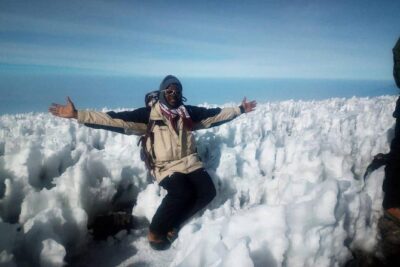
Expect steep and heavy scree or snow as you head up toward Gilman’s Point on the crater rim, at 5861 m. This part of the climb can take roughly 4 to 5 hours, and it is often the mental challenge as much as the physical one. One step at a time is the only plan that works.
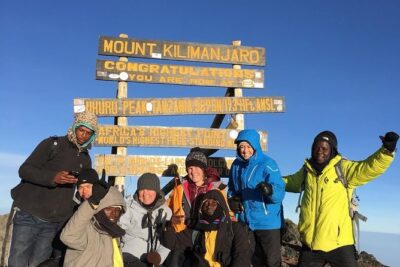
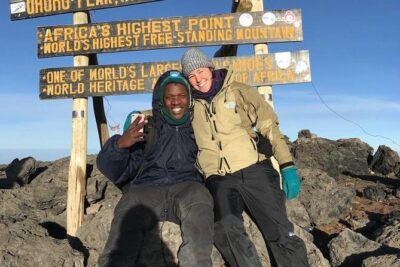
After Gilman’s Point, you continue to Uhuru Peak, the highest point in Africa at 5895 m. This final push is described as taking about 1 to 2 hours. Once you arrive, you’ll have unbelievable views at every turn, and you can get a summit picture taken.
This is the moment most people dream about, but you still need to think like a hiker, not a tourist. If you are prone to impatience, you might want to practice slowing down in the days before summit night. The Marangu route gives you that chance with the Horombo acclimatization structure.
Then comes the descent. You stop for lunch and a rest at Kibo before continuing down toward Horombo for dinner and overnight, taking about 3 to 4 hours. That’s a reminder that the summit is not the end of your work. Your legs still need careful handling on the way down.
Descent to Moshi: moorland steps, muddy sections, and the hot lunch at the gate
After breakfast following the summit and return to the Horombo area, you begin the descent. A steady downhill run takes you through moorland to Mandara Hut at around 2700 m, then you continue down toward the Marangu National Park gate.
At the lower elevations, conditions can be wet and muddy. That’s exactly where trekking poles and gaiters can help. If you plan for messy ground, you’ll enjoy the descent more, because you won’t spend every minute fighting slippery footing.
From Mandara Hut you’ll walk through lush forest down to the National Park gate at Marangu, around 1830 m (also described as 6004 ft). Shorts and t-shirts might be enough at lower elevations, but you should keep rain gear and warmer clothing handy. Kilimanjaro weather can shift fast, and the trek operates in all weather conditions, so your clothing system matters.
Once you reach the gate, you’re not left hanging. A car is waiting for you for a hot lunch, and then you drive back to Moshi or Arusha. If you are flying out the same day, you can get an airport drop-off.
That hot lunch and transport are part of why this route feels complete. You finish the mountain, you eat, and you still have a way back to real life.
Price and value at $1,460 per person (and when to book)
This trek costs $1,460.00 per person for 5 days, and it’s offered as a private experience in a small group setup. On the inclusion side, you get four nights of accommodation, all fees and taxes, lunch, a professional guide, and hotel pickup and drop-off. You also get private tour service.
Alcoholic drinks and souvenir photos are not included, but those are typical add-ons rather than core costs.
Here’s how I think about value for a Kilimanjaro trek. Most of your real expense is the staffing and the mountain operation: guide time, porters and crew, transport to and from the start and finish, and the park-related fees. When those pieces are included, your budget feels cleaner. You can focus on packing and your own fitness, instead of constantly checking what costs extra.
This specific offering is also commonly booked about 42 days in advance. For a summit window, I’d treat that as a signal to plan ahead. If you wait until the last minute, you may lose the date you want.
Also note that you can choose a vegetarian option if you request it at booking. That’s worth doing early, so the team can plan accordingly.
Who this Marangu trek is best for
This 5-day Marangu climb suits you best if you want a less technical route and you appreciate acclimatization time at Horombo. It’s a strong match for people with moderate physical fitness who can handle long altitude days and an early summit start.
You’ll also like it if you want a private-group pace with professional guidance and reliable logistics, including pickup and a ride back after you reach the gate.
If your priority is a calm, structured climb with planned recovery time, Marangu fits that goal. If your priority is a more rugged, less straightforward route, this probably isn’t the right direction based on the “easier option” profile.
One more fit check: you should be comfortable dressing for all weather and walking in muddy sections during the descent. The trek is run year-round in all weather conditions, so you are not choosing a weather guarantee. You are choosing a plan plus gear.
Should you book the 5 Days Kilimanjaro Trekking – Marangu Route?
Book it if you want the classic easier profile, plus extra acclimatization at Horombo, and a guided private setup that handles transfers and fees. This is especially compelling if you like the idea of going higher on a controlled acclimatization day to Zebra Rocks and Mawenzi Tarn Hut, then returning to Horombo before summit night.
Be thoughtful before booking if the midnight-to-2am summit start feels intimidating. It’s part of the plan, and the ascent includes steep, heavy scree or snow. You are paying for more than views, you are paying for a system that manages the climb, but your mindset and preparation still matter.
If you want a structured climb with real support, this Marangu option from Moshi is a smart pick. Plan your packing for rain and cold, respect the acclimatization days, and treat summit day as a steady uphill grind rather than a speed challenge.
FAQ
How long is the Kilimanjaro trek on the Marangu route?
The trek is listed as 5 days (approx.), with about 4 nights of accommodation included.
Where does this trek start and where do you return to?
You start from Moshi, Tanzania, and you are driven to the Marangu starting gate. After the descent, you return by car to Moshi or Arusha, with an airport drop-off option if you are flying out the same day.
Do you get hotel pickup and drop-off?
Yes. Hotel pickup and drop-off are included.
Is the tour private?
Yes. It is a private tour/activity, and only your group participates.
What parts of the trip are included in the price?
Included are 4 nights accommodation, all fees and taxes, lunch, a professional guide, hotel pickup and drop-off, and private tour service.
What is not included?
Alcoholic drinks (available to purchase) and souvenir photos (available to purchase) are not included.
What is the summit timing like?
You begin the climb to the summit between midnight and 2am, then continue to Gilman’s Point and onward to Uhuru Peak.
Is the Horombo day only for resting?
You can rest at the camp, but the second day at Horombo is also described as an important acclimatization day. You may optionally trek to Zebra Rocks (4200 m) and Mawenzi Tarn Hut (4300 m) and return for overnight.
Are there vegetarian options?
Yes. A vegetarian option is available if you advise the provider at booking.
Can I cancel for a full refund?
You can cancel up to 24 hours in advance for a full refund, as long as you cancel at least 24 hours before the experience’s start time.
The Marangu Trail
- Kilimanjaro climb, Marangu route (6-day)
★ 5.0 · 72 reviews - Climbing Kilimanjaro – Marangu Route
★ 5.0 · 65 reviews - Best Kilimanjaro Adventures 6 Days Marangu Route Experience
★ 5.0 · 18 reviews - Kilimanjaro Private Climbing in 6 Days Marangu Route
★ 5.0 · 16 reviews - 6 Days Climb Kilimanjaro Through Marangu Route
★ 4.5 · 15 reviews
Kilimanjaro, Route by Route
- Kilimanjaro climb by Lemosho Route (7-day)
★ 5.0 · 651 reviews - Kilimanjaro climb, Machame Route (7-day)
★ 5.0 · 262 reviews - Kilimanjaro Climbing Lemosho Route 8 Days.
★ 5.0 · 186 reviews - Climbing Kilimanjaro – Machame Route
★ 5.0 · 170 reviews - Climbing Kilimanjaro through 7 days Machame Route
★ 5.0 · 151 reviews
Just added from around Moshi

Kilimanjaro Marangu Route, compared.
 ★ 5.0Kilimanjaro climb, Marangu route (6-day)From $2,90272 reviews
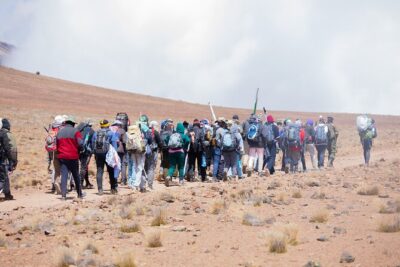 ★ 5.0Climbing Kilimanjaro – Marangu RouteFrom $2,00465 reviews
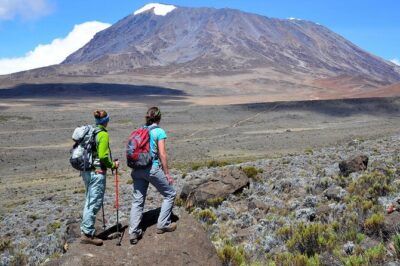 ★ 5.0Private Full Day Hiking Experience to Marangu RouteFrom $26061 reviews
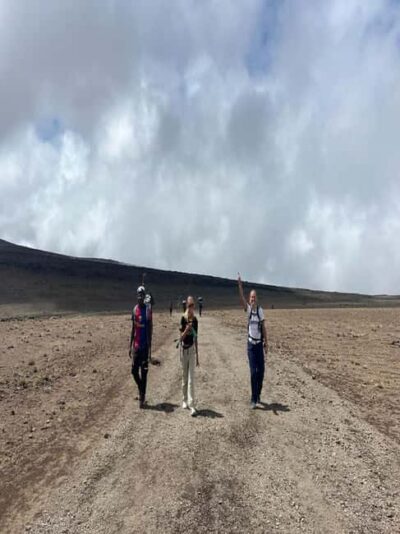 ★ 4.5From Arusha/Moshi: Kilimanjaro Hike Marangu Route Day TripFrom $10154 reviews
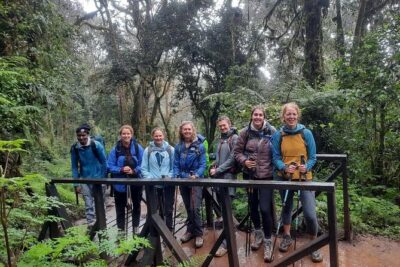 ★ 5.0Mount Kilimanjaro Day Hike Through Marangu Route to Mandara HutFrom $26537 reviews
 ★ 5.0Kilimanjaro Climbing 5 days Marangu routeFrom $90022 reviews
 ★ 5.0Best Kilimanjaro Adventures 6 Days Marangu Route ExperienceFrom $1,00018 reviews
 ★ 5.0Kilimanjaro Private Climbing in 6 Days Marangu RouteFrom $2,00016 reviews
Browse the lists this tour appears in