
REVIEW · KILIMANJARO RONGAI UMBWE AND SHIRA ROUTES
Rongai Route 7 Days
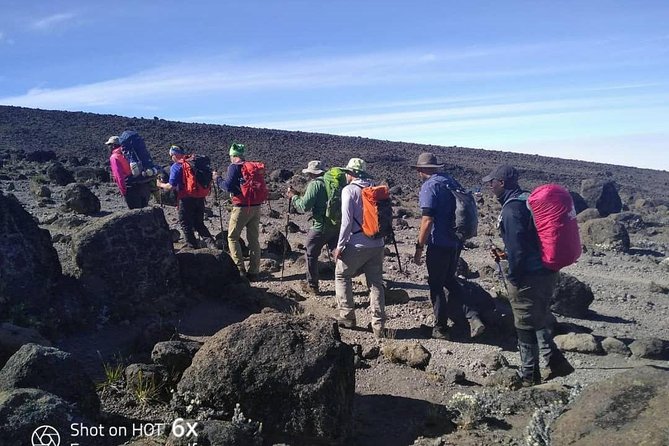
A quieter way up Kilimanjaro exists, and the Rongai Route’s north-side approach near Kenya keeps the trail remote and less crowded. I love the more gradual slope that helps if you are less backpacking experienced, and I love the private camp setup with waterproof four-season tents plus staffed mess tents. One drawback to consider is the route still asks for serious stamina, especially the midnight summit push.
This is a 7-day trek based out of Moshi, Tanzania, with pickup and drop-off, plus guides, chef, and porters included. You’ll hike up through farmland, pine forest, and moorland, then make the high-altitude crossing to summit, finishing the descent via the Marangu route back toward the rainforest and the park gate.
In This Review
- Rongai in a Nutshell: what makes this climb tick
- Price and logistics: what you are really paying for
- Rongai route style: the north side near Kenya and why it helps
- Day 1, Nalemoru Gate to Simba Camp: farmland, pine forest, and your first altitude dose
- Day 2, Simba Camp to 2nd Cave Camp: moorland ascent with Kibo and eastern ice fields
- Day 3, 2nd Cave to Kikelewa: leaving pine behind and aiming toward Mawenzi views
- Day 4, Kikelewa to Mawenzi Tarn Hut: a steep grassy push and northern Kenyan plains
- Day 5, Mawenzi Tarn to Kibo Hut: crossing the saddle and preparing for an early night
- Day 6, summit night to Uhuru Peak and down to Horombo Hut: long hours, key high points, and fast recovery
- Day 7, Horombo Hut to Marangu Gate: heath, moor zone, rainforest, and back to Arusha
- Crew and vibe: organization, safety, and a smile that helps
- Who Rongai is for, and who should think twice
- Should you book this Rongai 7-day trek?
- FAQ
- How long is the Rongai Route trek?
- What time does the trek start?
- Do you include pickup and drop-off?
- What’s included for camps and meals?
- Do I need my own sleeping bag and walking poles?
- Where do you descend after summiting?
Rongai in a Nutshell: what makes this climb tick
- North-side approach, less crowd energy: Rongai comes from the northern side close to the Kenyan border, and it’s known for staying quieter.
- Gradual rhythm for acclimatizing: Days build steadily through moorland, which can feel more manageable than steeper route profiles.
- Wilderness feel for most of the trek: Even though scenery is less varied than western routes, you spend a long time in truly remote terrain.
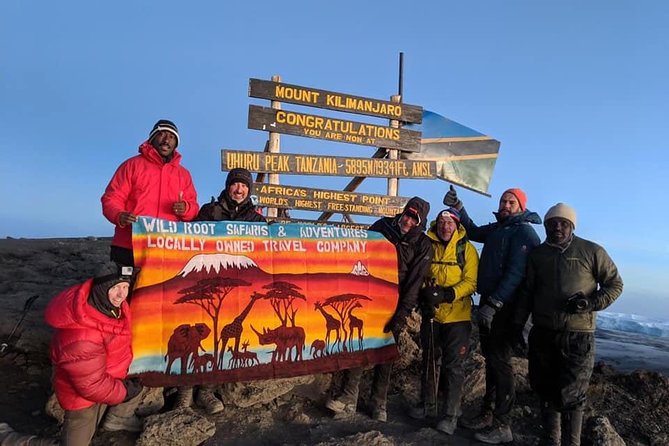
- Summit plan is structured: You start the final ascent around midnight, pass key high points, reach Uhuru Peak at 5895m, then come down the same day.
- Comfort at camp is real: Quality waterproof private mountain sleeping tents and mess tents with table and chairs reduce the usual end-of-day chaos.
Quieter Kilimanjaro routes we walked through
- Kilimanjaro climb, Rongai Route (7-day)★ 5.0 · 40 reviews
- Kilimanjaro climb, Rongai Route (6-day)★ 5.0 · 15 reviews
- Mount Kilimanjaro Rongai Route★ 5.0 · 10 reviews
- 6-Day Rongai Route Trek in Mount Kilimanjaro★ 5.0 · 8 reviews
Price and logistics: what you are really paying for
At $2,923.08 per person for this 7-day Rongai climb, the headline number is big. The value comes from what is bundled in, not from a cheap ticket price.
Here is what you are paying for, in practical terms:
- Full crew support: guides, a chef, and porters allowances are included, which matters a lot at altitude and on longer days.
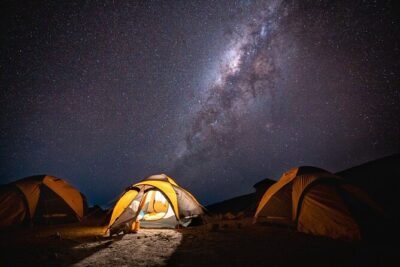
- Tents and camp setup: you get quality waterproof, four-season private mountain sleeping tents, plus mess tents with table and chairs. That means you spend less time worrying about gear and more time resting.
- Meals included through the trek: breakfast, lunch, and dinner are included across the days, with a summit-day meal on the return to Kibo Hut.
- Park costs included: the itinerary includes an admission ticket each day listed.
- Transfers handled: airport pick up and drop off, plus transfers during the trek days, with the trip finishing back with a short transfer to your hotel in Arusha.
What you do need to plan for:
- Sleeping bag and walking poles are not included. If you do not already have them, budget time to rent or buy them before you leave.
- Tanzania visa and gratuity are not included.
- Personal expenses like laundry, telephone, and beverages are on you.
Also note the pacing of the day schedule. Several days are short-to-moderate on distance, but the summit day is long: you’re out for roughly 12 to 15 hours, and total distance listed is 22 km / 13.7 mi. If you are the type who hates early nights or late climbs, this day is where you feel it.
Rongai route style: the north side near Kenya and why it helps
Rongai is the only Kilimanjaro route that approaches from the north, close to the Kenyan border. That location is not just a trivia point. It changes the overall vibe and, for some seasons, the weather pattern you experience.
Why this matters:
- Lower crowd levels: Rongai is still popular among climbers, but it generally avoids the heavy traffic that can show up on the more famous routes.
- A gentler feel: The route is described as having a more gradual slope, and it’s recommended for people with less backpacking experience. Even if you are fit, fewer steep shocks usually helps your breathing and foot rhythm.
- Rain considerations: The north side receives less precipitation, which makes Rongai a strong choice when you are climbing during the rainy season.
Tradeoffs to be aware of:
- Less scenery variety: The route is not framed as the most visually varied compared to western routes. What it gives you instead is long stretches of true wilderness and a more remote sense of being away from everything.
Day 1, Nalemoru Gate to Simba Camp: farmland, pine forest, and your first altitude dose
You start with a drive from Moshi area to Nale Moru for the Rongai start. Day 1 begins around Nalemoru Gate at 1990m, then you hike about 8 km / 5 mi in 4 to 5 hours to Simba Camp at 2625m.
What makes Day 1 special:
- You ease in through farmland and pine forests rather than jumping straight into high-alpine conditions.
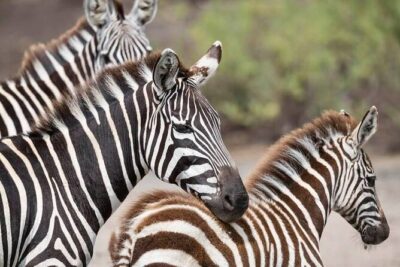
- If you’re lucky, you might spot Colobus monkeys and, along the way, elephants or buffalo. Even if you do not see wildlife, the forest-and-farmland start feels like a mental warm-up.
A practical note: Day 1 is short by Kilimanjaro standards, but you still gained about 600m. Take it easy. Save your effort for later stages where the altitude really adds up.
Day 2, Simba Camp to 2nd Cave Camp: moorland ascent with Kibo and eastern ice fields
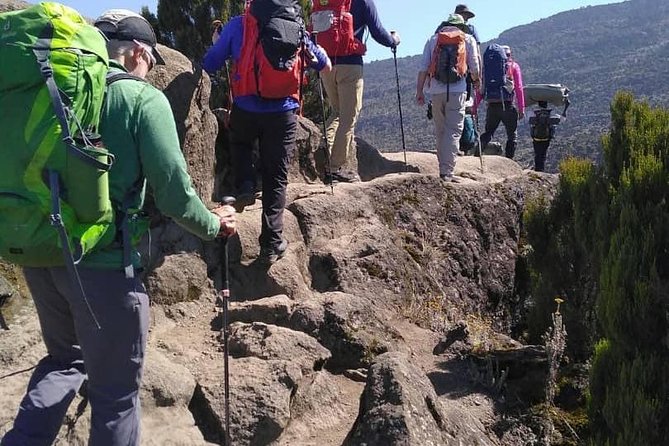
Day 2 is a steady climb from Simba Camp (2625m) to 2nd Cave Camp (3480m). You cover 5 km / 3.1 mi in 3 to 4 hours.
This day’s payoff:
- You’re still in the moorland zone, and the views can be striking.
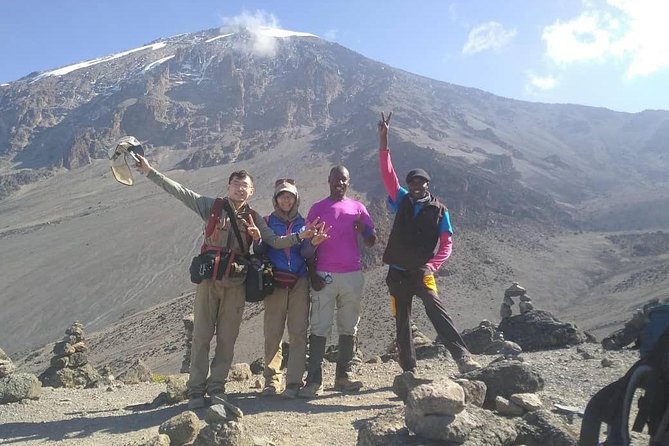
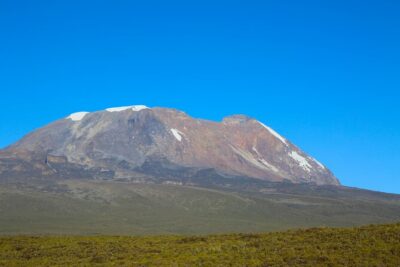
- You get superb views of Kibo and the Eastern ice fields on the crater rim.
What to expect on the ground: this is not described as a technical day. The challenge is the constant upward effort. Think of it as building rhythm: steady breathing, steady steps, and not getting ahead of your acclimatization plan.
Day 3, 2nd Cave to Kikelewa: leaving pine behind and aiming toward Mawenzi views
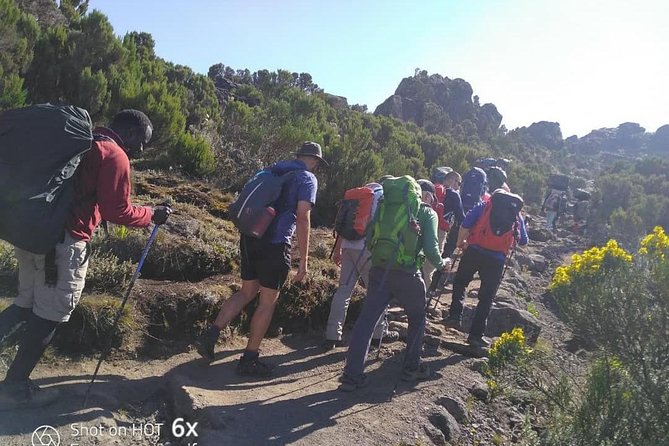
Day 3 takes you from 2nd Cave Camp (3480m) to Kikelewa Camp (3630m). The schedule doesn’t list the full distance, but you’re hiking for about 3 hours and staying in the moorland.
Key change here:
- You leave the pine forest behind and continue with a steady ascent.
- The route leaves the main trail and crosses moorland on a smaller path toward the jagged peaks of Mawenzi.
This is also where the eastern ice-field views on the crater rim of Kibo show up again. If you like those big-picture moments where the mountain starts to look real, this is one of your days.
Consideration: because you’re off the main trail on a smaller path, follow your guide’s pace and instructions closely. It’s not about being scared. It’s about being efficient.
Day 4, Kikelewa to Mawenzi Tarn Hut: a steep grassy push and northern Kenyan plains
Day 4 is listed as Kikelewa Camp (3630m) to Mawenzi Tarn Hut (4310m). You hike around 8 km / 5 mi in 4 to 5 hours.
Morning highlight:
- A short but steep ascent up grassy slopes.
- You gain a major viewpoint, including what’s described as superb views of the Kenyan plains to the north.
Afternoon acclimatization:
- You reach Mawenzi Tarn Hut, directly below the towering cliffs of Mawenzi.
- You get time to rest or explore the surrounding area to help acclimatization.
This is a smart design in the itinerary. You do the steeper push, then you stop high enough that you can give your body a chance to adjust.
On a personal note to your future self: you may feel restless. Don’t rush. Resting here helps on the later days where you have less margin for error.
Day 5, Mawenzi Tarn to Kibo Hut: crossing the saddle and preparing for an early night
Day 5 goes from Mawenzi Tarn Hut (4310m) to Kibo Hut (4700m). Distance is about 8 km / 5 mi, and hiking time is 5 to 6 hours.
The terrain shift:
- You cross the lunar desert of the saddle between Mawenzi and Kibo.
- After a couple hours trekking, you reach Kibo Hut, with the summit area in the background and the rest of the trail stretched out before you.
Why this day matters:
- This is not just a transfer to a camp. It’s a mental ramp-up. Seeing the final route laid out is motivating, but it also makes the summit day feel close.
Then you do what you need to do:
- The remainder of the day is spent resting and preparing for the final ascent after an early night.
Practical expectation: at Kibo Hut altitude, sleep can be harder than it is at the lower camps. Plan to treat sleep like training. Even if you do not sleep deeply, lying down and conserving energy helps.
Day 6, summit night to Uhuru Peak and down to Horombo Hut: long hours, key high points, and fast recovery
This is the big one. Day 6 is listed as Kibo Hut (4700m) up to Uhuru Peak (5895m) and then down to Horombo Hut (3700m).
Time and effort:
- You start your final ascent around midnight.
- Total hiking time is 12 to 15 hours, and distance is about 22 km / 13.7 mi.
Route markers you’ll hear about on the way:
- Hans Meyer Cave at 5220m
- Gillman’s Point (5681m) at sunrise on the crater rim
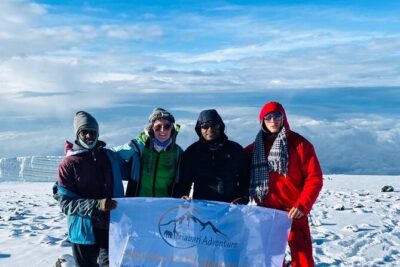
- Uhuru Peak at 5895m
It’s slow, steady, and cold:
- The description emphasizes that the climb slowly but surely goes upwards and that you’ll move from night cold into sunrise warming.
After the summit:
- You return to Kibo Hut for a warm meal.
- Then you continue down to Horombo Hut with a listed 1 to 2 hour break before descending further.
What to remember for your plan:
- This day is where small mistakes compound. Hydration, your pace, and staying focused matter more than speed.
- If you’re thinking about whether your body can handle it, remember that the itinerary explicitly pairs the summit push with a long descent, not a short one. You’ll be working long even after the peak.
Day 7, Horombo Hut to Marangu Gate: heath, moor zone, rainforest, and back to Arusha
On Day 7 you drop from Horombo Hut (3700m) to Marangu Gate (1860m). The trek goes down through the heath and moor zone to Mandara Hut (2700m) and then onward through tropical rainforest to the park gate.
Timing and distance:
- Total hiking time listed is about 8 hours, with 20.8 km / 12.9 mi.
- You’ll be at Mandara Hut for a warm lunch.
Why Day 7 feels good:
- After the summit and the big altitude swing, stepping back toward lower elevations tends to feel like real relief.
- The route description calls out that you pass through tropical rainforest before reaching the gate.
When you finish:
- After saying goodbye to your mountain guides, you get a short transfer back to your hotel in Arusha for a warm shower and a proper celebration.
Crew and vibe: organization, safety, and a smile that helps
This climb depends on teamwork. The operator running this trip is Wild Root Safaris and Adventures, and the trek is built around guides, chef, and porters allowances.
From the kind of experiences that have shown up for past groups, one theme is clear: communication and mood matter. I like that planning can be customized with quick answers, and that the team shows up with a calm, supportive energy. In one example, planning was led by Mathew from Wild Root Safaris, with an itinerary customized for a family group of 12 from the USA. Another group highlighted the leadership of guide Khoo Swee Chiow, calling out excellent organization, superb logistics, and staff who were helpful and never without a smile.
You don’t need a motivational speech. You need practical help at altitude, and you need the team to stay steady when conditions get tough. That kind of reliability is what makes the tough days feel possible.
Who Rongai is for, and who should think twice
Rongai is a great match if:
- You want the north-side, quieter route near Kenya.
- You’re looking for a more gradual slope and a route often recommended for people with less backpacking experience.
- You’re climbing during a season when rain might matter, because the north side receives less precipitation.
- You prefer wilderness time over a route built around constant scenic variety.
You should think twice if:
- You know you struggle with long days at altitude. The summit day is a full marathon: midnight start, up to 5895m, and back down to 3700m the same day.
- You’re short on gear and do not want to handle basics like a sleeping bag and walking poles, since those are not included.
- You dislike early nights and disrupted sleep. Day 5 sets you up for an early night, then Day 6 starts around midnight.
Should you book this Rongai 7-day trek?
I’d book it if you want a Kilimanjaro route with a calmer feel, north-side wilderness time, and a gradual hiking rhythm that suits less experienced trekkers. The inclusions are strong for the price, especially the tents, the mess setup, the meals, and the fact that guides, chef, and porters are part of the package. If you already have the right gear or can easily source a sleeping bag and poles, the planning gets much simpler.
I would not book it if your priority is shortest hiking days above 4000m, or if you are worried about a brutally long summit schedule. The itinerary is clear: you are committing to the big day and the full down day. If you come prepared, follow your guide’s pace, and treat the itinerary like an acclimatization process rather than a race, Rongai can be an excellent way to earn that summit.
FAQ
How long is the Rongai Route trek?
It’s listed as 7 days (approx.).
What time does the trek start?
The start time is 8:00 am.
Do you include pickup and drop-off?
Yes. The experience includes airport pick up and drop off, and there is also a transfer back to your hotel in Arusha after the trek.
What’s included for camps and meals?
You get quality mess tents with table and chairs, private waterproof four-season mountain sleeping tents, plus meals including breakfast, lunch, and dinner across the trek days.
Do I need my own sleeping bag and walking poles?
Yes. Sleeping bags and walking poles are not included.
Where do you descend after summiting?
After reaching Uhuru Peak, the itinerary describes descending to Horombo Hut, and the final descent back to Marangu Gate is via the Marangu route.
The Quieter Kilimanjaro Trails
- Kilimanjaro climb, Rongai Route (7-day)
★ 5.0 · 40 reviews - Kilimanjaro climb, Rongai Route (6-day)
★ 5.0 · 15 reviews - Mount Kilimanjaro Rongai Route
★ 5.0 · 10 reviews - 6-Day Rongai Route Trek in Mount Kilimanjaro
★ 5.0 · 8 reviews - Rongai Route 6 Days 5 Nights/Kilimanjaro climb
★ 5.0 · 7 reviews
Just added from around Moshi

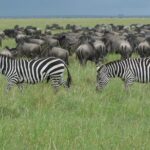
Kilimanjaro Rongai Umbwe and Shira Routes, compared.
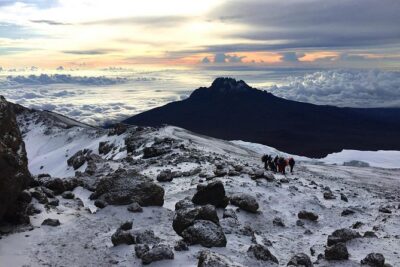 ★ 5.0Kilimanjaro climb, Rongai Route (7-day)From $3,50740 reviews
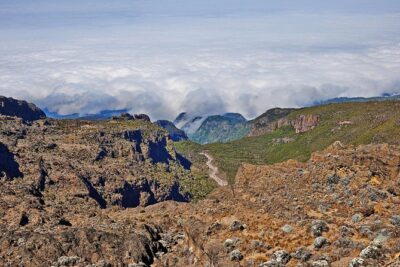 ★ 5.0Kilimanjaro climb, Rongai Route (6-day)From $3,06415 reviews
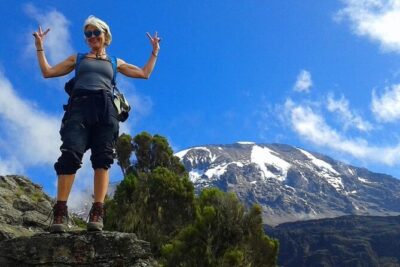 ★ 5.0Mount Kilimanjaro Rongai RouteFrom $2,70010 reviews
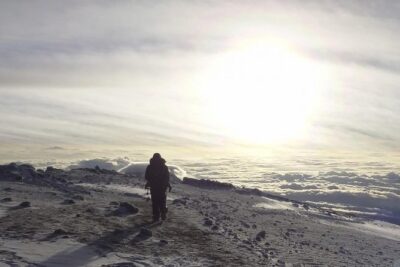 ★ 5.06-Day Rongai Route Trek in Mount KilimanjaroFrom $2,3538 reviews
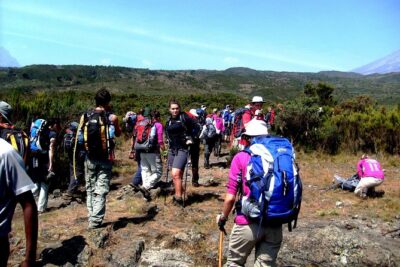 ★ 5.0Rongai Route 6 Days 5 Nights/Kilimanjaro climbFrom $1,8507 reviews
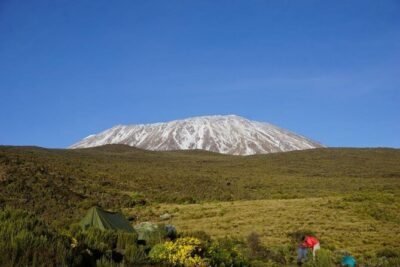 ★ 5.0Mt. Kilimanjaro: Shira plateau to Cathedral point 3872m Day hikeFrom $3207 reviews
 ★ 5.0Kilimanjaro Climbing Rongai RouteFrom $2,8406 reviews
 ★ 5.06-Day Kilimanjaro Umbwe Route–Steep,Adventurous, Challenging PathFrom $2,3106 reviews
Browse the lists this tour appears in