
REVIEW · KILIMANJARO LEMOSHO ROUTE
7 Days Lemosho Route
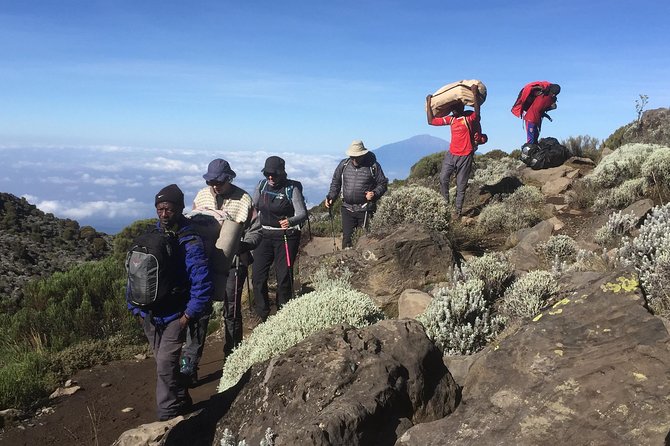
Kilimanjaro starts in a quiet forest. This 7-day Lemosho Route approaches from the west for strong scenery, a steadier climb rhythm, and better acclimatization, with the first two days feeling calmer before it meets more popular trails. I love the mix of big-elevation milestones like crossing Shira Ridge and reaching Stella Point, and I also like that the hike builds in logical steps, not random jumps. One watch-out is the summit night, where you rise around 11:30 PM and spend hours climbing heavy scree, so you need to take the training and pacing seriously.
You’ll base yourself in Moshi, and the trip includes private transport between Kilimanjaro International Airport and your Moshi accommodations. The group size is capped at 20, and the itinerary is built around long days outdoors, so it’s a good fit if you want an organized adventure with real time on the mountain rather than a quick, rushed experience.
In This Review
- Why the Lemosho 7-day route fits altitude better
- Moshi to the trailhead: getting set up without stress
- The Lemosho day-by-day plan, from Glades to Mweka Gate
- Day 1: Glades forest trails to Mti Mkubwa campsite
- Day 2: Shira Ridge crossing to Shira Camp 1
- Day 3: Lava Tower lunch and the descent to Barranco
- Day 4: Great Barranco Wall and time to rest and reset
- Day 5: Barafu Hut, wind, and early summit staging
- Day 6: Midnight start to Stella Point sunrise, then down to Mweka Camp
- Day 7: Park gate, certificates, and the final walk to Mweka Village
- Summit night at Stella Point: what makes it feel possible
- Price and value: what $2,050 includes and why it adds up
- Guides and porter support: the difference between hard and messy
- Who should choose this trek on the Lemosho route
- Should you book this 7-day Kilimanjaro Lemosho trek with Golden Summit Adventures?
- FAQ
- What is the duration of this trek?
- Where does the trip start, and what time does it begin?
- Do I get airport transport in Moshi?
- How big are the groups?
- What meals are included?
- Are park admission tickets included?
- What is not included in the price?
- When do you start the summit climb?
- What certificates do you receive at Mweka Gate?
- Can I get a refund if I cancel?
Why the Lemosho 7-day route fits altitude better
The Lemosho Route is famous for scenery, but for me the bigger reason it works is how it treats your body. The west approach gives you a slower ramp into higher altitudes, especially in the early days, when the trail is quieter and you get more space to settle into the rhythm.
That steady incline matters because Kilimanjaro is not just about willpower. It is about giving yourself time to adjust to thinner air. On this route, you spend meaningful time at key elevations such as the Shira Plateau and then build toward Barranco, before the final summit push.
Another practical plus is the trail timing and traffic. The first two days are relatively low traffic, and then you join the more popular Machame route later. If you value solitude early in the trek and then accept that crowds grow as summit season rolls on, this pattern can feel very comfortable.
Lemosho itineraries worth reading next
- Kilimanjaro climb by Lemosho Route (7-day)★ 5.0 · 651 reviews
- Kilimanjaro Climbing Lemosho Route 8 Days.★ 5.0 · 186 reviews
- Kilimanjaro climb, Lemosho Route (8-day)★ 5.0 · 148 reviews
- Kilimanjaro climb, Lemosho Route (6-day)★ 5.0 · 129 reviews
Moshi to the trailhead: getting set up without stress
Your trip starts in Moshi, with private transport included from Kilimanjaro International Airport to your accommodations. There is also pickup offered, which is a big deal because it reduces one more moving part before you hike at altitude.
The trek itself has a start time of 8:30 am. That means you should plan for an early morning and keep your routine simple: eat what you’re used to, hydrate, and be ready for a day outdoors that begins right away.
Fitness level matters. The tour notes moderate physical fitness as the expectation. You do not need to be an ultra-runner, but you should be comfortable hiking for hours with a backpack, and you should be able to keep steady effort when the air starts feeling thin.
The Lemosho day-by-day plan, from Glades to Mweka Gate
Here is what to expect on each day, and where each day can feel easy, tough, or memorable.
Day 1: Glades forest trails to Mti Mkubwa campsite
Day 1 is about transition and traction. You walk for about 3 hours along forest trails from the Glades to Mti Mkubwa (big tree) campsite. This is a gentler on-ramp compared to later days, and it’s a great time to start noticing how your breathing changes as you climb.
What I like about this start is that the forest gives you a more forgiving feel for the early miles. If you move steadily and avoid sprinting for distance, you’ll finish the day feeling ready for Day 2 instead of cooked.
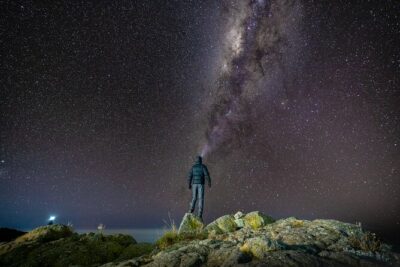
Day 2: Shira Ridge crossing to Shira Camp 1
On Day 2 the trail steepens gradually and you shift into giant heather moorland. You cross the Shira Ridge at 3,600 m / 11,810 ft, then descend gently to Shira Camp 1 on the Shira Plateau near a stream.
The stream location can be a comfort, since water access helps make camp life more manageable. The tougher part is mental: moorland can look wide and exposed, and those views come with wind and colder temperatures. If you tend to get cold, this is a good day to keep your layers organized so you do not waste energy fumbling.
Day 3: Lava Tower lunch and the descent to Barranco
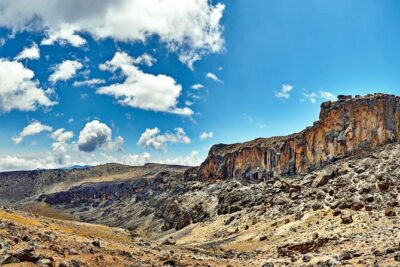
Day 3 gives you that classic Kilimanjaro contrast, from higher vegetation zones toward dramatic cliffs in the distance. After breakfast you hike east on a path that steepens above the highest vegetation. You’ll stop for lunch near Lava Tower, then descend about 2 hours to Barranco Camp at 3,950 m / 12,960 ft.
I really like this day because it includes two types of effort: a push that gets your lungs working, followed by a descent that helps your body settle before the next obstacle day. Barranco Camp sits in a valley below big walls, which sets you up for a strong sunset and a memorable wait for dinner.
The main consideration is that you should keep your footing careful on changing ground. Even when you are descending, altitude fatigue can make steps feel clumsier.
Day 4: Great Barranco Wall and time to rest and reset
Day 4 starts with climbing toward the Great Barranco Wall. You climb this major-looking obstacle, and the route notes that it turns out easier than it looks. That is encouraging, but still treat it with respect because exposure can make your hands and legs feel less coordinated.
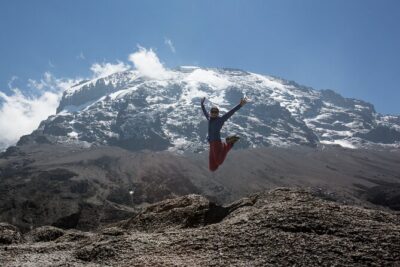
After the climb, you can look east and see the jagged peaks of Mawenzi, a view that many people remember long after they stop thinking about the route map. After a hot lunch in camp, your afternoon is at leisure for resting or exploring.
This “shorter” day is important because it sets you up for the summit push. Use the time wisely: eat well, hydrate, and do not spend your energy on needless exertion.
Day 5: Barafu Hut, wind, and early summit staging
Day 5 is where the trek starts to feel like a runway into summit night. In the morning you hike east and then join the Mweka Route, which will be your descent later. You turn left toward the mountain and hike up a ridge through sparse landscape to Barafu Hut, where you get a hot lunch.
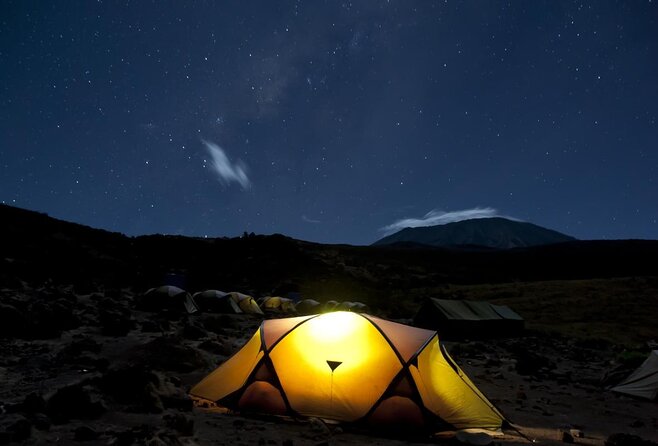
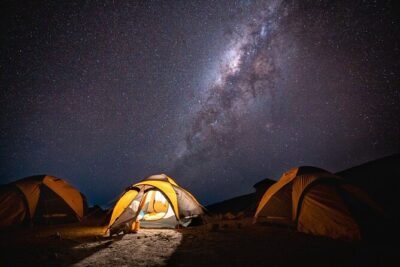
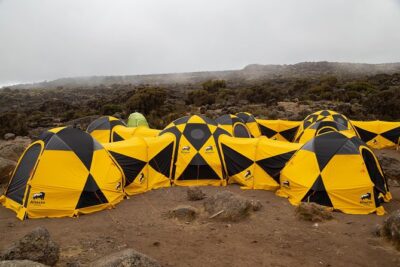
Then comes the part you cannot ignore: your tent is pitched on a narrow, stony, wind-swept ridge. You need to familiarize yourself with the terrain before dark, because this is exactly where accidents happen when visibility drops and nerves kick in.
In the evening you prepare equipment and warm clothing for the summit climb, and you’re told to drink a lot of fluids. You’ll go to bed for a few hours of precious sleep after early dinner.
Day 6: Midnight start to Stella Point sunrise, then down to Mweka Camp
This is the day most people mentally circle first, and it’s also the hardest for many climbers.
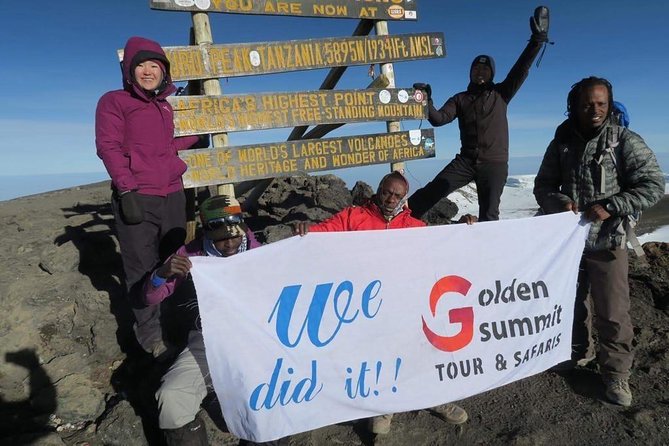
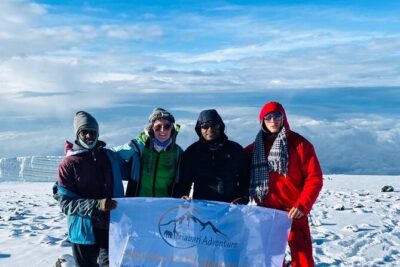
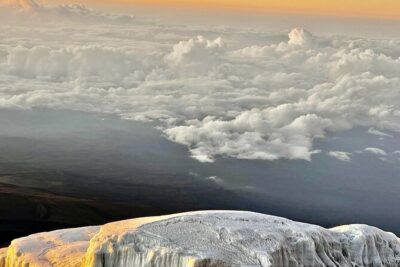
You rise around 11:30 PM, then have steaming tea and biscuits before you start shuffling off into the night. The climb takes about 6 hours on heavy scree northwest up through the area between the Rebmann and Ratzel glaciers to Stella Point at 5,685 m / 18,650 ft. The stop at Stella Point includes a chance for a sunrise that is described as supremely calm, which is a nice contrast to how hard the climb feels.
Then you descend about 3 hours back to Barafu Camp. After a short rest, you collect gear and hike down into moorland and eventually into the forest to Mweka Camp at 3,100 m / 10,170 ft.
The big lesson from this day is simple: summit day is not only altitude, it is also darkness, effort on scree, and decision fatigue. Follow the guide’s pace, keep moving steadily, and take care with your steps on the descent.
Day 7: Park gate, certificates, and the final walk to Mweka Village
After breakfast you do a short, scenic hike of about 3 hours back to the park gate. There is also a note about tipping etiquette: do not give tips to porters until you and all your gear reach the gate safely, then do remember to tip the staff at the gate.
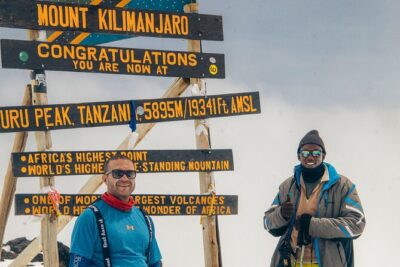
At Mweka Gate, you sign your name and add details in a register. This is also where summit certificates are handed out. If you reached Stella Point you receive green certificates, and if you reached Uhuru Peak you receive gold certificates.
After the gate, you continue down to Mweka Village. The final leg may be a muddy 3 km, about 1 hour, if the road is too muddy for vehicles. When you arrive at the village, you’re served a delicious meal.
Summit night at Stella Point: what makes it feel possible
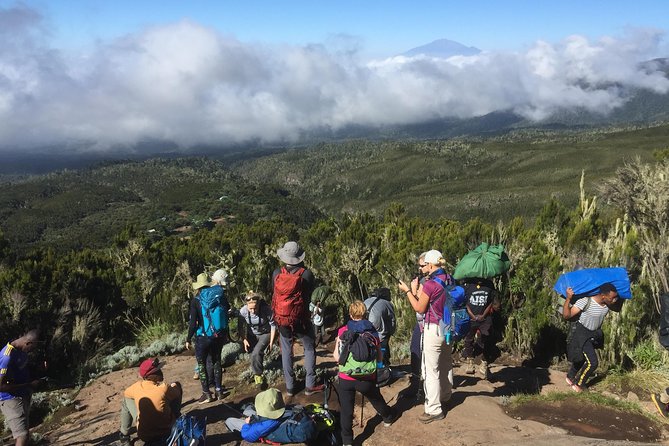
Even with a good route, summit night is still a big deal. The key timing detail here is the late start, rising around 11:30 PM. That means you need to sleep enough earlier in the evening and keep your warm layers ready and accessible.
The climb itself is described as climbing northwest up heavy scree, between the Rebmann and Ratzel glaciers. Heavy scree changes how you step. Instead of stable traction, your feet sometimes feel like they slide into place. That makes pacing and foot placement essential.
The reward is equally specific: you stop at Stella Point at 5,685 m, and you get a chance at sunrise. Then comes the grind of getting back down, with a descent that begins after reaching the summit area, and then a longer move into moorland and down toward the forest at Mweka Camp.
If you want to improve your odds of a smooth experience, the best move is to treat the summit day like a marathon of small decisions: steady pace, consistent breathing, and careful footing rather than big surges.
Price and value: what $2,050 includes and why it adds up
This trek costs $2,050 per person for an approximately 7-day duration. That is not cheap, but on Kilimanjaro you are paying for more than just your walking. You’re paying for the full machine that makes a high-altitude climb workable.
Here is what is included:
- Private transport to and from Kilimanjaro International Airport to your Moshi accommodations
- Meals: breakfast on 6 days, lunch on 7 days, and dinner on 6 days
- Admission tickets are included on each day listed for the trek
- The trip notes that pickup is offered
What is not included:
- Hotel lunches, dinners, and drinks before and after the climb
- Travel insurance
- Laundry (available at the hotel)
- Personal items and toiletries
For value, the meals plus admission tickets plus private airport transfer are the big anchors. If you tried to piece those together on your own, you would likely spend time managing multiple vendors, and you still need a coordinated schedule for a multi-day mountain route. This is the kind of trip where organization really matters.
Guides and porter support: the difference between hard and messy
You’re on a mountain for a full week. That makes guide quality and porter coordination a major part of the experience, not a side detail.
The trip capacity is capped at 20 travelers, which usually keeps the team responsive. The tour is also described as having professional support, including guides who run the day with humor and confidence, and porters who move quickly with loads so the hiking rhythm stays steady.
In the stories associated with Golden Summit Adventures, a coordinator named Elly is highlighted for helping plan details and sharing practical info like packing guidance and trip specifics. A guide named Laraha is also mentioned for professionalism and for keeping the group in a good mental place during tough sections.
You should expect that your team will focus on safety and pacing, especially during the final push and the descent from Stella Point. Your job is to follow the pace, drink fluids, and keep your energy for the climb itself.
Who should choose this trek on the Lemosho route
This 7-day Lemosho trek is best for people who:
- Want scenery and variety, from forest to moorland to dramatic cliff-country
- Prefer a route with a steadier acclimatization profile and lower traffic early on
- Are comfortable with a challenging summit night that begins around 11:30 PM
- Have at least moderate physical fitness and can hike long days
It may not be the best fit if you want a short, casual hike. This is real altitude walking. The route includes long hours, high points like Stella Point, and camp situations like the wind-swept ridge at Barafu Hut.
If you’re traveling solo, as a couple, or with friends, the group setup can still work well because the route length gives you time to settle in. Just remember: the mountain does not care if you are in a group, so pacing and listening to your guide still matter.
Should you book this 7-day Kilimanjaro Lemosho trek with Golden Summit Adventures?
If you want a Kilimanjaro route that aims for better acclimatization and a more scenic west approach, this 7-day Lemosho option makes a lot of sense. The structure of the hike, from quiet forest beginnings to Shira Plateau to Barranco and then the summit night to Stella Point, gives you enough time to adjust before the hardest hours.
I’d especially recommend it if you value organization and a calm start, since the early days are described as relatively low traffic and the trip includes private airport transfers plus your main meals. And if you’re the type who sleeps better knowing someone else is managing logistics, you’ll likely appreciate the coordinated planning supported by the team.
My only real hesitation is that summit night is intense. The heavy scree climb up to Stella Point and the midnight start mean you must take training, pacing, and cold-weather prep seriously. If you can handle that, you’re signing up for one of the more thoughtfully paced routes up Kilimanjaro.
FAQ
What is the duration of this trek?
The trek is listed as 7 days, approximately.
Where does the trip start, and what time does it begin?
It lists a start time of 8:30 am. The trip is based in Moshi.
Do I get airport transport in Moshi?
Yes. Private transport is included to and from Kilimanjaro International Airport to your accommodations in Moshi, and pickup is offered.
How big are the groups?
The tour notes a maximum of 20 travelers.
What meals are included?
Dinner is included for 6 days, lunch is included for 7 days, and breakfast is included for 6 days.
Are park admission tickets included?
Yes. Admission tickets are included as shown for the trekking days.
What is not included in the price?
Not included are hotel lunches, dinners, and drinks before and after the climb, travel insurance, laundry, and personal items and toiletries.
When do you start the summit climb?
You rise around 11:30 PM for the summit climb, reaching Stella Point on the crater rim at 5,685 m.
What certificates do you receive at Mweka Gate?
If you reach Stella Point you receive a green certificate. If you reach Uhuru Peak you receive a gold certificate.
Can I get a refund if I cancel?
No. The experience is non-refundable and cannot be changed for any reason.
Lemosho, Compared
- Kilimanjaro climb by Lemosho Route (7-day)
★ 5.0 · 651 reviews - Kilimanjaro Climbing Lemosho Route 8 Days.
★ 5.0 · 186 reviews - Kilimanjaro climb, Lemosho Route (8-day)
★ 5.0 · 148 reviews - Kilimanjaro climb, Lemosho Route (6-day)
★ 5.0 · 129 reviews - Kilimanjaro Lemosho Route
★ 5.0 · 71 reviews
Just added from around Moshi
Kilimanjaro Lemosho Route, compared.
 ★ 5.0Kilimanjaro climb by Lemosho Route (7-day)From $3,476651 reviews
 ★ 5.08-Day Small-group Lemosho Kilimanjaro Summit TrekkingFrom $2,895186 reviews
 ★ 5.0Kilimanjaro Climbing Lemosho Route 8 Days.From $2,300186 reviews
 ★ 5.0Kilimanjaro climb, Lemosho Route (8-day)From $3,975148 reviews
 ★ 5.0Kilimanjaro climb, Lemosho Route (6-day)From $3,034129 reviews
 ★ 5.0Kilimanjaro Lemosho RouteFrom $2,89071 reviews
 ★ 5.0Private Kilimanjaro Hike 7 Day Lemosho RouteFrom $2,45060 reviews
 ★ 5.0Climbing Kilimanjaro through 8 days Lemosho RouteFrom $2,76052 reviews
Browse the lists this tour appears in