
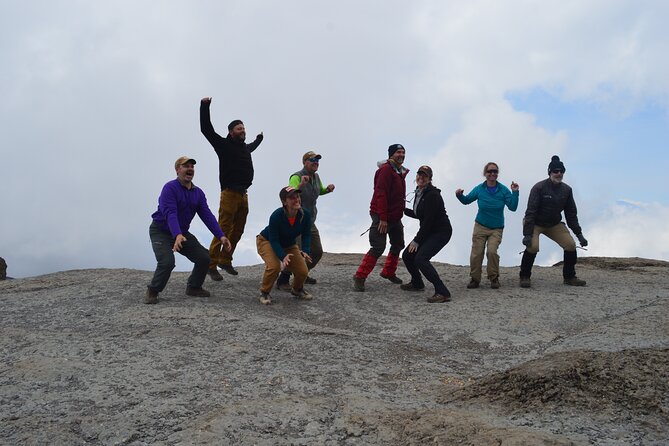
REVIEW · KILIMANJARO MARANGU ROUTE
7 days, 6 Nights – Private Marangu Route
Climb Africa’s White Mountain with comfort built in. This private Marangu route from Moshi mixes hut nights and big mountain drama with real downtime at Keys Hotel before you go chasing sunrise above the clouds. It is a classic way up Kilimanjaro, with a pace that favors steady movement and good views at each altitude step.
I especially like the altitude-friendly progression built into the route, rainforest to heather slopes to the moonlike alpine desert before the summit morning. The main consideration is that Uhuru Peak day starts very early, with a cold, dark hike on volcanic scree where you need patience, not rush.
In This Review
- Key highlights worth knowing
- Why Kilimanjaro’s “White Mountain” climb hits hard
- Moshi arrival and Keys Hotel: your warm-up day
- Marangu Gate to Mandara Hut: rainforest, mud, and waterfall options
- Mandara to Horombo Hut: giant heather and altitude training you can feel
- Horombo to Kibo Hut: Middle Red Hill, Triplets, and a moonlike walk
- Uhuru Peak sunrise from Gilman’s Point: the pre-dawn scree test
- The slide back to Marangu Gate and Moshi: rainforest calm, then hot shower
- Price and logistics: is $1,965 per person good value?
- Who this private Marangu climb is for, and who should reconsider
- Should you book this private Marangu route?
- FAQ
- How long is the Kilimanjaro private Marangu route?
- Where does the trip start?
- Is pickup included?
- Is this a private tour?
- What meals are included?
- Which huts and summit points are part of the climb?
- What fitness level do I need?
- What is not included in the price?
- What if the climb gets canceled due to weather?
- What is the cancellation timeline?
Key highlights worth knowing
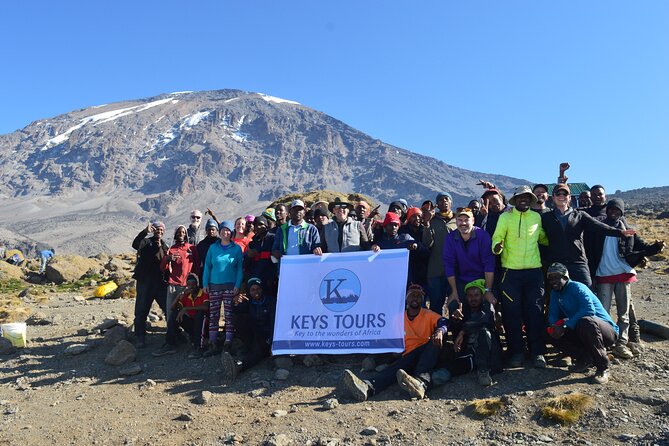
- Keys Hotel in Moshi gives you a proper reset, including a clean pool and easy access to town
- Marangu Gate to Mandara Hut walks start in dense rainforest, with a detour to waterfalls if conditions allow
- Hours of gradual altitude gain on the Mandara to Horombo stretch, with giant heather and tussock grass
- Kibo Hut sits at 4,700m, and the terrain shifts into an alpine desert feel as you head toward the crater region
- Sunrise from the summit window is the emotional peak, with headlamps lining up on the scree trail
Marangu, other operators and other lengths
- Kilimanjaro climb, Marangu route (6-day)★ 5.0 · 72 reviews
- Climbing Kilimanjaro – Marangu Route★ 5.0 · 65 reviews
- Best Kilimanjaro Adventures 6 Days Marangu Route Experience★ 5.0 · 18 reviews
- Kilimanjaro Private Climbing in 6 Days Marangu Route★ 5.0 · 16 reviews
Why Kilimanjaro’s “White Mountain” climb hits hard
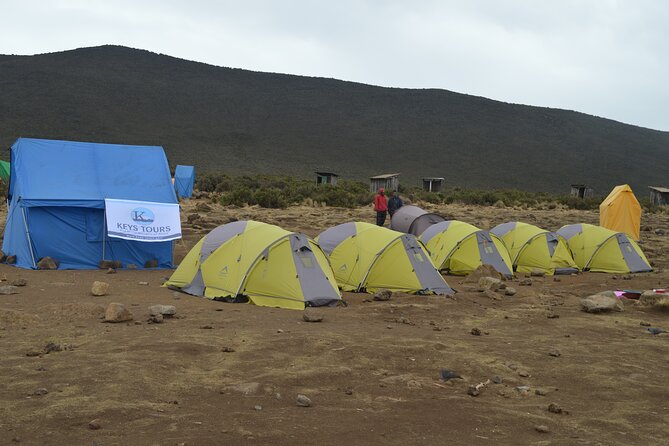
Kilimanjaro is not just a high walk in the sky. It is Africa’s highest peak, a cluster of volcanic summits with Kibo (5,895m) and Mawenzi (5,149m) among the big names. The mountain is so prominent that it is often described as the world’s highest free-standing volcanic summits, and it is protected as Kilimanjaro National Park since the 1970s. UNESCO added it as a World Heritage Site in 1987, and it later earned recognition as a Natural Wonder of Africa.
What matters for you on this private Marangu experience is how the mountain changes as you climb. You do not just get higher. You move through different ecosystems over a short time, so your body gets a chance to adapt while your eyes keep finding something new. The route name also fits the vibe: Marangu is one of Kilimanjaro’s most established trekking ways, and it is the option many people choose when they want structure and a straightforward plan.
This trek is also built for real people, not athletes only. You are looking at moderate physical fitness as the target, not “run up the hill” fitness. You will still work, but the design here favors consistent steps, hut stops, and a team that keeps meals and camp logistics moving so you can focus on breathing, footing, and that long view ahead.
Moshi arrival and Keys Hotel: your warm-up day
Your trip starts with meeting time at Kilimanjaro International Airport around 7:30 am, and pickup is included in the experience plan. After arrival, you head to Keys Hotel, a family-run spot on the slopes of Kilimanjaro. The location is close enough to Moshi town that you can get a sense of everyday life without losing your mountaineering rhythm.
This first day matters more than it sounds. You are flying into a big-country adventure, and you need sleep, a shower, and decent meals before you start climbing. Keys Hotel is described as comfortable, clean, and friendly, with a swimming pool that can be a welcome landing pad after you return from the mountain. It is also about a 10-minute walk to Moshi town center, so if you want a relaxed stretch or a simple bite before the trek, you are not stuck at a distant compound.
From a value standpoint, I like that this is not just “beds somewhere near the airport.” You get a real base in Moshi, and it sets expectations for what the operator is trying to deliver: a smooth start, then a mountain plan with fewer unknowns. If your goal is a confident, well-run climb, this hotel day helps you feel ready instead of rushed.
Marangu Gate to Mandara Hut: rainforest, mud, and waterfall options
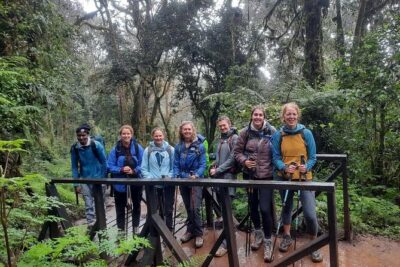
After breakfast you transfer to Marangu Gate to begin your trek into Kilimanjaro National Park. Today is about getting into the rhythm. The route starts in rainforest with dense vegetation, and you will likely face a muddy trail at times. That does not mean it is miserable. It means you need shoes with grip and you should expect slower going than on dry ground.
The trek to Mandara Hut (2,700m) takes about 4 hours on the schedule you are given, with a steady hiking pace that is described as slow and comfortable. You are not pushed into an all-day grind right away, which matters for altitude planning. Instead, you settle into the hike, enjoy the photos, and eat your provided packed lunch at a sensible time.
One cool detail: there is a detour to waterfalls in the rainforest route. It is well worth it, but you should discuss it with your guide before you set off, since conditions can affect timing and footing. If the weather is on and the trail is passable, this is one of those “the forest gives back” moments that makes the day feel more than just a staircase upward.
Meals are included during the climb, with your guide and porters handling food preparation. That is a big deal on a multi-day trek, because it reduces mental load. You can focus on hydration and pacing, not on how you will eat and when.
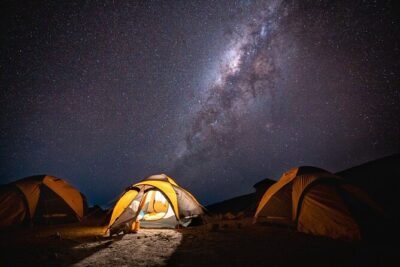

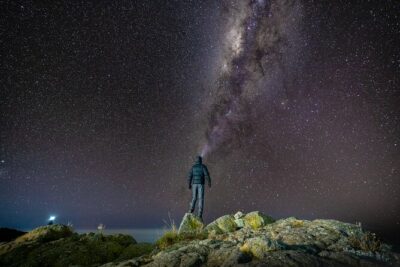
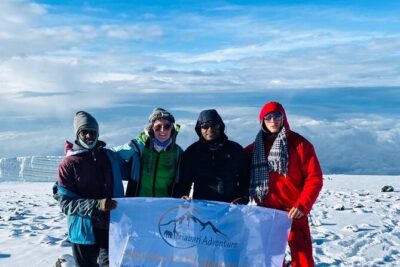
Mandara to Horombo Hut: giant heather and altitude training you can feel
Day two in the trekking sequence continues upward to Horombo Hut (3,700m). This is where you start to notice the mountain changing in a way that affects both your body and your senses. The climb begins with a steep section that can be wet, plus a walk through upper rainforest. Then you transition into the iconic high-altitude plant world, with giant heather and tussock grass.
The schedule gives about 15 km and roughly 5 hours of hiking, and the longer timing listed for the day suggests expect a range depending on pace, stops, and trail conditions. The key is not the exact number. The key is that you are gaining altitude gradually enough to keep breathing manageable.
As you go higher, vegetation shifts again. You move into stunted heather with everlasting flowers and short tussock grass, and in wetter spots you may see plants like lobelia and groundsels. That is not just decoration. It is a sign that you are leaving the thick humidity behind and moving toward drier, colder conditions.
I like this day for first-time climbers because it teaches you how to climb at altitude without hitting the “all gas” button. You will still sweat. You might still feel your lungs working. But the structure here is designed to keep you moving steadily and not burning energy too fast.
Horombo to Kibo Hut: Middle Red Hill, Triplets, and a moonlike walk
From Horombo Hut you head toward Kibo Hut (4,700m). Today includes a route that traverses west before turning northward, with stops and landmarks like Middle Red Hill and the Triplets mentioned in the plan.
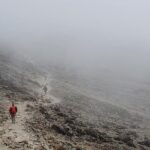
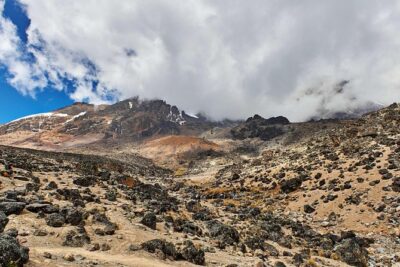
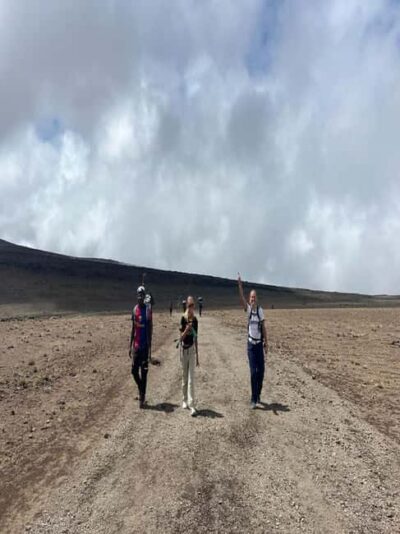
The terrain change is the headline. Once you start approaching Kibo, the landscape shifts into an alpine desert feel, with rocks and volcanic debris. The walking can feel strange at first, like you are walking on a planet surface. That is also why this day is so good for orientation. You learn how your feet handle scree and rock, and you start understanding what “high altitude walking” feels like when the air is thinner.
One of the best payoffs is the view toward Mawenzi Peak to the east. Even if clouds play games with your visibility, the mountain’s shape is a reminder that Kilimanjaro is not a single hill. It is a volcanic system, and you are working around it.
For many people, the day arriving at Kibo Hut is where their mindset shifts from “trek” to “summit climb.” Nights here matter. You are higher, colder, and closer to the conditions you will feel during the summit push. You also need to conserve energy so you can handle the long night ahead.
Uhuru Peak sunrise from Gilman’s Point: the pre-dawn scree test
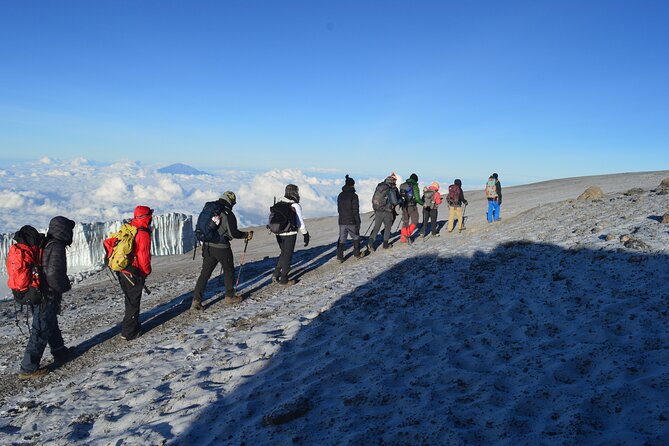
This is the day people remember, and for good reason. You wake up very early, grab a quick bite, and sip something warm before heading out in darkness. The route to Gilman’s Point is described as a slow steep walk on volcanic scree for about 5 to 6 hours, and the headlamps on the trail line up like fireflies. That detail is a big clue: you are not alone on the mountain, and you are following a steady stream of climbers up a trail that demands careful footing.
As you approach the crater rim, you get one of the main emotional moments of the whole climb: a memorable sunrise over Africa. The plan also mentions the curvature of the earth at this altitude, with the horizon glow making it feel even bigger. If you like photos, keep your camera ready, because this is when the mountain gives you dramatic light.
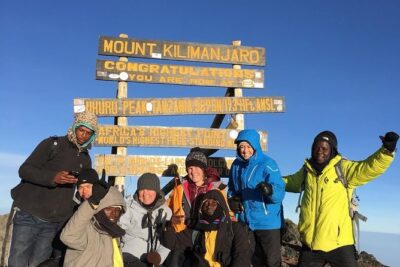
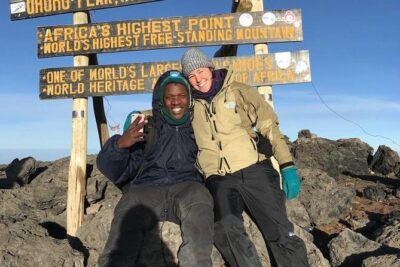
When you reach Uhuru Peak, the effort starts to feel worth it. Then comes the part many people do not plan for mentally: descending can be tiring too. The trail down from Gilman’s Point on the Marangu route can be fun in a very specific way, with hikers sliding down loose gravel using big steps and side movements. It is not a race. But if you move with control, it turns a painful descent into something a little lighter.
Then you head back toward Horombo Huts, with the option to rest at Kibo Hut depending on how you feel.
The slide back to Marangu Gate and Moshi: rainforest calm, then hot shower
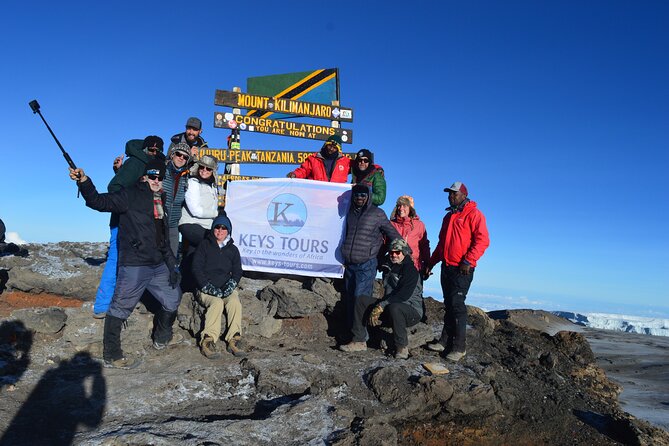
After the summit day, your body is doing math it did not ask for. You are going down, but altitude fatigue can still make your legs feel heavy. The schedule brings you to Marangu Gate after a slow hike through rainforest, including sections with many steps.
This descent is where you get the soft landing back into familiar terrain. The route highlights Old Man’s Beard (tree moss) and giant ferns towering above the forest floor. You may feel a sense of relief here, but do not let that trick you into moving too fast. After days of different terrain, your feet still need attention, especially on step-heavy sections.
Once you reach Marangu Gate, you transfer back to Keys Hotel for a hot shower and overnight rest. This is one of the practical reasons to pick a package with a solid Moshi base: you actually get to recover in real comfort, not just collapse at the edge of a waiting area.
Because the overall experience is listed as 7 days and 6 nights even though the trekking segment is roughly 6 days, plan on at least one night in Moshi tied to your flight schedule. That extra time is not wasted. It helps you keep the trek from feeling like a nonstop sprint.
Price and logistics: is $1,965 per person good value?
At $1,965 per person, this private Marangu route is not a bargain. But it also is not priced like a luxury expedition either. What you get for the money is what makes the number make sense for many people: private guiding structure, a well-located start and recovery base at Keys Hotel, and meal coverage across the trek.
Here is what is included in the experience plan:
- Parking fees
- Breakfasts (5)
- Lunches (4)
- Dinners (3)
On a multi-day mountain trip, food is where costs and headaches pile up fast. Including multiple meals cuts down what you need to plan, and it also keeps the daily rhythm consistent. You should still budget for drinks and tips, since those are listed as not included.
Also note that this is a private tour/activity, meaning only your group participates. In practical terms, that usually improves how flexible your days can feel. It also often means less waiting around with strangers for the same group schedule.
Value also depends on your priorities. If your top goal is maximizing summit odds by keeping a steady, organized pace and having a team handle the daily logistics, this price starts to look reasonable. If your priority is lowest cost above all else, you might compare against other routes and operators.
Who this private Marangu climb is for, and who should reconsider
This trek is described as suitable for moderate physical fitness. That does not mean it is easy. Kilimanjaro is a serious altitude climb. But it suggests a focus on steady pacing rather than a “fitness bootcamp” approach.
You will likely love this experience if:
- You want a classic route with a clear progression through ecosystems
- You prefer guided structure with meals handled during the climb
- You want a comfortable hotel base in Moshi, not just camps everywhere
- You care about sunrise and are willing to get up very early
You might reconsider if:
- You cannot handle pre-dawn starts, since the summit day wake-up is very early
- You know you struggle with scree walking and steep sections in thin air
The Marangu route is also one of Kilimanjaro’s official ascent routes, and it is included among several alternatives people choose, such as Lemosho, Machame, Rongai, Umbwe, Shira, and more. If you want variety in scenery or a different style of acclimatization, you could compare routes. But if you want straightforward and well-paced, Marangu fits that mission.
Should you book this private Marangu route?
I would book it if you want a well-run climb where the mountain is the star, but your days are organized enough that you can focus on breathing, steps, and the sunrise moment. The pairing of Keys Hotel in Moshi with a classic Marangu climb is a strong practical combo, especially if you appreciate hot shower recovery and real meals after big hiking days.
I would think twice if you dread early mornings and long hours on scree. The summit day is the reality check day, and it is built around cold darkness, slow steep climbing, and patience.
If that sounds like you can handle it, this private plan is a solid pick for a once-in-a-lifetime Kilimanjaro push.
FAQ
How long is the Kilimanjaro private Marangu route?
It is listed as 7 days and 6 nights, with an approximate trek duration of 6 days.
Where does the trip start?
The meeting point is Kilimanjaro International Airport (Kilimanjaro Airport Rd, Tanzania), with a start time listed as 7:30 am.
Is pickup included?
The tour summary notes that pickup is offered, and the start point is at the airport.
Is this a private tour?
Yes. It is described as private, with only your group participating.
What meals are included?
Included meals are breakfast (5), lunch (4), and dinner (3).
Which huts and summit points are part of the climb?
The route includes Mandara Hut, Horombo Hut, Kibo Hut, and the summit day is focused on Gilman’s Point and Uhuru Peak.
What fitness level do I need?
The guidance says travelers should have a moderate physical fitness level.
What is not included in the price?
Drinks and tips are listed as not included.
What if the climb gets canceled due to weather?
The info says the experience requires good weather. If it is canceled due to poor weather, you are offered a different date or a full refund.
What is the cancellation timeline?
You can cancel up to 3 days in advance for a full refund, based on local time cutoffs. Canceling less than 3 full days before start time means the amount is not refunded.
The Marangu Trail
- Kilimanjaro climb, Marangu route (6-day)
★ 5.0 · 72 reviews - Climbing Kilimanjaro – Marangu Route
★ 5.0 · 65 reviews - Best Kilimanjaro Adventures 6 Days Marangu Route Experience
★ 5.0 · 18 reviews - Kilimanjaro Private Climbing in 6 Days Marangu Route
★ 5.0 · 16 reviews - 6 Days Climb Kilimanjaro Through Marangu Route
★ 4.5 · 15 reviews
Just added from around Moshi

Kilimanjaro Marangu Route, compared.
 ★ 5.0Kilimanjaro climb, Marangu route (6-day)From $2,90272 reviews
 ★ 5.0Climbing Kilimanjaro – Marangu RouteFrom $2,00465 reviews
 ★ 5.0Private Full Day Hiking Experience to Marangu RouteFrom $26061 reviews
 ★ 4.5From Arusha/Moshi: Kilimanjaro Hike Marangu Route Day TripFrom $10154 reviews
 ★ 5.0Mount Kilimanjaro Day Hike Through Marangu Route to Mandara HutFrom $26537 reviews
 ★ 5.0Kilimanjaro Climbing 5 days Marangu routeFrom $90022 reviews
 ★ 5.0Best Kilimanjaro Adventures 6 Days Marangu Route ExperienceFrom $1,00018 reviews
 ★ 5.0Kilimanjaro Private Climbing in 6 Days Marangu RouteFrom $2,00016 reviews
Browse the lists this tour appears in