
REVIEW · MOUNT KILIMANJARO TREKS
Hiking Mt Kilimanjaro 8 days, the most scenic route up Kili
Kilimanjaro feels close, then suddenly huge. The Lemosho route gives you a slower start, panoramic views from multiple sides, and a plan that helps you acclimatize before summit night. I like that it balances scenery, fewer people on trail, and a strong push toward a successful summit.
Two things I really like: the route variety over several ecosystems, and the way the schedule uses short days at the right moments. Forest on Day 1, plateau hiking on Days 2 and 3, then the lava and glacier area later makes the climb feel like a guided tour of Kilimanjaro’s moods.
One drawback to consider is that the hardest part hits at night, so expect a very long, physically demanding summit push and plan around cold, wind, and weather changes. Also, this is best with a moderate fitness base, because even the “scenic” days require real uphill effort.
In This Review
- Key highlights to look for on this Lemosho climb
- Why the Lemosho route feels like a scenic approach to Kibo
- Getting from Moshi to Londorossi Gate, then into the forest on Day 1
- Shira Ridge and Shira Plateau days: where the Kibo views start
- Lava Tower, Shark’s Tooth, Arrow Glacier, and Barranco Hut on Day 4
- Karanga Valley’s short ridge day: letting your body catch up
- Barafu Hut on Day 6: summit views start lining up
- Summit night from Rebmann and Ratzel glaciers to Stella Point and Uhuru Peak
- Descent to Mweka Park Gate on Day 8: finish strong, not fragile
- Group size, pickup, and the human side of Kilimanjaro
- Price and value: what $2,900 buys you on an 8-day Kili climb
- Who should choose this climb, and who should slow down first
- Should you book this Mt Kilimanjaro Lemosho hike?
- FAQ
- How long is the Mt Kilimanjaro hike on this route?
- Where does the hike start and how do you get there from Moshi?
- What route is used to climb Kilimanjaro?
- How many people are in the group?
- Is pickup included?
- Are park admission tickets included?
- What level of fitness do you need?
- Is summit day weather dependent?
- What is the cancellation policy?
Key highlights to look for on this Lemosho climb
- Lemosho’s low-traffic feel, so you spend less time stuck behind other groups and more time taking in views
- Big Kibo views across the Shira Plateau, especially when the weather is clear
- Acclimatization days built into the schedule, including a gentler plateau crossing and a short ridge to Karanga
- A clear summit-day timeline, starting from midnight to around Stella Point for sunrise if conditions allow
- Small group size, up to 7 travelers, which usually makes the logistics and pacing feel more personal
- Camp comfort with full board, so you are not constantly figuring out meals at altitude
Other ways up Kilimanjaro we reviewed
- Kilimanjaro climb by Lemosho Route (7-day)★ 5.0 · 651 reviews
- Kilimanjaro climb, Machame Route (7-day)★ 5.0 · 262 reviews
- Kilimanjaro Climbing Lemosho Route 8 Days.★ 5.0 · 186 reviews
- Climbing Kilimanjaro – Machame Route★ 5.0 · 170 reviews
Why the Lemosho route feels like a scenic approach to Kibo
If you want Kilimanjaro to feel cinematic, Lemosho is a smart choice. This route is known for panoramic vistas from different angles, and it does not just save the views for one big moment. You’ll likely notice how the scenery changes as you gain altitude, from forest shade to moorland, then into semi-desert and alpine zones.
I also like that Lemosho is described as a great balance: fewer hikers on the trail, strong scenery, and a higher summit success rate compared with more rushed approaches. In plain terms, you are choosing a route that tries to match how humans actually acclimatize.
The other thing you feel on Lemosho is pacing. It is not a party trek, and it is not a “just grind” trek either. It is a steady climb with specific help from the plan, especially around the plateau and the days before the summit push.
Getting from Moshi to Londorossi Gate, then into the forest on Day 1
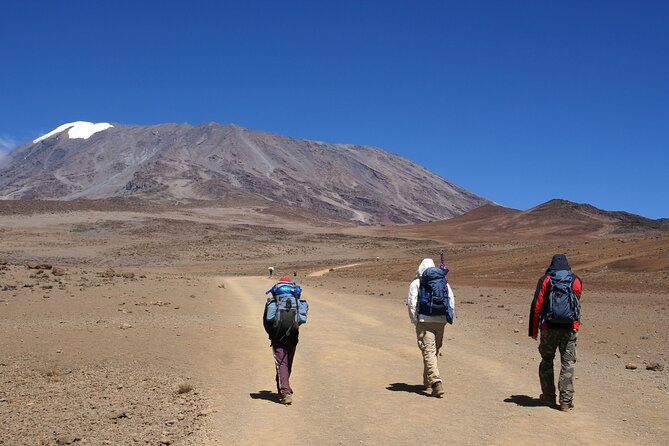
Your day starts with a drive, and that part matters more than people think. From Arusha or Moshi, you head to Londorossi Gate for about 4 hours, then continue another hour to the Lemosho trailhead. Once you reach the trailhead, you get lunch and then start hiking through undisturbed rain forest.
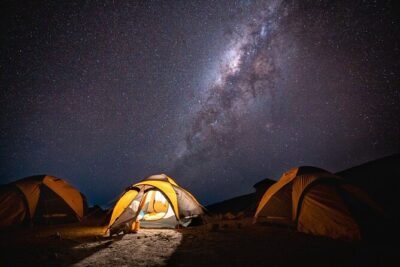
On Day 1, you hike roughly 6 km in about 3 to 4 hours, moving from around 7,800 ft to 9,500 ft. You’ll camp at Forest Camp, also known as Big Tree Camp, with full board provided. This is the kind of opening day that helps you settle in, because you are not immediately thrown into steep, high-altitude stress.
Practical tip: treat Day 1 like a warm-up, not a fitness test. Forest hiking still requires effort, but the pace and the lower altitude mean your body can start adjusting to the trekking rhythm. If you go out too fast early, you pay for it later.
Shira Ridge and Shira Plateau days: where the Kibo views start
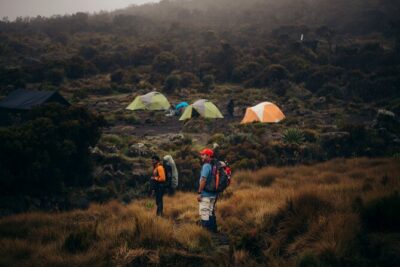
Day 2 continues the climb out of the forest and up into a savannah world. As the trail leaves the trees behind, you move into tall grasses, heather, and volcanic rock that can appear draped with lichen. This is the first shift that makes Lemosho feel special, because it is visually different every few hours.
You climb through rolling hills and cross streams until you reach the Shira Ridge, then descend gently to Shira 1 Camp. The view of Kibo from across the plateau is a highlight, because the mountain starts looking less like a background and more like a destination.
On Day 2, you stay and sleep at Shira One Camp with dinner and overnight included. Park admission ticket is included for the day, so you are not juggling extra paperwork while you are concentrating on breath and legs.
Day 3 is where the route gets seriously scenic. You walk east toward Kibo’s glaciered peak across the plateau, then reach Shira 2 Camp on moorland. Depending on how the plan is managed for you, you may also have the option to continue to Moir Hut near the base of the Lent Hills.
This is one of the smartest parts of the trip because it supports acclimatization without feeling like a boring recovery day. The Lent Hills area offers a variety of walks, which can help you adjust while still moving forward. You’re also at much higher altitude, roughly 11,500 ft to 13,800 ft, covering about 14 km in around 5 to 7 hours.
If the weather clears, Shira can feel like you are walking on a high, open stage. Just keep in mind that even if the walking feels steady, the air gets thinner, so slow down. Your legs may want to go faster, but your lungs should lead.
Lava Tower, Shark’s Tooth, Arrow Glacier, and Barranco Hut on Day 4
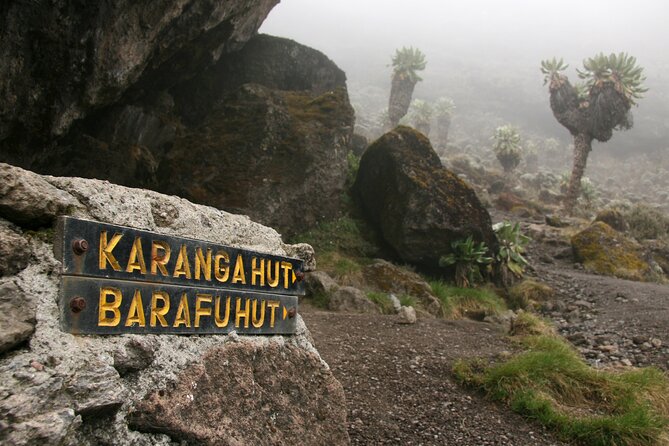
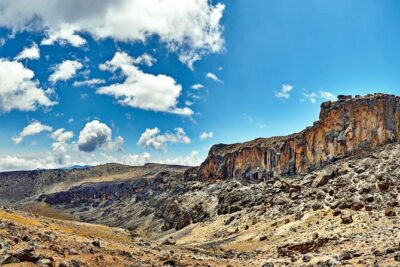
Day 4 turns the climb into something more dramatic. After breakfast, you hike toward the Lava Tower in a south-eastern direction, then head toward the area known as Shark’s Tooth. This is the day where you start seeing more of the rugged, volcanic character of Kilimanjaro.
After the Lava Tower, you reach a second junction that brings you up toward the Arrow Glacier area, around 16,000 ft. Then the route drops down to Barranco Hut at about 13,000 ft. The effort goes up and down here, and that back-and-forth can be mentally tricky if you expect a simple “up only” trek.
You hike about 7 km in roughly 4 to 6 hours through semi-desert terrain. You get rest, dinner, and overnight at Shira 2 Camp or Moir Hut, depending on how the day is matched to conditions.
A key value of Day 4 is perspective. The higher you go, the more your brain starts understanding the scale of what is coming next. The drawback is that this is not a gentle stroll. You want good trekking technique, steady foot placement, and the patience to handle the ups and downs without rushing.
Karanga Valley’s short ridge day: letting your body catch up
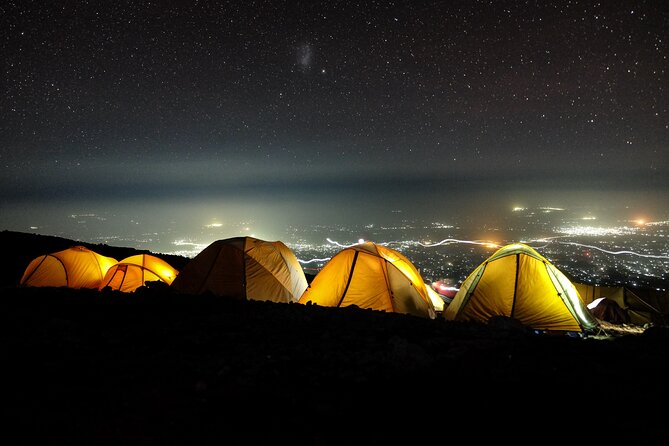
Day 5 is deliberately shorter, and that is a good thing. You leave Barranco and continue along a steep ridge, passing the Barranco Wall, then head into the Karanga Valley campsite.
The reason this day exists is clear: it gives your body more time to acclimatize. You hike about 5 km for around 4 to 5 hours, moving from roughly 13,000 ft to 13,100 ft, and you camp at Karanga Camp with full board.
You might feel like a short day is a break. It is not always easy, but it is a smart one. Your legs still work, your altitude still matters, but you are giving your body a better chance to handle the big push coming on Day 7.
If you want to maximize your summit odds, this is the kind of day you should respect. Don’t treat it like a day to speed up and “bank energy.” The goal is to arrive at Barafu in a steady, not depleted, state.
Barafu Hut on Day 6: summit views start lining up
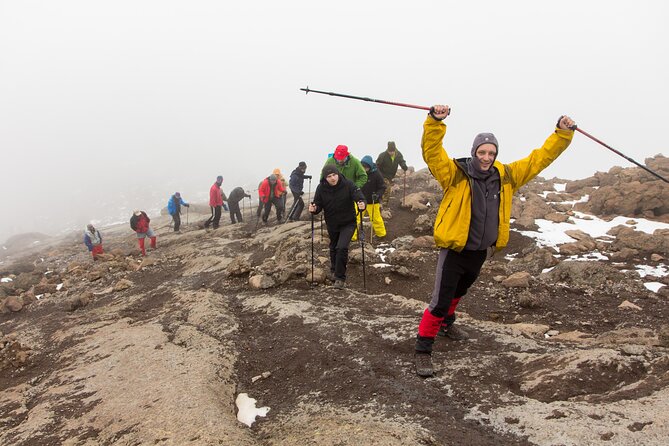
On Day 6, you head toward Barafu Hut. You leave Karanga, reach the junction connecting with the Mweka Trail, and then continue up to Barafu. At this point, you have completed the South Circuit, which is known for bringing views of the summit from different angles.
This day is relatively short in distance: about 4 km in roughly 4 to 5 hours. You climb from around 13,100 ft to 15,300 ft through alpine desert terrain. You camp at Barafu Hut Camp with full board.
This is the moment where the trip shifts. The trekking energy becomes more focused on readiness. You’re not just thinking about steps now, you’re thinking about hydration, warmth, and conserving effort for the midnight departure.
Practical note: Barafu is where you should plan your summit day logistics carefully, like where you keep essentials and how you manage layers. Once you start summit prep, you will not have time to improvise.
Summit night from Rebmann and Ratzel glaciers to Stella Point and Uhuru Peak
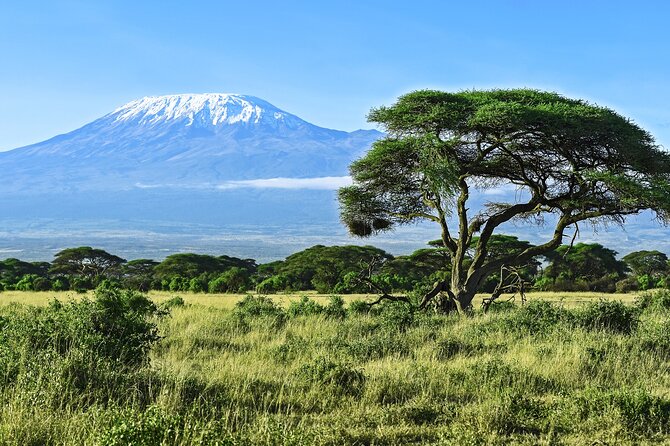
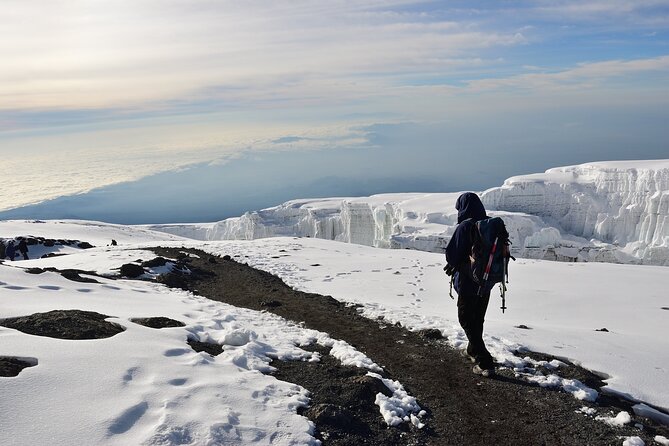
This is the day that makes or breaks the whole experience. On Day 7, you begin between midnight and 12:00 am, moving toward the summit between the Rebmann and Ratzel glaciers. You head roughly northwesterly and ascend heavy scree toward Stella Point on the crater rim.
This portion is described as the most mentally and physically challenging part of the trek. It makes sense. Heavy scree is slow going, and you are working at extreme altitude. Your motivation has to be steady, not spiky, so you keep moving even when it feels like you are not gaining ground.
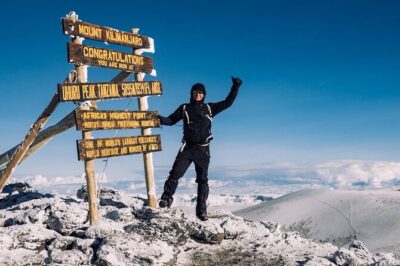
At Stella Point (18,600 ft), you stop briefly and, if weather permits, get rewarded with one of the most memorable sunrises you are likely to see in your life. From Stella Point, you may encounter snow all the way on the 1-hour ascent to the summit.
Then you reach Uhuru Peak, the highest point on Mount Kilimanjaro and the highest point on the African continent. The total time on this day is listed as about 12 hours, and admission ticket is included.
Key advice: treat the summit like a strategy game. Go slower than your ego wants. Small gains add up, and the summit timeline is long enough that steady pace matters more than bursts of speed. If sunrise visibility is poor, do not panic. Your effort is still the point, and clear skies are not guaranteed.
Descent to Mweka Park Gate on Day 8: finish strong, not fragile
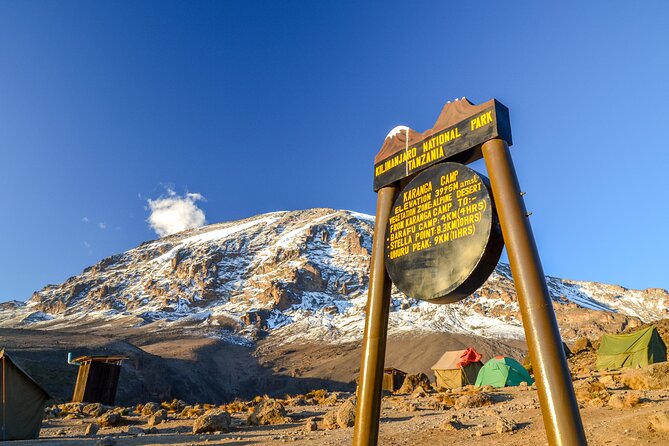
After sunrise and summit efforts, Day 8 is about getting down safely. You eat breakfast, then continue your descent to the Mweka Park Gate. Vehicles wait for you afterward to drive you back to your hotel in Arusha or Moshi.
This final day is much shorter in time on trail, about 3 hours for the drive after gate arrival. The park admission is marked as free for this day, so it is one less item to manage as you wrap up the climb.
Descent can be rough on knees and feet, so your “finish well” plan matters. Stick with careful steps, take short breaks, and do not rush just because the hardest part is over.
The good news is that by the end of Day 8, you get the practical payoff. You are done with the logistics of camping and trekking, and you can focus on recovery and food, not gear decisions.
Group size, pickup, and the human side of Kilimanjaro
Small groups change the tone of the hike. This trip is limited to a maximum of 7 travelers, which tends to mean less crowding, more attention, and more flexibility in pacing. You also get pickup offered, which reduces stress on your travel day when you already have enough to think about.
The experience is run by Safari Soles Tours, and the reviews tied to this company put a strong emphasis on the crew. Names that come up include Emanuel Mkumbo, Bryson, and Franky, with praise for guides who looked after safety and helped make the climb feel manageable.
I value that kind of guidance because Kilimanjaro is not just about fitness. It is about decision-making at altitude, pacing, and confidence when you are tired. Even if you are an experienced hiker, good guiding makes a difference when the ground gets steep and your breathing gets slower.
Also worth noting: this tour includes a mobile ticket. For many travelers, that is one less physical document to handle while moving through gates, camps, and transfers.
Price and value: what $2,900 buys you on an 8-day Kili climb
At $2,900 per person for about 8 days, this is not a budget trek. But Kilimanjaro is expensive for reasons beyond marketing. You are paying for trained support, park access, multiple nights of camping infrastructure, and the logistics of moving people safely across steep terrain and changing altitude.
What helps this price feel more reasonable is that the schedule includes full board at the camps on the trekking days (with meals noted for each camp stop). You are not expected to find your own food at high altitude, and that reduces both stress and decision fatigue.
Another value factor is that the trip includes admission tickets for the trekking days listed (days 1 through 7 are marked as included), and day 8 is marked as free for admission. If you are trying to budget accurately, that clarity matters.
You may also benefit from group discounts, which is a practical win if you are traveling with friends. The small group cap also helps keep the experience from feeling like a long school trip through a checklist.
Bottom line on value: if you want Lemosho’s scenic balance and you want it run by a team that focuses on the human side of safety and pacing, this price can make sense. If you want the absolute cheapest way to climb, you might find other options. But for many people, paying for a well-run route is cheaper than paying for a damaged experience.
Who should choose this climb, and who should slow down first
This climb is aimed at people with a moderate physical fitness level. That means you do not need to be an ultra runner, but you should be able to hike uphill for hours, carry yourself steadily, and keep your energy controlled rather than spiking into exhaustion.
It’s a strong fit if you:
- Want scenery across multiple ecosystems, not one long boring grind
- Like the idea of a route known for low traffic and big views
- Appreciate a plan that uses acclimatization days instead of rushing straight up
- Prefer a small group of up to 7 travelers, where the trip feels more coordinated
It may be a tougher match if:
- You are not comfortable with a long, cold, intense summit night that starts around midnight
- You struggle with altitude and need a lot more medical or pacing flexibility than a standard trek can offer
- You get anxious in low-visibility weather, since the summit outcome is weather dependent
The trip also runs in a context that expects “good weather.” That does not mean you will have perfect conditions. It means you should be mentally ready for delays, changes, or rescheduling if conditions are poor.
Should you book this Mt Kilimanjaro Lemosho hike?
Book it if your priority is a scenic, well-paced climb on the Lemosho route, with full-board camp support and a team that emphasizes safety and guidance. I’d choose it if you want the best chance to reach the top while still enjoying the mountain as something you experience, not just something you conquer.
Pause before booking if you are new to altitude trekking, dislike early starts, or cannot commit to the demanding summit day. If you can handle cold, steep terrain, and a steady pace mindset, this is the kind of Kilimanjaro trip that can leave you with memories that last far beyond the peak.
FAQ
How long is the Mt Kilimanjaro hike on this route?
The hike is listed as 8 days, approximately.
Where does the hike start and how do you get there from Moshi?
You depart from Arusha or Moshi for Londorossi Gate, then drive to the Lemosho trailhead. Pickup is offered.
What route is used to climb Kilimanjaro?
This climb uses the Lemosho route, described as the most scenic route up Kilimanjaro.
How many people are in the group?
The maximum group size is 7 travelers.
Is pickup included?
Yes, pickup is offered.
Are park admission tickets included?
Admission ticket inclusion is marked for the trekking days (days 1 through 7), and day 8 is marked as admission ticket free.
What level of fitness do you need?
Travelers should have a moderate physical fitness level.
Is summit day weather dependent?
Yes, the experience requires good weather, and if it is canceled due to poor weather, you will be offered a different date or a full refund.
What is the cancellation policy?
Free cancellation is available. You can cancel up to 24 hours in advance for a full refund, and cancellations less than 24 hours before the start time are not refunded.
Kilimanjaro, Route by Route
- Kilimanjaro climb by Lemosho Route (7-day)
★ 5.0 · 651 reviews - Kilimanjaro climb, Machame Route (7-day)
★ 5.0 · 262 reviews - Kilimanjaro Climbing Lemosho Route 8 Days.
★ 5.0 · 186 reviews - Climbing Kilimanjaro – Machame Route
★ 5.0 · 170 reviews - Climbing Kilimanjaro through 7 days Machame Route
★ 5.0 · 151 reviews
Just added from around Moshi
Mount Kilimanjaro Treks, compared.
 ★ 5.0Kilimanjaro climb by Lemosho Route (7-day)From $3,476651 reviews
 ★ 5.0Kilimanjaro climb, Machame Route (7-day)From $3,377262 reviews
 ★ 5.08-Day Small-group Lemosho Kilimanjaro Summit TrekkingFrom $2,895186 reviews
 ★ 5.0Kilimanjaro Climbing Lemosho Route 8 Days.From $2,300186 reviews
 ★ 5.0Climbing Kilimanjaro – Machame RouteFrom $2,322170 reviews
 ★ 5.0Climbing Kilimanjaro through 7 days Machame RouteFrom $2,425151 reviews
 ★ 5.0Kilimanjaro climb, Lemosho Route (8-day)From $3,975148 reviews
 ★ 5.0Kilimanjaro climb, Lemosho Route (6-day)From $3,034129 reviews
Browse the lists this tour appears in