
REVIEW · MULTI-DAY NORTHERN CIRCUIT SAFARI PACKAGES
9 Days Kilimanjaro Hiking or Climbing via Northern Circuit route
Kilimanjaro feels bigger than you think. I like the Northern Circuit pacing because it gives your body time to adjust, and I like the changing ecosystems that keep each trekking day visually fresh. From rainforest to heath to alpine desert, the mountain keeps switching the rules on you.
A big practical win is that your price covers a lot of the heavy lifting, including park and operating fees plus meals and pre and post climb hotel support. One thing to think about, though, is the brutal reality of summit night, where cold, wind, and a long midnight-to-dawn climb are part of the deal.
In This Review
- Key points before you go
- Northern Circuit pacing: why this climb can feel steadier
- Price and logistics: what $1,584 covers, and what you still must plan
- Moshi start and the road to the gate: getting your trip off to a smooth start
- The 9-day trek by day: rainforest to Uhuru Peak
- Day 1: Londorossi Gate to Mti Mkubwa (rain forest)
- Day 2: Mti Mkubwa to Shira 1 Camp (heath begins)
- Day 3: Shira 1 to Shira 2 (moorland and wildflowers)
- Day 4: Shira 2 to Lava Tower, then on to Moir Hut (alpine desert)
- Day 5: Moir Hut to Buffalo Camp (views toward the border)
- Day 6: Buffalo Camp to Third Cave (remote feel)
- Day 7: Third Cave to School Hut over the Saddle (pre-summit training)
- Day 8: School Hut to Uhuru Peak at night, then down to Mweka Camp
- Day 9: Mweka Camp to Mweka Gate, then on to Mweka Village and Moshi
- Summit morning reality check: how to handle the cold, wind, and darkness
- Who should choose this climb, and who should think twice
- Should you book this 9-day Northern Circuit Kilimanjaro climb?
- FAQ
- How much does the 9-day Kilimanjaro Northern Circuit climb cost?
- Where does this experience start, and what time does it begin?
- How long is the trek?
- What route and destination are included?
- What is included in the price?
- What is not included?
- Is pickup offered?
- What is the cancellation policy?
- What happens if the climb is canceled due to weather?
Key points before you go
- Northern Circuit altitude rhythm: the route profile is designed to help you acclimatize without rushing straight upward.
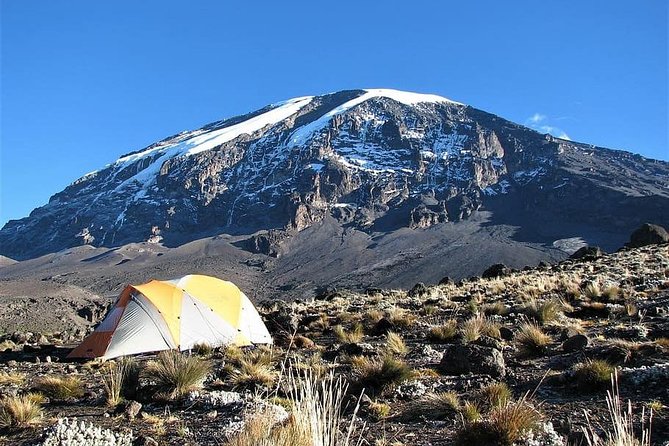
- Real variety by habitat: rain forest, heath, alpine desert, and even the route’s Arctic-labeled zone on summit day approach.
- Buffalo Ridge and Third Cave sections: these are described as more remote and rarely traveled, which can make your trekking feel more wild.
- A dedicated high camp for the summit push: School Hut sets you up for the midnight start and sunrise timing.
- Your costs are more controlled up front: fees, crew wages, and transfers are included, so you are less likely to get surprised on the mountain.
Longer northern circuit routes, side by side
- Big Five Safari In Tanzania★ 5.0 · 99 reviews
- Unforgettable Tanzania Safari And Zanzibar Beach★ 5.0 · 97 reviews
- 8-Day Essence of Tanzania Safari – Luxury★ 5.0 · 72 reviews
- 4-day Tanzania Safari★ 5.0 · 53 reviews
Northern Circuit pacing: why this climb can feel steadier
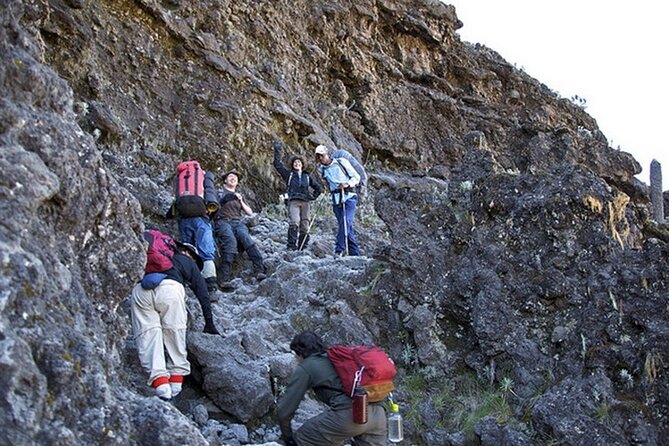
Kilimanjaro punishes two things: speed and altitude. This route helps with both by building in a gradual climb through multiple elevation zones instead of trying to force the mountain in a straight line.
On the Northern Circuit, you spend days moving from rainforest into heath, then into alpine desert. That matters because it changes not only your view, but also how your body feels. If you are the type who wants to settle into a rhythm and keep your head clear, this pacing style tends to suit you.
I also like that the plan builds in acclimatization opportunities along the way, not only on summit day. You get extra time with hikes around high points, like Lent Hills during the approach, which is the kind of mental training that helps when everything later turns cold and slow.
Price and logistics: what $1,584 covers, and what you still must plan
At $1,584 per person for about 9 days, this is not a cheap adventure. The key question is what you are buying for that money, and here the package covers a lot of the must-pay costs that often add up fast on Kilimanjaro.
Included in the price are all fees and taxes, airport pickup and drop, gate transfers, crew wages, and the Kilimanjaro operation cost. You also get hotel accommodations before and after the climb, and full meals while you are trekking, listed as 8 breakfasts, 9 lunches, and 8 dinners.
What you still need to budget for:
- Tipping the crew
- flights to Tanzania
- visas, plus medical and travel insurance
- personal hiking gear
So the value is strong if you want fewer logistical headaches and more certainty that the mountain side is handled. It is weaker if you already have most gear, dislike group logistics, or want total customization, because personal costs like gear and insurance still sit with you.
Moshi start and the road to the gate: getting your trip off to a smooth start
You meet at Burigi Chato Safaris CO LTD in Moshi, with a start time of 8:30 am. From there, the process is designed to get you to the park area without you wrestling with timing on your own.
Day 1 starts with a drive from Moshi to Londorossi Gate, about 4 hours, where you complete entry formalities. After that, you drive to the Lemosho trailhead and begin hiking right away through undisturbed forest.
This matters more than it sounds. A clear start plan reduces stress on Day 1, and stress is one more thing that makes altitude feel worse. Also, starting through rainforest means your first climbs feel like hiking, not punishment.
Other ways up Kilimanjaro we reviewed
The 9-day trek by day: rainforest to Uhuru Peak
Day 1: Londorossi Gate to Mti Mkubwa (rain forest)
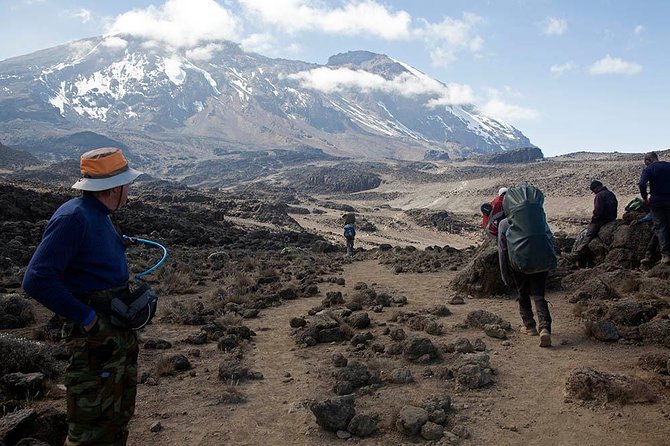
You gain elevation from about 7,742 ft to 9,498 ft over a short hiking stretch, roughly 3 to 4 hours, covering about 6 km. The habitat is rain forest, so expect the trail to feel cooler and more shaded than later days.
The challenge on Day 1 is usually not breathing as much as it is steady effort. In the rainforest, you can accidentally overdo it because the conditions feel forgiving. I recommend starting controlled, letting your body learn the altitude slowly.
A pleasant side effect of this opening day is that it lets you get familiar with the rhythm of walking as a group, plus adjusting to carrying your own essentials while the crew handles camp logistics.
Day 2: Mti Mkubwa to Shira 1 Camp (heath begins)
This day climbs from around 9,498 ft to 11,500 ft across about 8 km, hiking 5 to 6 hours. The environment transitions from rain forest into savannah of tall grasses, heather, and volcanic rock covered with lichen.
You reach Shira Ridge, then drop gently to Shira 1 Camp. The drop is useful. It is a reminder that altitude gain is not always straight upward, and the route gives you small pacing breaks.
You also get a first glimpse of Kibo across the plateau. That first sight can do strange things to your brain, in a good way. It turns the mountain from an idea into a target.
Day 3: Shira 1 to Shira 2 (moorland and wildflowers)
Day 3 is shorter but higher, rising from about 11,500 ft to 12,500 ft over around 7 km, with 3 to 4 hours hiking. The habitat stays in heath.
Here you explore the Shira Plateau on moorland meadows, heading east toward Shira 2 Camp. The route notes wildflowers and Senecio trees, which is a nice detail if you like noticing how different plants survive at height.
This is the kind of day that can feel easier physically, but it still sets you up for how you will breathe later. Keep your pace gentle, especially if you feel any headache or unusual fatigue.
Day 4: Shira 2 to Lava Tower, then on to Moir Hut (alpine desert)
Day 4 is where you start feeling the mountain’s harsher side. You go from roughly 12,500 ft to 15,190 ft to reach Lava Tower, then move to Moir Hut at about 13,580 ft. Hiking time is listed as 3 to 4 hours up to Lava Tower, then 2 to 3 hours to Moir Hut.
The habitat becomes alpine desert. Expect more exposure, more wind potential, and a colder feel as you get higher.
You also divert from the main trail to Moir Hut, described as a little used site at the base of Lent Hills. There are walk options on Lent Hills that act as acclimatization. I like this because it gives you something useful to do when you need to adjust without burning yourself out.
And yes, this day includes Lava Tower, a tall volcanic rock formation about 300 ft tall. It is a visual marker that makes this section feel special, even if you keep your focus on steady steps.
Day 5: Moir Hut to Buffalo Camp (views toward the border)
Day 5 goes from about 13,580 ft to 13,200 ft across a bigger hiking chunk, about 12 km, with 5 to 7 hours walking. The habitat stays alpine desert.
This part includes a moderately steep climb out of Moir Valley, then a trek toward the summit of Lent Hills, before returning to the main trail and continuing to Buffalo Camp. You also cross a rock field and gently undulate.
The route specifically highlights views across the plains north of Kilimanjaro stretching toward the Kenyan/Tanzanian border. Even if you do not obsess over geography, this is a day where you can look far and feel small in the best way.
A consideration here is that alpine desert terrain can feel “grippier” when it is stable, but can also feel rough underfoot. If your knees are sensitive, take your time on any rocky sections.
Day 6: Buffalo Camp to Third Cave (remote feel)
This day drops a touch from about 13,200 ft to 12,700 ft while you trek roughly 8 km, 5 to 7 hours. The habitat is heath.
The key detail is that this route section is rarely travelled. You trek through remote valleys on to the northern slopes of Kilimanjaro until you arrive at Third Cave.
That remote feel can be psychologically important. It reduces the “everyone is watching you suffer” factor, and it can make the hike feel more like wilderness. It also helps you focus on your own breathing and cadence.
If you tend to get restless on long days, this is a good one to enjoy mentally, even if your legs are tired.
Day 7: Third Cave to School Hut over the Saddle (pre-summit training)
Day 7 climbs from about 12,700 ft to 15,600 ft over roughly 5 km, hiking 4 to 5 hours. The habitat is alpine desert again.
You climb steadily up and over the Saddle, sitting between Kibo and Mawenzi. Then you continue to School Hut for the night. Once there, you rest and eat early dinner to prepare for summit day.
This is one of the most important “setup” days of the whole trek. You want enough energy for tomorrow, which means not treating today like a bonus workout. Think of it as the day you finish packing your mind for the midnight push.
You are also getting a direct sense of the mountain’s geography, with Kibo and Mawenzi literally framing your route and your future view.
Day 8: School Hut to Uhuru Peak at night, then down to Mweka Camp
This is the day with the big milestone. You start very early, around midnight, for the summit push. The total time is listed as about 14 hours, with about 6 to 8 hours for the Uhuru Peak section and about 4 to 6 hours for the descent to Mweka Camp.
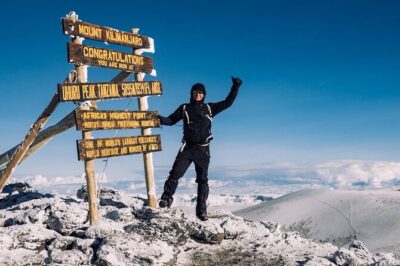
Elevation jumps from about 15,600 ft to Uhuru Peak at 19,341 ft, then drops to around 10,065 ft at Mweka Camp. The route notes the habitat as Arctic at summit elevation.
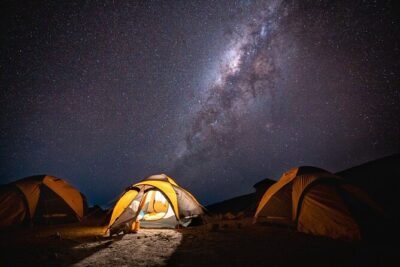
This is the hardest part of the entire trip. The wind and cold can be extreme, and you ascend in darkness for several hours. You take frequent but short breaks, and at Gilman’s Point (18,600 ft) you get a sunrise reward coming over Mawenzi Peak.
That sunrise detail is not small. When your body is tired and your hands are cold, having a timed reward helps you stay steady. It turns a painful climb into a story you can complete.
Then you hike down to Mweka Camp. This is not a victory lap, it is still work. Your legs will feel it. Plan on moving carefully.
Day 9: Mweka Camp to Mweka Gate, then on to Mweka Village and Moshi
The last day is mostly descent. You go from about 10,065 ft to 5,380 ft, covering about 10 km in 3 to 4 hours through rain forest conditions.
After you collect summit certificates at Mweka Gate, you continue another hour to Mweka Village. A vehicle meets you in Mweka Village and drives you back to your hotel in Moshi.
The ground at lower elevations can be wet and muddy. That is common on Kilimanjaro descents, and it is also where tired feet and sore knees can make a bad match. Watch your footing and keep your steps short.
The good news is that once you are on Day 9, the hardest altitude battles are behind you. You get the sense of closure, plus the comfort of a vehicle transfer back to Moshi.
Summit morning reality check: how to handle the cold, wind, and darkness
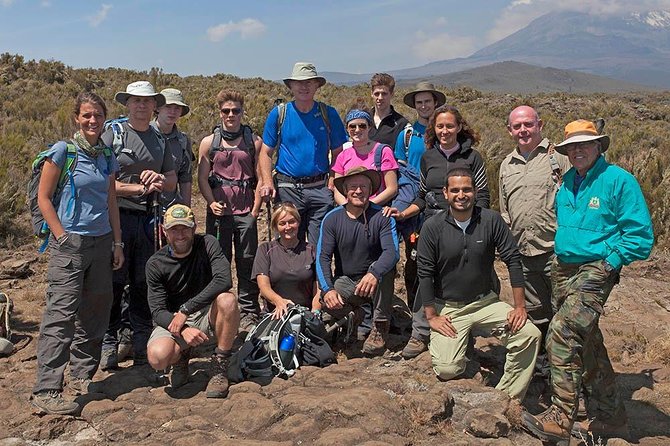
If you come for the summit, you should also come prepared for summit conditions. The plan describes extreme wind and cold at the time of day you go, around midnight, and it emphasizes that you hike in darkness for hours.
That means your comfort depends heavily on your clothing system and your ability to stay warm while moving slowly. Also, you are taking frequent short breaks, so it helps to dress in layers you can adjust quickly. If you overheat during climbs but get cold during halts, you will feel it.
Gilman’s Point is at 18,600 ft, and it is where sunrise is timed. You should not count on sunrise as a guarantee of comfort, but it is an emotional turning point. When the sky starts to lighten near Mawenzi, it is often the moment people shift from survival mode to full mountain appreciation.
Finally, remember that getting to Uhuru Peak is only half the story. The descent to Mweka Camp comes immediately afterward, and it is still long enough to wear you out.
Who should choose this climb, and who should think twice
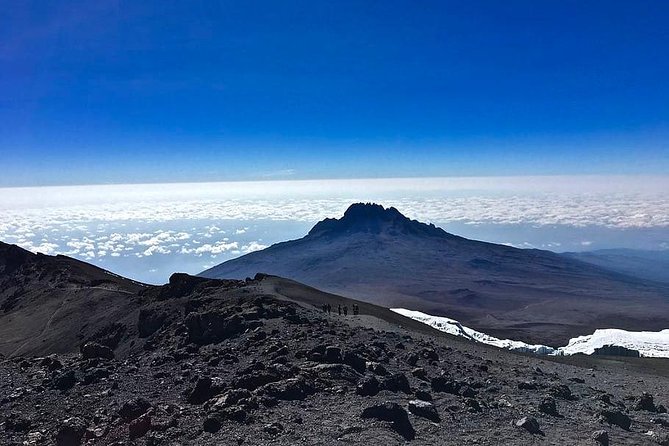
This package is described as suitable for most travelers, and the route profile is built for acclimatization. That combination makes it a strong fit if you want a structured, well-supported Kilimanjaro climb without sprinting.
It is also a good match if you like variety. You get multiple habitat shifts, remote-feeling trekking days, and a big “set your mind” summit day.
Think twice if you know you struggle with very early starts and cold conditions, or if long walking days and long total trek duration feel like a bad idea for your current fitness. Summit night is demanding even for people who are in shape.
Also remember that personal gear is not included. If you show up underprepared for cold and wet conditions, you can spend energy just trying to stay comfortable instead of focused on the climb.
Should you book this 9-day Northern Circuit Kilimanjaro climb?
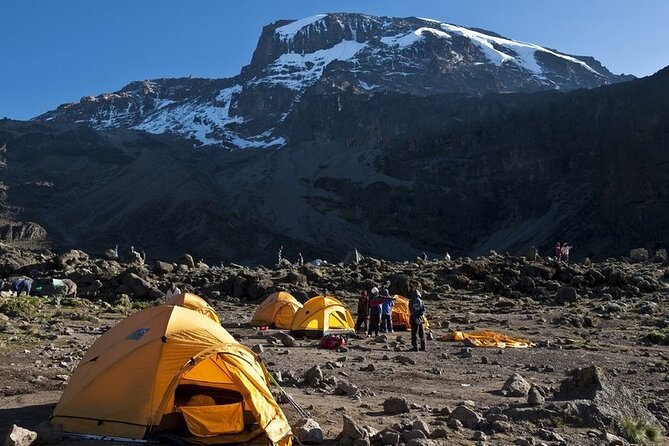
I think you should book it if you want:
- a Northern Circuit route that takes acclimatization seriously through pacing and high-elevation days
- a climb where the big costs and logistics are already bundled, including park fees, crew wages, transfers, meals, and pre and post climb hotel support
- a classic Kilimanjaro story, with Uhuru Peak and sunrise timing at Gilman’s Point
I would skip it if you are looking for a fully independent hike with no crew handling camps, or if you are not ready to manage summit night cold, wind, and the midnight start.
If you do book, plan early for your personal gear, insurance, and crew tipping budget. And treat the early days like setup, not a contest. The mountain rewards patience, and this route is built for it.
FAQ
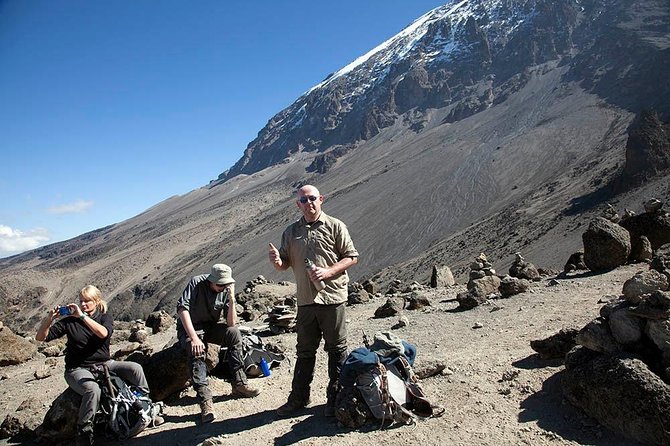
How much does the 9-day Kilimanjaro Northern Circuit climb cost?
The price is $1,584.00 per person.
Where does this experience start, and what time does it begin?
The start is at BURIGI CHATO SAFARIS CO LTD – Tanzania Serengeti Safaris | Kilimanjaro Climbing (Hiking) & Zanzibar Tour Operators on Mkwawa Street, Shanty town, Moshi. The start time is 8:30 am.
How long is the trek?
It is a 9-day experience (approx.).
What route and destination are included?
This climb is via the Northern Circuit route and includes a summit day to Uhuru Peak on Mount Kilimanjaro.
What is included in the price?
Included are all fees and taxes, airport pickup and drop off, gate transfer and crew wages, hotel accommodations before and after the climb, the Kilimanjaro hiking operation cost, plus meals listed as 8 breakfasts, 9 lunches, and 8 dinners.
What is not included?
Not included are tipping the crew, local and international flights, personal hiking gears, visas, medical and travel insurance.
Is pickup offered?
Yes. Pickup and drop off are included, along with gate transfers.
What is the cancellation policy?
You can cancel for free up to 24 hours in advance for a full refund. Within 24 hours, no refund is provided.
What happens if the climb is canceled due to weather?
This experience requires good weather. If it is canceled due to poor weather, you will be offered a different date or a full refund.
Kilimanjaro, Route by Route
- Kilimanjaro climb by Lemosho Route (7-day)
★ 5.0 · 651 reviews - Kilimanjaro climb, Machame Route (7-day)
★ 5.0 · 262 reviews - Kilimanjaro Climbing Lemosho Route 8 Days.
★ 5.0 · 186 reviews - Climbing Kilimanjaro – Machame Route
★ 5.0 · 170 reviews - Climbing Kilimanjaro through 7 days Machame Route
★ 5.0 · 151 reviews
Longer Trips Through the North
- Big Five Safari In Tanzania
★ 5.0 · 99 reviews - Unforgettable Tanzania Safari And Zanzibar Beach
★ 5.0 · 97 reviews - 8-Day Essence of Tanzania Safari – Luxury
★ 5.0 · 72 reviews - 7-Day Magical Tanzania Safari -Premium High End Package
★ 5.0 · 53 reviews - 4-day Tanzania Safari
★ 5.0 · 53 reviews
Just added from around Moshi
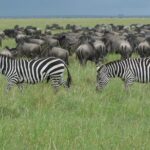
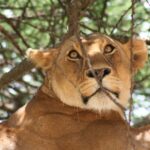
Multi-Day Northern Circuit Safari Packages, compared.
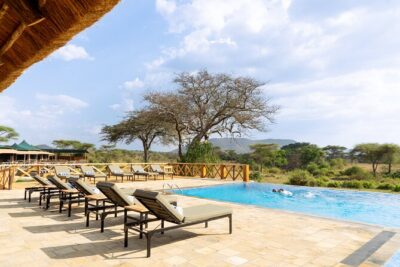 ★ 5.07-Day Premium Luxury Tanzania Safari All-InclusiveFrom $4,840426 reviews
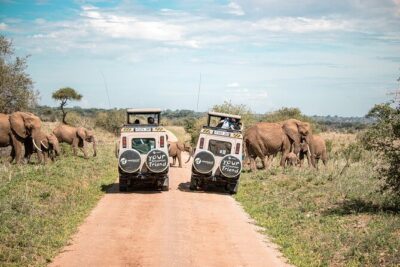 ★ 5.0Tanzania Wildlife Encounters – 6 DaysFrom $3,413277 reviews
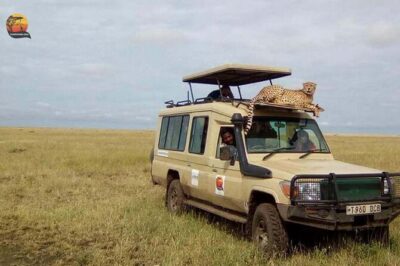 ★ 5.0Group Safari 7 Days in Tanzania’s Main ParksFrom $3,000240 reviews
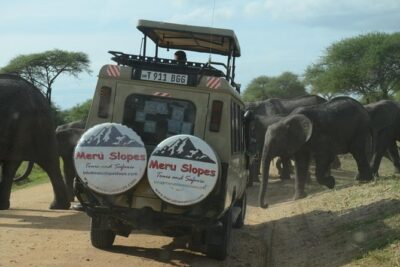 ★ 5.04 Days Join Group tour Tarangire Serengeti and Ngorongoro craterFrom $1,090219 reviews
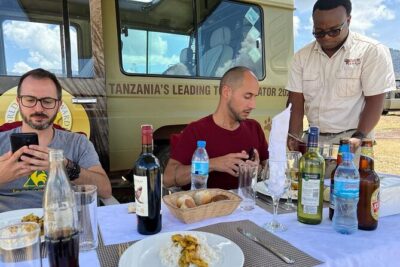 ★ 5.05-Day Private Northern Tanzania Safari from ArushaFrom $2,780182 reviews
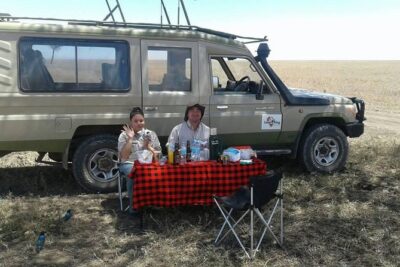 ★ 5.05 Days Best of Tanzania Luxury Safari Northern CircuitFrom $3,744174 reviews
 ★ 5.08 Day Spectacular Migration Serengeti mid -Range Tanzania SafariFrom $4,257161 reviews
 ★ 5.0Multi-Day Tanzania Odssey Safari from ArushaFrom $4,164120 reviews
Browse the lists this tour appears in