
REVIEW · MULTI-DAY NORTHERN CIRCUIT SAFARI PACKAGES
8-Day Essence of Tanzania Safari – Luxury
This safari route is built for big sightings, not wasted time. You start in Arusha, then rotate through Tarangire, Lake Manyara, Serengeti, Ngorongoro, and Lake Eyasi with game drives paced by real scenery and culture stops.
I especially love how the days balance famous parks with quieter add-ons like Tarangire’s off-route feel and Lake Eyasi’s Hadzabe experience. I also like the luxury touches mentioned in the plan, like sunset dinners and sundowner cocktails prepared by your guide.
One drawback to think about: it is a fast, packed circuit. If you hate long drives or want lots of downtime, you might feel the pace in an 8-day window.
In This Review
- Key things to know before you go
- Four northern parks plus Hadzabe time, all from Moshi
- Price and what you truly get for $6,785 per person
- Day 1 in Arusha: your safari gateway, not just an overnight
- Tarangire National Park: elephants, bird life, and a quieter circuit
- Lake Manyara: tree-climbing lions and 400-plus species of birds
- Serengeti via Olduvai Gorge: resident predators and the long-game payoff
- Serengeti to Ngorongoro: Masai village stop and the crater day
- Ngorongoro crater and Lake Magadi: hippos, birds, and volcanic drama
- Lake Eyasi and the Hadzabe hunting experience: hands-on, early, and respectful
- How the guiding style makes or breaks your safari
- Comfort and pacing: the luxury touches you should actually notice
- Who this 8-day safari fits best
- Should you book this tour?
- FAQ
- Where does the tour start and where do I get dropped off?
- Is pickup included?
- What meals are included in the price?
- Are park fees included?
- What about tips?
- Is this a private tour?
- What if weather is poor?
Key things to know before you go
- Private safari feel: it’s set up so only your group participates.
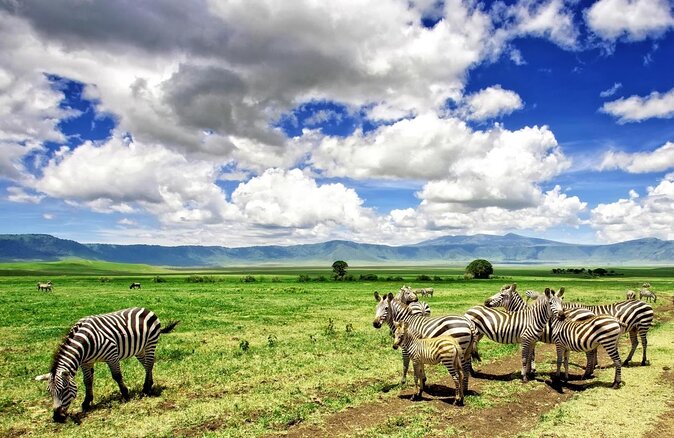
- Big park variety: Tarangire elephants, Manyara tree-climbing lions, Serengeti predator country, Ngorongoro crater wildlife.
- Culture built in: Masai village visit and a Lake Eyasi bushman hunt with the Hadzabe.
- Photography-friendly guiding: guides like William, Barik, and Jovin Mbasa are described as excellent spotters with a knack for positioning.
- Meal plan is included: 7 breakfasts, 7 lunches, and 6 dinners are part of the package.
- Value depends on inclusions: park fees for non-residents, a professional driver-guide, and most meals are baked into the cost.
Longer northern circuit routes, side by side
- Big Five Safari In Tanzania★ 5.0 · 99 reviews
- Unforgettable Tanzania Safari And Zanzibar Beach★ 5.0 · 97 reviews
- 8-Day Essence of Tanzania Safari – Luxury★ 5.0 · 72 reviews
- 4-day Tanzania Safari★ 5.0 · 53 reviews
Four northern parks plus Hadzabe time, all from Moshi
If you picture Tanzania as a greatest-hits album, this itinerary is that idea, but with smart sequencing. You are based in the Moshi area at the start, then you work your way through the northern circuit, keeping the driving efficient while stacking the best wildlife zones.
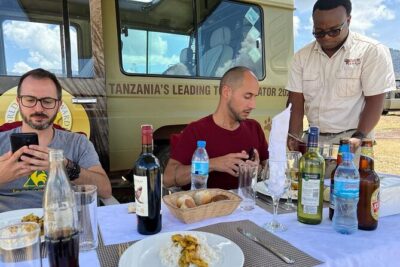
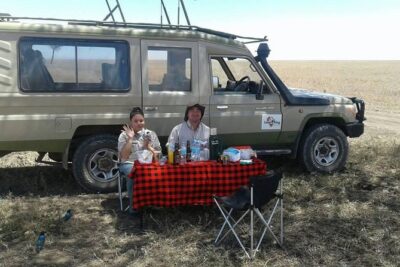
What makes it feel “luxury” in practice is not just branding. The plan includes moments that break up the routine: sunset dinners at the lodge, and sundowners prepared by your guide on Serengeti days. That matters because safari days can run long, and you want small comfort wins along the way.
Price and what you truly get for $6,785 per person
At $6,785 per person for an 8-day luxury safari, the price is not low. But you are also not just buying vehicle time and park entry separately.
Here is the value angle that stands out from what is included:
- Park fees for non-residents are included.
- A professional driver/guide is included.
- Meals are covered for most days: 7 breakfasts, 7 lunches, and 6 dinners.
- Pickup is offered, and you use a mobile ticket.
That combination is often where safari costs quietly balloon. If you are paying for parks, guiding, and meals one by one, the total climbs fast. With this package, the arithmetic is simpler, and you can focus more on wildlife.
The other value check is the experience mix. You get classic game viewing in Tarangire, Lake Manyara, Serengeti, and Ngorongoro, plus a cultural stop at Masai villages and a Hadzabe bushman hunting experience at Lake Eyasi. That is a lot to fit into 8 days, so you are essentially paying for density and logistics management.
Day 1 in Arusha: your safari gateway, not just an overnight
You arrive at Kilimanjaro International Airport and meet your guide. Then you transfer to an overnight in Arusha, the city at the base of volcanic Mt. Meru, known as the gateway for safaris to the north.
This first day is about getting your bearings. Arusha is convenient for launching into northern parks, and it also helps you avoid the stress of trying to jump straight into safari drives immediately after landing.
Arusha also gives you a sense of the geography. Even if Mt. Meru itself is not the main attraction here, knowing you are in the volcanic foothills of the region makes the rest of the trip feel connected, especially once you reach the Ngorongoro volcanic crater world.
Lodge safaris in the same bracket
Tarangire National Park: elephants, bird life, and a quieter circuit
Day 2 takes you to Tarangire National Park for a full-day game drive with lunch, then a lodge night with sunset dinner. Tarangire is described as slightly off the main safari route, which is exactly why I like it on a first pass through Tanzania.
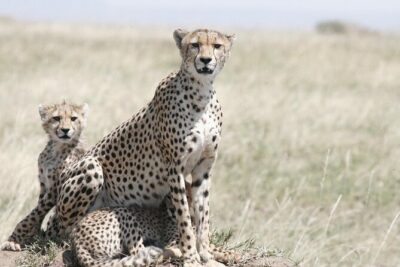
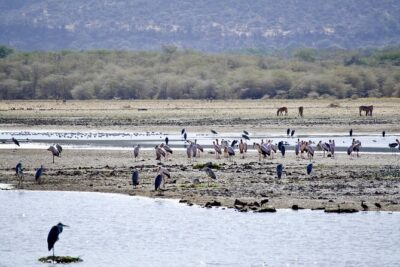
The big payoff here is concentration. Tarangire is famous for elephant activity and birding, and the plan leans into that. If you are the type who stops often to zoom in on smaller action, Tarangire is a strong match because birdlife can keep rewarding you even when you are not chasing the big beasts.
A practical note: being off the main route can mean fewer crowds and a more “authentic safari atmosphere,” at least in the way game drives feel on the ground. That can help you slow down and actually enjoy the bush instead of rushing between sightings.
If you get a driver who doubles as a photographer’s helper, this day can be extra rewarding. Reviews highlight guides like William and Barik for seeing wildlife from far away and getting vehicles positioned well for shots, so keep your camera ready.
Lake Manyara: tree-climbing lions and 400-plus species of birds
Day 3 moves you to Lake Manyara for a game drive, with lunch handled and time on the road into the evening. Manyara is Tanzania’s birding classroom. More than 400 bird species have been recorded here, so even if your birding skills are rusty, you can still realistically spot a lot in one day.
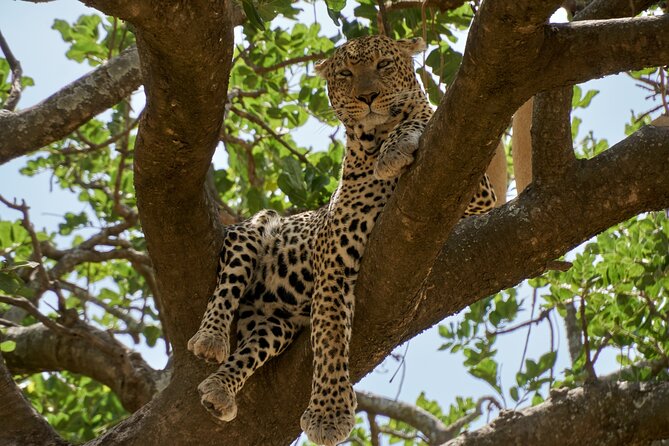
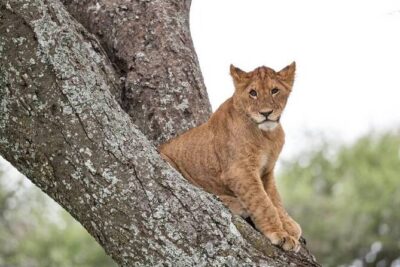
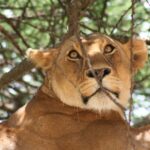
There’s also the legendary wildlife twist: the narrow belt of acacia woodland is a favorite area for tree-climbing lions and for elephants with long tusks. So you are getting two different styles of viewing in the same park: classic safari searching plus the chance of seeing something that feels unusual for most first-time visitors.
The tradeoff is that birds and tree-climbing lions can be “watch and wait” experiences. This is not a park where you can demand a specific animal on cue. But the payoff is that you are broadening your safari experience beyond the Big Five obsession.
Serengeti via Olduvai Gorge: resident predators and the long-game payoff
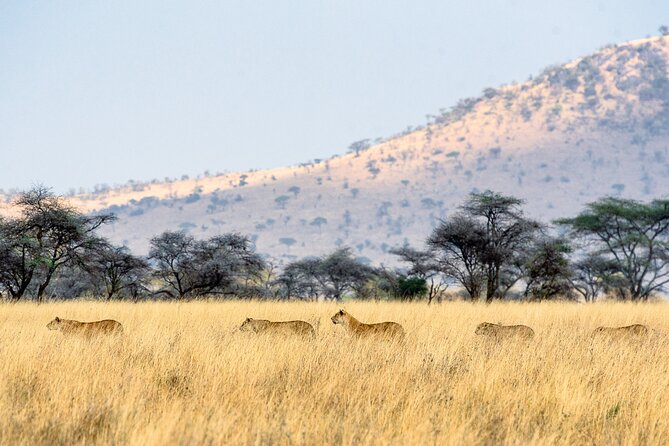
Day 4 heads to Serengeti National Park via Olduvai Gorge, then continues on for a full lunch and central Serengeti game drive. Olduvai Gorge is a famous setting in East Africa, and using it as a transit bridge gives you a sense of the region’s deeper significance while you are already moving toward the main wildlife engine.
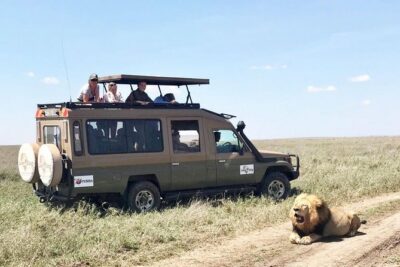
In Serengeti, the plan leans into resident wildlife. The area is described as having a strong lion population and being a place where leopards can be found around Seronera, with around a 1,000-animal leopard population figure mentioned in the materials for this route.
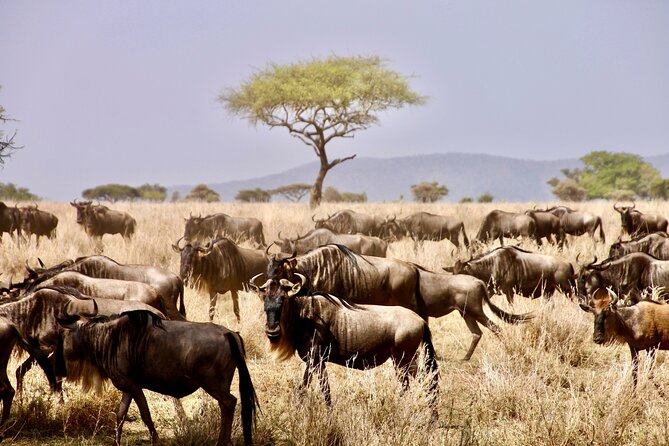
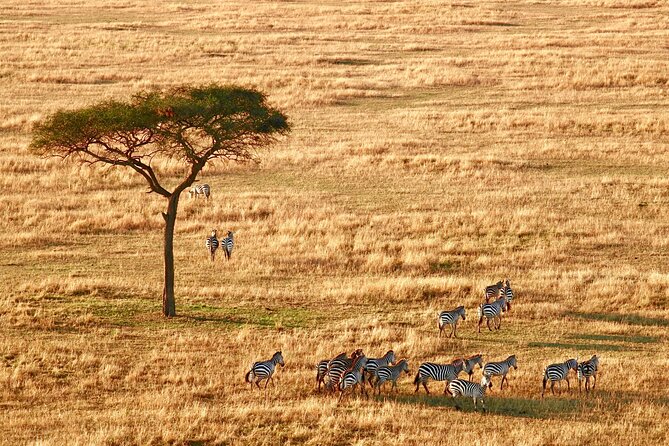
If this is your first Serengeti, I’d set expectations to match what the ecosystem actually does. In some parks, you chase migration. Here, you can also get great sightings from resident predators, which can be a relief when timing is unpredictable.
Day 5 stays in Serengeti for another full-day drive. This is where the safari “math” starts to work in your favor. Two full Serengeti days means you are not gambling on one miracle encounter. And your guide prepares sundowner cocktails, which is a small luxury that also signals you are slowing down for the light changes that matter for viewing and photos.
Serengeti to Ngorongoro: Masai village stop and the crater day
Day 6 brings another Serengeti morning drive, with lunch included and then late-afternoon travel toward Ngorongoro. Along the way, you visit Masai villages, then check into your camp for dinner and overnight.
The value of the village visit is not that it replaces wildlife. It is that it interrupts the safari bubble so you remember Tanzania is not just a photo backdrop. You get a human cultural lens paired with a wildlife-heavy week.
Then comes the Ngorongoro crater phase, which is the “gravity well” of the whole itinerary. Even at a planning level, it is described in concrete numbers: the crater is about 20 km across, around 600 meters deep, and roughly 300 sq km in area. That kind of scale matters because it explains why the crater can feel like a closed ecosystem rather than a typical open-park drive.
Ngorongoro crater and Lake Magadi: hippos, birds, and volcanic drama
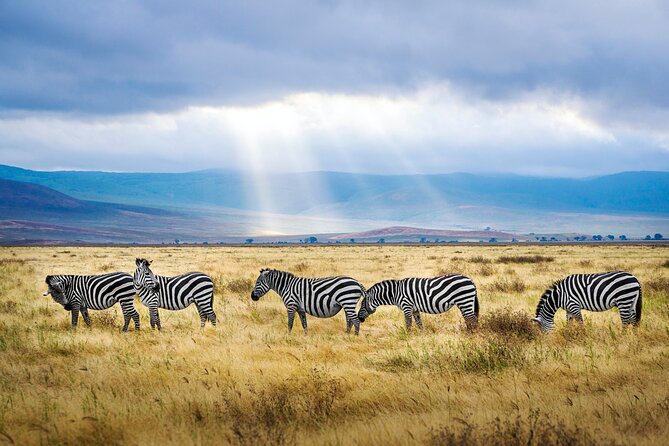
Day 7 is built around the crater. The plan includes a game drive toward it, a hot lunch, and then movement to Lake Eyasi for dinner and overnight.
The crater itself is described as the largest unflooded and unbroken caldera in the world. That’s big talk, but the point for you is simple: this is where you can see a surprising range of wildlife in a concentrated setting.
You also visit Lake Magadi inside the crater zone. It is a large but shallow alkaline lake, and it is where you can often see hippos and flamingos, plus other water birds. If you want your week to include more than grassland predators, this part adds watery, bird-focused action.
This day also gives you a nice contrast before Lake Eyasi. Serengeti and the crater are about open-space viewing and predator energy. Lake Eyasi shifts the tone again toward people, traditional lifeways, and a more grounded landscape feel.
Lake Eyasi and the Hadzabe hunting experience: hands-on, early, and respectful
Day 8 starts early with a hunting experience with bushmen, then you return for breakfast. After that, you drive back toward Arusha, with a lunch stop, and then transfer to the airport.
The spotlight here is on the Hadzabe around Lake Eyasi. Their small population and language are described as having click elements similar to other bushman groups further south. There is also context in the materials about how their numbers were threatened during earlier government efforts, including Nyerere’s Ujuma policy.
For you, the practical takeaway is mindset. This is not a zoo encounter and it should not feel like a theme-park show. It is a cultural interaction inside a survival and daily-life tradition, and doing it early makes sense because you are often matching the rhythms of people and land.
If the day feels intense, that is normal. By the end of an 8-day safari, you are running on adrenaline, dust, and big skies. This final experience can be emotionally high-volume in a good way, especially because it pulls you back from only thinking in animals.
How the guiding style makes or breaks your safari
This route depends heavily on the guide-driver. Not in a vague way, in a very practical way: spotting animals, getting you into the right viewing angles, and managing time between stops so you do not miss the best light.
The names that keep showing up in strong safari feedback are the kind of people you want to see assigned to your dates. Guides like Jovin Mbasa and Barik are described as top spotters, including for leopards and lions that other vehicles might pass by. Edward Masaki is highlighted for professionalism and experience, and Samir is praised for getting you to where the animals are and explaining both culture and wildlife.
Even if your exact guide is different, these examples tell you what to look for in the person behind the wheel. You want someone who:
- can spot from far away, not just react
- keeps the vehicle positioned well for viewing and photos
- can explain what you are looking at, from plants to predator behavior
- stays safe and calm when you are driving across long distances
Comfort and pacing: the luxury touches you should actually notice
Safari comfort is often reduced to lodge reviews and pillow talk. Here, the plan gives you small, concrete comfort points inside the day.
Two standouts in the schedule:
- Sunset dinners after drives in the earlier park days.
- Sundowner cocktails prepared by your guide on the Serengeti day.
These are not just nice extras. They help you manage the emotional arc of a safari day. Morning drives can feel like a sprint. Late afternoon can feel like waiting for the light to shift. When your guide builds in a planned break, you stay focused instead of getting cranky.
The other comfort factor is the overall flow. You are not bouncing between totally unrelated regions. You keep operating within the northern safari ecosystem, with Arusha as your launch pad and final transfer point.
Who this 8-day safari fits best
This is a good match if you want:
- a high wildlife variety trip with multiple top parks
- a route that includes both Big Five territory and bird-heavy moments
- a culture stop and a Lake Eyasi bushman experience
- the luxury feel of meal pacing and guide-led sundowners
It might be less ideal if you:
- want a very slow pace with lots of free time in one location
- prefer fewer drives and more lounging between activities
- are extremely sensitive to schedule changes caused by weather conditions (safari needs good weather)
Should you book this tour?
I’d book it if your goal is to see Tanzania’s northern safari highlights in one coherent 8-day run, without having to micromanage parks, driving days, and meals. The inclusions matter here, especially the park fees for non-residents and the number of meals covered.
Before you hit book, do two quick checks:
- Confirm your expectations for a packed circuit. This route stacks major wildlife areas fast.
- If photography is a big deal, ask what guide-driver will be on your dates, and pay attention to whether they’re known for spotting and for vehicle positioning.
If those align with your style, this is a strong value way to experience Tanzania at the “luxury pacing” level, with Serengeti plus Ngorongoro as the wildlife centerpieces and Lake Eyasi giving you a human layer you will remember long after the last sunset.
FAQ
Where does the tour start and where do I get dropped off?
The tour starts with pickup at Kilimanjaro International Airport. It ends with a transfer to the airport after you return to Arusha with a lunch stop.
Is pickup included?
Yes, pickup is offered.
What meals are included in the price?
The package includes 7 breakfasts, 7 lunches, and 6 dinners.
Are park fees included?
Yes. Park fees are included for non-residents.
What about tips?
Tips are not included. The tipping guideline provided is US$10.00 per person per day.
Is this a private tour?
Yes. It is described as private, with only your group participating.
What if weather is poor?
This experience requires good weather. If it is canceled due to poor weather, you will be offered a different date or a full refund.
More Lodge Safaris
- 7-Day Magical Tanzania Safari -Premium High End Package
★ 5.0 · 53 reviews - Tanzania Luxury Safari
★ 5.0 · 48 reviews - 5-Day Majestic Tanzania Safari – High End All Inclusive
★ 5.0 · 44 reviews - 7-Day Tanzania Odyssey Safari- High End Tour
★ 5.0 · 35 reviews - 5 Day Mid range Tanzania Safari
★ 5.0 · 34 reviews
Longer Trips Through the North
- Big Five Safari In Tanzania
★ 5.0 · 99 reviews - Unforgettable Tanzania Safari And Zanzibar Beach
★ 5.0 · 97 reviews - 7-Day Magical Tanzania Safari -Premium High End Package
★ 5.0 · 53 reviews - 4-day Tanzania Safari
★ 5.0 · 53 reviews - 4 Days Group Joining Camping Safari to Tarangire Serengeti Ngorongoro Crater
★ 5.0 · 50 reviews
Just added from around Moshi
Multi-Day Northern Circuit Safari Packages, compared.
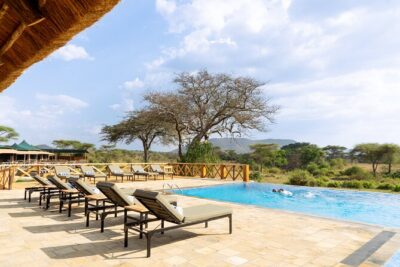 ★ 5.07-Day Premium Luxury Tanzania Safari All-InclusiveFrom $4,840426 reviews
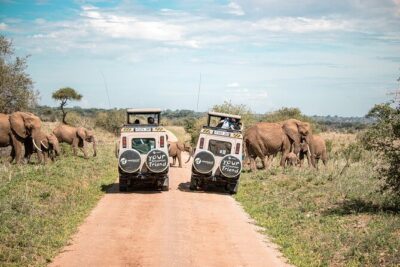 ★ 5.0Tanzania Wildlife Encounters – 6 DaysFrom $3,413277 reviews
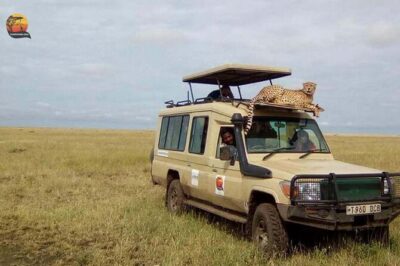 ★ 5.0Group Safari 7 Days in Tanzania’s Main ParksFrom $3,000240 reviews
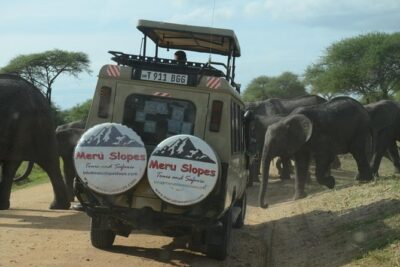 ★ 5.04 Days Join Group tour Tarangire Serengeti and Ngorongoro craterFrom $1,090219 reviews
 ★ 5.05-Day Private Northern Tanzania Safari from ArushaFrom $2,780182 reviews
 ★ 5.05 Days Best of Tanzania Luxury Safari Northern CircuitFrom $3,744174 reviews
 ★ 5.08 Day Spectacular Migration Serengeti mid -Range Tanzania SafariFrom $4,257161 reviews
 ★ 5.0Multi-Day Tanzania Odssey Safari from ArushaFrom $4,164120 reviews
Browse the lists this tour appears in