
REVIEW · KILIMANJARO MACHAME ROUTE
The best 6-Days Kilimanjaro hiking (Machame route)whiskey route
Kilimanjaro is not a checklist, it is a journey. This 6-day Machame Route climb, starting from the lower Machame Gate area and using trek high, sleep low, is built to help you handle altitude step by step. I like that the plan is structured around acclimatization, and I also like that it includes the big cost items like park and rescue fees, plus guided support throughout. One thing to consider is that Machame is more challenging than easier routes, so your fitness and pace matter more than you might expect.
What you get feels practical from the start: pickup is offered from your Arusha hotel area, the schedule begins at 7:00 am, and meals run daily with breakfast, lunch, and dinner. In the mountain day rhythm, you will climb through changing ecosystems, from forest to heather to high-altitude desert, with major view moments at key huts and camps. The tradeoff is simple: you are paying for a full-service climb, so if you like a totally self-guided adventure, this setup will feel more managed than you planned.
In This Review
- Why Machame is often called the Whiskey Route
- Key highlights that make this climb feel worth it
- Price and logistics, what the $1,968 covers
- Day 1: Machame Gate to Machame Hut at 3,000m
- Day 2: Shira Cave camp at 3,840m, big views and crater terrain
- Day 3: Toward Kibo, then down into Barranco Valley at 3,950m
- Day 4: Barranco Wall scrambling, Karanga lunch, Barafu Hut at 4,600m
- Day 5: the hard climb lead-in and the Mweka bivouac night
- Day 6: Mweka forest descent to Mweka Gate and certificates
- Guides, safety, and what private really changes
- The altitude experience you can expect, not just the scenery
- Who this trip fits best, and who should think twice
- Should you book this 6-day Machame Whiskey Route climb?
- FAQ
- How long is the Kilimanjaro Machame route hike?
- What time does the experience start?
- Is pickup included?
- Are meals included?
- What is included regarding park and rescue fees?
- Is tips included in the price?
Why Machame is often called the Whiskey Route
Machame climbs up through some of Kilimanajaro’s most dramatic scenery, and that is the main reason people talk about it for years. The route is commonly nicknamed the Whiskey Route, and along the way you will move through distinct ecological zones in a way that makes the mountain feel bigger each day.
This particular trip also leans hard on acclimatization. You are not just rushing upward. You go high enough to trigger adaptation, then you sleep at a lower or more manageable point relative to where you walked that day. That matters because altitude does not care about your excitement level, it cares about physiology.
Other ways up Kilimanjaro we reviewed
- 8-Day Small-group Lemosho Kilimanjaro Summit Trekking★ 5.0 · 186 reviews
- 7-Day Machame Kilimanjaro Summit Tour from Arusha★ 5.0 · 125 reviews
- Mountain Kilimanjaro Day Hike★ 5.0 · 102 reviews
- 4 days Best experience Kilimanjaro Hike, Serengeti &Ngorongoro★ 5.0 · 54 reviews
Key highlights that make this climb feel worth it
- Trek high, sleep low structure designed to support acclimatization
- All meals included for 6 days: breakfast, lunch, and dinner
- Park admission and rescue fees included, so you avoid surprise add-ons
- Private tour for your group, which keeps logistics calmer
- Professional mountain guides with a safety-first culture
- Views that stack up fast, from Shira to Barafu, with Kibo and Mawenzi in sight
Price and logistics, what the $1,968 covers
At $1,968 per person for about 6 days, the biggest value is what’s bundled. This is not just a guide and a route on paper. Your package includes professional mountain guides, park fees, and rescue fees, plus arrival and departure transfers, and 2 nights’ hotel accommodations.
Tips and international flights are not included, so you should plan for those separately. But if you compare this to the way many Kilimanjaro trips break costs into separate invoices, bundling park admission, rescue coverage, and daily meals is a real plus. It means you can budget once and spend your mental energy where it belongs, on pacing, hydration, and finishing strong.
Also note the practical items: confirmation is received when you book, and you get a mobile ticket. Start time is set for 7:00 am, which is helpful if you like knowing exactly when the day begins rather than guessing.
Day 1: Machame Gate to Machame Hut at 3,000m
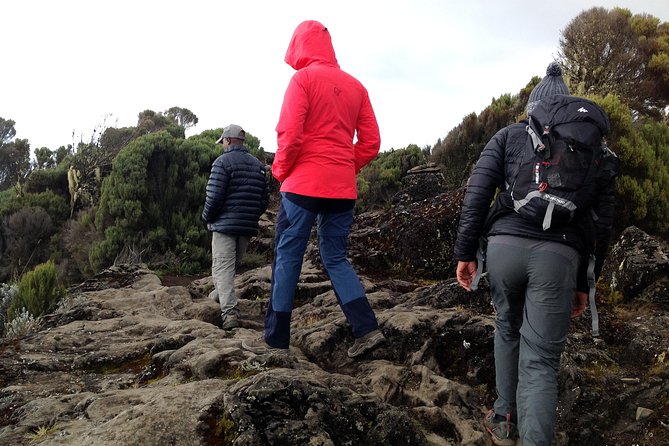
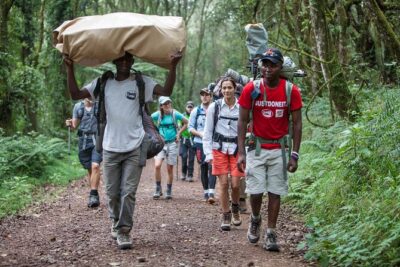
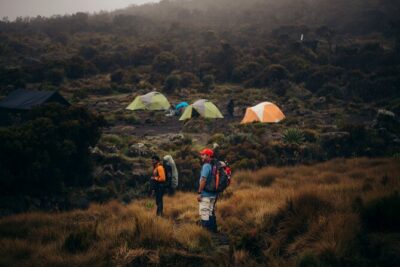
Your climb starts with a drive from Arusha to the Machame route, beginning around 1,800m. From there, you enter the forest zone on a mild climb that eases you into the day. This is where Kilimanjaro starts showing personality. You are walking under a canopy with busy lizzie flowers, begonias, and ferns in the mix, which makes the forest feel alive instead of just dark and humid.
The goal is Machame Hut around 3,000m, typically reached in about 5 to 6 hours. This day is a warm-up in altitude terms, but it still builds your rhythm. Expect to feel the effort in your legs, even if the pace feels reasonable.
Practical takeaway: day one is your chance to get your gear routine right. If you start fiddling with clothing, hydration, or layers here, you will pay for it later. I like that the route’s first day is positioned as a gentle entry rather than an abrupt altitude shock.
More Machame departures, compared
Day 2: Shira Cave camp at 3,840m, big views and crater terrain
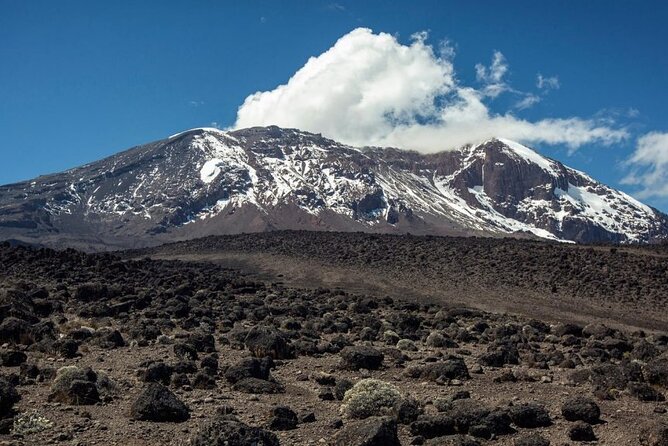
On day two, you climb out of the big heather zone and move into open field terrain as you head toward Shira Cave at 3,840m. The landscape becomes more exposed, and the walking feels different. It is not just fewer trees, it is more wind, more light, and more direct contact with altitude.
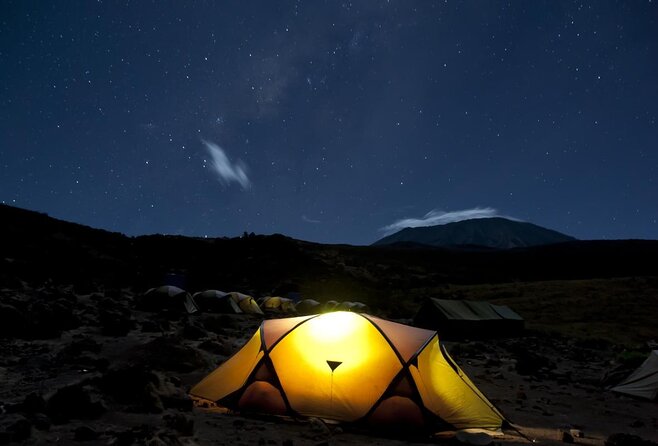
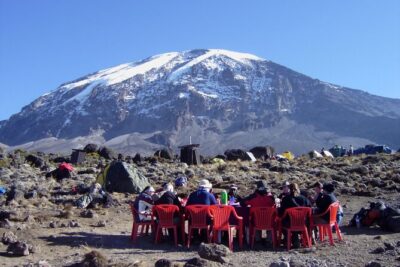
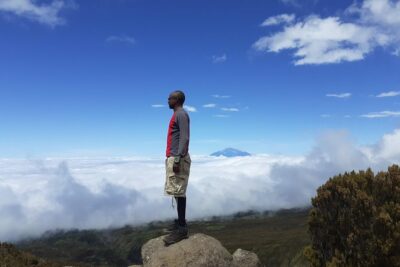
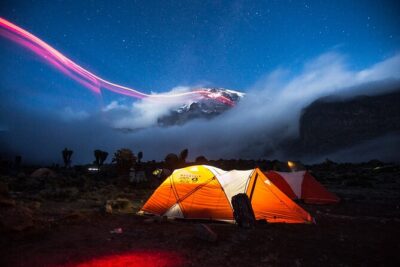
You camp near Shira Hut around 3,840m, and this is one of the view-heavy nights on the route. From camp, you can look toward the massive volcanic cone of Kibo, see the rock formations of the Shira tableland, and sometimes catch Mount Meru floating on clouds. That cloud-and-mountain effect is the kind of thing you remember even when your body is exhausted.
Wildlife can show up too. The trek passes areas where you might see antelope, and there is a chance for an occasional lion encounter, depending on conditions. This is not a guaranteed safari, but it is a reminder that you are not hiking in a museum. The mountain is part of a living ecosystem.
Walking time is about 4 to 5 hours (with the day listed around 6 hours total), so you are not racing. The focus is acclimatization and positioning you for the next move. You also get a short window for earth-science moments in the crater terrain area later in the afternoon.
Practical takeaway: your job day two is to protect your energy. Take small steps, keep breathing steady, and do not treat the view points like snack stops. Save your appetite and strength for when you are back at camp.
Day 3: Toward Kibo, then down into Barranco Valley at 3,950m
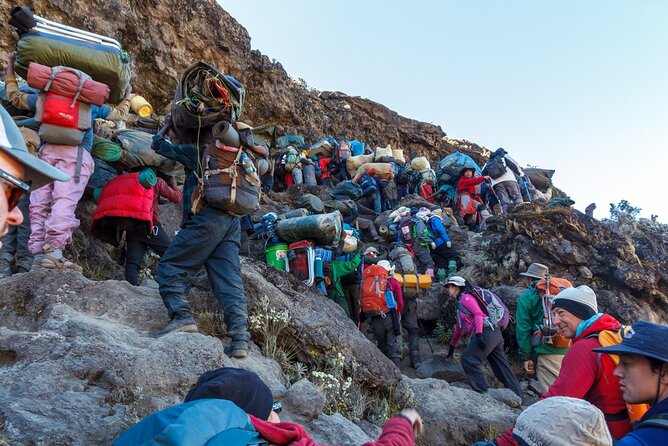
Day three is where Machame starts getting serious. You head from Shira toward the Kibo zone, and at higher points western glaciers can be visible across the high-altitude desert of volcanic rocks and boulders. Seeing glaciers against the rugged terrain is one of those Kilimanjaro moments that makes the mountain feel larger than geography.
Then you do something that surprises first-time climbers: you descend into the Barranco Valley for a mid-way camp at around 3,950m. The route design uses this kind of up-then-down rhythm to help acclimatization. You might walk higher during the day, then camp lower relative to that high point.
The day’s walk is often 6 to 7 hours, and the official ascent might look modest (about 110m total ascent), even though the day can feel long because you are moving through rough terrain. That is exactly why the route is respected. It builds acclimatization, not just altitude.
Practical takeaway: mentally, day three is about staying calm. If you watch the numbers too closely, you may underestimate how hard it feels. Listen to your breathing, not your ego.
Day 4: Barranco Wall scrambling, Karanga lunch, Barafu Hut at 4,600m
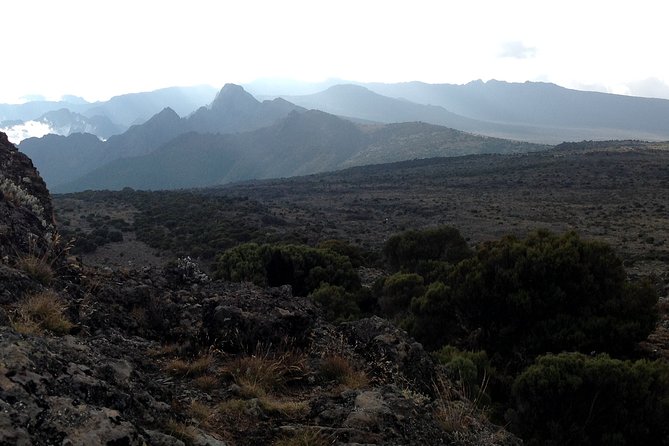
Day four brings the Barranco character. You go up the steep Barranco wall, with sections that involve straightforward scrambling. Even if the scrambling is not technical in a climbing sense, it still asks for balance and steady foot placement. This is a day where trekking poles and careful movement can feel like the difference between smooth progress and slow, annoying stumbles.
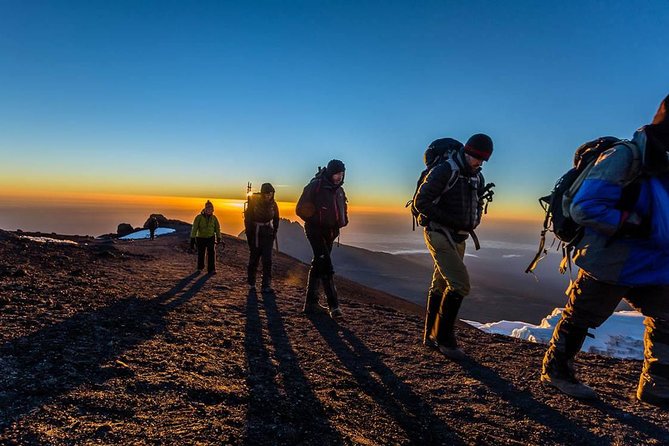
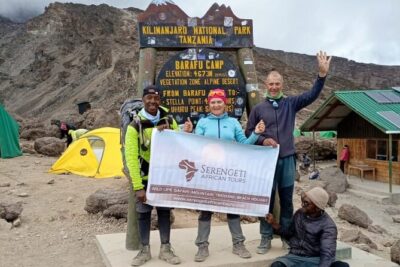
After that, you move down toward the Karanga Valley, where lunch is taken. Then you hike on to Barafu Hut around 4,600m. This is a long day, about 7 to 8 hours of hiking and roughly 650m of ascent, and the climb ends with your body needing rest, not celebration.
The reward is camp-side scenery. From Barafu, you get fantastic views across toward Mawenzi peak. After a day like this, views are not just decoration, they are a way to confirm you are where you need to be.
Practical takeaway: treat this as your staging day. When you reach Barafu, the best move is to conserve energy and follow your guide’s pacing and hydration plan. You are preparing for the early push that comes next.
Day 5: the hard climb lead-in and the Mweka bivouac night
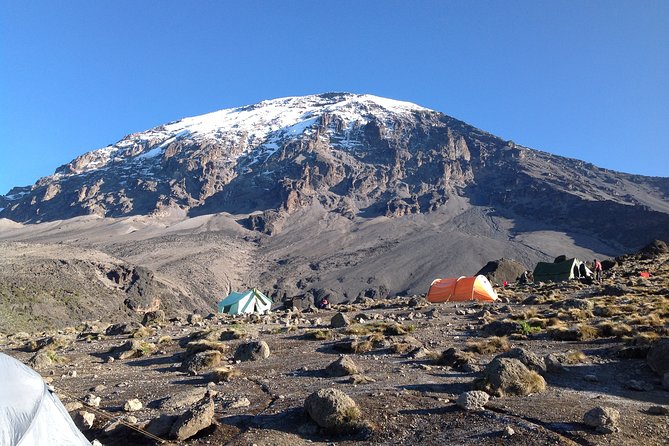
Day five in the route plan keeps you in the same high-altitude lead-in zone, with steep hiking and the same general Barranco, Karanga, and Barafu rhythm. The key theme is that you are set up for the difficult summit hike early the following morning, which means this day is about moving efficiently and not draining yourself.
Also, because day six starts from Mweka bivouac, you should plan on an end-of-day finish in that area after the summit attempt. That matters because after a long altitude day, you are not going to feel like doing anything extra. You want your schedule to be clear and your recovery options ready.
Practical takeaway: on day five, focus on consistency. Eat and drink on schedule rather than waiting until you feel hungry or thirsty. If you fall behind here, day six becomes harder than it needs to be.
Day 6: Mweka forest descent to Mweka Gate and certificates
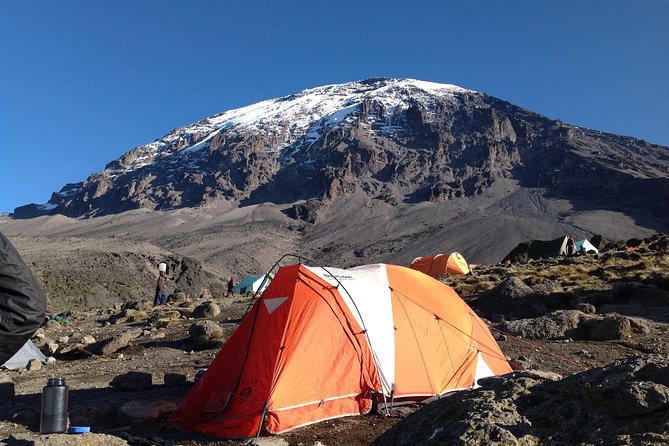
You finish with a descent from Mweka bivouac to Mweka gate, typically 4 to 5 hours depending on fitness. The route drops you through forest, which is a mental shift. After days of stark high-altitude terrain, walking in trees changes the feel of the hike, and it is often when relief finally catches up with your body.
At Mweka gate, you meet your vehicle and handle certificates before heading back for the night in Arusha accommodations. This is the moment most people remember, not because it is dramatic, but because it is tangible closure. You completed the work.
Practical takeaway: descent days still require steady pacing. Your knees and ankles can protest if you treat the final leg as easy. Keep steps short and controlled.
Guides, safety, and what private really changes
This trip is set up as a private tour just for your group, which sounds like a small detail until you are on a mountain schedule. With a private group, you are less likely to feel rushed by other pacing styles, and you can match your needs to your guide’s tempo.
You also get professional mountain guides, plus the package includes rescue fees. That coverage matters because safety planning on Kilimanjaro is not optional. It is part of how the climb runs. In operator guidance, the emphasis is on safety, comfort, and a bit of fun, meaning you can expect a team that takes the work seriously without turning the whole trip into a silent drill.
One more thing: pickup and transfers are included for arrival and departure. That removes a lot of friction right at the start and end. For a multi-day climb, small log jams turn into stress you do not need.
The altitude experience you can expect, not just the scenery
What makes Machame memorable is that you do not just climb toward a summit sign. You move through multiple zones, and each zone changes how you breathe and how your legs feel.
- Early walking in the forest zone feels shaded, slower, and more forgiving on the ground.
- Heather and open field terrain brings wind, more exposure, and a thinner feel in your lungs.
- High-altitude desert sections bring a rugged footing and long visual horizons.
- Barranco includes scrambling, so balance matters more than speed.
- The forest descent at the end can feel like a relief blanket, even while you still need control.
If you are the kind of traveler who likes to understand what you are seeing, the route supports that. There are opportunities for crater and earth-science moments around Shira, plus glacier views near the Kibo zone. Even without a geology degree, the scenery gives you something to connect to besides your breathing.
Who this trip fits best, and who should think twice
This is described as a Machame climb, which is one of the more challenging routes. The trip is also described as suitable for most travelers, but you should take that as a fitness guidance rather than a promise.
I think it is a great fit if:
- You want structured acclimatization and a guide-led climb.
- You prefer meals included so you are not rationing decisions in the middle of altitude fatigue.
- You like the idea of a private group where your pace does not get squeezed.
You might want to think twice if:
- You are new to sustained high-altitude trekking and your training is light.
- You want a low-stress, easy-going hike, because day four and the approach to high camps is demanding.
- You dislike feeling managed, since the route is designed with timing, meals, and safety planning.
Should you book this 6-day Machame Whiskey Route climb?
If you want the Kilimanjaro experience with the big uncertainties handled, I would book this. The value is strongest in what is included: park and rescue fees, daily breakfast, lunch, and dinner, guides, and transfers. The private format also makes the mountain feel less chaotic.
The decision comes down to one question: do you want a guided, acclimatization-focused climb on a route that is known to be challenging? If yes, this is a solid match. If you are hoping for an effortless hike, look at easier route options instead.
FAQ
How long is the Kilimanjaro Machame route hike?
The itinerary is listed as 6 days (approx.).
What time does the experience start?
The start time is 7:00 am.
Is pickup included?
Yes. Arrival and departure transfers are included, and pickup is offered.
Are meals included?
Yes. Breakfast, lunch, and dinner are included for 6 days.
What is included regarding park and rescue fees?
All park fees and rescue fees are included.
Is tips included in the price?
No. Tips are not included.
More Machame Departures
- 7-Day Machame Kilimanjaro Summit Tour from Arusha
★ 5.0 · 125 reviews - 6 Days: Hiking Kilimanjaro via Machame Route
★ 5.0 · 24 reviews - 6-Day Guided Tour in Machame Route Mt Kilimanjaro
★ 5.0 · 17 reviews - KILIMANJARO MACHAME ROUTE, (Climb 7days)
★ 5.0 · 16 reviews - 7 days Kilimanjaro climb via Machame route (Whiskey route)
★ 5.0 · 16 reviews
Kilimanjaro, Route by Route
- 8-Day Small-group Lemosho Kilimanjaro Summit Trekking
★ 5.0 · 186 reviews - 7-Day Machame Kilimanjaro Summit Tour from Arusha
★ 5.0 · 125 reviews - Mountain Kilimanjaro Day Hike
★ 5.0 · 102 reviews - 4 days Best experience Kilimanjaro Hike, Serengeti &Ngorongoro
★ 5.0 · 54 reviews - From Arusha/Moshi: Kilimanjaro Hike Marangu Route Day Trip
★ 4.5 · 54 reviews
Just added from around Arusha
Kilimanjaro Machame Route, compared.
 ★ 5.0Kilimanjaro climb, Machame Route (7-day)From $3,377262 reviews
 ★ 5.0Climbing Kilimanjaro – Machame RouteFrom $2,322170 reviews
 ★ 5.0Climbing Kilimanjaro through 7 days Machame RouteFrom $2,425151 reviews
 ★ 5.07-Day Machame Kilimanjaro Summit Tour from ArushaFrom $2,695125 reviews
 ★ 5.07 Days Kilimanjaro via Machame route affordable priceFrom $2,400110 reviews
 ★ 4.2#1. Best Kilimanjaro Day hike Tour-Machame Route-ISMANIFrom $11547 reviews
 ★ 5.07 Days Machame route – KilimanjaroFrom $2,85045 reviews
 ★ 5.0The Best of Machame Route in 6 Days: Your World’s Summit GuideFrom $1,15044 reviews
Browse the lists this tour appears in