
REVIEW · KILIMANJARO MACHAME ROUTE
Mountain Kilimanjaro Climbing 7 Days Machame Route
Night climbs to 5895 meters, no excuses. This 7-day Machame Route starts with a rainforest hike from Machame Gate and builds toward a nonstop, high-altitude test of grit. I like how the trail feels less packaged, with sections that can be overgrown and muddy underfoot, so you really experience Kilimanjaro as a mountain, not a track.
What I really like is the built-in pacing. You follow the mountaineering code walk high, sleep low, and the route spends real time at altitude before the final summit push. That matters because you are gaining height day after day, and the schedule is designed to help your body adjust.
One thing to think about upfront: this is not a gentle climb. The Machame route stacks long, steep days, then asks you to start climbing around midnight, so you need solid stamina and comfort with early nights that do not feel like a vacation.
In This Review
- Key things you should know before you go
- Moshi to Machame Gate: stepping into Kilimanjaro’s rainforest
- Shira Plateau views: where Kilimanjaro turns into a bigger picture
- Lava Tower moorland and the “walk high, sleep low” rhythm
- Great Barranco Wall to Karanga Camp: long, tiring uphill effort
- Barafu Camp at 4640m: scree, steepness, and staying calm
- Midnight summit push: Stella Point sunrise to Uhuru Peak
- Down via Mweka Gate: rainforest return and certificates
- Price and value: is $2,564.11 a fair deal?
- Who this Machame climb fits best
- Should you book the 7-day Machame Kilimanjaro climb?
- FAQ
- Where does the Machame climb start and where do you finish?
- How many days is the Machame climb, and can it be done faster?
- What does Machame Route mean when it is called the Whiskey route?
- Do you sleep in tents on this route?
- What happens on the summit day?
- Is park admission included?
- Is Moshi pickup included, and do you receive a mobile ticket?
- What is the cancellation window for a full refund?
Key things you should know before you go
- Machame is the Whiskey route, known for steeper hiking and longer distances than Marangu
- Tents all the way, so you are sleeping in the weather, not in hut warmth
- Walk high, sleep low, with altitude time built into the middle of the trek
- Great Barranco and Karanga Camp bring big uphill effort before the final scree days
- Summit morning hits Stella Point first, then Uhuru Peak at 5895m, with crater views along the way
Other ways up Kilimanjaro we reviewed
- Kilimanjaro climb by Lemosho Route (7-day)★ 5.0 · 651 reviews
- Kilimanjaro climb, Machame Route (7-day)★ 5.0 · 262 reviews
- Kilimanjaro Climbing Lemosho Route 8 Days.★ 5.0 · 186 reviews
- Climbing Kilimanjaro – Machame Route★ 5.0 · 170 reviews
Moshi to Machame Gate: stepping into Kilimanjaro’s rainforest
Most climbs start with logistics, and this one starts fast. You leave Moshi and drive about an hour to Machame Gate, then handle park formalities and meet your crew of porters before you begin walking. After that, the mountain immediately switches you into work mode.
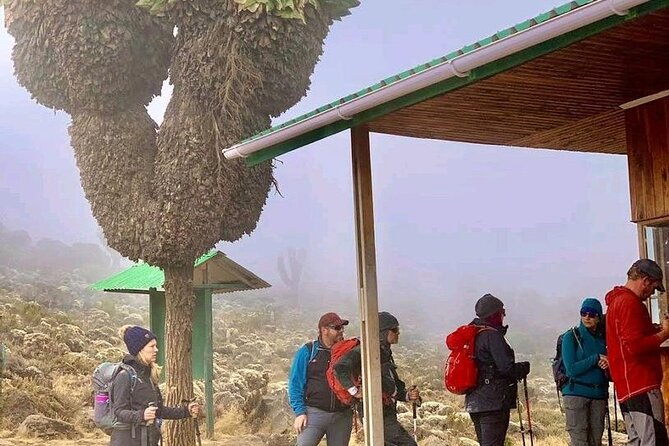
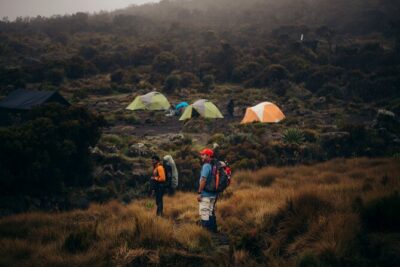
The first walking day threads through dense rainforest at the southern base. This is the kind of start where your senses wake up right away: the air changes, the trail can feel alive with growth, and the path can be wet and muddy. It is also a section that is less well-trodden, so in places it can run overgrown. That is not a dealbreaker, but it is a real condition, and you should go in expecting slippery footing.
I also like that this early rainforest portion is not just a warm-up blur. You spend enough time here to feel like you are moving from lowland life to mountain altitude in stages. It sets the tone for what comes next: each day is different, and the changes are dramatic.
Shira Plateau views: where Kilimanjaro turns into a bigger picture
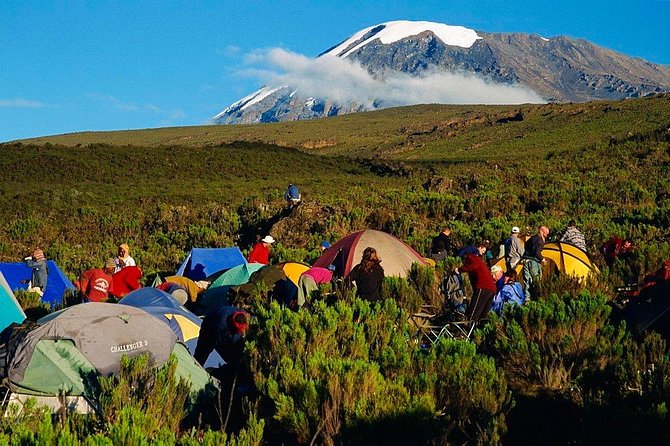
After the forest walk, the trek climbs steadily until you reach the steep ascent onto the Shira Plateau. This is the first time you feel the mountain open up visually. Once you are on the plateau, you get rewarding views, and the skies tend to make the mountain feel closer and more defined.
One of the coolest practical details here is the sightline to Mt Meru in the distance, rising above Arusha town. That helps you orient yourself, and it reminds you that Kilimanjaro is not an isolated rock. You are climbing in a whole region with other peaks and valleys feeding into the bigger view.
The Shira day is also where the altitude ramps up. You are climbing while the environment starts changing, and you are learning how your body responds when you keep going even when your breath starts to feel different. It is not an extreme day by summit standards, but it is a key transition day.
Lava Tower moorland and the “walk high, sleep low” rhythm
Day three is where the environment flips again. The trek moves onto higher moorland, and the whole feel of the hike changes. Instead of rainforest humidity and thick undergrowth, you are in open terrain where the mountain seems to have more space around it.
You traverse the southwest side of Kilimanjaro and pass under the Lava Tower. You also work around the area near the Western Breach before reaching camp at altitude, up to about 4600m. That altitude is a big reason this route is usually done over seven days, not just the minimum.
What I like most about this part is the route’s commitment to walk high, sleep low. In plain terms, you keep moving during the day while you create a better chance to sleep at a more manageable height. That is exactly what you want when the goal is not just to climb, but to do it with enough adaptation that you can still function on summit day.
Even if you feel strong, this is the day you should respect the altitude rather than trying to “win” the trek early. The mountain will still be there tomorrow. Your job is to build a climb that you can finish.
More Machame departures, compared
Great Barranco Wall to Karanga Camp: long, tiring uphill effort
The next day starts with a descent into the Great Barranco ravine. That down portion matters because it is not just about distance, it is about fatigue. You feel your legs after the change from higher moorland, and then you head back up.
Then comes the Great Barranco Wall, a steep exit that divides you from the southeastern slopes of Kibo. This is described as a climb over rock that is not technical, but it is long and tiring. Translation: you do not need climbing gear, but you do need patience. Your pace matters here. If you sprint early, you will pay for it later.
Along the way, you pass underneath the Heim and Kersten glaciers. Whether you are thinking about them as scientific features or just dramatic visuals, they give the trek a sense of scale. They also make it feel real that you are getting close to the higher ice zones.
From the Great Barranco and out toward Karanga valley, the day keeps climbing. You reach Karanga Camp at 3963m, then there is an optional mid-afternoon acclimatization trek to around 4200m before descending back to camp. I like that you have the option, because acclimatization is not one-size-fits-all. Some people feel good and can handle extra time. Others do better keeping their day steady and resting.
Barafu Camp at 4640m: scree, steepness, and staying calm
The day you move toward Barafu Camp is one of the most mentally intense, even before summit night. You walk from your camp up toward Barafu camp at 4640m, and the terrain is described as desolate scree slopes with no vegetation. That means you are hiking on loose, rocky ground where every step can feel like it slides a little.
This section is tough and steep, and altitude makes everything harder. It is not only about effort, it is about how your body handles exertion when the air feels thin. This is the part where you need to keep your rhythm steady and avoid unnecessary spikes in speed.
When you arrive at Barafu, you eat and rest and spend the afternoon preparing for the long night and day ahead. The plan specifically flags hydration and warmth as priorities. That is practical advice, not a slogan. When you are about to do a near-all-night summit push, your comfort during the pre-dinner and early rest window affects how you feel later.
Then there is an early dinner, followed by trying to sleep with wake-up around 11pm to 12pm. I know that sounds brutal, but the timing sets up the crater views and the sunrise at the right place.
Midnight summit push: Stella Point sunrise to Uhuru Peak
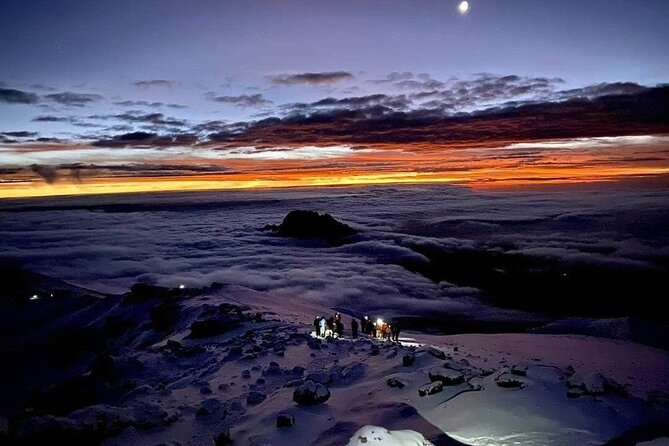
This is the day you came for. You start around midnight and walk steeply toward the summit glaciers. The climb involves scree for about 4 to 5 hours, gaining incredible height over a short distance. That is a classic Kilimanjaro feeling: you feel like you are working hard for every meter, but the rewards show up fast once you keep moving.
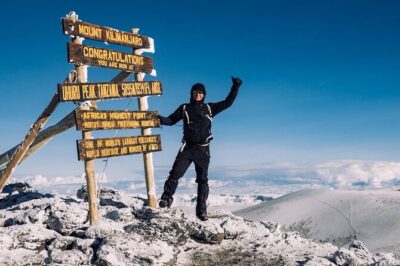
Then you aim for the crater rim at Stella Point (5739m) as the first rays of sun hit. This timing is not random. It is when the crater ice cliffs and the surrounding views become most dramatic, and it is also when people start to feel that the night grind had a point.
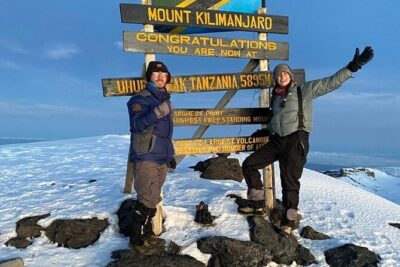
From Stella Point, you continue about another hour to Uhuru Peak (5895m). You also get crater views and a view of jagged Mawenzi peak and beyond. Even if you are tired, that part tends to hit you like a switch. The last effort feels worth it because the mountain finally looks like the mountain you imagined.
After Uhuru Peak, you descend back to Stella Point, then continue down on scree slope and the track back to Barafu Camp for breakfast. Finally, you descend to Millennium Camp for a long, well-earned rest. This is another reason Machame done over seven days can feel more manageable: the summit day is intense, but you are not doing it with zero buffer.
And yes, the day is long, described as roughly 15 hours. Your success depends on keeping your pace steady, trusting the climb plan, and not burning yourself out early in the night.
Down via Mweka Gate: rainforest return and certificates
After the summit and a long day, the trek does not end on a high note. It ends with a gentle trek down through rainforest to Mweka Gate. That descent through forest is a relief, and it also helps your body shift from “go mode” to “get down and recover” mode.
At Mweka Gate you complete park formalities and receive certificates. It is a small moment, but it is one of the few official touchpoints that makes the effort feel tangible. Then vehicles meet you and take you back to your hotel in Moshi, where you can treat yourself to a welcome hot shower.
This final day is not about speed. It is about finishing the journey and letting your body come down from the altitude high. If you try to rush it, you will likely feel it in your legs. If you take it steady, you can actually enjoy that the mountain is behind you and you are back in civilization.
Price and value: is $2,564.11 a fair deal?
The price listed is $2,564.11 per person for this 7-day climb. That can sound high until you look at what the trek requires. You are paying for more than walking time. You are paying for guided logistics around a high-altitude, multi-day summit attempt, including park entry support and the operational crew that keeps the trek running from Machame Gate through Mweka Gate.
A useful detail in your favor is that admission ticket coverage is shown as included across the days. That matters because park fees on Kilimanjaro climbs can be a line item you do not want to negotiate in the field.
Also, the group size has a maximum of 15 travelers. Smaller groups usually mean you are not one face among hundreds. It can translate into smoother communication when conditions change, especially on summit night when timing and pacing matter.
I also like that the company uses a mobile ticket and offers pickup. Those are small touches, but on a mountain trip, small things reduce stress.
The big value question for you is not only cost, it is whether the route length and schedule match your altitude comfort. Seven days over Machame gives you more time to acclimatize than the minimum option. If you want a realistic shot at finishing strong, that extra time is often the best part of the price.
Who this Machame climb fits best
This trek lists a moderate physical fitness level requirement. In real terms, it is aimed at people who can handle steep days, long walking hours, and night climbing without panicking. If you like steady effort more than sprinting, you will probably do well here.
Machame works best if you want:
- Tents and open terrain rather than hut accommodations
- a route that takes its altitude acclimatization seriously
- a summit day built around crater rim sunrise at Stella Point
If you hate the idea of climbing on scree, or you cannot handle steep stairs and rocky inclines for hours, then Machame might feel too intense. In that case, you may want a less steep route. But if you are choosing Machame because you want the challenge, that choice also explains the reward.
Should you book the 7-day Machame Kilimanjaro climb?
If you want the classic, steeper Kilimanjaro experience, I think this is a strong option. You get the full Machame experience with rainforest starts, moorland changes, walk high, sleep low acclimatization, then a summit push timed for Stella Point sunrise and Uhuru Peak.
I would book if you can commit to long days, early summit-night timing, and you are ready for muddy rainforest footing plus scree steepness later on. I would hesitate if you are looking for an easy hike, because Machame is called Whiskey for a reason, and your legs will notice it.
If you book, keep your focus simple: paced effort, hydration and warmth during the pre-summit hours, and respect for the altitude schedule. Do that, and the view from the crater rim to Mawenzi can feel like the payoff you trained for.
FAQ
Where does the Machame climb start and where do you finish?
You start at Machame Gate and you finish at Mweka Gate, where you complete park formalities and receive certificates. After that, vehicles take you back to your hotel in Moshi.
How many days is the Machame climb, and can it be done faster?
This trip is listed as 7 days (about 6 nights). The Machame route can be done in a minimum of six days (five nights), but seven days is usually chosen for better acclimatization.
What does Machame Route mean when it is called the Whiskey route?
The Machame route is also known as the Whiskey route because it is considered tougher, with steeper hiking and longer distances. It contrasts with the Marangu route, which is known as the Coca Cola route and is generally less steep and uses huts.
Do you sleep in tents on this route?
Yes. The Machame route uses tents for sleeping, rather than hut accommodations.
What happens on the summit day?
You start climbing around midnight, walk steeply toward the summit glaciers, and climb scree for about 4 to 5 hours. You reach Stella Point (5739m) as the first rays of sun hit, then continue for about an hour to Uhuru Peak (5895m). After the summit, you descend back toward Stella Point, return to Barafu Camp for breakfast, then continue down to Millennium Camp.
Is park admission included?
Yes. The experience notes admission ticket included for the days listed across the trek, and you also complete park formalities at both gates.
Is Moshi pickup included, and do you receive a mobile ticket?
Yes. Pickup is offered, and you are returned to your Moshi hotel after finishing at Mweka Gate. You also receive a mobile ticket.
What is the cancellation window for a full refund?
You can cancel for a full refund up to 24 hours in advance of the experience start time. If you cancel less than 24 hours before, the amount paid is not refunded.
More Machame Departures
- Kilimanjaro climb, Machame Route (7-day)
★ 5.0 · 262 reviews - Climbing Kilimanjaro – Machame Route
★ 5.0 · 170 reviews - Climbing Kilimanjaro through 7 days Machame Route
★ 5.0 · 151 reviews - #1. Best Kilimanjaro Day hike Tour-Machame Route-ISMANI
★ 4.2 · 47 reviews - 7 Days Machame route – Kilimanjaro
★ 5.0 · 45 reviews
Kilimanjaro, Route by Route
- Kilimanjaro climb by Lemosho Route (7-day)
★ 5.0 · 651 reviews - Kilimanjaro climb, Machame Route (7-day)
★ 5.0 · 262 reviews - Kilimanjaro Climbing Lemosho Route 8 Days.
★ 5.0 · 186 reviews - Climbing Kilimanjaro – Machame Route
★ 5.0 · 170 reviews - Climbing Kilimanjaro through 7 days Machame Route
★ 5.0 · 151 reviews
Just added from around Moshi
Kilimanjaro Machame Route, compared.
 ★ 5.0Kilimanjaro climb, Machame Route (7-day)From $3,377262 reviews
 ★ 5.0Climbing Kilimanjaro – Machame RouteFrom $2,322170 reviews
 ★ 5.0Climbing Kilimanjaro through 7 days Machame RouteFrom $2,425151 reviews
 ★ 5.07-Day Machame Kilimanjaro Summit Tour from ArushaFrom $2,695125 reviews
 ★ 5.07 Days Kilimanjaro via Machame route affordable priceFrom $2,400110 reviews
 ★ 4.2#1. Best Kilimanjaro Day hike Tour-Machame Route-ISMANIFrom $11547 reviews
 ★ 5.07 Days Machame route – KilimanjaroFrom $2,85045 reviews
 ★ 5.0The Best of Machame Route in 6 Days: Your World’s Summit GuideFrom $1,15044 reviews
Browse the lists this tour appears in