
REVIEW · KILIMANJARO MACHAME ROUTE
Mount Kilimanjaro – Machame route
Kilimanjaro is harder than it looks on Instagram. The Machame route is a classic way up, mixing rainforest, moorland, and icy summit air in one steady plan.
What I like most is the way the itinerary moves through altitude in a way that gives you time to adjust, yet still keeps the days hiking-focused. I also appreciate the support setup, including portable oxygen tanks and a detailed crew team with guides, cook, and porters. The main drawback is simple: this is high-altitude trekking that needs strong fitness, and you will likely spend extra on personal gear plus travel insurance since those are not included.
In This Review
- Quick hits for a smart Machame climb
- Why the Machame Route hits different
- Price and support value: what $2,700 really covers
- Moshi pickup, meeting point timing, and how the days start
- Day 1: Machame village and rainforest to Machame Camp (1800m to 3000m)
- Day 2: Moorland climb, rocky ridges, and Shira Camp (3000m to 3850m)
- Day 3: Shira to Kibo zone, Lava Tower, Arrow Glacier, and Barranco Camp (3850m to 3950m)
- Day 4: Barranco Wall to Karanga Valley, alpine desert air (3950m to 4040m)
- Day 5: Junction with Mweka Trail, Barafu Hut, and summit rest mode (4040m to 4700m)
- Day 6: Rebmann and Ratzell glacier climb to Stella Point, then Uhuru Peak, down to Mweka
- Day 7: Mweka descent to the forest and down to Mweka Gate (3100m to 1650m)
- The crew vibe: organization and friendly guidance matter
- Who should book the Machame route with Moana Tanzania
- Should you book Moana Tanzania for the 7-day Machame trek?
- FAQ
- How long is the Kilimanjaro Machame route trek?
- Where does the trek start and where is it based?
- Is pickup included, and when do I need to meet the group?
- What safety and medical support comes with the trek?
- Are meals and drinking water included?
- What is not included in the $2,700 price?
- What is the maximum group size?
- What is the cancellation policy and how does poor weather affect it?
Quick hits for a smart Machame climb
- Machame’s route variety takes you from rainforest to moorland, then into semi-desert and alpine desert before the icy summit zone.
- Practical crew support includes guides, a cook, and porters, with rescue fees covered.
- Altitude help is built in, with portable oxygen tanks and an ox meter, plus a first-aid kit.
- Comfort details matter: drinking water throughout and hot water for washing show up every day.
- Smaller group size keeps the pace more manageable, with a maximum of 15 travelers.
- Route infrastructure is strong on Machame, with multiple base camps and public toilets that make the long days easier to handle.
Other ways up Kilimanjaro we reviewed
- Kilimanjaro climb by Lemosho Route (7-day)★ 5.0 · 651 reviews
- Kilimanjaro climb, Machame Route (7-day)★ 5.0 · 262 reviews
- Kilimanjaro Climbing Lemosho Route 8 Days.★ 5.0 · 186 reviews
- Climbing Kilimanjaro – Machame Route★ 5.0 · 170 reviews
Why the Machame Route hits different
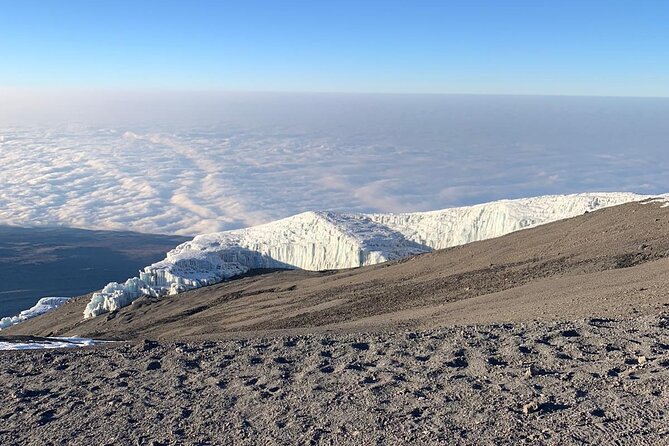
The Machame trek is known for variety. One day you are walking in rainforest air, and later you are climbing through barren, rocky zones where everything feels sharper, colder, and more exposed. That shift matters because it keeps the hike interesting and gives you frequent chances to adjust your effort rather than grinding one long, identical climb.
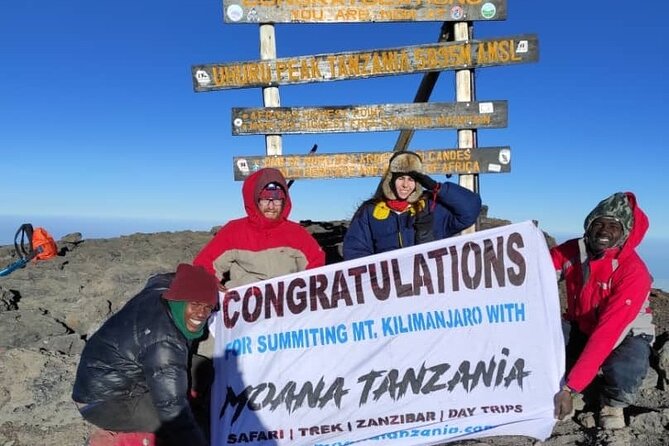
I also like that Machame gives you classic summit country. On summit night you work your way up through glacier zones, reach Stella Point, and then press on to Uhuru Peak. That sequence is part of Kilimanjaro’s big story, and it is also the moment most people come for.
One more reason this route feels like a good value: the pacing is built around a multi-day structure that includes rest, transition camps, and a summit attempt window. You are not just being rushed upward, and the total length is about right for many first-timers.
Price and support value: what $2,700 really covers
At $2,700 per person for about 7 days, this is not a bargain trek. But Kilimanjaro is expensive for real reasons: permits, logistics, trained staff, rescue coverage, and the daily cost of moving people and supplies at altitude.
Here is what you are paying for that actually helps on the mountain:
- Private transportation, plus parking fees and GST.
- Camp and accommodation fees.
- Rescue fees.
- Drinking water throughout the trek.
- Hot water for washing.
- Guides, a cook, and porters.
- Portable oxygen tanks and an ox meter.
- A portable first-aid kit.
The meals are also included. You get breakfast 6 times, dinner 6 times, and lunch 7 times, which helps you budget realistically once you arrive in Moshi.
The catch is what is not included. You will pay extra for personal items, toiletries, and personal mountainclimbing gear. You also need to cover accommodation in Moshi before and after the trek, plus flights and travel insurance.
Moshi pickup, meeting point timing, and how the days start
This trip is based in Moshi, Tanzania, and private transportation is included. If you are staying in town, pickup is offered, which saves you from hunting down the right start point on day one.
Your meeting window is daily from 7:00 AM to 11:00 AM (Monday through Sunday). Since the trek starts early and the mountain logistics run on schedule, plan to arrive with a buffer, not at the last second.
Also keep in mind the mountain season runs on weather. The experience requires good weather, and if conditions force a change, you will be offered a different date or a full refund.
More Machame departures, compared
Day 1: Machame village and rainforest to Machame Camp (1800m to 3000m)
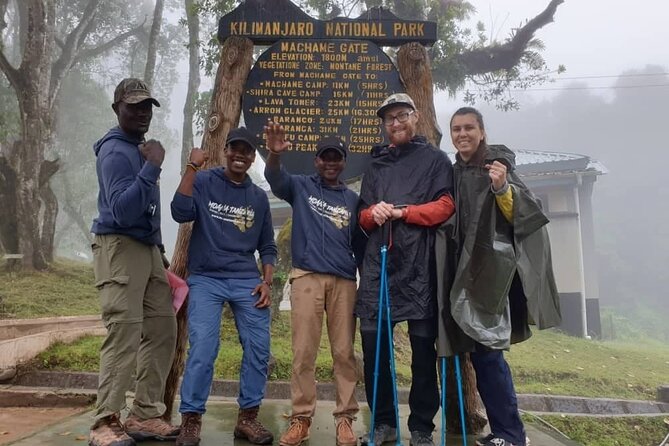
Day one is about getting your legs and breathing working before you go higher. You start from the Machame village and the nearby Machame gate, then hike through rainforest toward your first camp.
Expect an 11 km day with about 5 to 7 hours of hiking time. The rainforest setting is not just scenic. It usually means less exposure, softer footing in some areas, and a more forgiving start while you acclimate.
The first camp, Machame camp, lands you around 1800m to 3000m. That is the beginning of Kilimanjaro’s altitude story, and it is where you learn your own pace. If you feel like you are doing too much too fast, day one is the time to dial it back.
A practical upside of Machame: the route has camp infrastructure, including public toilets along the way. That sounds small, but it makes a long multi-day trek more doable.
Day 2: Moorland climb, rocky ridges, and Shira Camp (3000m to 3850m)
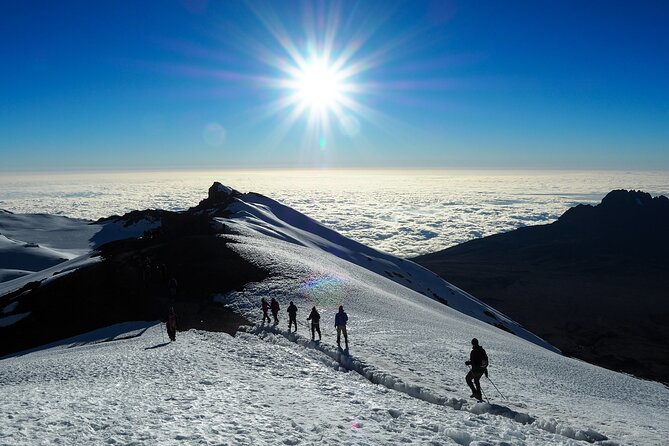
On day two, the rainforest fades and the hike gets more demanding. You move into moorland and begin a continuing ascent with an 9 km trek that takes about 4 to 6 hours.
One detail I’d watch for is the character of the climbing. You will cross a valley and tackle a steep rocky ridge, then head toward a river gorge before reaching Shira camp. That mix of footing and angle means your calves get involved early, even though the day is shorter than day one.
You end day two around 3000m to 3850m. This elevation range is where people start to feel altitude more clearly, especially if their first-day pace was too aggressive. If you can, treat day two like a rehearsal: breathe steadily, take short breaks, and keep your effort controlled.
Day 3: Shira to Kibo zone, Lava Tower, Arrow Glacier, and Barranco Camp (3850m to 3950m)
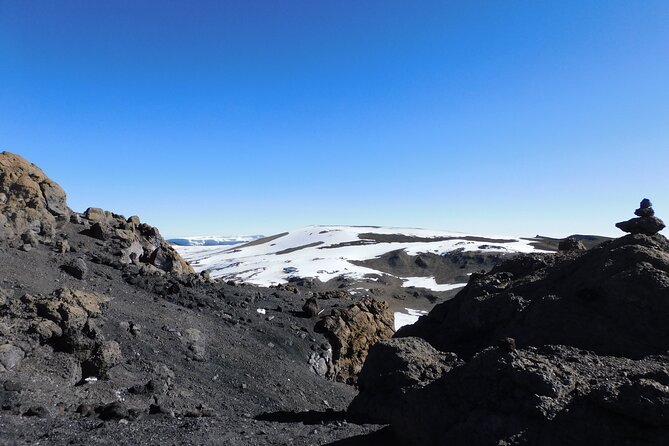
Day three is where the Machame route starts to feel dramatic. You leave the Shira plateau and work toward the Kibo peak area, passing major landmarks along the way.
You will walk by the Lava Tower, sometimes nicknamed sharks tooth, then continue toward the Arrow Glacier. Expect a 10 km day with about 6 to 8 hours of hiking, in semi-desert conditions.
This is a long day because the terrain changes and your body is already operating at higher altitude. Still, the walking itself is often manageable if you stick to a steady rhythm. I like this day because it gives you real landmarks instead of just “more trail,” so you feel like you are progressing toward something concrete.
You finish day three at Barranco camp, at about 3850m to 3950m. Barranco is a key stepping stone into the lower alpine desert and the next big transition.
Day 4: Barranco Wall to Karanga Valley, alpine desert air (3950m to 4040m)
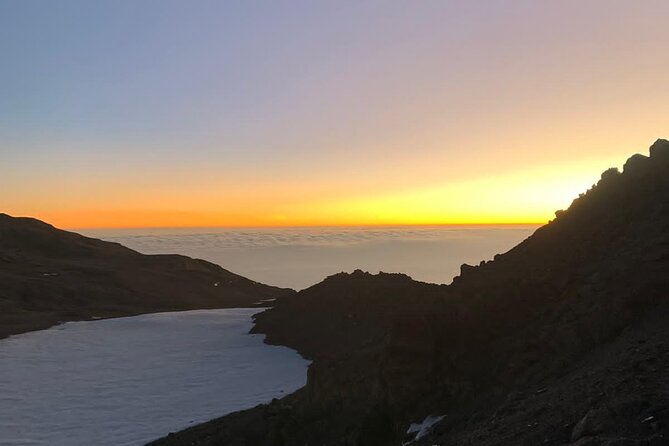
Day four is shorter in distance, but it can feel powerful. You hike through alpine desert, passing the Barranco Wall and then into the Karanga Valley.
The day is listed as about 5 km and roughly 4 to 5 hours. That shorter time can be a mental relief after day three, but the terrain still demands attention. High-altitude trekking is rarely about speed. It is about balance, rhythm, and conserving energy.
You overnight at Karanga camp, around 3950m to 4040m. This camp day matters because it sets you up for the last major push toward Barafu, the summit staging area.
Day 5: Junction with Mweka Trail, Barafu Hut, and summit rest mode (4040m to 4700m)
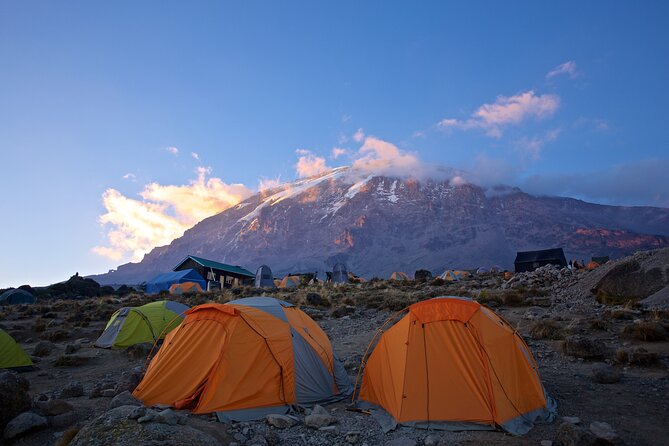
Day five is the pivot day. You leave Karanga and head to the junction that connects with the Mweka Trail, then continue up to the Barafu Hut.
This is a 4 km day with about 4 to 5 hours of hiking time. Yes, the distance is small. No, that does not mean it is easy. At this altitude, every step can feel heavier, and a short day still takes real effort.
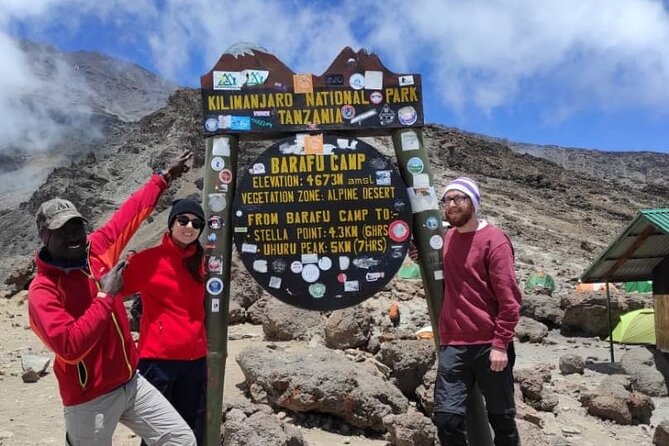
You reach Barafu camp at roughly 4040m to 4700m and you have now completed the south circuit. This is also your rest and preparation window for the summit attempt. The goal is not to overdo it. It is to get your body ready for cold, early hours and long climbing.
If you want a simple strategy for day five: eat well, hydrate steadily, and keep your movements calm. Summit night rewards people who save energy, not people who chase a fast timeline.
Day 6: Rebmann and Ratzell glacier climb to Stella Point, then Uhuru Peak, down to Mweka
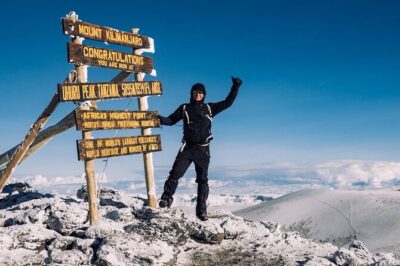
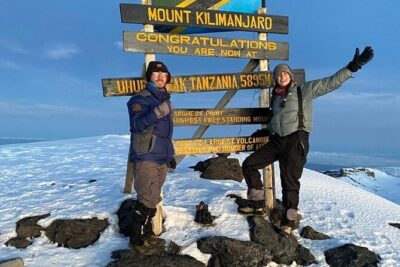
This is the day. You start the summit push between the Rebmann and Ratzell glaciers, then climb toward Stella Point. After that, you go for Uhuru Peak, with time afterward for photos and celebration before starting your descent.
The day is physically intense in both directions:
- 4700m up to 5895m, then back down to about 3100m
- 5 to 7 hours up
- 5 to 7 hours down
- Habitat is described as icy summit conditions
Why the included altitude support matters here: portable oxygen tanks and an ox meter are part of your package. That does not mean altitude risk disappears, but it does mean your crew has tools to monitor and respond if conditions call for extra help. You also have a portable first-aid kit and rescue fees covered.
When you descend to Mweka Hut and overnight there around 3100m, you get a critical mental win. The mountain can still feel enormous, but you are already on the way down into more breathable air.
Also, keep your expectations grounded. Summit day is about finishing, not winning a race. I like that the operation includes the whole descent plan, not just the top.
Day 7: Mweka descent to the forest and down to Mweka Gate (3100m to 1650m)
Day seven is a true cooldown. You continue descending from Mweka Hut straight to the Mweka gate through forest habitat.
This is about 3 to 4 hours with a drop from roughly 3100m down to 1650m. Most people feel relief here because the air gets easier to breathe and your body stops living in constant altitude math.
You finish the trek at Mweka gate, which gives you closure fast. Then you are done with the mountain part and move back toward Moshi.
The crew vibe: organization and friendly guidance matter
One of the strongest themes tied to Moana Tanzania is how organized the climb feels once you are on the trail. People describe a friendly atmosphere, a crew that stays upbeat, and guides who keep you comfortable and focused.
Guide names that come up include Onesmo and Isack. That is important because on summit day and during long altitude stretches, a guide who can manage pace, morale, and small decisions makes a real difference. The goal is not just getting you to the top, it is getting you there without burning out early.
If you are the kind of person who gets anxious when things get complicated, the fact that this trip includes a structured crew setup helps. You are not left to guess. Someone is managing camps, food timing, and the daily rhythm.
Who should book the Machame route with Moana Tanzania
This is a good match if:
- You have strong physical fitness and you want a real challenge.
- You want a route with major environmental variety, not just one long “same-feeling” hike.
- You like the comfort touches that help you recover daily, like hot water for washing.
- You value safety support like oxygen tanks and an ox meter, plus a first-aid kit and rescue fees.
It may not be the best fit if you want a casual stroll. Kilimanjaro is a serious altitude trek. Even if the trek days are planned well, you still need to show up ready.
If you are traveling with friends, the maximum of 15 travelers can feel like a sweet spot. It is small enough to stay social and supportive, and it is not so big that you feel lost.
Should you book Moana Tanzania for the 7-day Machame trek?
I think it is worth considering if you want a well-supported Machame experience with practical comfort extras and real altitude tools. The package includes a lot of the stuff that usually costs extra or causes stress, like rescue fees, drinking water, hot washing water, and oxygen support.
Book it if you can commit to training and a steady pace. If you are tempted to go in tired or underprepared, don’t. The mountain will handle your weaknesses, then charge you for them.
One last value check before you decide: since personal gear, travel insurance, and Moshi hotel nights before and after are not included, build that into your total budget. If you do, the $2,700 starts to look less like a sticker shock and more like paying for a smooth, organized climb.
FAQ
How long is the Kilimanjaro Machame route trek?
The duration is listed as 7 days (approx.).
Where does the trek start and where is it based?
The tour is based in Moshi, Tanzania, and the hiking journey begins from Machame village and the nearby Machame gate.
Is pickup included, and when do I need to meet the group?
Private transportation is included and pickup is offered. The meeting point opening hours are 7:00 AM to 11:00 AM, Monday through Sunday.
What safety and medical support comes with the trek?
The package includes a portable first-aid kit, rescue fees, and portable oxygen tanks plus an ox meter.
Are meals and drinking water included?
Yes. Drinking water is included throughout the trek, and meals are included as breakfast 6 times, lunch 7 times, and dinner 6 times.
What is not included in the $2,700 price?
Not included are personal items and toiletries, personal mountainclimbing gear, accommodation in Moshi before and after the trek, travel insurance, flight tickets, and laundry service.
What is the maximum group size?
The group size maximum is 15 travelers.
What is the cancellation policy and how does poor weather affect it?
You can cancel up to 6 days in advance for a full refund, 2 to 6 days for a 50% refund, and less than 2 days before start time is not refunded. If the experience is canceled due to poor weather, you will be offered a different date or a full refund.
More Machame Departures
- Kilimanjaro climb, Machame Route (7-day)
★ 5.0 · 262 reviews - Climbing Kilimanjaro – Machame Route
★ 5.0 · 170 reviews - Climbing Kilimanjaro through 7 days Machame Route
★ 5.0 · 151 reviews - #1. Best Kilimanjaro Day hike Tour-Machame Route-ISMANI
★ 4.2 · 47 reviews - 7 Days Machame route – Kilimanjaro
★ 5.0 · 45 reviews
Kilimanjaro, Route by Route
- Kilimanjaro climb by Lemosho Route (7-day)
★ 5.0 · 651 reviews - Kilimanjaro climb, Machame Route (7-day)
★ 5.0 · 262 reviews - Kilimanjaro Climbing Lemosho Route 8 Days.
★ 5.0 · 186 reviews - Climbing Kilimanjaro – Machame Route
★ 5.0 · 170 reviews - Climbing Kilimanjaro through 7 days Machame Route
★ 5.0 · 151 reviews
Just added from around Moshi
Kilimanjaro Machame Route, compared.
 ★ 5.0Kilimanjaro climb, Machame Route (7-day)From $3,377262 reviews
 ★ 5.0Climbing Kilimanjaro – Machame RouteFrom $2,322170 reviews
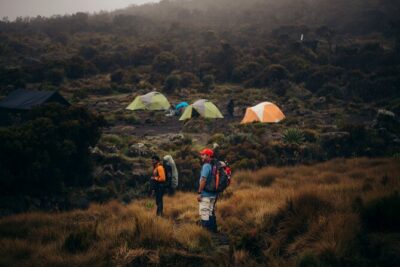 ★ 5.0Climbing Kilimanjaro through 7 days Machame RouteFrom $2,425151 reviews
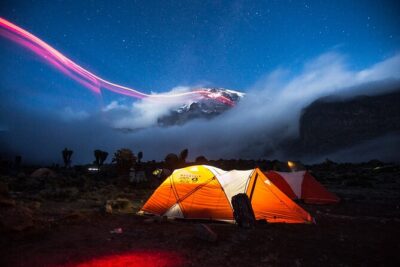 ★ 5.07-Day Machame Kilimanjaro Summit Tour from ArushaFrom $2,695125 reviews
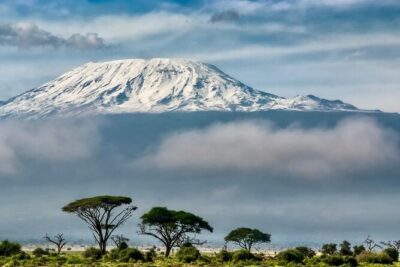 ★ 5.07 Days Kilimanjaro via Machame route affordable priceFrom $2,400110 reviews
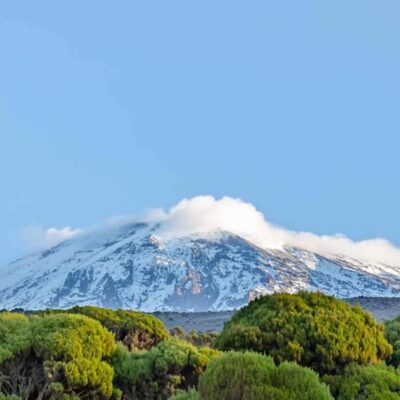 ★ 4.2#1. Best Kilimanjaro Day hike Tour-Machame Route-ISMANIFrom $11547 reviews
 ★ 5.07 Days Machame route – KilimanjaroFrom $2,85045 reviews
 ★ 5.0The Best of Machame Route in 6 Days: Your World’s Summit GuideFrom $1,15044 reviews
Browse the lists this tour appears in