
REVIEW · KILIMANJARO MACHAME ROUTE
Kilimanjaro Climb Via Machame Route
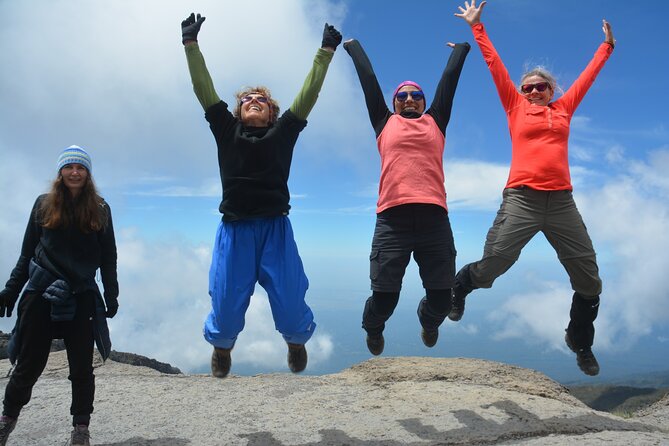
Kilimanjaro on Machame feels like a full-body movie. This popular Whiskey route climbs from the rainforest up through heather and alpine desert, then makes a hard night push toward Uhuru Peak. If you want variety under your feet and not just steady uphill, this route delivers.
I like that this specific trip runs a structured rhythm across camps that support acclimatization, not random wandering. I also like the people side, since Sirikwa Travel’s team has been praised for being hospitable and hands-on, with names like Ole Sirikwa and owner Oinoth showing up in client stories.
The tradeoff is serious: Machame is steep and challenging, and the schedule is shorter than some alternatives. That means you should be ready for the cold wind at extreme altitude and the mental grind of the summit push.
In This Review
- Key takeaways before you book
- Machame Route Basics: Why the Whiskey name fits
- Price and logistics: What $2,550 buys you on the ground
- Day 1: Moshi to Machame Gate, then into the rainforest climb
- Day 2: Shira Plateau approach, heather moor, and a rocky ridge
- Day 3: Lava Tower to Barranco Camp, Senecio Forest, and acclimatization at higher altitude
- Day 4: Great Barranco Wall to Karanga Camp, steep but non-technical
- Day 5: Barafu Hut, Southern Circuit completion, and summit-day preparation
- Day 6: Midnight summit push, Uhuru Peak, Stella Point sunrise, then down to Mweka Camp
- Day 7: Mweka Gate descent, summit certificates, and the ride back to Moshi
- How hard is Machame really, and who should choose it
- What you’ll actually feel, day to day
- About Sirikwa Travel: why the team likely matters on summit day
- Should you book this Machame route with Sirikwa Travel?
- FAQ
- How long is the Machame route climb?
- Where does the climb start, and do you get transport from Moshi?
- What is the maximum group size?
- Are meals included in the price?
- Is a guide included?
- What is the highest altitude you reach?
- What kinds of environments will you hike through?
- Is there a vegetarian option?
- Is free cancellation available?
Key takeaways before you book
- Machame (Whiskey route) earns its fame with big habitat changes, from rainforest to arctic zones
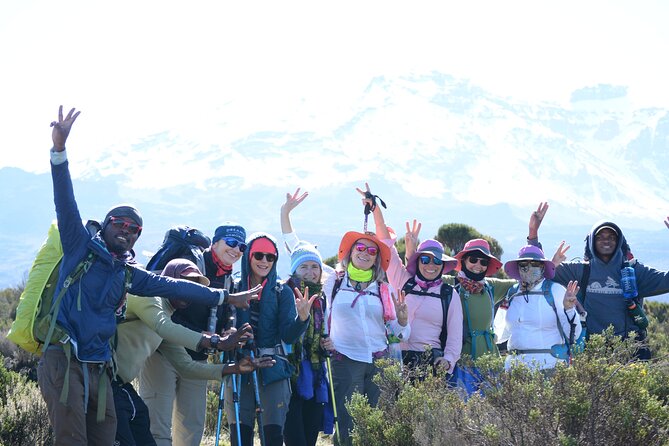
- Small groups (max 10) help the pace stay manageable and coordination stay tight
- Acclimatization is built in, including a shorter day on the Barranco wall and Karanga area
- A long summit push starts at midnight, with very cold, very windy conditions possible
- Guides and crew matter, and Sirikwa Travel’s staff has a reputation for support and patience
Other ways up Kilimanjaro we reviewed
- 8-Day Small-group Lemosho Kilimanjaro Summit Trekking★ 5.0 · 186 reviews
- 7-Day Machame Kilimanjaro Summit Tour from Arusha★ 5.0 · 125 reviews
- Mountain Kilimanjaro Day Hike★ 5.0 · 102 reviews
- 4 days Best experience Kilimanjaro Hike, Serengeti &Ngorongoro★ 5.0 · 54 reviews
Machame Route Basics: Why the Whiskey name fits
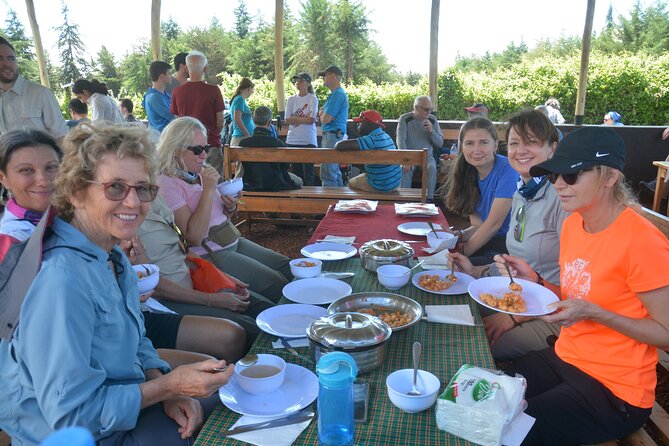
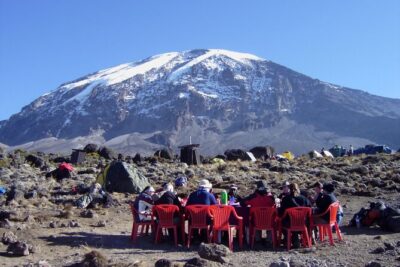
Machame, often called the Whiskey route, is popular because it’s scenic and varied. You start on the mountain’s south side, and the trail slowly changes from lush rainforest to open moor and then to alpine desert.
Over 7 days, you’ll hike through multiple zones and camp at different elevations. That variety is fun, but it also means your body keeps reacting to altitude. This is not a stroll, even on the easier-sounding days.
The route also includes a big strategic feature: you’ll approach the Shira Plateau, then later move under the Southern Ice Field on a section known as the Southern Circuit. That helps explain why some parts feel rugged or feel like you’re constantly shifting terrain underfoot.
Price and logistics: What $2,550 buys you on the ground
At $2,550 per person, this is a mid-to-premium Kilimanjaro climb option, and the value hinges on what’s actually covered.
Included in your package:
- Transportation
- A tour guide
- Meals: breakfast 7 times, lunch 7 times, dinner 7 times
- Admission tickets
- A mobile ticket
You’re also capped at a maximum of 10 travelers, which I like on Kilimanjaro. Smaller groups tend to mean less chaos at camps, easier pacing, and fewer bottlenecks during narrow trail sections.
What’s not listed as included is anything extra beyond the items above. So you should plan for personal costs that your trek organizer does not mention in the inclusions.
Day 1: Moshi to Machame Gate, then into the rainforest climb
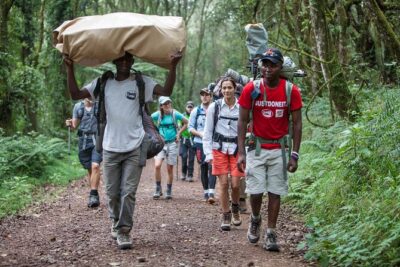
Your trek starts with a short drive from Moshi to Machame Gate, about 50 minutes. You pass through Machame village on the lower slopes, then enter the park area and begin your hike.
From there, the trail climbs through dense rainforest on a winding ridge up to Machame Camp. Your day range is roughly 5,380 ft to 9,350 ft, with 11 km or 7 miles and about 5 to 7 hours of hiking.
I like the way this day sets expectations. It’s not yet the brutal altitude, but it is steady effort, and the rainforest makes your body warm up without you noticing. One practical note: rainforest days often mean damp ground, so your footing skills matter right away.
More Machame departures, compared
Day 2: Shira Plateau approach, heather moor, and a rocky ridge
Day two pushes you higher, from about 9,350 ft to 12,500 ft. The hike is only 5 km or 3 miles, but it can feel longer because of the incline and rocky sections, with around 4 to 6 hours on the move.
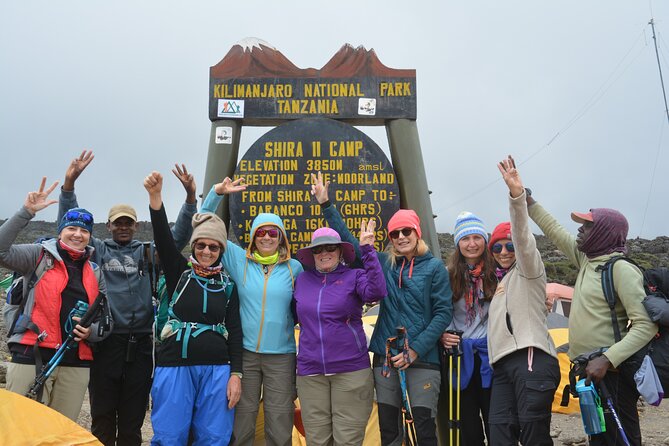
You leave the rainforest glades and transition onto an ascending path that climbs to a steep, rocky ridge. Once you reach the Shira Plateau area, the trail moves through heather and open moorlands, then crosses a large river gorge to Shira 2 Camp.
This is where Machame’s personality shows up. You don’t just climb, you change environments fast. That’s great for views and variety, but it also makes your breathing feel different as conditions open up and altitude rises.
Day 3: Lava Tower to Barranco Camp, Senecio Forest, and acclimatization at higher altitude
Day three runs from about 12,500 ft up to 15,190 ft near Lava Tower, then drops to Barranco Camp around 13,044 ft. Distance is short, 7 km or 4 miles total for the earlier part, and hiking time is about 4 to 5 hours, plus a continuation down to Barranco Camp.
You’ll head east up a ridge and then southeast toward Lava Tower, a volcanic rock formation about 300 ft tall. From there, the descent takes you down through Senecio Forest, which is strange and beautiful in its own way, and then into the lower camp elevation.
Here’s a smart detail: even if you end the day around the same elevation you started at, you still spend time higher on the mountain. That can help acclimatization because your body gets exposure without dragging the hardest hours into the next day.
For me, this is one of the best days on Machame because it balances scenery, challenge, and altitude strategy.
Day 4: Great Barranco Wall to Karanga Camp, steep but non-technical
Day four is designed to be shorter, which makes it useful for acclimatization. You’ll go from about 13,044 ft to roughly 13,106 ft, with 5 km or 3 miles and around 4 to 5 hours hiking.
The day starts with a descent into a ravine to the base of the Great Barranco Wall. Then you climb the wall area, described as non-technical but steep, with a cliff rise of nearly 900 ft. After crossing a network of hills and valleys, you descend sharply into Karanga Valley and climb to Karanga Camp.
I like days like this because the work is focused. You get one major steep segment, then you earn your recovery time. Also, because it’s non-technical, it tends to stay within what most hikers can handle if they take it slow and steady.
If you are prone to going out too fast early in the day, this is one place you’ll want discipline. Steep climbs punish shortcuts.
Day 5: Barafu Hut, Southern Circuit completion, and summit-day preparation
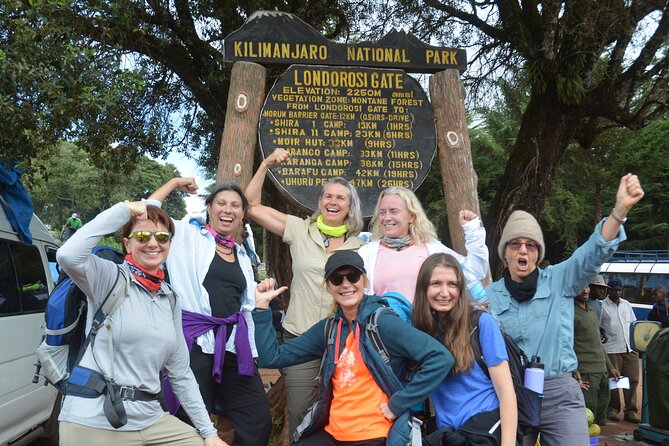
Day five moves you higher again, from about 13,106 ft to 15,331 ft. It’s a shorter hike on paper: 4 km or 2 miles, with 4 to 5 hours on the trail.
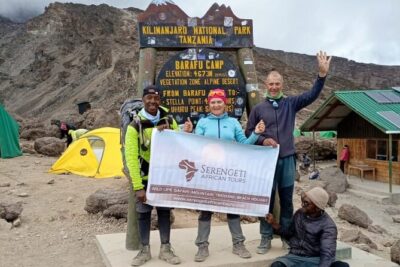
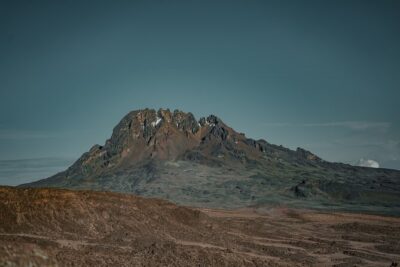
You head toward the junction connecting with the Mweka Trail, then continue up through a rocky section to Barafu Hut. This day is a major checkpoint because you’ve completed the Southern Circuit by the time you reach camp. From Barafu, you can often see Mawenzi and Kibo from your position.
The most important part of day five is what happens at Barafu. After you rest and eat an early dinner, you’re preparing for the summit push that night.
This is the day where you want to treat food like fuel, not a treat. You’ll likely want your stomach calm and your energy consistent, because day six starts when most bodies are trying to sleep.
Day 6: Midnight summit push, Uhuru Peak, Stella Point sunrise, then down to Mweka Camp
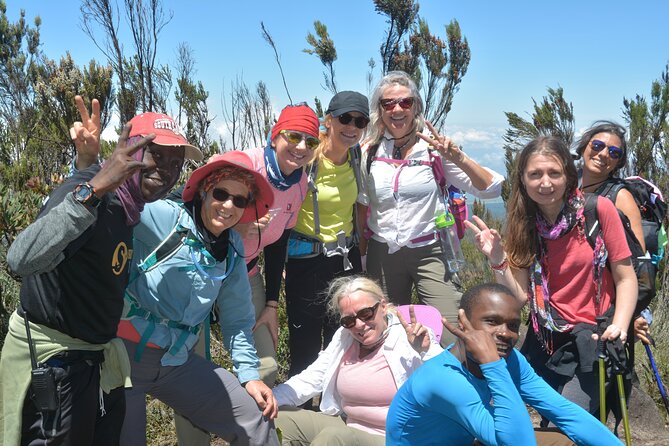
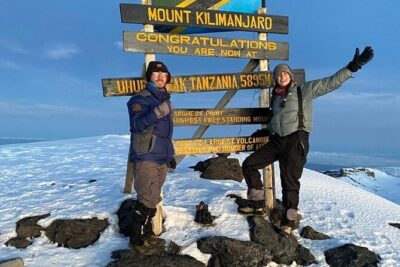
Day six is the big one: the emotionally intense and physically brutal section of the trek. You start around 15,331 ft and climb to about 19,341 ft at Uhuru Peak, then descend down to Mweka Camp around 10,065 ft. Hiking time is listed at 7 to 8 hours for the overall work, with a summit-day push that can take longer depending on pace.
The schedule begins very early, around midnight. That means you’re climbing in darkness for several hours, with short frequent breaks. Wind and cold at that elevation can feel extreme, and your motivation has to be steady because the effort doesn’t allow much mental bargaining.
Near Stella Point (around 18,900 ft), you’re rewarded with a sunrise that comes over Mawenzi Peak. Even if you’ve seen a thousand mountain sunrises on screens, this one is different because it’s tied to the effort of getting there.
Then you do the other half of the day, descending down toward Mweka Camp through the arctic habitat zone. Your legs might feel like they belong to someone else, which is normal. The descent is where careful foot placement matters most, since fatigue makes slips easier.
Day 7: Mweka Gate descent, summit certificates, and the ride back to Moshi
The final day starts around 10,065 ft and drops to about 5,380 ft, with 10 km or 6 miles and roughly 3 to 4 hours of hiking. You continue down to Mweka Gate, where you collect summit certificates.
Below the gate, conditions can be wet and muddy, so expect slippery sections. Your reward comes after you finish: from Mweka Village, a vehicle meets you to drive back to your hotel in Moshi.
I like ending with a vehicle pickup because it turns the final day into a finish line instead of another all-day grind. You’ll still feel tired, but you’ll feel more like you completed something rather than simply survived it.
How hard is Machame really, and who should choose it
Machame can be tough because it’s described as steep and challenging, especially with a shorter itinerary than some other routes. This isn’t a dealbreaker, but it is a signal.
This trek fits best if you:
- Have some high-altitude hiking or backpacking experience
- Can handle steep climbs and uneven footing
- Keep a steady pace instead of trying to “win” any day
The physical fitness guidance in the tour details says “moderate physical fitness level.” I read that as: you should be able to hike uphill for hours, carry your own essentials, and follow pacing advice. If you’re brand new to hiking, I’d think twice, because Machame asks a lot from the body early.
Also note who can go: children must be accompanied by an adult. That’s a straightforward rule, and it matters if you’re planning a family trip.
What you’ll actually feel, day to day
The biggest pattern on Machame is rhythm. You’ll gain altitude, adjust, then gain again, with camp timing that supports acclimatization.
- Day 1 introduces effort in the rainforest.
- Day 2 shifts you into moor and higher terrain.
- Day 3 gives you a higher exposure through Lava Tower and the Senecio Forest descent.
- Day 4 is a steep acclimatization day with the Great Barranco Wall.
- Day 5 positions you at Barafu with summit prep and key views of Mawenzi and Kibo.
- Day 6 tests everything, and the sunrise reward is tied to that midnight grind.
- Day 7 is a muddy, practical finish through rainforest back down.
That’s why people often describe the Machame experience as memorable rather than just scenic. The route teaches you pacing, patience, and trust in the plan.
About Sirikwa Travel: why the team likely matters on summit day
On Kilimanjaro, the route and altitude are the headline, but the crew is the difference between a stressful trip and a managed one.
In client stories, Sirikwa Travel is praised for hospitality and support, and the names Ole Sirikwa and Oinoth show up as part of that experience. People also highlight that the organization ran smoothly, including pick up and drop off coordination.
A good guide team is especially important because summit day starts around midnight. You want calm decision-making, steady pace reminders, and support when the cold and wind make your brain cranky.
This operator is also described as responsive when it comes to planning and scheduling, which matters if you’re trying to connect your climb with other Tanzania plans.
Should you book this Machame route with Sirikwa Travel?
I’d book this if you want the classic Kilimanjaro challenge with serious variety, and you can handle steep days with a compact 7-day schedule. The value is strongest when you trust the plan: transportation, guide support, admission tickets, and full meal coverage are all part of the package, so you’re not piecing together daily logistics.
I would hesitate if:
- You’re not comfortable with the idea of steep, difficult trail work
- You’re worried about extreme cold or wind during the midnight summit attempt
- You want a longer, gentler acclimatization schedule
If you’re ready to work for it, Machame has the right mix of scenic magic and real mountain toughness, plus a local team that people credit for keeping things organized and supportive from start to summit.
FAQ
How long is the Machame route climb?
The trek is listed as 7 days approximately, with each day mapped to specific elevation ranges and hiking times.
Where does the climb start, and do you get transport from Moshi?
Yes. The plan includes transportation, and the drive from Moshi to Machame Gate is about 50 minutes.
What is the maximum group size?
This activity is capped at a maximum of 10 travelers.
Are meals included in the price?
Yes. The package includes breakfast 7 times, lunch 7 times, and dinner 7 times.
Is a guide included?
Yes. A tour guide is included as part of the experience.
What is the highest altitude you reach?
The summit day lists reaching Uhuru Peak at about 19,341 ft.
What kinds of environments will you hike through?
You’ll pass through multiple habitats, including rain forest, heath, alpine desert, arctic conditions at the highest zone, and back through rain forest on the descent.
Is there a vegetarian option?
Yes. A vegetarian option is available, and you should advise your needs at the time of booking.
Is free cancellation available?
Yes. You can cancel up to 24 hours in advance for a full refund. If you cancel less than 24 hours before the start time, the amount paid is not refunded.
More Machame Departures
- 7-Day Machame Kilimanjaro Summit Tour from Arusha
★ 5.0 · 125 reviews - 6 Days: Hiking Kilimanjaro via Machame Route
★ 5.0 · 24 reviews - 6-Day Guided Tour in Machame Route Mt Kilimanjaro
★ 5.0 · 17 reviews - KILIMANJARO MACHAME ROUTE, (Climb 7days)
★ 5.0 · 16 reviews - 7 days Kilimanjaro climb via Machame route (Whiskey route)
★ 5.0 · 16 reviews
Kilimanjaro, Route by Route
- 8-Day Small-group Lemosho Kilimanjaro Summit Trekking
★ 5.0 · 186 reviews - 7-Day Machame Kilimanjaro Summit Tour from Arusha
★ 5.0 · 125 reviews - Mountain Kilimanjaro Day Hike
★ 5.0 · 102 reviews - 4 days Best experience Kilimanjaro Hike, Serengeti &Ngorongoro
★ 5.0 · 54 reviews - From Arusha/Moshi: Kilimanjaro Hike Marangu Route Day Trip
★ 4.5 · 54 reviews
Just added from around Arusha
Kilimanjaro Machame Route, compared.
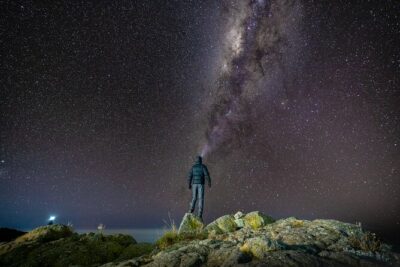 ★ 5.0Kilimanjaro climb, Machame Route (7-day)From $3,377262 reviews
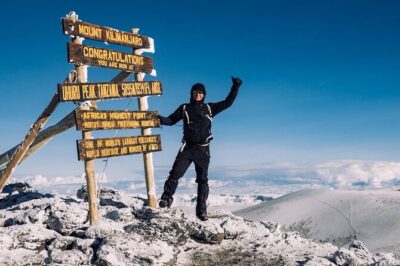 ★ 5.0Climbing Kilimanjaro – Machame RouteFrom $2,322170 reviews
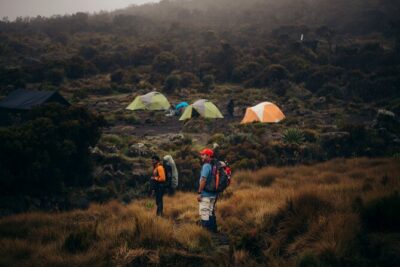 ★ 5.0Climbing Kilimanjaro through 7 days Machame RouteFrom $2,425151 reviews
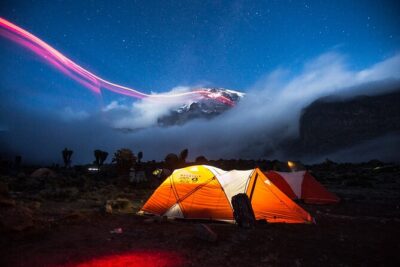 ★ 5.07-Day Machame Kilimanjaro Summit Tour from ArushaFrom $2,695125 reviews
 ★ 5.07 Days Kilimanjaro via Machame route affordable priceFrom $2,400110 reviews
 ★ 4.2#1. Best Kilimanjaro Day hike Tour-Machame Route-ISMANIFrom $11547 reviews
 ★ 5.07 Days Machame route – KilimanjaroFrom $2,85045 reviews
 ★ 5.0The Best of Machame Route in 6 Days: Your World’s Summit GuideFrom $1,15044 reviews
Browse the lists this tour appears in