
REVIEW · KILIMANJARO MACHAME ROUTE
Climb Kilimanjaro Machame Route 7 Days
Midnight starts, then Africa meets dawn. This 7-day Kilimanjaro Machame climb in Tanzania is built for steady acclimatization, with a short day before summit night so you can arrive less wrecked and more ready for the grind. You also get a safety-minded setup, including an oxygen tank, plus a team that handles the logistics while you focus on walking.
I love the combination of professional guides and quality climb support, from the park start to camp each night. I also like the pacing on the Machame schedule, because the days are broken up so you gain altitude, recover, and then hit the serious summit window at the right time.
One drawback to think about up front: you need a strong fitness level, and summit day runs on a midnight to 2am start with cold, possible snow, and a long descent after Uhuru Peak.
In This Review
- Key points worth knowing
- Where You Meet in Moshi, and How the Trip Starts Smooth
- The Machame Route in 7 Days, and Why This Schedule Works
- Day 1: Machame Gate to Machame Camp, Rain Forest Hits First
- Day 2: Machame Camp to Shira Camp, Moorland and a New Climb Mood
- Day 3: Shira to Lava Tower (Shark’s Tooth) to Barranco Camp
- Day 4: Barranco Camp to Karanga Camp, the Short Acclimatization Day
- Day 5: Karanga to Barafu, South Circuit Views and Summit Prep
- Day 6: Barafu to Summit (Uhuru Peak) and Down to Mweka Hut
- Day 7: Mweka to the Park Gate, Summit Certificates, Then Back to Moshi
- Safety, Comfort, and the Team You Rely On
- What’s Included, and Why It Changes the Value Equation
- Food, Camps, and How the “Daily Life” Feels on Kilimanjaro
- Packing Tips That Match This Route’s Reality
- Who Should Choose This Machame 7-Day Climb
- Should You Book This Kilimanjaro Machame 7 Days Tour?
- FAQ
- How long is the Kilimanjaro Machame route on this tour?
- Where is the meeting point in Moshi?
- Do you pick up guests from the airport?
- What is included in the tour price?
- What is not included?
- Is oxygen provided?
- When do you start the summit attempt?
- Is this tour private or shared?
- What is the cancellation policy?
Key points worth knowing
- Oxygen tank included for extra peace of mind on summit day
- Private tour so your group stays together with the full team
- Smart Machame timing, including a shorter acclimatization day close to summit
- 4×4 and AC transfers to reduce the stress around the trek
- Sunrise at Stella Point and Uhuru Peak, weather permitting
- Camping gear, entry fees, and mountain food included, so you can travel lighter
Other ways up Kilimanjaro we reviewed
- Kilimanjaro climb by Lemosho Route (7-day)★ 5.0 · 651 reviews
- Kilimanjaro climb, Machame Route (7-day)★ 5.0 · 262 reviews
- Kilimanjaro Climbing Lemosho Route 8 Days.★ 5.0 · 186 reviews
- Climbing Kilimanjaro – Machame Route★ 5.0 · 170 reviews
Where You Meet in Moshi, and How the Trip Starts Smooth
Most Kilimanjaro trips live or die by the first few hours, because that is when small problems become big stress. Your start here is in Moshi, with the meeting point listed as Honey Badger Lodge in Moshi. If you fly in, the company representative meets you at the airport with a signboard, then gives a short briefing before driving you into town.
That matters because Moshi is where you set up your headspace. You are not scrambling for last-minute details. You are getting briefed, transferred, and then sleeping like a normal human before you start climbing. An air-conditioned vehicle is also included, which is a small comfort that helps when you are thinking about altitude and cold ahead.
The Machame Route in 7 Days, and Why This Schedule Works
The Machame route is popular for a reason: it gives you multiple “worlds” as you climb, from rain forest into moorland, then semi-desert, alpine desert, and finally the arctic zone near the summit. On this 7-day plan, the key benefit is pacing. The trek from Barranco to Barafu is broken into two days, with a shorter day just before summit attempt.
Why you should care: summit day begins very early, around midnight. If you arrive at the final camp exhausted and under-slept, the climb gets that much harder, not just physically but mentally. This itinerary builds in a recovery moment so you go into the night climb with a better chance of steady breathing and calm decision-making.
Also, the route is considered a standard, well-run Machame schedule. In practical terms, that means fewer surprises and a rhythm your body can learn.
Day 1: Machame Gate to Machame Camp, Rain Forest Hits First
Day 1 starts with the drive from Moshi to the national park gate, about 50 minutes. You then walk from Machame Gate up through rain forest on a winding trail that climbs a ridge. The elevation range is roughly 5,400 ft to 9,400 ft, with an 11 km hike that typically takes 5 to 7 hours.
This is the day where you should keep your effort smooth. Lower down, the trail can be muddy and slippery, so it is smart to use trekking poles and gaiters if you have them. Even if you are not planning to rush, slipping burns energy fast and can spook your confidence.
When you reach Machame Camp, you are not chasing a big view yet. You are establishing a walking tempo and letting your body start adjusting to thinner air.
More Machame departures, compared
Day 2: Machame Camp to Shira Camp, Moorland and a New Climb Mood
Day 2 climbs from about 9,400 ft to 12,500 ft over a shorter distance, around 5 km, with a hike time of 4 to 6 hours. The habitat shifts to moorland, and the feel of the trail changes too.
You leave the glades of rain forest, then keep ascending along rocky ridges and through areas with heather. You also cross a river gorge, which can add small surprises depending on recent weather. This is still not the “final form” of Kilimanjaro yet, but it is where your layers start to matter more, because temperatures can drop quickly as you gain height.
That night at Shira campsite is where you get rest, dinner, and sleep. You are building a pattern now: climb, eat, recover. Later, you will want that rhythm on summit night.
Day 3: Shira to Lava Tower (Shark’s Tooth) to Barranco Camp
Day 3 is about elevation gain with a change in scenery and a little altitude challenge. You go from about 12,500 ft up toward the Lava Tower area, then down to Barranco Hut around 13,000 ft. It is listed as 10 km and 6 to 8 hours.
This day includes a standout landmark, the Lava Tower, often called the Shark’s Tooth. After passing junction points, the route heads toward Arrow Glacier at higher altitude before dropping down toward Barranco. Even though your end elevation is close to where you started, the “work” is real because you spend time higher than your camp elevation.
Barranco Hut is an important acclimatization stop. It is also the kind of day that teaches you what you will feel later: you might finish at nearly the same altitude you began, but your body has still taken a hit.
Day 4: Barranco Camp to Karanga Camp, the Short Acclimatization Day
Day 4 is intentionally short. You move from about 13,000 ft to 13,100 ft over roughly 5 km, with a hike time around 4 to 5 hours. The habitat is alpine desert.
You leave Barranco and climb a steep ridge passing the Barranco Wall, then reach Karanga Valley campsite. This is the kind of day where you should treat time on the trail as training, not a race. The gain is small, but the altitude is still climbing in a way your body needs to practice.
Why it’s valuable: acclimatization is not only about elevation charts. It is also about giving your body repeated days of adjustment, while still keeping fatigue in check for later.
Day 5: Karanga to Barafu, South Circuit Views and Summit Prep
On Day 5, the elevation jumps from about 13,100 ft up to 15,300 ft. The hike distance is short, around 4 km, usually 4 to 5 hours, and you stay in alpine desert.
You link into the junction that connects with the Mweka Trail, then continue up to Barafu Hut. This is described as completing the South Circuit, and you can often see the summit from multiple angles from this position. You also get views of Mawenzi and Kibo from Barafu.
What I like about this setup for you: the day feels like a transition. You are not climbing forever that afternoon. You reach the final camp area, rest, eat, and prepare for the summit attempt. The goal now is to save your energy and protect your sleep.
Day 6: Barafu to Summit (Uhuru Peak) and Down to Mweka Hut
This is the big day, the one you plan for months and still feel surprised by in the moment. You start between midnight and 2am, heading toward the summit between Rebmann and Ratzel glaciers. The climb is listed as 5 km ascent and about 12 km descent.
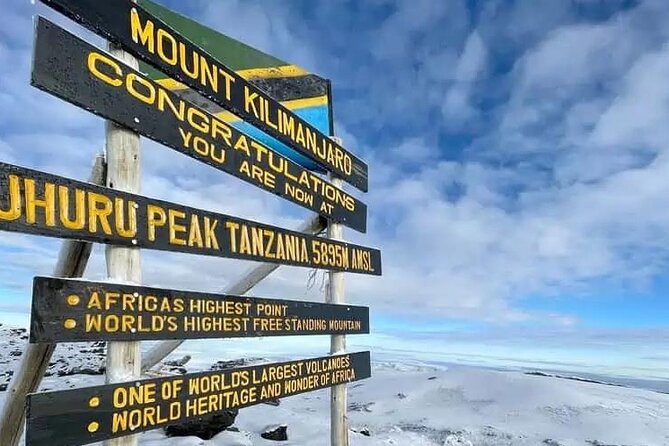
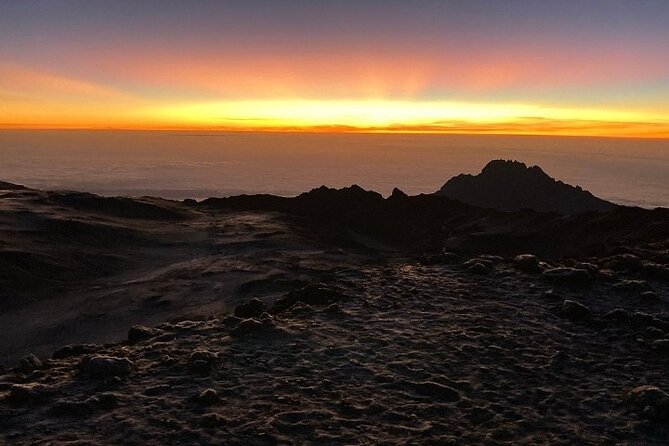
You ascend through heavy scree toward Stella Point on the crater rim. Stella Point sits around 18,600 ft, and you stop for a short rest there. Weather permitting, this is where you can catch the most memorable sunrise you are likely to see.
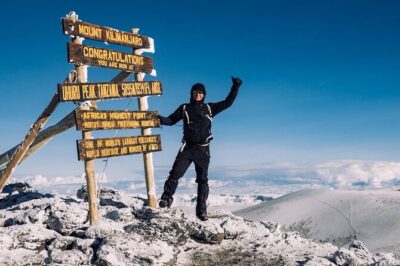
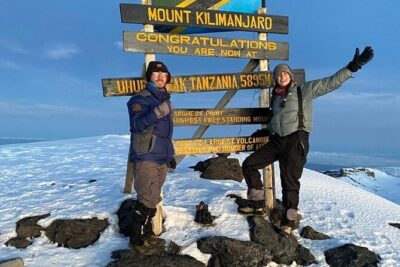
Then it is the final ascent to Uhuru Peak, the highest point on Mount Kilimanjaro and Africa. The itinerary notes that faster hikers may see the sunrise from the summit itself. Either way, the emotional reward is real: you go from “why am I doing this?” to “we made it” very quickly, even if your legs do not agree.
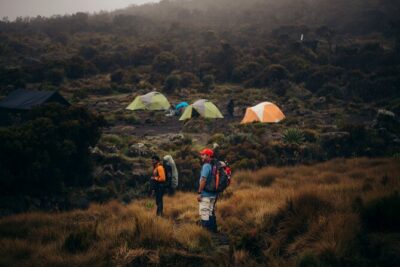
From Uhuru Peak you descend straight down to Mweka Hut camp site, stopping at Barafu for lunch. This is not a gentle downhill. It is gravel and loose rock, so gaiters and trekking poles are worth their weight on the descent. Mweka Camp is in the upper forest, so mist or rain can show up late afternoon. Expect cool, damp air and plan clothing for that reality.
Day 7: Mweka to the Park Gate, Summit Certificates, Then Back to Moshi
Day 7 finishes the mountain work and starts the “you did it” phase. You descend from about 10,000 ft down to 5,400 ft over around 10 km in about 3 to 4 hours. The habitat returns to rain forest.
You go to the Mweka Park Gate first for summit certificates, which is a nice way to mark the journey without making you jump through extra hoops. After the gate, you continue roughly another hour to Mweka Village.
Then a vehicle meets you to drive back to your hotel in Moshi. That is a big practical win. After a summit, you want comfort and reliable transport, not more uncertain logistics.
Safety, Comfort, and the Team You Rely On
This is a serious climb, so I pay attention to how a company thinks about safety. Here, the plan lists safety as the number one goal, with quality equipment and professional guides. A 4×4 model safari jeep is included, which matters for road conditions around Moshi and the park approach.
The itinerary also includes an oxygen tank. That does not replace good acclimatization or smart pacing, but it does add confidence that the operation is prepared for altitude-related emergencies.
The other safety piece is the crew structure. You have a Kilimanjaro team with a guide, cook, and porters. That means you are not carrying everything on your back, and the trip is run with mountain logistics in mind. You spend your energy walking, not managing gear.
And from what you can learn from previous clients, guides like Mussa and Frankie get credit for professional support, kindness, and helping different needs on the trail. I would treat that as a good sign that the team knows how to keep people calm, not just how to find the trail.
What’s Included, and Why It Changes the Value Equation
At $2,200 per person, the price can look high if you only compare it to “cheap” trips. The value picture improves fast when you compare it to what is actually included.
Included items in this package are substantial:
- Camping equipment
- Entry fees
- Food on the mountain
- A 2 nights hotel stay in Moshi or Arusha
- Airport transfers
- Oxygen tank
- Salary support for the team, including guide, cook, and porters
- Air-conditioned vehicle
- Kilimanjaro team operations and mountain staffing
If you have ever pieced together a Kilimanjaro climb yourself, you know how quickly costs stack up: park fees, guides, porters, tents, meals, and transport. This package is attractive because it wraps those elements together so you are not guessing what you forgot.
What costs extra:
- Tipping and beverages
- Visa
- Personal climbing items
- Flights
That is normal for Kilimanjaro. Still, you should set aside cash for tips and beverages so you do not feel rushed at the end.
Food, Camps, and How the “Daily Life” Feels on Kilimanjaro
Your comfort on Kilimanjaro is partly weather and elevation, but it is also how camps run. This plan includes food on the mountain, plus camping equipment and a team that handles camp setup.
I like that there is a cook and a porter crew. It usually means you get consistent meal timing, which helps your energy and mood. Summit day is an eating day as much as a hiking day. If you eat and hydrate on schedule, the long night climb feels more manageable.
Camps also help you recover between elevation changes. Each night you get dinner and sleep, and that is the engine behind acclimatization.
One note from the schedule: the day you are sleeping at higher altitude means you should assume temperature drops. The itinerary specifically warns that at lower elevations it can be wet and muddy on the final descent, so expect damp conditions at both ends of the trek, just in different forms.
Packing Tips That Match This Route’s Reality
Kilimanjaro punishes wrong gear, mainly because weather shifts and trails get rough. Based on what this plan highlights, here is what matters most for you.
Bring gaiters and trekking poles. They are specifically useful for muddy or slippery trail sections early on, and for loose gravel during descent from the summit.
Plan for cold and wet:
- Keep rain gear and warmer clothing handy, especially as you approach summit night.
- Shorts and t-shirts might be fine at lower elevations during descent, but layering is the key.
Also, make sure your personal climbing items are truly yours. The package includes camping equipment and food, but it lists personal climbing items as not included. That is where people get tripped up, because “I thought they meant everything” is a common mistake.
Who Should Choose This Machame 7-Day Climb
This route is best for people who want a classic Machame experience with a smart acclimatization rhythm and a well-defined summit window. You should consider it if you:
- Are ready for a midnight start and a long day on summit
- Want the route pacing that includes a shorter acclimatization day close to the summit attempt
- Prefer a supported climb with porters, camping gear, and organized food
It also fits people who like structure. This is a private tour, meaning your group participates together and the team can focus on you rather than dozens of unrelated schedules.
The trip specifically notes strong physical fitness is needed. If you are on the fence, do not guess. Be honest about your cardio and your ability to handle long hours of trekking at high altitude.
Should You Book This Kilimanjaro Machame 7 Days Tour?
Book it if you want the Machame route with a safety-first operation, a full team, and a schedule designed to protect your energy for summit night. The included package is also a good sign for value, because camping gear, entry fees, oxygen tank, hotel nights, transfers, and mountain food are all wrapped in.
I would hesitate only if you know you are not comfortable with very early starts, cold conditions, and the reality of heavy scree and a long descent. This climb does not care about your excuses. It cares about your preparation and pacing.
If you want a guided Machame climb that is organized, supportive, and focused on getting you to Uhuru Peak with sunrise memories, this is the kind of trip that makes sense.
FAQ
How long is the Kilimanjaro Machame route on this tour?
This is a 7-day Kilimanjaro climb on the Machame route, with a day-by-day plan from Machame Gate through Mweka, including the summit attempt.
Where is the meeting point in Moshi?
The meeting point is listed as Honey Badger Lodge in Moshi, Kilimanjaro (M92P+CP, Kiboriloni 1258, Tanzania).
Do you pick up guests from the airport?
Yes. A company representative meets you at the airport arrival point with a company signboard, provides a short briefing, then drives you to your hotel.
What is included in the tour price?
Included items are camping equipment, entry fees, salaries for the team, 2 nights hotel in Moshi or Arusha, airport transfers, an oxygen tank, food on the mountain, the Kilimanjaro team (guide, cook, and porters), and an air-conditioned vehicle.
What is not included?
Not included are tipping and beverages, visa, personal climbing items, and flights.
Is oxygen provided?
Yes. An oxygen tank is included.
When do you start the summit attempt?
Summit day starts very early, around midnight to 2am.
Is this tour private or shared?
This is a private tour/activity. Only your group will participate.
What is the cancellation policy?
You can cancel for free up to 24 hours in advance of the experience start time for a full refund. If you cancel less than 24 hours before, the amount you paid will not be refunded.
More Machame Departures
- Kilimanjaro climb, Machame Route (7-day)
★ 5.0 · 262 reviews - Climbing Kilimanjaro – Machame Route
★ 5.0 · 170 reviews - Climbing Kilimanjaro through 7 days Machame Route
★ 5.0 · 151 reviews - #1. Best Kilimanjaro Day hike Tour-Machame Route-ISMANI
★ 4.2 · 47 reviews - 7 Days Machame route – Kilimanjaro
★ 5.0 · 45 reviews
Kilimanjaro, Route by Route
- Kilimanjaro climb by Lemosho Route (7-day)
★ 5.0 · 651 reviews - Kilimanjaro climb, Machame Route (7-day)
★ 5.0 · 262 reviews - Kilimanjaro Climbing Lemosho Route 8 Days.
★ 5.0 · 186 reviews - Climbing Kilimanjaro – Machame Route
★ 5.0 · 170 reviews - Climbing Kilimanjaro through 7 days Machame Route
★ 5.0 · 151 reviews
Just added from around Moshi
Kilimanjaro Machame Route, compared.
 ★ 5.0Kilimanjaro climb, Machame Route (7-day)From $3,377262 reviews
 ★ 5.0Climbing Kilimanjaro – Machame RouteFrom $2,322170 reviews
 ★ 5.0Climbing Kilimanjaro through 7 days Machame RouteFrom $2,425151 reviews
 ★ 5.07-Day Machame Kilimanjaro Summit Tour from ArushaFrom $2,695125 reviews
 ★ 5.07 Days Kilimanjaro via Machame route affordable priceFrom $2,400110 reviews
 ★ 4.2#1. Best Kilimanjaro Day hike Tour-Machame Route-ISMANIFrom $11547 reviews
 ★ 5.07 Days Machame route – KilimanjaroFrom $2,85045 reviews
 ★ 5.0The Best of Machame Route in 6 Days: Your World’s Summit GuideFrom $1,15044 reviews
Browse the lists this tour appears in