
REVIEW · KILIMANJARO MACHAME ROUTE
7 Days Machame Route
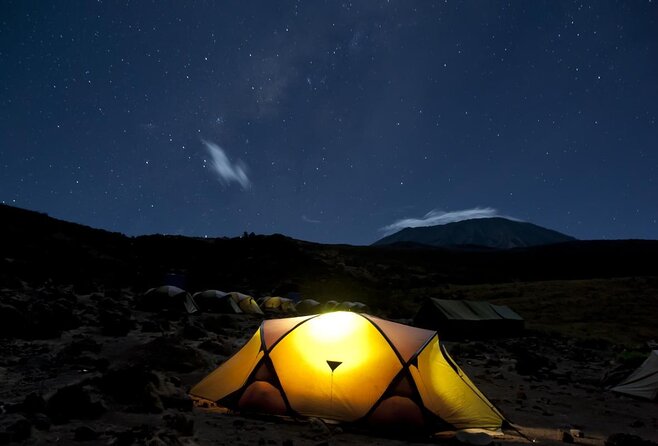
That first step into Kilimanjaro forest feels like a movie. This 7-day Machame Route from Moshi mixes cloud forest hiking, high moorland, and a very real summit push timed for sunrise views. You sleep in tents carried up by porters, and you follow a trail profile built for walk higher, sleep lower acclimatization.
Two things I especially like here are the practical climbing rhythm and the crew’s organization. The itinerary is paced to help you adjust to altitude, including time spent at high points (up to about 4,600m) while still lowering your sleeping elevation. The on-trail support also shows up in the details, like porters managing your belongings during the summit push and guides keeping meals both filling and interesting.
One consideration: this is a physically demanding trek. You are hiking days that range from about 4 to 8 hours, then you face a long summit day that starts around midnight, plus cold, thin-air conditions above 5,700m. If you do not already train for steep, sustained walking, you’ll feel it.
In This Review
- Key things to know before you go
- Machame Route, built for altitude instead of bravado
- Day 1, cloud forest hiking and an early taste of Kilimanjaro weather
- Day 2, Shira Plateau ascent and those far-off mountain lines
- Day 3, high moorland trekking under volcanic landmarks
- Day 4, another altitude day that keeps you moving smart
- Day 5, Barafu Camp and the glacier views that pull you forward
- Day 6, midnight start to Stella Point, then Uhuru Peak at sunrise
- Day 7, rainforest descent to Mweka Gate, certificates, and Moshi comfort
- Price and value, what $2,000 per person buys in real terms
- Who this trek suits best, and who should rethink it
- Should you book this Machame Route?
- FAQ
- What route is this trek?
- Where does the trek start and what is the start time?
- How long is the trek?
- Is pickup included?
- What ticket format do I receive?
- Are admission tickets included?
- How big is the group?
- What fitness level do I need?
- What is the cancellation policy?
- What happens at the end of the trek?
Key things to know before you go
- Machame’s acclimatization style helps you climb high, then sleep lower for better adjustment.
- Cloud forest to alpine scree means big scenery shifts, from mossy trees to glacier views on Kibo.
- A midnight start on summit day sets you up for sunrise on the crater rim.
- Small group size is capped at 15 travelers, which makes logistics easier.
- Meals and gear handling are taken seriously, including porter support during the summit push.
- Park formalities and certificates happen at Mweka Gate, then you ride back to Moshi.
More Machame departures, compared
- Kilimanjaro climb, Machame Route (7-day)★ 5.0 · 262 reviews
- Climbing Kilimanjaro – Machame Route★ 5.0 · 170 reviews
- Climbing Kilimanjaro through 7 days Machame Route★ 5.0 · 151 reviews
- #1. Best Kilimanjaro Day hike Tour-Machame Route-ISMANI★ 4.2 · 47 reviews
Machame Route, built for altitude instead of bravado
If your main goal is reaching Kilimanjaro’s summit with the best chance your body has, Machame is a strong choice. The route is popular for a reason: its topography is designed so you can climb to higher altitudes during the day and still sleep lower than where you peak. That matters because altitude acclimatization is not just a “mindset” thing. It is biology, and the Machame profile works with it.
I also like that the trek does not rush you straight into the cold high zone. Day 1 takes you through moss-covered cloud forest, and Day 2 continues up until the trail reaches the steep ascent onto the Shira Plateau. From there you get views back toward Mt Meru in the distance. That early blend of forest footing and open high-country perspective helps you feel the mountain shift under your feet.
Finally, you get a small-group feel. The trip caps out at 15 travelers, so you are not battling a massive crowd on narrow paths or during check-in moments. You also tend to get smoother coordination for things like meals, tent setup, and the summit morning flow.
Day 1, cloud forest hiking and an early taste of Kilimanjaro weather
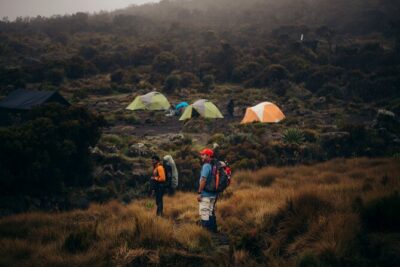
Day 1 is about 6 hours of walking through moss-covered trees in Kilimanjaro’s cloud forest. This is where the mountain feels lush and alive. The air can be cool and damp, and the trail conditions can be different from hot lowland hikes, even if the miles feel manageable.
About halfway through your first day you’ll notice the vegetation changing. The forest thins, and you move into areas with heathers, tall grasses, and wildflowers. This is a good day for getting your rhythm. Your legs are doing real work, but the environment helps you focus. Instead of only staring at the next switchback, you start reading the trail like a pattern: steady pace, light steps, and small adjustments when the ground gets slick.
Expect the day to include admission ticket coverage as part of the experience, so you are not dealing with extra park-entry logistics mid-trek. That frees your mental energy for hydration and pacing.
Day 2, Shira Plateau ascent and those far-off mountain lines
Day 2 runs around 5 hours and continues the climb through forest until you hit the steep ascent onto the Shira Plateau. Once you’re up there, you get rewarding views of Kilimanjaro and the surrounding area. One highlight here is seeing Mt Meru rising above Arusha town in the distance.
This day is important for acclimatization, even if it feels like another “walk day.” You are not simply grinding elevation. You are moving from enclosed forest into more open altitude conditions, which can affect how you breathe. If you treat this day as a chance to stay calm and consistent, your body usually thanks you later.
Also, the route’s design is noticeable in how it sets you up for the next stages. You are gaining altitude, but the trekking plan later keeps the sleeping pattern in mind.
Day 3, high moorland trekking under volcanic landmarks
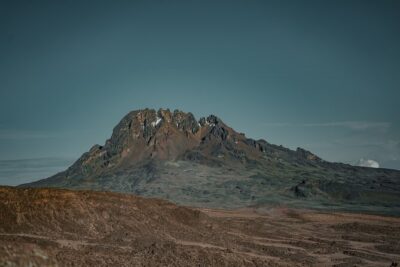
Day 3 is about 8 hours and brings you into high moorland, where the whole character of the trek changes. You traverse the southwest side of Kilimanjaro, passing underneath features like the Lava Tower and the final section of the Western Breach. These names can sound like trivia until you see how they frame the terrain. Suddenly the mountain has structure. You’re not just climbing a random slope, you’re moving through a specific volcanic system.
You’ll also spend a lot of time at altitude, with the plan reaching up to around 4,600m. That is a big reason Machame is so often recommended. You are not only reaching high points, you are still part of a schedule that tries to control how much strain gets placed on you while you sleep.
The key rule your guide team uses is the mountaineering concept of walk higher, sleep lower. You feel that in the itinerary pattern, not just in theory. You climb during the day, then you settle for the night at a more forgiving elevation. It can still be hard, but it is the kind of hard that makes physiological sense.
Day 4, another altitude day that keeps you moving smart
Day 4 is a shorter walking day, about 4 hours, but it is still part of your acclimatization building. The trek continues through high moorland and keeps you on the southwest side, again passing under the Lava Tower and around the Western Breach area, then reaching camp.
Why this matters: the trek is not only about summit effort. It is about maintaining a steady climb without burning matches too early. A shorter day like this can help your body recover a bit, especially after a longer day above 4,000m.
There’s also a psychological advantage. When you’ve spent time on trails where everything feels slower due to altitude, shorter walking stretches can feel like permission to breathe, drink, and regain your focus. If you push hard every day because you want to “catch up,” you usually pay for it later. Machame’s pacing gives you a better script.
Day 5, Barafu Camp and the glacier views that pull you forward
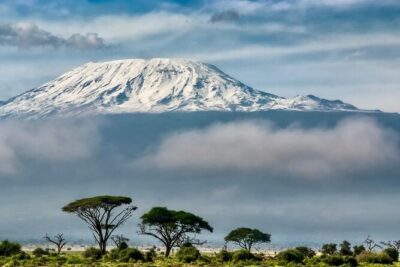
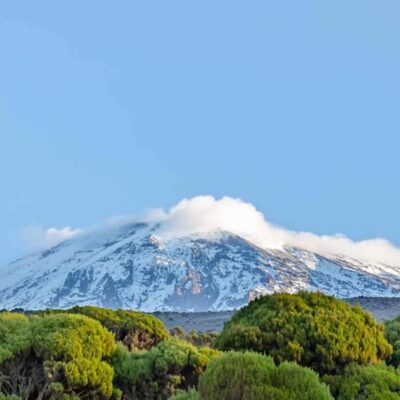
Day 5 starts after breakfast with a hike to Barafu Camp, roughly 4 hours. This is one of those days where the mountain starts rewarding you in a way that feels more direct. On the way you can view several of Kibo’s glaciers and you’ll also pass the junction that connects the descent route, Mweka, with the Machame trail.
You also get a chance to see glacial features along the route, including Heim, Kersten, and Decken Glaciers. Even if you do not know what all the names mean, you can still read what you’re looking at: ice in a high volcanic setting, with sharp edges and a harsh beauty.
For me, this is also the day where logistics start to matter more. You’re getting closer to the summit push, so your routine becomes more important than your ambition. Keep drinking, keep eating what you’re given, and try to keep your focus on small habits. That kind of steady effort is what makes the next day feel possible.
Day 6, midnight start to Stella Point, then Uhuru Peak at sunrise
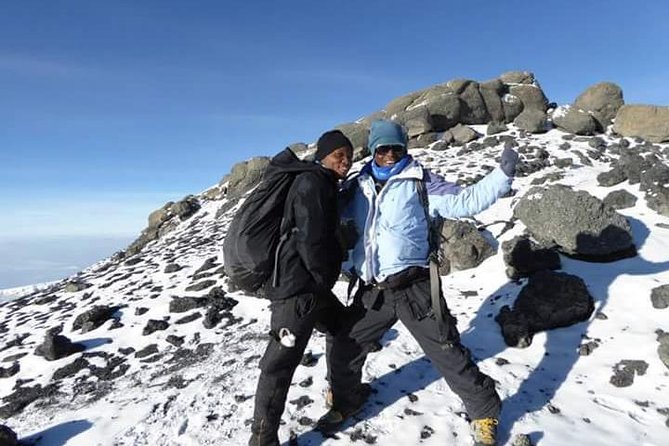
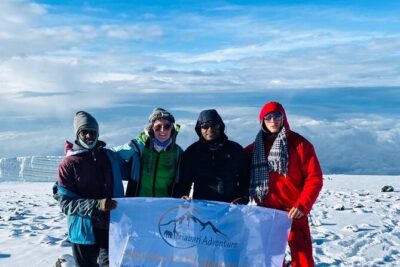
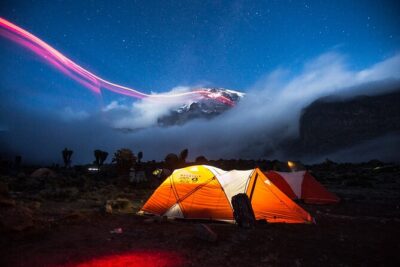
Day 6 is the big day. It starts at around midnight and includes roughly 4 to 5 hours of steep scree climbing. This is one of those experiences where the mountain compresses time. You’ll feel like you’re walking in one long effort, then suddenly you hit the crater rim.
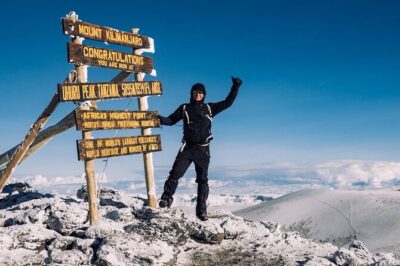
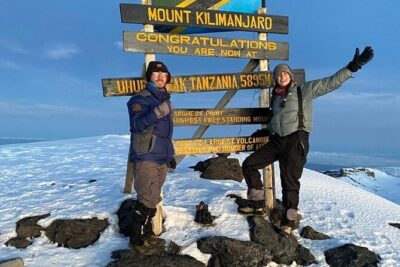
The plan is to reach Stella Point, around 5,739m, as the first rays of sun hit. This is where the view changes from “I’m climbing” to “I’m actually here.” Ice cliffs within the crater surround you, and you get spectacular views of jagged Mawenzi peak and beyond.
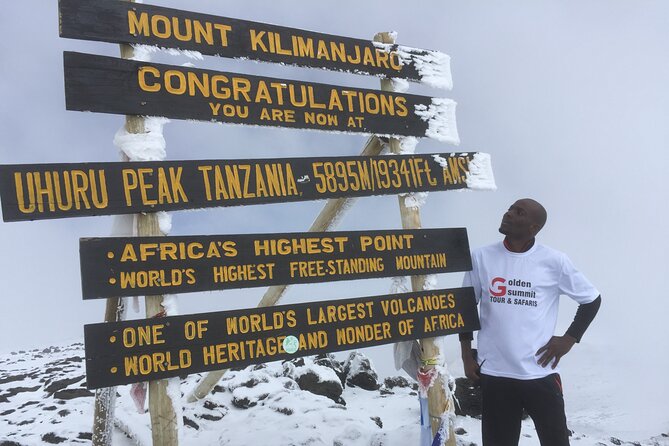
After another hour of walking, you reach Uhuru Peak, about 5,895m. Then you turn back, returning to Stella Point and descending on scree and track back toward Barafu for breakfast. After that, you continue down to Mweka Camp for rest.
Two things make this summit day stand out in a good way. First, the itinerary is timed for sunrise, so you’re not just chasing elevation. You’re chasing a payoff your eyes and mind can hold. Second, the operation around you is described as very organized, including porter support for your belongings during the summit attempt. That may sound like a small convenience, but on summit day it’s huge. It means you can focus on moving, not micromanaging gear.
It’s also a long day, roughly 15 hours total. So if you’re someone who needs predictability, this is where you want to listen to your guide, follow their pace, and resist the urge to surge when you see other people move faster.
Day 7, rainforest descent to Mweka Gate, certificates, and Moshi comfort
Day 7 is about 3 hours of trekking down through the rainforest to Mweka Gate. The contrast is striking. After the cold, rocky edges above, you get back into a greener, wetter world. Your legs will still be tired, but your mind usually relaxes a bit when the terrain feels less exposed.
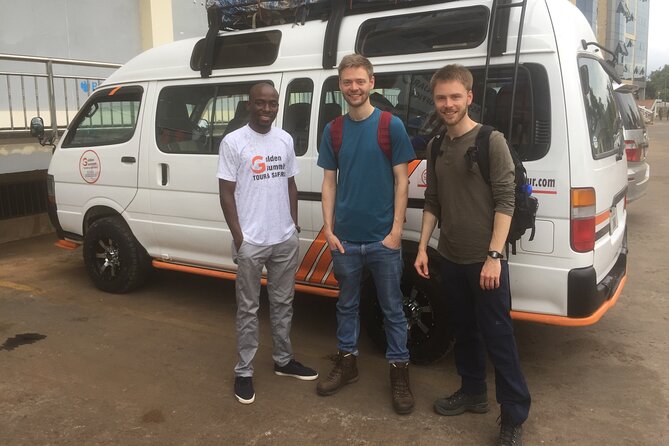
At Mweka Gate you complete park formalities and receive certificates. It’s a small moment, but it gives the whole effort a clean finish line. Then you’re met by vehicles and returned to your hotel in Moshi.
The itinerary includes a welcome shower, plus time to celebrate with cold drinks. That’s not just comfort for the sake of comfort. After days of cold air and limited washing, a proper rinse and a real break helps you reset your body and sleep.
Price and value, what $2,000 per person buys in real terms
At $2,000 per person, this trek is not cheap. But on Kilimanjaro, “cheap” usually means fewer supports, fewer services, or less attention to timing. Here, the value is in the full package feel: tents carried up by porters, admission ticket coverage, organized summit-day logistics, and a crew that stays focused on getting you safely to the summit.
I also see value in the way the trek is structured. You’re not gambling with a bare-bones climb. You’re paying for altitude strategy, including time at high points and a sleeping plan that tries to help acclimatization. Add the small-group cap of 15, and you get a setup that’s easier to manage and more personal than giant expeditions.
If you care about details, this provider’s reputation for experienced crew and strong communication comes through in the kind of service you remember. Meals are described as filling and thoughtfully handled, and the organization around gear during summit night makes a big difference when you’re exhausted and cold.
Who this trek suits best, and who should rethink it
This Machame trek fits well if you have moderate physical fitness and you are comfortable with multi-day uphill hiking. The walking times are mostly in the 4 to 8 hour range, but the total effort is higher because of altitude and the long summit day.
It also suits you if you want a well-run operation. If you like knowing that porters, guides, and timing are handled carefully, you’ll feel calmer. The reviews highlight customer service that stays responsive from first briefing to return, and that kind of calm professionalism matters on Kilimanjaro.
Who should rethink it? If you are not training for steep, cold, early-morning hiking, the summit day will be a tough mental battle. The trek is doable for many people, but it still demands effort and good decision-making, especially when fatigue and altitude stack up.
Should you book this Machame Route?
Yes, consider booking if you want Machame’s classic advantages: a route profile that supports acclimatization, glacier and summit views that are tied to sunrise timing, and an experienced team that handles the operational heavy lifting. I also think it’s a good match if you prefer a smaller group and you care about how gear and meals are managed during the toughest parts.
Skip or ask more questions first if you know you struggle with long cold nights, or if a midnight start sounds like an automatic deal-breaker. This trek can test you, but it also gives you the structure to meet that test in a smarter way.
FAQ
What route is this trek?
This is the 7 Days Machame Route on Mount Kilimanjaro, starting from Moshi, Tanzania.
Where does the trek start and what is the start time?
The meeting start time is 8:00 am. The location is Moshi, Tanzania.
How long is the trek?
It runs for 7 days (approximately).
Is pickup included?
Yes, pickup is offered.
What ticket format do I receive?
You get a mobile ticket.
Are admission tickets included?
Yes, the itinerary lists admission ticket included for the trek days shown.
How big is the group?
There is a maximum of 15 travelers.
What fitness level do I need?
The tour indicates travelers should have a moderate physical fitness level.
What is the cancellation policy?
You can cancel for a full refund up to 24 hours in advance of the experience’s start time. If you cancel less than 24 hours before, the amount paid is not refunded.
What happens at the end of the trek?
You hike down to Mweka Gate, complete park formalities, receive certificates, and then you’re met by vehicles to return to your hotel in Moshi, where a welcome shower is included in the plan.
More Machame Departures
- Kilimanjaro climb, Machame Route (7-day)
★ 5.0 · 262 reviews - Climbing Kilimanjaro – Machame Route
★ 5.0 · 170 reviews - Climbing Kilimanjaro through 7 days Machame Route
★ 5.0 · 151 reviews - #1. Best Kilimanjaro Day hike Tour-Machame Route-ISMANI
★ 4.2 · 47 reviews - 7 Days Machame route – Kilimanjaro
★ 5.0 · 45 reviews
Just added from around Moshi
Kilimanjaro Machame Route, compared.
 ★ 5.0Kilimanjaro climb, Machame Route (7-day)From $3,377262 reviews
 ★ 5.0Climbing Kilimanjaro – Machame RouteFrom $2,322170 reviews
 ★ 5.0Climbing Kilimanjaro through 7 days Machame RouteFrom $2,425151 reviews
 ★ 5.07-Day Machame Kilimanjaro Summit Tour from ArushaFrom $2,695125 reviews
 ★ 5.07 Days Kilimanjaro via Machame route affordable priceFrom $2,400110 reviews
 ★ 4.2#1. Best Kilimanjaro Day hike Tour-Machame Route-ISMANIFrom $11547 reviews
 ★ 5.07 Days Machame route – KilimanjaroFrom $2,85045 reviews
 ★ 5.0The Best of Machame Route in 6 Days: Your World’s Summit GuideFrom $1,15044 reviews
Browse the lists this tour appears in