
REVIEW · KILIMANJARO MACHAME ROUTE
7 Days Machame Route Climbing Mt. Kilimanjaro
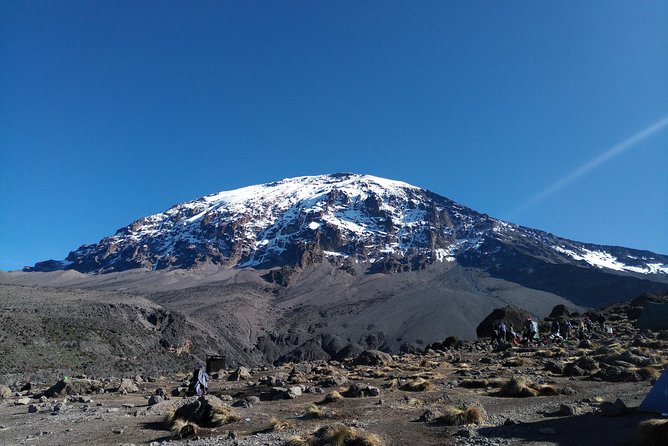
One mountain, seven days, and real altitude work. This 7-Day Machame Route climb from Moshi takes you step by step through rain forest, moorland, semi-desert, alpine desert, and finally arctic conditions near Uhuru Peak. If you like hikes that feel like a real journey, not a quick photo stop, this one fits.
What I like most is the way the plan supports your body. You climb, you drop, you rest, and you repeat that cycle at key points like Shira and Barranco, then again with a short acclimatization day at Karanga. The other thing I really appreciate is safety-forward support, including oxygen tanks and an ox meter, plus the team’s rescue fees and emergency first-aid kit.
The main drawback is also the obvious one: summit night and the altitude grind are intense. This trek is built for steady people with strong fitness, not casual walkers who want an easy schedule.
In This Review
- Quick hits on this Machame trek
- Why the Machame Route Works for Your Kilimanjaro Attempt
- From Moshi to Machame Gate: Timing, Pickups, and First Steps
- Day 1: Machame Gate to Machame Camp Through Rain Forest Ramps
- Day 2: Shira Camp Moorland, Heather Ridges, and a Rocky Rhythm
- Day 3: Lava Tower Shark’s Tooth, the Arrow Glacier Junction, and Barranco Rest
- Day 4: Barranco Wall to Karanga Camp, the Accclimatization Reset
- Day 5: Barafu Camp, South Circuit Views, and Summit Prep
- Day 6: Midnight Start to Stella Point Sunrise, then Uhuru Peak and the Long Descent
- Day 7: Mweka Gate Certificates, Mud-Ready Walking, and Back to Moshi
- Price and Value: What You Really Get for $2,750
- Safety and Support That Matter at 19,000+ Feet
- Gear, Fitness, and Pace Tips That Match This Specific Itinerary
- Who This 7-Day Machame Trek Is For (and Who Should Think Twice)
- Should You Book This Kilisa 7-Day Machame Climb?
- FAQ
- What is the duration of the 7-Day Machame Route climb?
- Where does the climb start, and what is the start time?
- Are park entry fees and camping fees included?
- What meals and drinking water are provided?
- Does this package include altitude safety items?
- What is not included in the price?
- How many travelers are in a group?
Quick hits on this Machame trek
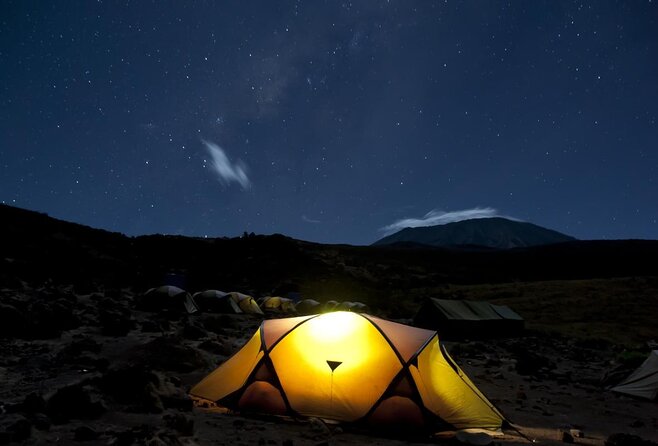
- Machame Route pacing built around altitude so you gain height in stages, not in one jump
- Oxygen tanks plus an ox meter to monitor at altitude
- Stella Point sunrise stop on the long, cold summit push (weather dependent)
- Small-group feel (max 15 travelers) with a full crew of guides, cook, and porters
- Real meal coverage with 3 hot meals daily while you’re on the mountain
Other ways up Kilimanjaro we reviewed
- Kilimanjaro climb by Lemosho Route (7-day)★ 5.0 · 651 reviews
- Kilimanjaro climb, Machame Route (7-day)★ 5.0 · 262 reviews
- Kilimanjaro Climbing Lemosho Route 8 Days.★ 5.0 · 186 reviews
- Climbing Kilimanjaro – Machame Route★ 5.0 · 170 reviews
Why the Machame Route Works for Your Kilimanjaro Attempt
The Machame Route is famous for a reason: it gives you a more interesting, rugged build-up than the quickest routes. You go from forest trails at lower elevation into increasingly dry, high terrain. That matters because Kilimanjaro is not just about distance. It’s about how your body responds to climbing day after day.
You also get multiple points where the route deliberately helps you acclimatize. A big one is Day 3, where you go up toward Lava Tower and the Arrow Glacier junction, then you descend back down to Barranco Camp. Another is Day 4, a shorter move to Karanga Camp that helps your system catch up before the final push.
If you want the classic Kili experience, with varied scenery and a path that feels like it’s earning your summit, this itinerary style makes sense.
From Moshi to Machame Gate: Timing, Pickups, and First Steps
Your trek is based in Moshi, and the start time is 8:30 am. The tour includes pickup options, plus private transport to and from Kilimanjaro International Airport, which removes a chunk of stress right away if you’re arriving from abroad.
On Day 1, you’ll transfer from Moshi to Kilimanjaro National Park, which takes about 50 minutes. You also pass through the village of Machame on the lower slopes, so you see how people live at the mountain’s edge before you trade roads for trail.
Practical tip: the first trail section can get muddy and slippery, especially lower down. Plan to move carefully on uneven ground and consider gaiters and trekking poles, which are specifically recommended for this route.
Day 1: Machame Gate to Machame Camp Through Rain Forest Ramps
Day 1 starts with a climb from about 5,400 ft to 9,400 ft, covering 11 km with a hike time of about 5-7 hours. You’ll be in rain forest habitat for the first part, and the trail is described as winding with a steady lift up a ridge.
This day is mostly about finding your rhythm. You’re going from a much lower elevation into altitude, so you want to keep your effort smooth and controlled. Even though the distance is not crazy, the forest trail plus elevation change can feel steady but demanding.
If you’re the type who wants to avoid wasted energy, use poles early and keep your steps even. The route note about muddy, slippery sections is real-life advice, not decoration.
More Machame departures, compared
Day 2: Shira Camp Moorland, Heather Ridges, and a Rocky Rhythm
On Day 2, you shift from forest into moors. You move from 9,400 ft to 12,500 ft over just 5 km, with a 4-6 hour hiking window. That time range tells you what matters here: even shorter distance can feel harder at altitude.
You’ll leave the glades of the rain forest and follow an ascending path that crosses heather-covered ridges. Then the trail turns west onto a river gorge area. Expect a mix of steady climbing and sections where you’ll need patience, because the terrain can be rocky and steep.
This is the day where packing mentally helps. Don’t treat it like a leg-burning marathon. Treat it like altitude training: slow pace, controlled breathing, and a focus on finishing strong enough to enjoy camp life.
Day 3: Lava Tower Shark’s Tooth, the Arrow Glacier Junction, and Barranco Rest
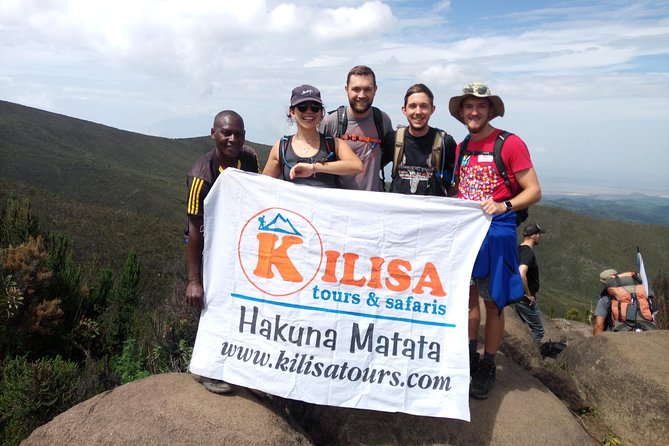
Day 3 is a big one. You hike about 10 km and it usually takes 6-8 hours. You start around 12,500 ft and end at roughly 13,000 ft, but the route swings upward along the way, so your body still feels the higher altitude pressure.
From Shira Plateau, you head east up a ridge, passing a junction toward Kibo. Then your direction shifts south-east toward Lava Tower, often called the Shark’s Tooth. Shortly after, you reach a second junction that brings you toward the Arrow Glacier at 16,000 ft.
Then comes the key part for acclimatization: you continue down to Barranco Hut at 13,000 ft. Even though your elevation at the end is similar to your start, the hike still stresses your system, and the descent is part of how you let your body reset.
This day also tends to be where mental focus matters. You’re moving through semi-desert terrain, with less cover and more open air, and it can feel harsher even if the temperatures are manageable.
Day 4: Barranco Wall to Karanga Camp, the Accclimatization Reset
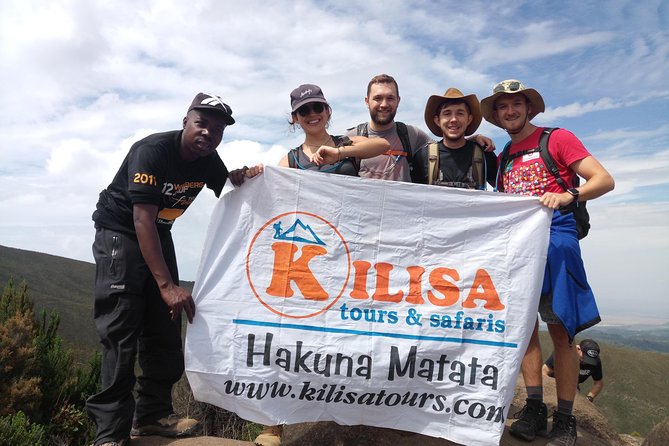
Day 4 is a shorter move on purpose. You go from Barranco Camp to Karanga Camp, covering about 5 km in 4-5 hours. Elevation stays almost the same, roughly 13,000 ft to 13,100 ft, and you move into alpine desert habitat.
The route leaves Barranco and continues on a steep ridge, with a focus on passing the Barranco Wall. After that climbing, you’re moving into the Karanga Valley campsite.
For many people, this is the day that makes the summit day feel survivable. It’s not a rest day in the easy sense. It’s a reset day, one where you gain less elevation so your body can adapt before the big effort coming next.
Day 5: Barafu Camp, South Circuit Views, and Summit Prep
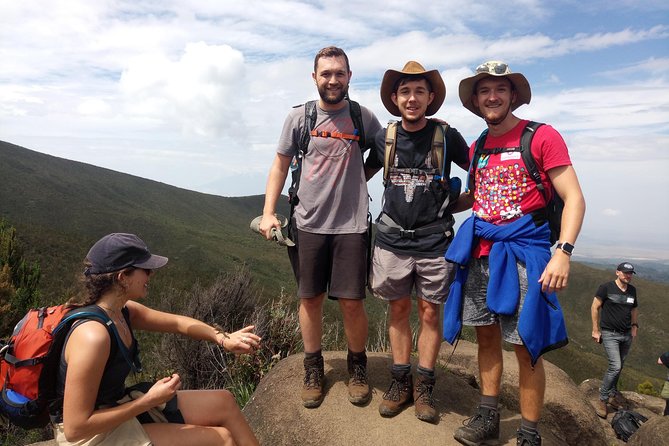
Day 5 takes you to Barafu Camp. You cover 4 km in about 4-5 hours, rising from 13,100 ft to 15,300 ft. You’ll stay in alpine desert conditions.
The route follows a junction that connects with the Mweka Trail, then continues up to Barafu Hut. At this point, the itinerary notes you have completed the South Circuit, and you get views of the summit from different angles.
You’ll camp at Barafu, rest, have dinner, and prepare for summit night. This is also where your mind starts acting like a team sport. You can feel the pressure build, but the goal of the evening is simple: sleep as best you can, eat well, hydrate, and wait for the early start.
Day 6: Midnight Start to Stella Point Sunrise, then Uhuru Peak and the Long Descent
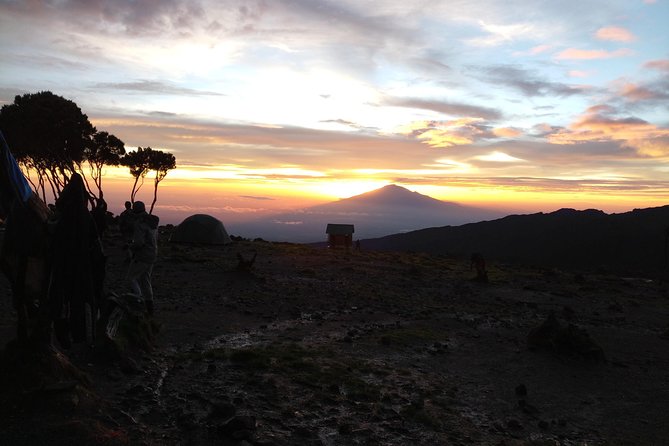
This is the classic summit push, and it’s scheduled to start very early, between midnight and 2:00 am. You’ll ascend through heavy scree between the Rebmann and Ratzel glaciers toward Stella Point on the crater rim.
You’ll see the most demanding portion described as the mentally and physically toughest. The ascent portion is about 5 km and takes roughly 7-8 hours. You end up at Stella Point (18,600 ft) for a short rest.
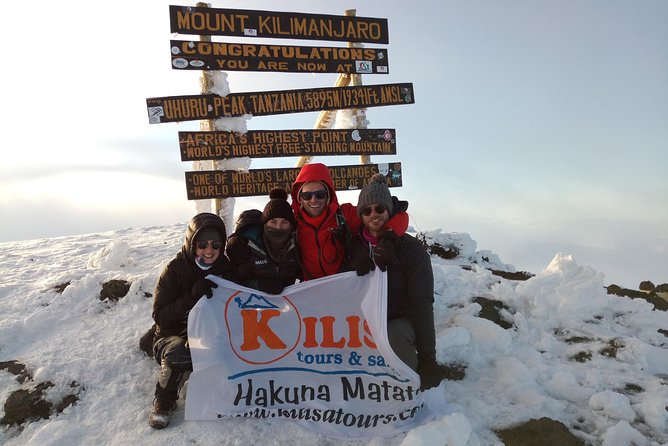
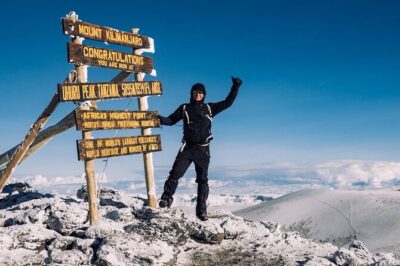
Then, if weather allows, Stella Point is your sunrise moment. From there, the route notes a 1-hour ascent to the summit. Your goal is Uhuru Peak at 19,345 ft.
After the summit, you’re not done. You descend about 12 km over 4-6 hours, down to roughly 10,000 ft, reaching Mweka Hut. This down day is where trekking poles help a lot and where your legs start counting every step.
If you take one lesson from this itinerary, it’s that success is pacing and consistency. The route doesn’t pretend you can sprint altitude. It’s slow work, step by step, especially in heavy scree.
Day 7: Mweka Gate Certificates, Mud-Ready Walking, and Back to Moshi
Day 7 is the finish. You descend from Mweka Camp down from about 10,000 ft to 5,400 ft. It’s 10 km with a 3-4 hour hike time, and it’s back in rain forest habitat.
The route drops to the Mweka Park Gate, where you receive your summit certificates after breakfast. From there, you continue about an hour to Mweka Village, where a vehicle meets you and drives you back to your hotel in Moshi.
Lower elevations can be wet and muddy, so the same practical advice applies: use gaiters and trekking poles if you have them. Shorts and t-shirts may be fine on paper, but keep rain gear and warmer clothing nearby because mornings and rain can surprise you.
Price and Value: What You Really Get for $2,750
At $2,750 per person, this trek is not cheap. The value comes from what’s included, and it’s a lot more than “a guide and a route.”
Included in your cost:
- 2 nights accommodation in Moshi
- Private transport to and from Kilimanjaro International Airport
- Park entry fees and camping fees
- Team Kilimanjaro Rescue fees
- 18% VAT
- Friendly and professional guides, cook, and porters
- 3 hot meals daily while on the mountain
- Enough treated and filtered drinking water
- Portable oxygen tanks and an ox meter
- An emergency first-aid kit
That bundle matters because many other costs pop up around Kilimanjaro if you’re not careful. This package also builds in altitude safety support rather than treating oxygen as a nice-to-have.
Not included costs you should budget for:
- Travel insurance
- Tips for guides, porters, and cook
- Flights
- A tented portable flush toilet rental option for $100 total for the entire trip, shared in a group
- Personal items and toiletries
One more value point: the tour is capped at a maximum of 15 travelers. A smaller group often means fewer bottlenecks on trail and more space to get what you need during camp routines.
Safety and Support That Matter at 19,000+ Feet
Kilimanjaro is unforgiving. The difference between a memorable summit and a stressful one often comes down to how well the team supports you when you’re tired, cold, and breathing hard.
This tour includes Team Kilimanjaro Rescue fees, an emergency first-aid kit, and altitude monitoring tools like oxygen tanks and an ox meter. Those inclusions aren’t just checkboxes. They mean there is planning behind the scenes for what can go wrong.
The human side shows up in the names people share. Guides and team members mentioned include Abraham, Alfonse, Bacarri, Livingston, Bakari, and Bryson, and the operator Naick also comes up as responsive and hands-on. If you care about being treated like a person instead of a number, those patterns matter.
You’ll also get a steady pace approach. In the reviews, pole pole gets mentioned as the motivation style, and that fits how this itinerary is built. Slow, consistent effort keeps you moving without wasting energy too early.
Gear, Fitness, and Pace Tips That Match This Specific Itinerary
This itinerary is demanding, but it’s also straightforward if you prepare.
From the route guidance:
- Plan for mud and slipperiness on lower trails. Gaiters and trekking poles are specifically recommended.
- For Day 7, you’ll likely wear shorts and t-shirts, but keep rain gear and warmer clothing available.
- Expect cold and possibly snow near the summit area. The route describes the habitat near Uhuru as Arctic and notes snow may appear up to the summit.
Fitness requirement is clear: you should have strong physical fitness. That doesn’t mean you need to be a mountain athlete, but you do need endurance for a long day and the reality of summit-night effort.
Pace tip that matches the way this climb runs: treat every day as training for the next. You don’t want to gamble on how fast you can hike. You want to arrive at camp with enough energy to sleep and eat.
Who This 7-Day Machame Trek Is For (and Who Should Think Twice)
This trek fits best if you:
- Want the Machame experience with varied environments and a classic summit profile
- Like the idea of acclimatization days, including a short Day 4
- Care about safety planning, including oxygen support and rescue fees
- Prefer a smaller group setup, with a cap of 15 travelers
- Are comfortable with a midnight to early-morning summit start
Think twice if you:
- Know you struggle with intense, long uphill efforts at night
- Are not ready for the altitude grind, even if you’re motivated
- Don’t want to factor in extra costs like tips and travel insurance
This climb is a test. The itinerary respects altitude, but it still demands commitment.
Should You Book This Kilisa 7-Day Machame Climb?
I’d book this if you want a well-rounded Machame itinerary, want safety supports like oxygen tanks and an ox meter, and value a package that already covers a lot of the big hidden costs. At $2,750, you’re paying for organization, guides and porters, meals, fees, and the practical safety gear that helps you stay calm when the mountain gets serious.
I’d be cautious if your budget is tight and you’re likely to cut corners on insurance or tips, or if you know you do poorly with long summit-night hours. Kilimanjaro rewards preparation, not improvisation.
If weather cancels the experience, you’ll be offered a different date or a full refund, and there is free cancellation up to 24 hours in advance. That flexibility can make it easier to plan with confidence.
FAQ
What is the duration of the 7-Day Machame Route climb?
The trek is scheduled for 7 days (approx.).
Where does the climb start, and what is the start time?
The trek is based in Moshi, Tanzania, and the start time is 8:30 am.
Are park entry fees and camping fees included?
Yes. The price includes park entry fees and camping fees.
What meals and drinking water are provided?
You get 3 hot meals daily while on the mountain, plus enough treated and filtered drinking water throughout the trek.
Does this package include altitude safety items?
Yes. It includes portable oxygen tanks and an ox meter, plus an emergency first-aid kit.
What is not included in the price?
Not included are travel insurance, tips for guides, porters, and cook, flights, and a tented portable flush toilet rental option (listed at $100 for the entire trip, shared). Personal items and toiletries are also not included.
How many travelers are in a group?
The tour has a maximum group size of 15 travelers.
More Machame Departures
- Kilimanjaro climb, Machame Route (7-day)
★ 5.0 · 262 reviews - Climbing Kilimanjaro – Machame Route
★ 5.0 · 170 reviews - Climbing Kilimanjaro through 7 days Machame Route
★ 5.0 · 151 reviews - #1. Best Kilimanjaro Day hike Tour-Machame Route-ISMANI
★ 4.2 · 47 reviews - 7 Days Machame route – Kilimanjaro
★ 5.0 · 45 reviews
Kilimanjaro, Route by Route
- Kilimanjaro climb by Lemosho Route (7-day)
★ 5.0 · 651 reviews - Kilimanjaro climb, Machame Route (7-day)
★ 5.0 · 262 reviews - Kilimanjaro Climbing Lemosho Route 8 Days.
★ 5.0 · 186 reviews - Climbing Kilimanjaro – Machame Route
★ 5.0 · 170 reviews - Climbing Kilimanjaro through 7 days Machame Route
★ 5.0 · 151 reviews
Just added from around Moshi
Kilimanjaro Machame Route, compared.
 ★ 5.0Kilimanjaro climb, Machame Route (7-day)From $3,377262 reviews
 ★ 5.0Climbing Kilimanjaro – Machame RouteFrom $2,322170 reviews
 ★ 5.0Climbing Kilimanjaro through 7 days Machame RouteFrom $2,425151 reviews
 ★ 5.07-Day Machame Kilimanjaro Summit Tour from ArushaFrom $2,695125 reviews
 ★ 5.07 Days Kilimanjaro via Machame route affordable priceFrom $2,400110 reviews
 ★ 4.2#1. Best Kilimanjaro Day hike Tour-Machame Route-ISMANIFrom $11547 reviews
 ★ 5.07 Days Machame route – KilimanjaroFrom $2,85045 reviews
 ★ 5.0The Best of Machame Route in 6 Days: Your World’s Summit GuideFrom $1,15044 reviews
Browse the lists this tour appears in